

Letná Apartment: Minimalist Open-Plan Renovation in Prague by Markéta Bromová
Minimalist 97 m² Prague apartment with open-plan layout, unified flooring, sculptural storage boxes, and exposed concrete ceilings by Markéta Bromová.


The Letná Apartment, a thoughtfully renovated 97 m² residence in Praha 7, Czechia, showcases the exceptional design vision of Markéta Bromová, a prominent Czech architect known for her minimalist yet functional interiors. Completed in 2022, this project transforms a traditional multi-room apartment into a contemporary open-plan living space, balancing the client’s desire for minimal doors with subtle spatial divisions that preserve privacy and functionality.
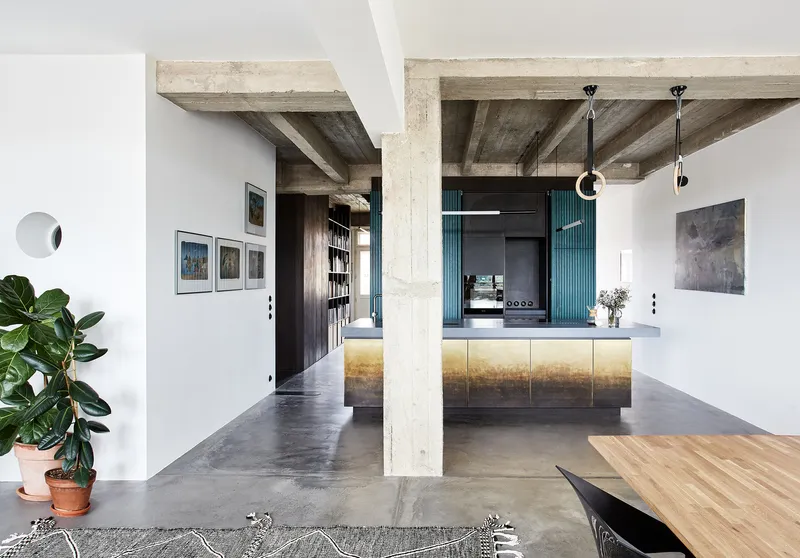
The renovation demonstrates a careful interplay of architectural precision, material honesty, and spatial fluidity, creating a home that feels both modern and human-centric. With exposed structural elements, unified surfaces, and bespoke “box” insertions, the Letná Apartment represents a successful marriage of minimalist aesthetics and practical living.
Conceptual Approach: Open-Plan Living with Minimal Barriers
One of the primary challenges of this project was to convert a large, multi-room apartment into a single cohesive space while reducing the number of doors, as requested by the client. Rather than forcing walls or partitions, Bromová approached the space with a focus on continuity and visual openness. The apartment’s design emphasizes flow and connection, allowing each area to feel distinct yet inherently linked.
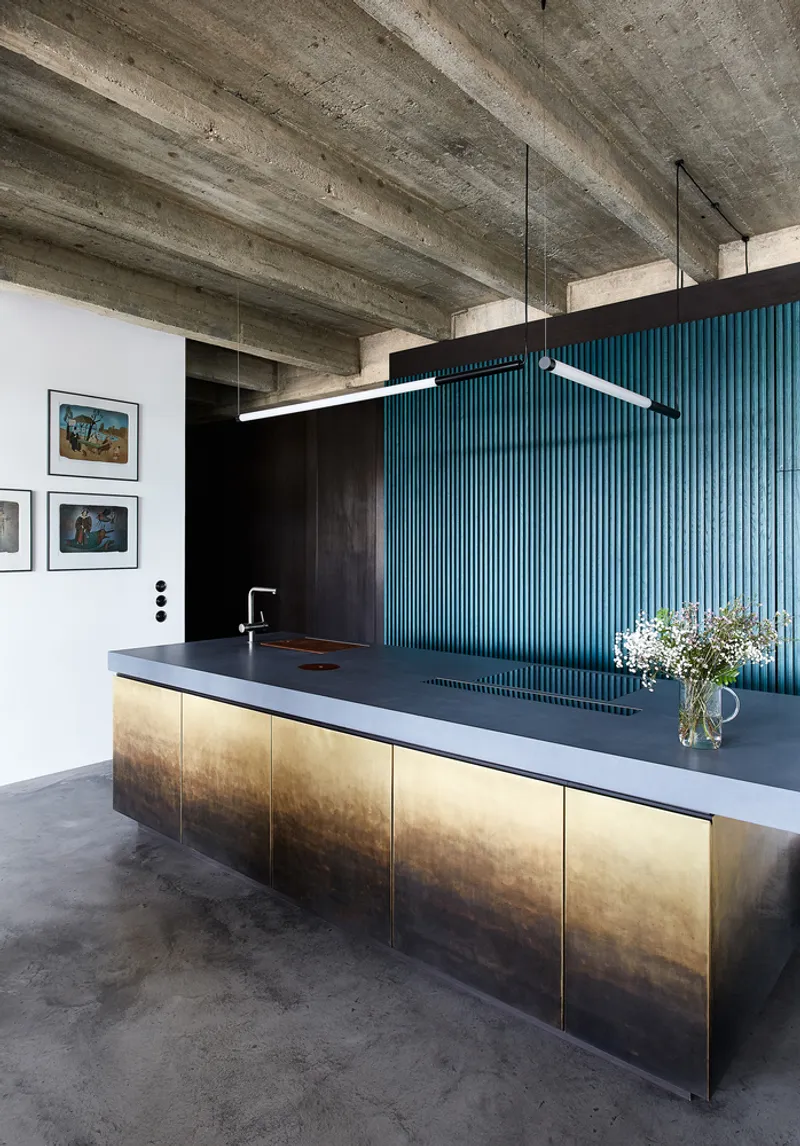
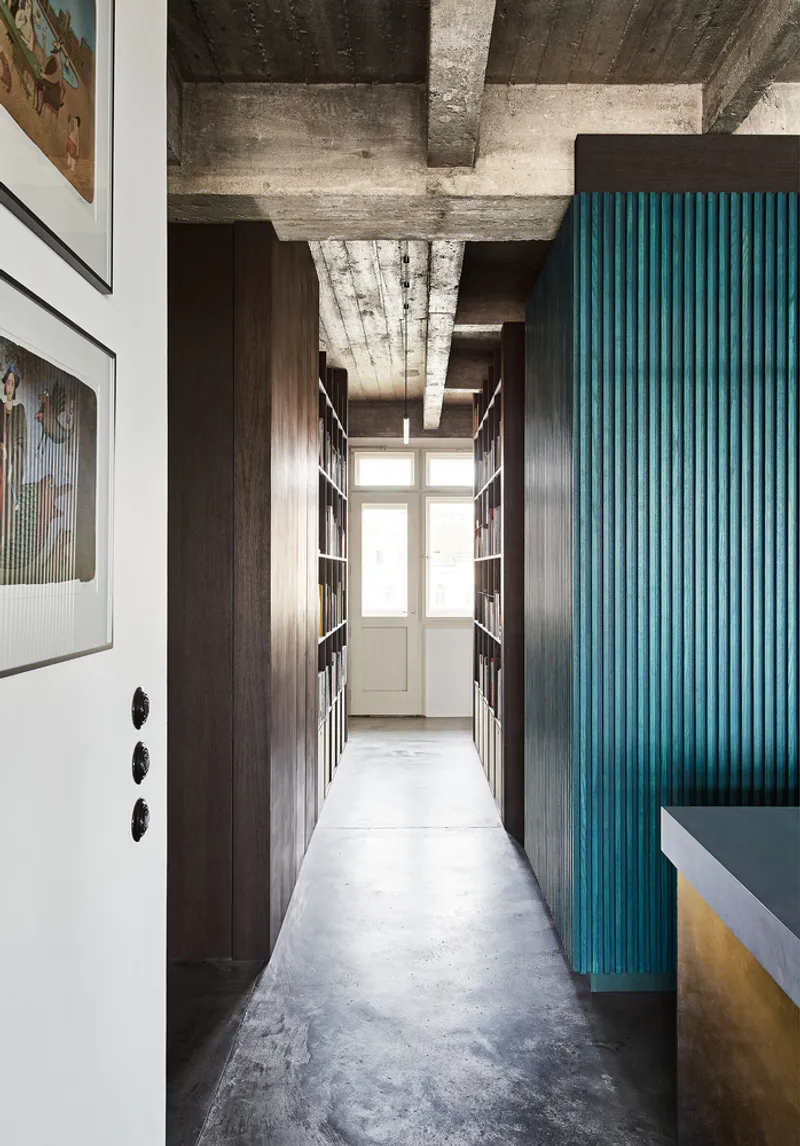
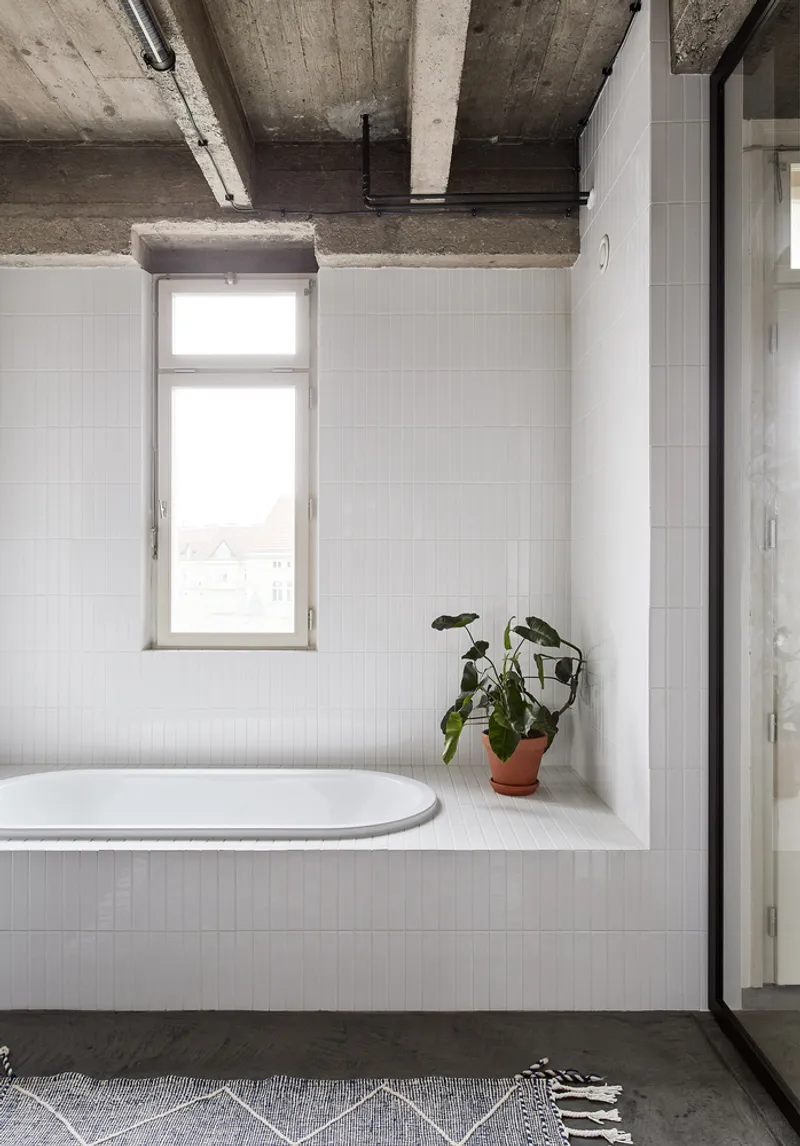
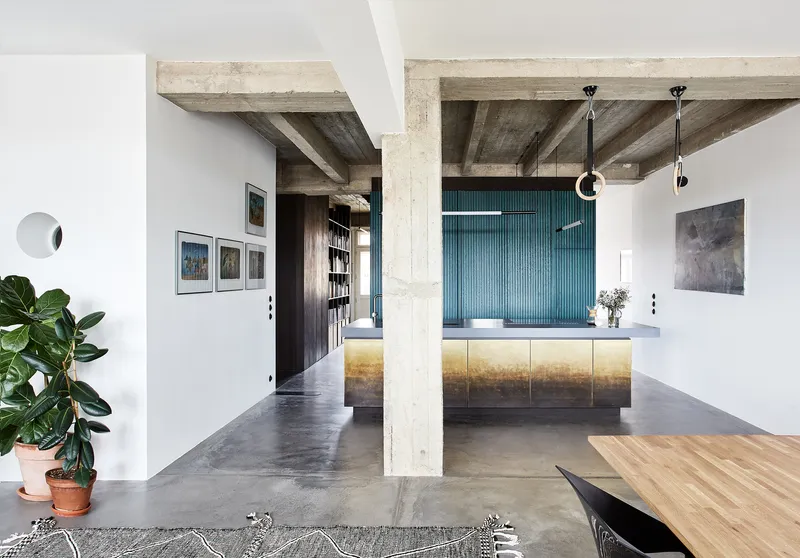
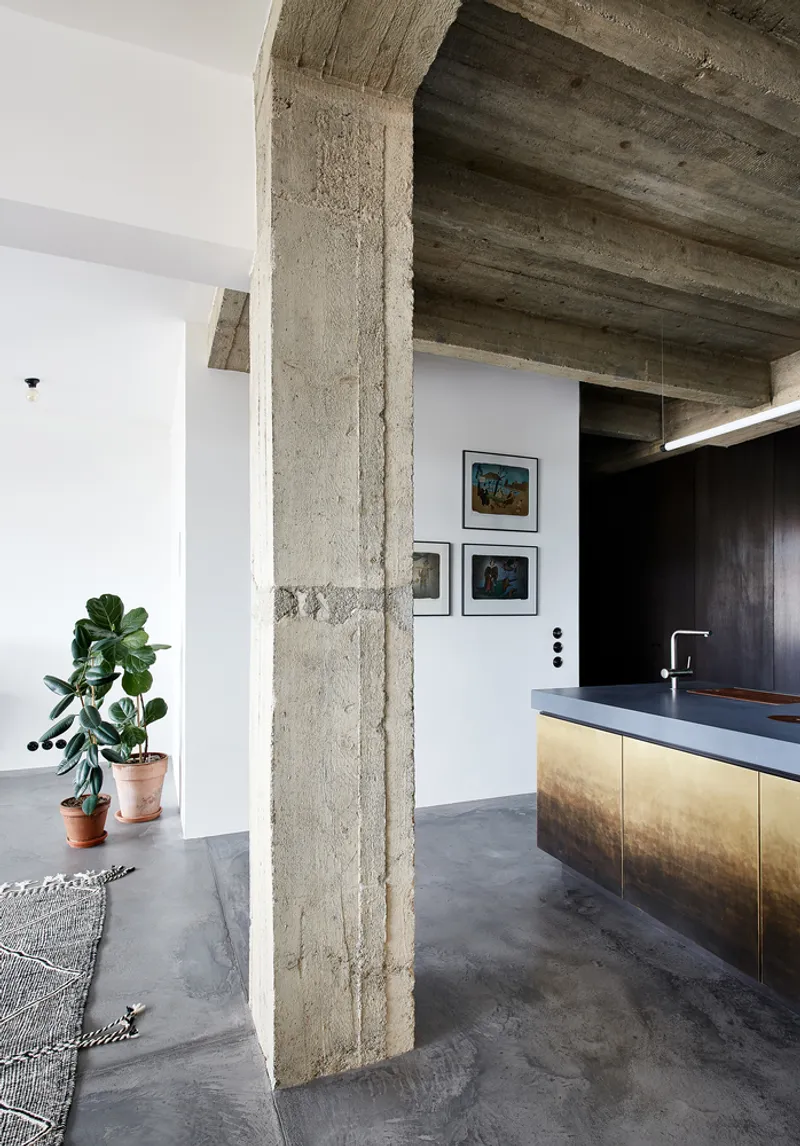
The apartment retains its original reinforced concrete ceiling structure with ribs, which was exposed to accentuate the raw character of the space. This structural honesty adds an industrial edge to the home while subtly framing each functional area. By embracing the existing technical and structural parameters, the renovation respects the apartment’s history and highlights its inherent architectural qualities.
Unified Flooring: Visual Continuity and Material Elegance
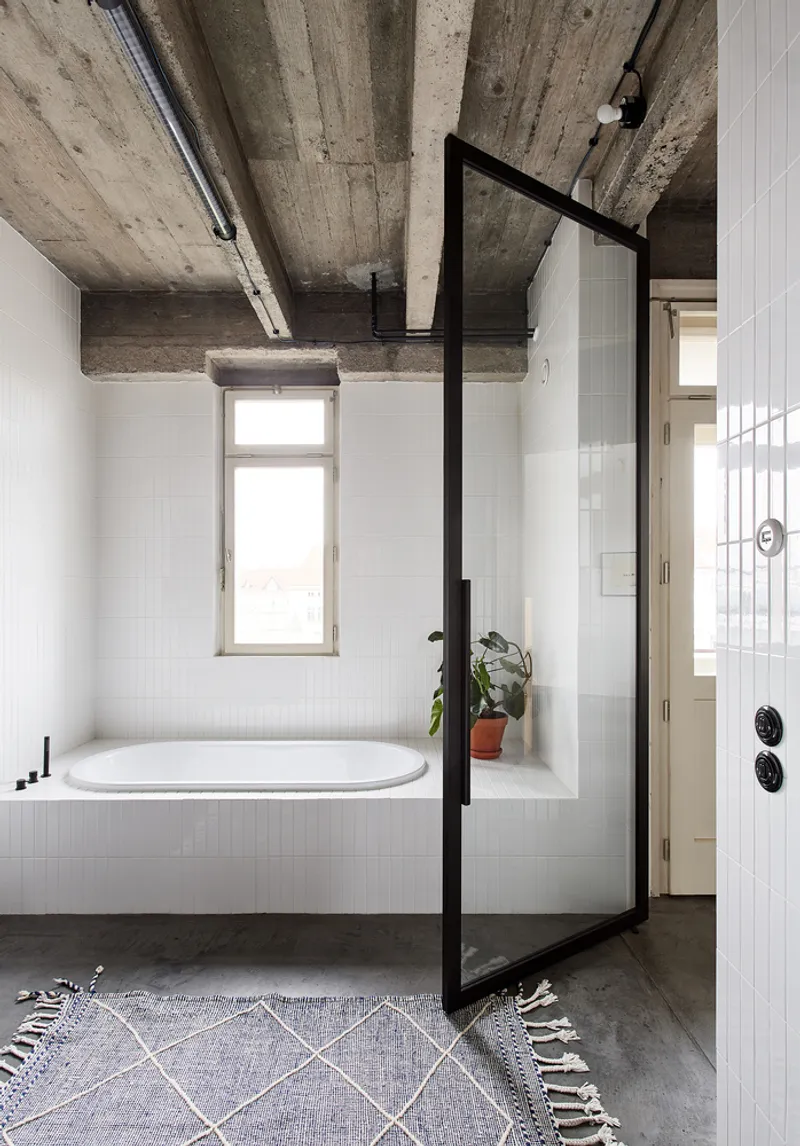
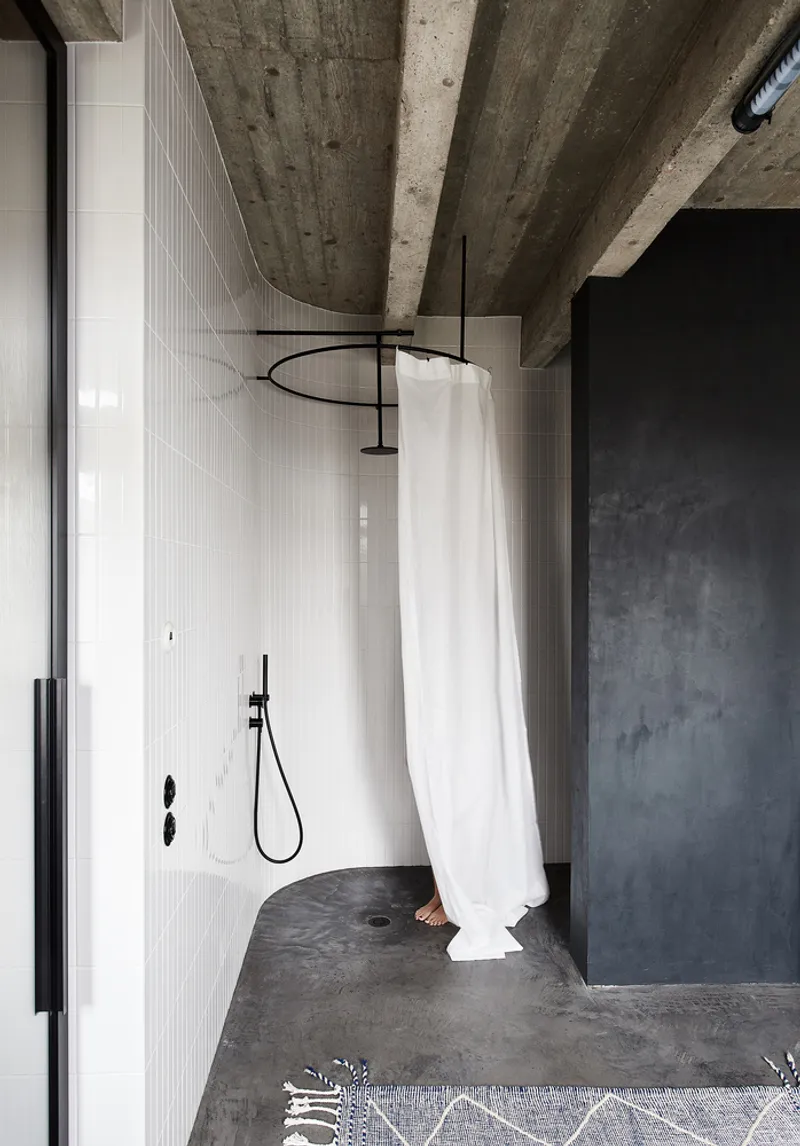
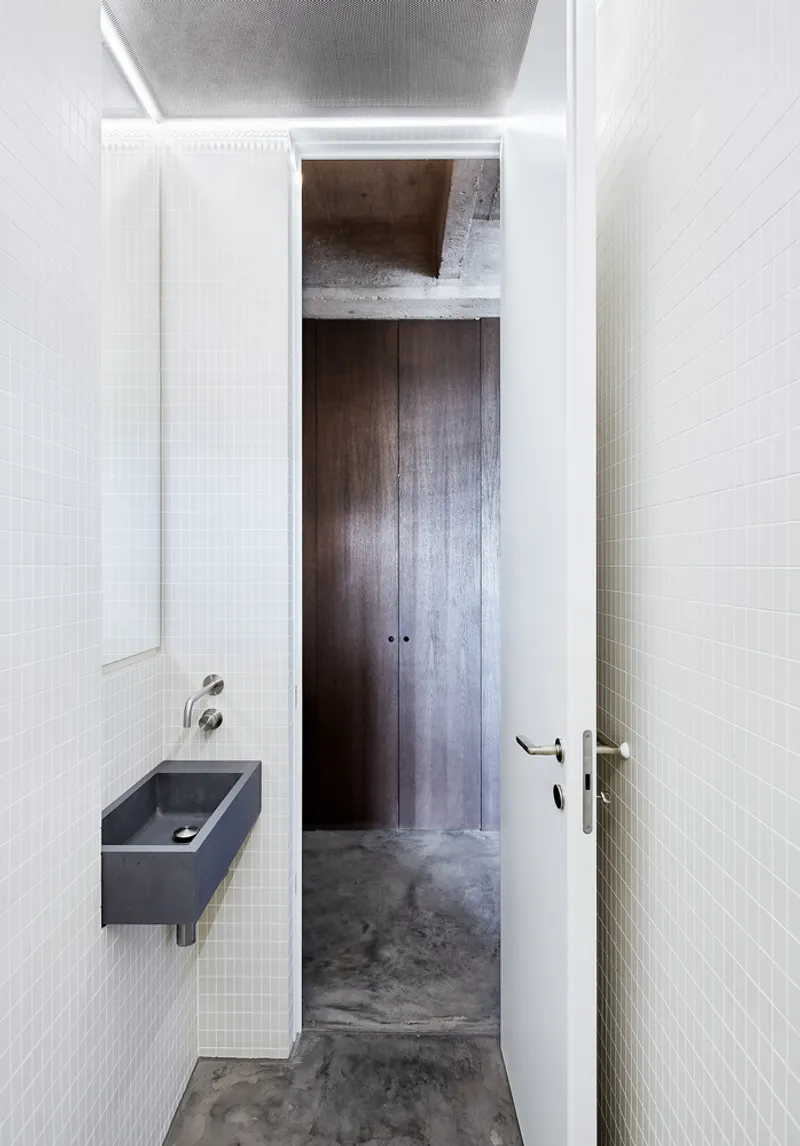
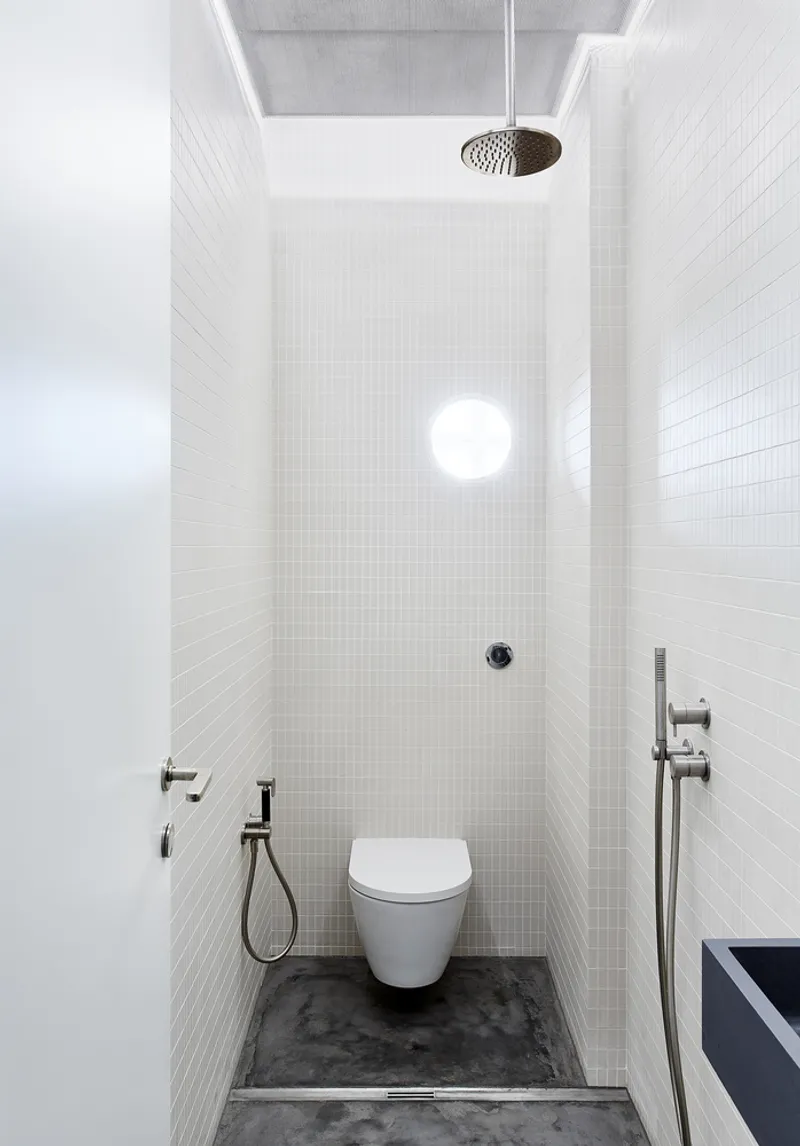
A key design decision in the Letná Apartment was the choice of flooring material. The architects aimed for a surface that would run seamlessly across all spaces, including bathrooms and shower areas, to unify the interior visually. Several options were considered, including terrazzo, but after a comprehensive static analysis, the client and architect opted for a brushed concrete screed.
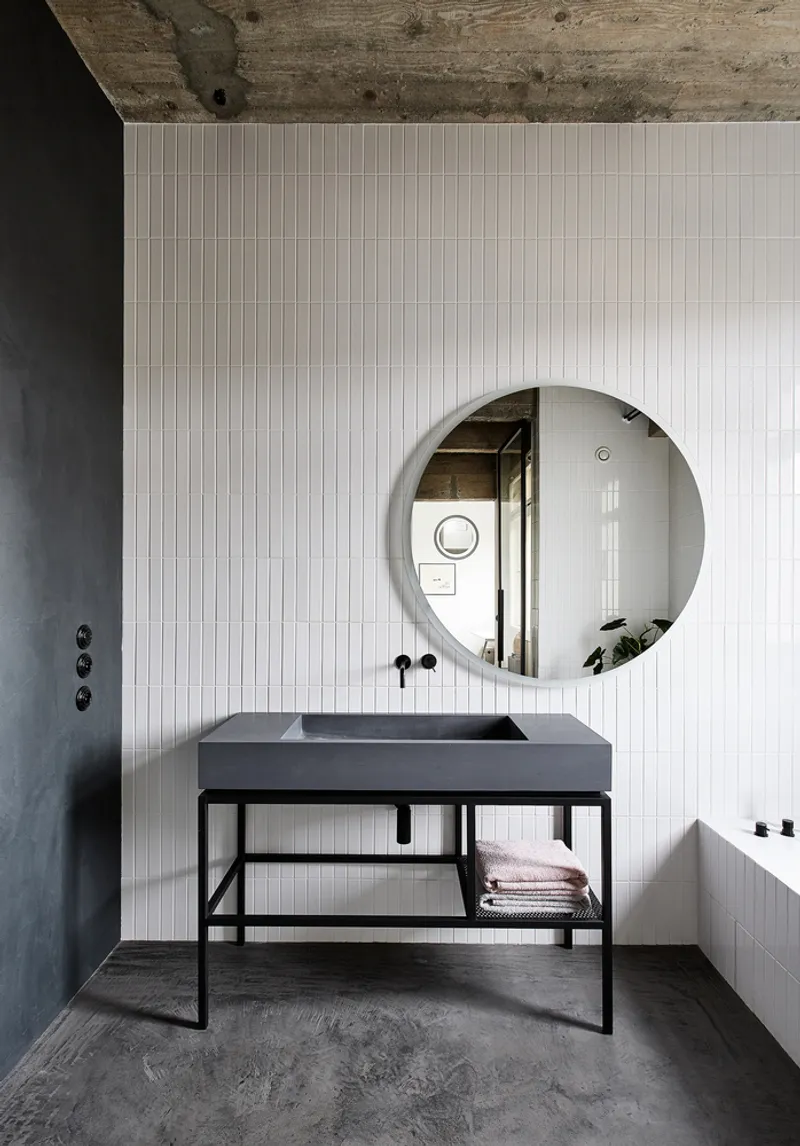
The concrete floor serves multiple purposes. It provides a durable, low-maintenance surface, ideal for daily living, and reinforces the minimalist aesthetic by maintaining a neutral, textural base throughout the apartment. The brushed finish softens the industrial feel of concrete, balancing rawness with warmth, and ensures that all spaces, from the living room to the private bathroom, feel interconnected.
Spatial Organization: The “Box” Concept
To maintain openness while still providing spatial distinction, Bromová introduced the concept of inserted “boxes” into the open layout. These architectural volumes serve multiple functions:
- Dividing private and public areas: Boxes create subtle separations between living, dining, and sleeping areas without traditional doors or walls.
- Providing functional storage: The boxes incorporate essential storage solutions, including wardrobes, kitchen appliances, and closets.
- Enhancing aesthetic cohesion: Each box is crafted from materials that complement the overall palette, ensuring the interior remains harmonious.
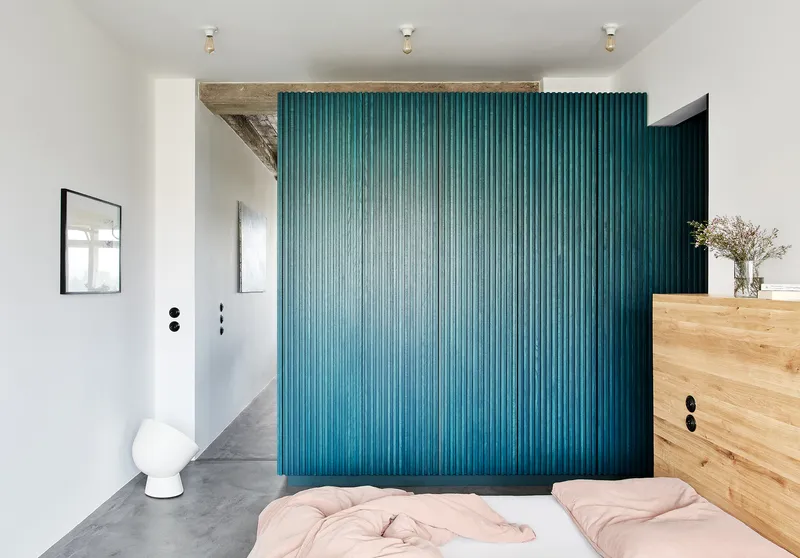
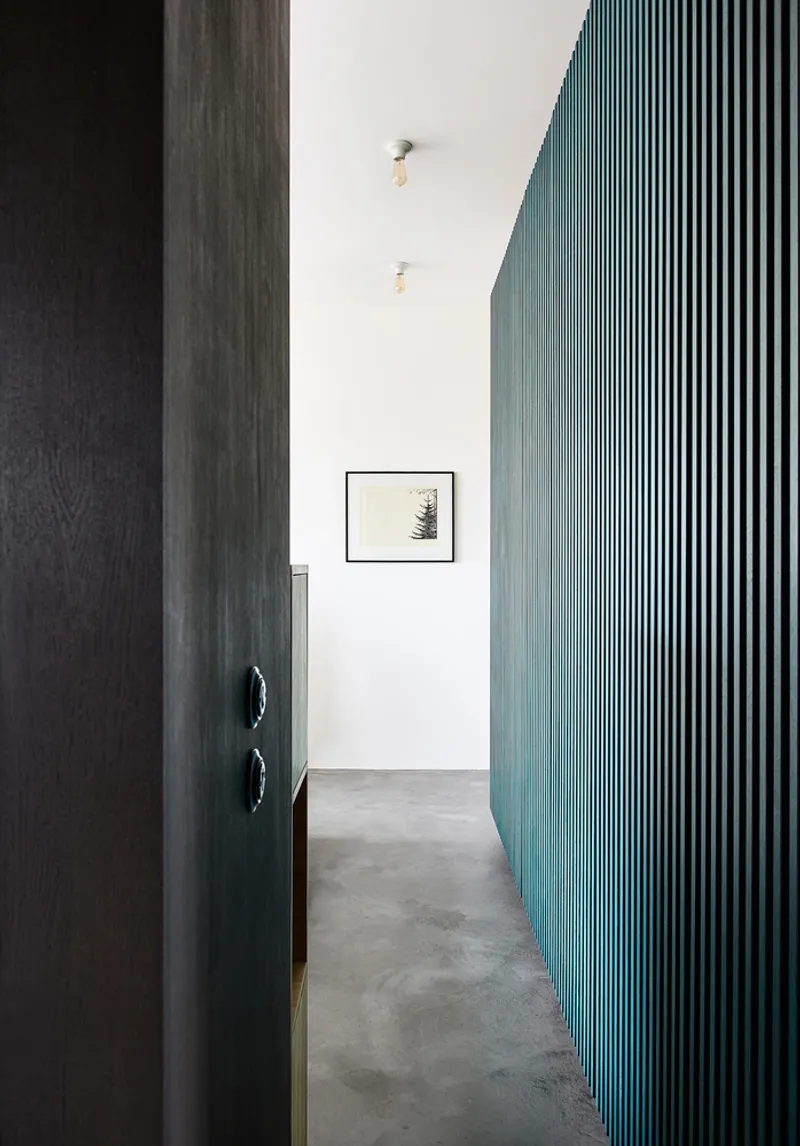
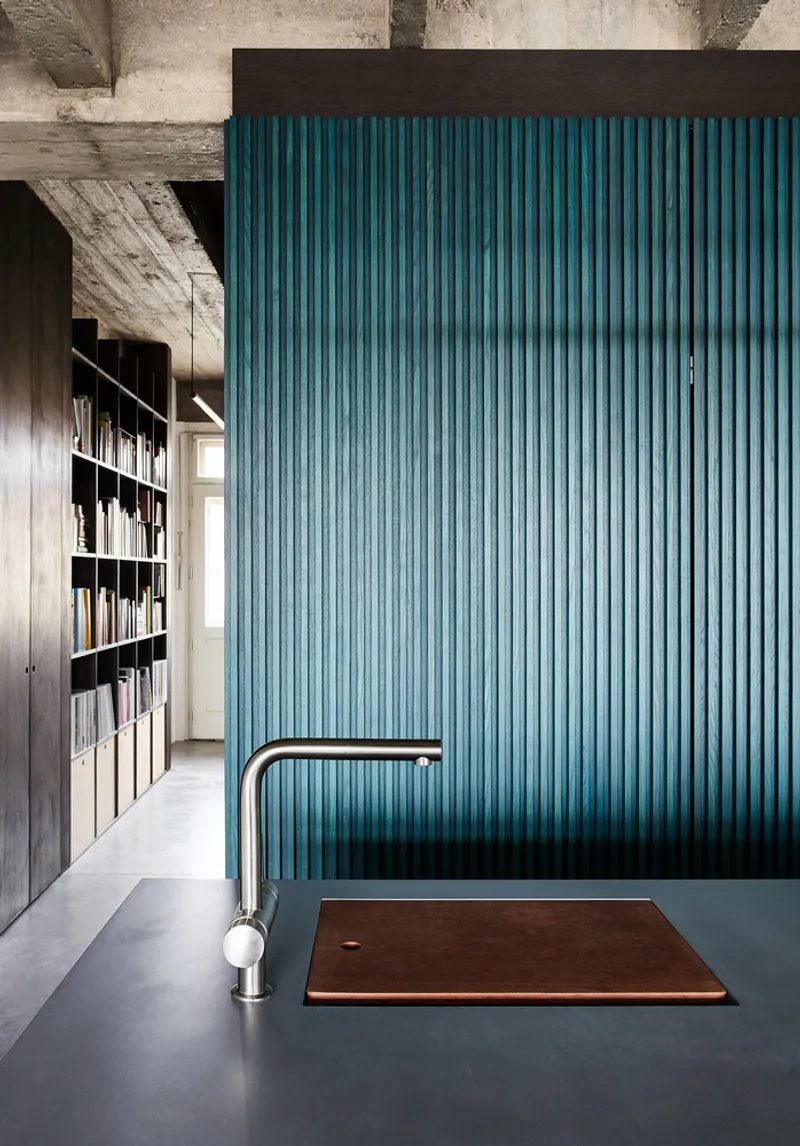
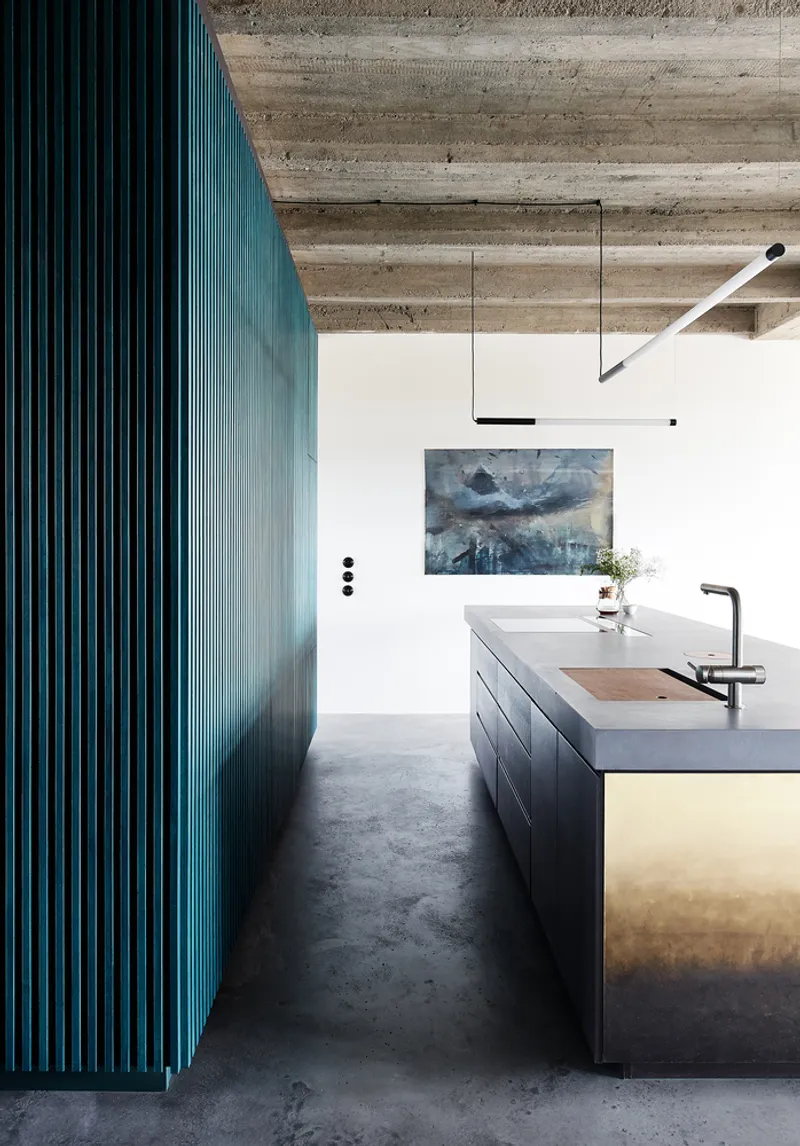
A signature element is the green scalloped box, which becomes a visual and functional centerpiece. It cleverly conceals kitchen appliances such as the fridge, dishwasher, and built-in oven, as well as bedroom wardrobes and an entrance closet. This approach allows the apartment to maintain a fluid, airy character while providing practical storage solutions that do not disrupt the minimalist ethos.
Material Palette and Finishes: Minimalism with Warmth
The materials chosen for the Letná Apartment underscore simplicity, durability, and elegance. In addition to the brushed concrete floors, the design incorporates wood, textured surfaces, and subtle color accents to introduce warmth and tactility.
- Concrete and structural elements: The exposed ribs and raw textures add an industrial character, reminding inhabitants of the building’s construction history.
- Wooden finishes: Carefully selected wood tones soften the hard edges of concrete and metal, bringing warmth and a sense of comfort to living spaces.
- Custom fixtures: Products from ABB, Delta Light, Maimana, Monobrand, WATEREVOLUTION, Winckelmans, and Zangra were integrated to enhance both functionality and visual appeal.
This careful layering of materials ensures that the apartment feels cohesive and inviting while staying true to minimalist principles.

Lighting Design: Enhancing Architecture and Ambiance
Lighting plays a crucial role in emphasizing the apartment’s architectural qualities. The design incorporates layered lighting strategies, including ambient, task, and accent lighting, to enhance both functionality and atmosphere. Delta Light fixtures, for instance, highlight the structural ribs and create soft illumination that complements natural daylight.
Natural light is a significant asset in the Letná Apartment. Large windows in the living areas and bathrooms allow sunlight to permeate the interiors, enhancing the sense of openness. The interplay between natural and artificial light creates a dynamic environment, where spaces feel alive throughout the day and into the evening.
Functional Zones: Living, Dining, and Private Areas
Despite the absence of traditional doors, the apartment maintains clear functional zones through the thoughtful placement of boxes and furniture.
- Living and dining area: Positioned near the windows, this open area maximizes natural light and encourages interaction. The absence of barriers creates a spacious, welcoming environment suitable for entertaining or daily living.
- Kitchen: Integrated within the green scalloped box, the kitchen remains functional yet unobtrusive, allowing cooking and dining activities without disrupting the visual flow.
- Bedrooms and private areas: The inserted boxes define sleeping spaces and storage while maintaining openness. Privacy is subtly achieved through design rather than physical barriers.
- Bathrooms and showers: Uniform flooring and minimal partitions create continuity, ensuring that these spaces feel integrated with the rest of the apartment while maintaining their private function.
Sustainability and Minimalism
Although primarily a design-focused renovation, the Letná Apartment also demonstrates sustainable principles. The use of durable materials like concrete and wood, along with long-lasting fixtures, ensures longevity and reduces the need for frequent replacements. By minimizing unnecessary walls and doors, the project reduces material consumption while maximizing spatial efficiency.
The apartment’s design aligns with contemporary trends in minimalist living, emphasizing quality over quantity, openness over segmentation, and functionality over excess decoration. Every material, volume, and surface serves a purpose, resulting in an elegant, sustainable, and highly livable environment.
Interior Photography: Showcasing Minimalist Beauty
The project was meticulously photographed by Veronika Raffajová, capturing the apartment’s spatial flow, material integrity, and light dynamics. Photography highlights the continuity of flooring, the strategic placement of boxes, and the interaction between raw and finished surfaces. Through visual documentation, viewers gain a deeper understanding of the apartment’s minimalist approach and spatial philosophy.
The images also emphasize architectural storytelling, showcasing how thoughtful interventions, like the green scalloped box, can transform everyday living without adding visual clutter. Raffajová’s photography reinforces the balance between raw textures and refined finishes, emphasizing the apartment’s unique character.
Design Philosophy: Minimalism Meets Practicality
At its core, the Letná Apartment exemplifies a design philosophy that prioritizes openness, simplicity, and functionality. Bromová’s approach demonstrates that minimalism does not equate to emptiness; instead, it requires careful consideration of structure, light, materials, and spatial relationships.
Key principles reflected in the design include:
- Spatial clarity: Open layouts and uniform flooring create a sense of continuity and flow.
- Functional elegance: Inserted boxes provide storage, privacy, and organization without traditional doors.
- Material honesty: Exposed concrete and structural elements celebrate the apartment’s original architecture.
- Light integration: Both natural and artificial lighting enhance spatial perception and ambiance.
- Sustainable minimalism: Reduced materials and thoughtful design contribute to environmentally responsible living.
This philosophy ensures that the apartment is not only visually compelling but also highly livable and adaptable, demonstrating how design can respond to both aesthetic and practical demands.
Client-Centered Design: Collaboration and Customization
The success of the Letná Apartment is rooted in the close collaboration between architect and client. Every design decision, from flooring selection to the placement of storage boxes, reflects the client’s preferences for minimal doors, functional organization, and visual openness.
The green scalloped box, for example, was tailored to meet specific needs: it conceals essential appliances, organizes bedroom storage, and doubles as an entrance closet. Such bespoke interventions exemplify a user-focused design process, ensuring the apartment meets lifestyle requirements while maintaining architectural integrity.
Legacy and Context: Prague’s Contemporary Residential Design
The Letná Apartment contributes to the ongoing evolution of Prague’s contemporary residential architecture. In a city where historical buildings and modern interventions coexist, Bromová’s renovation stands out for its respectful yet innovative approach. By leveraging existing structural features and introducing minimalist interventions, the project highlights the potential of adaptive reuse and thoughtful renovation in urban contexts.
This apartment demonstrates that even within the constraints of a pre-existing building, it is possible to achieve modern, functional, and aesthetically refined interiors. It sets a benchmark for future renovations, proving that careful planning, material selection, and spatial strategy can transform traditional apartments into modern open-plan homes.
The Letná Apartment by Markéta Bromová is a testament to minimalist open-plan design, where structural honesty, material cohesion, and spatial clarity converge to create a home that is both functional and visually striking. With exposed concrete ceilings, uniform flooring, and strategically inserted boxes, the apartment achieves openness without sacrificing privacy or usability.
This renovation exemplifies how thoughtful interventions, client collaboration, and careful material selection can transform a traditional multi-room apartment into a modern, cohesive, and highly livable residence. By balancing aesthetics with functionality, the Letná Apartment remains a remarkable example of Prague’s contemporary minimalist residential architecture.
All photographs are works of
Veronika Raffajová


Popular Articles
Popular articles from the community


Cube Design Draws an Ecological Corridor Between Two Shenzhen Hills with the Nankai Building
Beside Shenzhen's container docks, the Nankai Building pairs stacked balconies with a climbing green screen to connect two hillsides across its height.

David Ortega Stacks a Two-Story Mexico City Penthouse Around a Steel Stair and a Pergola-Shaded Roof Terrace
In Colonia Roma, a 300 m² penthouse uses oak joinery, a planted steel stair and a slatted roof pergola to make a new-build apartment feel like a house.

Architekt Andreas Gruber Scatters 23 Dark Timber Chalets Across a South Tyrolean Forest Edge
In Molini di Tures, Amonti Chalets breaks a resort into a hamlet of gabled timber houses, with parking, storage and services pushed into the slope.

Juan García Correa, John González and Claudia Rueda Sink a Circular Amphitheater into a Manizales Engineering Building
On the La Nubia campus in Manizales, Colombia, the S1 Building folds labs and offices into a hillside of ramped lawns that double as a campus route.

Similar Reads
You might also enjoy these articles


Bamboo Housing Challenge 2026: Design Affordable, Sustainable Homes Using Bamboo
An international design competition by Bamboo U and IBUKU inviting architects and designers to reimagine affordable housing using bamboo — with the winning design built full-scale in Bali.

Computational Design & Education: Beegraphy Design Awards Introduces 7th Category (Featuring Jiyun's Innovative Approach)
Dive into Beegraphy’s 7th Design Awards category, where computational design meets education to create immersive, interactive learning tools, inspired by Jiyun’s work.
From Parametric Lighting to Urban Furniture: Join the 2nd Workshop in Beegraphy’s Computational Design Series
Dive into Cutting-Edge Design Techniques and Practical Applications with Industry Experts

Last Call: Unleash Your Architectural Genius in SHAK's Kindergarten Design Competition
Urgent call for architects to join SHAK's kindergarten design competition before the looming deadline

Explore Residential Building Competitions
Discover active competitions in this discipline

Challenge to design mud housing for contemporary communities

Challenge to reimagine the Iron Throne

Photograph architecture without architects

Illustrate the lost glory of Angkor Wat - Render Challenge
Comments (0)
Please login or sign up to add comments
No comments yet. Be the first to comment!