

LI City Study by Greater Dog Architects: A Model for Sustainable Renovation and Cultural Reuse in Liyang, China
A renovated office turned 24-hour public library, blending adaptive reuse, natural light, and sustainable materials into a vibrant cultural space.


Architects: Greater Dog Architects
Reimagining Urban Architecture through Adaptive Reuse
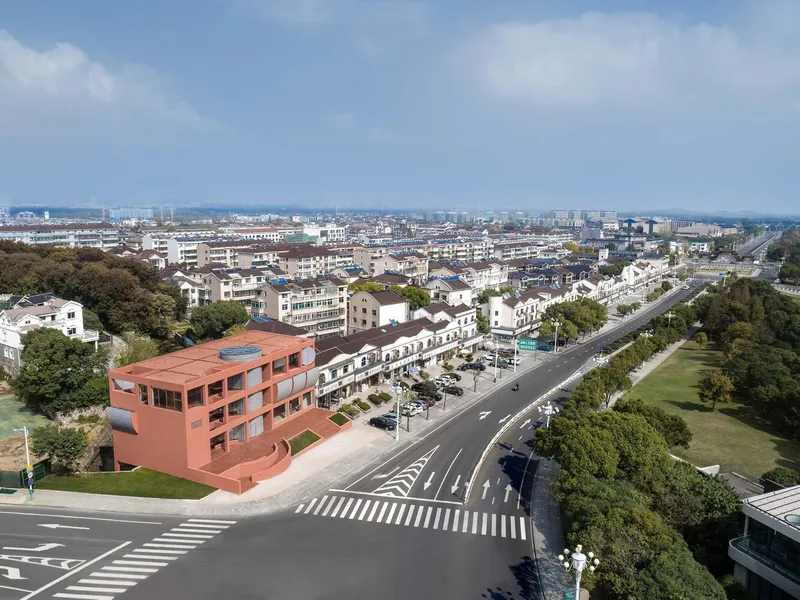
"Demolishing is a decision of easiness and short term," architect Anne Lacaton once said, emphasizing the waste embedded in erasing built heritage. In LI City Study, Greater Dog Architects respond to this ethos by transforming a former office building into a vibrant, 24-hour public library and cultural hub. Located within the Tianmu Lake Resort of Liyang City, the project exemplifies sustainable urban regeneration, breathing new life into obsolete structures through architectural sensitivity and functional ingenuity.

From Bureaucracy to Community: The Evolution of Space
Initially a government office building, the structure had outlived its original purpose. Rather than razing it, the local government embraced a progressive urban planning approach—reassigning the building as a shared cultural facility, freely accessible to both residents and tourists. The brief emphasized civic humanism, environmental sustainability, and public engagement. Greater Dog Architects undertook extensive research on the existing conditions, ensuring the renovation respected the building’s structure, local construction methods, and environmental context.


Honoring the Old: Structural Preservation and Architectural Dialogue
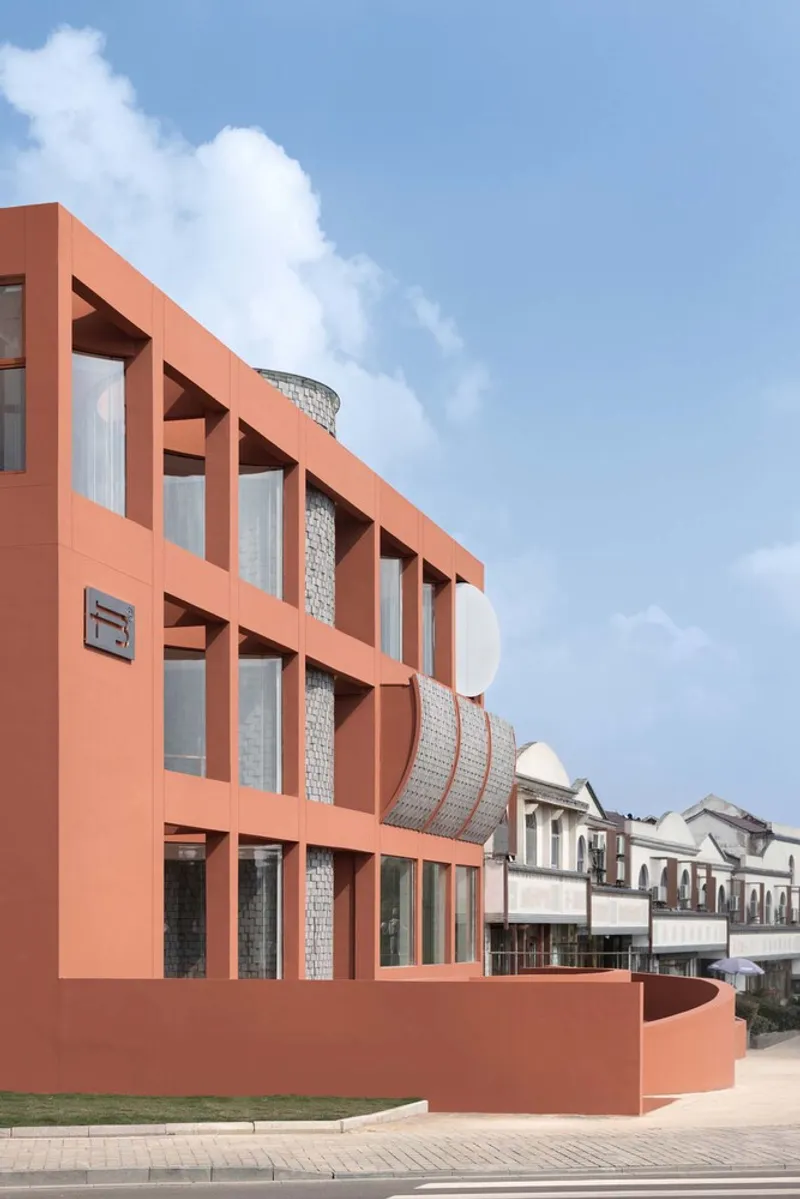
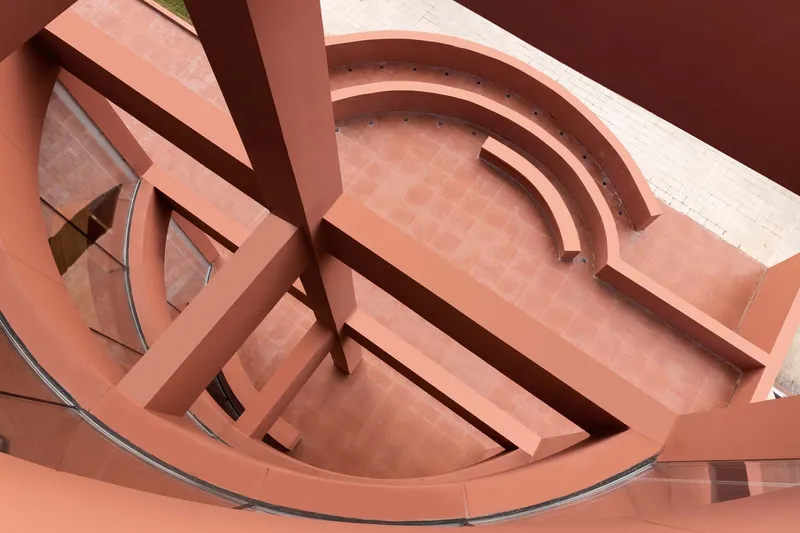
The existing three-story plus basement frame structure became the foundation for a deliberate spatial transformation. The design team removed exterior walls to reveal the building’s original beams and columns, establishing a raw, honest architectural language. New setback circular beams and exposed floor cuts interact with the old frame, creating a dynamic contrast between heritage and modernity.
A central design gesture is the creation of a circular spatial flow at the entrance, distancing the library from the busy street and softening the transition from city to interior sanctuary. The circular form not only frames circulation but also becomes a spatial landmark, reinforcing the continuity of movement and memory.

Sustainability Through Natural Light and Material Reuse
Natural light plays a pivotal role in the renovation strategy. Frameless, curved glass windows contrast with the heavy concrete frame, introducing lightness and visual transparency. These architectural interventions establish a direct dialogue between the interior space and the natural beauty of Tianmu Lake, enhancing user experience and grounding the library in its scenic lakeside context.
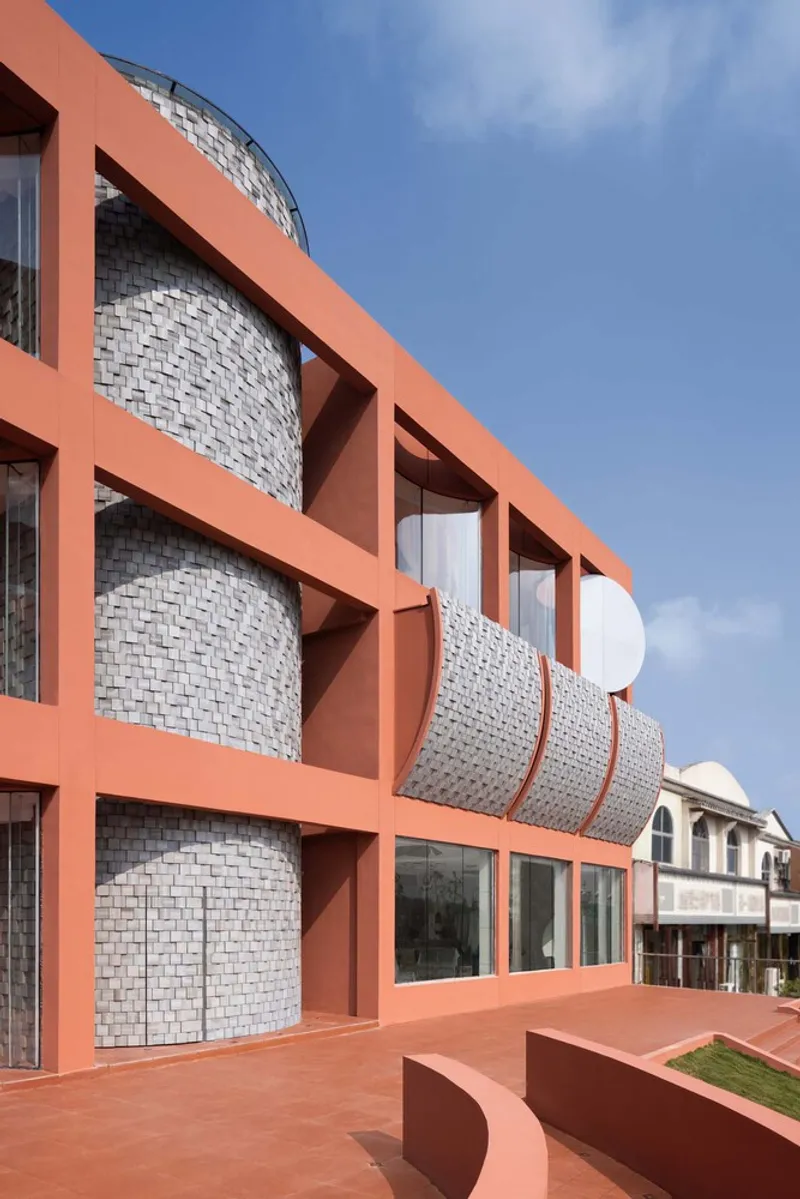
A series of outward-curving facades mirror the interior forms, enabling better privacy and sunlight modulation. Slim skylights, organic curves, and transparent glass components encourage upward gazes—connecting readers to the sky and natural rhythms.
Materials were chosen with care: gray wooden shingles, re-dyed and pressed from recycled wood, add warmth and tactility. Reddish-brown exterior paints reflect local earth tones and harmonize with surrounding architecture. These choices articulate a poetic materiality that elevates the act of reading into an immersive spatial experience.

Integrative Design: Function, Form, and Flexibility
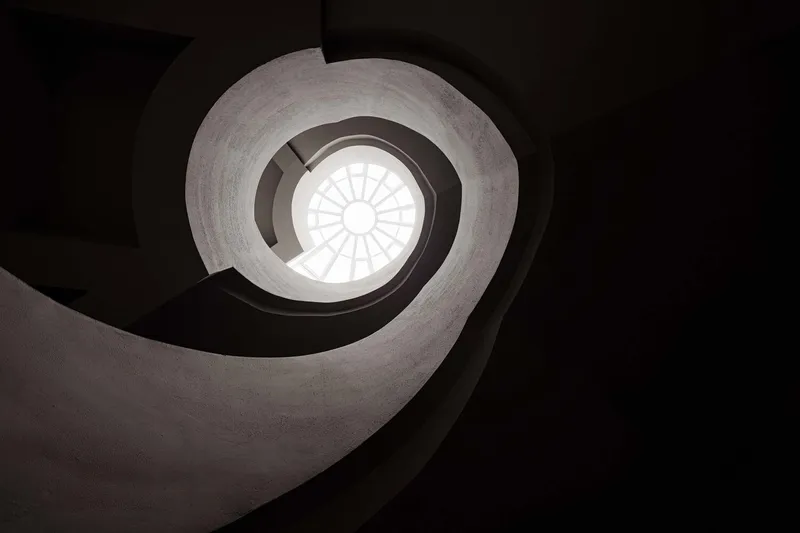
Circulation is entirely reimagined. A spiral staircase located within a cylindrical volume connects all floors, illuminated from above by a circular skylight. This not only improves wayfinding but turns movement into a spatial event. The original floor slabs are interrupted by new sloped roofs and strategic voids, which visually and functionally connect various programmatic zones—from reading areas to café counters.
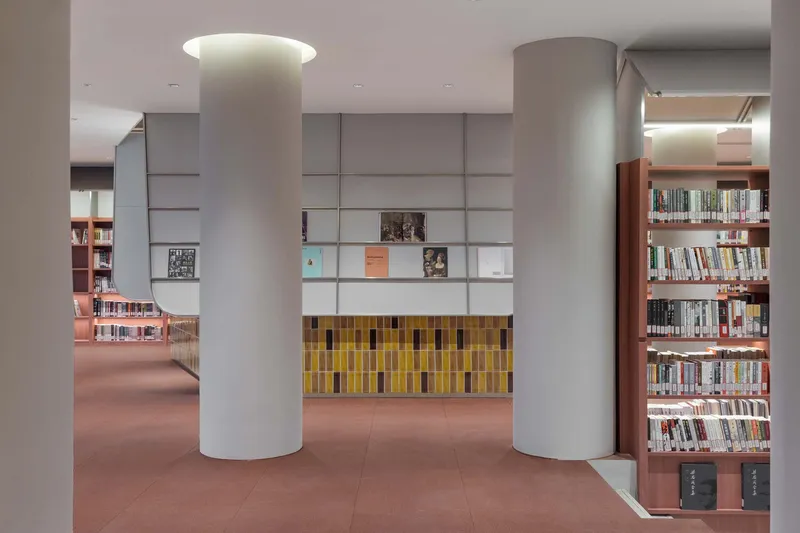
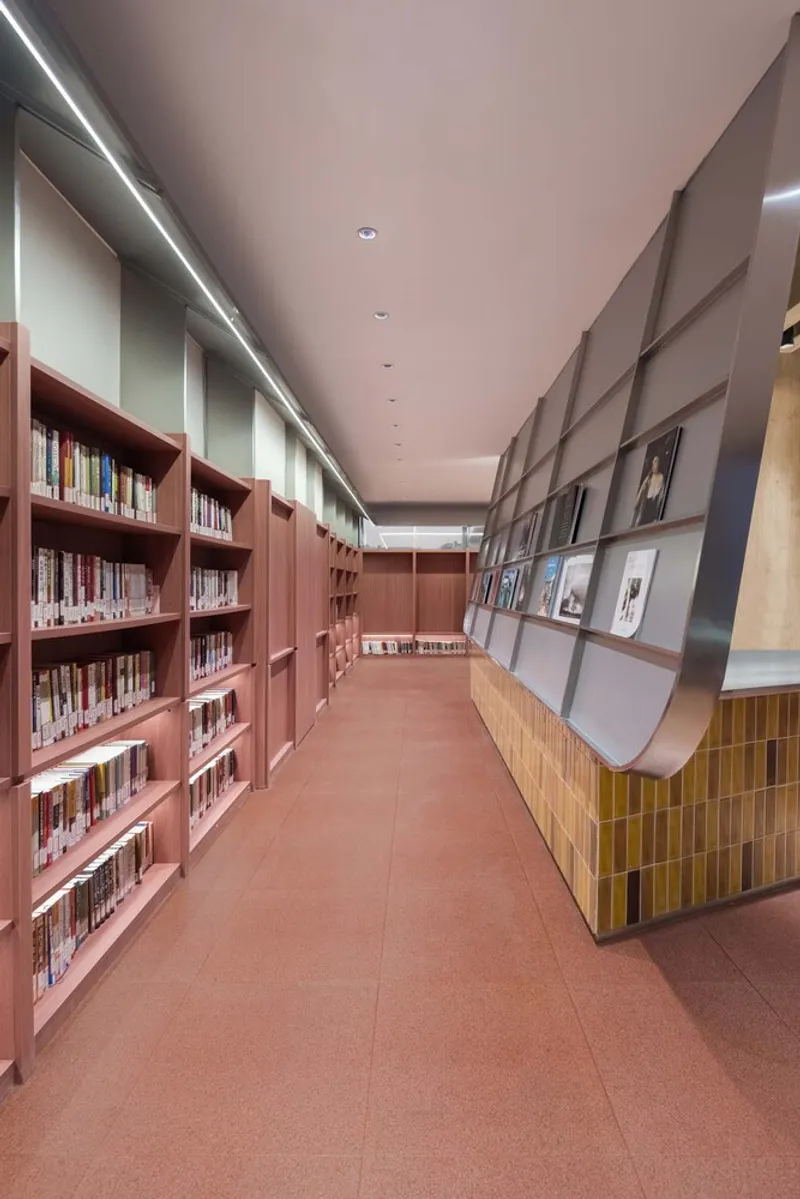
Bookshelves are integrated within the architecture, including cantilevered elements that hide lighting. Handmade glazed ceramic bricks and reddish-brown floor tiles blend seamlessly with the facade’s textures, reinforcing a unified, materially cohesive environment.


Engineering Renewal: Reinforced Infrastructure and New Life Cycle
The renovation extended beyond aesthetics and program. The building’s structural capacity was re-evaluated and strengthened to accommodate new functional loads, including a modern HVAC system, fire safety upgrades, and seismic reinforcements. Despite its contrast with nearby architecture, LI City Study maintains a respectful sense of proportion, creating a new civic landmark that feels both distinctive and contextually grounded.
Cultural Legacy and Urban Sustainability
In the broader context of China’s shift from expansion to stock renewal, the project offers a compelling model for adaptive reuse. Rather than erasing the past, it negotiates with it—preserving identity while responding to new urban realities. LI City Study has not only extended the building’s lifespan but enriched its cultural significance, proving that architecture can be both resource-efficient and emotionally resonant.

All photographs are works of Metaviz Studio



Popular Articles
Popular articles from the community


Co-Life: Senior Housing Design That Reconnects Older Adults With the City
Co-Life reimagines senior housing design through healing gardens, shared streets, workshops, and a sustainable community across generations.

Hill & Cross Opera: Sculptural Opera House Architecture Shaped by Tallinn’s Landscape and Identity
Hill & Cross Opera reimagines opera house architecture in Tallinn through its sculptural hill, civic plaza, glass wave and a luminous cross.

The Musturak Paradise: Senior Living Architecture for a Connected Future in Temara, Morocco
The Musturak Paradise reimagines senior living architecture in Temara via private homes, social spaces, culture, community, and shared care.

Conexión: Biophilic Design Reimagines High-Rise Living in Hong Kong
Conexión reimagines high-rise living in Hong Kong through biophilic design, green facades, shared spaces, daylight, water and nature within.

Similar Reads
You might also enjoy these articles


Hodi-Mandai Geram
Project Function: Preservation and revitalization of the Intangible heritage and socio-spatial identity of the Hodi by Housing, Cultural Memory Center, Sacred Grove, landscape, local tourism economy


Olio Towers: A Mid-Rise for Performers That Fuses Housing, Rehearsal, and Stage
Located blocks from Houston's Theater District, this modular tower stacks living units around a central performance atrium.

Oasis: Modular Green Housing Carved into Dhaka's Urban Fabric
A shortlisted Plugin Housing entry reclaims unauthorized settlements in Dhaka with stepped concrete volumes, green roofs, and ventilation-driven design.

Black Hole: A Floating Megastructure for the Post-Physical Era
Emiliano Mazzarotto envisions a spherical, self-scaling arena where e-sports, digital hotels, and holographic stadiums replace traditional public space.
Explore Architecture Competitions
Discover active competitions in this discipline



Challenge to design public laboratory


Challenge to reimagine the Iron Throne


Photograph architecture without architects


Illustrate the lost glory of Angkor Wat - Render Challenge
Comments (0)
Please login or sign up to add comments
No comments yet. Be the first to comment!