
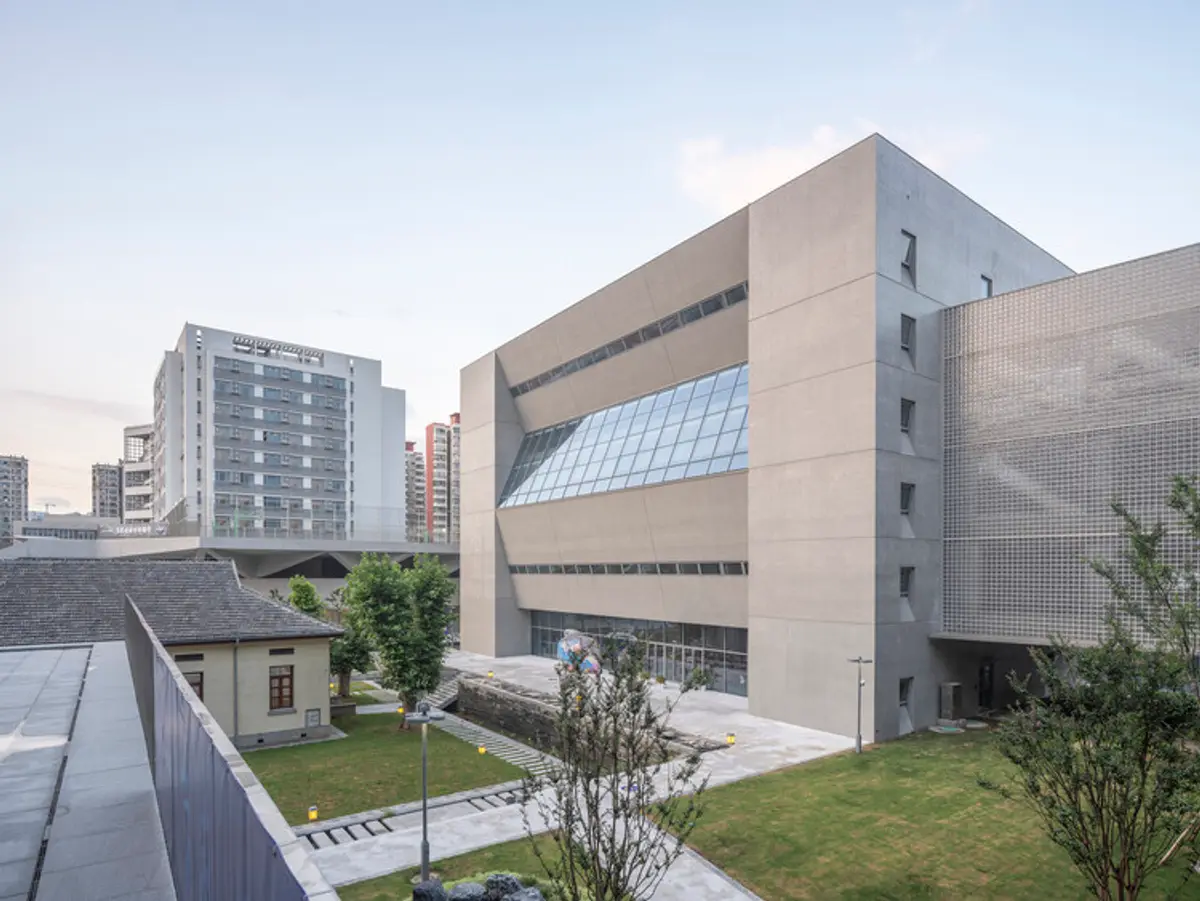
Library of the High School Affiliated to Nanjing Normal University, Xiaozhuang Campus By Atelier FCJZ | Innovative Vertical Learning Spaces in Nanjing, China
The Xiaozhuang Campus Library by Atelier FCJZ blends vertical design, open learning spaces, and nature integration for a modern educational experience.


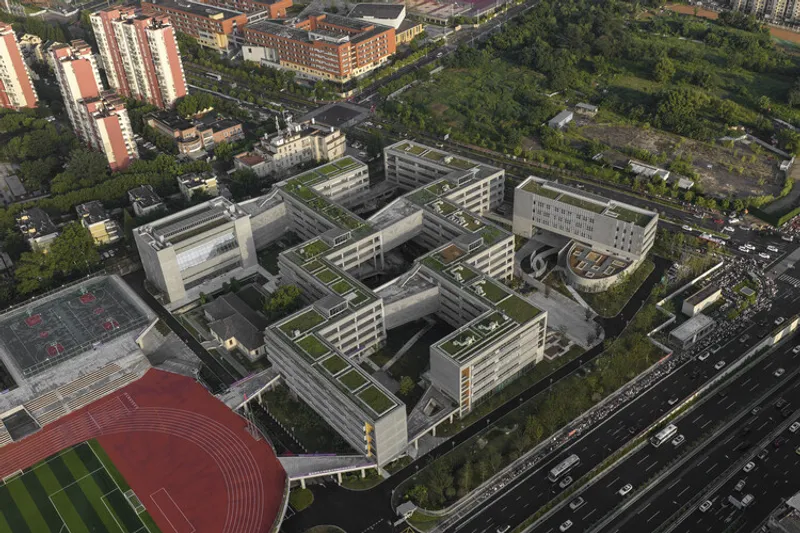
The Library of the High School Affiliated to Nanjing Normal University, Xiaozhuang Campus, designed by Atelier FCJZ, exemplifies contemporary educational architecture that balances high-density campus planning, spatial innovation, and seamless integration with nature. Located on a 66,700 m² site with a total building area of approximately 95,000 m², the campus accommodates 42 classes in a compact footprint while preserving historical structures, mature trees, and semi-outdoor spaces.
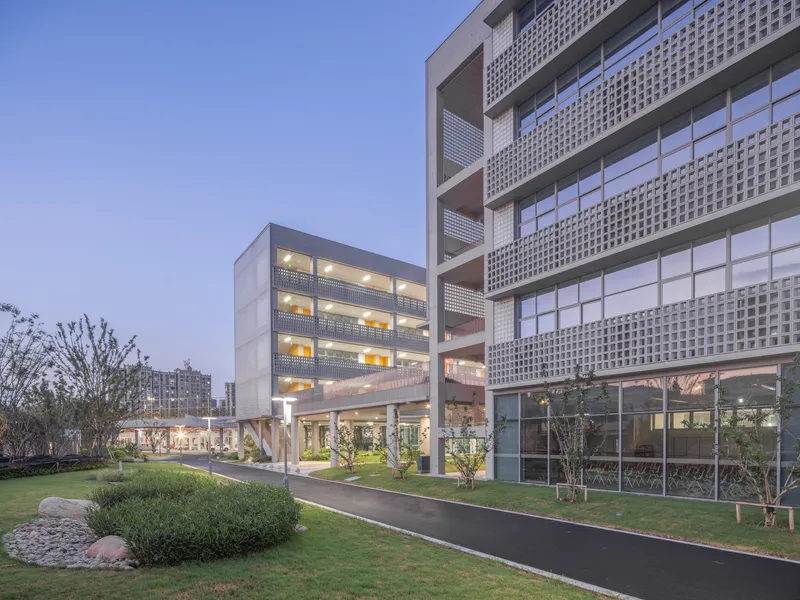
High-Density Vertical Campus Design
Constrained by land availability, the master plan organizes the campus around the heritage structure of the former Second Communication Station of the Republic of China Air Force. Adjacent mature trees form the nucleus of a central landscape, with the southern side dedicated to academic and administrative functions, and the northern side accommodating living and sports facilities.
The 400-meter running-track sports field on the western edge is structurally elevated, optimizing space below. This multi-use podium houses a parent drop-off zone, semi-sunken natatorium, indoor basketball court, training hall, and all-weather running track. Elevated platforms provide students and staff with expansive views across the dense urban setting, encouraging physical activity and relaxation during breaks.
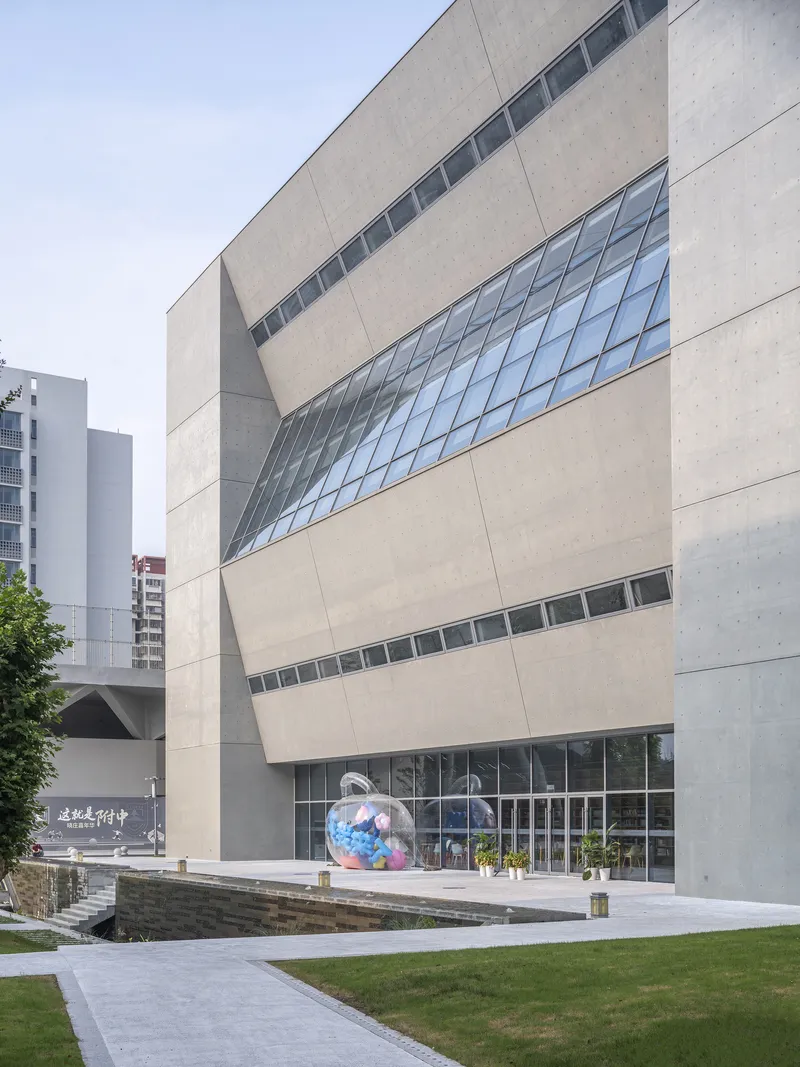
Academic Buildings and Courtyards
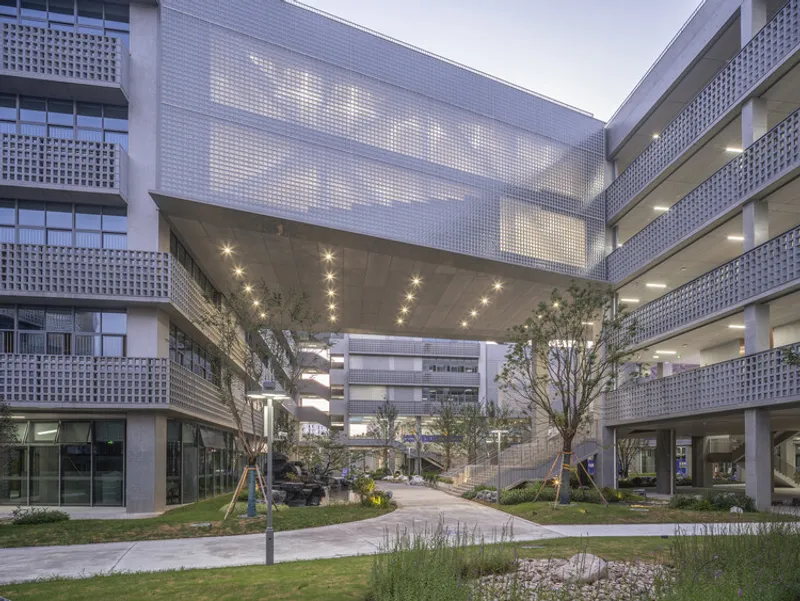
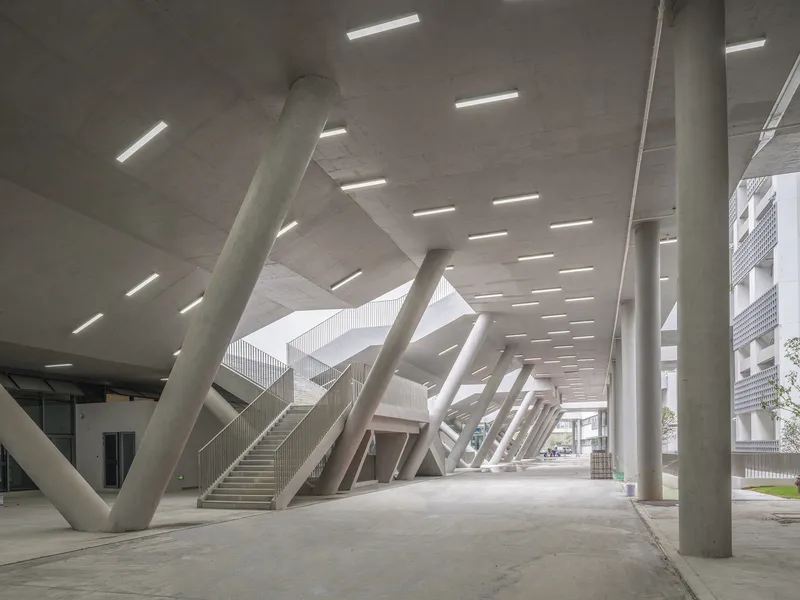
The academic buildings to the south adopt a zigzag configuration around the heritage structure, forming five semi-enclosed courtyards. Elevated ground floors allow free movement between courtyards, creating visual connections between entrances and fostering an interactive campus environment. Green landscapes extend into elevated and sunken semi-outdoor areas, providing versatile venues for outdoor learning.
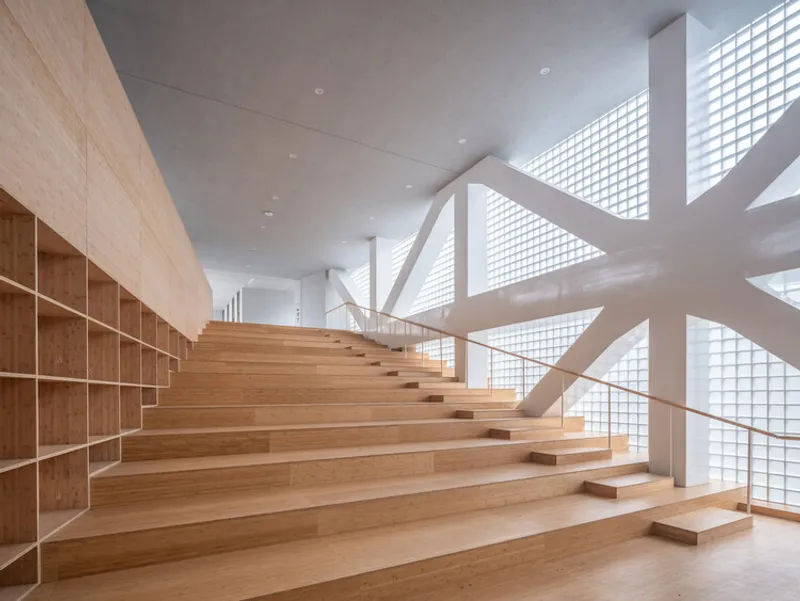
Bridges and open platforms connect upper floors, extending the public realm vertically. Features such as atriums, open staircases with resting areas, terrace classrooms, and wide corridors promote self-directed learning and informal interaction among students.
The Open School Library
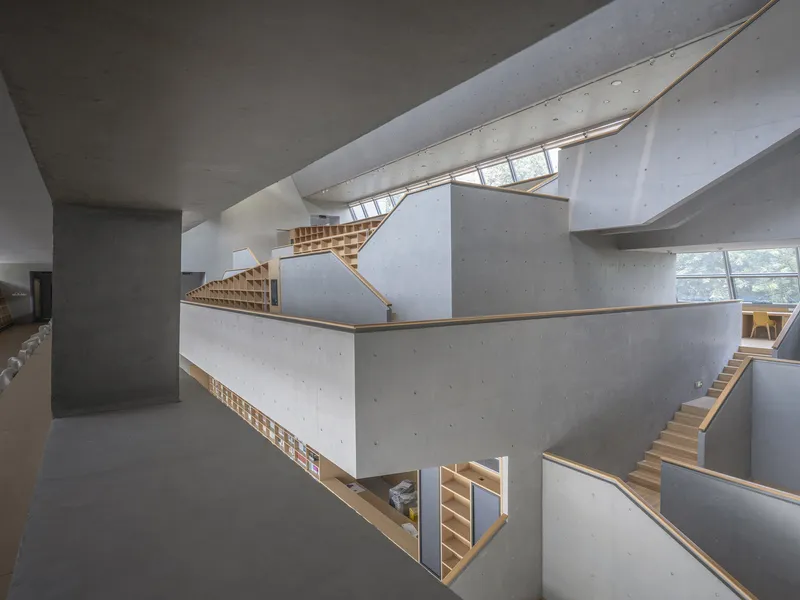
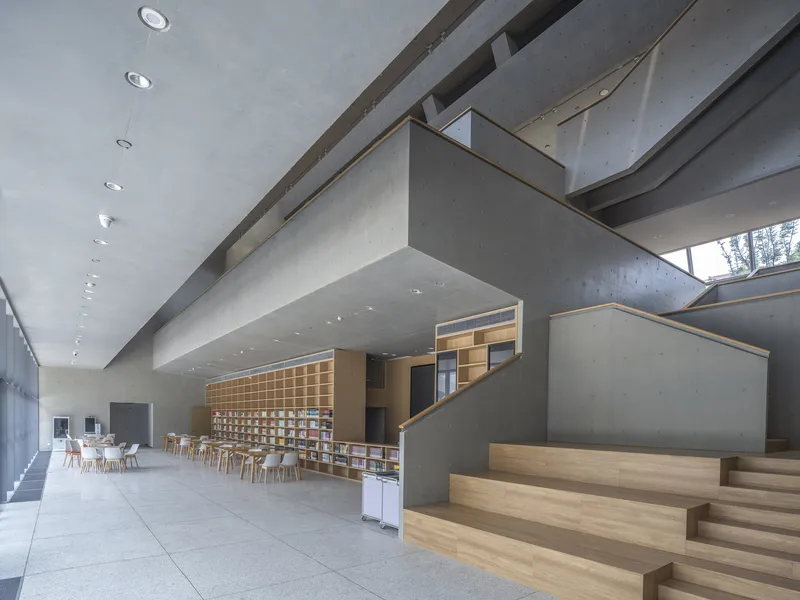
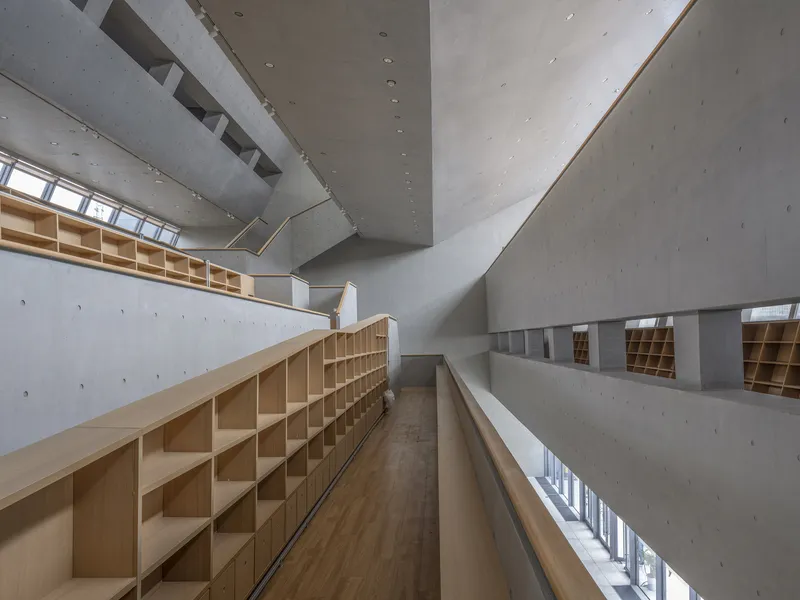
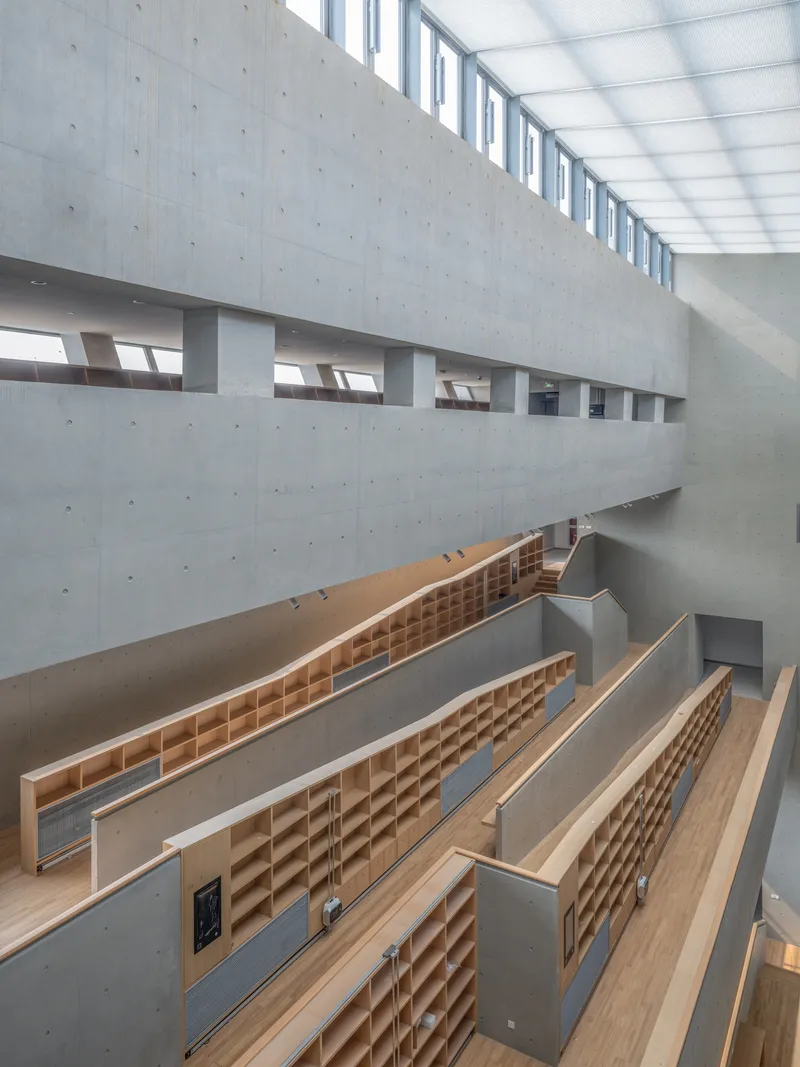
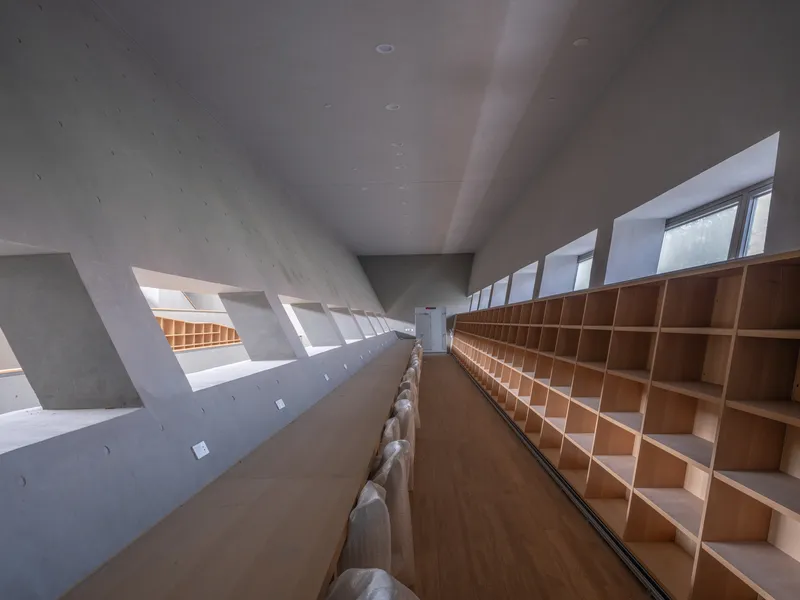
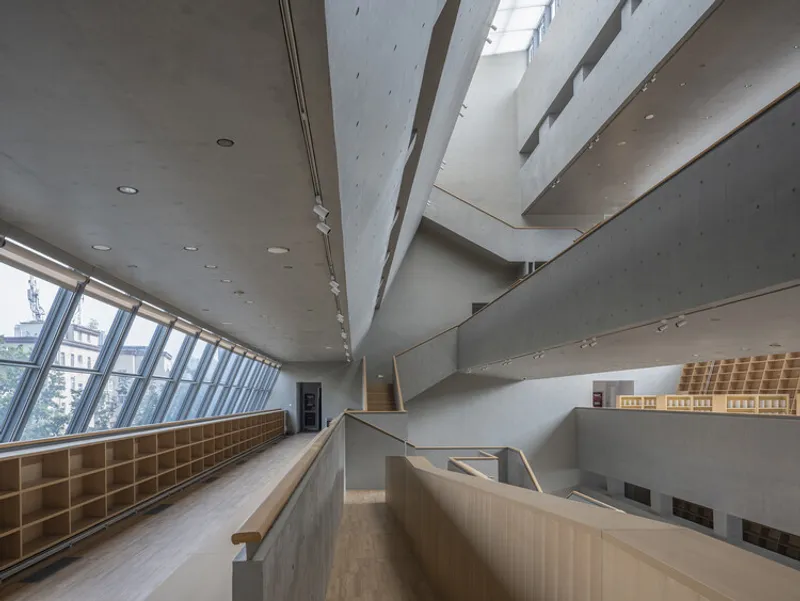
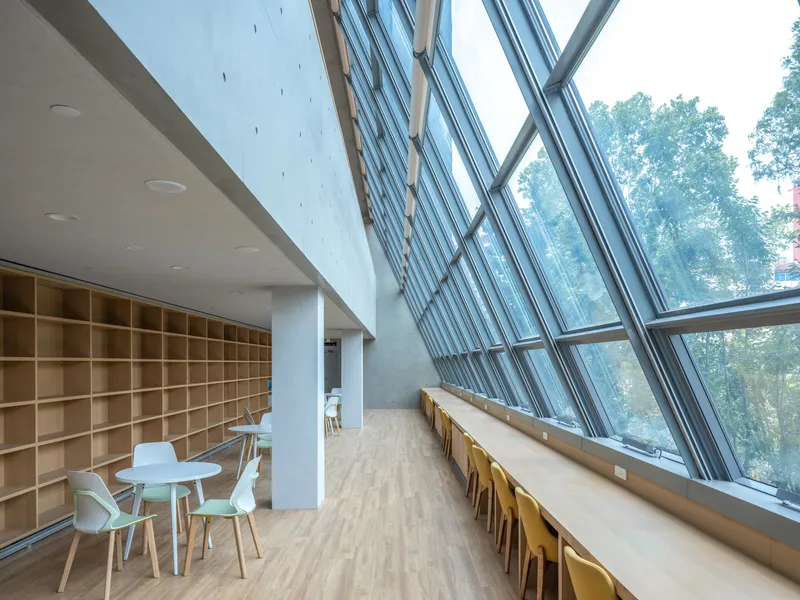
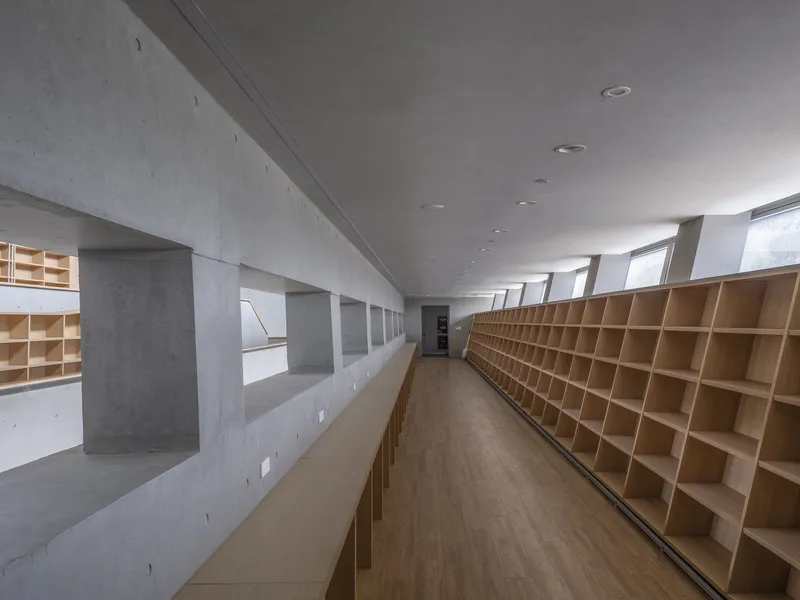
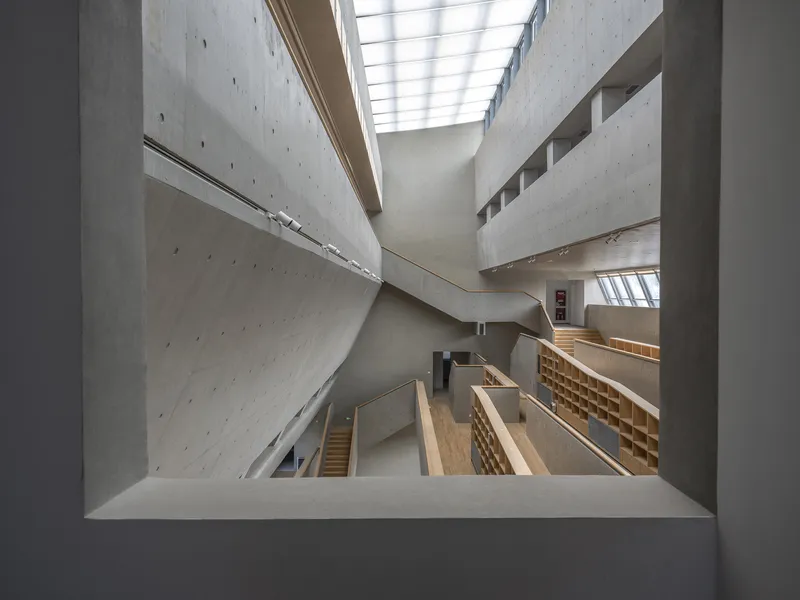
Situated east of the heritage plaza, the 3,800 m² library embodies the “open school” concept. Departing from traditional floor plates, the design interweaves five large-span tubular and terraced reading volumes within a central atrium. This layout creates diverse reading environments, including semi-enclosed spaces and open terraces, catering to faculty, students, and collaborative activities.
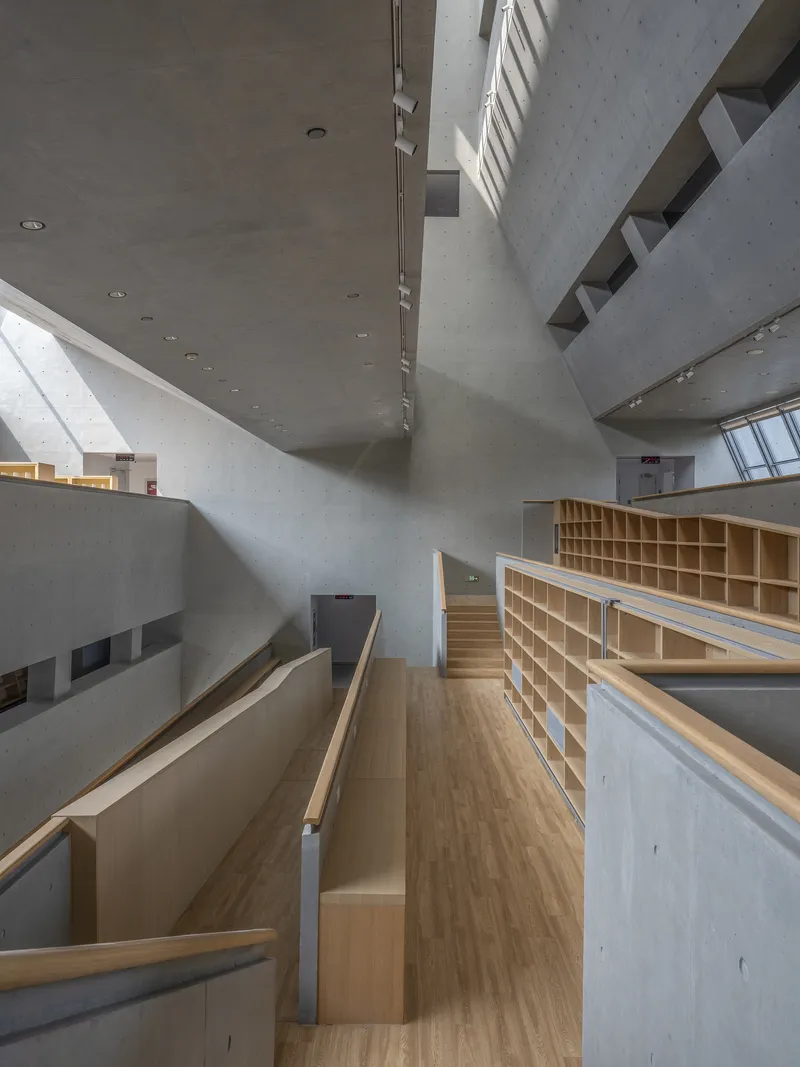
A central skylight introduces natural light into the atrium, which diffuses across multiple surfaces to produce a layered, luminous atmosphere. A continuous “wandering path” connects ground-floor entrances, book areas, service desks, reading bleachers, multi-level student platforms, and a top-floor digital reading room. Gently sloped ramps ensure accessible circulation throughout the library.
Structural and Material Integration
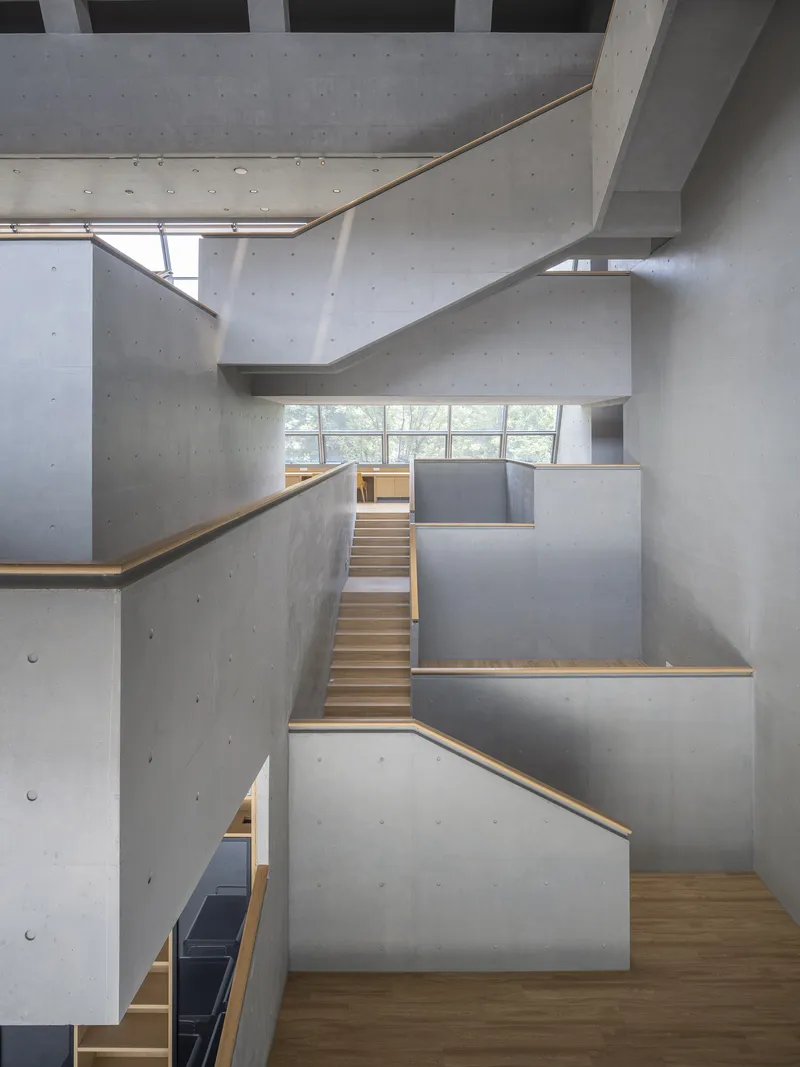
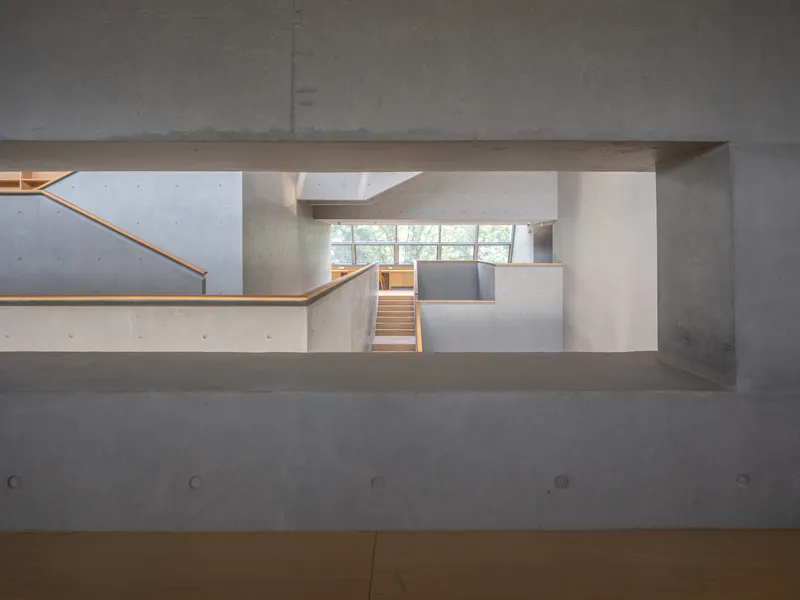
The library’s fair-faced concrete, poured using ply-bamboo formwork, functions as both structure and finish, defining the spatial character. Warmth is added through solid wood flooring, handrails, and bookshelves, creating sculptural interiors with tactile intimacy.
Building services are seamlessly integrated within the structural framework. Pipes, ducts, and air outlets are routed through voids in the long-span structure or incorporated into bookshelves, desks, and railings, unifying architecture, structure, and services.
Advanced Design and Construction
The project heavily relies on sectional design to coordinate spatial composition, structural requirements, and service integration. Full-scale BIM and Revit modeling during construction ensured precise execution of complex spaces and high-quality fair-faced concrete finishes. The result is a library that merges vertical density, openness, and interaction with nature, fostering an enriched learning environment for students and faculty alike.


Popular Articles
Popular articles from the community


Manzana Morphosis: Stretching Barcelona's Grid into a Living Landscape for 2050
A radical reworking of the Eixample manzana turns density into a tool for generous public space, vertical ecology, and environmental performance.
Temporary Home for Dogs: A Reversed Zoo Rethinks Animal Shelter Architecture
In Bucharest, a sinuous corridor and freed landscape flip the logic of containment, designing a shelter that works to make itself unnecessary.

The Amber Palace Opera: A Geological Fiction Surfaces on Tallinn's Baltic Waterfront
Pierre Brillard reimagines a Baltic legend as a public landscape, opera house, and waterfront promenade rooted in Tallinn's coastal identity.

Opera by the Sea Estonia: Three Shells Dissolving Architecture into Tallinn's Coastline
A winning opera house proposal replaces monumental form with interconnected shells that blur the boundary between building, park and Baltic Sea.

Similar Reads
You might also enjoy these articles


Hodi-Mandai Geram
Project Function: Preservation and revitalization of the Intangible heritage and socio-spatial identity of the Hodi by Housing, Cultural Memory Center, Sacred Grove, landscape, local tourism economy


Olio Towers: A Mid-Rise for Performers That Fuses Housing, Rehearsal, and Stage
Located blocks from Houston's Theater District, this modular tower stacks living units around a central performance atrium.

Oasis: Modular Green Housing Carved into Dhaka's Urban Fabric
A shortlisted Plugin Housing entry reclaims unauthorized settlements in Dhaka with stepped concrete volumes, green roofs, and ventilation-driven design.

Black Hole: A Floating Megastructure for the Post-Physical Era
Emiliano Mazzarotto envisions a spherical, self-scaling arena where e-sports, digital hotels, and holographic stadiums replace traditional public space.

Explore Zhejiang University Of Tech Competitions
Discover active competitions in this discipline

Challenge to design public laboratory

Challenge to reimagine the Iron Throne

Photograph architecture without architects

Illustrate the lost glory of Angkor Wat - Render Challenge
Comments (0)
Please login or sign up to add comments
No comments yet. Be the first to comment!