

Light Around a Courtyard: ESPAI HB Office, Algemesí by HB Estudi d'Arquitectura
A former warehouse transformed into a luminous office, organized around a central courtyard that brings light, comfort, and material clarity.


ESPAI HB Office emerges from the transformation of a former warehouse into a bright, open, and welcoming workspace for HB Estudi d’Arquitectura. Located at ground level and originally deprived of natural light, the project responds to a clear necessity: to create a spacious, comfortable, and pleasant environment that reflects the studio’s architectural values while respecting the character of the existing structure.
Reimagining a Warehouse as a Luminous Workplace
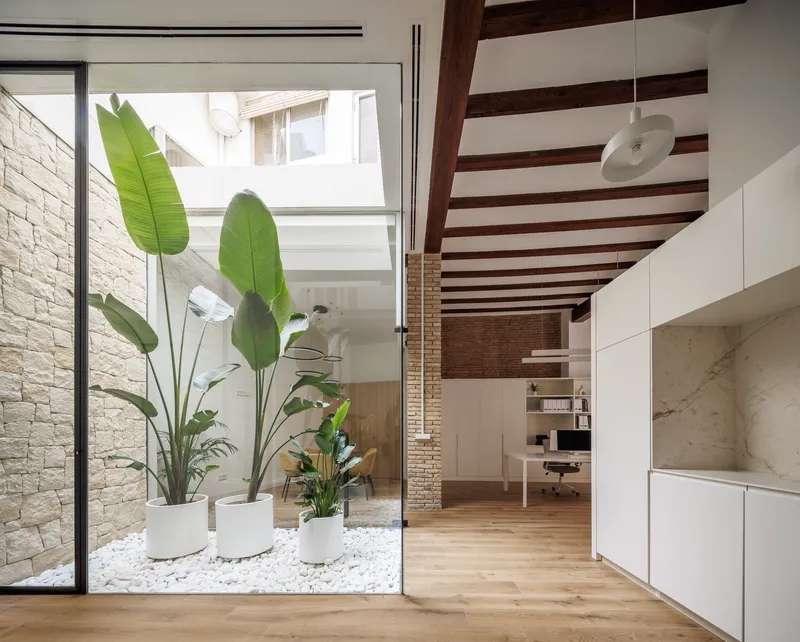
Rather than erasing the past, the intervention embraces it. The design carefully rehabilitates the space, balancing preservation and contemporaneity to produce an office that is both functional and atmospheric.
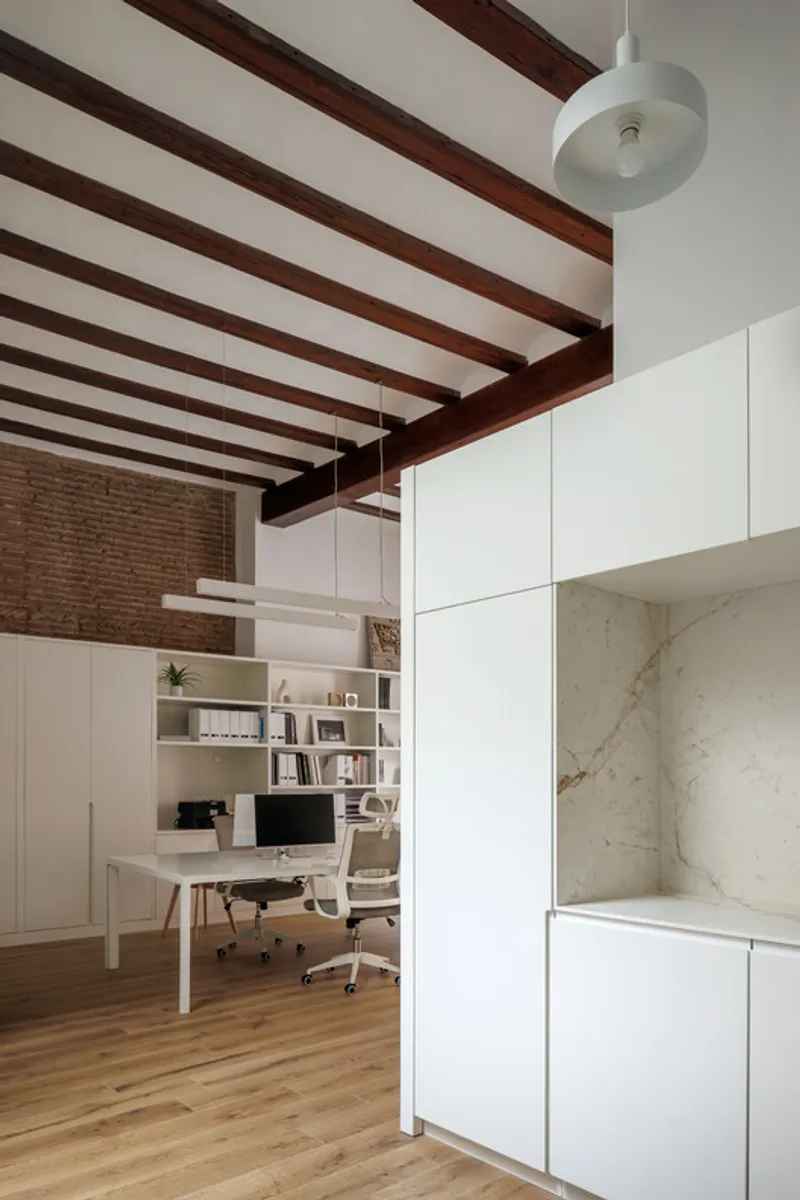
A Courtyard as the Organizing Core
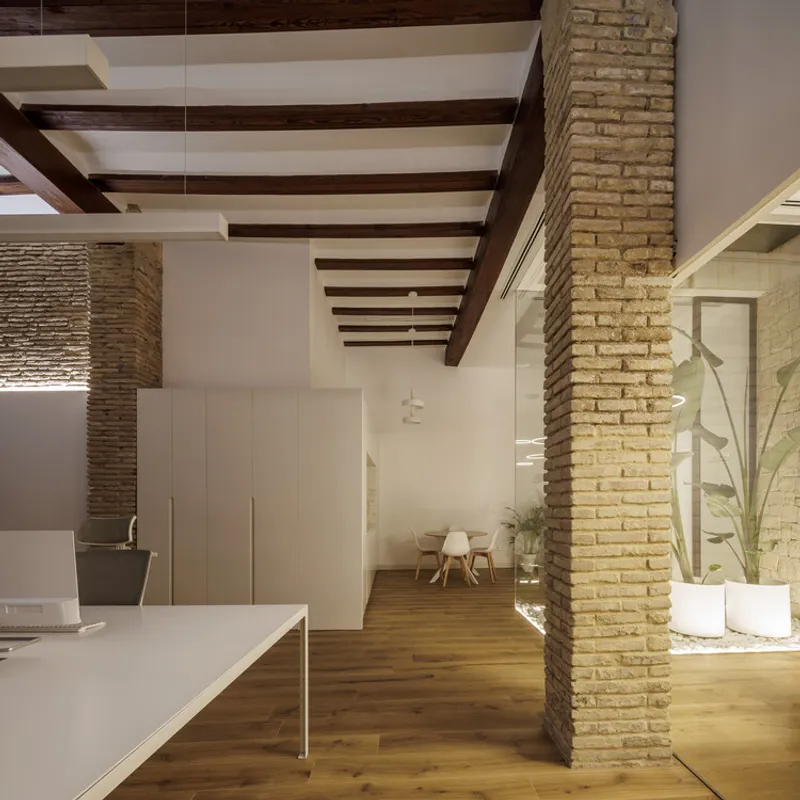
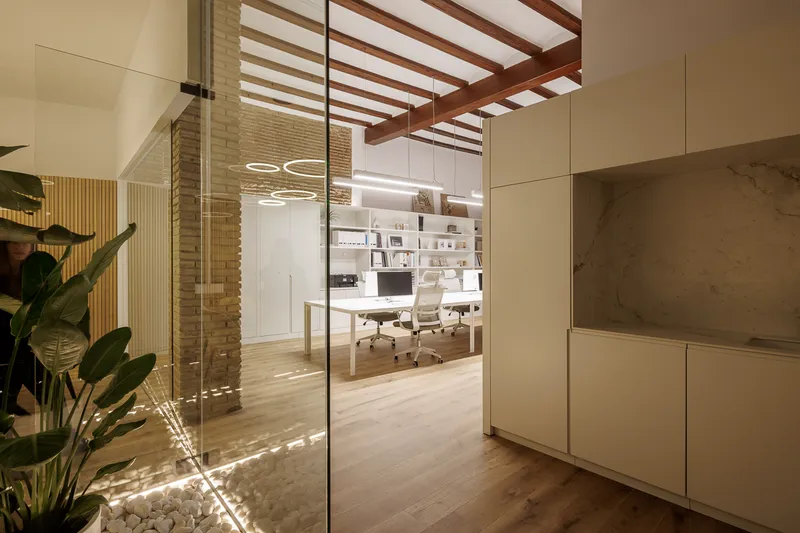
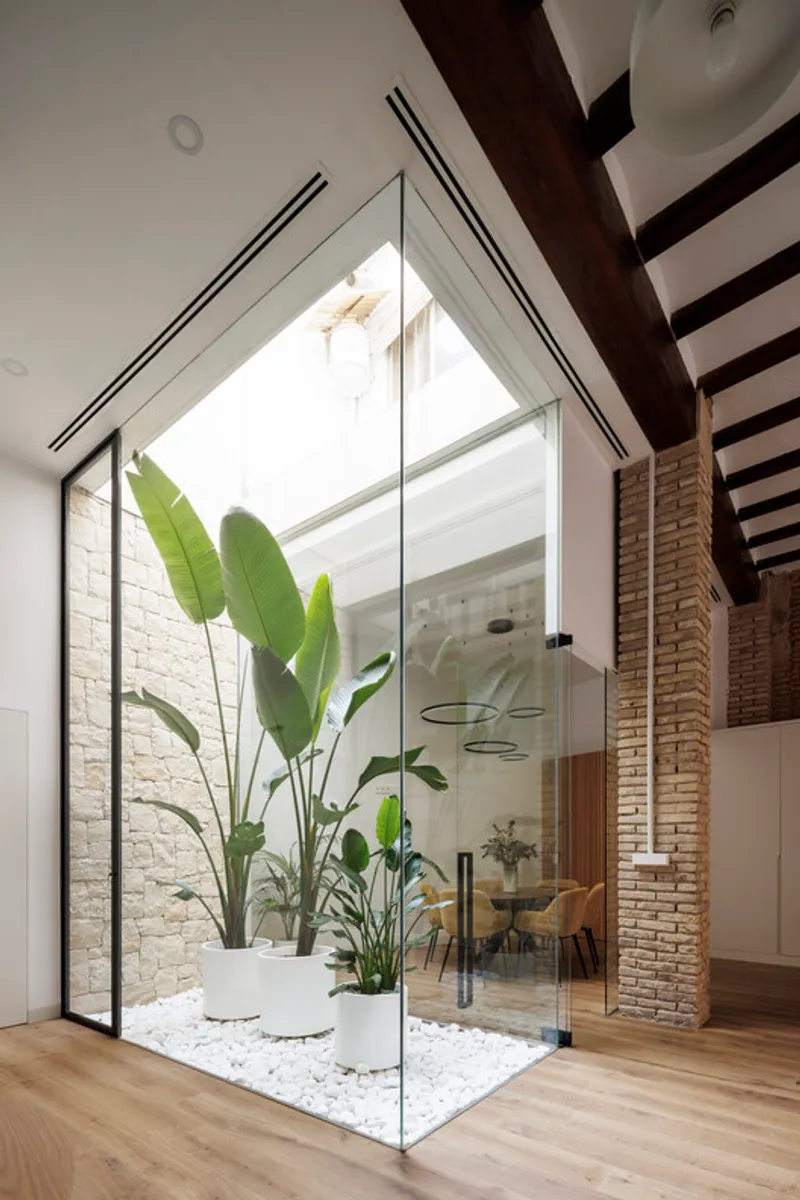
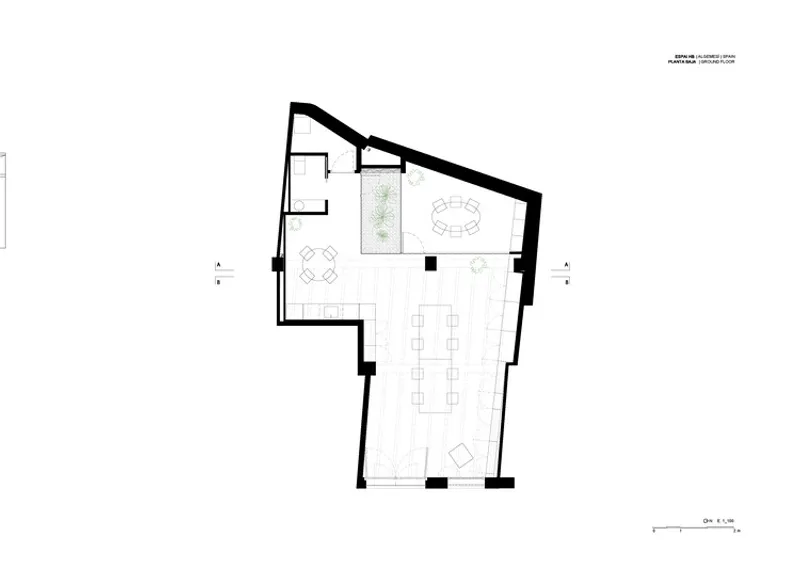
The spatial organization revolves around a central courtyard, which becomes the heart of the project. This void is the primary source of natural light, ensuring that daylight reaches all areas of the office despite its deep plan and ground-floor position. Every function is articulated around this courtyard, establishing a sense of openness and continuity.
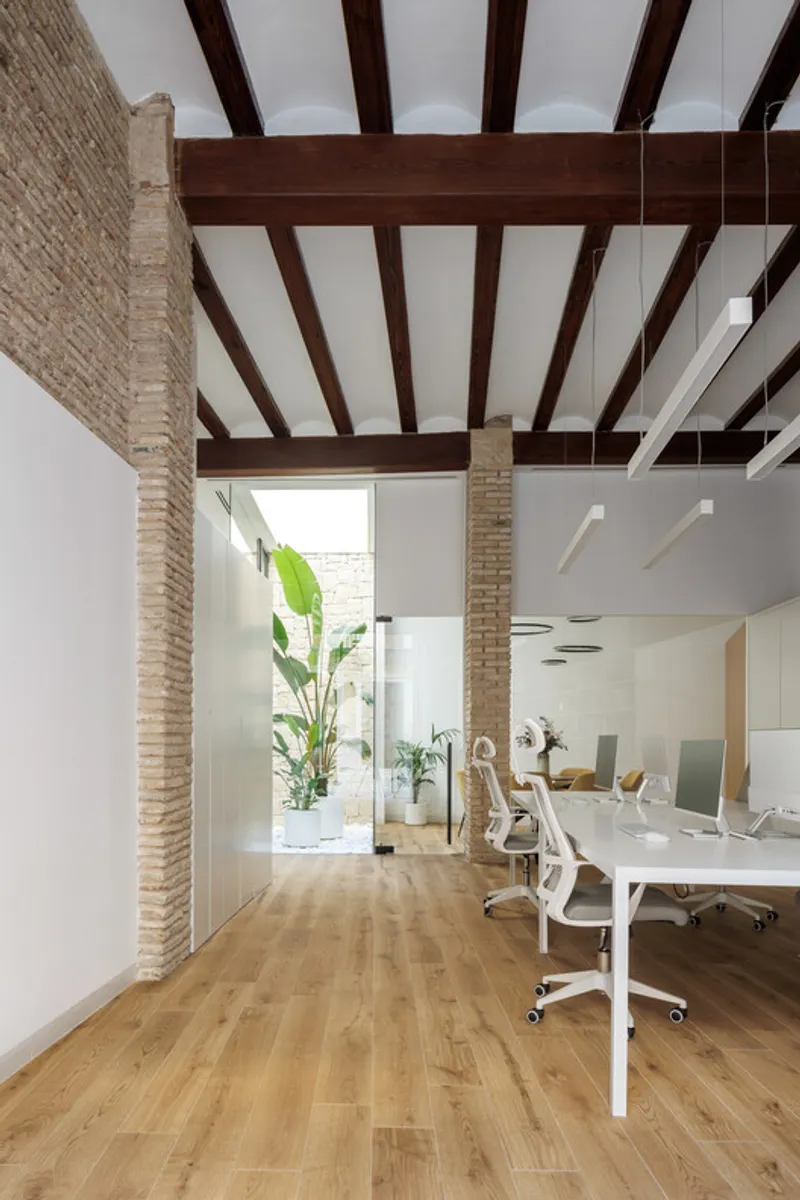
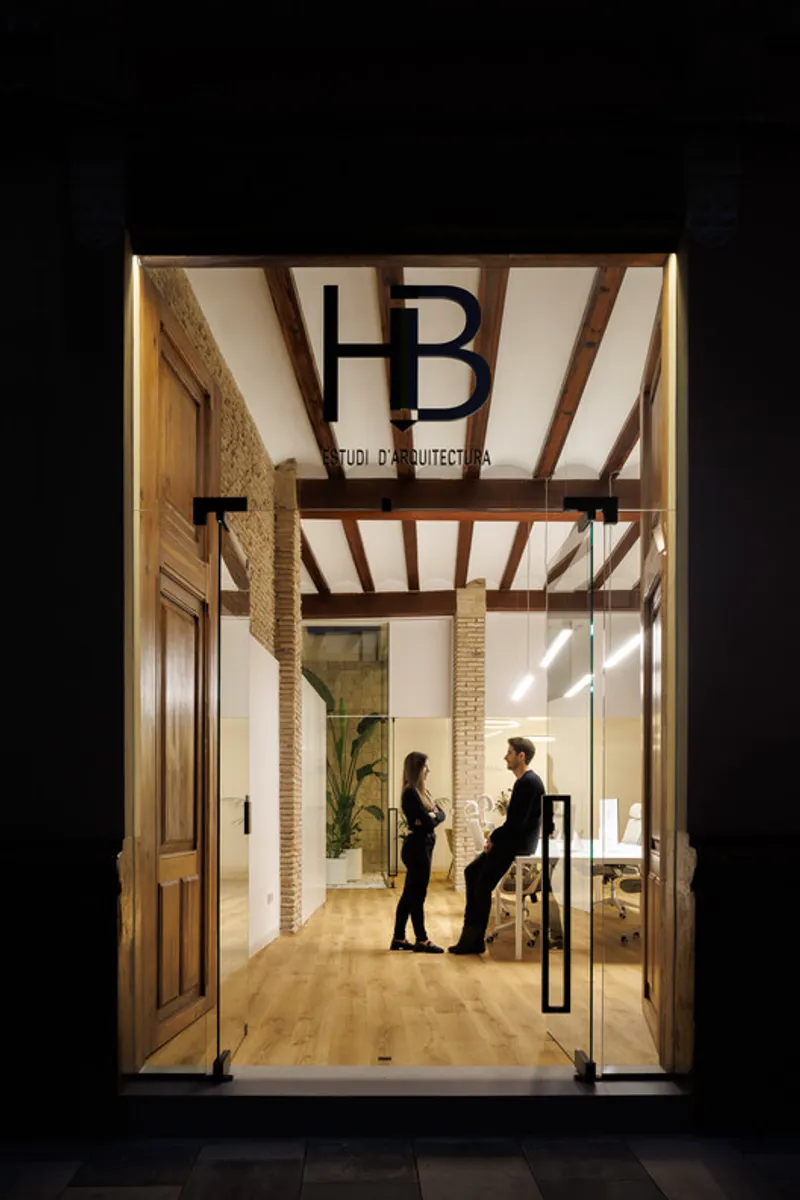
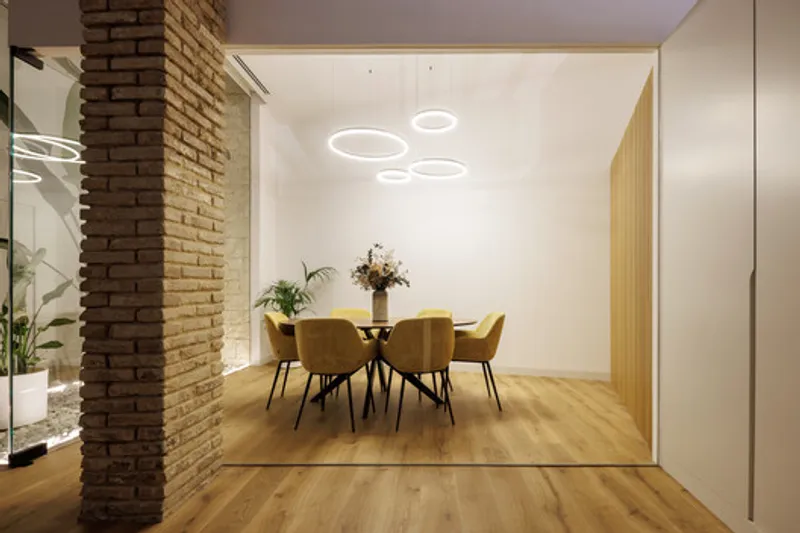
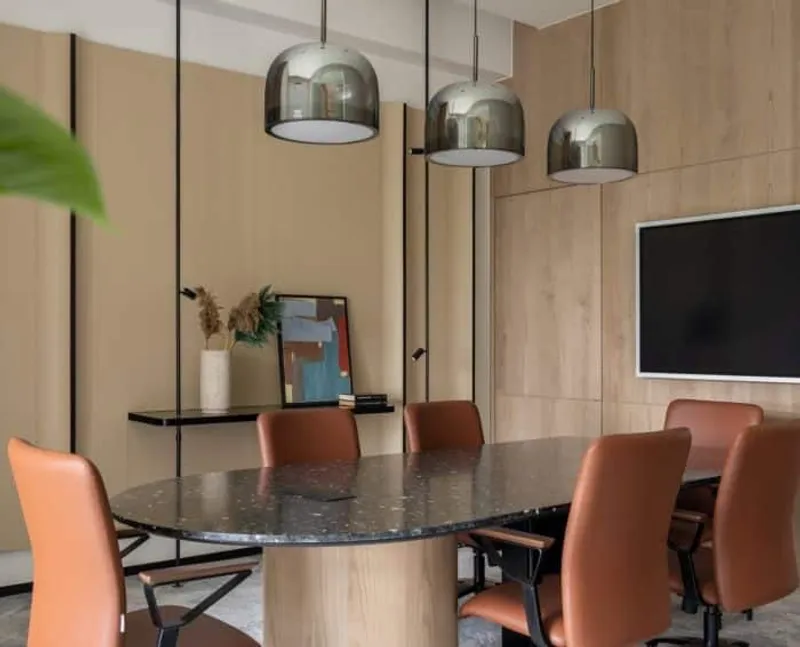
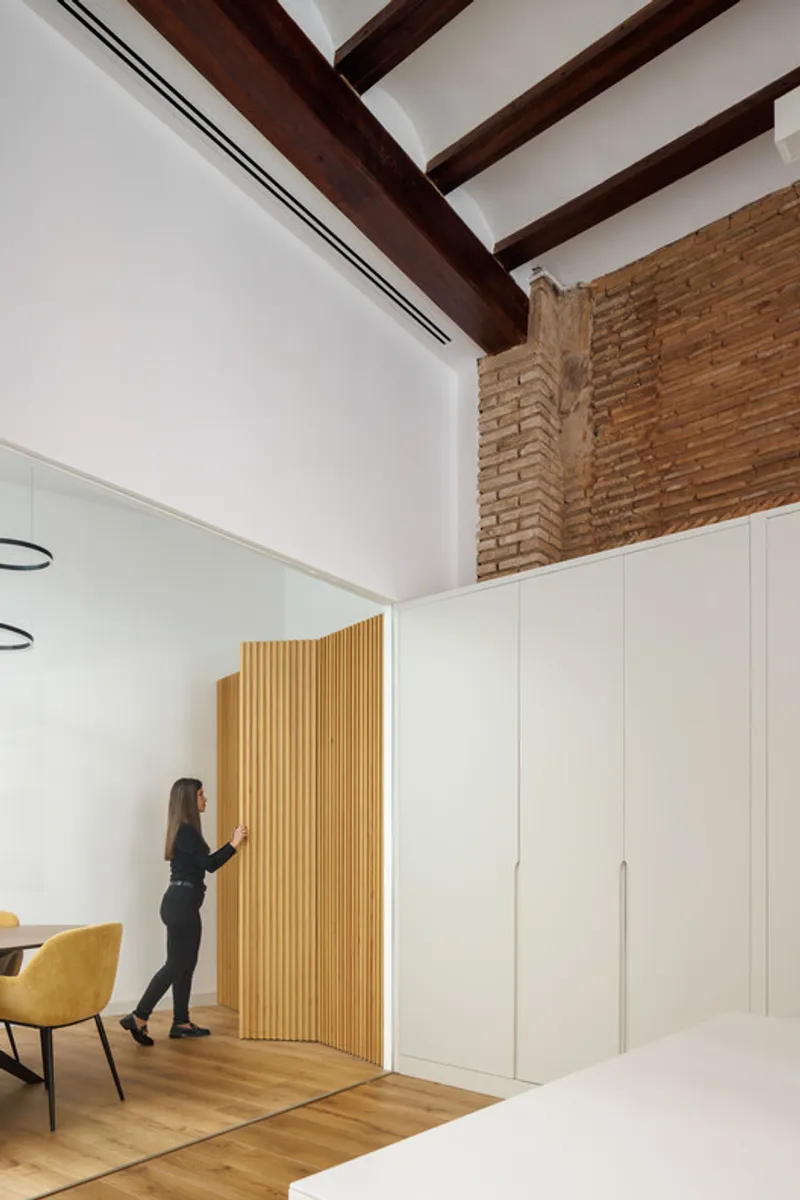
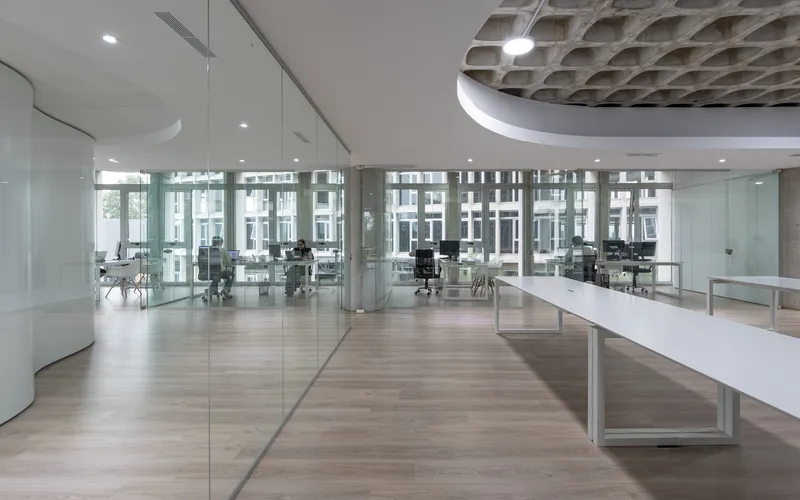
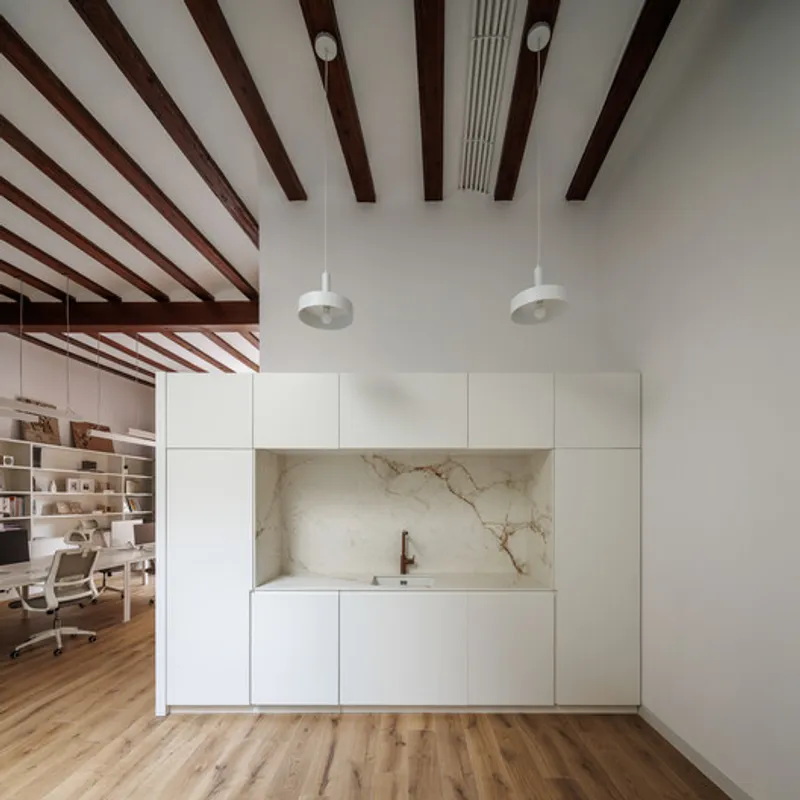
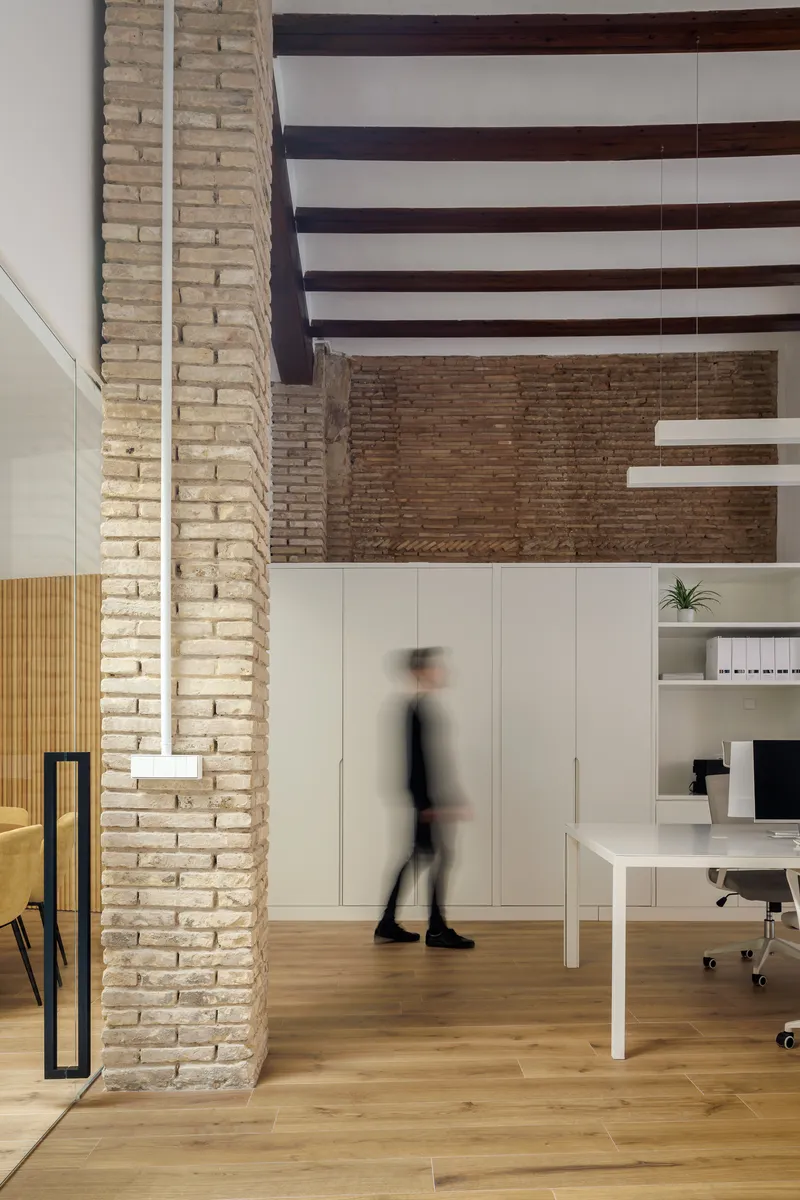
The layout avoids rigid separations. Workspaces flow into one another without partitions, fostering collaboration and visual connection. A central work area connects directly to a meeting room, while auxiliary functions, such as a compact kitchen, are positioned discreetly to support moments of rest and informal interaction throughout the working day.
Materiality Rooted in Memory
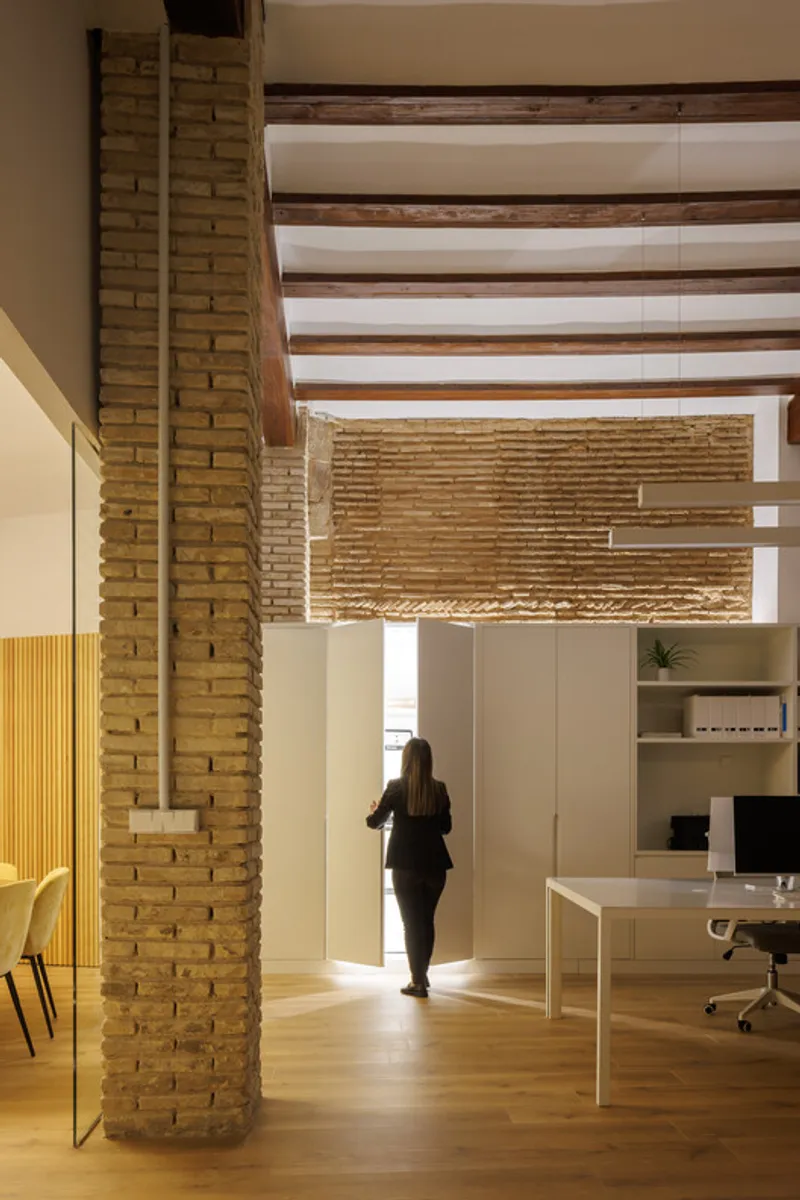
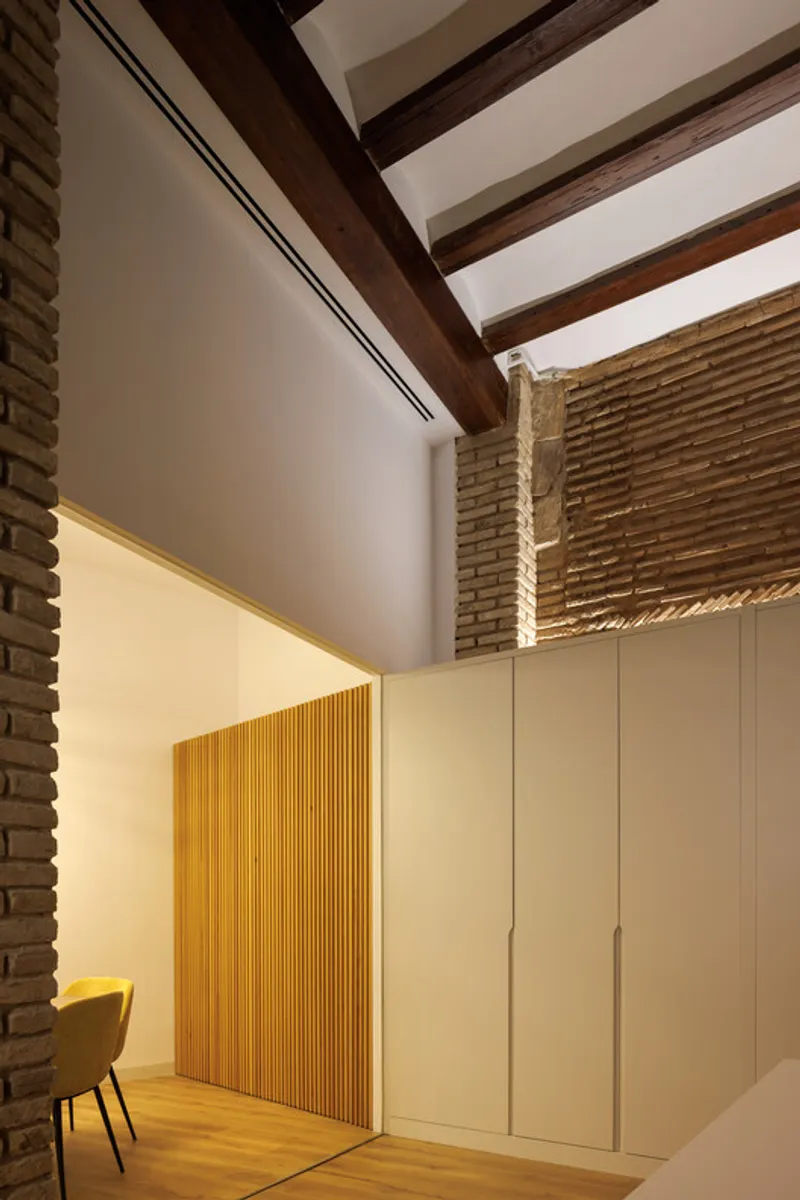
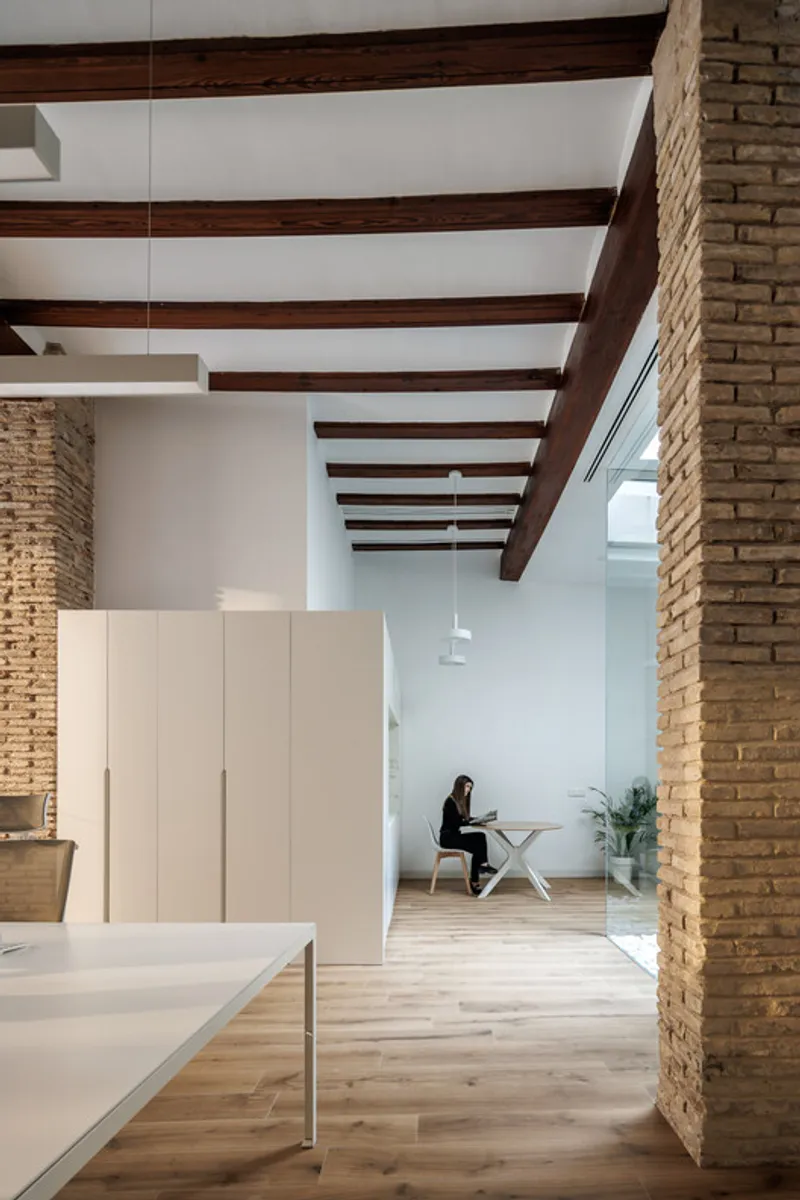
Material expression plays a fundamental role in defining the identity of ESPAI HB Office. From the outset, the project prioritizes respect for existing materials, preserving and exposing original wooden beams, joists, and masonry walls. These elements anchor the space to its industrial past, revealing layers of history through texture and construction.
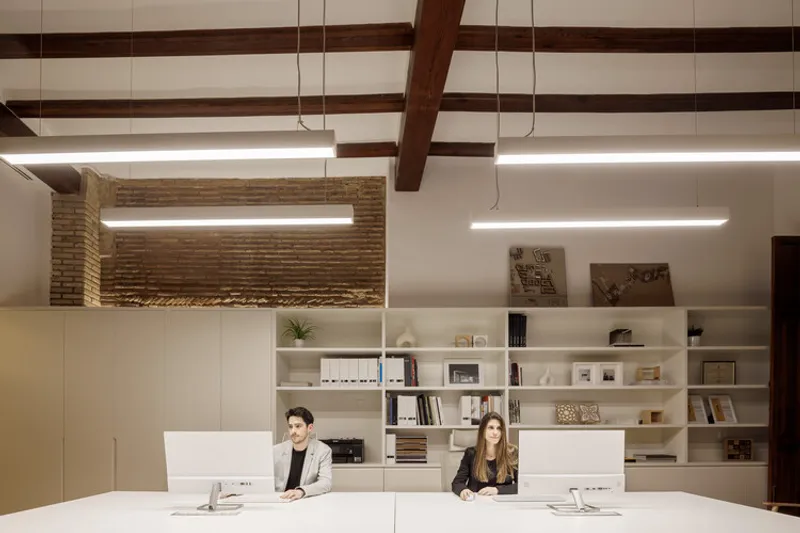
New materials are introduced with restraint, creating a subtle dialogue between old and new. A horizontal plane, almost imperceptible yet sensorially present, marks the transition between original and contemporary interventions. This material binomial reflects HB Estudi’s architectural ethos: honoring heritage while embracing current architectural language.
Light as Design Medium
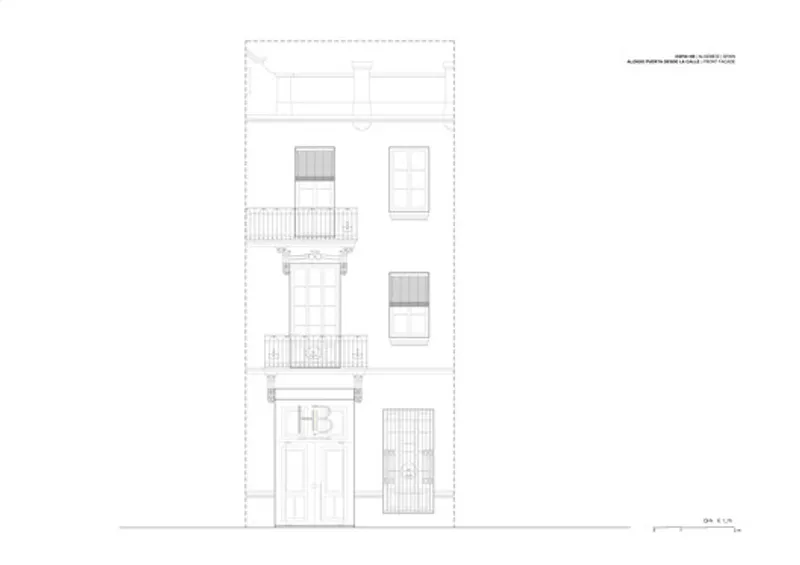
Light is the true protagonist of the project. What was once a dark warehouse is transformed into a luminous workspace through a combination of natural and artificial lighting strategies. The courtyard bathes the interior with daylight, while a secondary glass door at the entrance allows the original wooden door to remain open during working hours, drawing additional light deep into the office.
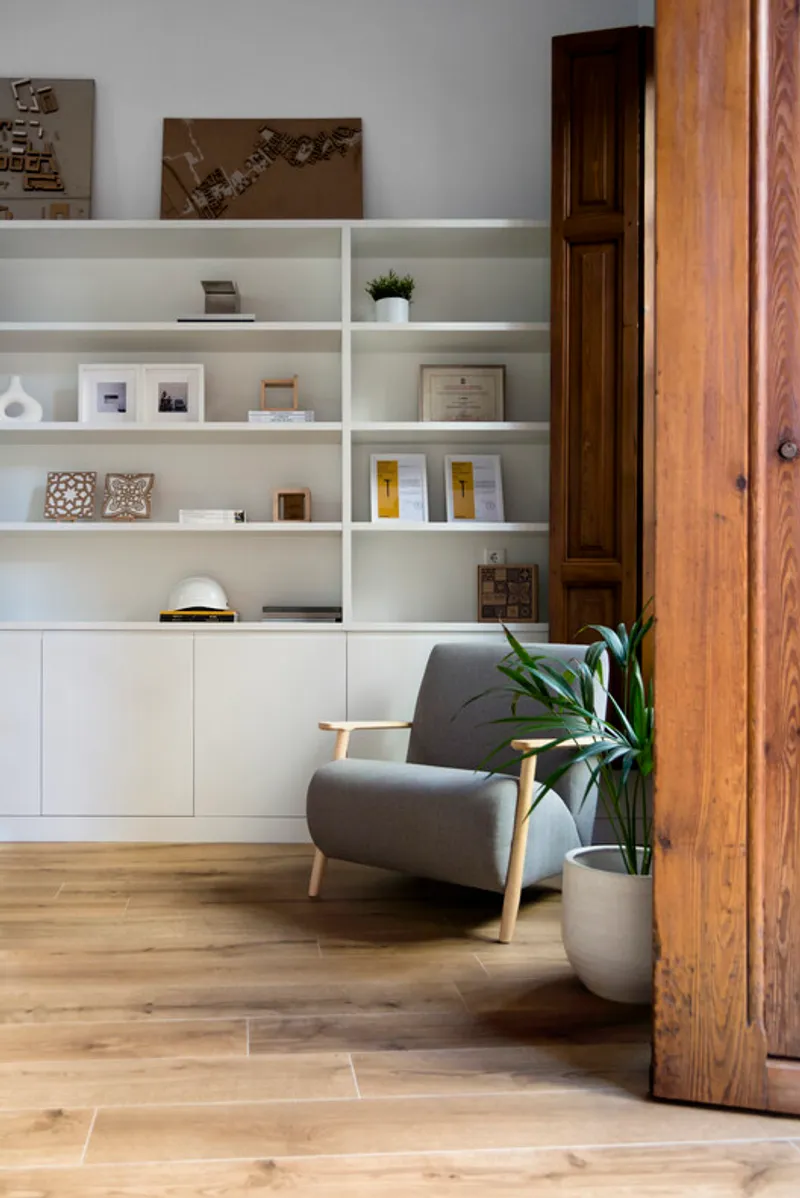
Artificial lighting is carefully calibrated to complement daylight. Indirect light highlights the textures of exposed brick and timber, enhancing the tactile quality of the space without visual intrusion. The result is a calm, evenly lit environment that supports concentration and wellbeing.
Comfort Through Invisible Systems
Comfort underpins every design decision. Environmental systems are integrated discreetly, ensuring thermal comfort throughout the year without disturbing the visual clarity of the space. Aerothermal energy provides an efficient and sustainable solution, combining air conditioning for summer cooling with underfloor heating for winter warmth.
These systems operate quietly in the background, reinforcing the idea that a well-designed workspace should feel effortless: comfortable, healthy, and adaptable to daily use.
A Contemporary Workspace with Soul
ESPAI HB Office is more than a workplace; it is a spatial manifesto. By centering the design on light, material honesty, and comfort, the project demonstrates how adaptive reuse can produce environments that are both contemporary and deeply rooted in place. The office embodies HB Estudi d’Arquitectura’s commitment to thoughtful rehabilitation, where architecture enhances daily experience without losing sight of its origins.
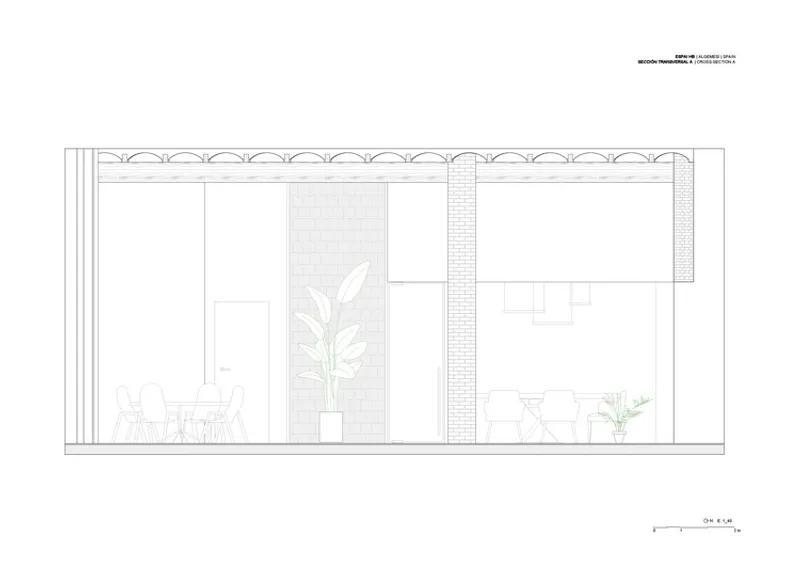
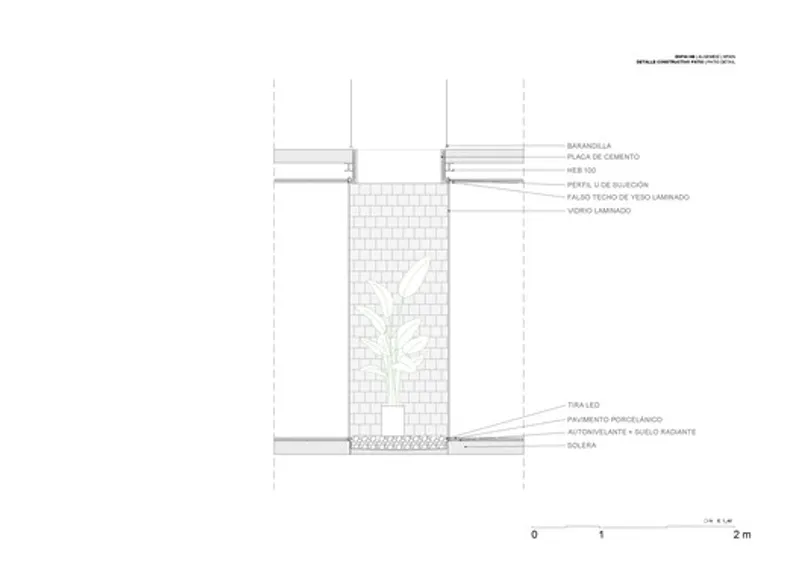
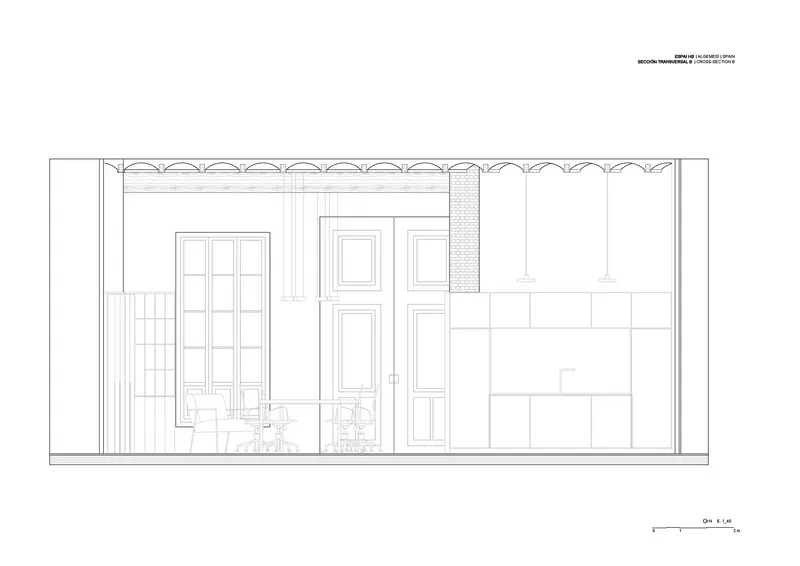
All the Photographs are works of Alejandro Gómez Vives


Popular Articles
Popular articles from the community


Architekt Andreas Gruber Scatters 23 Dark Timber Chalets Across a South Tyrolean Forest Edge
In Molini di Tures, Amonti Chalets breaks a resort into a hamlet of gabled timber houses, with parking, storage and services pushed into the slope.

Cube Design Draws an Ecological Corridor Between Two Shenzhen Hills with the Nankai Building
Beside Shenzhen's container docks, the Nankai Building pairs stacked balconies with a climbing green screen to connect two hillsides across its height.

Juan García Correa, John González and Claudia Rueda Sink a Circular Amphitheater into a Manizales Engineering Building
On the La Nubia campus in Manizales, Colombia, the S1 Building folds labs and offices into a hillside of ramped lawns that double as a campus route.

Jaramillo Van Sluys Arquitectura and Urbanismo Turn a Demolished Registry Lot in Quito into an Orchard Plaza
In Quito's Centro Histórico, a 2,800 m² plaza exposes the San Agustín convent wall and redraws its lost Augustinian orchard in volcanic stone.

Similar Reads
You might also enjoy these articles


Hodi-Mandai Geram
Project Function: Preservation and revitalization of the Intangible heritage and socio-spatial identity of the Hodi by Housing, Cultural Memory Center, Sacred Grove, landscape, local tourism economy


Olio Towers: A Mid-Rise for Performers That Fuses Housing, Rehearsal, and Stage
Located blocks from Houston's Theater District, this modular tower stacks living units around a central performance atrium.

Oasis: Modular Green Housing Carved into Dhaka's Urban Fabric
A shortlisted Plugin Housing entry reclaims unauthorized settlements in Dhaka with stepped concrete volumes, green roofs, and ventilation-driven design.

Black Hole: A Floating Megastructure for the Post-Physical Era
Emiliano Mazzarotto envisions a spherical, self-scaling arena where e-sports, digital hotels, and holographic stadiums replace traditional public space.

Explore Office Building Competitions
Discover active competitions in this discipline

Challenge to reimagine the Iron Throne

Photograph architecture without architects

Illustrate the lost glory of Angkor Wat - Render Challenge

Design challenge to reuse E-waste
Comments (0)
Please login or sign up to add comments
No comments yet. Be the first to comment!