
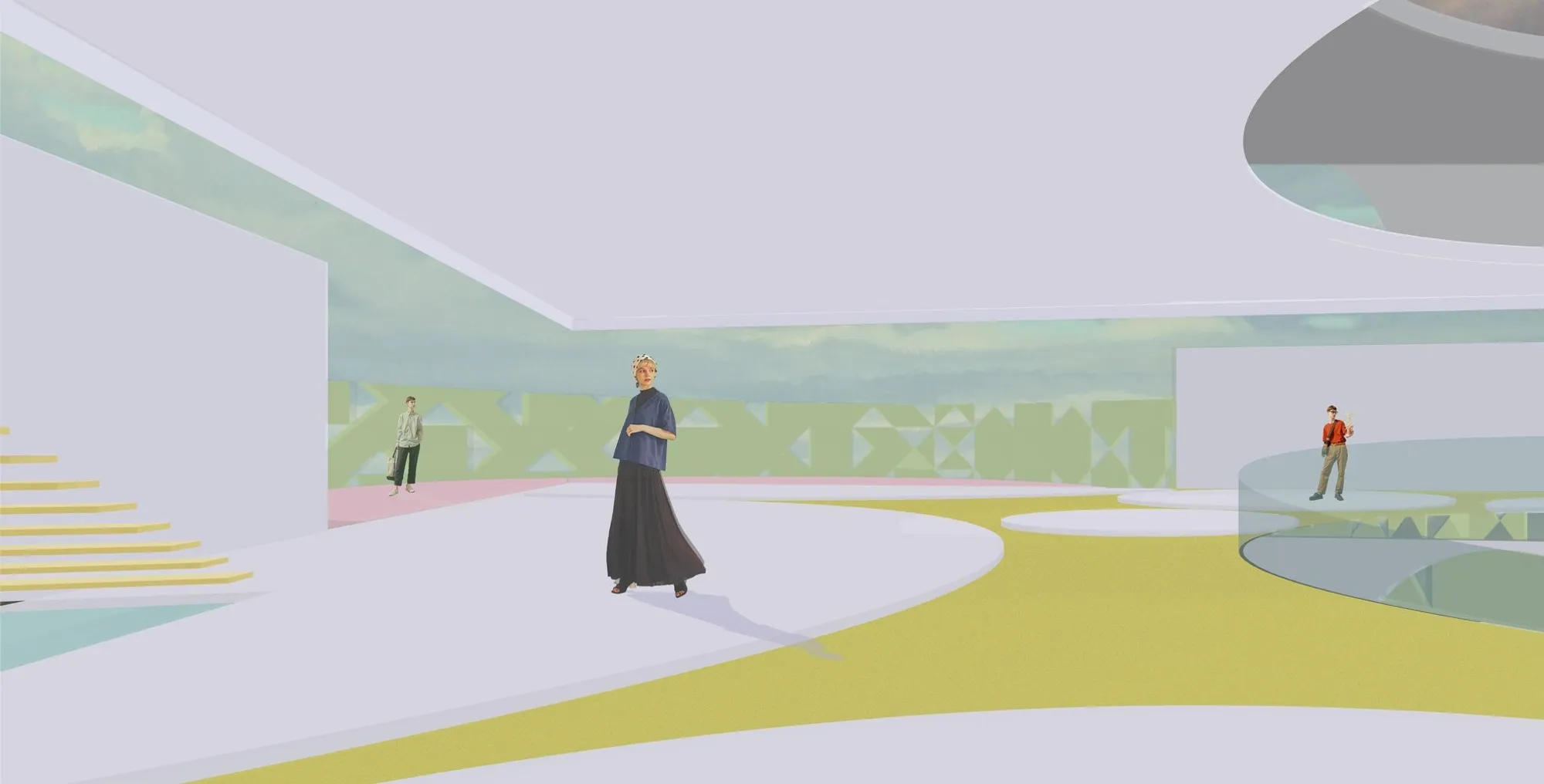
Like Lichen: A Sustainable Architecture Design Rooted in Memory and Ecology
A sustainable architecture design that merges memory, climate, and ecology into a timeless spatial experience for future generations.


Project by Kah-Lin Lee
Shortlisted Entry of Hourglass
In an era defined by climate urgency and environmental degradation, Like Lichen emerges as a compelling exploration of sustainable architecture design that bridges past memories with future resilience. Rather than proposing a monumental structure that dominates its context, the project operates as a subtle yet powerful spatial intervention, one that learns from nature, adapts to climate, and redefines how architecture can mediate between human experience and ecological systems.
The project draws inspiration from lichen, a symbiotic organism capable of thriving in extreme conditions. This biological analogy becomes the conceptual backbone of the design, translating into an architectural language that is both adaptive and enduring. Like lichen itself, the structure exists as a quiet witness to time, absorbing environmental changes while maintaining a sense of permanence.
Architecture as Memory and Environmental Narrative
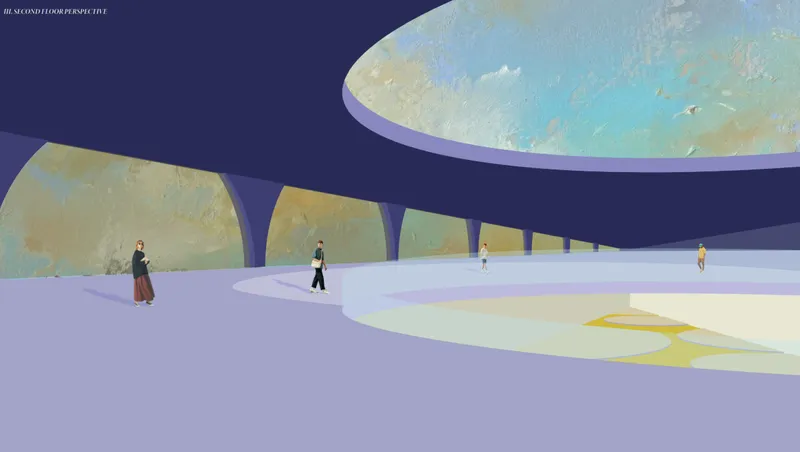
At its core, Like Lichen is conceived as a memorial space that captures fleeting moments and transforms them into lasting spatial experiences. The architecture does not rely on static symbolism; instead, it evolves through interaction with light, air, and human movement.
The project constructs a narrative journey where visitors transition through distinct environmental conditions. These spatial shifts evoke awareness of climate, materiality, and the passage of time. The design resists the idea of architecture as a fixed object and instead frames it as a living system embedded within its surroundings.
This approach aligns strongly with contemporary sustainable architecture design strategies, where buildings are no longer isolated artifacts but responsive ecosystems.
Climate-Responsive Facade and Environmental Systems
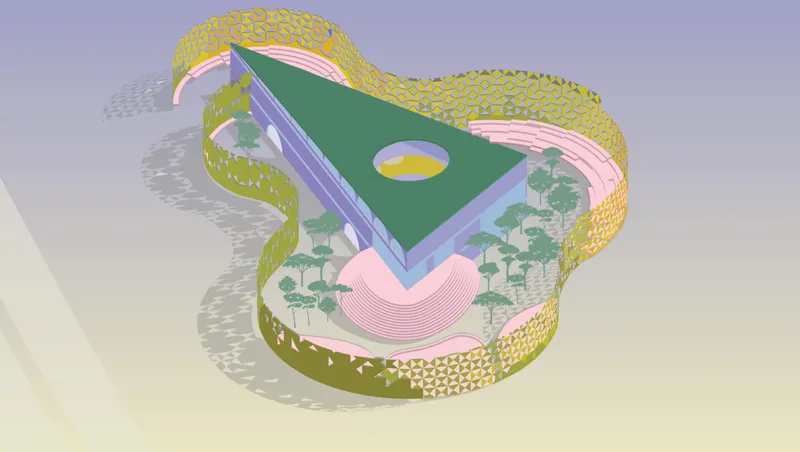
One of the most defining elements of the project is its moss-lichen facade. Unlike conventional green walls, this system is engineered to absorb carbon dioxide and mitigate air pollution. The facade geometry is not arbitrary; it is calibrated according to environmental parameters such as sunlight exposure, prevailing winds, noise pollution, and privacy requirements.
Openings within the facade are strategically positioned to enhance ventilation and daylight penetration while minimizing heat gain. The use of mashrabiya-inspired patterns introduces a layer of passive shading, filtering sunlight and creating dynamic shadow play within the interior spaces.
The integration of malqaf wind catchers further reinforces the building’s passive cooling strategy. By channeling cooler air into the structure and facilitating convection-based ventilation, the project significantly reduces reliance on mechanical systems. This synthesis of traditional architectural intelligence and contemporary environmental thinking positions Like Lichen as a forward-looking example of sustainable architecture design.
Spatial Programming and Human Experience
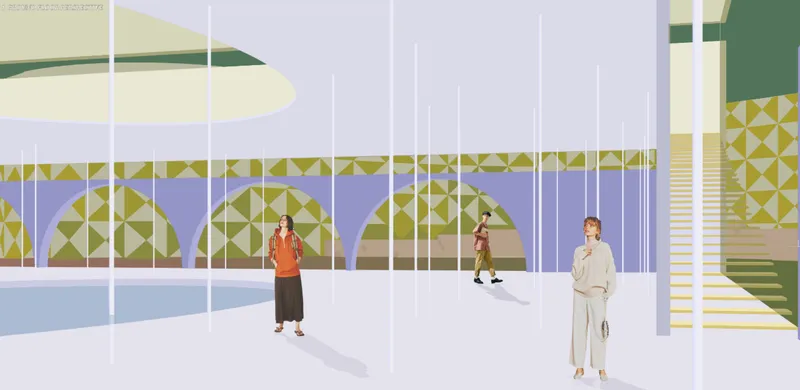
The program of the project is deliberately fluid, encouraging exploration rather than prescribing fixed pathways. Spaces are loosely partitioned, allowing natural elements to permeate the built environment and blur the boundary between interior and exterior.
The design accommodates a diverse range of activities, including:
- Art galleries and exhibition spaces
- Performance and live event zones
- Outdoor markets and social gathering areas
- Educational and therapeutic green spaces
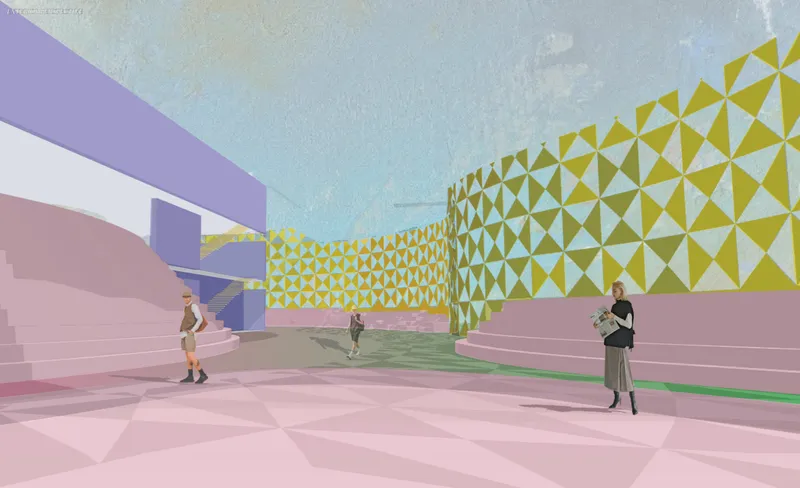
This multiplicity of functions transforms the memorial into a vibrant public realm. Visitors are not passive observers but active participants, engaging with the environment through movement, interaction, and reflection.
The spatial experience is further enriched by elements such as aeroponic gardens, water features, and shaded courtyards. These interventions create microclimates that enhance comfort while reinforcing the ecological narrative of the project.
Water Systems and Passive Cooling Strategies
The incorporation of the salsabil water feature introduces an additional layer of environmental performance. Water is allowed to flow across surfaces, facilitating evaporative cooling and improving thermal comfort within the space.
This system operates in tandem with ventilation strategies, creating a holistic environmental framework that prioritizes energy efficiency. The result is a building that not only responds to its climate but actively contributes to environmental well-being.
Such integrated systems exemplify the principles of sustainable architecture design, where performance and experience are seamlessly intertwined.
Materiality and Timelessness
The project emphasizes durability and longevity through its material choices. Predominantly constructed in concrete, the structure is designed to withstand the test of time with minimal maintenance.
However, this permanence is balanced by the dynamic qualities of the facade and environmental systems. While the core structure remains constant, the surrounding atmosphere continuously evolves, shaped by climatic conditions and human interaction.
This duality between permanence and change reflects the conceptual essence of lichen itself, reinforcing the idea of architecture as both a memory and a living process.
Cultural Context and Global Relevance
Although rooted in the environmental and historical context of Egypt, Like Lichen extends its relevance to a global audience. The project reinterprets traditional architectural elements such as mashrabiya and malqaf within a contemporary framework, demonstrating how vernacular strategies can inform modern sustainable design.
At the same time, the project addresses universal themes of climate change, environmental awareness, and collective memory. It invites visitors from diverse backgrounds to reflect on their relationship with nature and consider the impact of their actions on the planet.
This balance between local specificity and global applicability is a defining characteristic of successful sustainable architecture design.
Inspiring Future Generations
Beyond its environmental and spatial qualities, Like Lichen serves as an educational platform. It encourages visitors, particularly younger generations, to engage with ecological issues and explore alternative ways of living in harmony with nature.
The project transforms architecture into a medium for learning, where knowledge is not confined to text or images but experienced through space itself. This experiential approach fosters a deeper understanding of sustainability and inspires meaningful change.
Jury Commentary
Jonas Prismontas, Juror, noted:
“Lovely use of environmental strategies. Very nice graphics suitable for a competition work.”
This observation highlights the project’s strength in combining technical environmental performance with clear and compelling visual communication, an essential quality in contemporary architectural discourse.
Like Lichen is not merely a building; it is a carefully orchestrated system that integrates climate, culture, and human experience into a cohesive whole. Through its innovative use of sustainable architecture design principles, the project redefines the role of architecture in addressing environmental challenges.
By drawing from nature, embracing traditional wisdom, and leveraging modern design strategies, Like Lichen offers a vision of architecture that is resilient, adaptive, and deeply connected to its context. It stands as a reminder that the future of architecture lies not in imposing upon the environment, but in learning to coexist with it.



Popular Articles
Popular articles from the community


Play: Fragments of Their World
Familiar architecture becomes modular playground design, creating safe spaces where displaced children can learn, connect, imagine and play.

Conexión: Biophilic Design Reimagines High-Rise Living in Hong Kong
Conexión reimagines high-rise living in Hong Kong through biophilic design, green facades, shared spaces, daylight, water and nature within.

Riyadh For All: Intergenerational Urban Design for Active Aging in Rabat
Riyadh For All reimagines urban design in Rabat with intergenerational co-living, adaptive courtyards, and Moroccan cultural exchange today.

Co-life: Sustainable Architecture for Age-Friendly Community Living
Co-life reimagines sustainable architecture for seniors through courtyards, rammed earth, shared gardens, and spaces designed for belonging.


Similar Reads
You might also enjoy these articles

Eco Chapel: A Green Architecture Pavilion Designed in Symbiosis with the Forest
Eco Chapel uses green architecture to weave prayer, learning and reuse into a forest pavilion shaped by modular hexagonal canopies for life.
Kaffeebühnen: Coffee Shop Architecture Designed as a Civic Stage Between Vienna’s City and Park
Kaffeebühnen turns coffee shop architecture into a civic stage, linking Vienna’s park edge, urban life, warm timber yards, and coffee craft.
Healing Façade: Sustainable Architecture for Reforestation, Community, and Sacred Ecology in Ethiopia
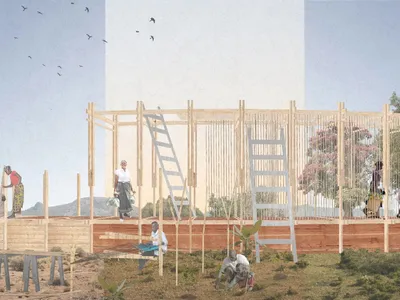
Healing Façade reimagines sustainable architecture as a living wall that restores soil, catches water and renews Ethiopia's forest churches.


Urban Forest: A Vertical Ecosystem for 5,000 Workers in Singapore's Changi Business Park
Radially stacked pods and layered green decks turn a 7-acre plot into 47 acres of ecological workspace projected for 2040.


Explore Architecture Competitions
Discover active competitions in this discipline



Challenge to reimagine the Iron Throne


Photograph architecture without architects


Illustrate the lost glory of Angkor Wat - Render Challenge


Design challenge to reuse E-waste
Comments (0)
Please login or sign up to add comments
No comments yet. Be the first to comment!