
LINGVO - museum of language
Immersive experience in exhibition space

nd , As we speak - LINGVO museum in Białystok
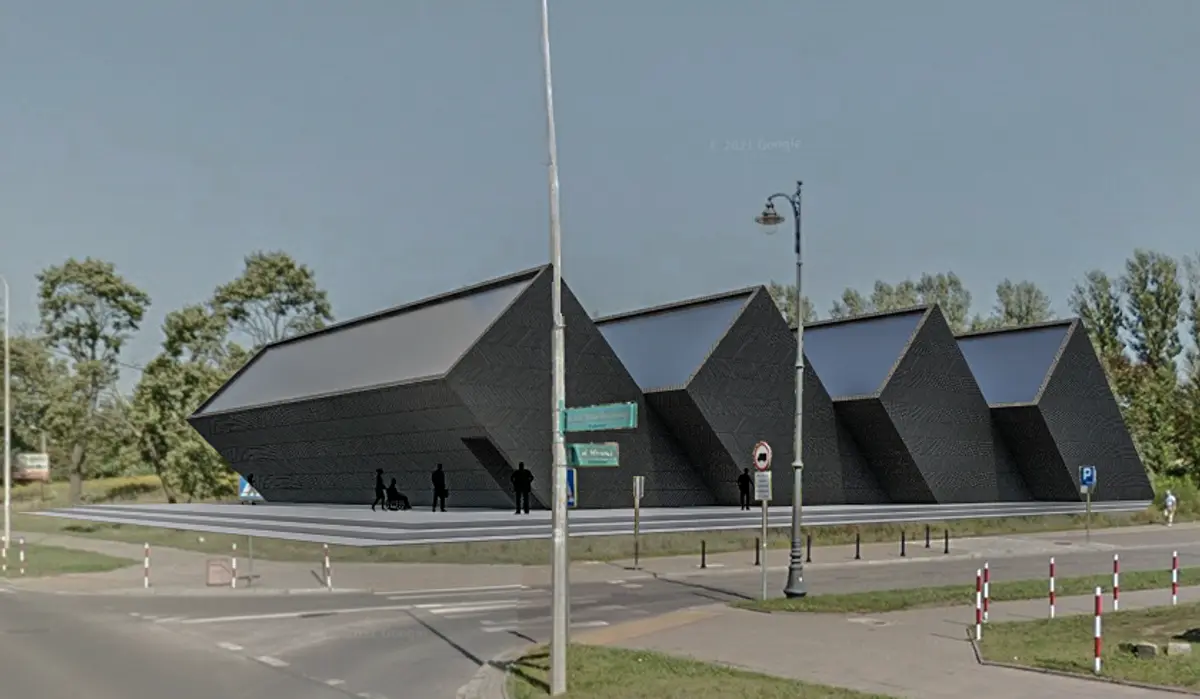
First two most used forms of language are spoken and written forms. Book is a symbol of written word, knowledge, sharing ideas to the world in understandable form to anyone who can read it. LINGVO museum is meant to look like four books dug into soil - as symbols of word, language and history of Bialystok and its honorable inhabitant - Eliezer Lewi Samenhof - inventor of the Esperanto language. Form of the building also tries to establish a dialogue with tradition of place by using legible symbols of its architecture - slope roof and wooden finish. (picture below)
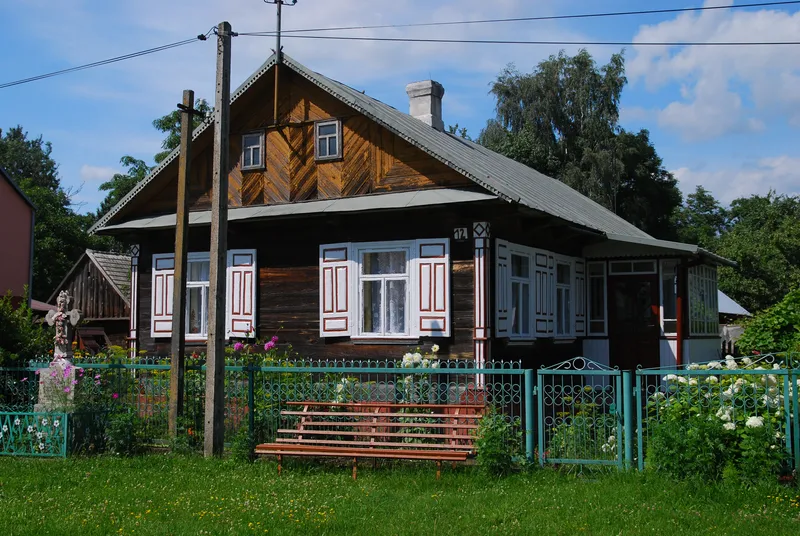
Simultaneously, it doesn't pretend to be old. It takes these symbols and connects them together with a modern-looking solid that no one will confuse with the old buildings.
Main material that I wanted to expose to visitors is wood. That's why most of the construction is made of glued wood, and the finishing of facades is made of dark pine wood. Few of trees that was growing on site are left untouched - they are part of land use and the square behind the building.
Immersive experience that was supposed to be designed in the building is a really new concept. Before designing my own I decided to go on a trip to Berlin in search of it. I’ve visited (among others) Topography of Terror, Jewish Museum, Memorial to the Murdered Jews of Europe and Futurium. Most of them presented very high level of architecture and design solutions to provide universal space for exhibitions. I found out that most museums and exhibition places are still using the old method of presenting its content: Exhibition of artifacts, some written word next to it and audio guide. That’s it. Futurium amongst others, is (trying to be) most innovative and futuristic. Still, the most immersive experience was a NFC tag to scan/grab text from exhibits, and read it later. Suprisingly I have found Memorial to the Murdered Jews of Europe to provide the most immersive experience. Despite the fact that it is, physically, just a lot of concrete blocks.(picture below)
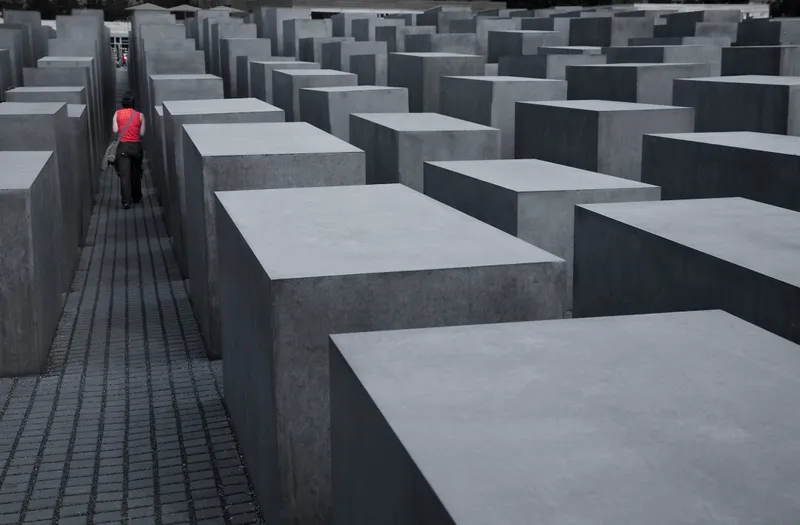
People walking between these blocks were seeing each other either in long perspective, or in very close distance. Orthogonal mesh made people appear and disappear instantly. This made me feel this space, experience it as if it was a symbol of how short and fragile human life is.
Conclusion from this trip was: Feelings are key to make an exhibition immersive.
Museum that I designed is made of three parts/levels experience - the first level is a typical museum with audio guide, text and artifacts. Goal is to make people enter immersive experience step by step, not immediately. This way they dont expect the moment when exhibition gets more dimensions.
Second level is culmination moment - physical space that is between immersive and non-immersive experience and is dedicated to L.L.Zamenhof. It tries to open minds for learning new languages, to pay attention to people who visit the exhibition, communicate, and create. Main goal of this part of the exhibition is to teach people about their ability to communicate even if they don't know the language of the interlocutor, and make them feel able to convey any simple message. There is equipment to record spoken word, and what visitors don’t know - their own voice and words (intended in Esperanto) are played in audio guide to other visitors in level one of the exhibition.
Third part is an immersive exhibition space that can also be used as a multi-purpose hall for events, workshops, seminars, etc. It is meant to be used as space to experience augmented reality, virtual reality, to watch and interact with parts of exhibition.
Building is meant to be eco-friendly. Materials that are used are produced with zero carbon footprint including concrete (-1 level) and not large amounts of steel (strenghtening of construction). Insulation is made of natural cork that has negative carbon footprint. There is a rainwater tank in the basement. Perovskites, i.e. solar panels, are mounted on the shutters on the windows and on the roof. The greenhouse effect inside is eliminated by the blinds/shutters.


Popular Articles
Popular articles from the community

Cloaked Colonization: A Mobile Underwater Habitat That Moves Like a Fish
Micah Abaya's shortlisted EHC Pacific entry reimagines ocean settlement as a dispersed network of self-sustaining architectural organisms.

Extended Shell: Retrofitting Kolkata's Balconies as Living Urban Thresholds
A modular retrofit system recovers the social and environmental intelligence of Kolkata's historic verandas for contemporary Park Street residents.

Opera by the Sea Estonia: Three Shells Dissolving Architecture into Tallinn's Coastline
A winning opera house proposal replaces monumental form with interconnected shells that blur the boundary between building, park and Baltic Sea.

Tsunami Convergenics: Turning Catastrophic Ocean Forces into Underwater Housing Infrastructure
A speculative underwater settlement off the coast of Onagawa, Japan, treats tsunamis and typhoons as energy sources rather than threats.

Similar Reads
You might also enjoy these articles

Shakur's House: Exposed Brick as an Interior Organiser in a 168 m² Mashhad Residence
Brick moves indoors in this Mashhad residence, where masonry walls, glass partitions and teal planes sequence a compact home without closing it off.

Day and Night Park: A Time-Based Urban Newsstand in Beijing
A temporary urban newsstand in Beijing blending travel, light, and reading through poetic colors, compact form, and community-focused design.

Modernist Patio Renovation in El Masnou, Barcelona by Oliver Segura Arquitectura + Cebrià Arquitectura
Modernist patio renovation blending tradition and innovation with a movable pool, leveled floors, and Catalan materials in El Masnou.

Alto Residencial Coop: Cooperative Housing Development in Santiago de Compostela by Carbajo Barrios Arquitectos
A linear cooperative housing complex blending white volumes and perforated metal façades, enhancing community living, natural light, privacy, and urban integration.


Comments (0)
Please login or sign up to add comments
No comments yet. Be the first to comment!