
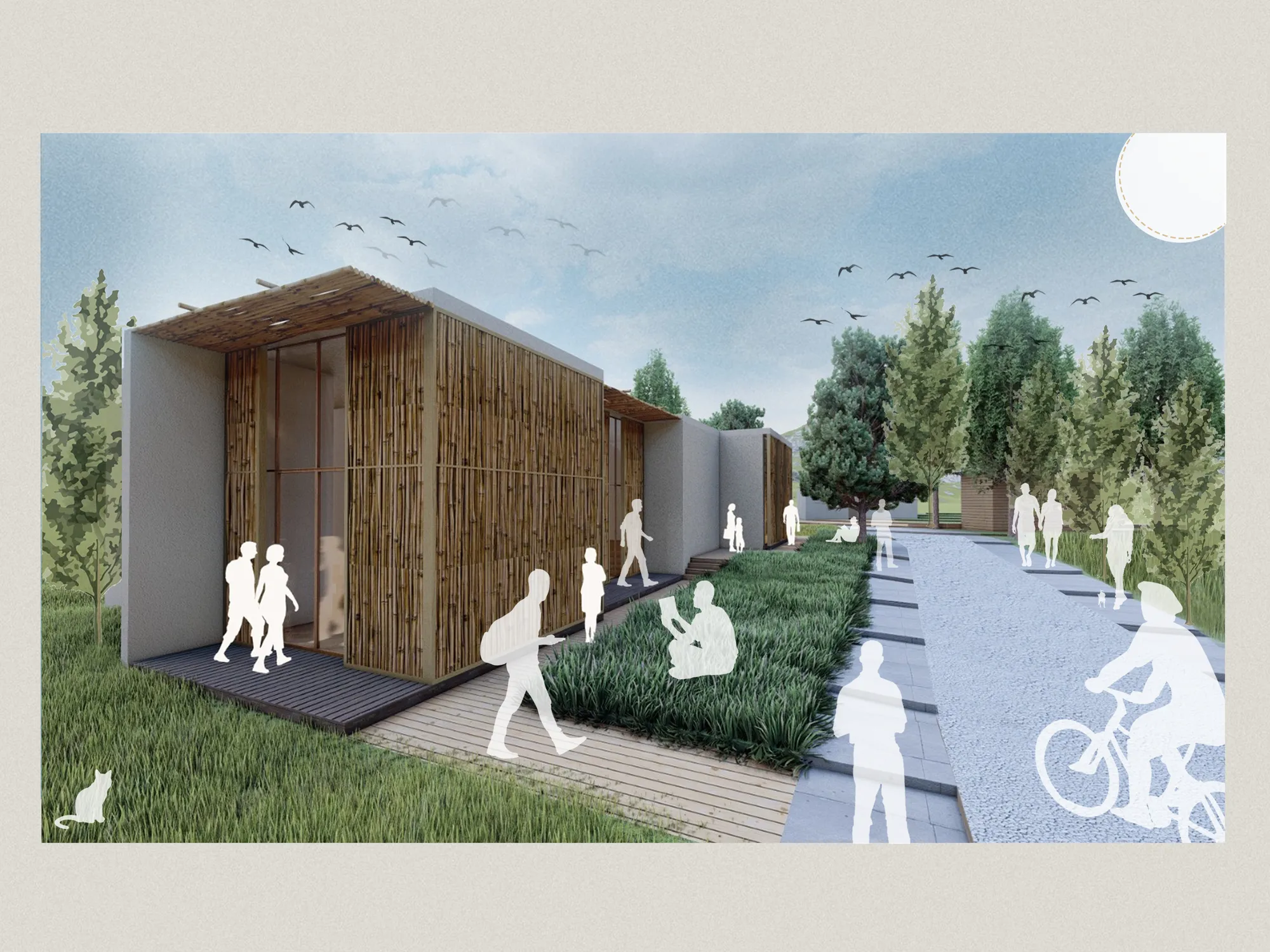
Little Library in Hokkaido
A library structure combining traditional reading culture and technology in Japan

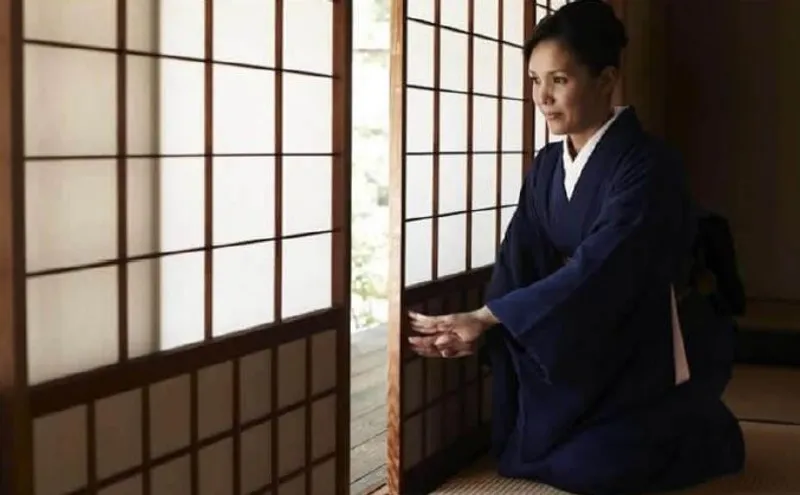 Shoji in Traditional Japanese Buildings
In Japan, the maximum utilization of urban use lands has made it necessary to design the use of small areas in the most efficient way. The decrease in the areas per person due to the overpopulation has developed the tradition of solving many functions in small spaces. The relationship between the size of space and population has led to the development of the concept of flexible space in Japan and the use of spaces by transforming them into different functions. Spaces with multiple functions can be transformed into each other; can be attached to each other with the flexibility provided by sliding panels. These panels allow the space to be divided, transformed into different functions, and from time to time to divide the interior and exterior volumes.
The interface of interior and exterior volumes is different in Japanese architecture. A thick wall divides the inner and outer volumes. Thanks to the movable dividers, it is possible to combine the interior and exterior volumes at any time. The movable dividers separating the spaces from each other are thin and light. Thanks to the movable dividers, the functions in the spaces change during the day, the spaces can be opened and closed, they can grow or shrink. There are no strict boundaries between places, neither with each other nor with nature. Sliding panels limiting the space can be removed according to function and need; spaces can be converted or added to each other. The functions and benefits of the concept of 'flexible space' and movable panels in space can be summarized as follows:
Space dimensions can be transformed according to function; By changing the dimensions of the space, it allows to define the spaces suitable for the function. Spaces can be fragmented, allowing many functions to occur at the same time. It allows small-scale areas to be used multi-functionally. It enables the creation of dark or light areas for different functions.
The sliding panels in our library design allow the small library to be used multifunctionally and help the space to make room for different functions at different times. In this way, the small volume can be used effectively as in traditional Japanese architecture. From time to time, the space in the library grows and it is used for collective events, and when necessary, special areas are created with panels.
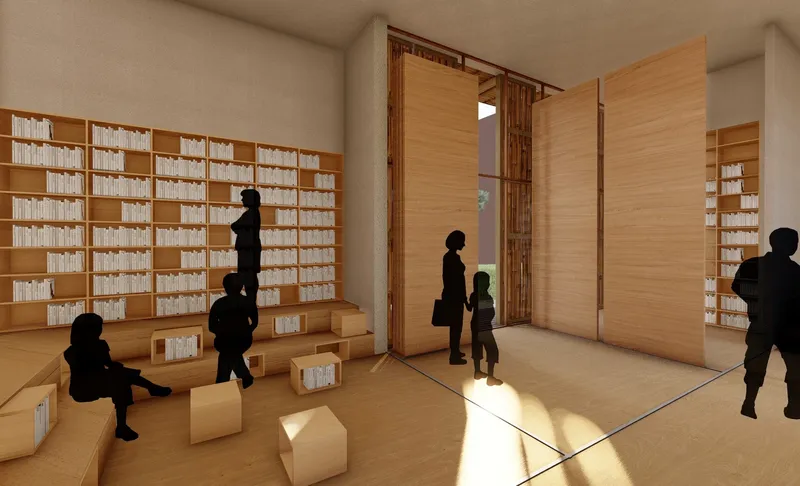 Movable Panels in This Project
The main materials used in our project are wood and bamboo. These two materials were widely used in traditional Japanese architecture. Trees grown in Japan constitute a very large part of the material of traditional buildings. Wood is widely used both indoors and outdoors. To cope with the hot and humid climate of Japan, materials with low thermal conductivity are suitable. Due to humidity, earthquake risk and the possibility of typhoons, wood has become preferable to stone or other materials as it provides adequate ventilation to combat climate and is resistant to natural disasters. Wood is mostly used in interior and exterior furniture. In summary, wood and bamboo materials have been determined as a suitable material for Hokkaido in terms of being organic, being easily available in Japan, creating a warm place, and being suitable for the climate and conditions of the region. The bamboo-glass relationship on the facade in the project adjusts the amount of light filtering in and establishes the relationship of openness and closure on the façade.
In the project, semi-open, open and closed space relations form a whole. These three spaces form different parts of the gridal system, thus creating small semi-open volumes where closed spaces meet open space. These volumes are defined as intermediate points where users can spend time and constitute the social areas where welcoming, resting, chatting and waiting activities take place. The origin of these concepts is also based on Japanese architecture. Japanese architecture has valued sustainability and deep connections with nature. Buildings are like a whole with nature, depending on the Japanese belief that regards nature and nature as sacred. The verandas under the roof eaves, which are a transition area between the building and nature, are perceived as part of the building when viewed from the outside, and perceived as a part of nature when viewed from the inside. Like the materials used in the building, the light is also natural. Engawa; they are important places in terms of establishing open - semi-open - closed space relations. There are long eaves on the doors to create an intermediate volume suitable for the rainy climate. These eaves act as a shelter against precipitation and wind, as well as an intermediate space and provide a connection between the interior and the exterior.
The library mostly consists of glass façade to benefit from sunlight. Bamboo sticks were used on the facade of the building. These sticks temper the bright light and spread it evenly across the space to create the perfect reading ambiance. The bamboo and glass used on the façade allow the space to receive sunlight and connect the space to nature.
It was aimed to design spaces intertwined with nature, so screens and sliding doors were used on the interior and exterior walls, and the space was connected to the outside with semi-open spaces. Verandas in the building; it constitutes the social areas where welcoming, resting, chatting and waiting activities take place.
While the leveling and the steps used in the interior make it possible to use the small-scale space more effectively, they also function as furniture. Children were also considered in the interior, and children's scale spaces were created. Emphasis is placed on the use of organic and local materials. Furniture and floor are made of wood.
To conclude, the concept of flexible space (moving screens), the use of wood and bamboo materials, open-semi-open-closed space relations are important design elements in the project.




Popular Articles
Popular articles from the community


Riyadh For All: Intergenerational Urban Design for Active Aging in Rabat
Riyadh For All reimagines urban design in Rabat with intergenerational co-living, adaptive courtyards, and Moroccan cultural exchange today.

Play: Fragments of Their World
Familiar architecture becomes modular playground design, creating safe spaces where displaced children can learn, connect, imagine and play.

The Ocean Hive: Sustainable Architecture for a Self-Sufficient Civilization at Sea
The Ocean Hive imagines sustainable architecture at sea, where modular habitats, algae, wave power and ocean waste sustain a growing colony.

Conexión: Biophilic Design Reimagines High-Rise Living in Hong Kong
Conexión reimagines high-rise living in Hong Kong through biophilic design, green facades, shared spaces, daylight, water and nature within.
Similar Reads
You might also enjoy these articles

The Rhythm of Seasons
A Farmers' Market Connecting Nature and the City

More Than a Building-Designing a Living System
More Than a Building-Designing a Living System
Base Beyond
DESERT COMPOUND ARID: TOURISM OF ABSENCE AND ABUNDANCE

Explore Reading Room Competitions
Discover active competitions in this discipline




Challenge to design public laboratory


Challenge to design luxury tourism on rails


VR headsets Storefront design competition

Designing a staircase for a client
Comments (0)
Please login or sign up to add comments
No comments yet. Be the first to comment!