

Living in a Hayloft by Markus Schlempp Architekt: A Historic Farmhouse Transformed for Contemporary Living
Adaptive reuse of a 300-year-old Swiss hayloft into a sustainable, age-friendly home blending heritage, timber craftsmanship, and modern living.


In the tranquil Swiss village of Böztal, nestled near a protected village center, a 300-year-old farmhouse has been respectfully revitalized into a modern residential retreat by Markus Schlempp Architekt. The project, titled "Living in a Hayloft," seamlessly merges heritage preservation with contemporary adaptation, breathing new life into a historic single-roof structure that once housed living quarters, a stable, and a hayloft under one roof.
A Thoughtful Architectural Renovation in Switzerland
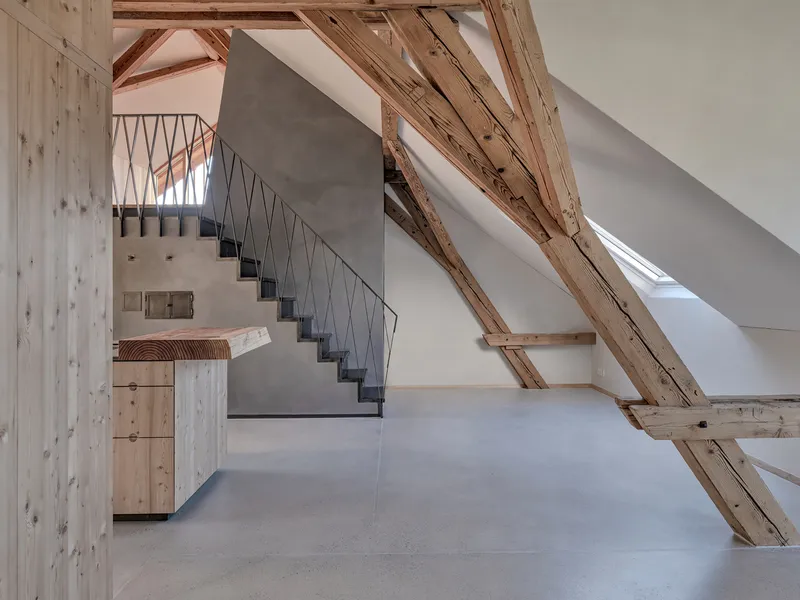
With a total floor area of 250 square meters, this adaptive reuse project reimagines the former hayloft into an age-friendly flat that can be accessed directly from ground level. This strategic design enables the remaining parts of the farmhouse to be rented to a young family—fostering multigenerational living while enhancing the usability and functionality of the home.
Preserving the Character of a 300-Year-Old Farmhouse
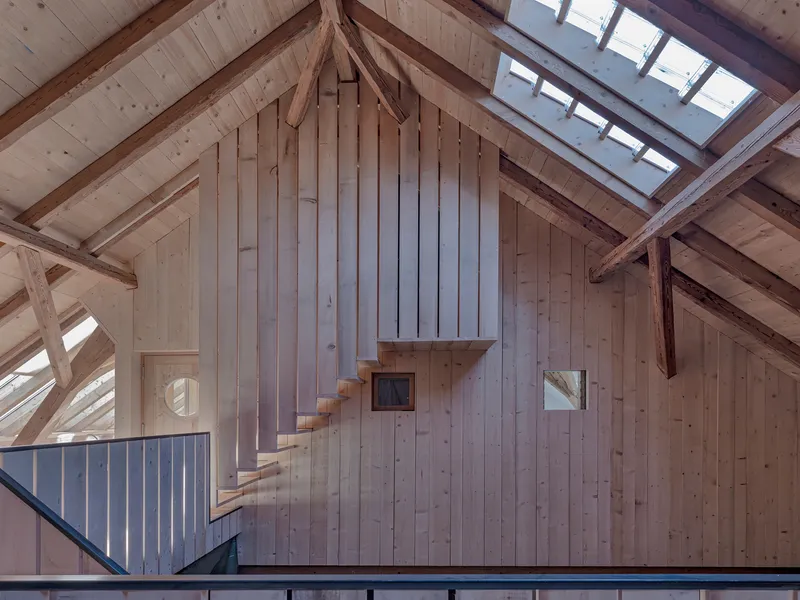
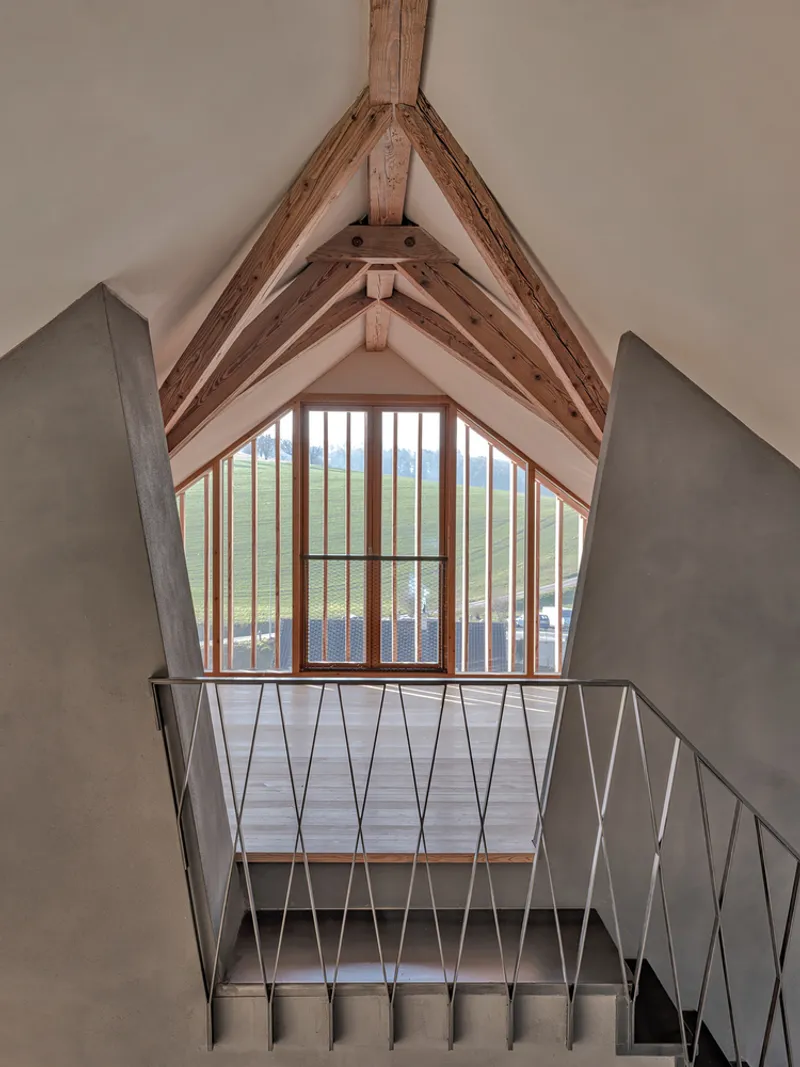
Maintaining the farmhouse’s traditional character was central to the renovation strategy. Despite the substantial interior transformation, the building’s historic facade and volume remain visually intact, with subtle yet intelligent interventions that balance old and new. A significant challenge arose from the need to introduce modern lighting and views into the deep hayloft space without disrupting the original structure.
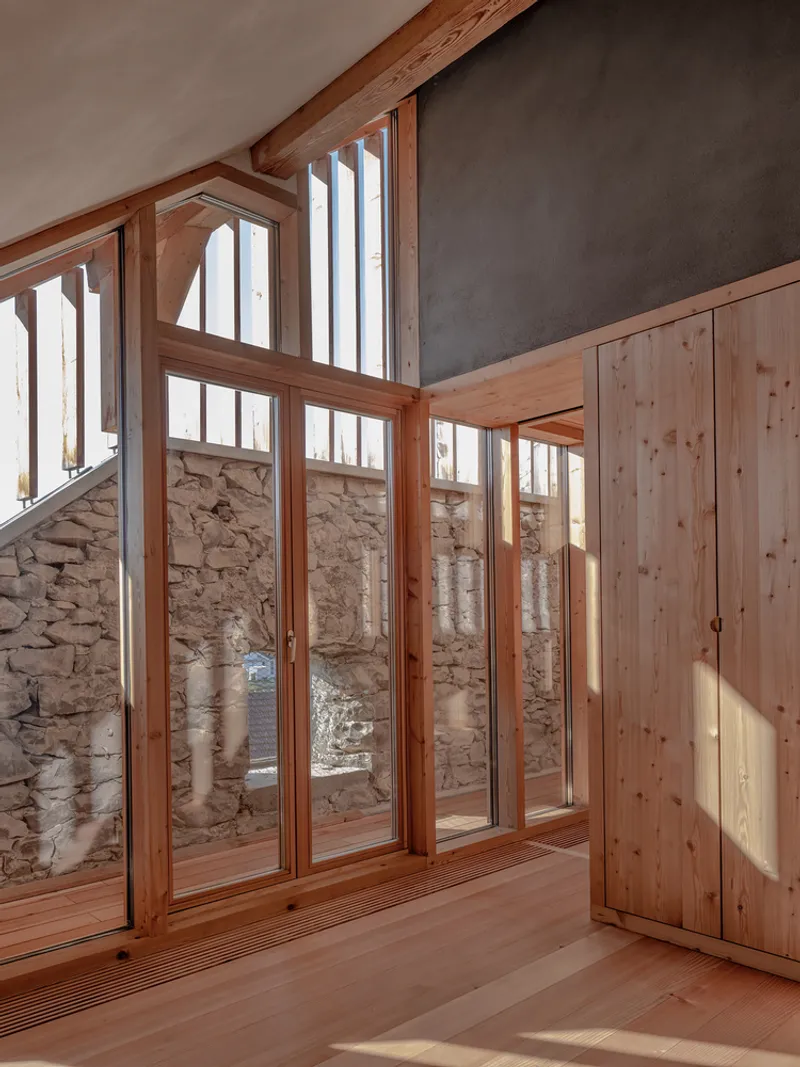
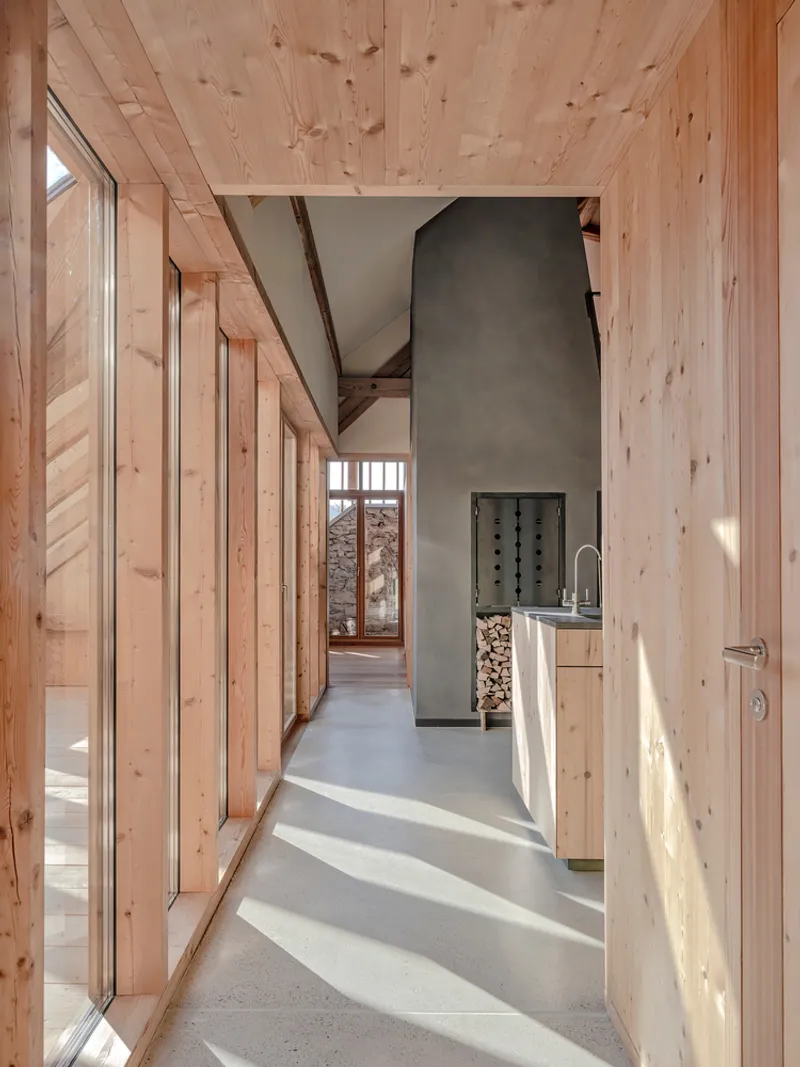
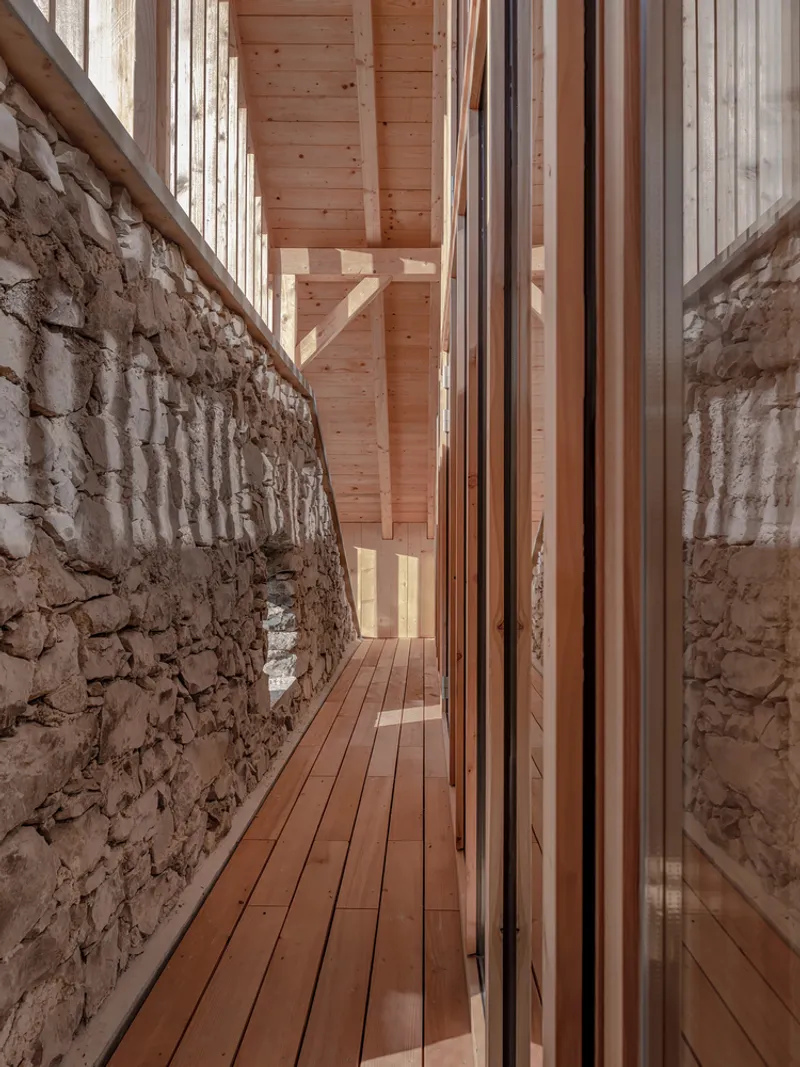
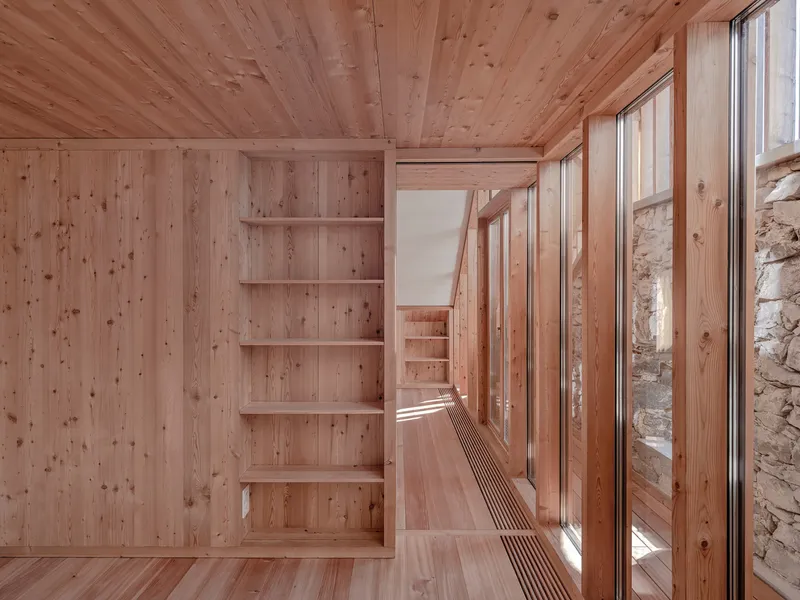
To overcome this, wooden slats were introduced to the gable facade where a previous extension once stood. These slats conceal a loggia behind the bedroom wing, creating a luminous yet private buffer zone. Another east-facing loggia sits beneath a glazed roof, accessed via wide double doors from the living area—doubling as a climate-controlled transition space for seasonal changes.
Materiality and Spatial Organization
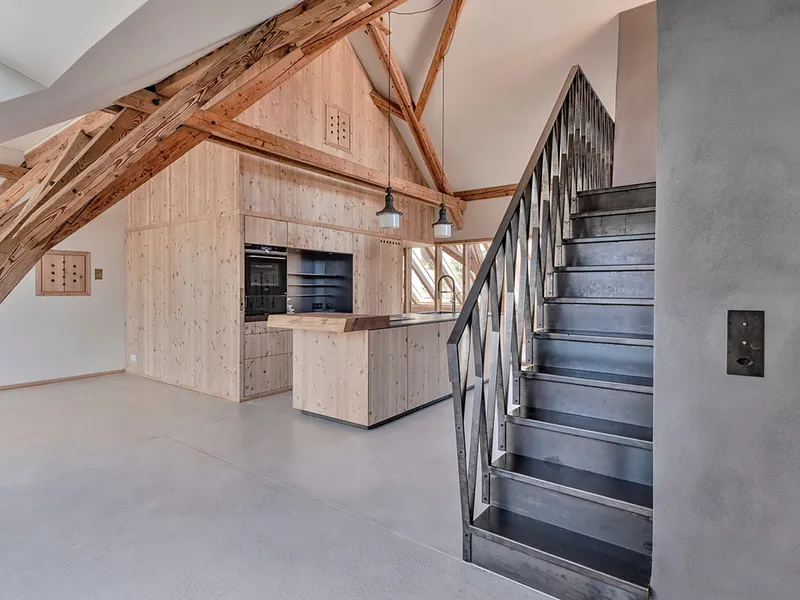
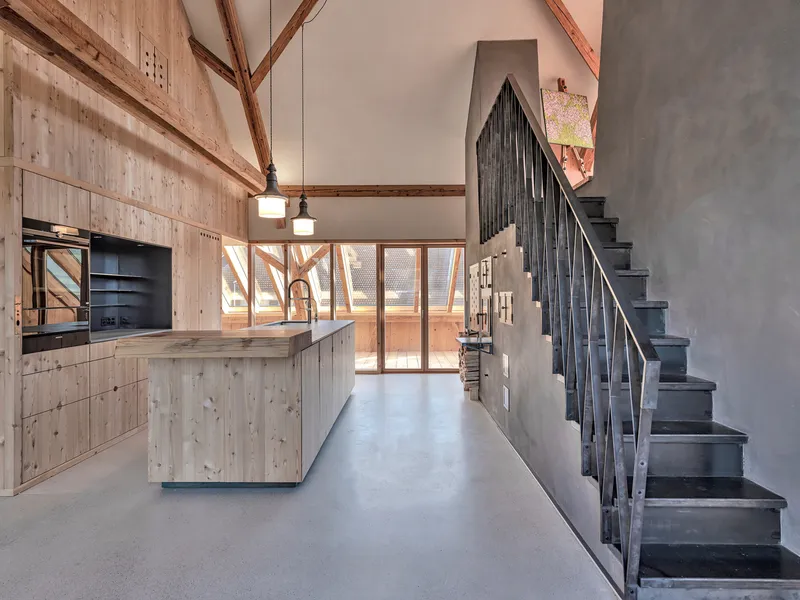
The reconfigured hayloft is anchored by two contrasting freestanding built-ins that define the interior spaces while respecting the openness of the original volume:
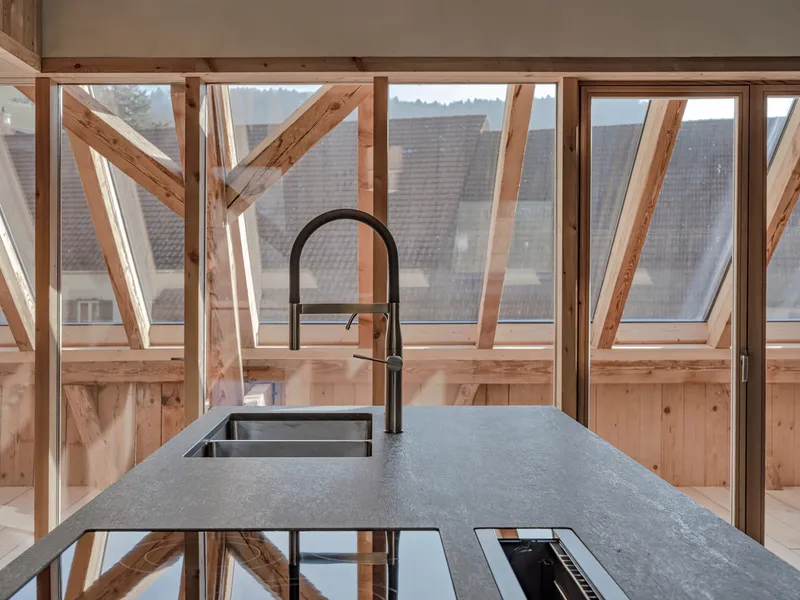
- One wooden core contains the kitchen and bathroom, offering warmth and continuity with the farmhouse’s timber heritage.
- The second clay-built structure houses the bedrooms and a central wood-burning stove, enhancing the home’s tactile richness and thermal mass.
These elements articulate the interior spatially and materially, while the living-dining area benefits from a large, carefully positioned skylight that frames picturesque views of the village and nearby vineyards.
A Sustainable and Sensitive Conversion
Working in collaboration with Timbatec as structural engineer and Zimmerei Frei on roofing, the architectural team prioritized sustainability and low-impact construction. Interior daylighting was maximized using Velux skylights, while the home's appliances and fixtures—supplied by Laufen and Siemens—support energy efficiency.
An Intergenerational Living Model Rooted in History
"Living in a Hayloft" exemplifies the potential of adaptive reuse architecture to deliver sensitive, sustainable, and highly functional living environments. This conversion not only preserves cultural heritage but also supports intergenerational living in a setting that remains visually and contextually authentic.
All Photographs are works of Rene Dürr


Popular Articles
Popular articles from the community


longwave studio Reorganizes a 112 m² Tainan Apartment Around the Daily Routines of a Family and Two Cats
In Tainan, Taiwan, birch plywood, rust-red furniture and a freestanding plaster wall link arrival, storage, work and family life in one apartment.

Juan García Correa, John González and Claudia Rueda Sink a Circular Amphitheater into a Manizales Engineering Building
On the La Nubia campus in Manizales, Colombia, the S1 Building folds labs and offices into a hillside of ramped lawns that double as a campus route.

LT2A and OPEN Architectes Thread a Brick and Glass High School Through a Wooded Belgian Campus
In Braine-l'Alleud, a 3,000 m² wing for Collège Cardinal Mercier pairs pale brick with a glazed colonnade, deferring to a small chapel and a dense wood.

David Macias Steps a Doorless Stone and Plaster House Down a Tropical Colombian Hillside
In the humid hills of Colombia, Threshold House replaces the front door with an open void and terraces its 850 m² down the slope instead of fighting it.

Similar Reads
You might also enjoy these articles


Hodi-Mandai Geram
Project Function: Preservation and revitalization of the Intangible heritage and socio-spatial identity of the Hodi by Housing, Cultural Memory Center, Sacred Grove, landscape, local tourism economy


Olio Towers: A Mid-Rise for Performers That Fuses Housing, Rehearsal, and Stage
Located blocks from Houston's Theater District, this modular tower stacks living units around a central performance atrium.

Oasis: Modular Green Housing Carved into Dhaka's Urban Fabric
A shortlisted Plugin Housing entry reclaims unauthorized settlements in Dhaka with stepped concrete volumes, green roofs, and ventilation-driven design.

Black Hole: A Floating Megastructure for the Post-Physical Era
Emiliano Mazzarotto envisions a spherical, self-scaling arena where e-sports, digital hotels, and holographic stadiums replace traditional public space.

Explore Housing Competitions
Discover active competitions in this discipline

Challenge to reimagine the Iron Throne

Photograph architecture without architects

Illustrate the lost glory of Angkor Wat - Render Challenge

Design challenge to reuse E-waste
Comments (0)
Please login or sign up to add comments
No comments yet. Be the first to comment!