

livMatS Biomimetic Shell: A Sustainable Architectural Innovation
The livMatS Biomimetic Shell is a sustainable, bioinspired timber pavilion combining advanced robotics, 4D printing, and climate-responsive design.


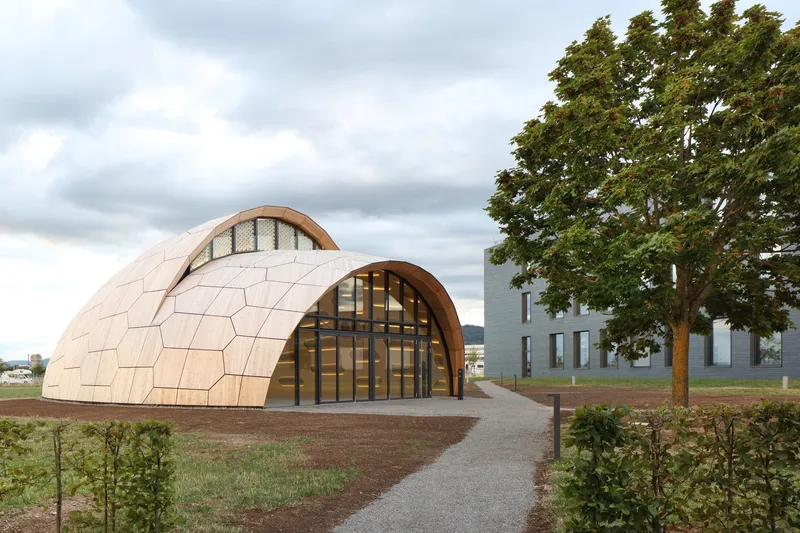
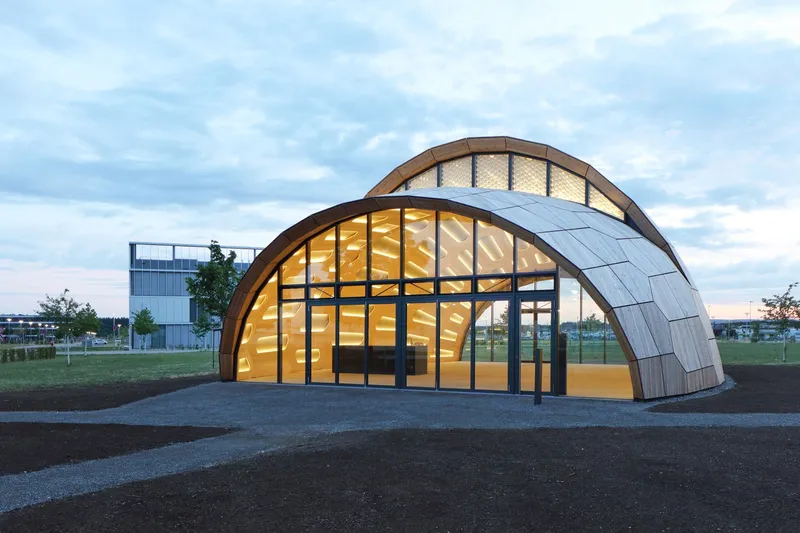
The livMatS Biomimetic Shell, completed in 2023, is a pioneering research pavilion situated at the FIT Freiburg Center for Interactive Materials and Bioinspired Technologies in Germany. This project is a collaborative effort between the Institute for Computational Design and Construction (ICD), the Institute of Building Structures and Structural Design (ITKE) at the University of Stuttgart, and the Cluster of Excellence Living, Adaptive and Energy-autonomous Materials Systems (livMatS) at the University of Freiburg.
Design and Structure
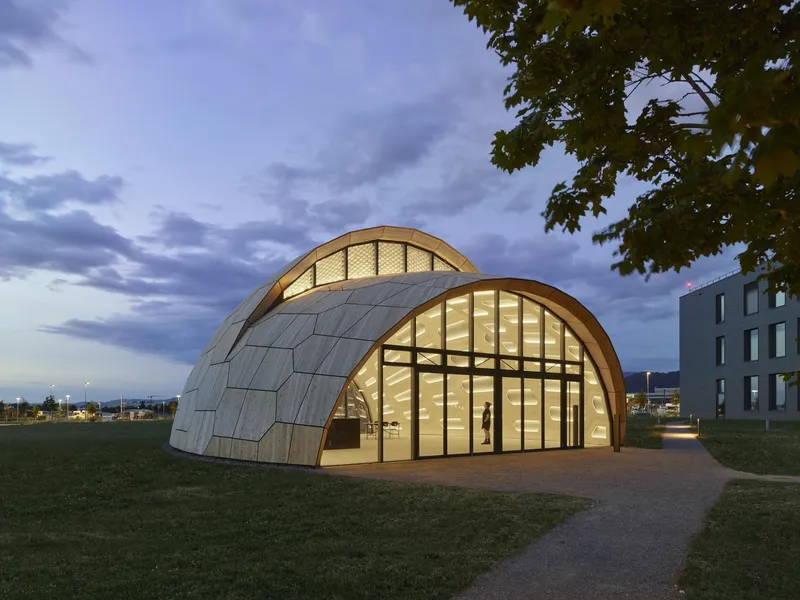
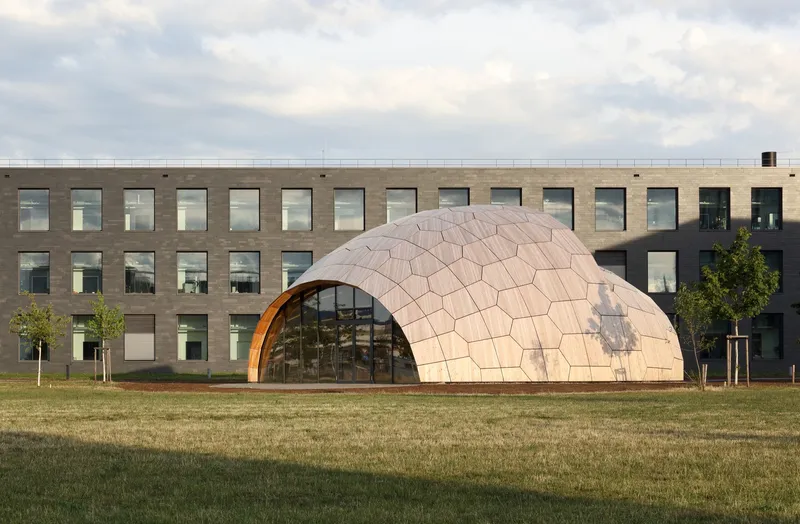
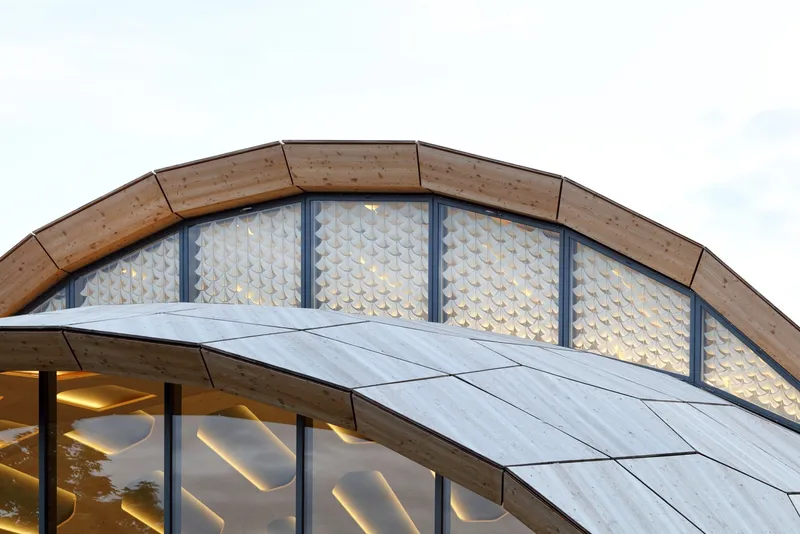
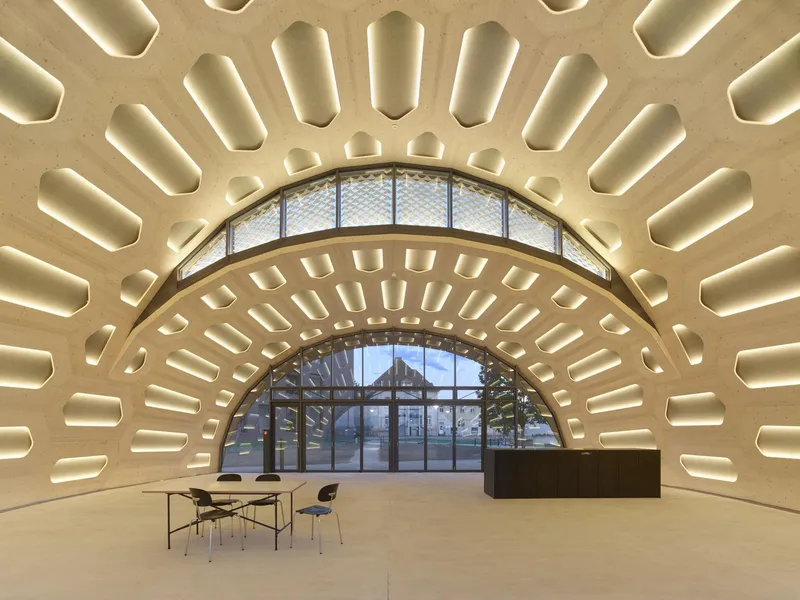
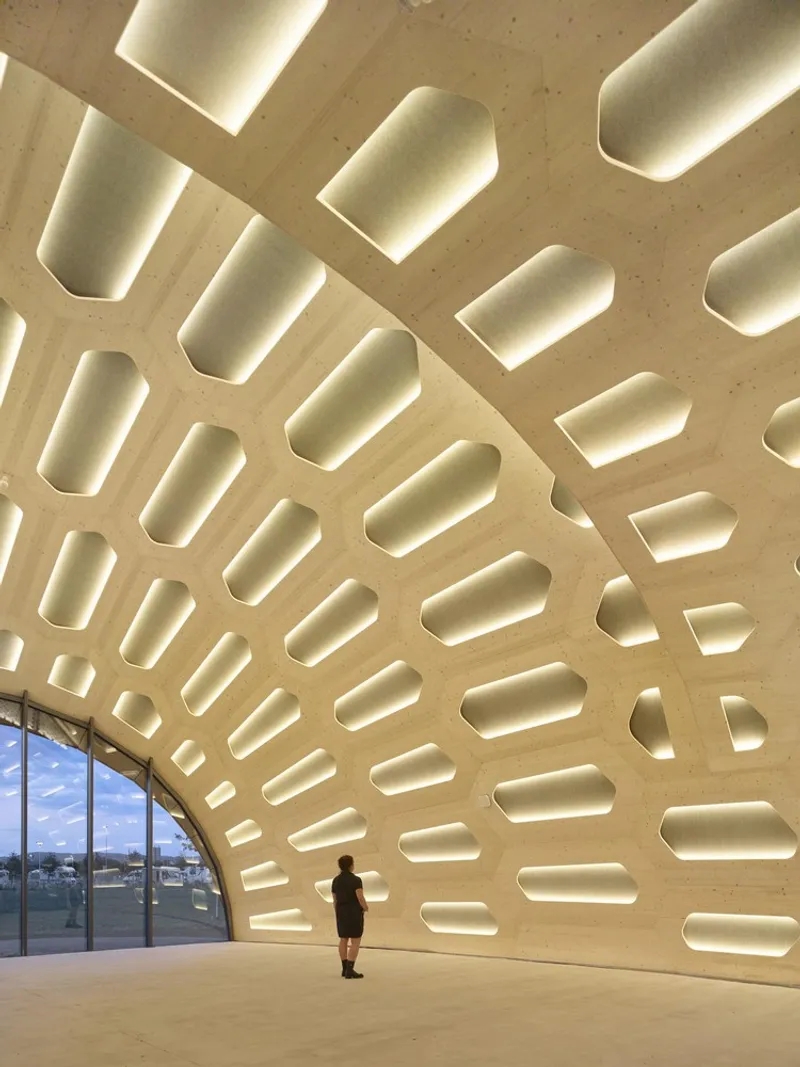
Inspired by the morphological principles of sea urchin plate skeletons, the pavilion features a segmented timber shell construction. Comprising 127 hollow cassettes made from three-layer spruce boards, the structure achieves a free span of 16 meters with a weight of only 27 kg/m². This design allows for full deconstruction and reusability, aligning with sustainable building practices.
Innovative Climate Control
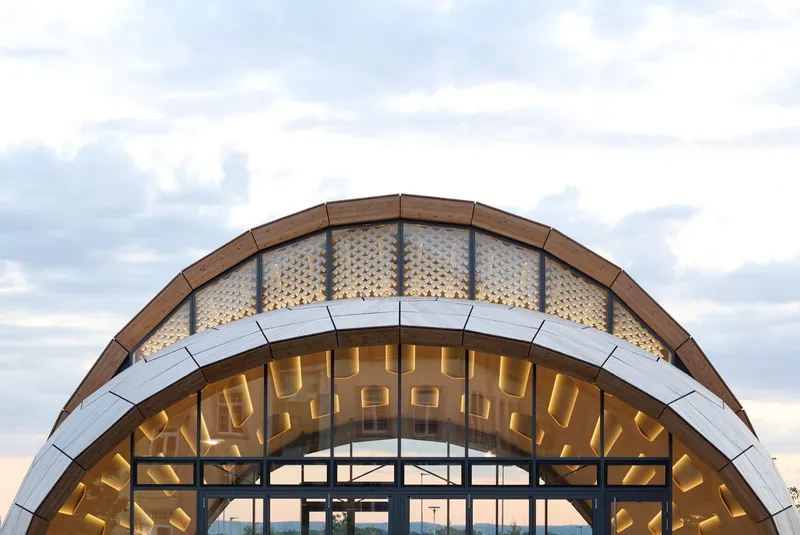
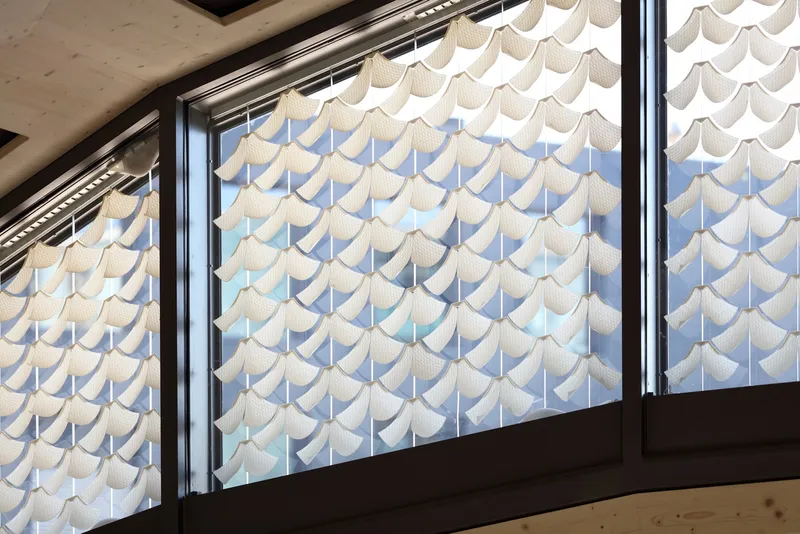
A key feature of the pavilion is the "Solar Gate," a large-scale skylight equipped with a biomimetic, energy-autonomous, 4D-printed shading system. This system regulates the indoor climate by adapting to environmental conditions, reducing the need for conventional heating and cooling systems. Additionally, the building incorporates a thermally activated floor slab made of recycled concrete, enhancing energy efficiency.
Sustainability and Research Impact
Compared to traditional timber buildings, the livMatS Biomimetic Shell reduces environmental life cycle impacts by 50%. The project serves as a platform for developing innovative, cross-disciplinary research ideas, demonstrating how integrative computational design and construction methods can lead to more sustainable architectural solutions.
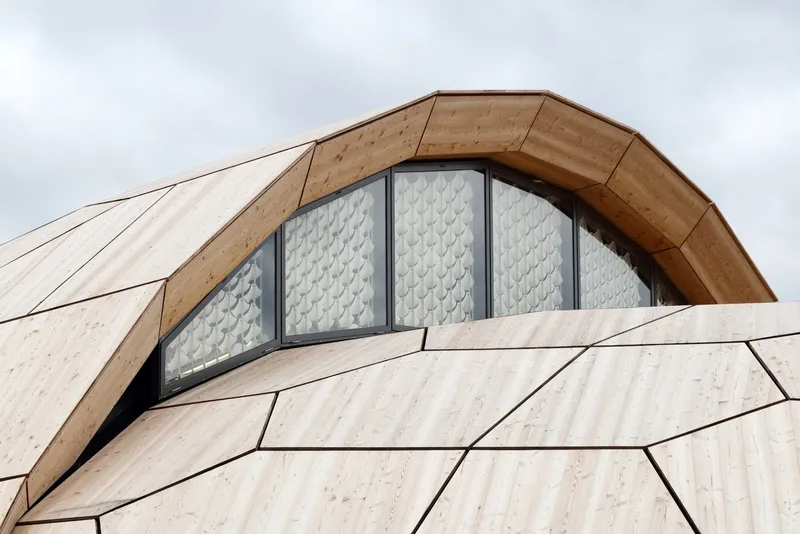
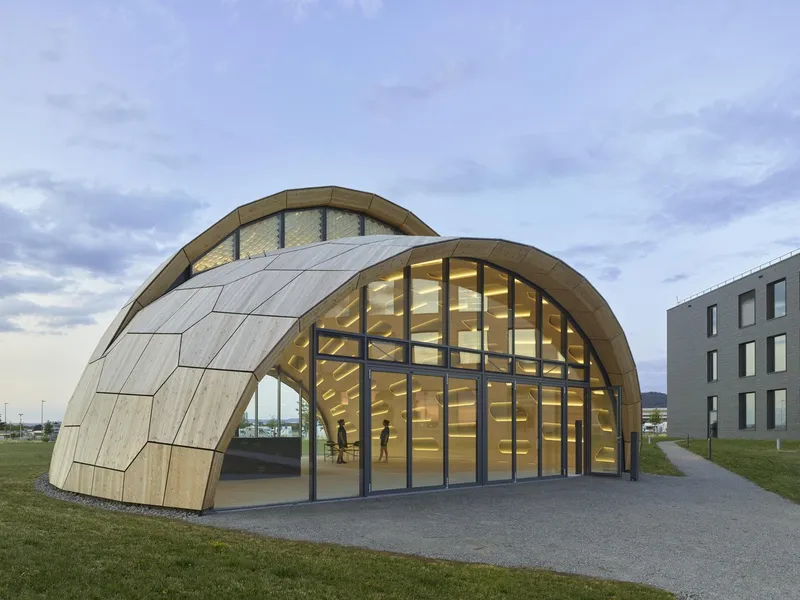
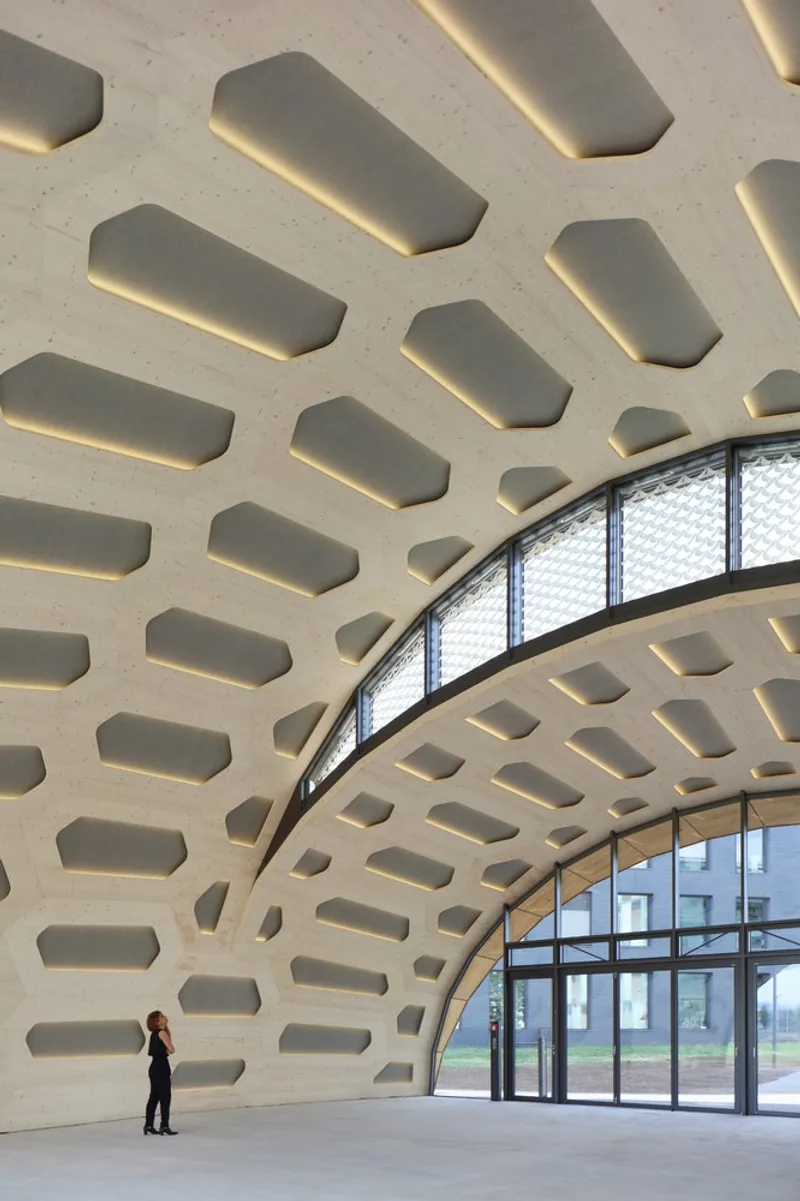
The livMatS Biomimetic Shell exemplifies the potential of bioinspired design and advanced construction technologies in creating sustainable, adaptive, and resource-efficient buildings. As a research pavilion, it not only provides a functional space for innovation but also sets a benchmark for future architectural practices.
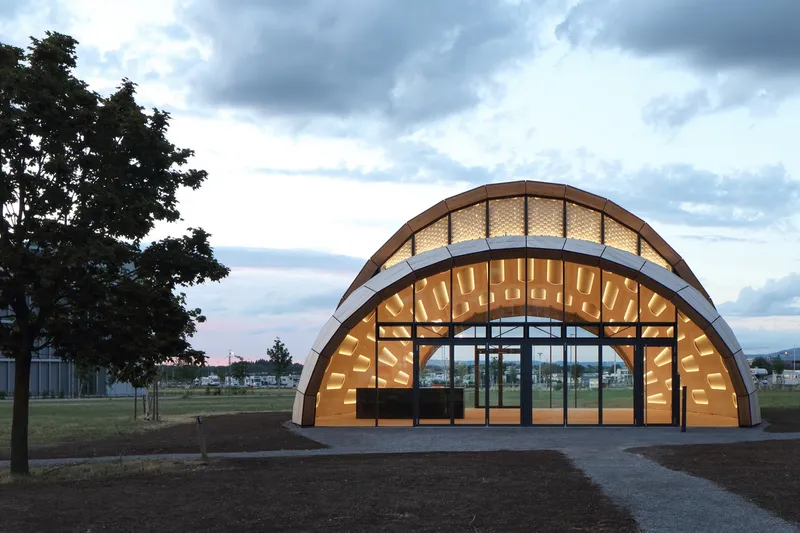
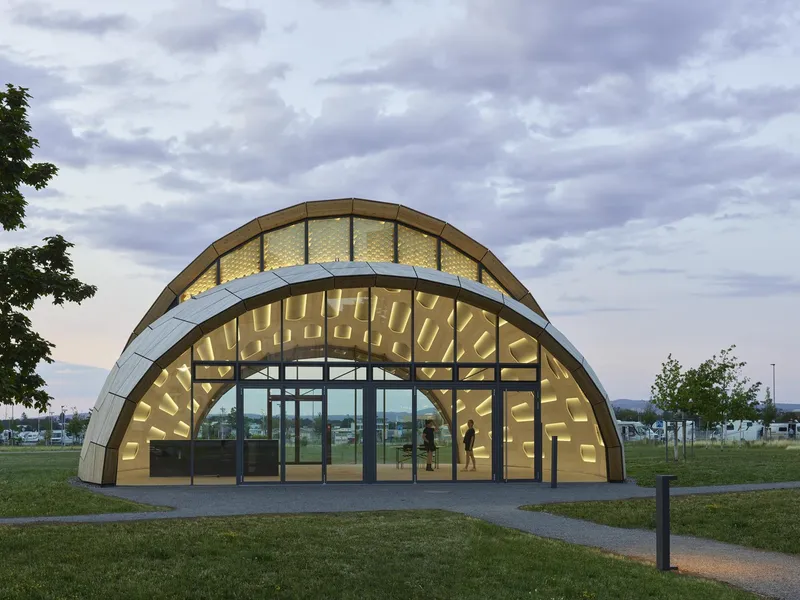
All the photographs are works of Roland Halbe, Conné van d’Grachten


Popular Articles
Popular articles from the community


Opera on the Sea: Driftwood Logic Shapes a Timber Opera House on Estonia's Coast
Trevor Orgill's opera house translates the entangled drift of floating timber into a civic building where wood, water, and music converge.

Aquadapt: An Underwater Habitat That Rewrites Its Rooms by the Hour
Curved modules ring the seabed while one shell shifts from breakfast room to cinema, farm and football pitch as residents' needs change.


graciastudio Turns a Viewless Tijuana Lot Inward Around a Courtyard of Concrete, Timber and Trees
In Tijuana, Jorge Gracia's GA2 House stacks a timber-clad private floor over exposed concrete and replaces a missing view with a planted interior patio.

Manzana Morphosis: Stretching Barcelona's Grid into a Living Landscape for 2050
A radical reworking of the Eixample manzana turns density into a tool for generous public space, vertical ecology, and environmental performance.

Similar Reads
You might also enjoy these articles


Hodi-Mandai Geram
Project Function: Preservation and revitalization of the Intangible heritage and socio-spatial identity of the Hodi by Housing, Cultural Memory Center, Sacred Grove, landscape, local tourism economy


Olio Towers: A Mid-Rise for Performers That Fuses Housing, Rehearsal, and Stage
Located blocks from Houston's Theater District, this modular tower stacks living units around a central performance atrium.

Oasis: Modular Green Housing Carved into Dhaka's Urban Fabric
A shortlisted Plugin Housing entry reclaims unauthorized settlements in Dhaka with stepped concrete volumes, green roofs, and ventilation-driven design.

Black Hole: A Floating Megastructure for the Post-Physical Era
Emiliano Mazzarotto envisions a spherical, self-scaling arena where e-sports, digital hotels, and holographic stadiums replace traditional public space.

Explore Biomimicry Frontiers Competitions
Discover active competitions in this discipline

Challenge to design public laboratory

Challenge to reimagine the Iron Throne

Photograph architecture without architects

Illustrate the lost glory of Angkor Wat - Render Challenge
Comments (0)
Please login or sign up to add comments
No comments yet. Be the first to comment!