
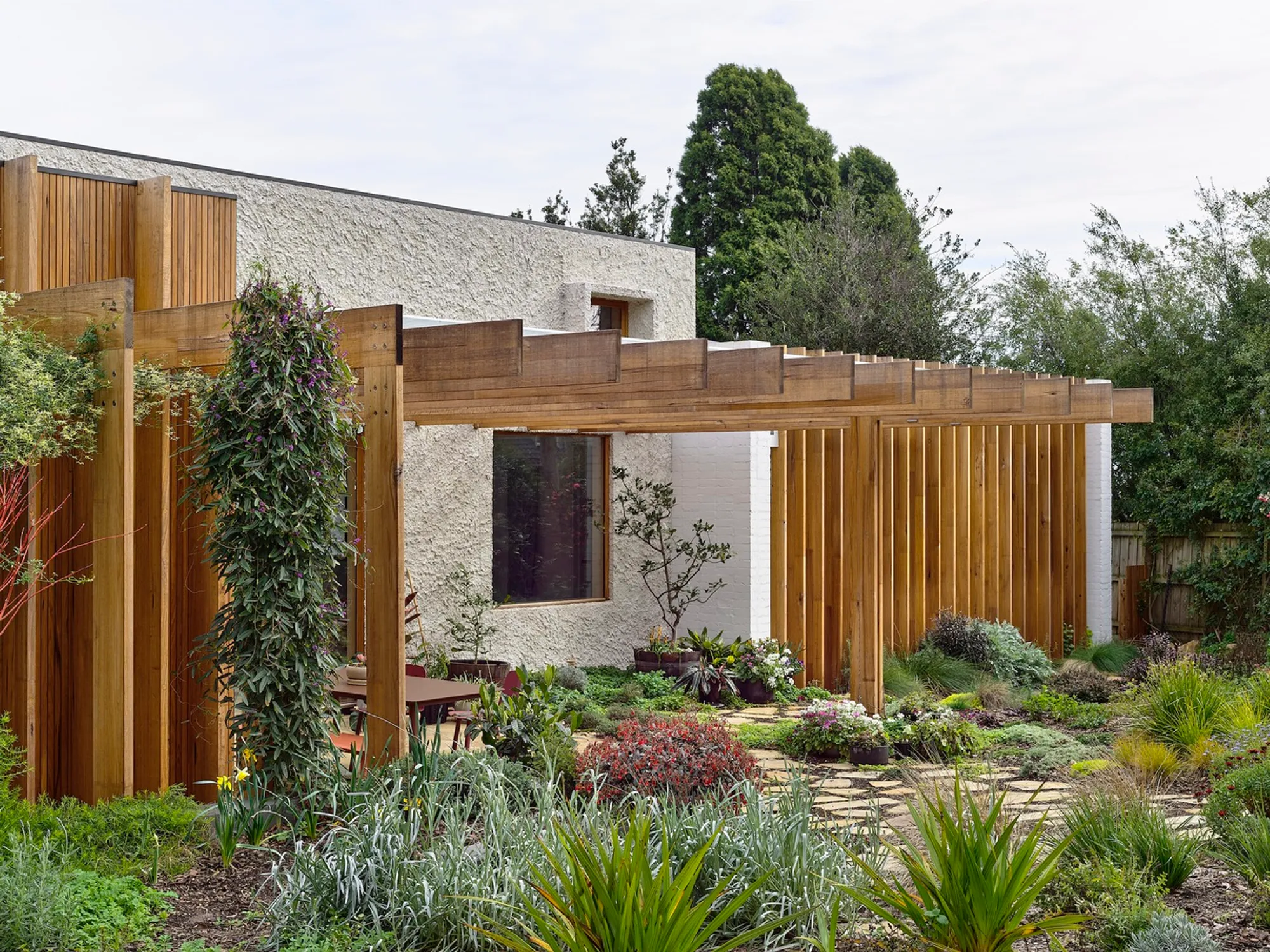
Local House by Zen Architects: A Sustainable Sanctuary Rooted in Heritage and Landscape
A sustainable, modern home in Melbourne blending heritage context, natural materials, and passive design for multigenerational, adaptable living.


Context and Heritage: Embracing Mount Eagle Estate's Legacy
Local House is situated within the historic Mount Eagle Estate, a suburb laid out in 1915 by Marion Mahoney and Walter Burley Griffin. Known for its curving roads, native vegetation, and community-focused planning, the estate encourages homes that harmonize with the natural topography rather than dominate it. Zen Architects honored this philosophy by designing a residence that sits gently within the landscape and respectfully reinterprets the area’s character.
Client Brief: Design for Family, Art, and Sustainability
Designed for a couple who value art, design, and travel, and who recently became grandparents, the home needed to accommodate a growing extended family. The brief emphasized sustainability, spatial flexibility, and accessibility. The result is a home that can evolve with changing family needs—supporting gatherings, quiet retreat, and long-term aging in place.
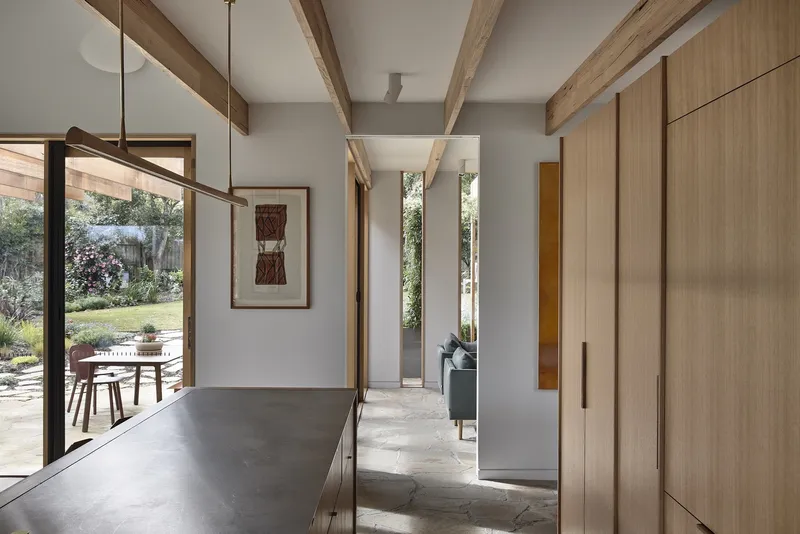
Architectural Layout: Zoning for Privacy and Connection
The single-story structure is organized into three distinct zones:
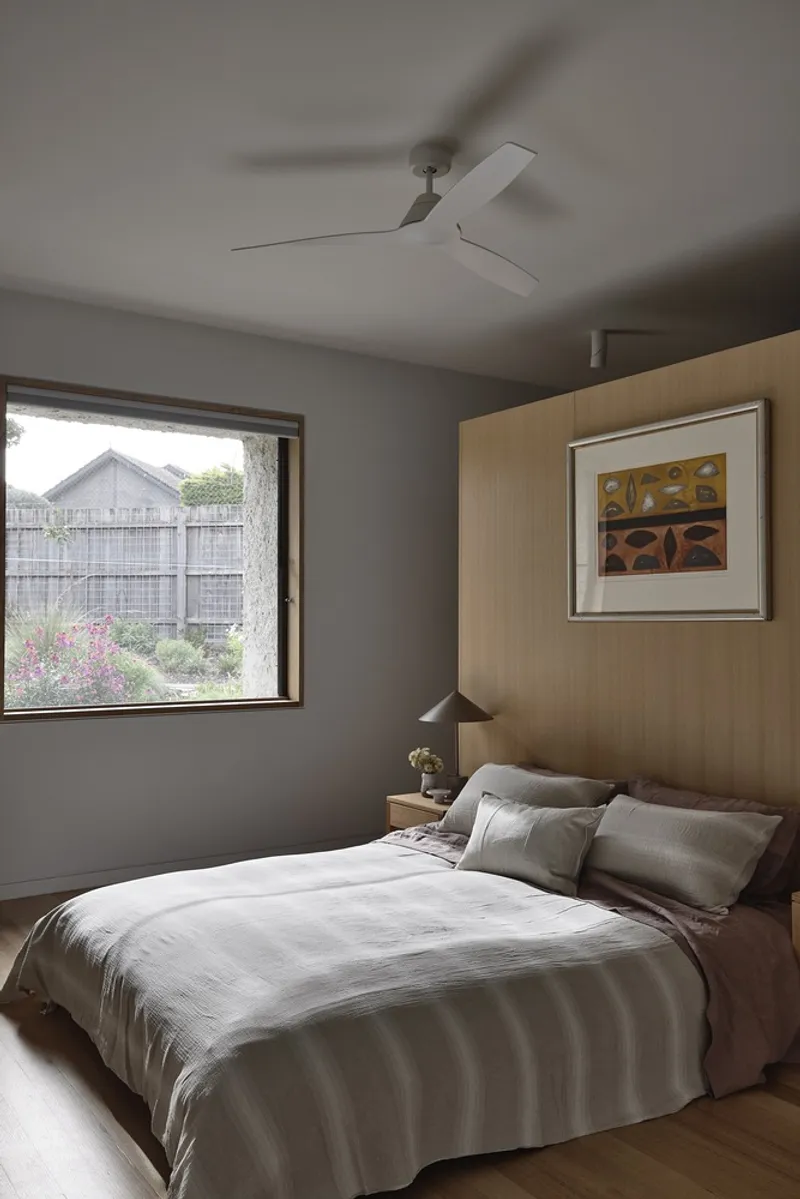
- Private Wing (East): Includes the primary bedroom, ensuite, library, and a sitting room—intimate, textural, and inward-looking.
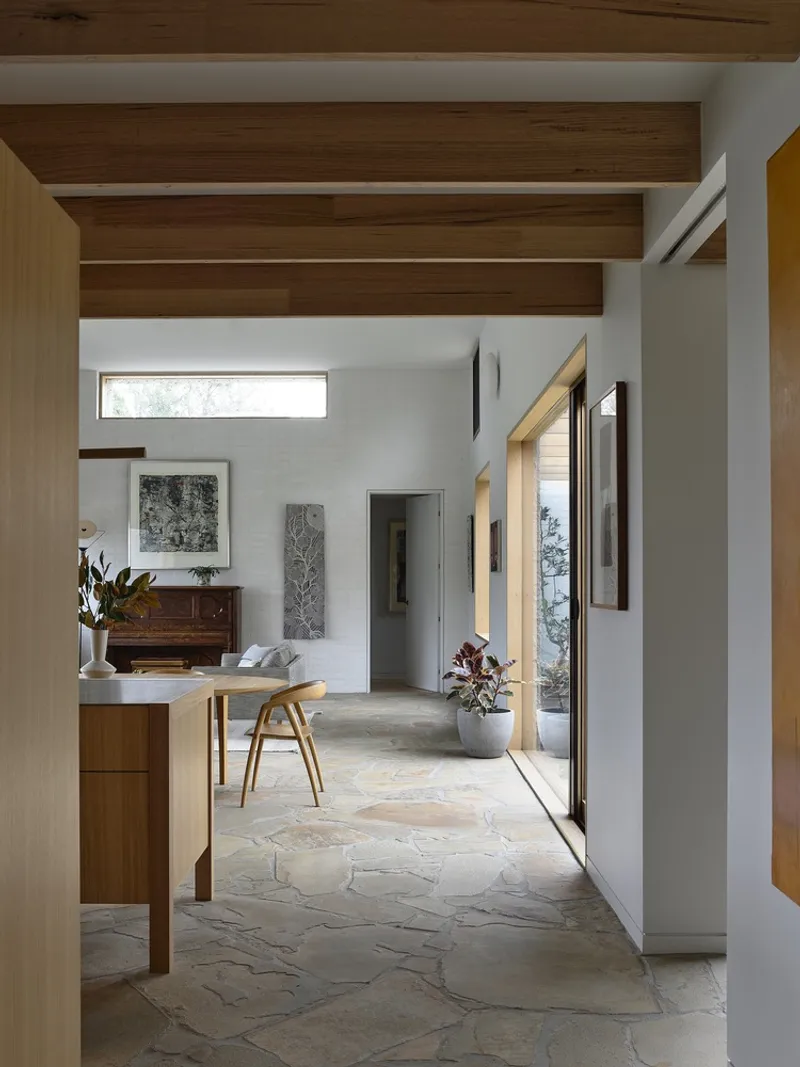
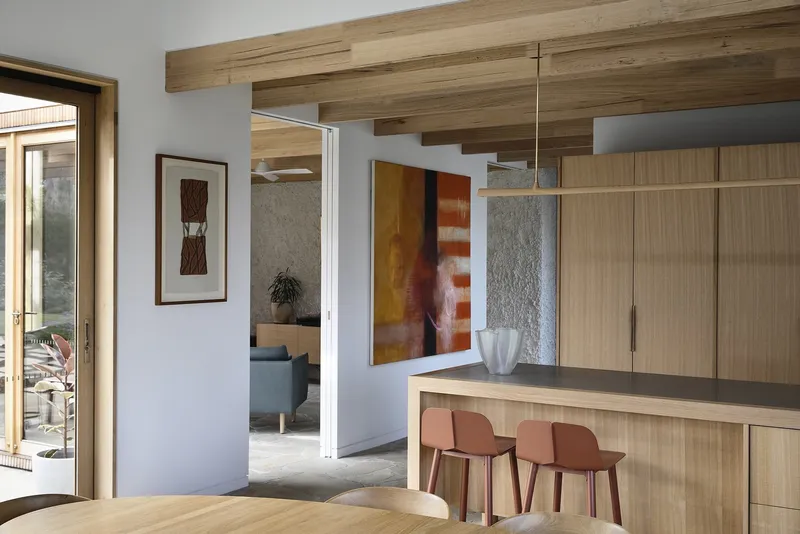
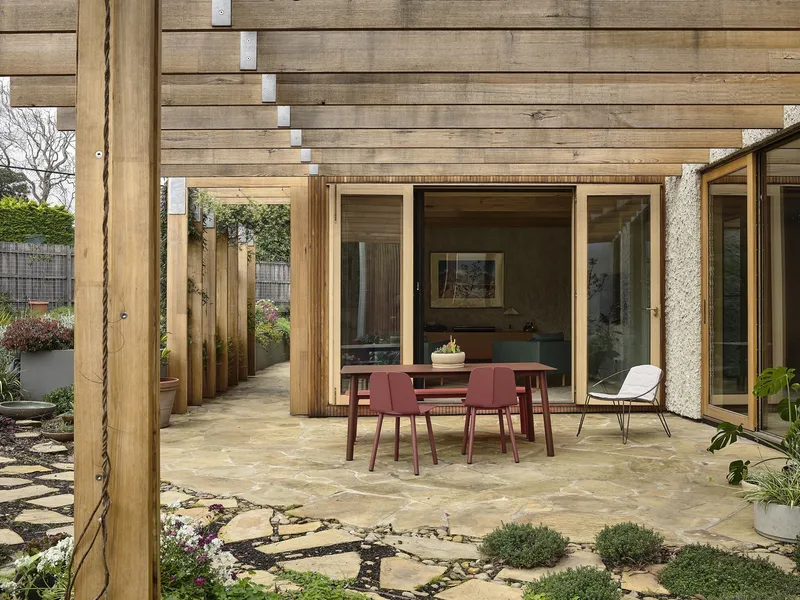
- Public Core (Center): Open kitchen, dining, and living areas—flooded with light, spacious, and seamlessly connected to the outdoors.
- Guest Wing (West): Contains modest guest bedrooms and a yoga room—self-contained and ideal for visiting family.
The layout allows the house to expand and contract with the number of occupants while maintaining comfort and functionality.
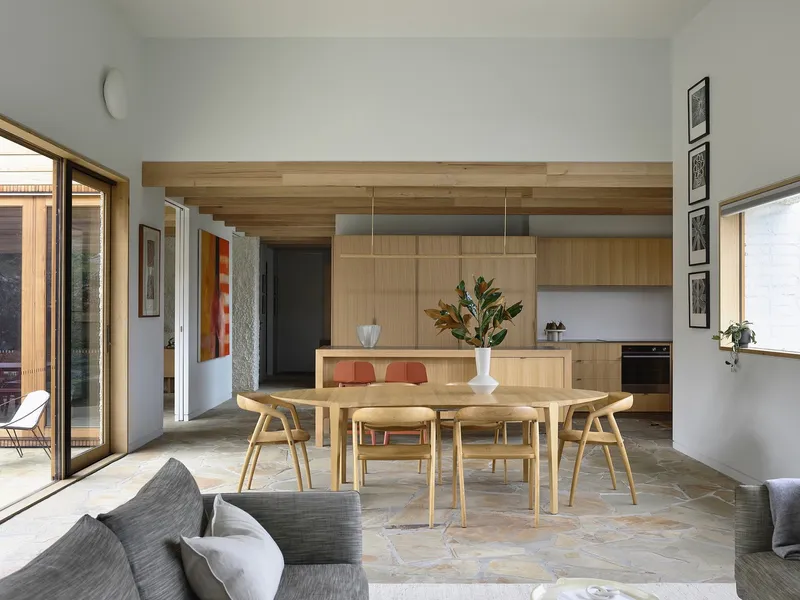
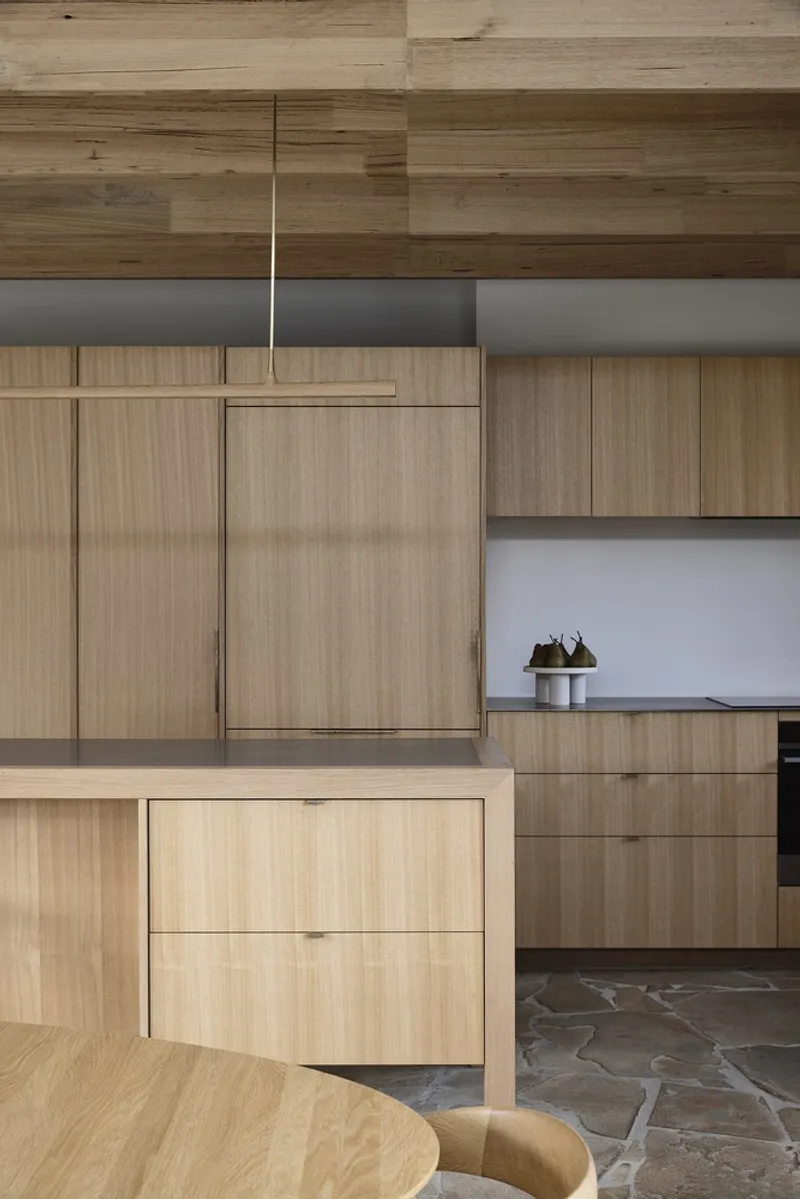
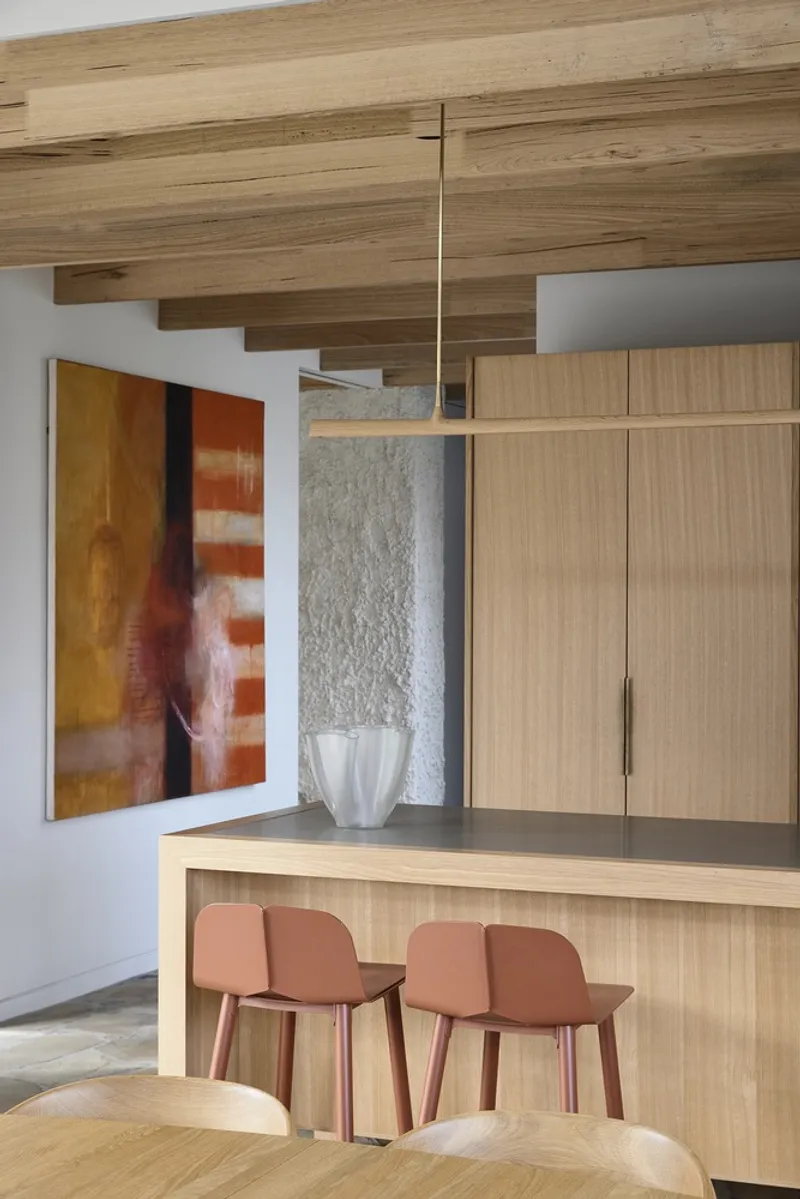
Material Palette: Locally Sourced, Textured, and Timeless
Zen Architects employed a natural and tactile palette using locally sourced, recycled, and sustainable materials:
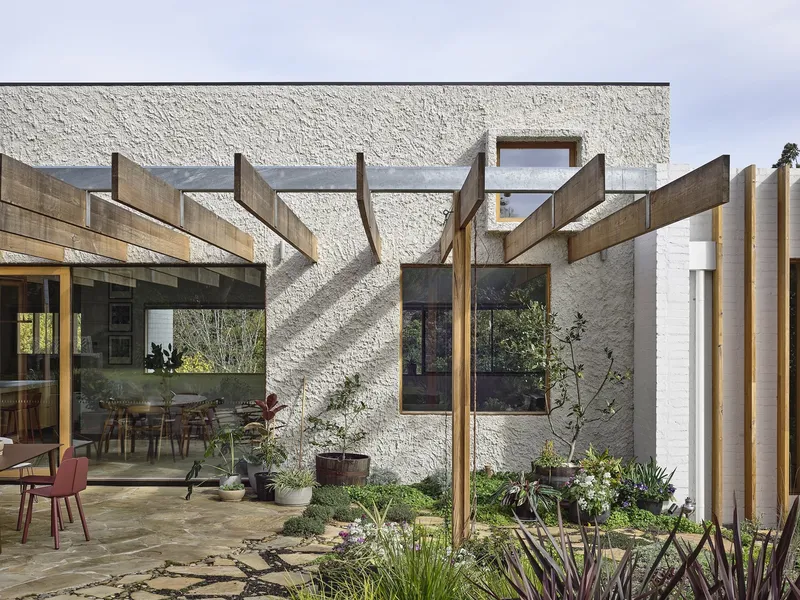
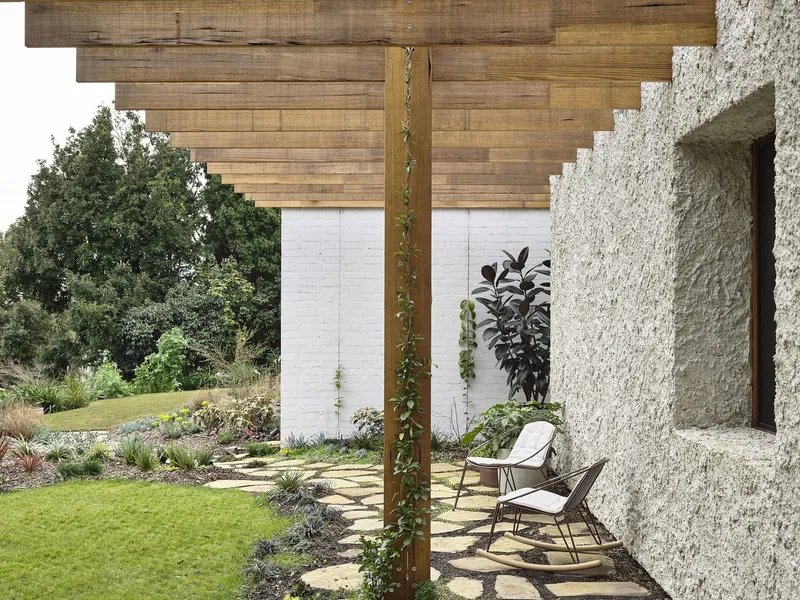
- Recycled brick and coarse render on the exterior blend with the local heritage aesthetic.
- Castlemaine slate pavers extend from the outdoor spaces into the public interior zones.
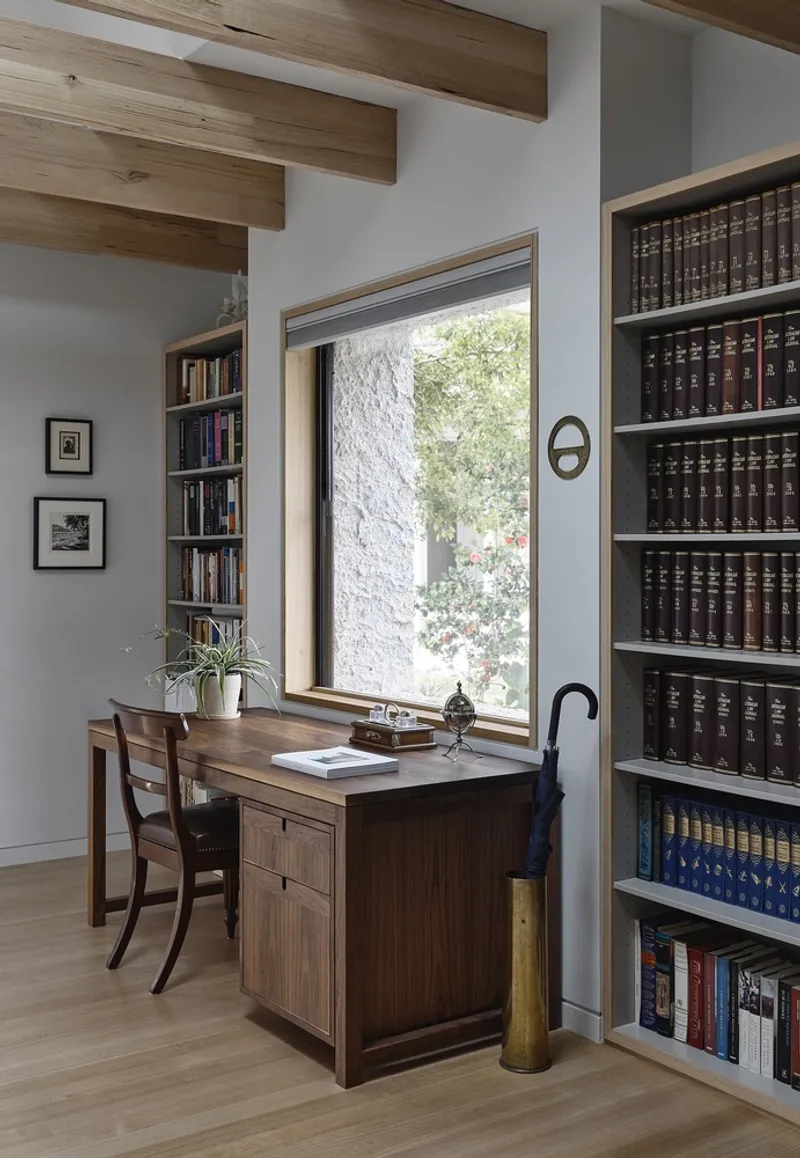
- Victorian Ash timber beams appear both outside (pergolas) and inside (entry, kitchen, library), providing warmth and cohesion.
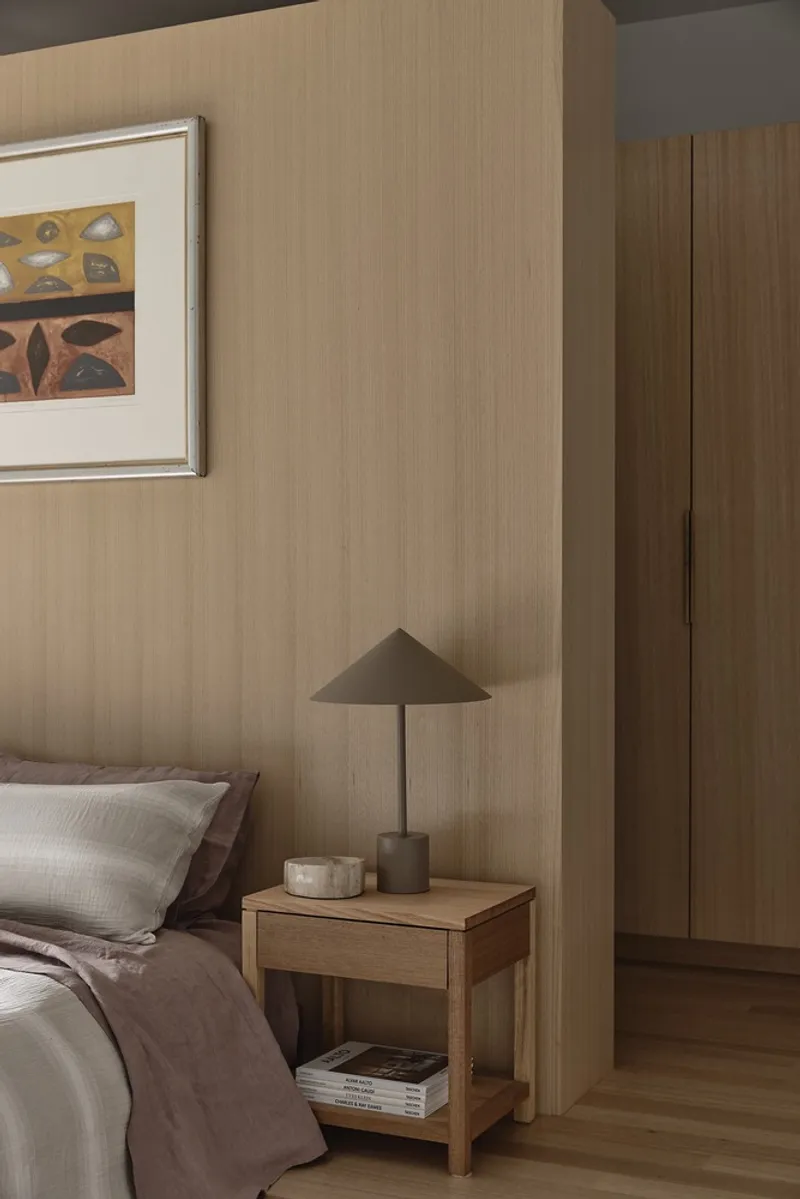
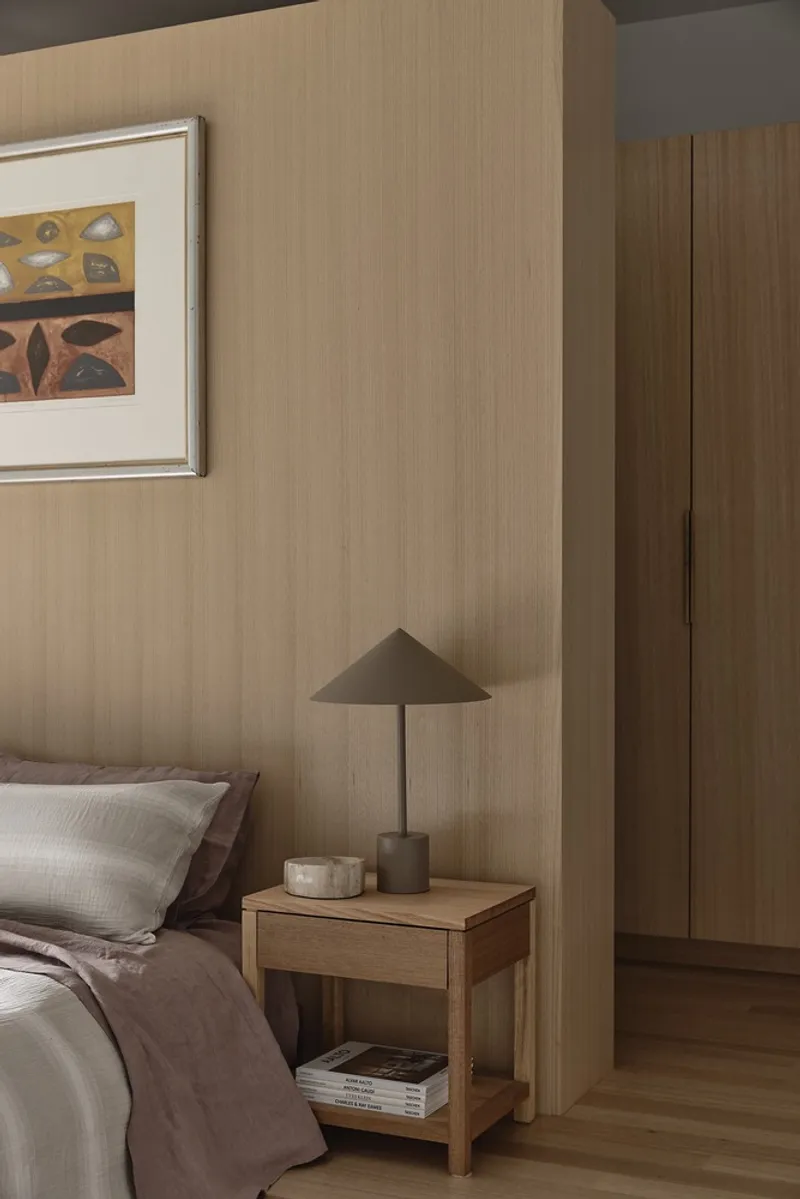
- Vertical timber screens and window frames create a sense of enclosure and layered privacy.
These materials are chosen not just for sustainability, but also for durability and low maintenance over time.
Sustainability: Passive Solar and Energy Efficiency
Environmental performance is integrated throughout the design:
- North-facing orientation captures winter sunlight and maximizes thermal gain.
- Deep window hoods and eaves provide summer shading.
- Recessed southern windows ensure privacy from the street while maintaining ventilation.
- Natural cross-ventilation and considered glazing reduce energy use.
- The reduced building footprint increases garden area and decreases environmental impact.
Landscape Integration: Native and Layered Planting
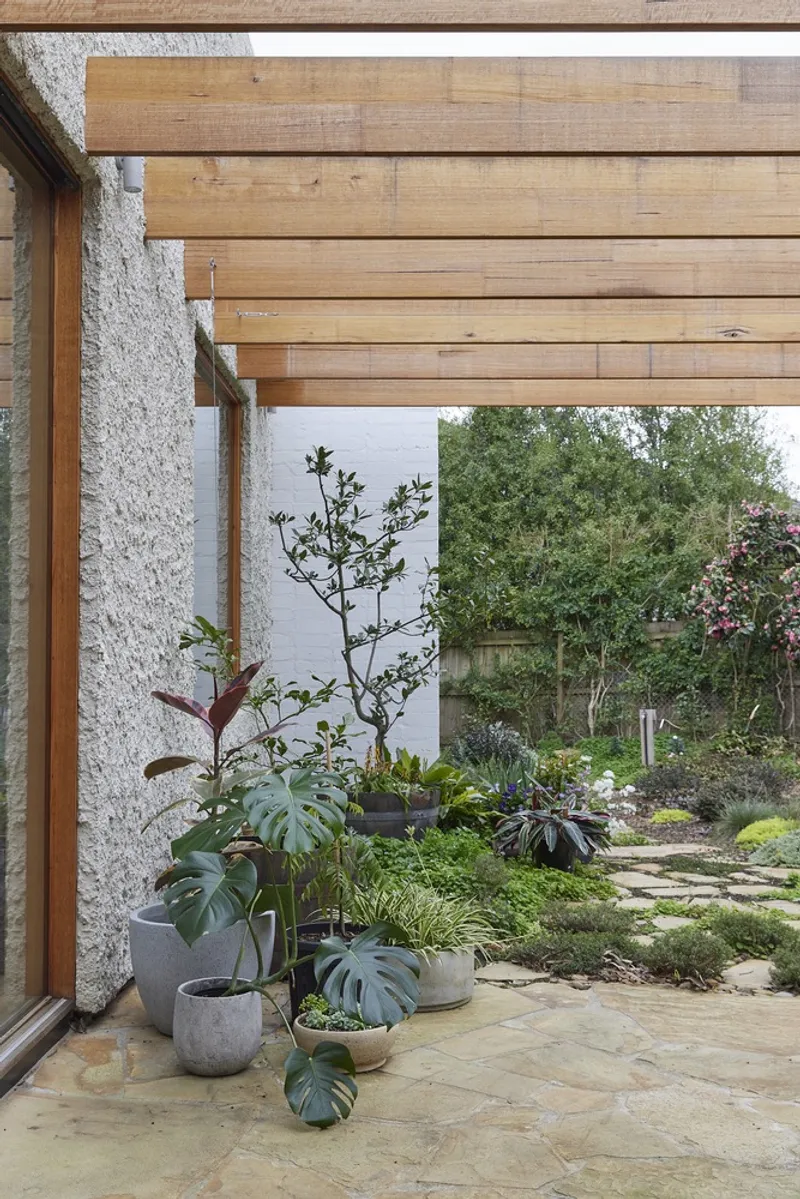
The landscape design adheres to the estate’s heritage overlay, using a diverse mix of native plant species. These layers of vegetation are intended to grow over, around, and through the architecture—blurring the line between built form and nature. Over time, the house will become even more embedded in its setting, fostering biodiversity and seasonal change.
A Contemporary Home with Enduring Values
Local House by Zen Architects is more than just a modern residence. It is a thoughtfully executed vision of sustainable living, timeless design, and deep respect for place. With its adaptive layout, sensitive material use, and strong environmental performance, it offers a blueprint for future-facing homes grounded in heritage and nature.




Popular Articles
Popular articles from the community


Conexión: Biophilic Design Reimagines High-Rise Living in Hong Kong
Conexión reimagines high-rise living in Hong Kong through biophilic design, green facades, shared spaces, daylight, water and nature within.

Play: Fragments of Their World
Familiar architecture becomes modular playground design, creating safe spaces where displaced children can learn, connect, imagine and play.

Lunar Spiral: Space Architecture Shaped by the Mathematics of the Universe
Lunar Spiral reimagines space architecture through Fibonacci geometry, lunar regolith, levitating habitats, and self-sustaining Moon living.

Riyadh For All: Intergenerational Urban Design for Active Aging in Rabat
Riyadh For All reimagines urban design in Rabat with intergenerational co-living, adaptive courtyards, and Moroccan cultural exchange today.

Similar Reads
You might also enjoy these articles


Hodi-Mandai Geram
Project Function: Preservation and revitalization of the Intangible heritage and socio-spatial identity of the Hodi by Housing, Cultural Memory Center, Sacred Grove, landscape, local tourism economy


Olio Towers: A Mid-Rise for Performers That Fuses Housing, Rehearsal, and Stage
Located blocks from Houston's Theater District, this modular tower stacks living units around a central performance atrium.

Oasis: Modular Green Housing Carved into Dhaka's Urban Fabric
A shortlisted Plugin Housing entry reclaims unauthorized settlements in Dhaka with stepped concrete volumes, green roofs, and ventilation-driven design.

Black Hole: A Floating Megastructure for the Post-Physical Era
Emiliano Mazzarotto envisions a spherical, self-scaling arena where e-sports, digital hotels, and holographic stadiums replace traditional public space.

Explore Architecture Competitions
Discover active competitions in this discipline



Challenge to reimagine the Iron Throne


Photograph architecture without architects


Illustrate the lost glory of Angkor Wat - Render Challenge


Design challenge to reuse E-waste
Comments (0)
Please login or sign up to add comments
No comments yet. Be the first to comment!