

London School of Architecture Restoration and Adaptive Reuse by IDK
IDK Architects transformed a historic Dalston church hall into the sustainable, flexible, and affordable London School of Architecture education center.


The London School of Architecture in Dalston, London, underwent a remarkable transformation under the guidance of IDK Architects. Completed in 2022, this project revitalized a late 19th-century church hall, converting it into one of the UK’s most accessible design education centers. With a focus on sustainability, affordability, and community, the restoration showcases innovative adaptive reuse strategies in urban architecture.


Reviving a Historical Landmark
The Dalston church hall, once in disrepair, presented a unique challenge. IDK Architects, led by James Pockson, approached the project with a clear vision: restore the building’s original character while adapting it for modern educational use. Layers of piecemeal additions from previous decades were carefully removed, revealing the building’s historic fabric and creating flexible spaces suitable for contemporary learning.
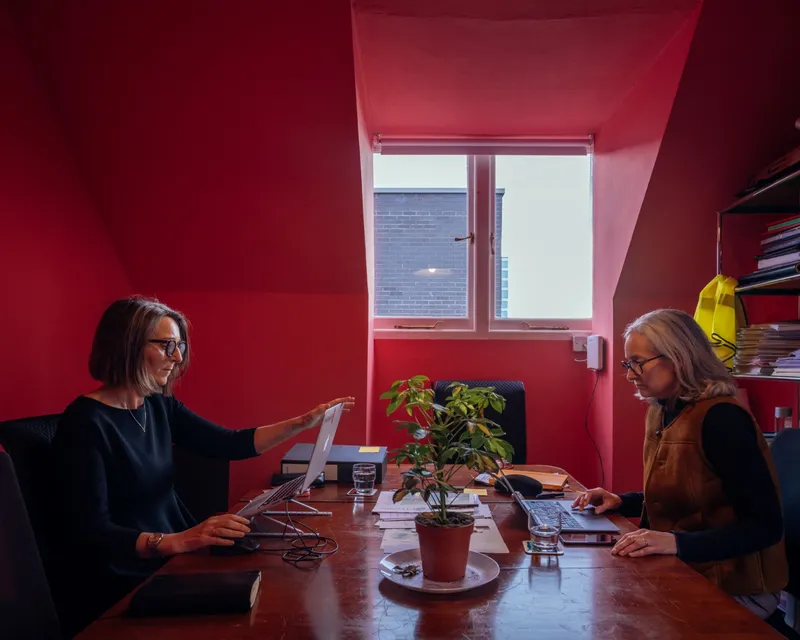

The building now accommodates a wide range of functions, including:
- Architecture school classrooms and studios
- Furniture-making workshops
- Shared seminar and lecture spaces
- Administrative offices
- Large adaptable studio spaces
This mix of functions reflects a thoughtful balance between preserving heritage and addressing present-day educational needs.
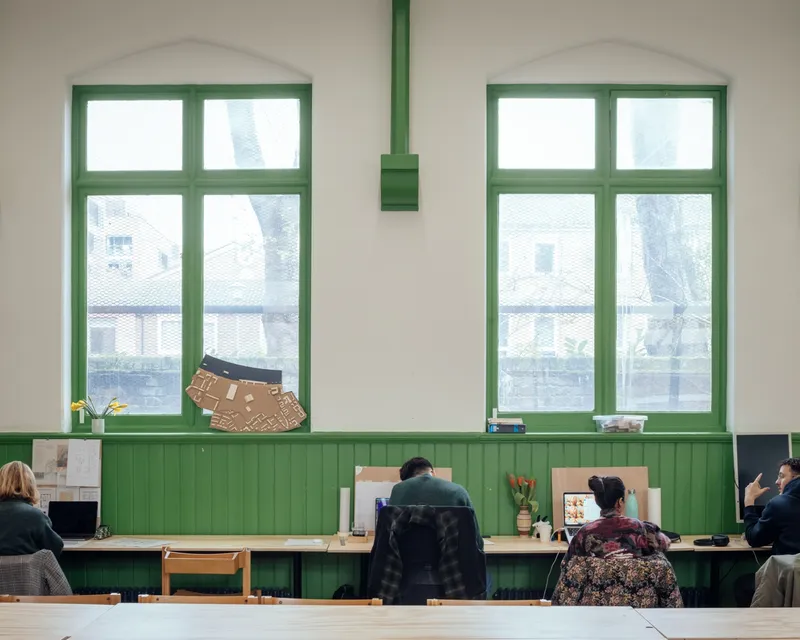
Sustainable and Circular Design
Sustainability was central to the project. Circular procurement methods were employed wherever possible. All studio furniture was sourced second-hand, including chairs salvaged from a brutalist church facing demolition. Lighting fixtures were rescued from department stores and remanufactured to near-new quality, reducing both costs and environmental impact by 80% in terms of carbon footprint.
Additionally, monitoring systems within the building track air quality, temperature, and humidity. These metrics will guide the second-phase retrofit, ensuring the school evolves sustainably while maintaining comfort and efficiency.

Affordable, Flexible, and Community-Oriented
With a constrained budget, IDK delivered an affordable yet high-quality design education center. The concept of “minimum viable restoration” allowed the school to open quickly while laying the groundwork for future improvements. The approach prioritizes careful measurement, adaptive reuse, and sustainable practices without compromising on design quality.

Materiality and Interior Design
The interiors celebrate the building’s history while accommodating modern educational requirements. Natural light floods the spaces through existing windows, highlighting restored timber floors and exposed structural elements. Furniture and fixtures, thoughtfully repurposed, contribute to a warm, inviting atmosphere while exemplifying sustainable design principles.

Technical Expertise and Collaboration
The success of this project relied on seamless collaboration across multiple disciplines:
- Structural Engineers: Structure Workshop
- Lighting Design: Egg Lighting
- Construction: Hexagon
- Manufacturers: SLV, Sera
This integrated approach ensured the historical integrity of the building was preserved while delivering a highly functional, modern architecture school.
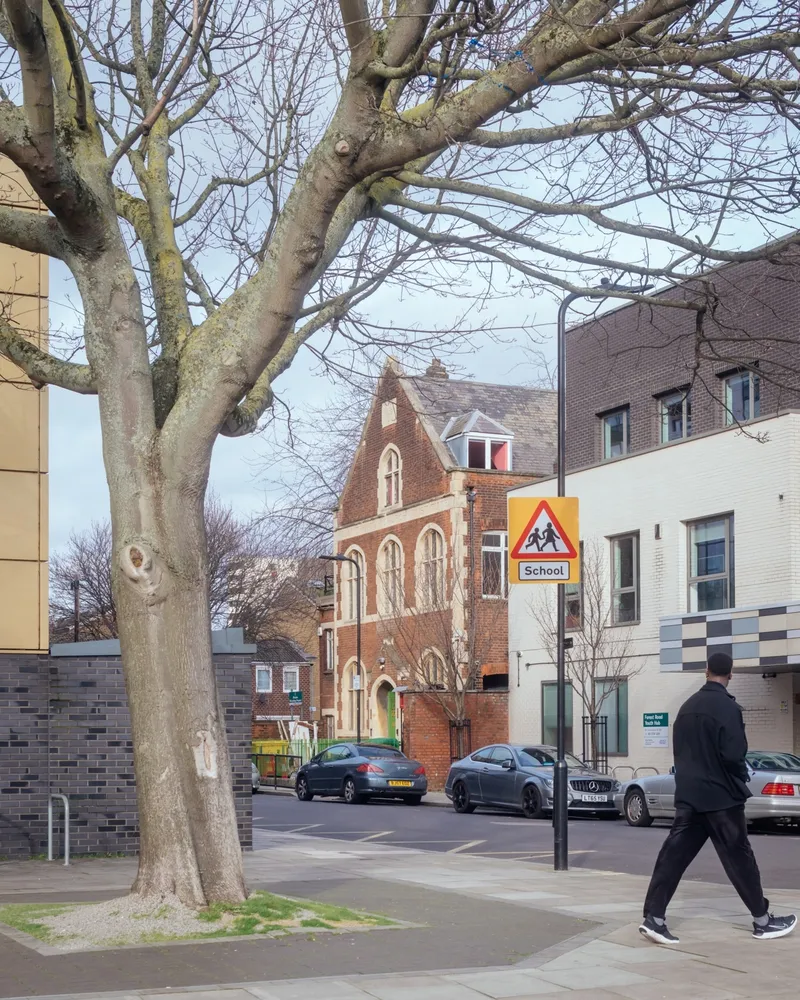

A Model for Future Architectural Education Spaces
The London School of Architecture stands as a leading example of adaptive reuse in educational architecture. By blending heritage conservation, sustainability, and affordability, IDK demonstrates how historical buildings can be reimagined for contemporary learning environments. This project not only preserves a piece of London’s architectural heritage but also promotes accessible, flexible, and environmentally responsible design education.


All photographs are works of
Jim Stephenson


Popular Articles
Popular articles from the community


Cloaked Colonization: A Mobile Underwater Habitat That Moves Like a Fish
Micah Abaya's shortlisted EHC Pacific entry reimagines ocean settlement as a dispersed network of self-sustaining architectural organisms.

Singing Woman: An Opera House That Performs Before the Curtain Rises
Ovidiu Cristian Pavel's conceptual opera house translates Estonia's choral identity into a sculpted waterfront landmark facing the Baltic Sea.

Opera on the Sea: Driftwood Logic Shapes a Timber Opera House on Estonia's Coast
Trevor Orgill's opera house translates the entangled drift of floating timber into a civic building where wood, water, and music converge.

The Amber Palace Opera: A Geological Fiction Surfaces on Tallinn's Baltic Waterfront
Pierre Brillard reimagines a Baltic legend as a public landscape, opera house, and waterfront promenade rooted in Tallinn's coastal identity.

Similar Reads
You might also enjoy these articles

FAMM Arquitectura Organizes Ten Villas Around Courtyards and Jungle in Nosara, Costa Rica
El Molino pairs two elongated volumes with deep overhangs and timber louvers to build a compact coastal community five minutes from the beach.
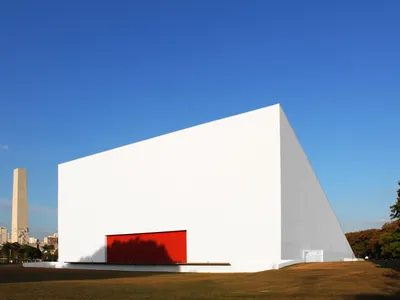
Oscar Niemeyer's Ibirapuera Park Pavilions Define São Paulo's Cultural Identity in Concrete and Curve
A constellation of modernist volumes set within São Paulo's most important urban park, conceived for the city's 400th anniversary in 1954.
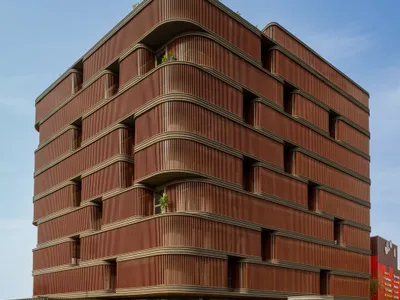
Sanjay Puri Architects Wraps a Jaipur Office Tower in Capsule-Shaped Green Buffers
A nine-level climate-responsive workplace near Jaipur Airport uses stacked planter terraces and aluminium screens to fight 40°C heat.
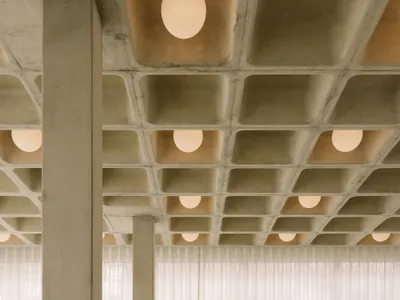
RHO Converts a Berlin Spree-Side Industrial Courtyard into Enkime's 1,000 m² Agency Headquarters
A social media agency's new home in Charlottenburg trades glossy branding for concrete waffle ceilings, glazed tile, and sheer curtains.

Explore Mes School Of Architecture Competitions
Discover active competitions in this discipline

Challenge to reimagine the Iron Throne

Photograph architecture without architects

Illustrate the lost glory of Angkor Wat - Render Challenge

Design challenge to reuse E-waste
Comments (0)
Please login or sign up to add comments
No comments yet. Be the first to comment!