
Long March Cultural Digital Art Museum – A Fusion of History, Digital Art, and Architectural Innovation
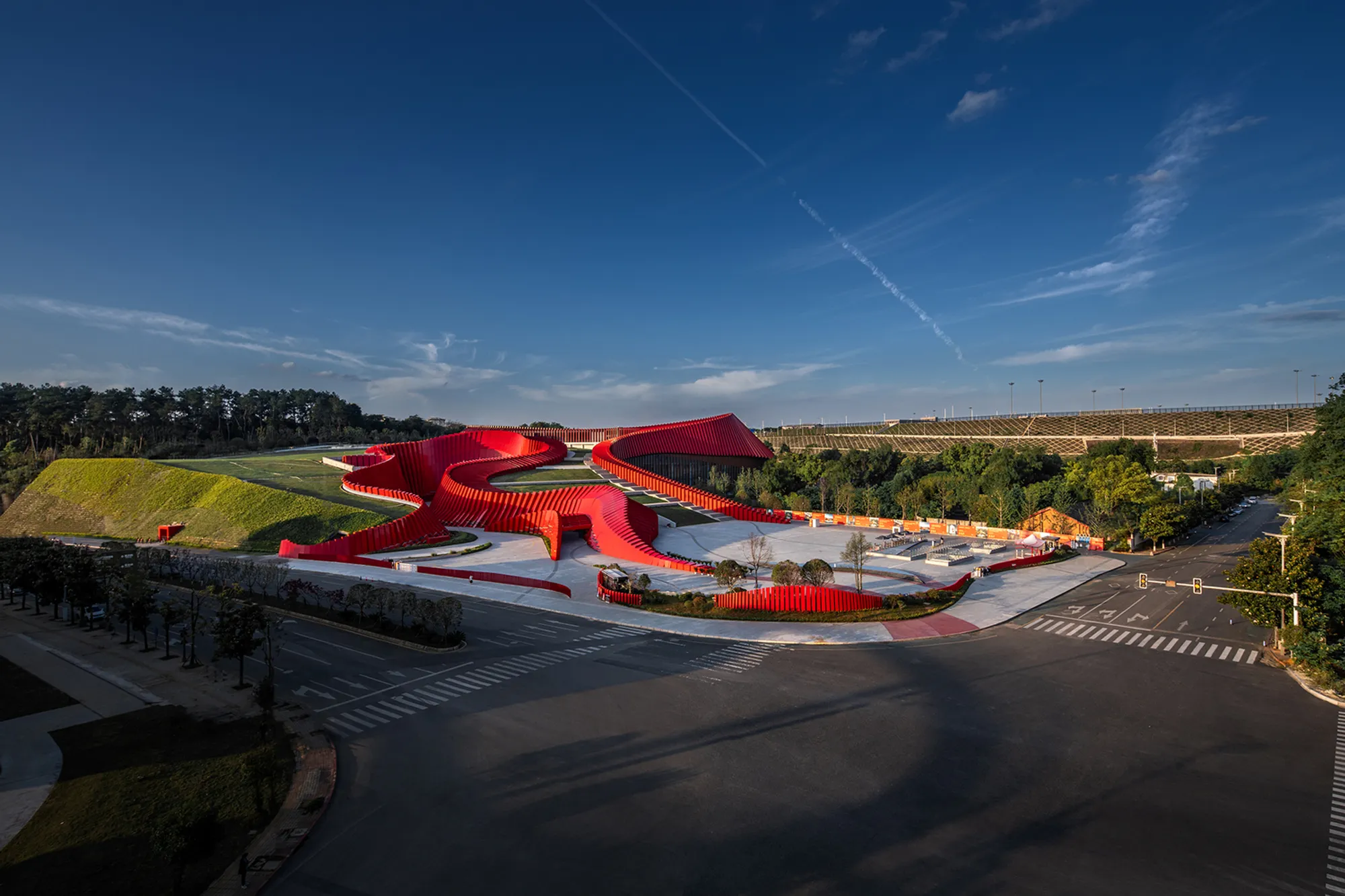
The Long March Cultural Digital Art Museum in Guiyang blends immersive digital art, interactive performances, and red ribbon-inspired architecture honoring Chinese history.


The Long March Cultural Digital Art Museum, designed by China IPPR International Engineering Co., Ltd., stands as a remarkable landmark in Guiyang, China. Officially opened to the public in October 2023, this digital art museum offers an immersive cultural experience, blending historical storytelling, cutting-edge architecture, and interactive digital performances. Covering an area of 53,000 m², the museum reflects a modern reinterpretation of China's revolutionary heritage, centered around the iconic Long March.


Concept and Design Philosophy
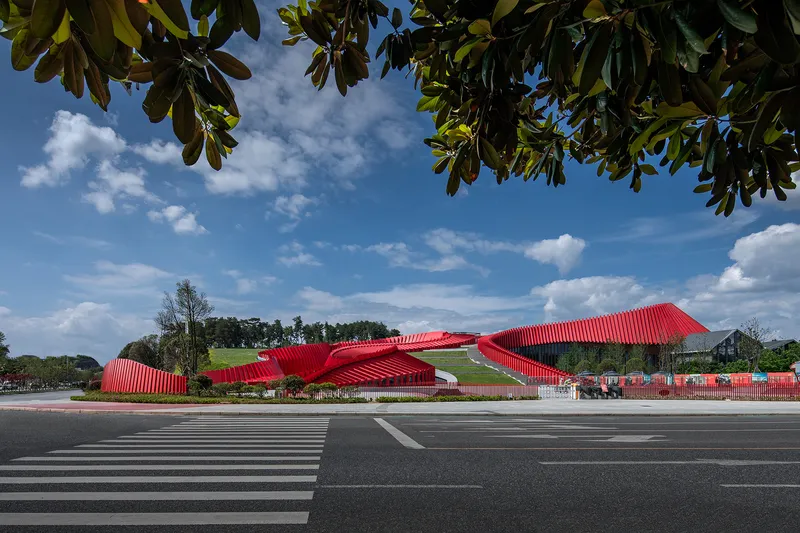
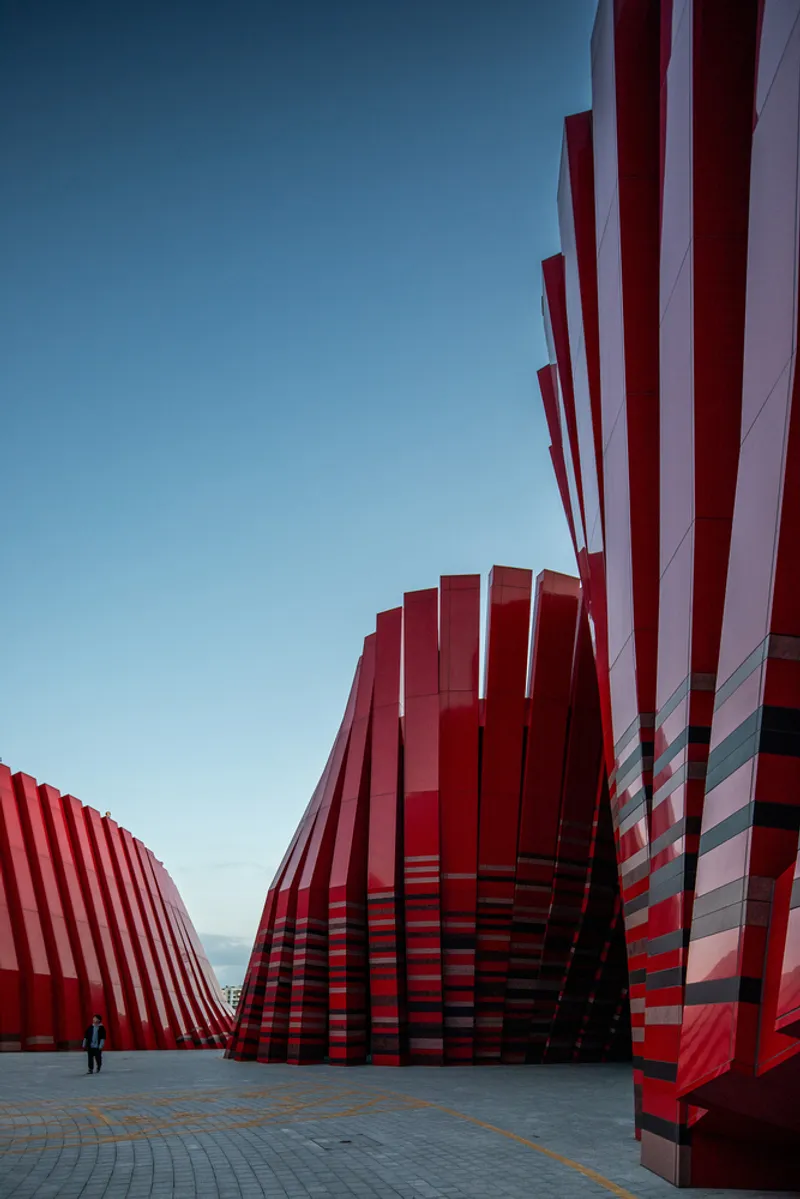
Curated under the guidance of Han Shuang, the museum’s central design concept, “Red Ribbon on the Earth,” ingeniously integrates architecture with the natural landscape. The architects took full advantage of the site’s altitude differences, concealing the large building volume beneath a roof that seamlessly merges with the surrounding mountain terrain. Above this roof, two striking red ribbons appear, symbolizing the enduring spirit of the Long March. These sinuous forms not only embody historical and cultural connotations but also harmonize the structure with its environment, emphasizing sustainable and context-sensitive design.
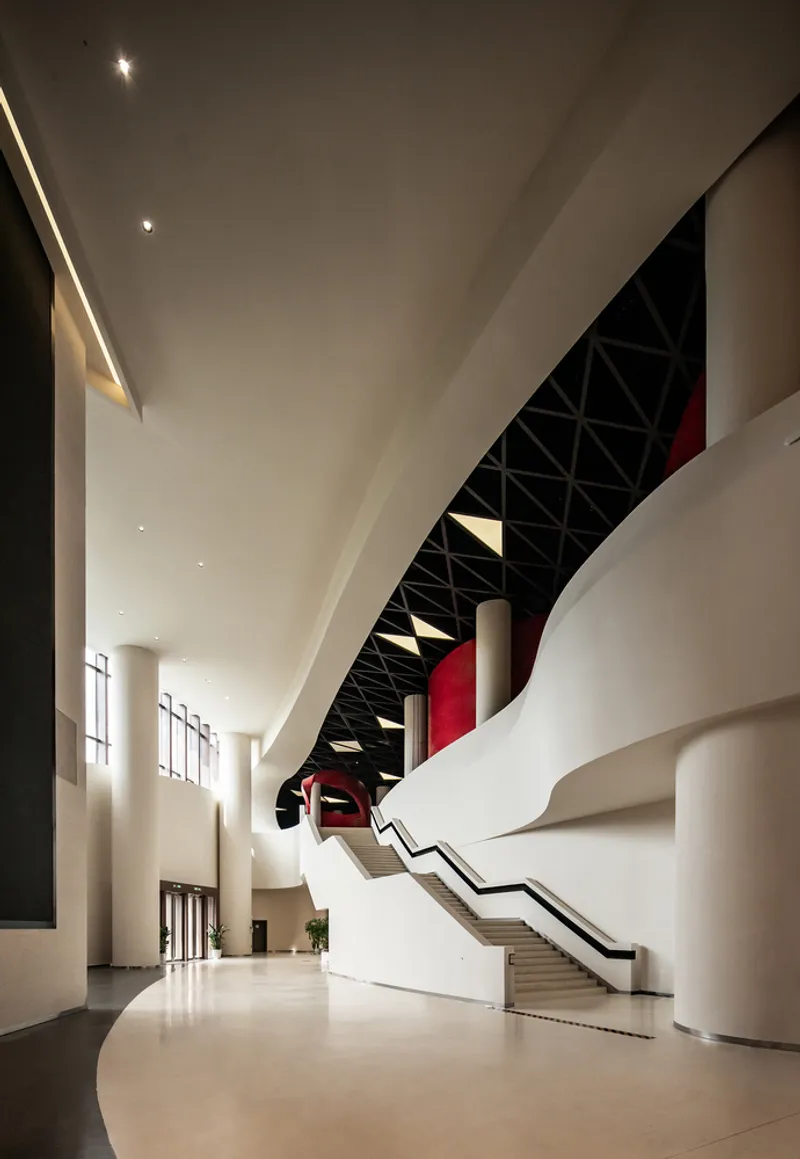
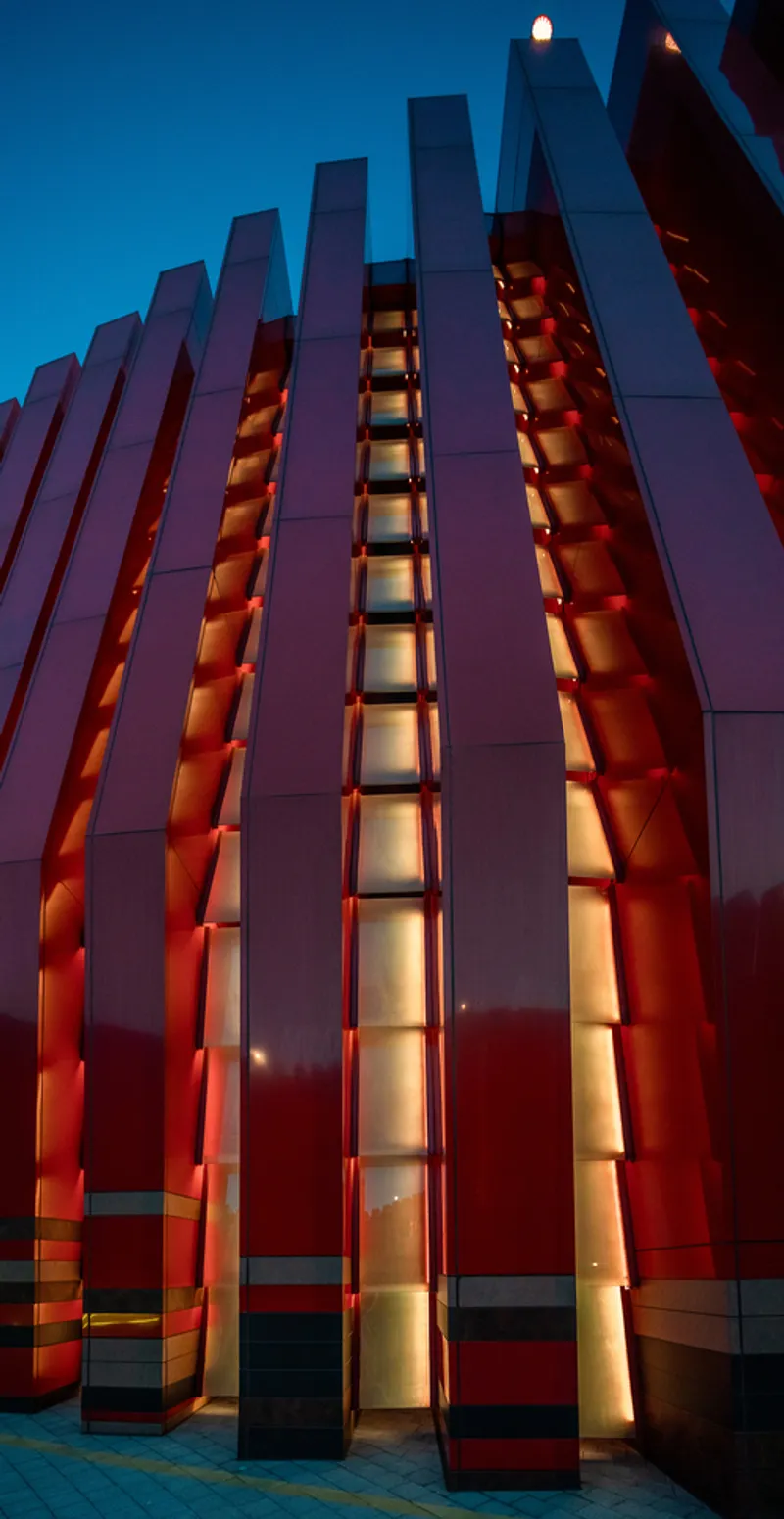
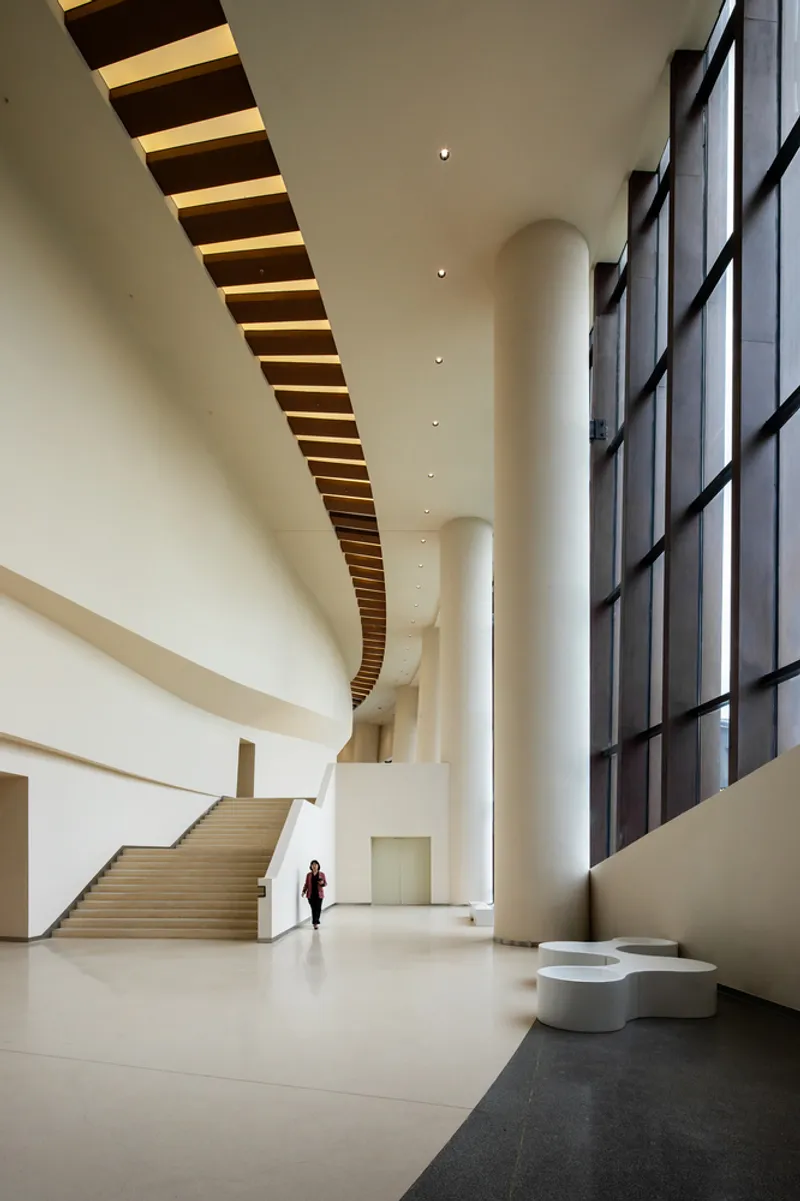
The architectural team, led by Sun Zonglie, Zhu Yilei, and Li Kai, collaborated closely with artists to ensure the building and its artistic narrative were fully integrated, resulting in a space where architecture itself becomes a performative element. The design employs parametric methods to craft smooth, dynamic curves and apertures between structural steel frames that allow natural skylight illumination, creating corridors with shifting light and shadow that enhance the visitor experience.
Spatial Organization and Experience
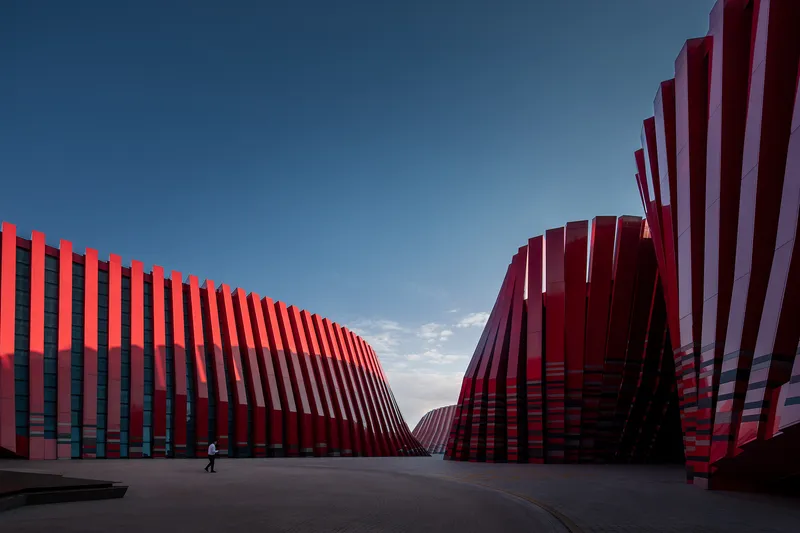
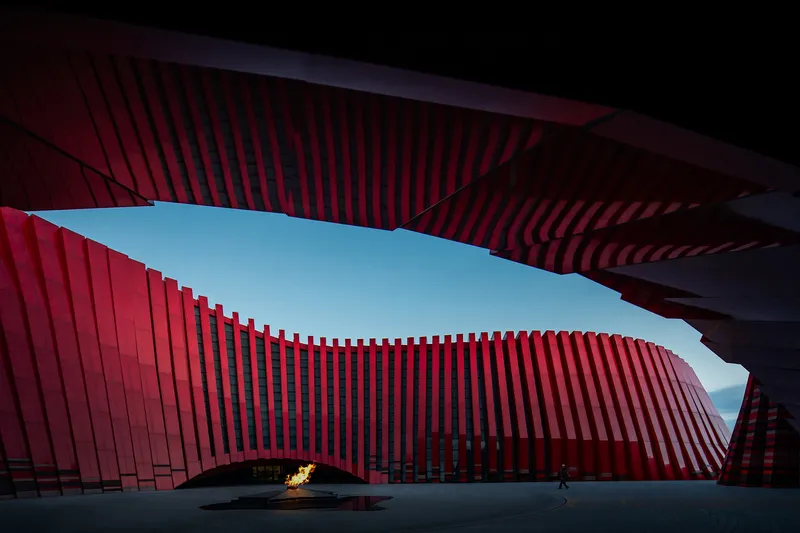
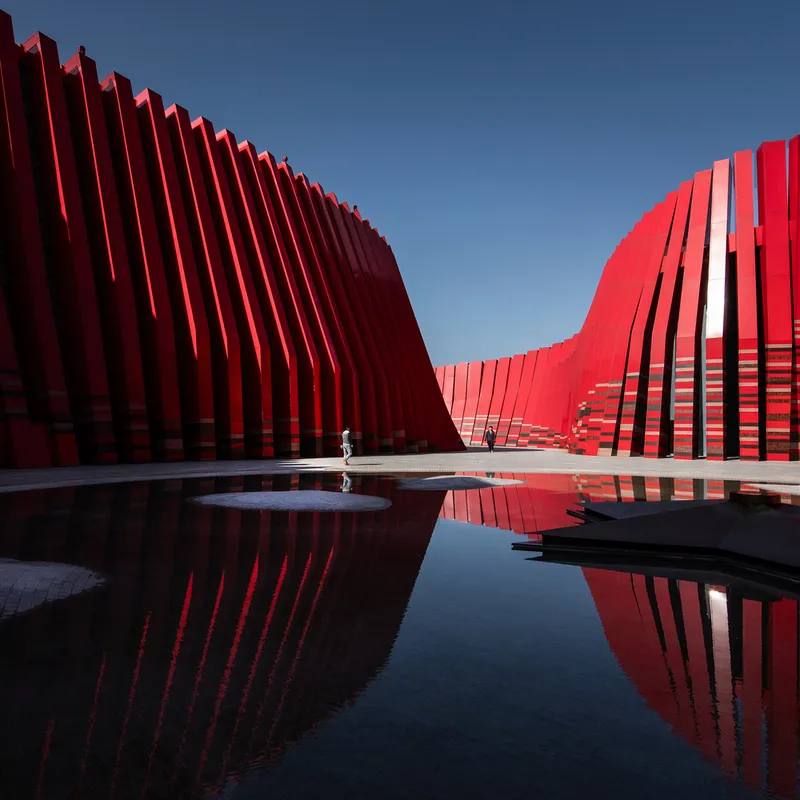
At the heart of the museum lies the Star and Fire Plaza, which serves as the central node of the site. Surrounding this plaza are a series of curated scenes and thematic performance spaces, carefully designed to immerse visitors in the story of the Long March. Upon arrival, visitors enter through a narrow passage that isolates them from external noise, gradually revealing the dramatic entrance plaza with soaring walls. The plaza features a borderless reflecting pool and a star-shaped torch, evoking a sense of reverence and continuity with history.
The museum houses six thematic performance spaces, including mechanical interactive theaters, ring-screen cinemas, flying cinemas, and other digital exhibition areas, providing a vivid and interactive panorama of the Long March. Each space utilizes advanced digital technologies to engage visitors, making history tangible through immersive storytelling and multi-sensory experiences.


Materials and Technology
The iconic red ribbon is crafted with modern materials such as Alucobond panels, integrating parametric design with environmental responsiveness. The red surfaces reflect the changing colors of the sky and ground, creating dynamic visual effects that shift throughout the day. This approach reinterprets traditional Chinese red, linking the museum’s design to both cultural symbolism and contemporary aesthetics.
The interior design, led by the Beijing Architectural Design Institute of China Construction Corp., Ltd., complements the architectural vision with carefully curated finishes, enhancing the immersive and contemplative atmosphere for visitors.
Cultural and Historical Significance
As part of the Long March National Cultural Park, the museum is more than a space for art; it is a living monument to Chinese history. Through its innovative fusion of architecture, digital technology, and performing arts, the museum allows audiences to engage with the heroic narrative of the Long March in a modern, interactive, and educational context. It successfully bridges the past and present, offering an iconic cultural destination for both local communities and international visitors.
All photographs are works of
Object Lens



Popular Articles
Popular articles from the community


The Ocean Hive: Sustainable Architecture for a Self-Sufficient Civilization at Sea
The Ocean Hive imagines sustainable architecture at sea, where modular habitats, algae, wave power and ocean waste sustain a growing colony.

Co-Life: Senior Housing Design That Reconnects Older Adults With the City
Co-Life reimagines senior housing design through healing gardens, shared streets, workshops, and a sustainable community across generations.

The Musturak Paradise: Senior Living Architecture for a Connected Future in Temara, Morocco
The Musturak Paradise reimagines senior living architecture in Temara via private homes, social spaces, culture, community, and shared care.

Hill & Cross Opera: Sculptural Opera House Architecture Shaped by Tallinn’s Landscape and Identity
Hill & Cross Opera reimagines opera house architecture in Tallinn through its sculptural hill, civic plaza, glass wave and a luminous cross.

Similar Reads
You might also enjoy these articles


Hodi-Mandai Geram
Project Function: Preservation and revitalization of the Intangible heritage and socio-spatial identity of the Hodi by Housing, Cultural Memory Center, Sacred Grove, landscape, local tourism economy


Olio Towers: A Mid-Rise for Performers That Fuses Housing, Rehearsal, and Stage
Located blocks from Houston's Theater District, this modular tower stacks living units around a central performance atrium.

Oasis: Modular Green Housing Carved into Dhaka's Urban Fabric
A shortlisted Plugin Housing entry reclaims unauthorized settlements in Dhaka with stepped concrete volumes, green roofs, and ventilation-driven design.

Black Hole: A Floating Megastructure for the Post-Physical Era
Emiliano Mazzarotto envisions a spherical, self-scaling arena where e-sports, digital hotels, and holographic stadiums replace traditional public space.

Explore Architecture Competitions
Discover active competitions in this discipline



Challenge to reimagine the Iron Throne


Photograph architecture without architects


Illustrate the lost glory of Angkor Wat - Render Challenge


Design challenge to reuse E-waste
Comments (0)
Please login or sign up to add comments
No comments yet. Be the first to comment!