

Los Mangos Community Center: Revitalizing Community Life in Tuxtepec
Los Mangos Community Center revitalizes Tuxtepec with multifunctional spaces, sports, cultural facilities, and accessible design, fostering community engagement and social development.


Located on the outskirts of San Juan Bautista Tuxtepec, Oaxaca, the Los Mangos Community Center, designed by Entorno y Contexto, emerges as a transformative urban project addressing the pressing need for public facilities and communal spaces in a growing neighborhood. Covering an area of 76,316 ft², and completed in 2024, this innovative center strengthens community bonds, encourages social engagement, and enhances the quality of life for local residents.
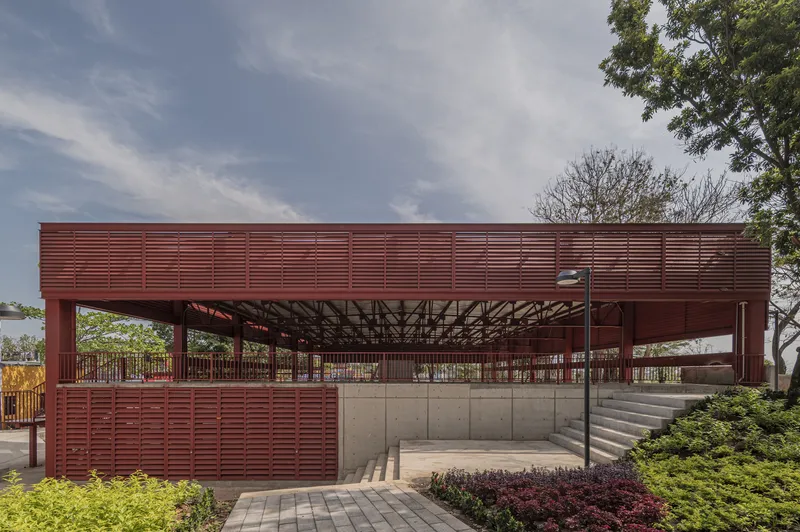
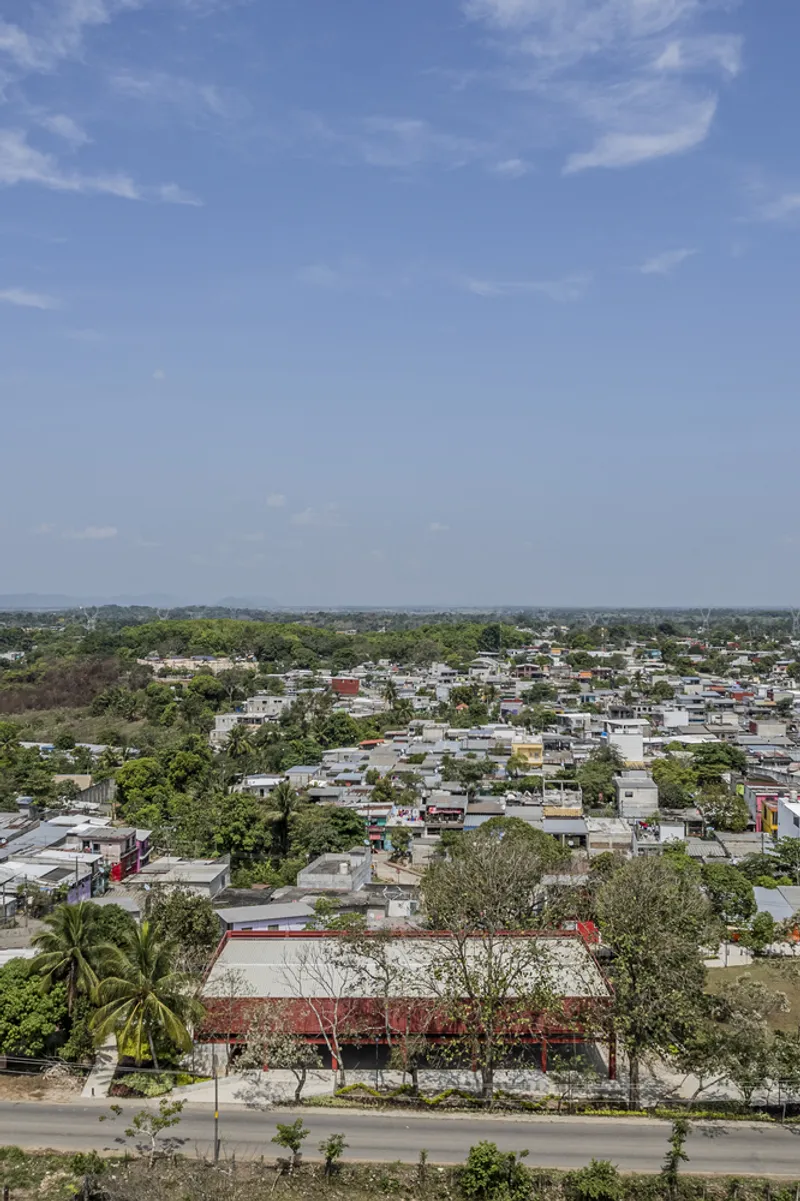
Urban Integration and Contextual Design
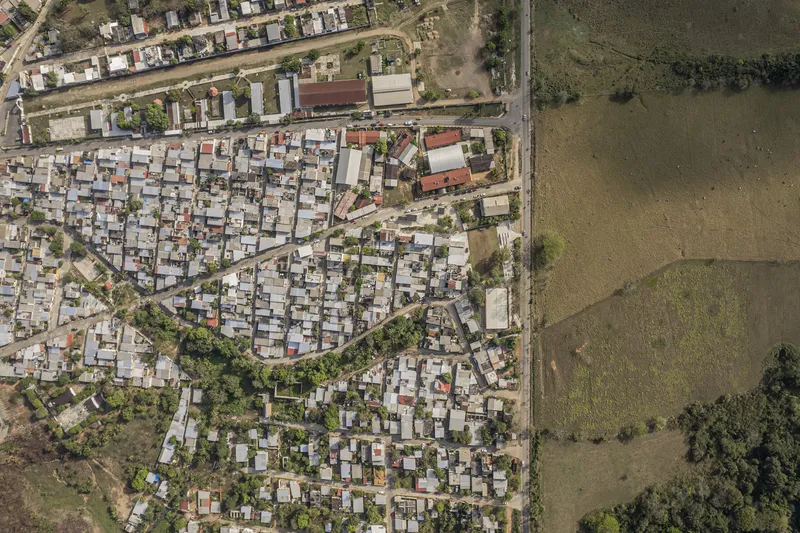
The masterplan strategically connects the residential areas, existing schools, and the local church, transforming a previously unbuilt plot into a central hub for community life. By integrating reclaimed land, formerly irregularly occupied, into public use, the project reinforces social identity and a sense of belonging. According to lead architect Alejandro Polo Lamadrid, this approach promotes a cohesive urban fabric while addressing community needs for recreation, culture, and education.

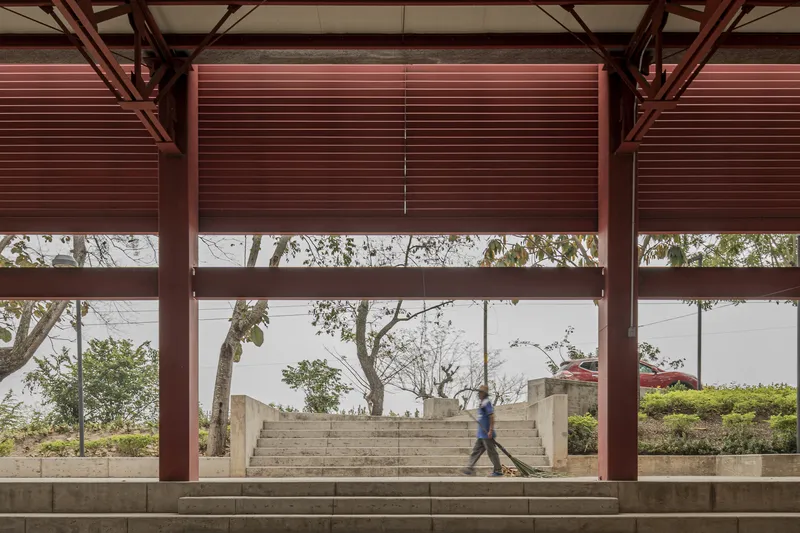
Multifunctional Program for Social Development
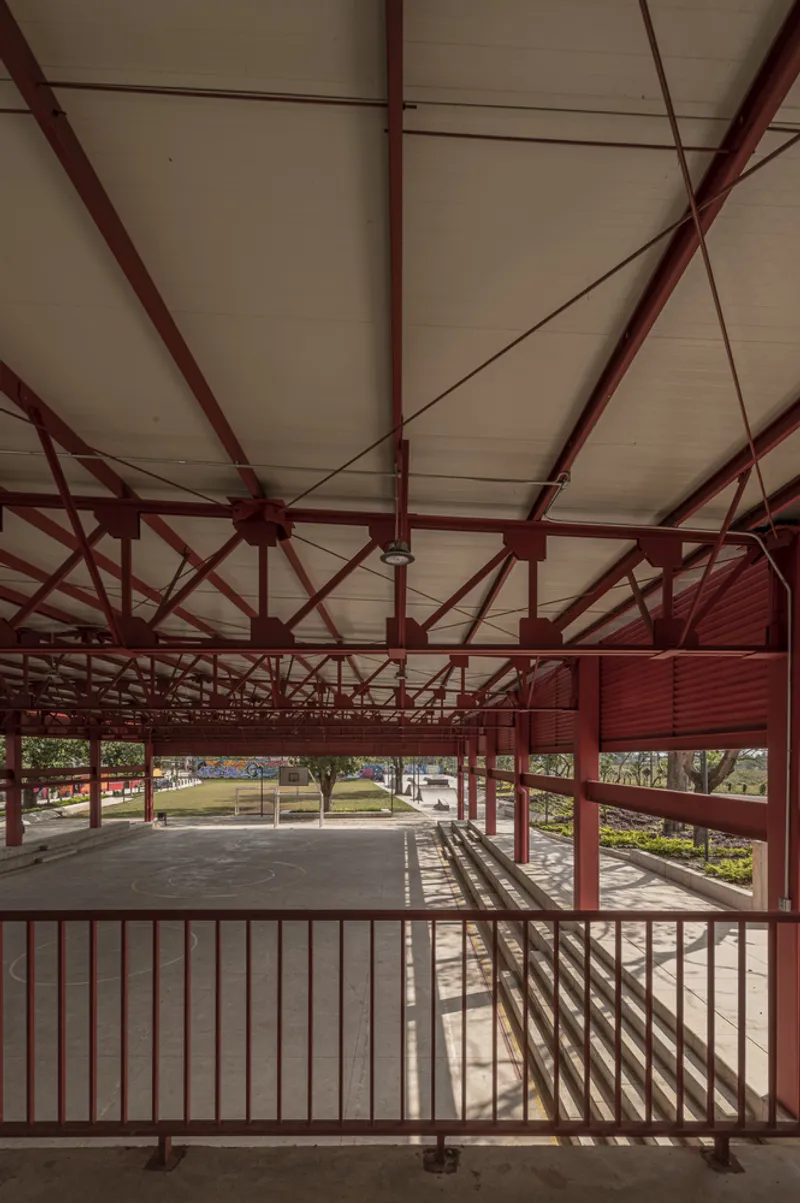
At the heart of the community center lies a multifunctional pavilion designed to host diverse activities. Facilities include a multi-sports court, a multipurpose hall with sanitary spaces, a community kitchen, and commercial areas, all complemented by a covered terrace for events. Outdoor programs are equally comprehensive, featuring a natural grass sports field, children’s play zones, fitness equipment, a skate park, plazas, rest areas, and covered pavilions for productive and commercial activities.
Universal accessibility, adequate lighting, and thoughtfully designed urban furniture have been prioritized to ensure safety, supervision, and long-term engagement within the complex. These measures encourage the sustained use of public spaces, promoting well-being and active community participation.
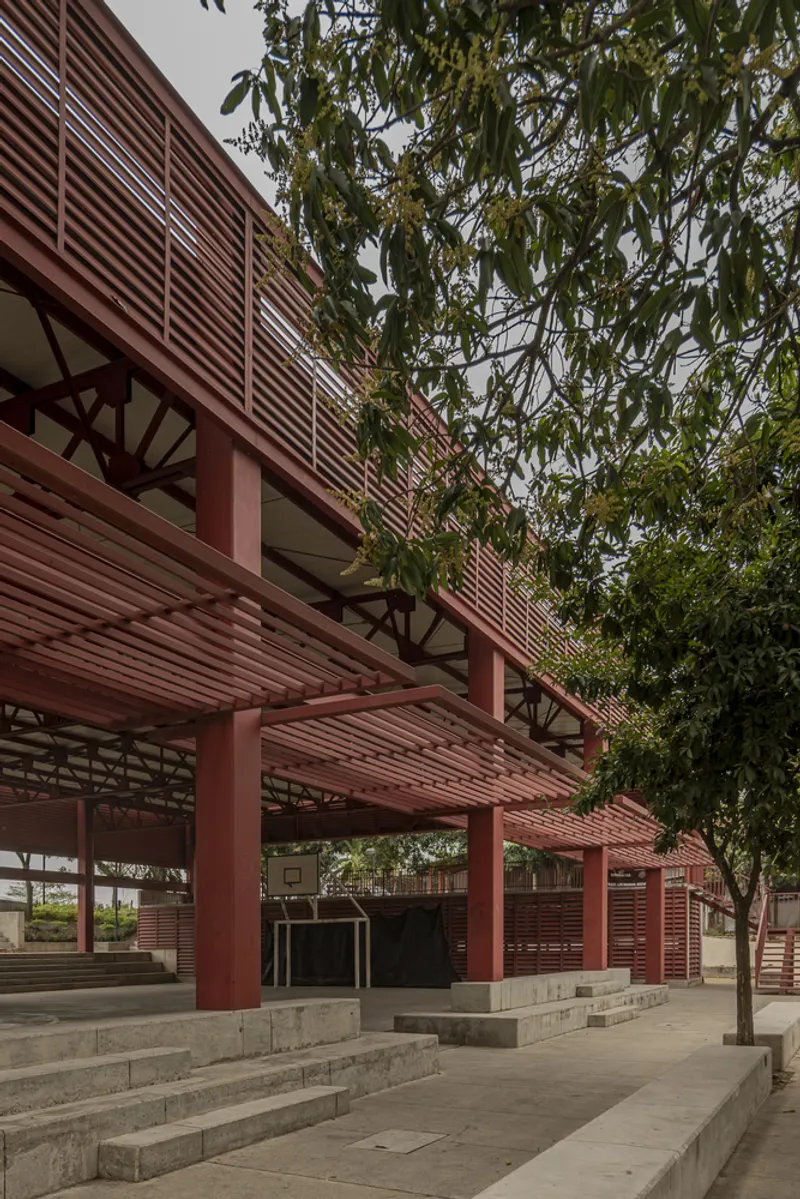
Materiality and Regional Identity
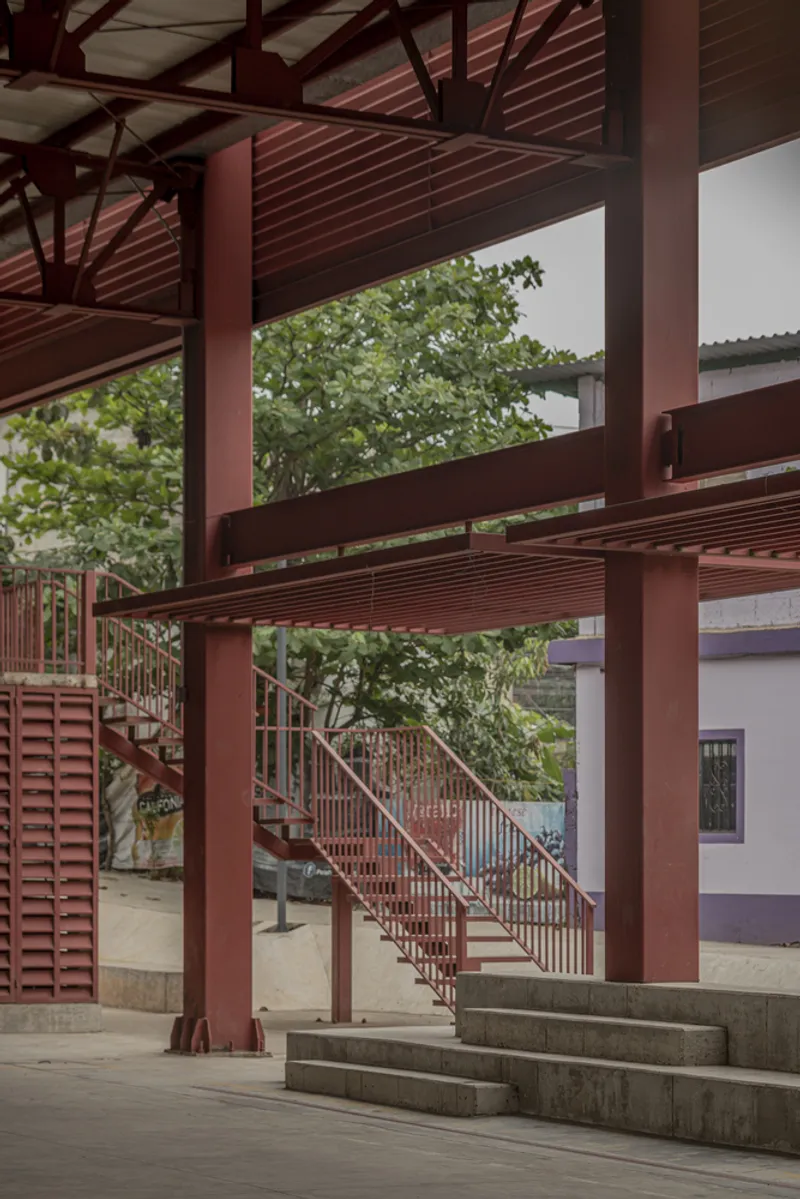
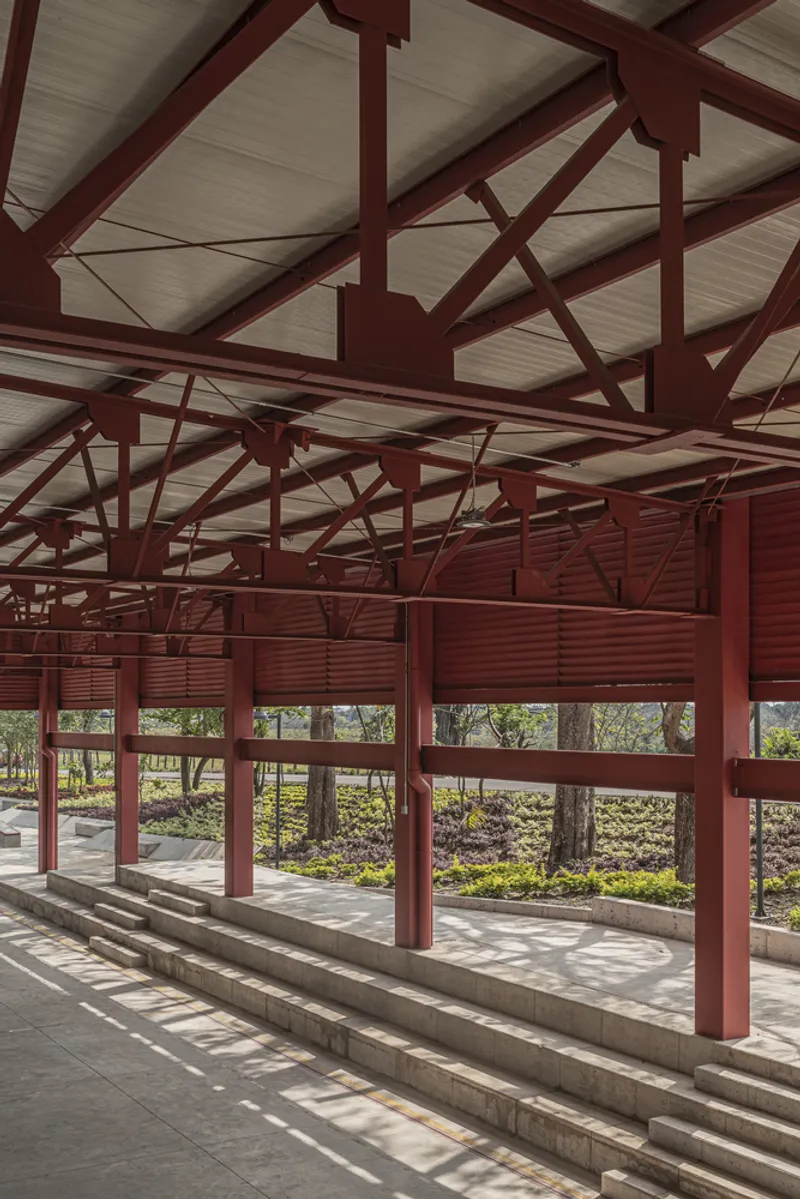
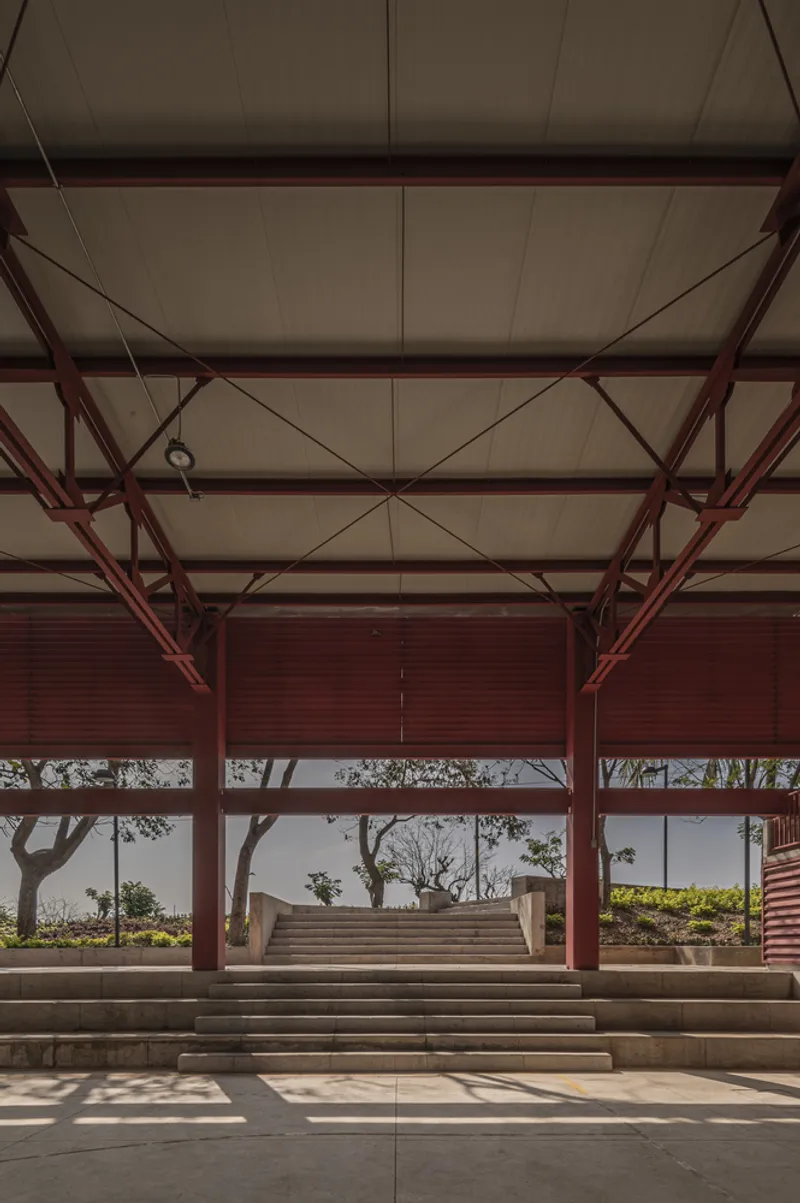
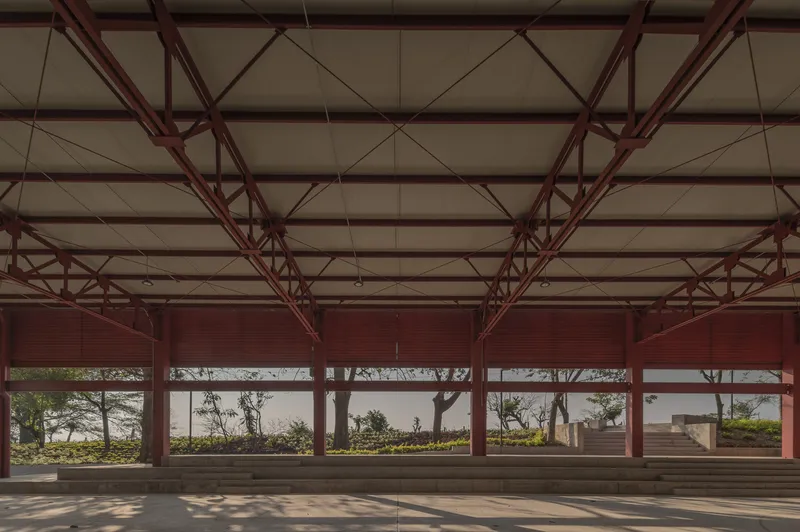
Drawing inspiration from Tuxtepec’s industrial heritage, the pavilion features a lightweight steel roof that offers flexibility and openness while reinterpreting traditional forms with contemporary simplicity. The design incorporates polished and textured concrete paving, accented by regional slabs, and a warm red tone for structural elements, harmonizing with local aesthetics and the historical context.
Social and Environmental Impact
Since its inauguration, the Los Mangos Community Center has catalyzed a significant transformation in the neighborhood. Once plagued by social challenges and flooding, the site has become a vibrant public space where residents actively participate in sports, recreational, cultural, and educational programs. This engagement fosters stronger social ties and contributes to holistic community development, positioning the center as a benchmark for urban improvement initiatives under SEDATU’s Urban Improvement Program.
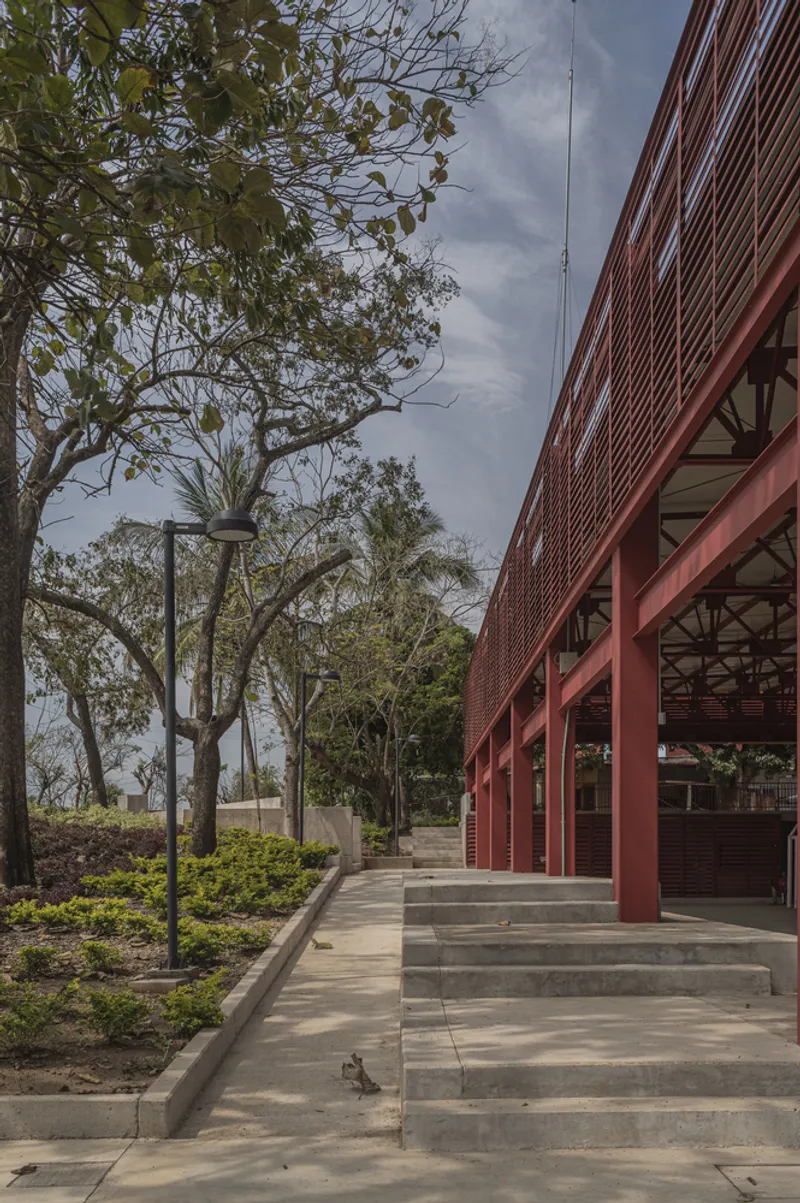
The Los Mangos Community Center exemplifies how thoughtful architectural design, contextual sensitivity, and community collaboration can revitalize urban neighborhoods. Through a careful blend of multifunctional spaces, material innovation, and social foresight, the project strengthens community identity and promotes inclusive, sustainable development in Tuxtepec.
All photographs are works of
Andrés Cedillo


Popular Articles
Popular articles from the community


Architekt Andreas Gruber Scatters 23 Dark Timber Chalets Across a South Tyrolean Forest Edge
In Molini di Tures, Amonti Chalets breaks a resort into a hamlet of gabled timber houses, with parking, storage and services pushed into the slope.

GROUP A Strips a 1969 Rotterdam Harbor Headquarters to Its Frame and Wraps It in Timber Louvers
In Rotterdam's M4H harbor district, Ferro Offices reuses a 1969 frame, adds one timber storey and reaches BREEAM-NL Outstanding.

Jaramillo Van Sluys Arquitectura and Urbanismo Turn a Demolished Registry Lot in Quito into an Orchard Plaza
In Quito's Centro Histórico, a 2,800 m² plaza exposes the San Agustín convent wall and redraws its lost Augustinian orchard in volcanic stone.

David Ortega Stacks a Two-Story Mexico City Penthouse Around a Steel Stair and a Pergola-Shaded Roof Terrace
In Colonia Roma, a 300 m² penthouse uses oak joinery, a planted steel stair and a slatted roof pergola to make a new-build apartment feel like a house.

Similar Reads
You might also enjoy these articles

Gil Mello Arquitetura Tilts a Single Roof Toward the Waterfalls on a Plateau Above Aiuruoca, Brazil
In Aiuruoca, Minas Gerais, a 200 m² house of local labor and reclaimed poles pairs a low valley veranda with a tall mountain one.

U.GA Architects Wraps an Oval Rooftop Pool in Curved Board-Formed Concrete on Busan's Jeollidan-gil
In Busan's Jeonpo-dong, a 454 m² mixed-use block stacks a neighborhood facility, guest rooms and an oval rooftop pool inside spiraling concrete walls.

Felipe Hess Arquitetos Turns a Blind Stone Wall to the Street and Opens a Brazilian House onto a Courtyard and Canal
A canal-front house in Brazil hides behind painted stone and planting, then opens to an olive-tree courtyard, a reed-ceilinged porch and a curving pool.

David Macias Steps a Doorless Stone and Plaster House Down a Tropical Colombian Hillside
In the humid hills of Colombia, Threshold House replaces the front door with an open void and terraces its 850 m² down the slope instead of fighting it.

Explore Architecture Competitions
Discover active competitions in this discipline

Challenge to reimagine the Iron Throne

Photograph architecture without architects

Illustrate the lost glory of Angkor Wat - Render Challenge

Design challenge to reuse E-waste
Comments (0)
Please login or sign up to add comments
No comments yet. Be the first to comment!