

Louis-Saint-Laurent School by STGM Architectes + Ateliers Architecture
Louis-Saint-Laurent School blends modern wooden expansion with historic brick architecture, creating bright, sustainable, child-centered learning spaces connected to nature.


A Warm and Contemporary Expansion for an Iconic Canadian School
Located in Canada, the Louis-Saint-Laurent School by STGM Architectes in collaboration with Ateliers Architecture is a thoughtful expansion project that redefines the learning environment for young children. Completed in 2023, this 1,541-square-meter addition transforms a 1959 school building into a modern, light-filled educational space that fosters creativity, connection, and community engagement.
A Seamless Blend of Heritage and Modernity
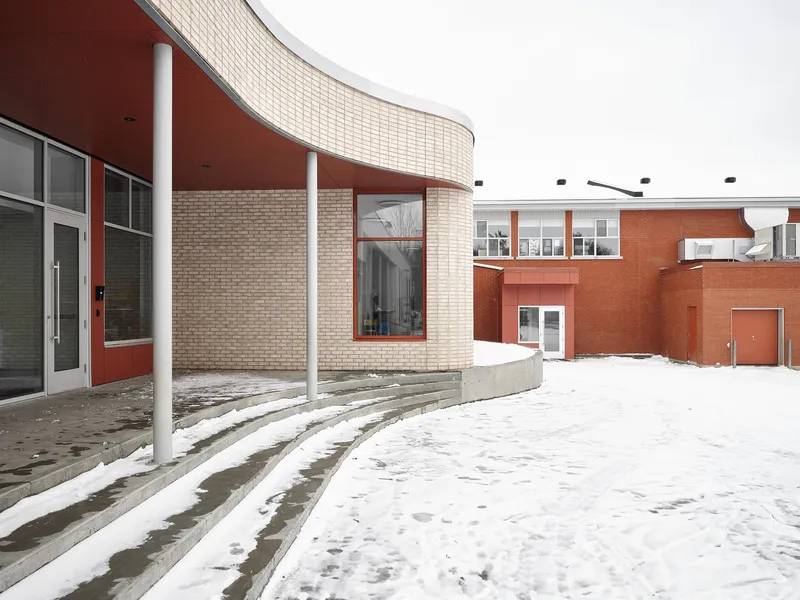
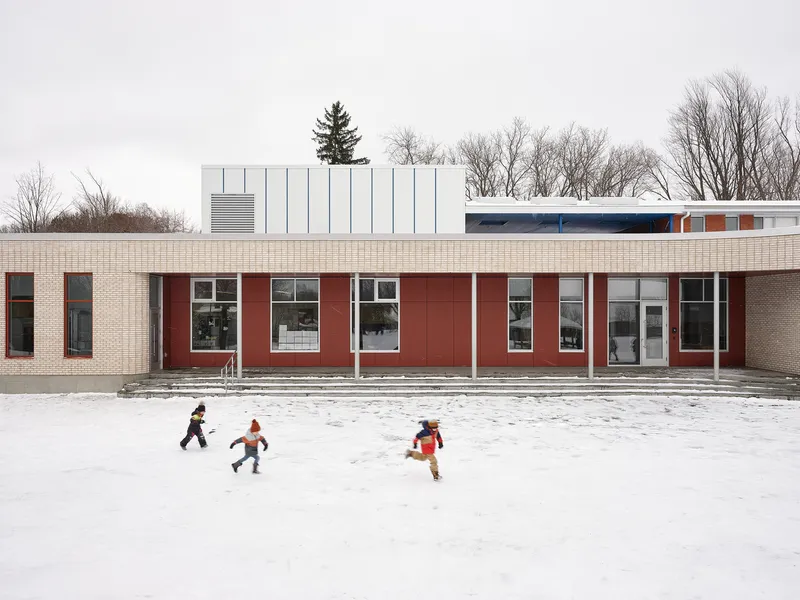
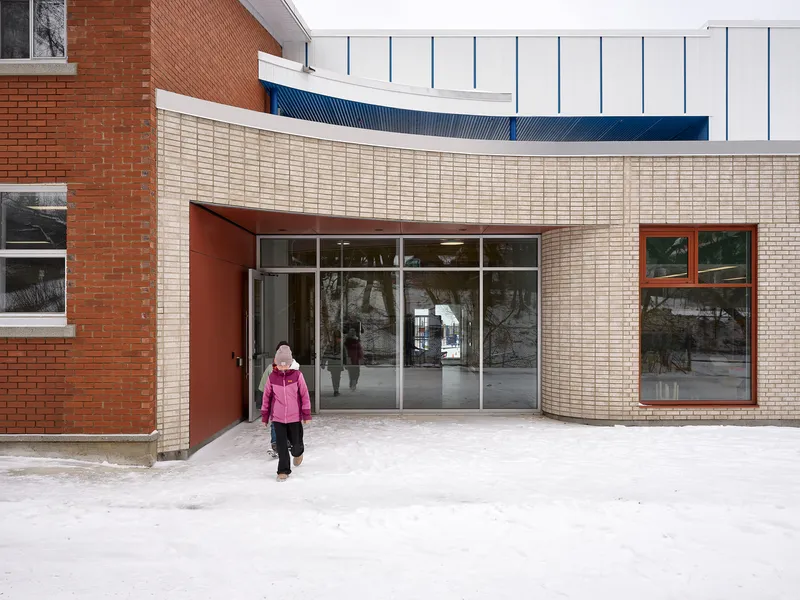
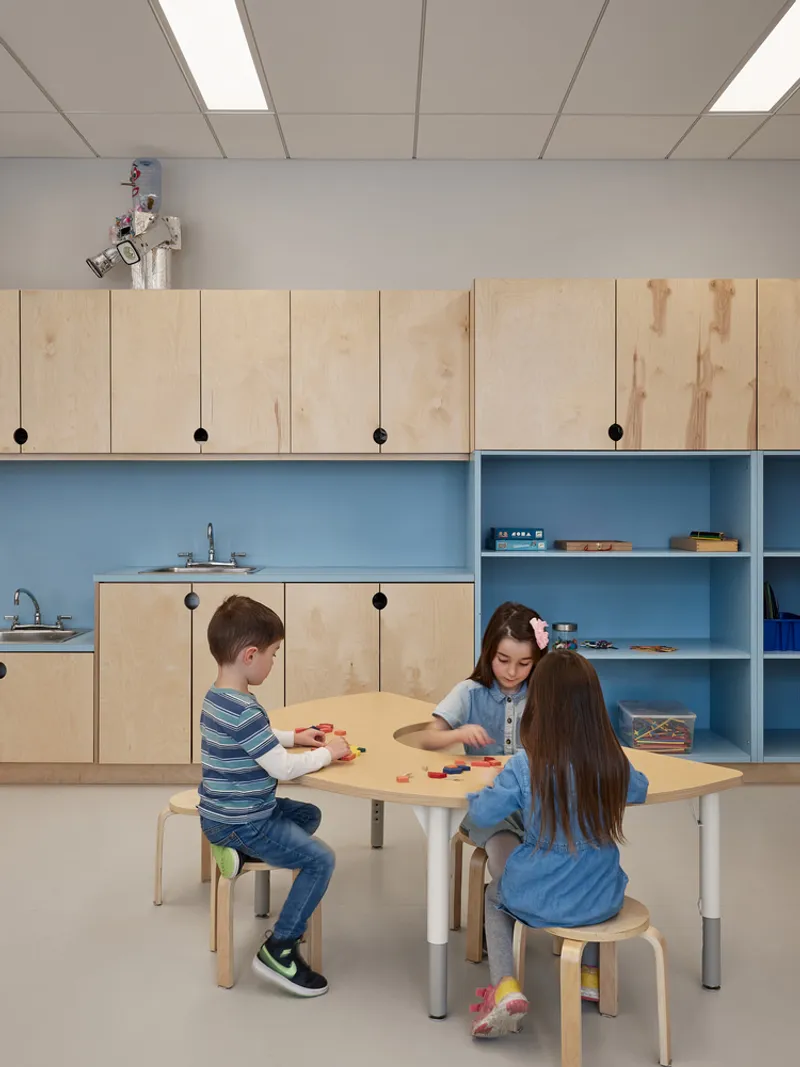
The original Louis-Saint-Laurent School—characterized by its two-story structure, red brick façade, and sloped roof—represented a typical mid-20th-century educational building. The new extension builds upon this foundation, adding five preschool classrooms, a learning hub, and a welcoming entrance hall that opens directly to the schoolyard. This design creates a fluid transition between old and new, preserving the school’s heritage while embracing a forward-looking architectural language.
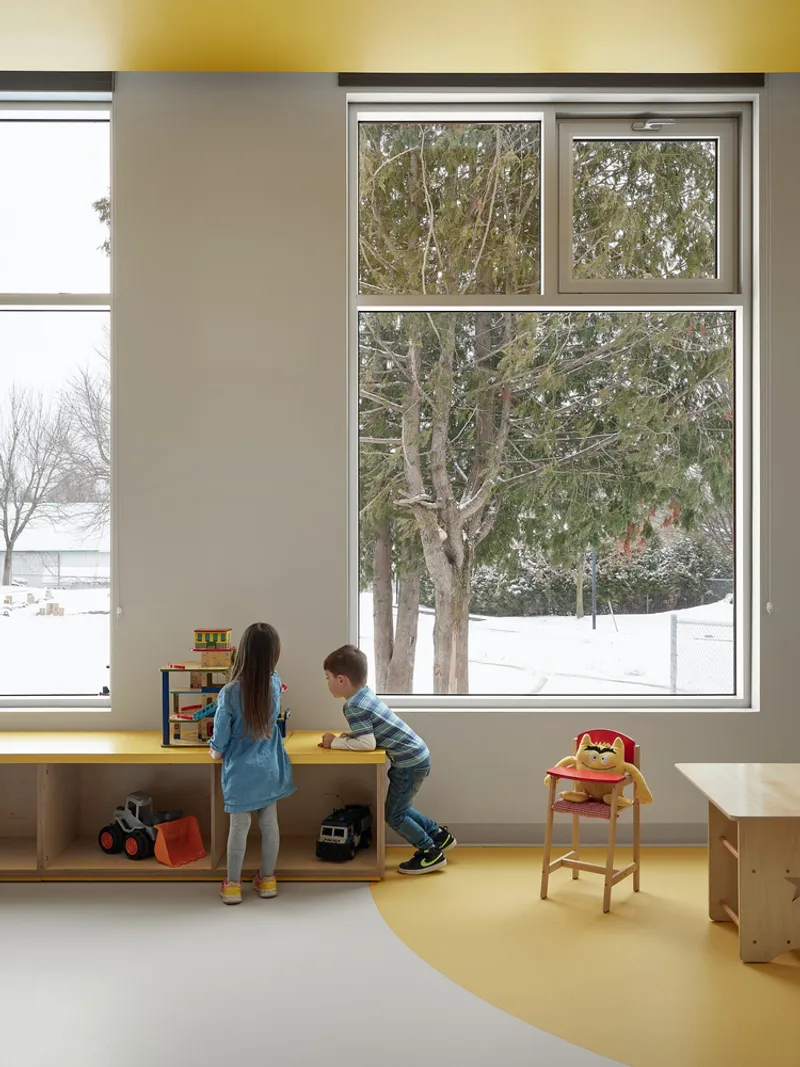
The architects’ approach focuses on human-scale design, ensuring that every space feels comfortable, accessible, and conducive to learning. The project emphasizes natural light, transparency, and connection to the outdoors, all of which play essential roles in creating an engaging and dynamic atmosphere for students.
Functional Reorganization and Spatial Clarity
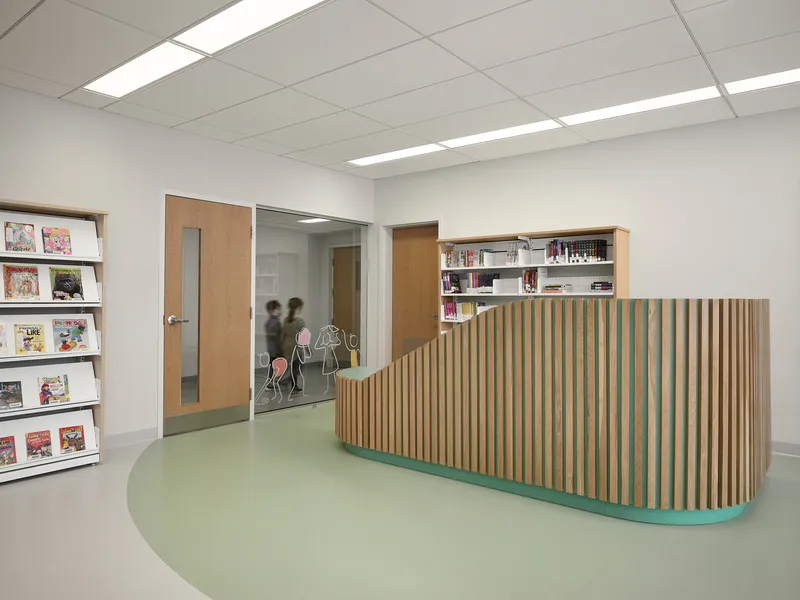
Inside the renovated school, the architects redefined circulation and spatial flow to enhance clarity and functionality. The new hall connects seamlessly to the existing structure, leading into the central learning hub, which serves as the heart of the project. Administrative spaces were reorganized for efficiency—the staff room now sits adjacent to the main office and entrance, improving communication and accessibility.
The two formerly isolated classrooms on the ground floor were reimagined as arts and music studios, enriching the school’s cultural offerings. Additionally, three new cloakrooms now act as transitional spaces between the building and the schoolyard, freeing the main corridors and improving movement throughout the facility.
To strengthen community ties, the design allows direct public access to the gymnasium, while a rooftop outdoor classroom promotes hands-on learning and extends the educational experience into nature.
Sustainable Materials and Harmonious Design
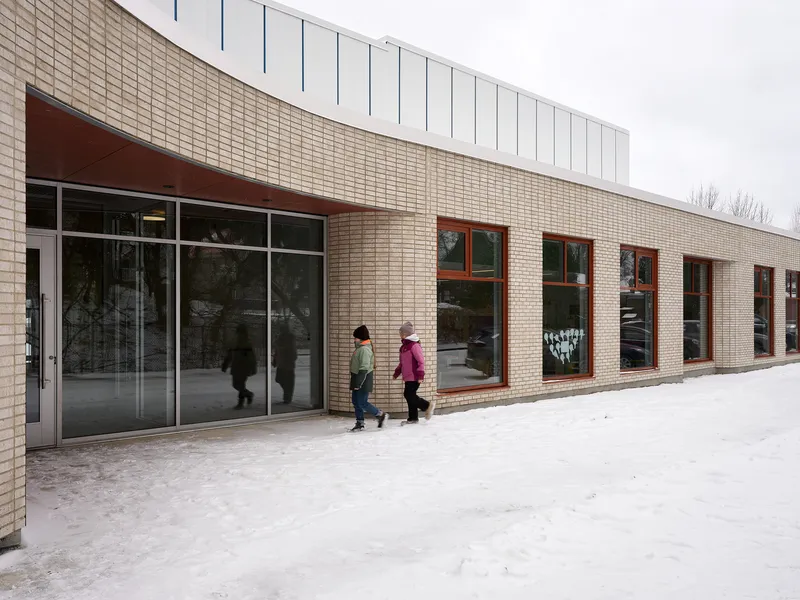
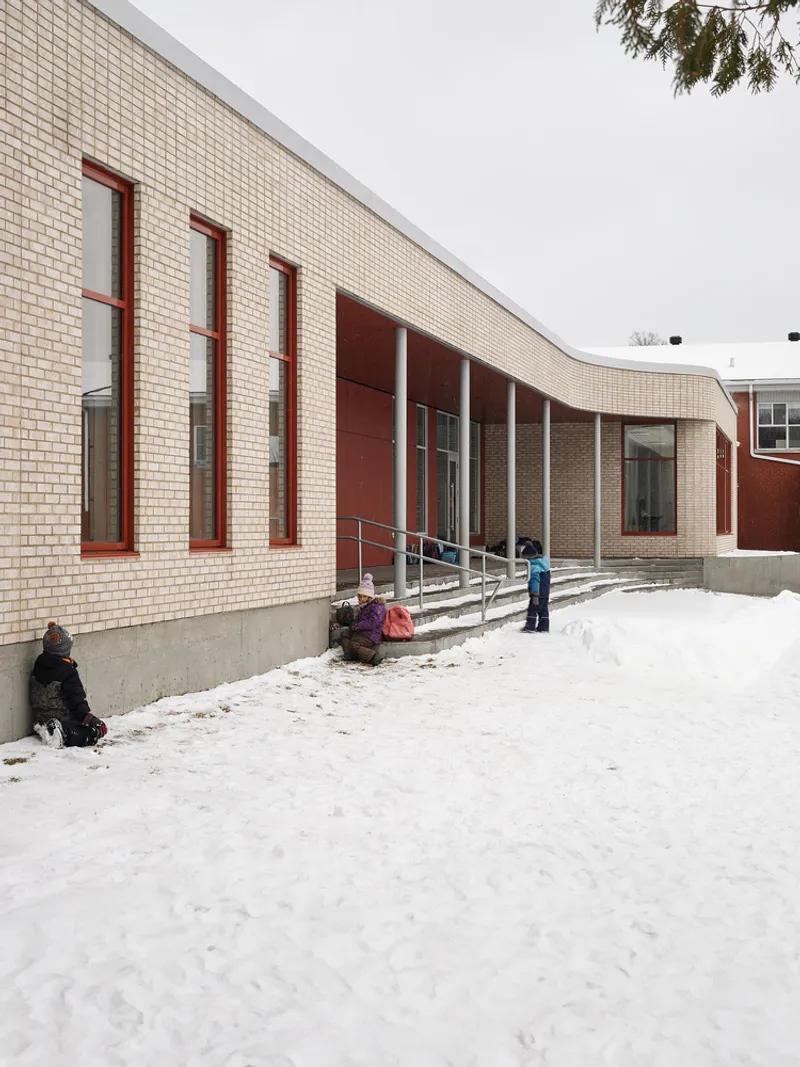
The extension’s wooden structural system ensures a warm and sustainable architectural expression, harmonizing beautifully with the existing brick building. Clad primarily in clay brick, the façade reflects durability and timelessness, while subtle color variations distinguish the new volume from the old.
Recessed areas on the façade—articulated with red-tinted composite cement panels—mark the entrances and introduce visual depth. These materials not only add vibrancy and friendliness but also enhance impact resistance and long-term performance. The balanced contrast between textures and tones creates a cohesive visual dialogue between heritage and innovation.
Light, Curves, and Connection to Landscape
Natural light is a defining element of the project. Generous glazing across the hall and classrooms allows daylight to filter deep into the interior, reducing the need for artificial lighting and creating uplifting learning environments. The architectural composition achieves a sense of lightness and openness, reflecting the project’s educational philosophy.
Curved forms appear throughout the design, both inside and out—echoing the gentle topography of the surrounding landscape. These flowing lines soften the building’s geometry, adding a sense of movement and dynamism that invites exploration and engagement.
A Model for Contemporary Educational Design
The Louis-Saint-Laurent School expansion stands as an inspiring model of how educational architecture can evolve while respecting its past. Through sensitive integration of materials, spatial clarity, and sustainable design, STGM Architectes and Ateliers Architecture have created an environment that encourages curiosity, community, and well-being.
All photographs are works of Maxime Brouillet


Popular Articles
Popular articles from the community


David Macias Steps a Doorless Stone and Plaster House Down a Tropical Colombian Hillside
In the humid hills of Colombia, Threshold House replaces the front door with an open void and terraces its 850 m² down the slope instead of fighting it.

longwave studio Reorganizes a 112 m² Tainan Apartment Around the Daily Routines of a Family and Two Cats
In Tainan, Taiwan, birch plywood, rust-red furniture and a freestanding plaster wall link arrival, storage, work and family life in one apartment.

Juan García Correa, John González and Claudia Rueda Sink a Circular Amphitheater into a Manizales Engineering Building
On the La Nubia campus in Manizales, Colombia, the S1 Building folds labs and offices into a hillside of ramped lawns that double as a campus route.

GROUP A Strips a 1969 Rotterdam Harbor Headquarters to Its Frame and Wraps It in Timber Louvers
In Rotterdam's M4H harbor district, Ferro Offices reuses a 1969 frame, adds one timber storey and reaches BREEAM-NL Outstanding.

Similar Reads
You might also enjoy these articles


Hodi-Mandai Geram
Project Function: Preservation and revitalization of the Intangible heritage and socio-spatial identity of the Hodi by Housing, Cultural Memory Center, Sacred Grove, landscape, local tourism economy


Olio Towers: A Mid-Rise for Performers That Fuses Housing, Rehearsal, and Stage
Located blocks from Houston's Theater District, this modular tower stacks living units around a central performance atrium.

Oasis: Modular Green Housing Carved into Dhaka's Urban Fabric
A shortlisted Plugin Housing entry reclaims unauthorized settlements in Dhaka with stepped concrete volumes, green roofs, and ventilation-driven design.

Black Hole: A Floating Megastructure for the Post-Physical Era
Emiliano Mazzarotto envisions a spherical, self-scaling arena where e-sports, digital hotels, and holographic stadiums replace traditional public space.

Explore Educational Building Competitions
Discover active competitions in this discipline

Challenge to design public laboratory

Challenge to reimagine the Iron Throne

Photograph architecture without architects

Illustrate the lost glory of Angkor Wat - Render Challenge
Comments (0)
Please login or sign up to add comments
No comments yet. Be the first to comment!