

LRM House by SAAG Arquitetura: A Contemporary Sanctuary in São Paulo Integrating Light, Art, and Sustainability
LRM House by SAAG Arquitetura blends art, light, and sustainability in a São Paulo home designed for modern family living.


Located in a lush, green neighborhood of São Paulo, Brazil, the LRM House by SAAG Arquitetura is a bold exploration of spatial fluidity, natural light, and the emotional value of art and architecture. Completed in 2021 and spanning 435 square meters, this modern family residence transforms a narrow urban plot into a layered living experience — one that balances privacy with openness, and permanence with transience.
A Spatial Journey Framed by Art and Atmosphere
Accessed from the left side of the lot, the house invites visitors into a spatial journey defined by subtle revelations. Upon entry, guests are welcomed by a striking graffiti piece by Brazilian artist Crânio, a vibrant blue tribal figure that the homeowners affectionately view as the "protector" of the home. This gesture captures the family’s deep appreciation for contemporary art and sets the tone for a residence that is both personal and curated.
Every detail in the house reflects a clear architectural narrative: that a home should adapt to its inhabitants, their routines, their values, and their passions. For the LRM House, this means a seamless integration of natural light, sustainable materials, and a deep reverence for artistic expression.
Light, Volume, and the Play of Solids and Voids
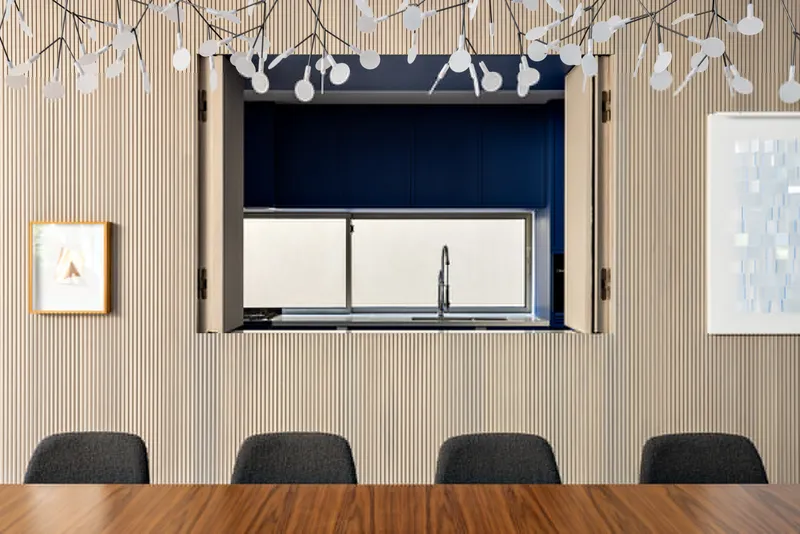
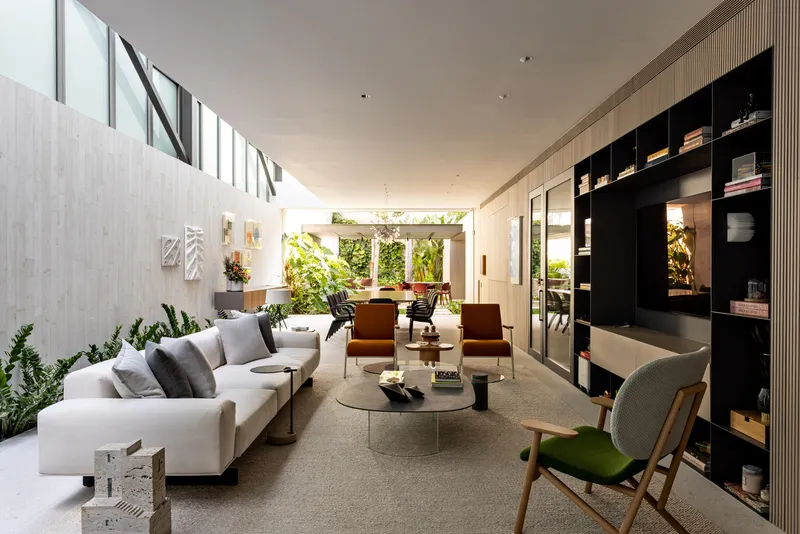
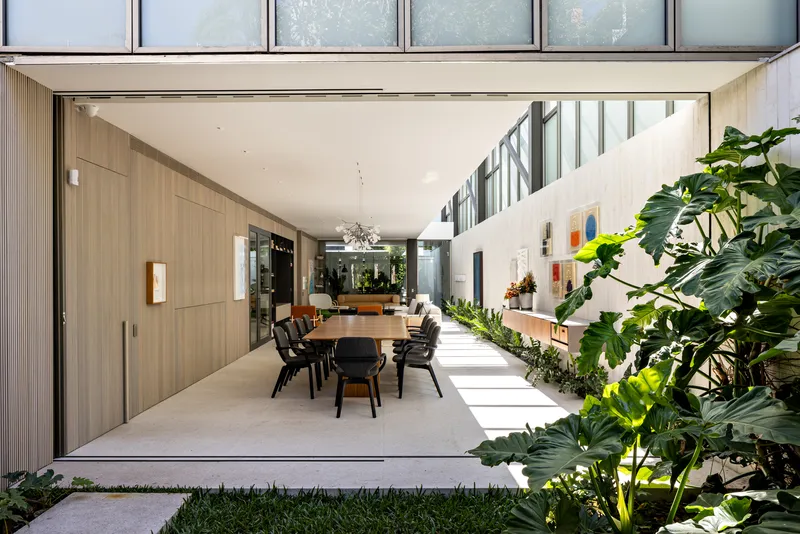
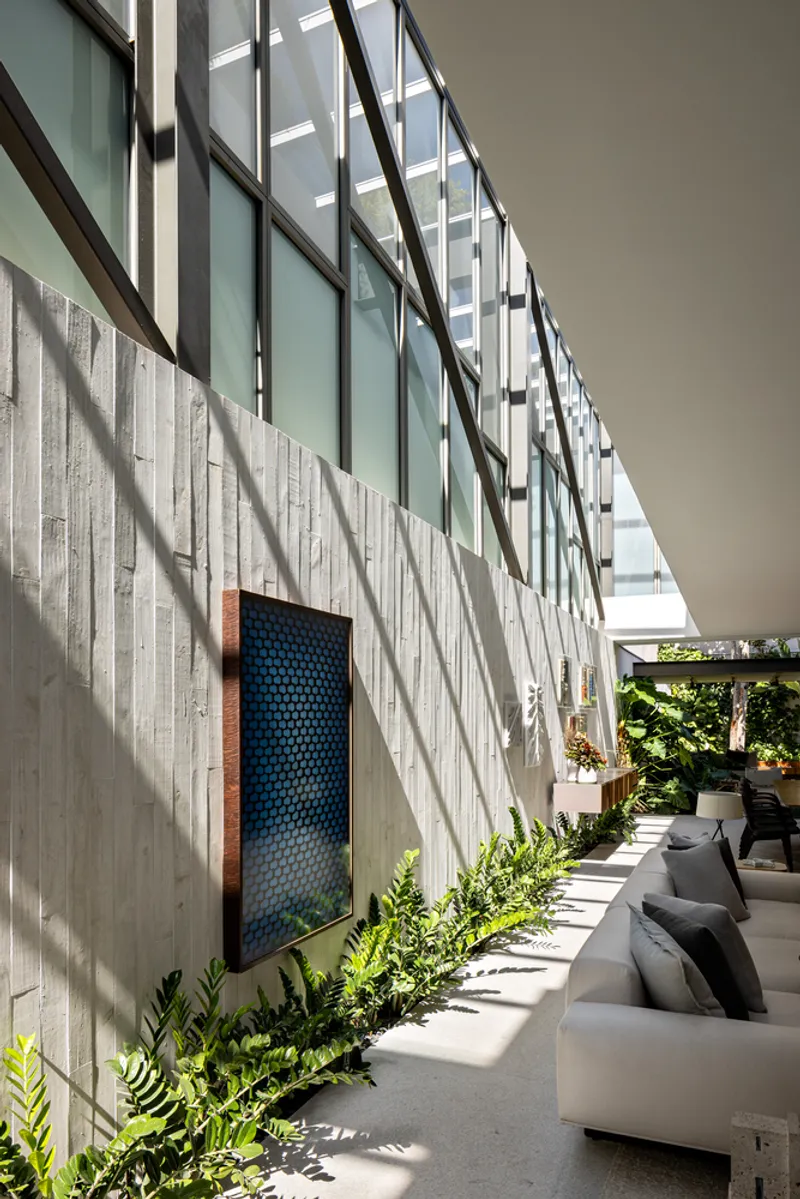
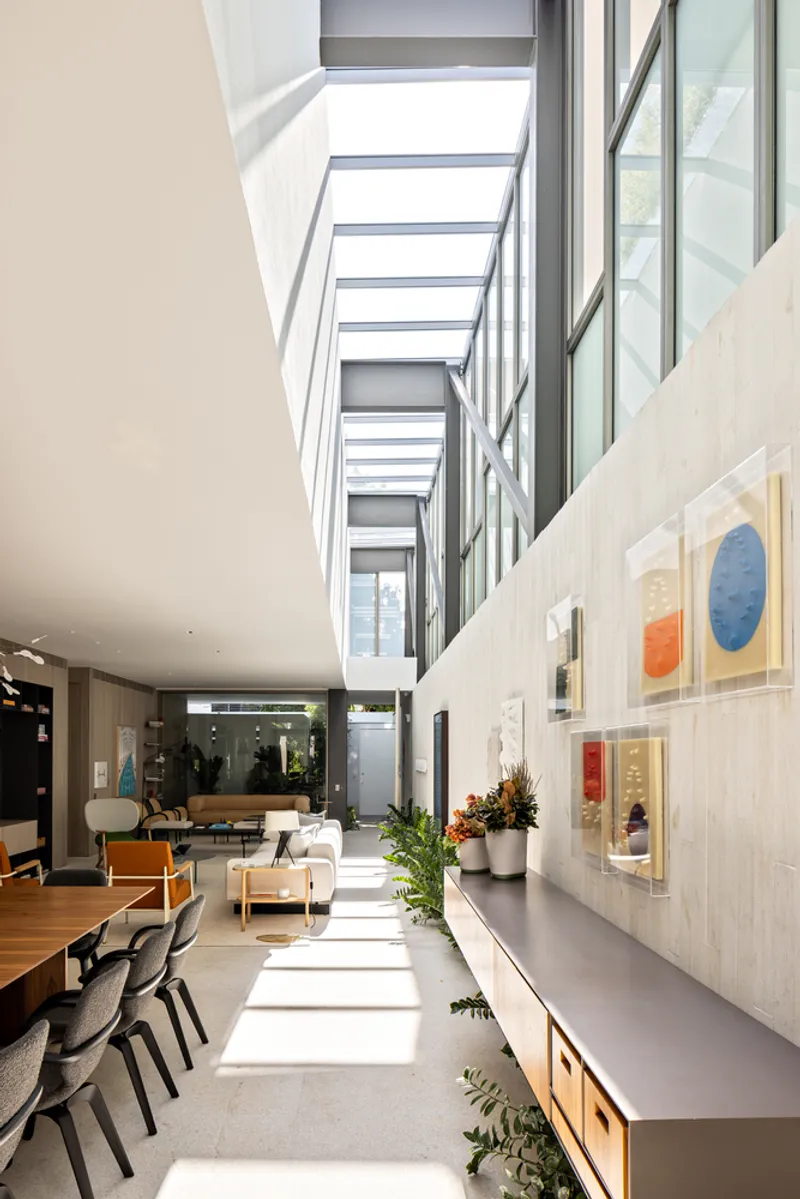
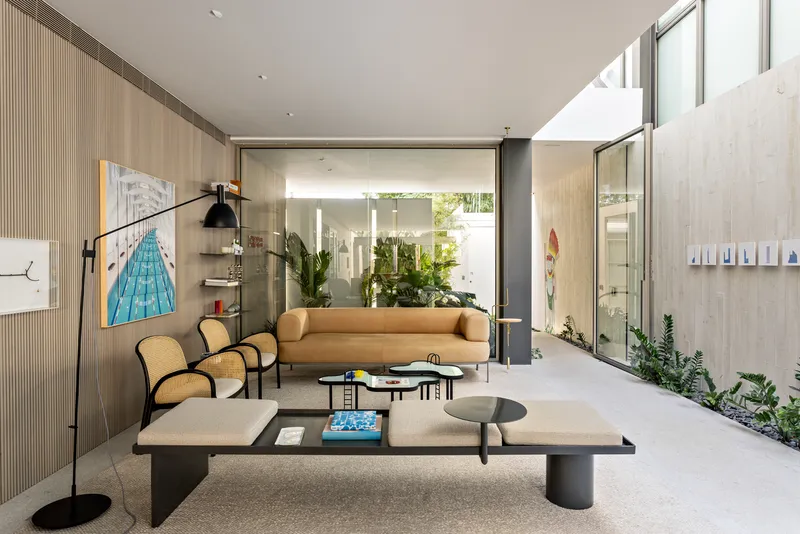
The design concept emerges from the careful manipulation of solids and voids, shaping how light moves through the structure. The house is organized around three key longitudinal elements: a solid volume clad in slatted wood, an airy void marked by a projecting upper floor, and a glass-enclosed double-height living space that captures zenithal light from above.
This layering creates an ever-shifting interior atmosphere as sunlight travels across the day, casting dynamic shadows and enhancing the tactile quality of materials. The muted palette — composed of desaturated finishes and restrained tones — allows these natural changes to stand out, reinforcing a sensory connection with time and space.
Interior-Exterior Continuity and Passive Design
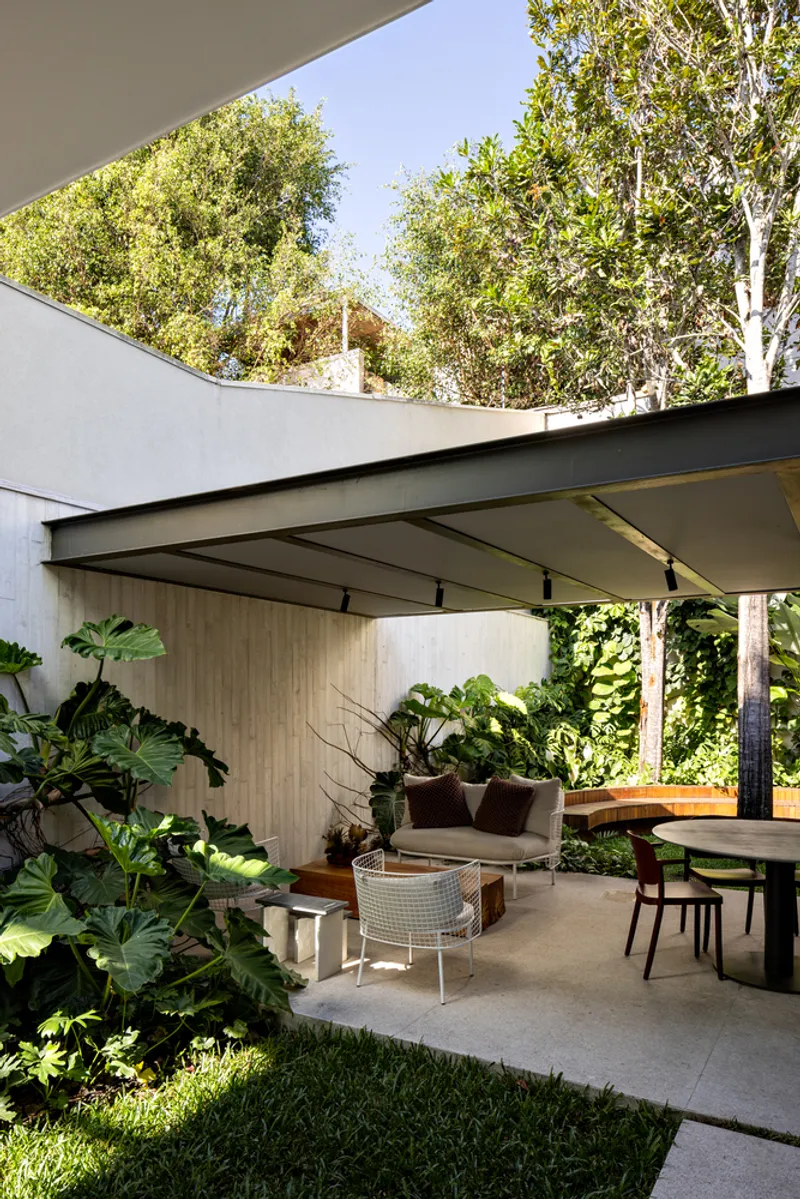
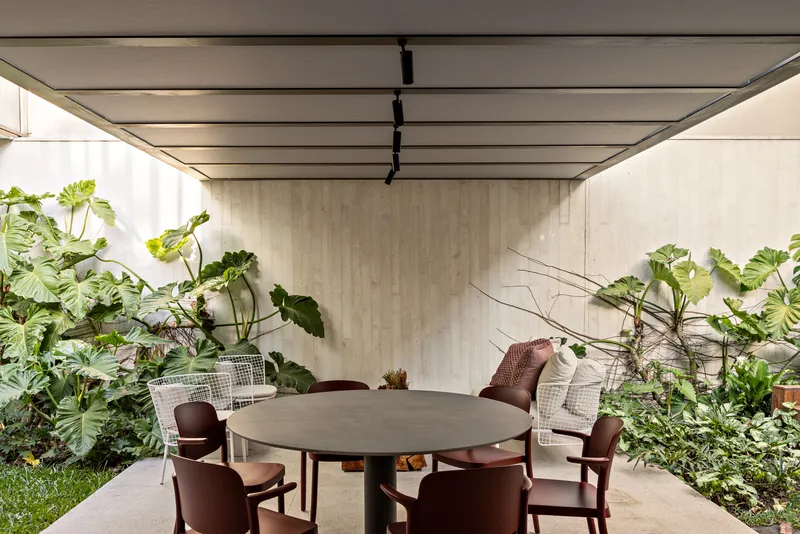
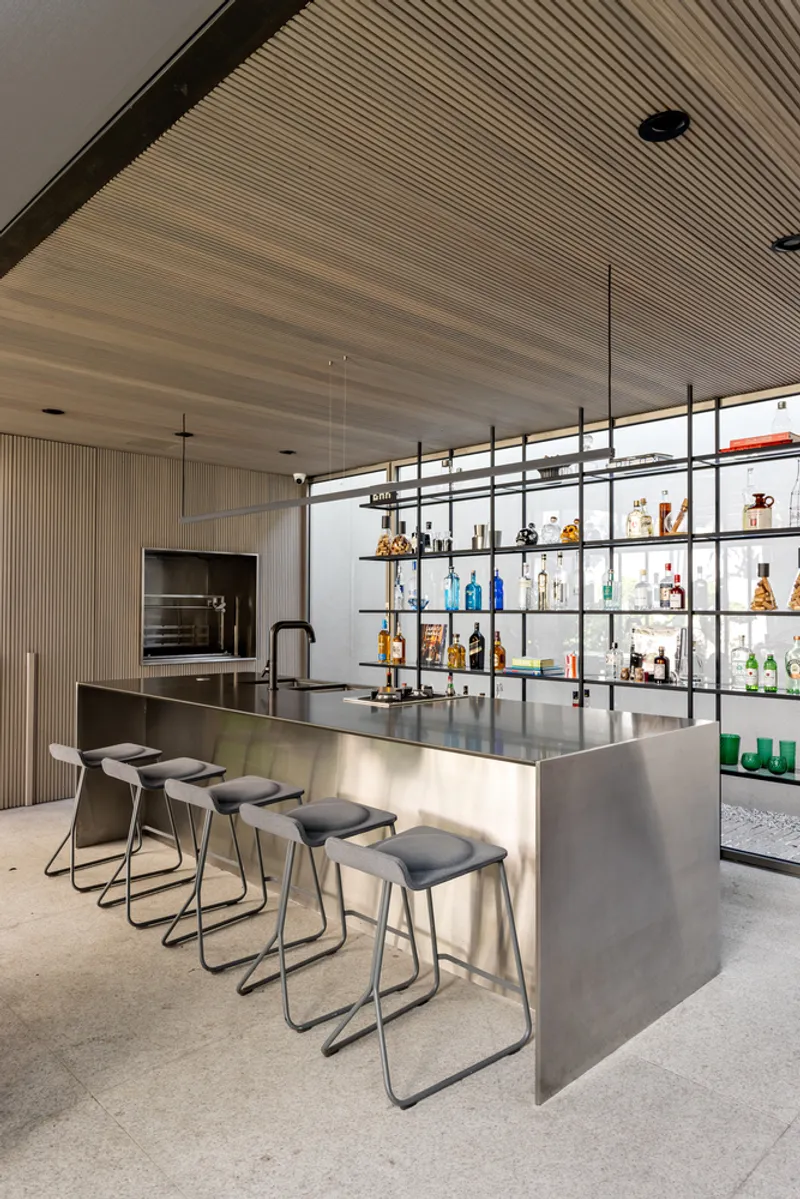
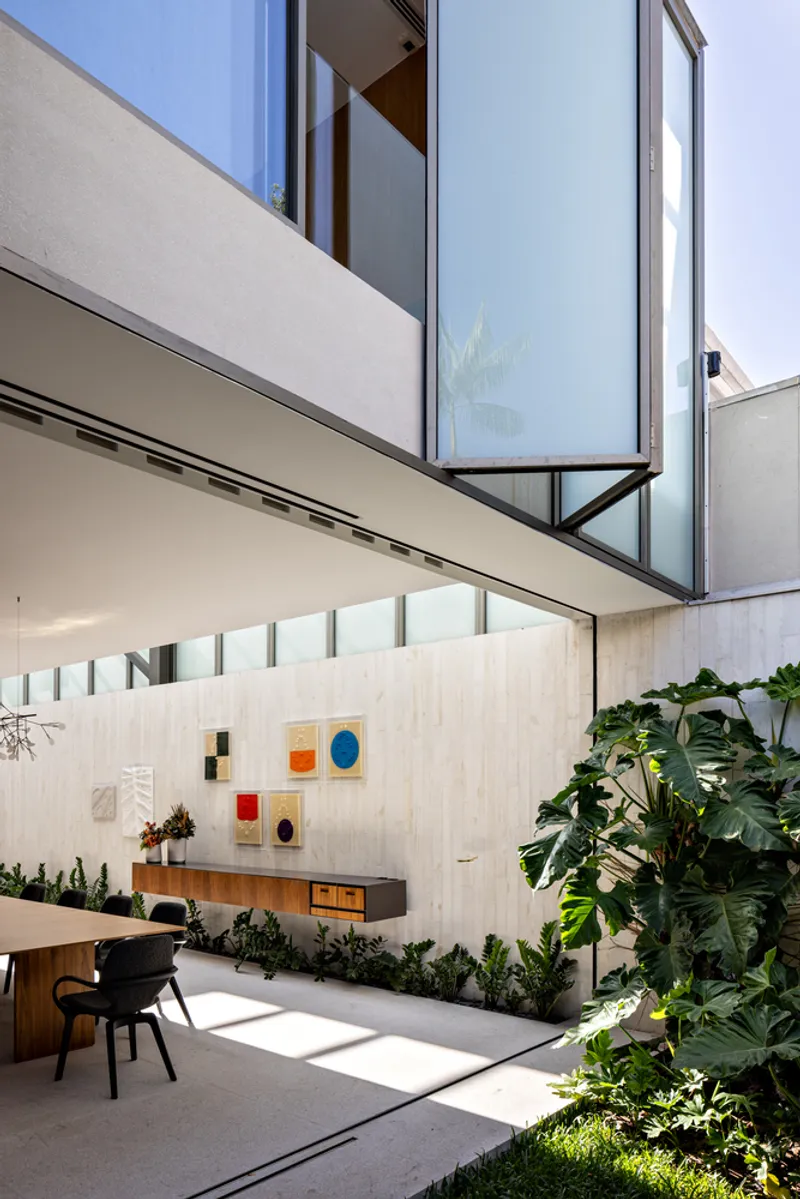
The ground floor contains the kitchen, vertical circulation, a half-bath, and service areas, all housed in a continuous volume that extends toward the backyard. Retractable glass panels dissolve the boundary between interior and exterior, facilitating cross ventilation and maximizing natural light. These large openings lead out to a private courtyard featuring an outdoor kitchen, laundry space, and a metallic pergola, transforming the garden into an open-air living room.
By allowing indoor activities to spill into the outdoor environment, the house fosters a deeper connection to nature while promoting sustainable living through passive cooling and efficient use of space.
Layered Vertical Living: Family, Work, and Wellness
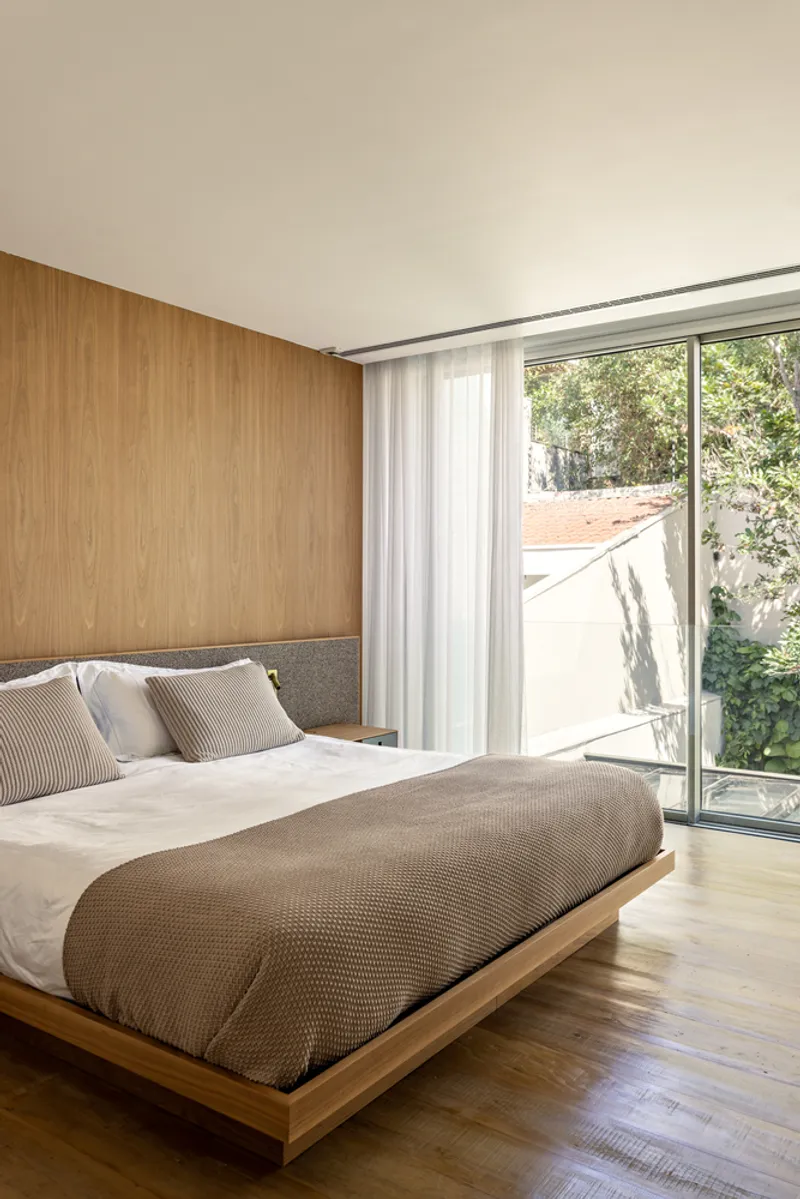
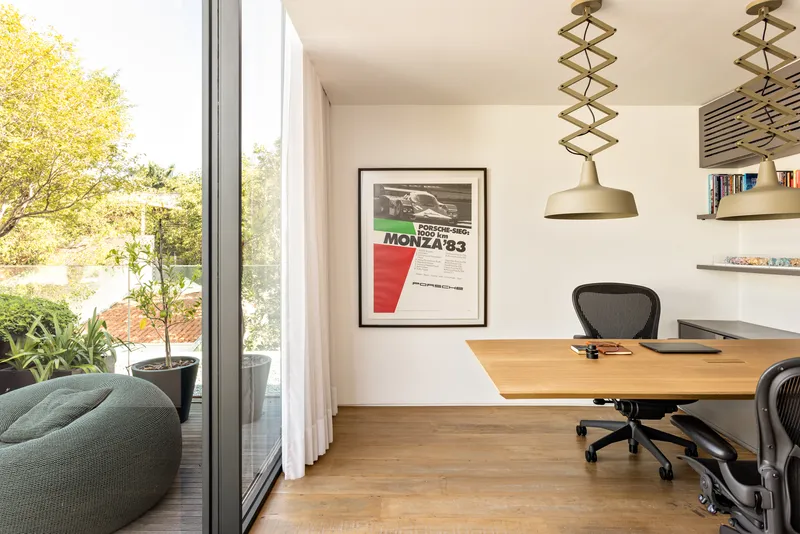
On the second floor, three suites are distributed along the front and rear facades, centered around a cozy family living area that offers privacy and connection in equal measure. Rising above this is a third floor, which introduces a new spatial program: an office, home gym, sauna, and an elevated swimming pool that opens out to stunning views of São Paulo’s iconic Ibirapuera Park.
This vertical arrangement efficiently uses the narrow site, while also allowing each floor to serve distinct emotional and functional needs — from communal gathering to work and wellness.
A Dynamic and Sustainable Façade
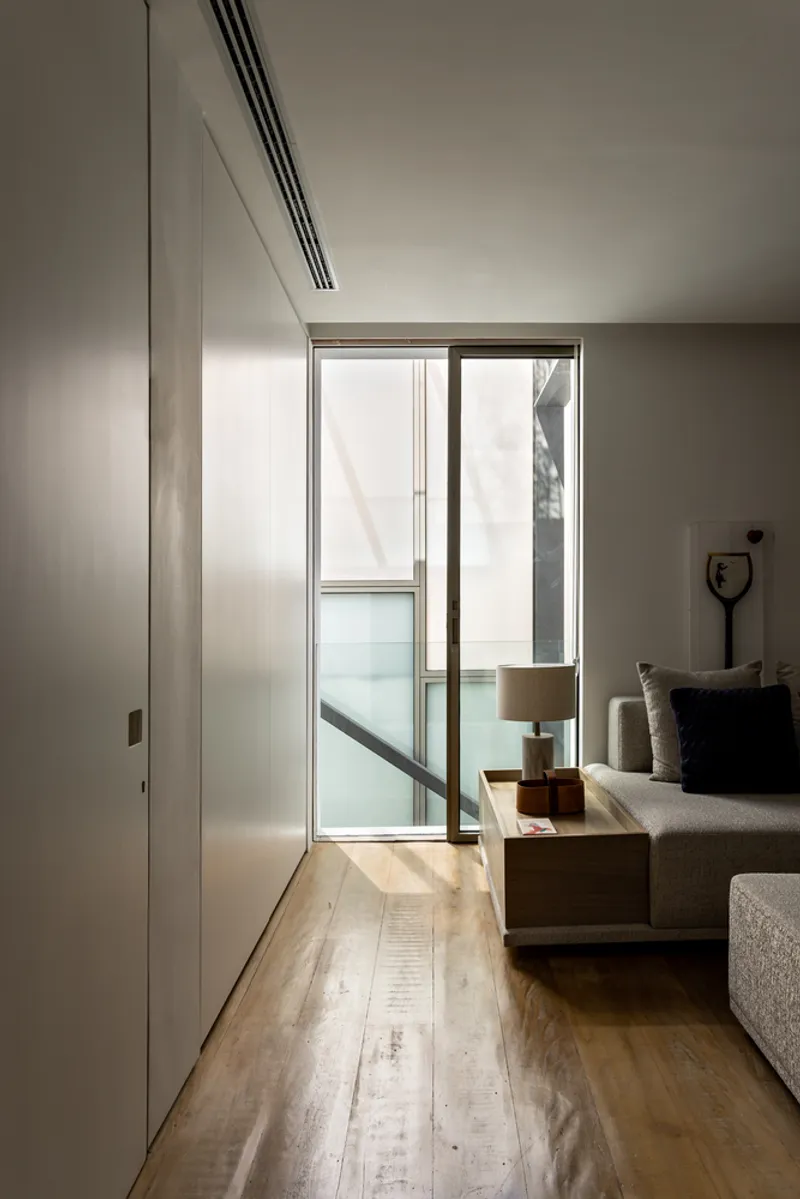
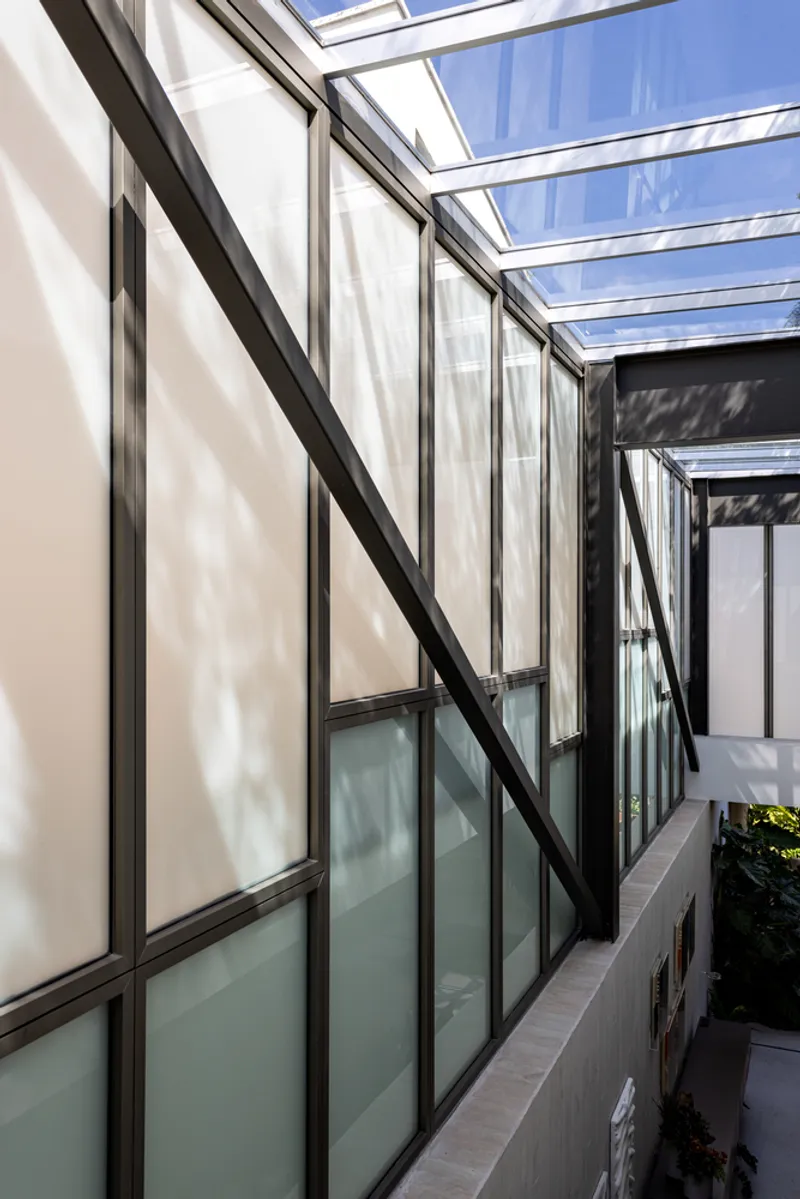
One of the most striking aspects of the project is its active façade system. A curtain wall of milky glass alternates between fixed panels and bi-folding windows, modulating sunlight, offering privacy, and adding thermal comfort. The rhythm of transparent and translucent panels on the side façades creates an ever-changing play of light and shadow within the home, reinforcing the architectural dialogue between opacity and clarity.
In terms of environmental performance, the house includes a rainwater collection system, photovoltaic solar panels, and energy-efficient design strategies. These features not only reduce the home’s ecological footprint but also align with SAAG Arquitetura’s commitment to sustainable residential architecture.
All Photographs are works of Fran Parente


Popular Articles
Popular articles from the community


Architekt Andreas Gruber Scatters 23 Dark Timber Chalets Across a South Tyrolean Forest Edge
In Molini di Tures, Amonti Chalets breaks a resort into a hamlet of gabled timber houses, with parking, storage and services pushed into the slope.

David Macias Steps a Doorless Stone and Plaster House Down a Tropical Colombian Hillside
In the humid hills of Colombia, Threshold House replaces the front door with an open void and terraces its 850 m² down the slope instead of fighting it.

LT2A and OPEN Architectes Thread a Brick and Glass High School Through a Wooded Belgian Campus
In Braine-l'Alleud, a 3,000 m² wing for Collège Cardinal Mercier pairs pale brick with a glazed colonnade, deferring to a small chapel and a dense wood.

Cube Design Draws an Ecological Corridor Between Two Shenzhen Hills with the Nankai Building
Beside Shenzhen's container docks, the Nankai Building pairs stacked balconies with a climbing green screen to connect two hillsides across its height.

Similar Reads
You might also enjoy these articles


Hodi-Mandai Geram
Project Function: Preservation and revitalization of the Intangible heritage and socio-spatial identity of the Hodi by Housing, Cultural Memory Center, Sacred Grove, landscape, local tourism economy


Olio Towers: A Mid-Rise for Performers That Fuses Housing, Rehearsal, and Stage
Located blocks from Houston's Theater District, this modular tower stacks living units around a central performance atrium.

Oasis: Modular Green Housing Carved into Dhaka's Urban Fabric
A shortlisted Plugin Housing entry reclaims unauthorized settlements in Dhaka with stepped concrete volumes, green roofs, and ventilation-driven design.

Black Hole: A Floating Megastructure for the Post-Physical Era
Emiliano Mazzarotto envisions a spherical, self-scaling arena where e-sports, digital hotels, and holographic stadiums replace traditional public space.

Explore Architecture Competitions
Discover active competitions in this discipline

Challenge to imagine architecture inspired by fiction

Challenge to reimagine the Iron Throne

Photograph architecture without architects

Illustrate the lost glory of Angkor Wat - Render Challenge
Comments (0)
Please login or sign up to add comments
No comments yet. Be the first to comment!