
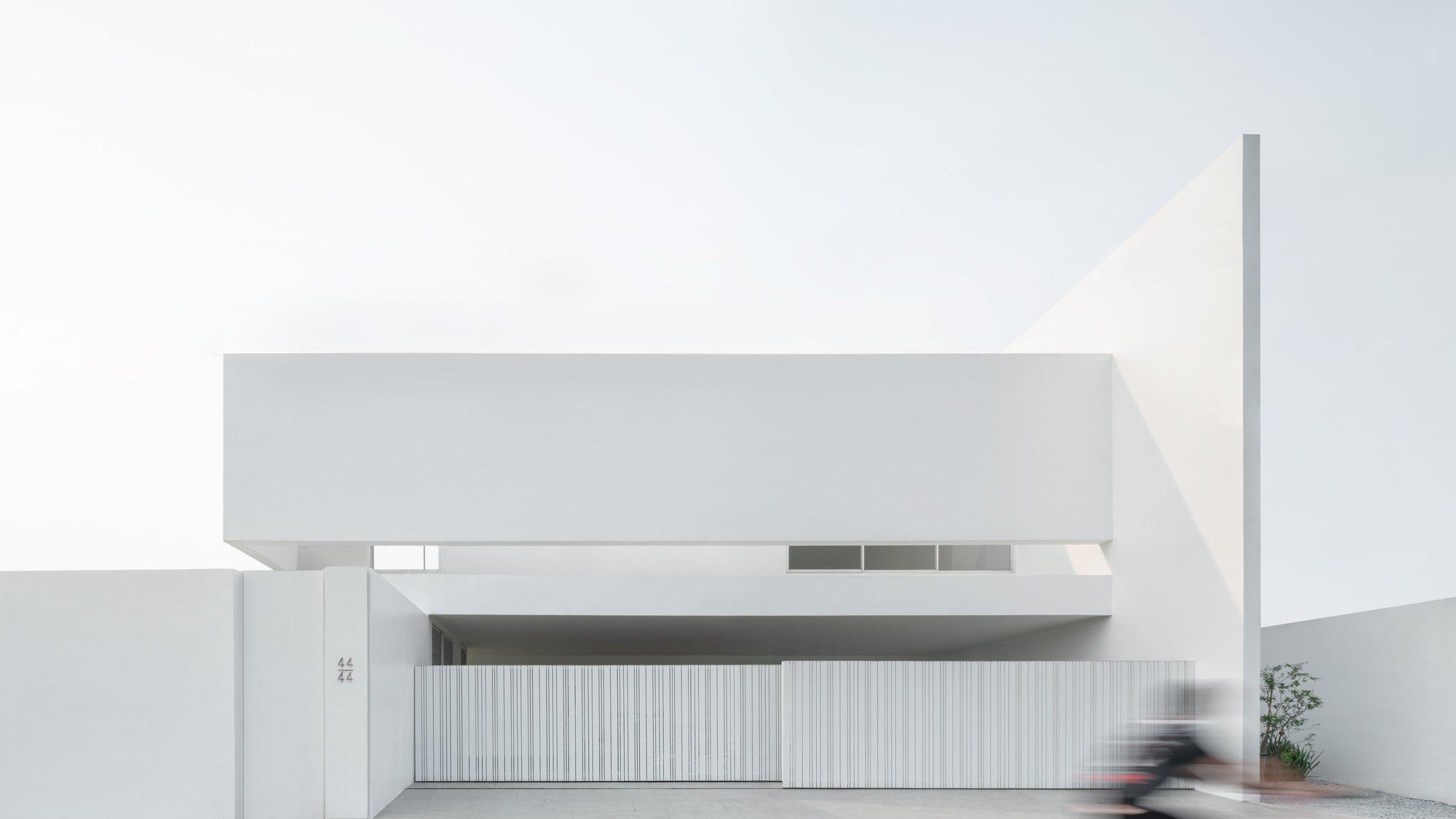
Lucent House By CORE Cluster
Lucent House in Thailand balances simplicity and spatial complexity, fostering family interaction through light-filled, interconnected living spaces and climate-responsive design.

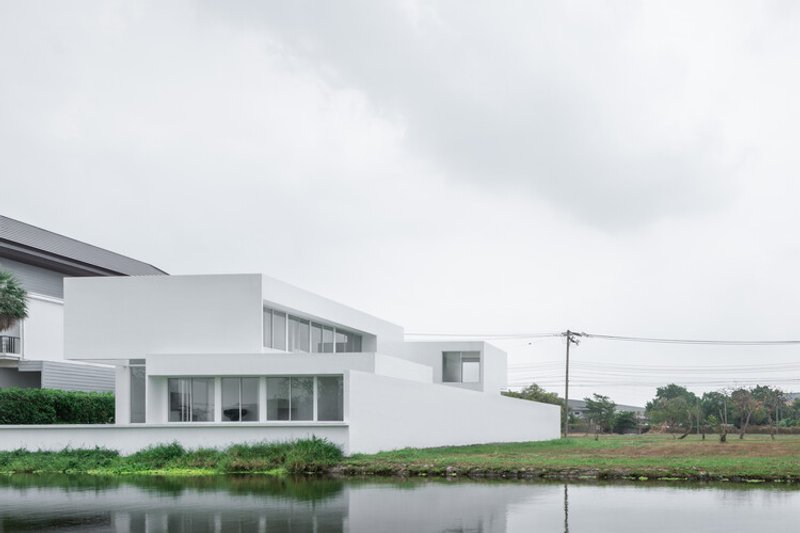
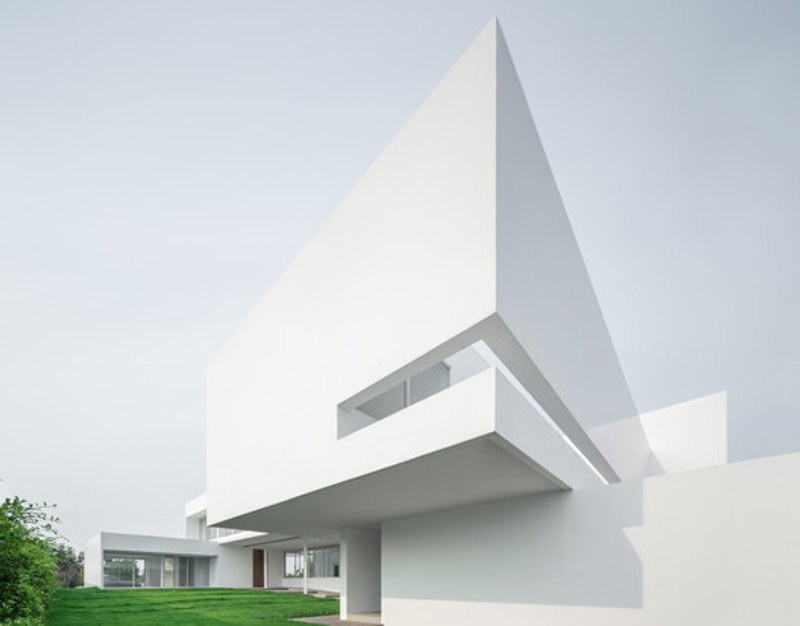
Lucent House, designed by CORE Cluster under the lead architect Methaporn Chittrayanont, is a contemporary family residence located in Pak Nam, Thailand. Completed in 2025, the 500 m² house explores the balance between architectural restraint and spatial richness, proposing a domestic environment that supports communication, adaptability, and long-term family life.
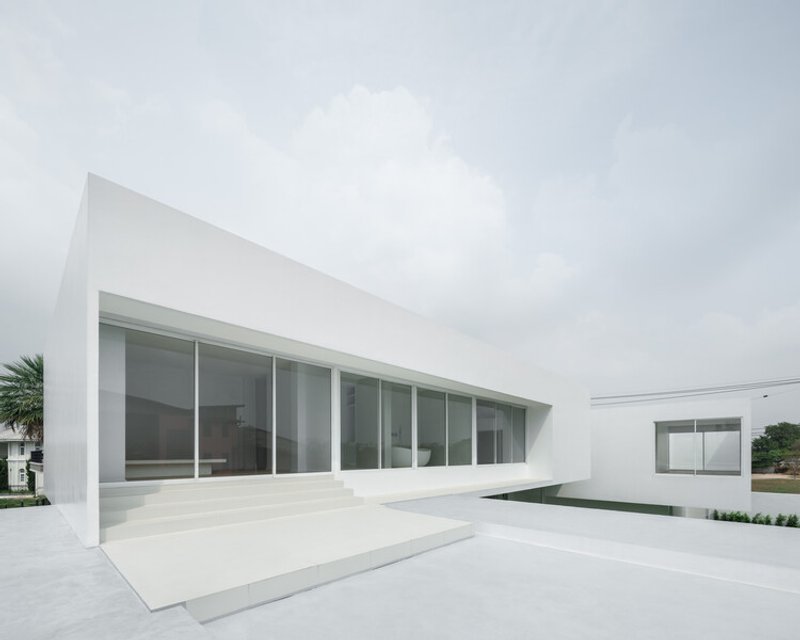
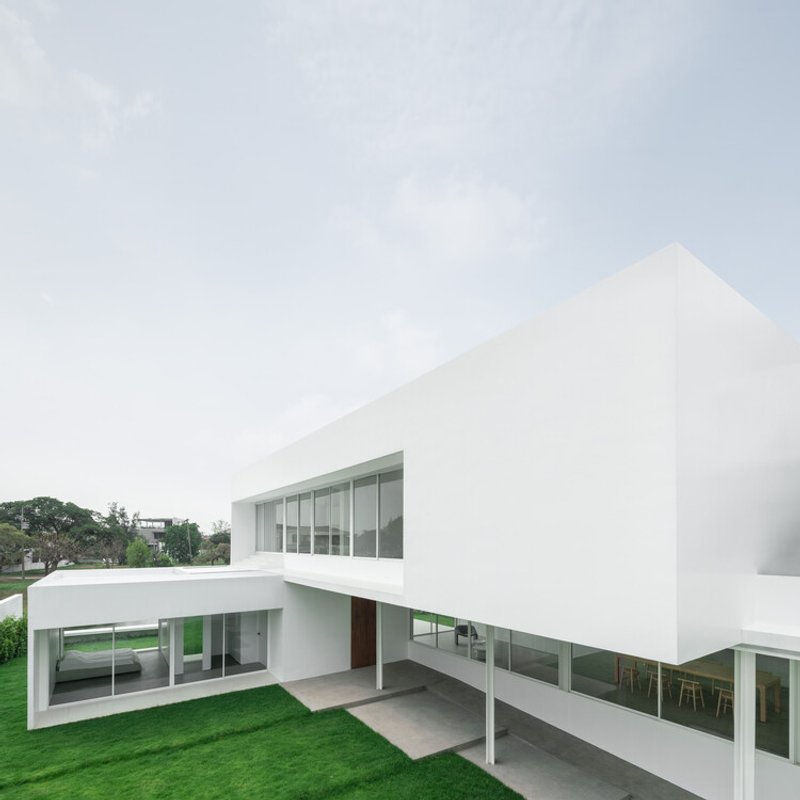
Simplicity and Complexity in Dialogue
The architectural concept of Lucent House is based on the juxtaposition of two contrasting qualities. On one hand, the exterior and primary interior surfaces embrace simplicity and plainness, allowing the house to adapt over time through personal decoration and evolving use. On the other, the spatial organization introduces complexity and vibrancy, encouraging dynamic interactions between family members.
This duality enables the house to function not as a static object, but as a living framework—one that gradually becomes a repository of shared memories, shaped by the relationship between its inhabitants and the architecture itself.
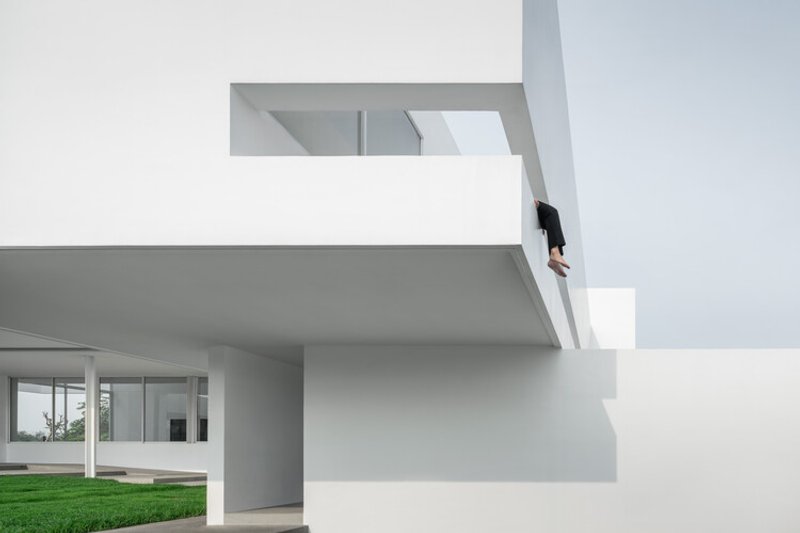
A Home Designed for Continuous Interaction
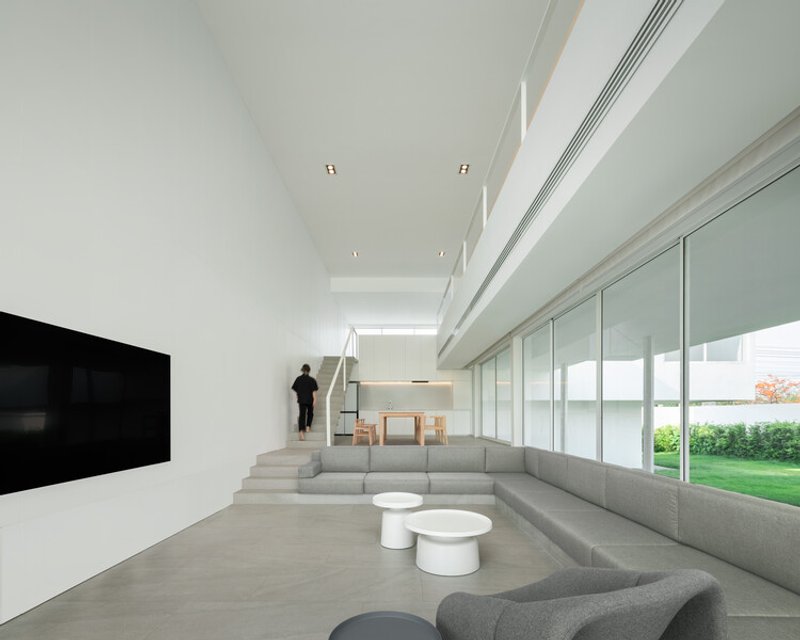
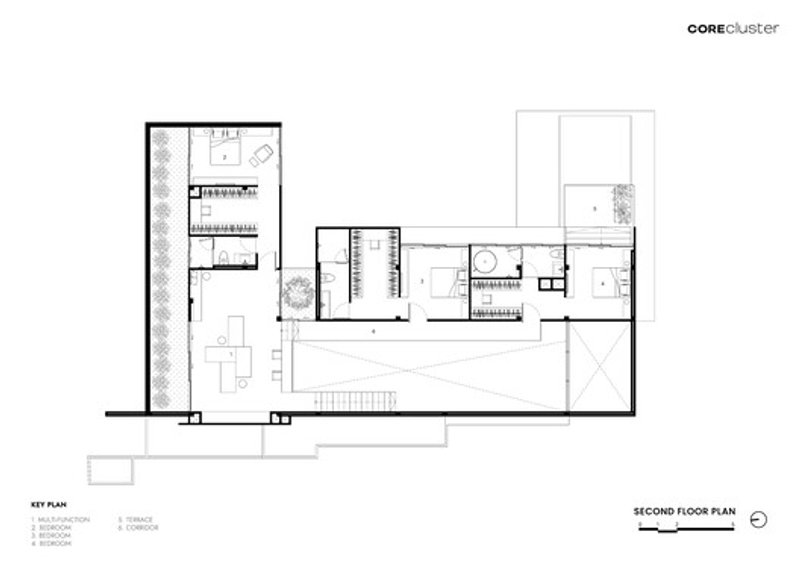
At the core of the project lies a fundamental question: How can family members remain connected throughout the day? The answer takes form in a large central common space, around which the house is organized. This shared area acts as the social heart of the home, supporting daily activities, informal gatherings, and spontaneous interaction.
The living and dining areas are subtly defined by a split-level floor, creating spatial distinction without relying on physical partitions. This approach maintains openness while allowing each function to retain its own identity.
Spatial Connectivity and Vertical Relationships
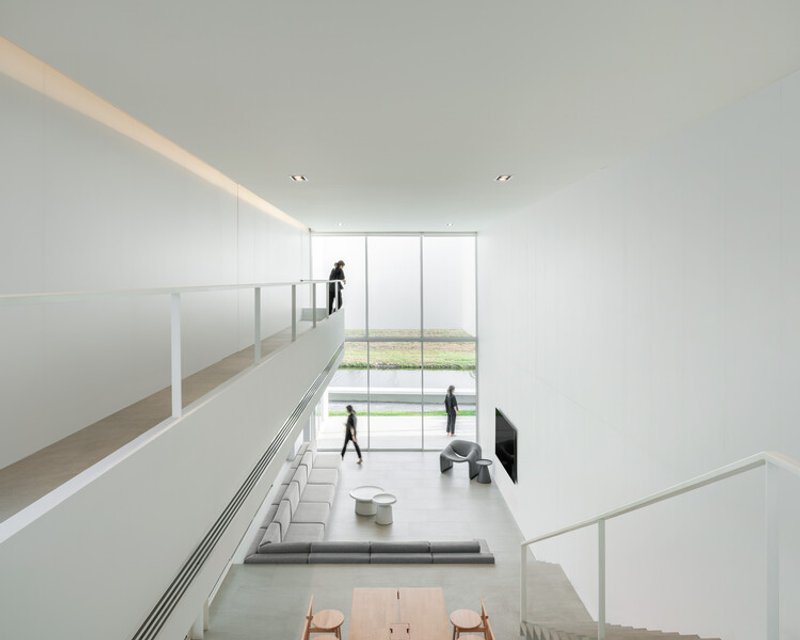
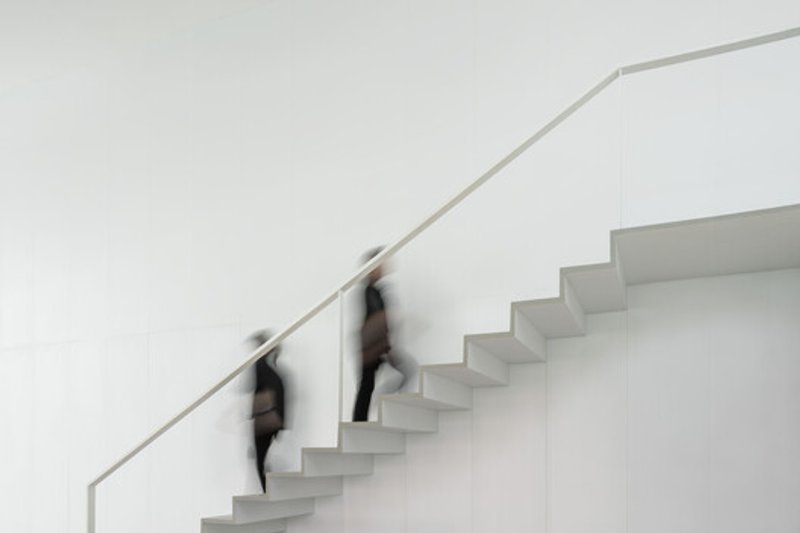
Beyond horizontal continuity, Lucent House emphasizes vertical visual connections. A double-height volume within the central common space establishes a visual dialogue between the ground floor and the second-floor corridor. This relationship reinforces the idea of shared space, while guiding a gradual transition from private to public zones, and from enclosed to more open environments.
The interconnected spatial sequence ensures that movement throughout the house is intuitive and engaging, reinforcing a sense of togetherness even when family members occupy different levels.
Material Strategy and Budget-Conscious Design
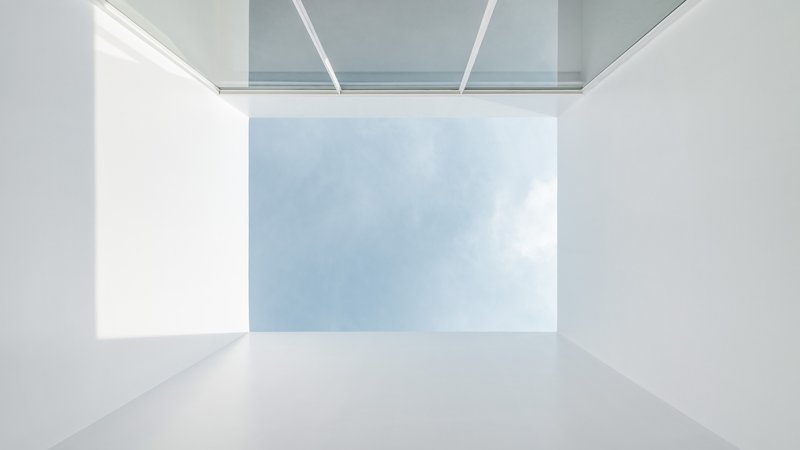
Working within a limited budget, the architects adopted a principle of “minimum necessary” in material expression and detailing. Plain walls were selected not only for their economic efficiency but also for their ability to reflect and distribute natural light, reducing the need for artificial lighting during the day.
This restrained material palette enhances the architectural clarity of the spaces while allowing light, shadow, and human activity to become the primary design elements.
Climate-Responsive Architecture
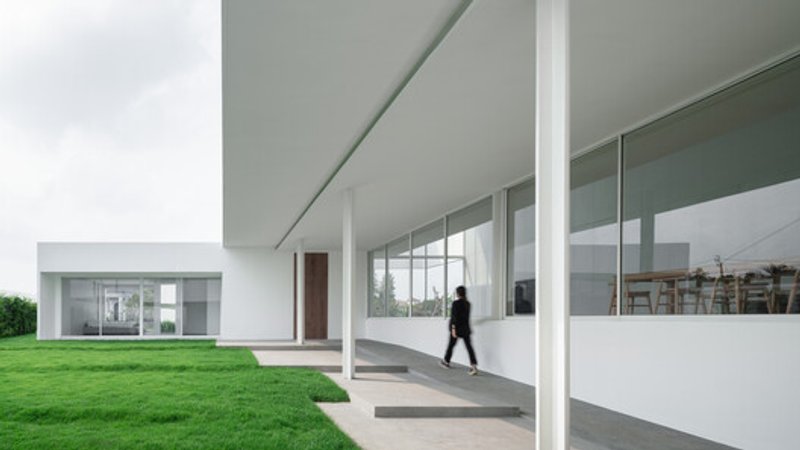
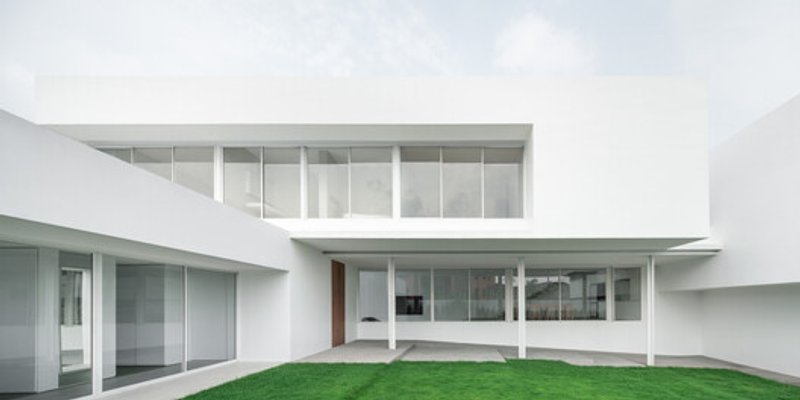
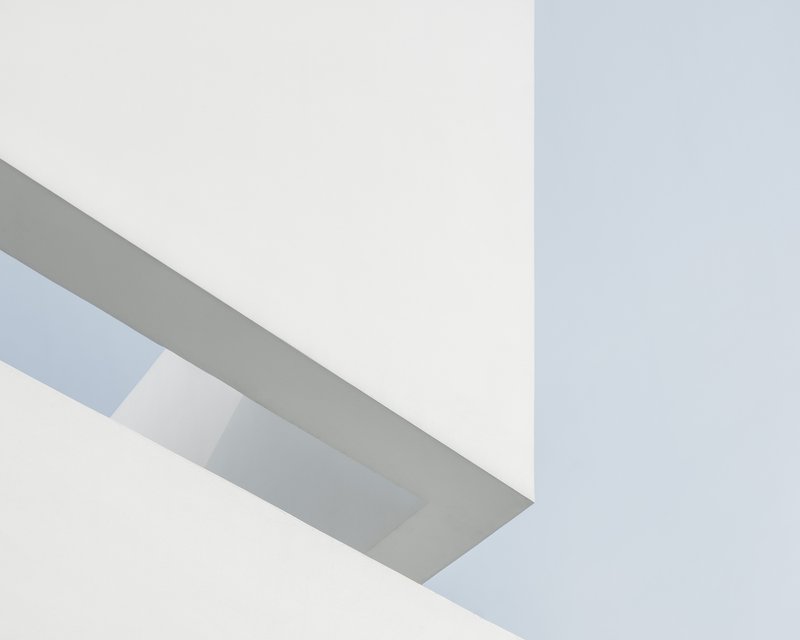
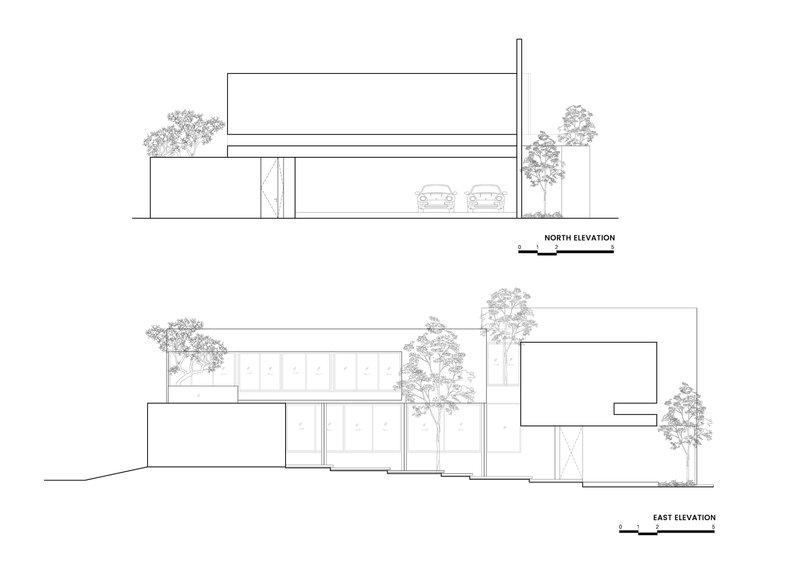
Lucent House responds carefully to Thailand’s tropical climate through building orientation, deep roof eaves, and strategic window placement. These elements improve thermal comfort, control daylight penetration, and encourage natural ventilation, contributing to a comfortable indoor environment year-round.
The cohesive integration of spatial planning, façade design, orientation, and material choices reflects a holistic architectural approach—one that balances visual clarity, functionality, and economic constraints without compromising spatial quality.
A Flexible Framework for Family Living
Rather than imposing a fixed way of living, Lucent House provides a flexible architectural framework capable of evolving with the needs of an extended family. Its open, interconnected spaces support communication and interaction, while its simplicity allows future personalization.
As time passes, the house becomes more than a residence—it transforms into a living archive of everyday life, where architecture quietly supports connection, comfort, and continuity.
All the photographs are works of Sofography | Chalermwat Wongchompoo




Popular Articles
Popular articles from the community

Inside a Timeless Mumbai Residence by Aether Studio
Aether Studio's 2,250 sq ft apartment in Malad, Mumbai uses marble, brass, boucle, and disciplined restraint to build a quiet retreat from the city.
Pablo Senmartin Suspends a Steel-and-Timber Refuge Above a River Forest in Córdoba
An 80-square-meter dwelling on pilotis camouflages itself among the trees of Mayu Sumaj, designed to be dismantled without waste.

The Heart of Milano: Slow Fashion Architecture for a New Circular Culture
The Heart of Milano turns slow fashion architecture into a civic landmark where learning, making, sharing, and circular culture meets daily.
R/URBAN DESIGN OFFICE Carves a Communal Living Room from a Tokyo Corporate Dormitory
In Shinagawa's Oi district, a 35-year-old reinforced concrete tower becomes a 49-unit rental residence with shared spaces that redefine cohabitation.


Similar Reads
You might also enjoy these articles

Olio Towers: A Mid-Rise for Performers That Fuses Housing, Rehearsal, and Stage
Located blocks from Houston's Theater District, this modular tower stacks living units around a central performance atrium.

Oasis: Modular Green Housing Carved into Dhaka's Urban Fabric
A shortlisted Plugin Housing entry reclaims unauthorized settlements in Dhaka with stepped concrete volumes, green roofs, and ventilation-driven design.

Black Hole: A Floating Megastructure for the Post-Physical Era
Emiliano Mazzarotto envisions a spherical, self-scaling arena where e-sports, digital hotels, and holographic stadiums replace traditional public space.
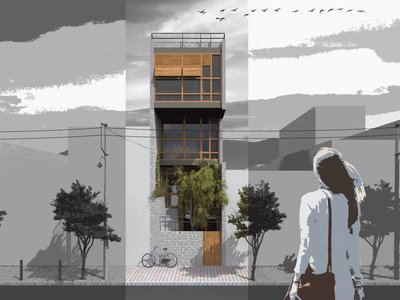
Compact & Sustainable Living in Piraeus: A Four-Level Family Home Built Around Light and Air
A narrow townhouse in one of Greece's densest port cities uses a central atrium and passive strategies to house three generations under one roof.


Explore Architecture Competitions
Discover active competitions in this discipline




The International Standard for Design Portfolios


The Global Benchmark for Architecture Dissertation Awards


The Global Benchmark for Graduation Excellence


Challenge to reimagine the Iron Throne
Comments (0)
Please login or sign up to add comments
No comments yet. Be the first to comment!