
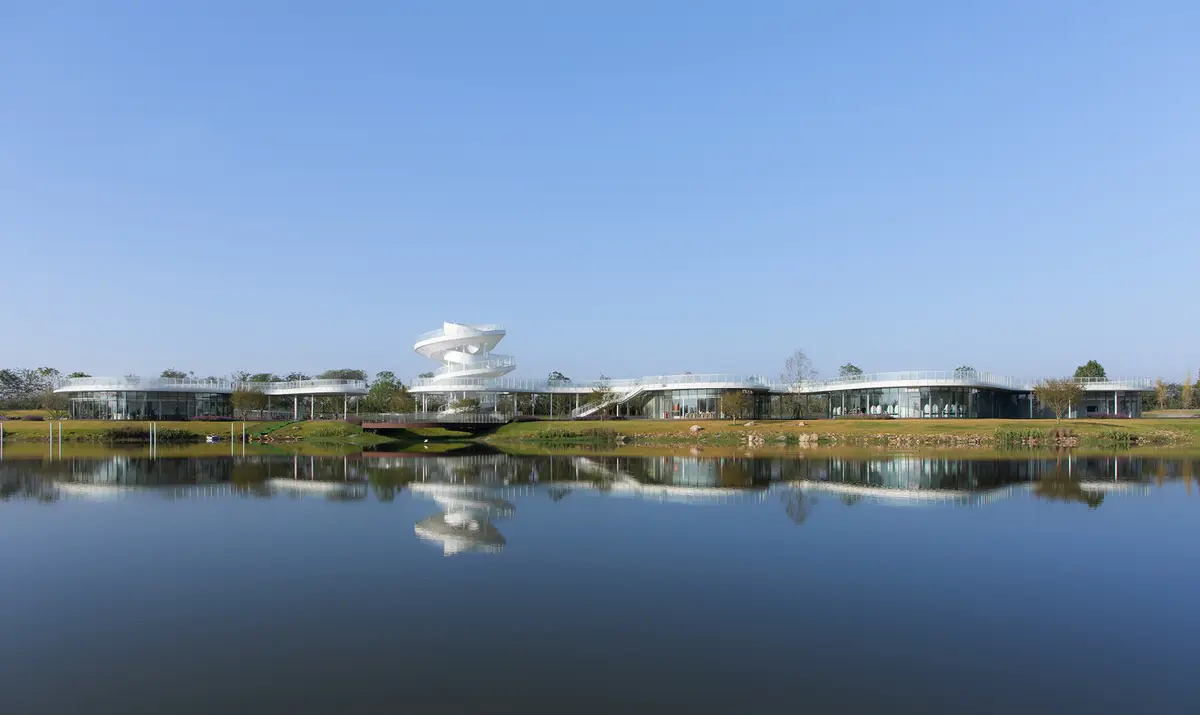
Lujiatan Wetland Park Commercial Service Center: A Harmonious Fusion of Nature and Modern Design
The Lujiatan Wetland Park Commercial Service Center by MUDA-Architects blends modern design with ecological sustainability, offering a multifunctional space that connects visitors to nature.


The Lujiatan Wetland Park Commercial Service Center, designed by MUDA-Architects, is a striking architectural project located in Wenjiang District, Chengdu, China. The 3,022 m² structure, completed in 2024, draws inspiration from both the rich cultural heritage of the region and the natural beauty of the surrounding wetland park. The design embraces ecological sustainability, modern functionality, and local culture, creating a space that fosters a connection between people, nature, and the environment.



Project Background and Location
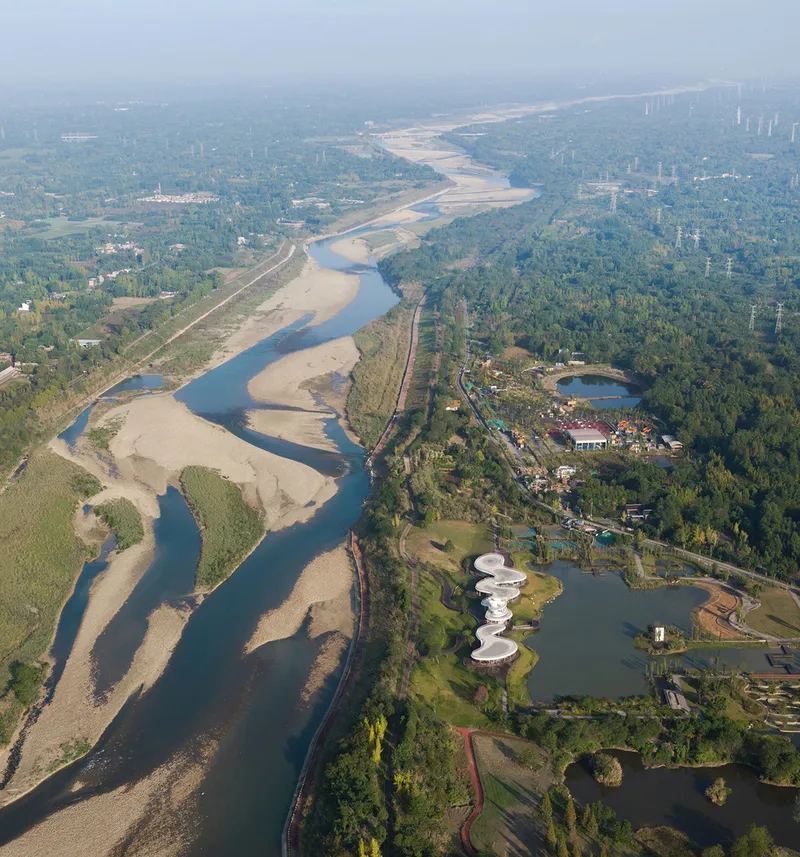
Wenjiang, historically known as the "City of Willows," is renowned for its deep cultural roots and natural resources. The district, situated near the Jinma and Minjiang Rivers, has long been a convergence point for humanity and nature. The Lujiatan Wetland Park, with its lush greenery and serene waters, is a prime example of the area’s natural charm. The commercial service center is strategically located within this ecological heartland, seeking to capitalize on the area’s beauty and growing popularity as a leisure destination. The building serves as a multifunctional space that integrates commerce, ecology, and leisure, offering visitors a unique and immersive experience of modernity in harmony with nature.
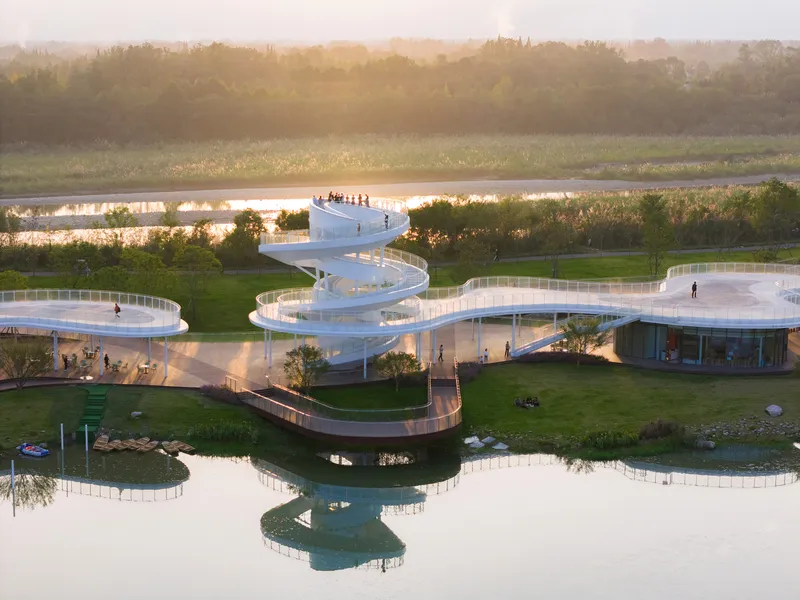

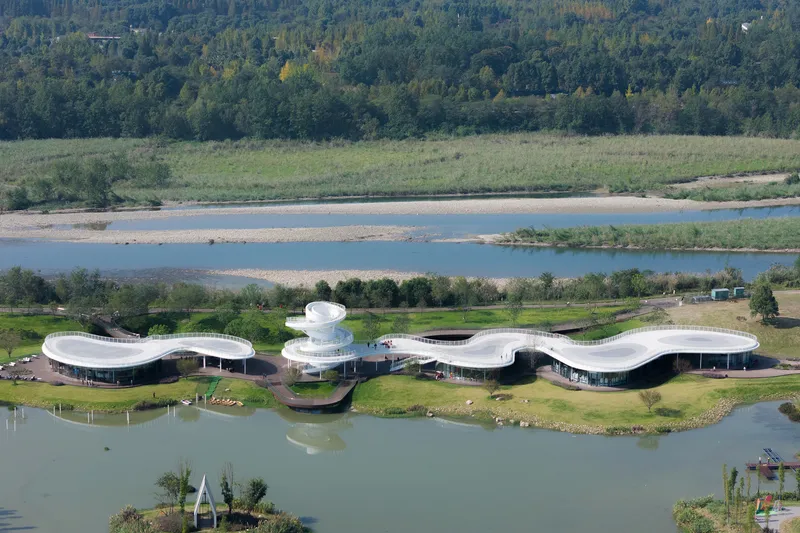
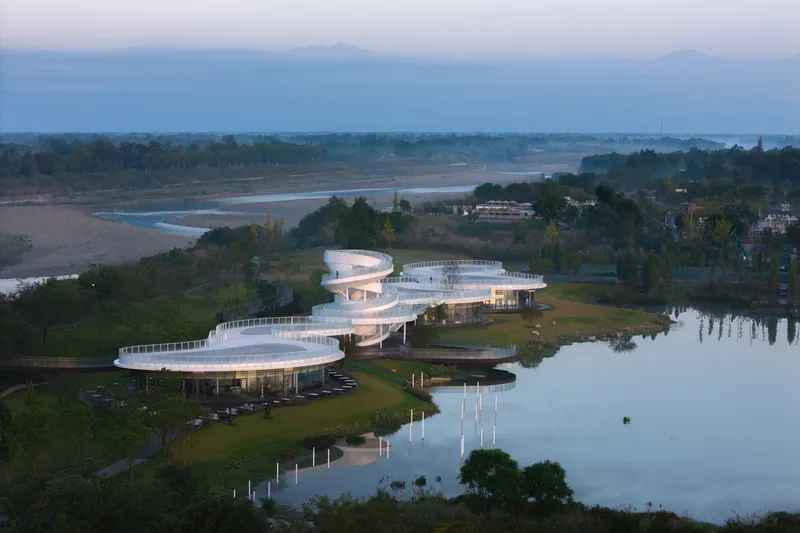
Design Concept: Translating Nature into Architecture
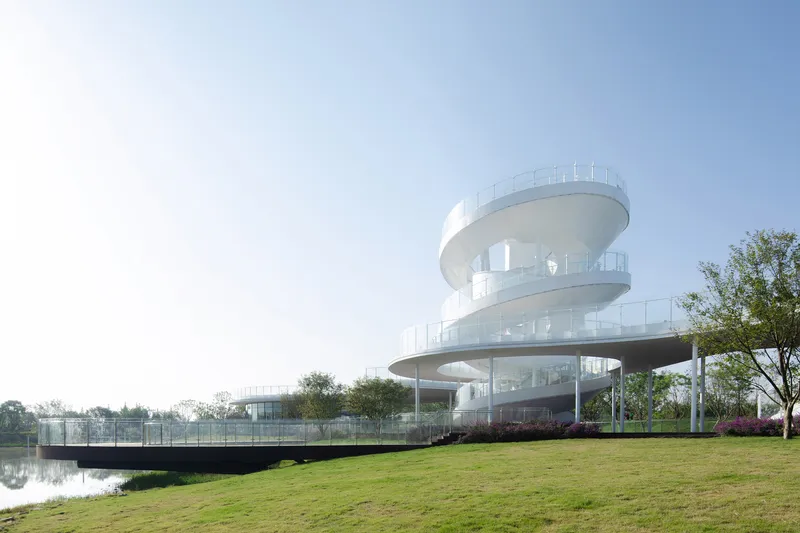
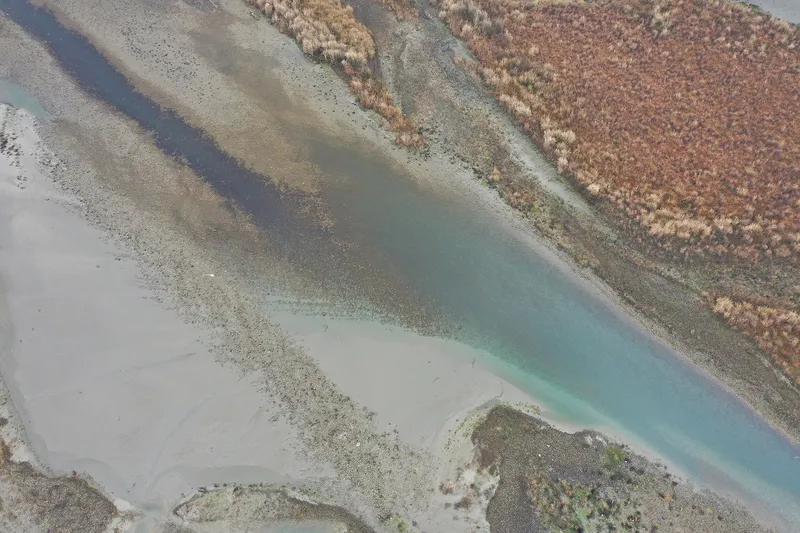
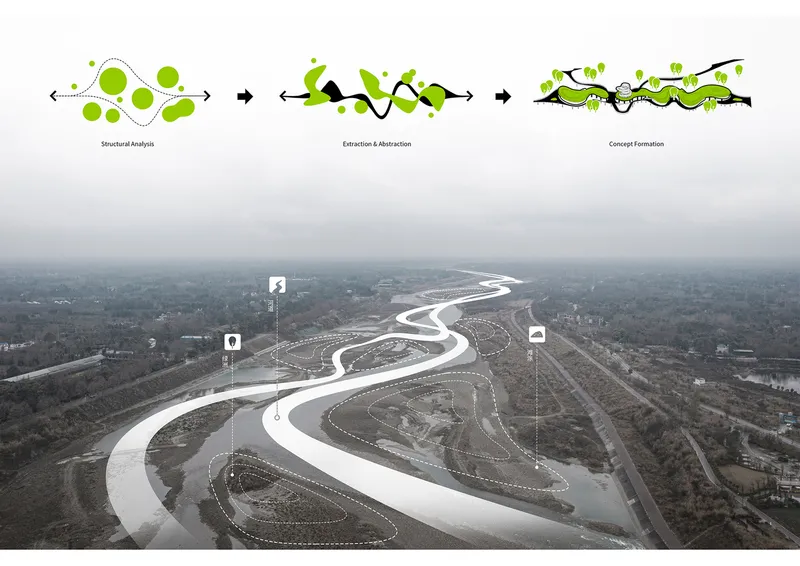
The design of the service center is deeply influenced by the natural environment. The architects were inspired by the geography of the Jinma River and its significance in the region's history. The river is seen as a symbol of the deep connection between humans and nature. MUDA-Architects translated this connection into architectural forms that evoke the flowing textures of riverbanks. The building’s curvilinear design reflects the rhythmic, fluid motion of the river, merging seamlessly with the wetland surroundings.
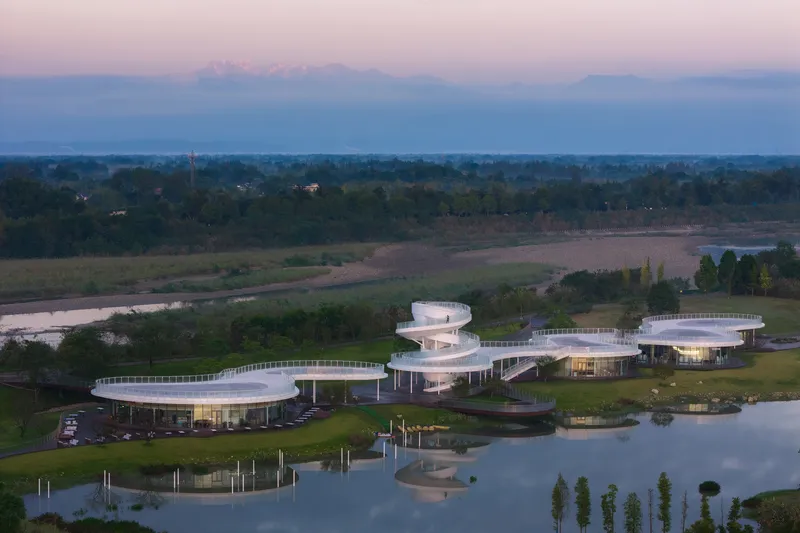

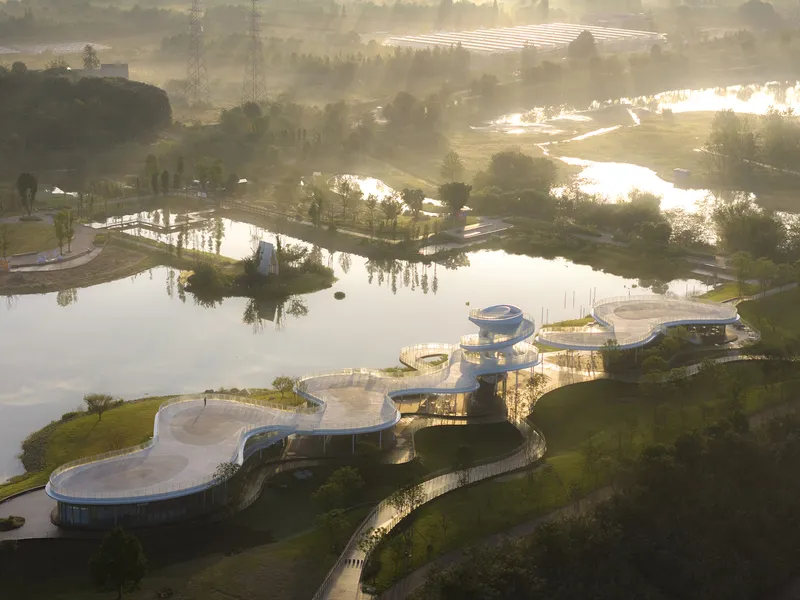
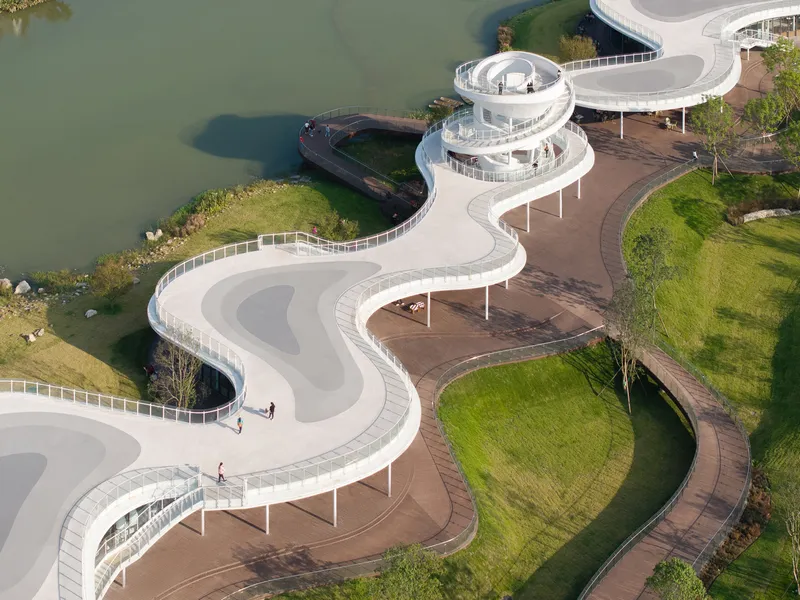
The project emphasizes modern design techniques while avoiding overt symbolism or imitation of traditional forms. Rather than replicating historical motifs, the design abstractly interprets natural elements to create a contemporary architectural statement that celebrates both the natural environment and local culture.



Integration with Nature and Functional Innovation
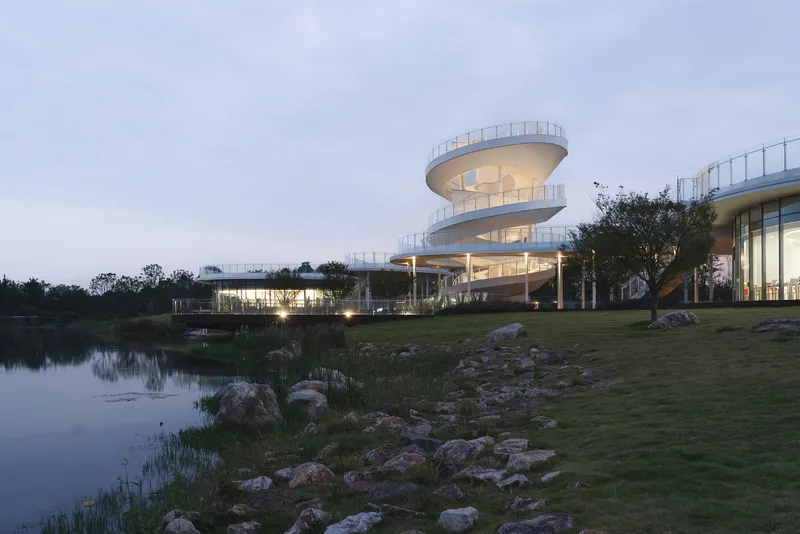
A key feature of the design is its integration with the surrounding wetland landscape. The building takes inspiration from traditional Chinese garden pavilions, reinterpreting the relationship between the "roof" and "column" in a modern context. The structure is lightweight and transparent, with fluid curves and expansive glass facades that allow the building to appear as though it is floating on water. The design maintains a delicate balance between ecological integrity and modern functionality, ensuring that the building complements its natural surroundings.
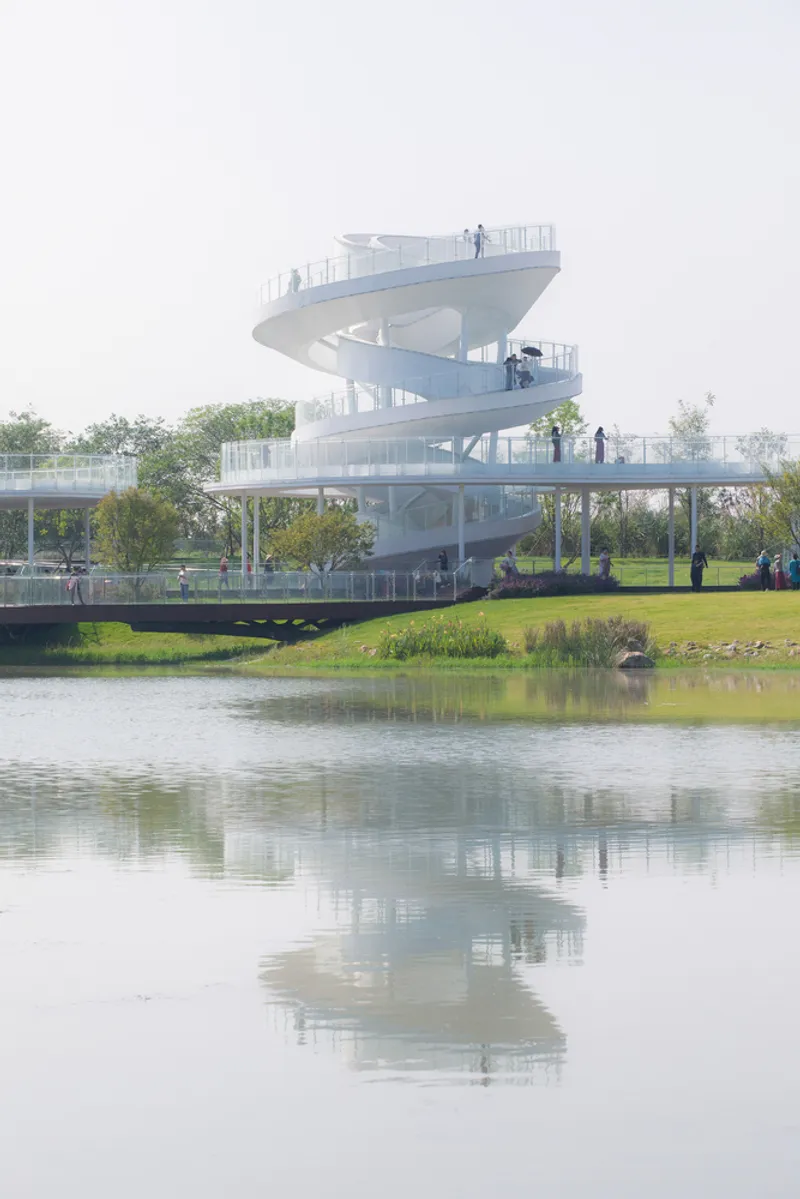
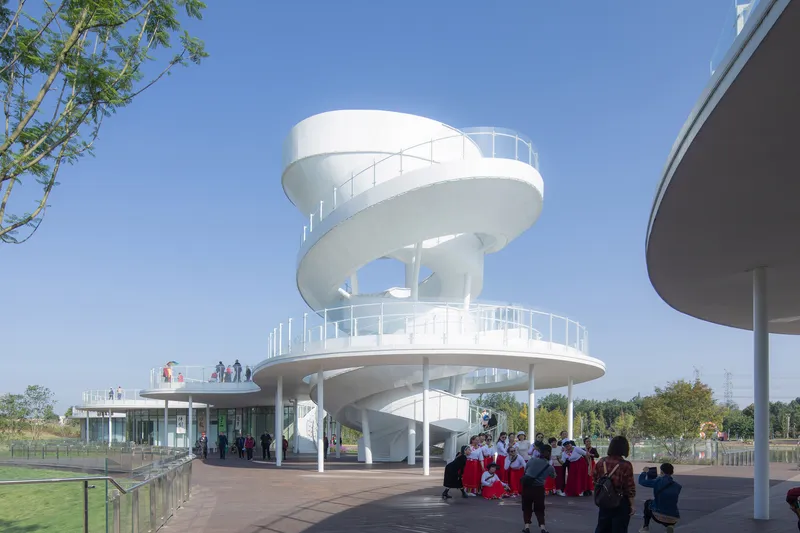


The commercial service center’s layout is designed with flexibility and interaction in mind. Breaking away from traditional “roadside shop” configurations, the building employs a modular approach that encourages exploration. The fluid design of the spaces and interconnected pathways invite visitors to experience the building with a sense of discovery, creating a dynamic environment that encourages engagement with the surrounding park.


Layered Public Spaces: Connecting Visitors to Nature
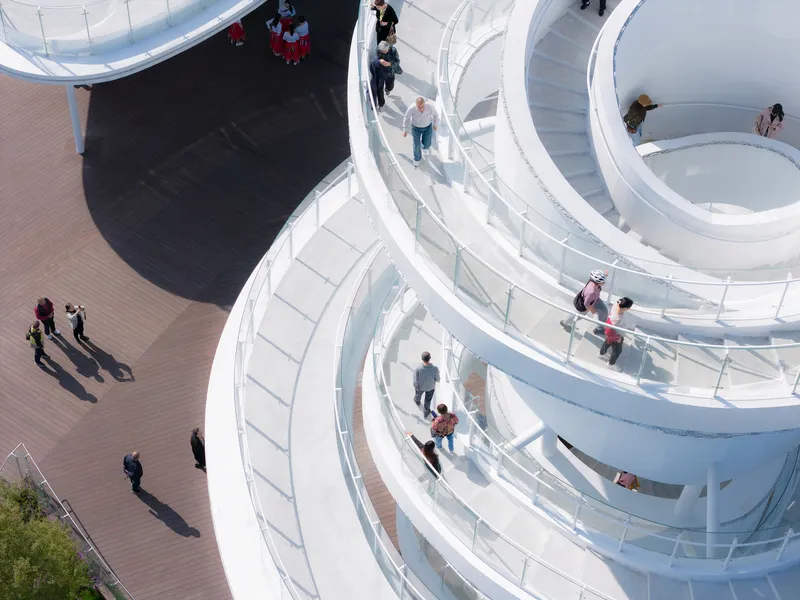
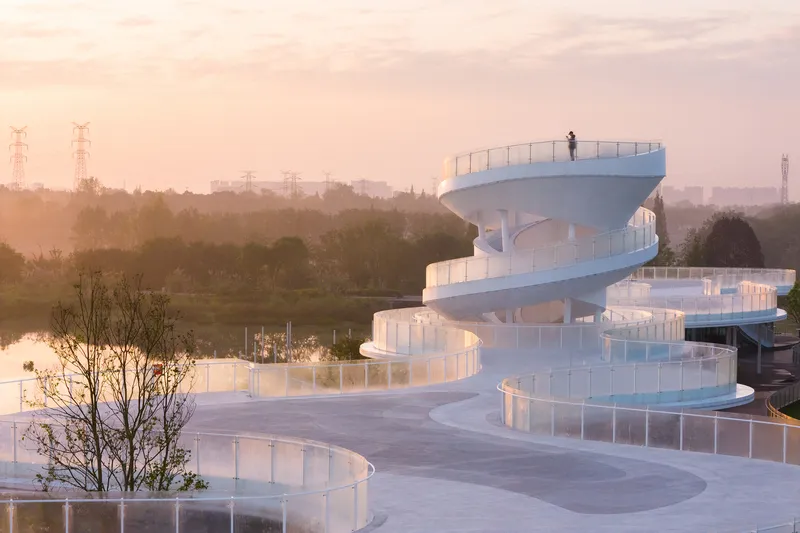
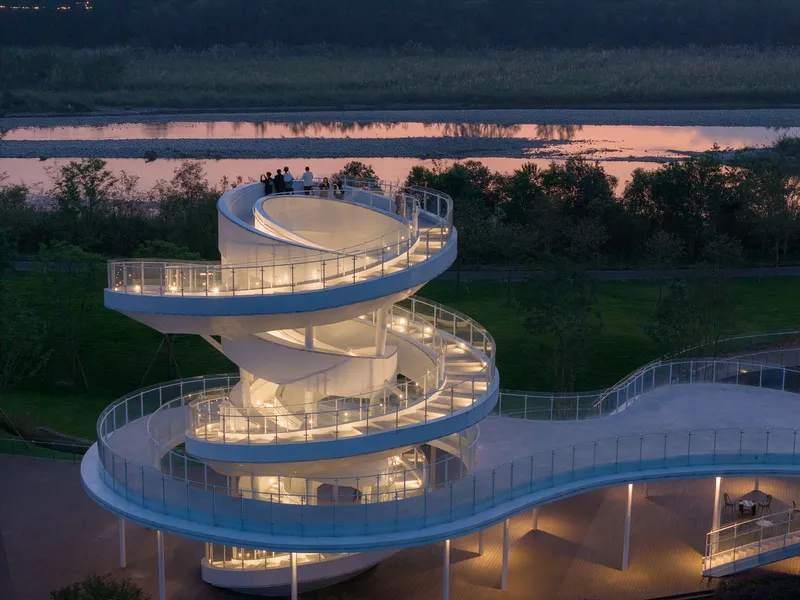
The design maximizes the potential of the public spaces by incorporating a walkable rooftop that connects seamlessly with the ground-level platform. This wooden platform, designed with anti-corrosion wood, serves as a bond between the building and the wetland park. On one side, it extends toward the water, creating a cantilevered hydrophilic platform where visitors can engage closely with the wetland’s natural beauty. On the other side, the platform connects to the Jinma River greenway, providing visitors with varied experiences as they explore the area.

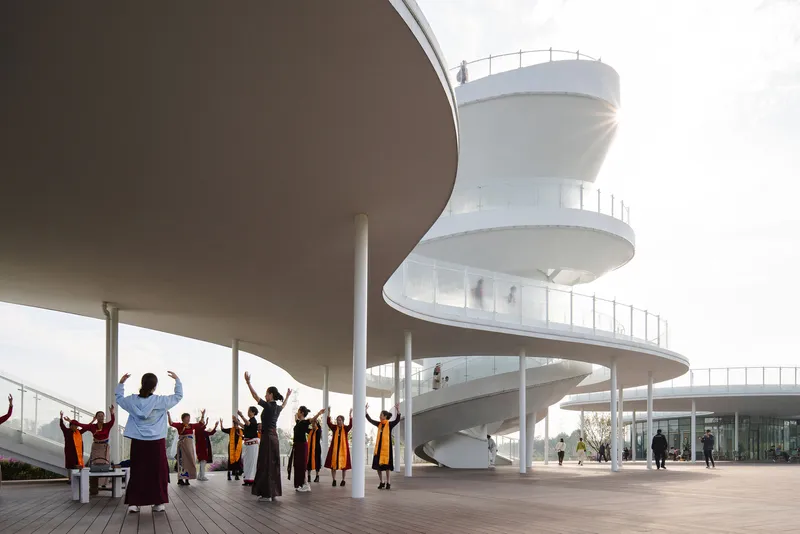
This careful design of public spaces promotes a deeper connection to the natural environment, enhancing the visitor experience by integrating architecture and landscape in a cohesive manner.


Observation Tower: Expanding Perspectives
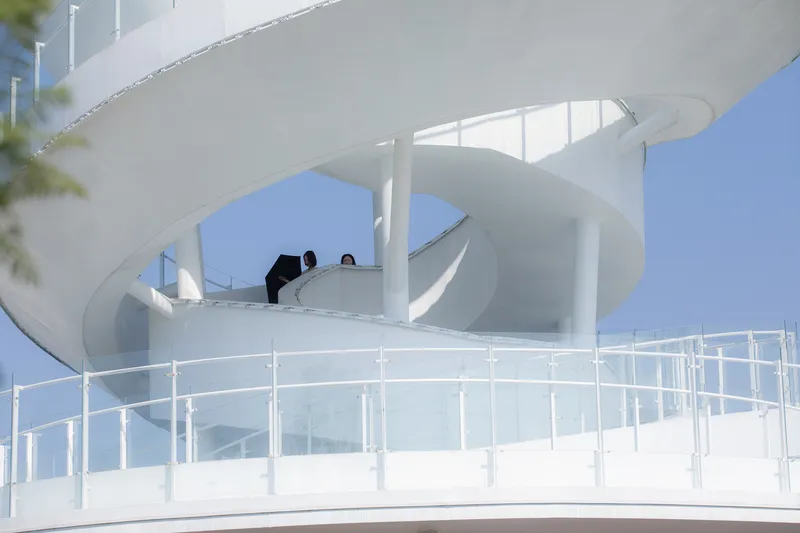
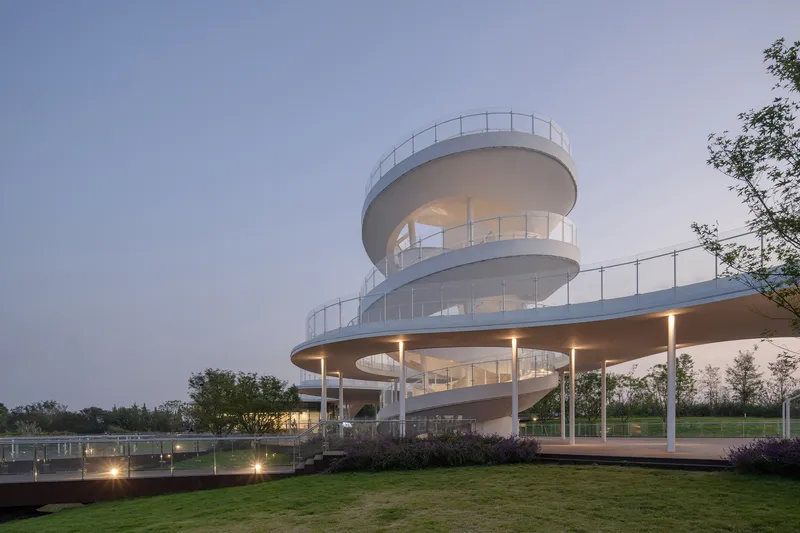
The building features an observation tower that offers panoramic views of the surrounding wetland and distant mountain ranges. The double-helix design of the tower’s spiral staircase allows visitors to ascend gradually, experiencing the landscape from various vantage points. At the top of the tower, visitors can enjoy breathtaking 360-degree views of the wetland, the Longmen Mountain, and even distant snow-capped peaks, offering an immersive and unique perspective of the region.

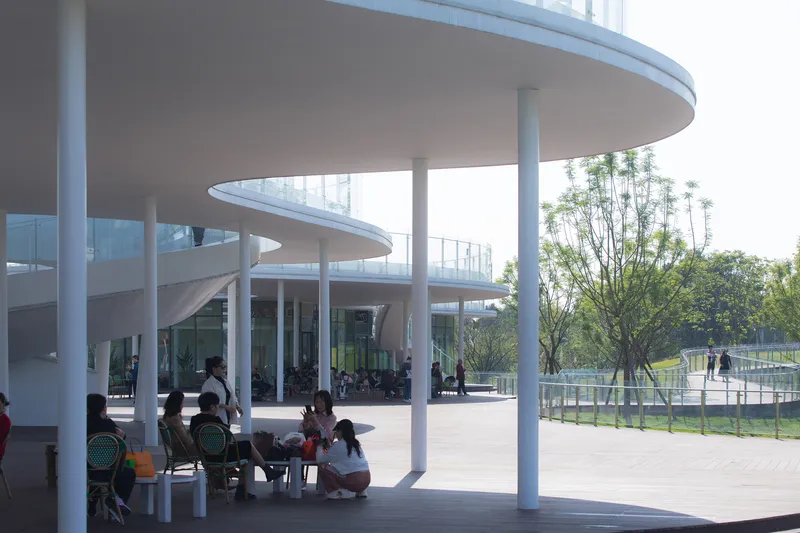

The observation tower serves as a focal point of the architectural complex, drawing attention to the integration of the building with its natural surroundings while also providing a space for contemplation and appreciation of the landscape.

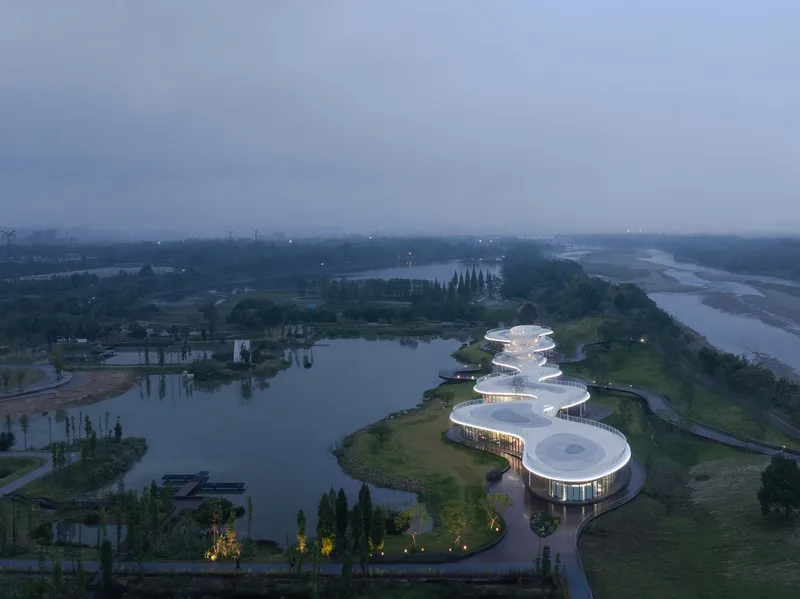

Sustainability and Ecological Responsibility
Sustainability is a core principle of the project. MUDA-Architects paid careful attention to the ecological sensitivity of the site, ensuring that the design minimizes its impact on the environment. The use of prefabricated steel structures reduced the need for heavy on-site construction equipment, minimizing disruption to the surrounding ecosystem.
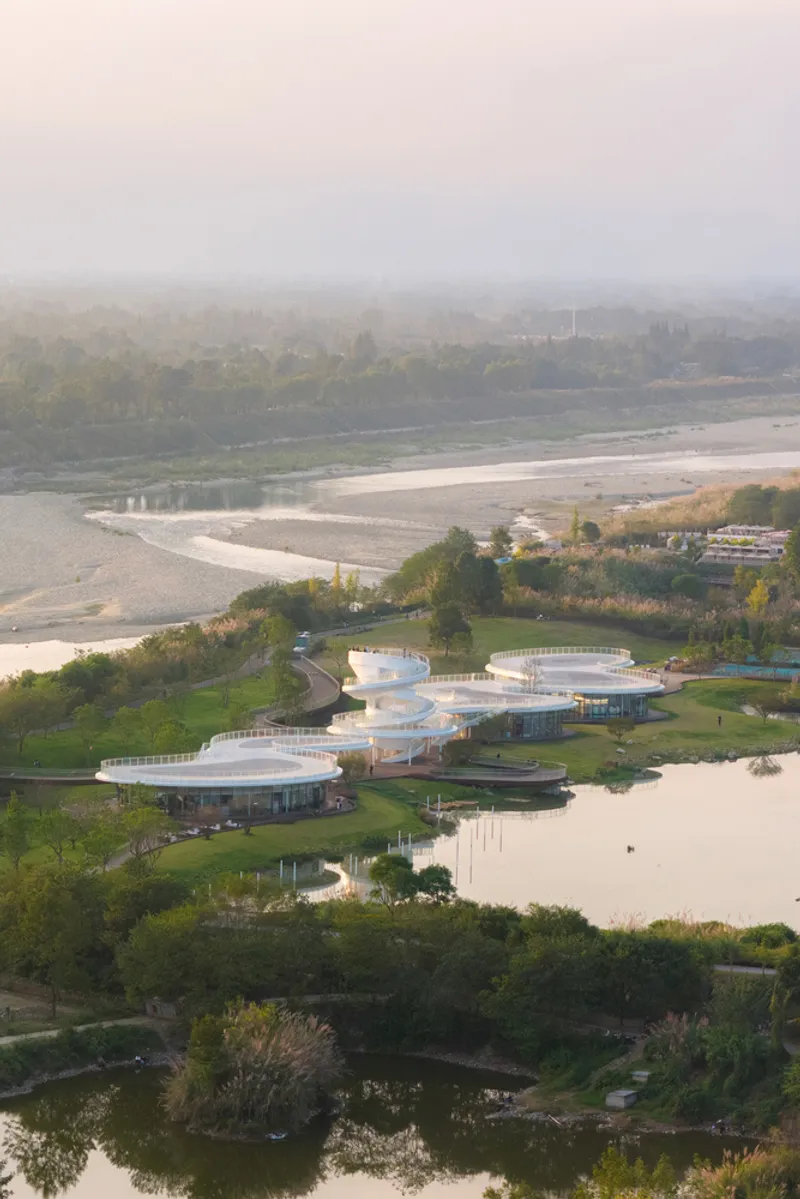

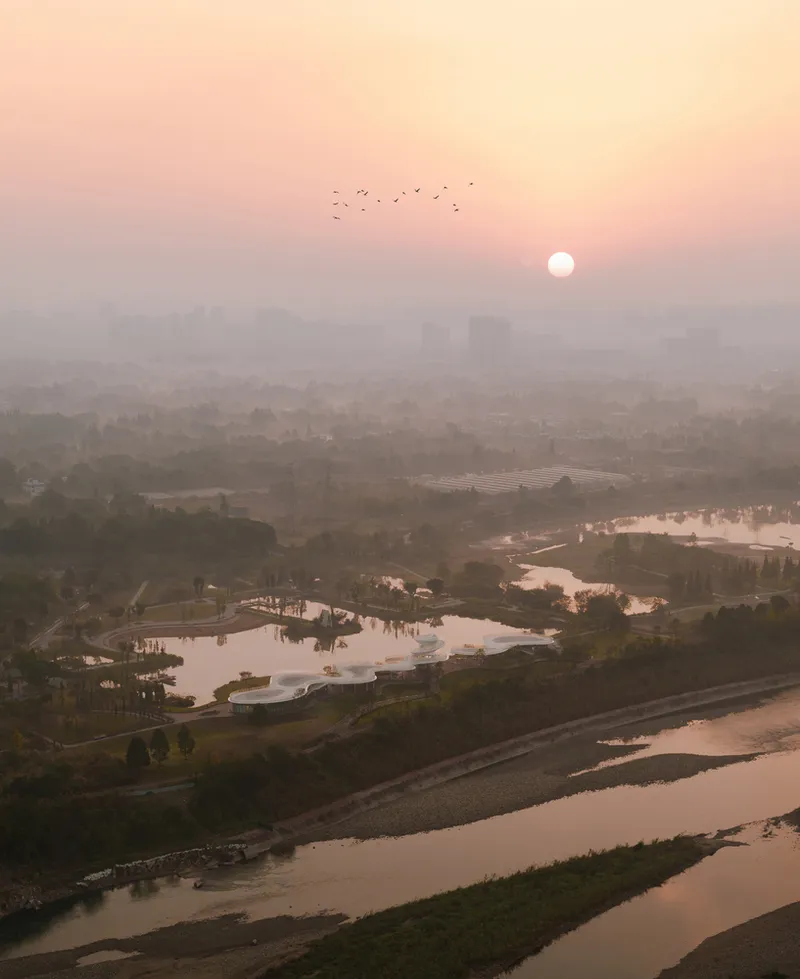
The building’s lightweight design, transparent glass façades, and use of materials like antiseptic wood and white metal plates further enhance the connection between nature and architecture. The building maximizes natural light, providing a pleasant indoor environment that blends harmoniously with the exterior landscape.
A Vision for the Future
The Lujiatan Wetland Park Commercial Service Center stands as a testament to the potential of architecture to blend modern design with ecological responsibility. By integrating the cultural heritage of Wenjiang with contemporary design principles, the project offers a multifunctional space that respects the environment while providing a unique experience for visitors. This project exemplifies the growing trend of combining natural landscapes with urban development, creating spaces that celebrate both the environment and the people who interact with it.


As a model for future architectural endeavors, the service center highlights the potential for design that is both sustainable and culturally sensitive, paving the way for a new era of urban architecture that prioritizes the relationship between humanity and the natural world.

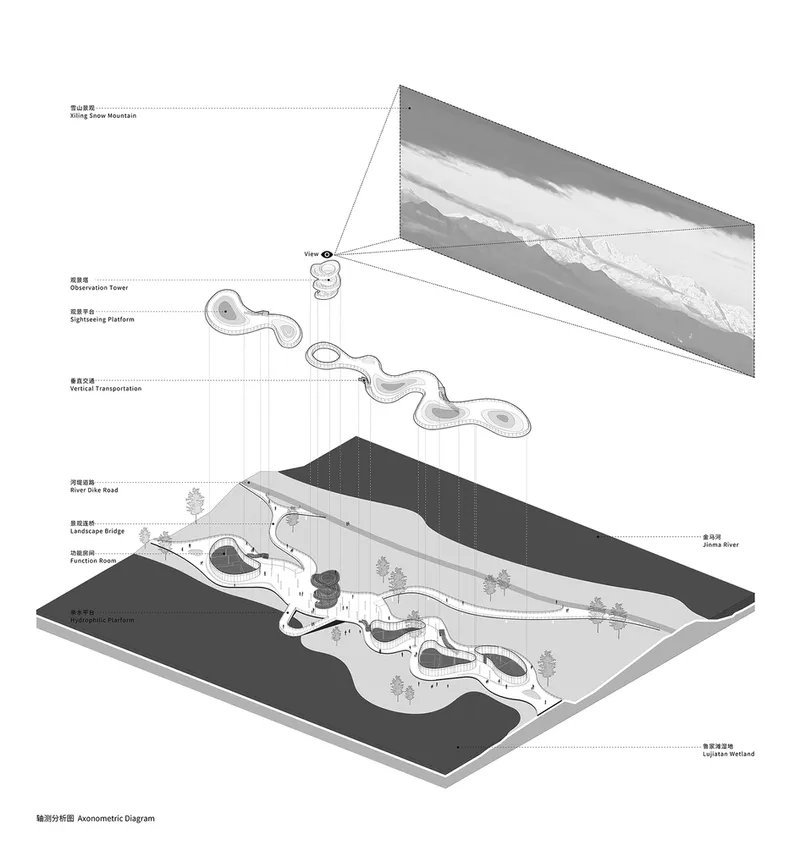

All Photographs are work of Arch-Exist, Dong Image


Popular Articles
Popular articles from the community


Conexión: Biophilic Design Reimagines High-Rise Living in Hong Kong
Conexión reimagines high-rise living in Hong Kong through biophilic design, green facades, shared spaces, daylight, water and nature within.

Co-life: Sustainable Architecture for Age-Friendly Community Living
Co-life reimagines sustainable architecture for seniors through courtyards, rammed earth, shared gardens, and spaces designed for belonging.

Lunar Spiral: Space Architecture Shaped by the Mathematics of the Universe
Lunar Spiral reimagines space architecture through Fibonacci geometry, lunar regolith, levitating habitats, and self-sustaining Moon living.
ALGAL REALM: A Bio-Integrated Lunar Habitat Design for Life Beyond Earth
ALGAL REALM reimagines lunar habitat design with algae-powered life support, 3D-printed regolith, and vertical living for a lunar future.

Similar Reads
You might also enjoy these articles


Hodi-Mandai Geram
Project Function: Preservation and revitalization of the Intangible heritage and socio-spatial identity of the Hodi by Housing, Cultural Memory Center, Sacred Grove, landscape, local tourism economy


Olio Towers: A Mid-Rise for Performers That Fuses Housing, Rehearsal, and Stage
Located blocks from Houston's Theater District, this modular tower stacks living units around a central performance atrium.

Oasis: Modular Green Housing Carved into Dhaka's Urban Fabric
A shortlisted Plugin Housing entry reclaims unauthorized settlements in Dhaka with stepped concrete volumes, green roofs, and ventilation-driven design.

Black Hole: A Floating Megastructure for the Post-Physical Era
Emiliano Mazzarotto envisions a spherical, self-scaling arena where e-sports, digital hotels, and holographic stadiums replace traditional public space.

Explore Architecture Competitions
Discover active competitions in this discipline

Challenge to reimagine the Iron Throne

Photograph architecture without architects

Illustrate the lost glory of Angkor Wat - Render Challenge

Design challenge to reuse E-waste
Comments (0)
Please login or sign up to add comments
No comments yet. Be the first to comment!