
LUMINARY TIDE
A wave of enlightenment rising like the tide, bringing clarity, wisdom, and collective connection.

When approaching this competition, we realized it would be a challenge being able to get people off their phones, especially when wanting to create something beautiful, you would almost want people to take out their phones and start posting about it. So, to move forward with less technology, we must trek backwards into a world with less technology and more nature. The challenge here was how do we merge modern building technology with elements of nature in a way that creates a vibrant, illuminated atmosphere; distracting even. We narrowed our search down to finding a site with historical context that merges land and water; the first two elements. We also knew our lighting system should be representative of fire, specifically a campfire. So that left us with finding a way to incorporate air.
We landed in New York City, specifically in Lower Manhattan at the Catherine Slip between the Brooklyn Bridge and Manhattan Bridge. Historically, in the 1800’s, the Catherine Slip used to be underwater and was a port for boats and ferries. With such a great location between these monumental bridges, we thought we could revitalize the idea of the port and make it the gathering spot it once was, while integrating new public multi-purpose spaces.
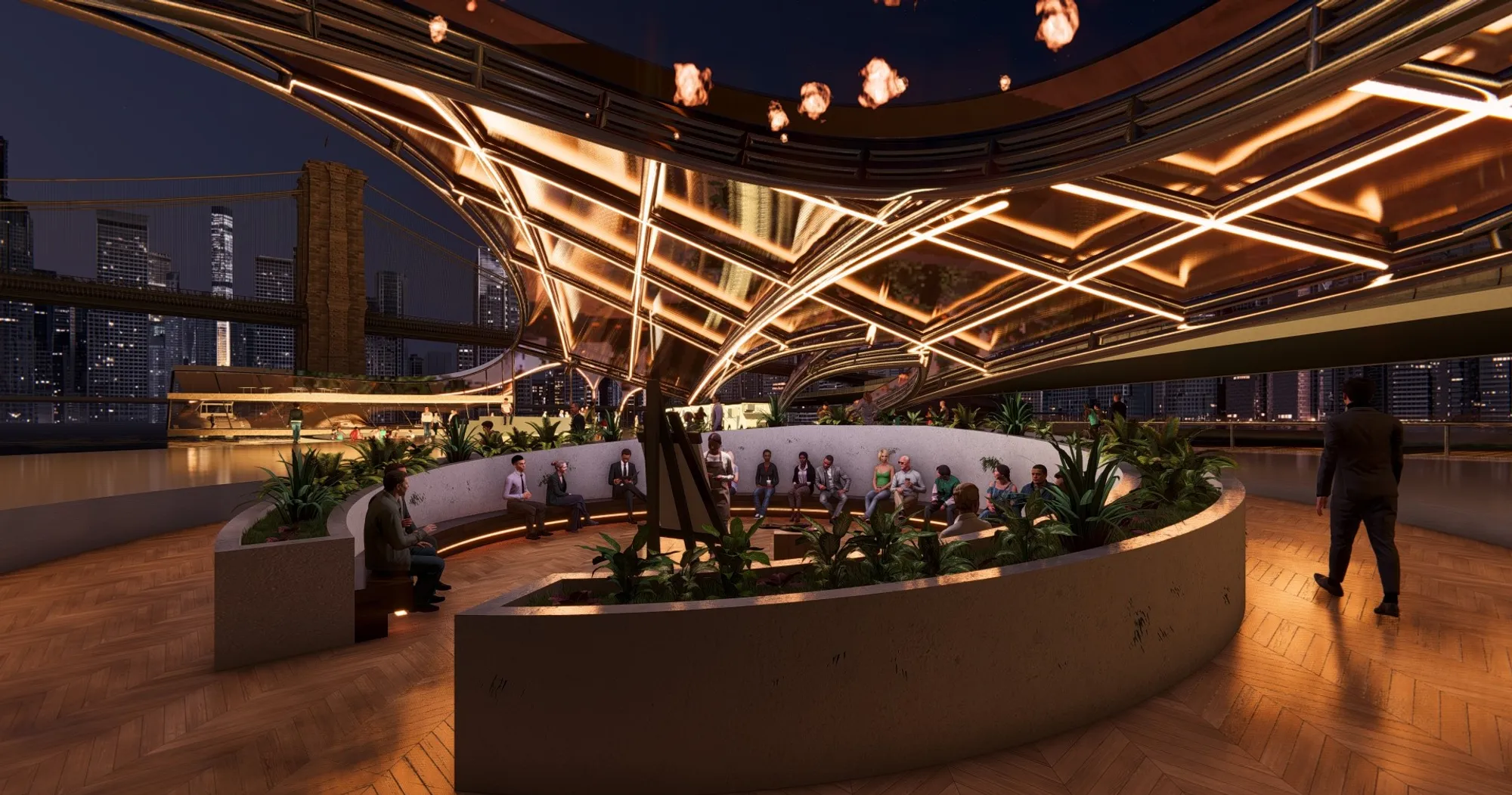
The design itself is representative of everything mentioned, beginning with the wave over FDR Dr. leading into the Catherine Slip. As the Catherine Slip is considered a historical site, we left the wave suspended in the air, symbolic of the Catherine Slip being underwater once again. The roof itself is made of glass panels that house water collected from rising tides (this is why part of the roof dips into the river. So, the Catherine Slip is once again, underwater, but in a new style.
The following task was to celebrate the connection of land and water, and through this we explored the opportunity of taking soft forms that both air and water perceive, in order to engage all 4 elements. So, the extensions for the docking ports are representative of the land growing out onto the water. Now, how do we incorporate sustainability? The docking ports take on the shape of a floating boom to collect plastic waste.
Lastly and most importantly, the project was tasked to create a communal space re-interpreting the campfire. An important characteristic of a campfire is how we all gather around it to keep warm but allow us a moment to share. The circular shape invites anyone to join and room to expand the circle. We wanted to bring this concept into our design with a focal circular communal space, where even though it is public, it almost feels private and feels safe for you to share. It can be used for different programs; we showcased a live painting performance in our renders. Above the space is an aperture that allows natural light in during the day and at night, a light is displayed vertically that is meant to look like a large campfire. The entire pavilion is unconditioned to also allow natural ventilation.


Popular Articles
Popular articles from the community


The Musturak Paradise: Senior Living Architecture for a Connected Future in Temara, Morocco
The Musturak Paradise reimagines senior living architecture in Temara via private homes, social spaces, culture, community, and shared care.

Co-life: Sustainable Architecture for Age-Friendly Community Living
Co-life reimagines sustainable architecture for seniors through courtyards, rammed earth, shared gardens, and spaces designed for belonging.

The Ocean Hive: Sustainable Architecture for a Self-Sufficient Civilization at Sea
The Ocean Hive imagines sustainable architecture at sea, where modular habitats, algae, wave power and ocean waste sustain a growing colony.

The Earth Pod: 3D Printed Homes for Resilient Refugee Communities
The Earth Pod reimagines refugee housing through 3D printed homes made from clay, combining resilience, self-sufficiency, and rapid shelter.

Similar Reads
You might also enjoy these articles
The Rhythm of Seasons
A Farmers' Market Connecting Nature and the City

More Than a Building-Designing a Living System
More Than a Building-Designing a Living System
Base Beyond
DESERT COMPOUND ARID: TOURISM OF ABSENCE AND ABUNDANCE
Explore Luminaire Competitions
Discover active competitions in this discipline




Challenge to reimagine the Iron Throne


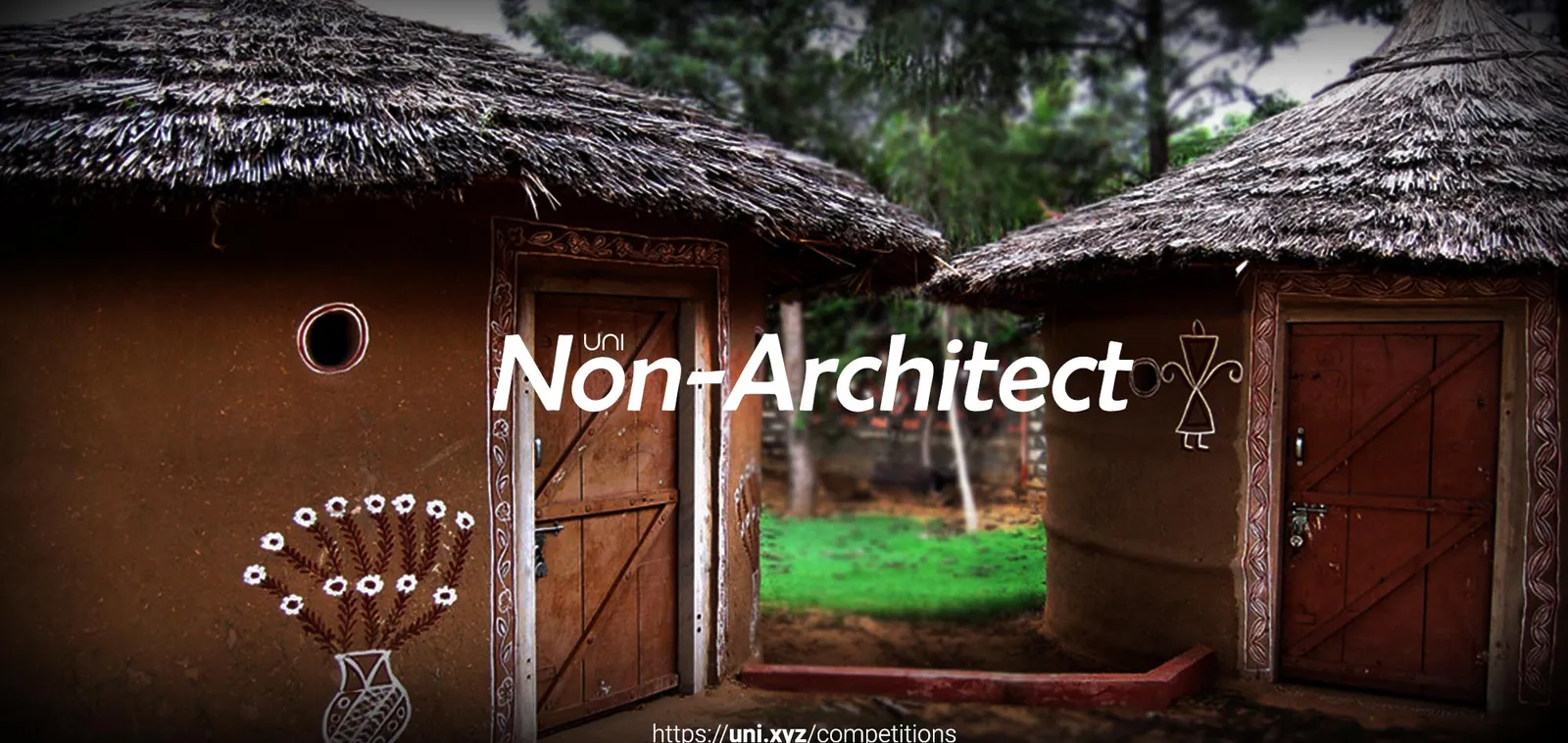
Photograph architecture without architects


Illustrate the lost glory of Angkor Wat - Render Challenge


Design challenge to reuse E-waste
Comments (0)
Please login or sign up to add comments
No comments yet. Be the first to comment!