
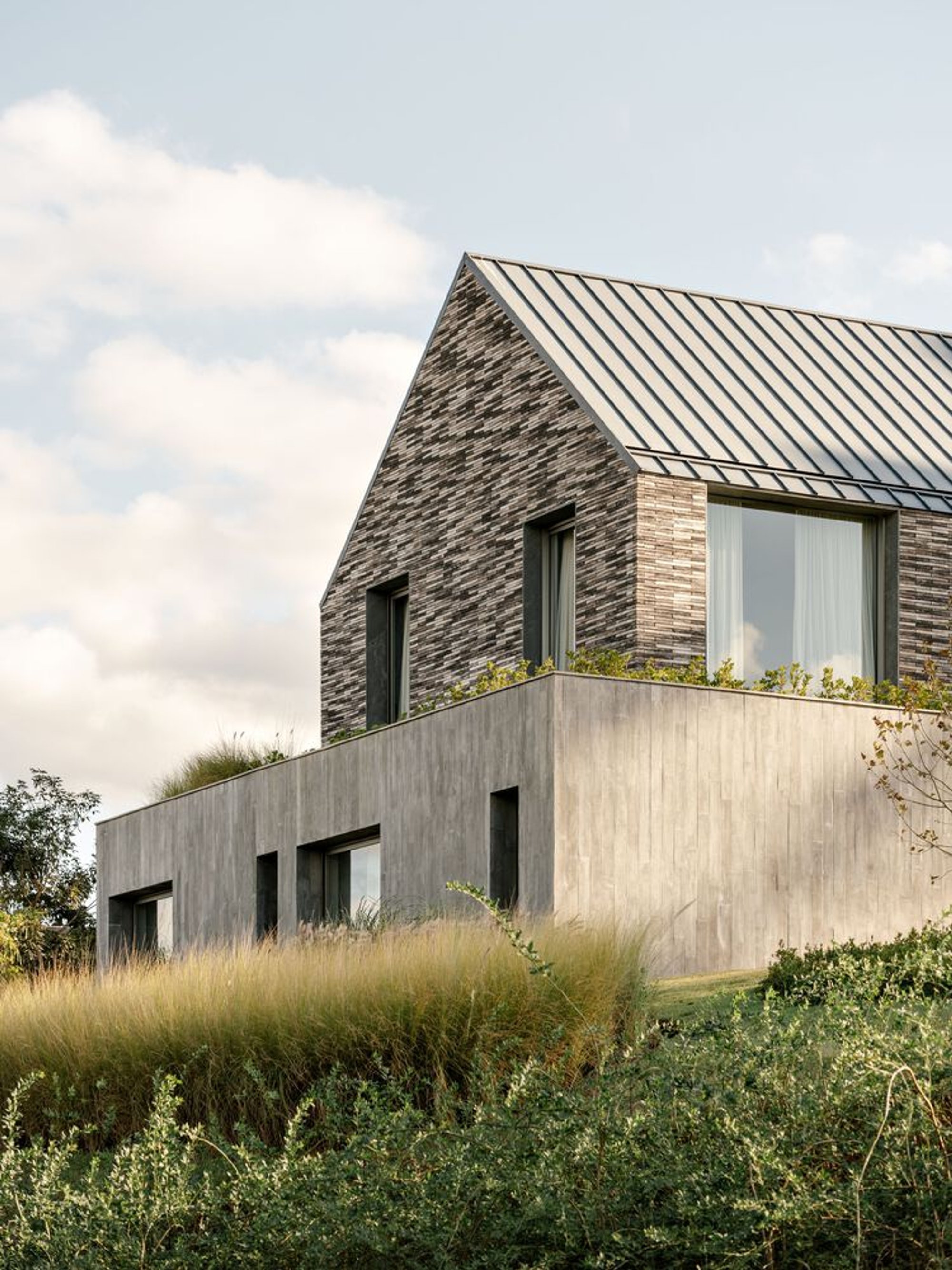
Kiko Salomão and Marcio Tanaka Carve Two Barn Volumes into an 11-Meter Hillside Near São Paulo
CCB House at Fazenda Boa Vista pairs gray brick gables with a concrete plinth to domesticate a steep rural plot in Porto Feliz, Brazil.

The barn is one of architecture's most persistent archetypes, and for good reason: its gabled profile, structural clarity, and agrarian associations make it a reliable vessel for nostalgia. The harder question is what happens when you scale two of them up to 37 and 25 meters long, clad them in four shades of gray brick, and plant them on a concrete platform that absorbs an 11-meter grade change. At Fazenda Boa Vista, a gated country house community in Porto Feliz, Kiko Salomão and Marcio Tanaka answer that question with CCB House, a 1,700-square-meter residence that treats the barn not as decoration but as a genuine organizing device for domestic life.
What keeps the project honest is its refusal to hide the engineering that makes the composition possible. The concrete base is not a plinth you forget about once you reach the front door. It is visible, structural, and programmatically loaded, housing a gym, spa, sauna, and party room on its lower level. The barn volumes sit on top, their pitched roofs occasionally cracked open to admit gardens and light. A third block, flat-roofed and clad in perforated mini wave sheets, runs parallel to the boundary wall and handles the service program. The result reads less like a farmhouse and more like a small hillside campus organized around a pool courtyard.
Three Blocks, One Platform
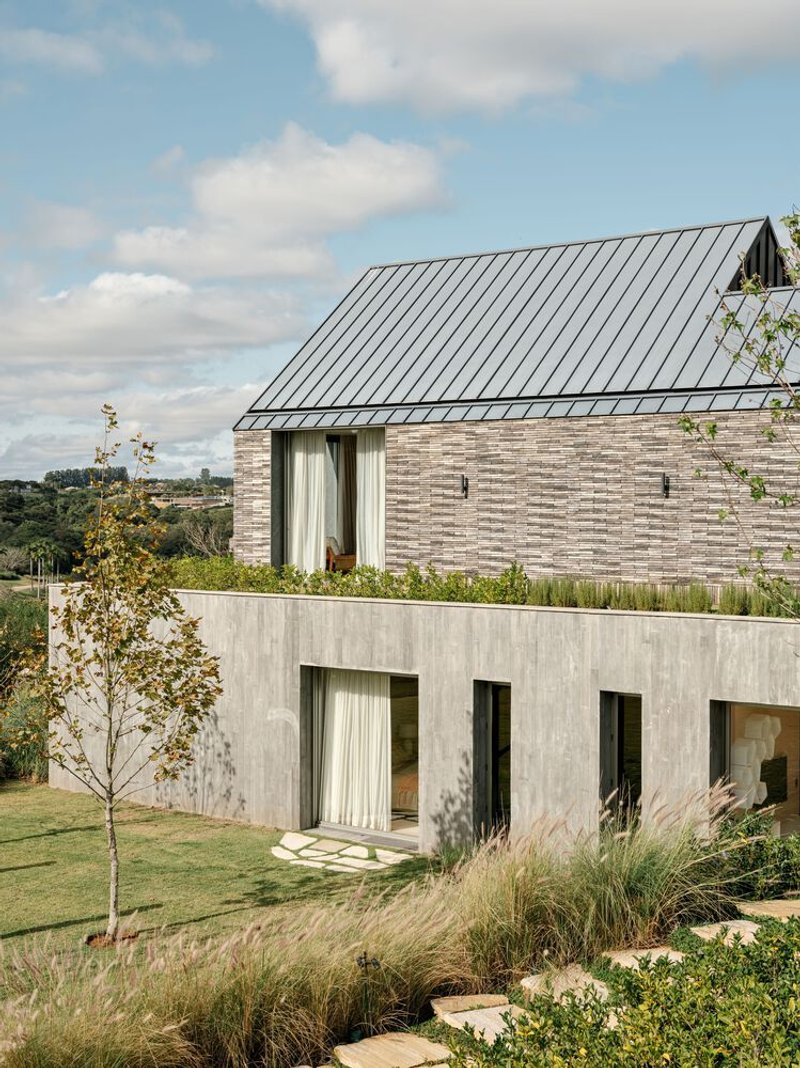
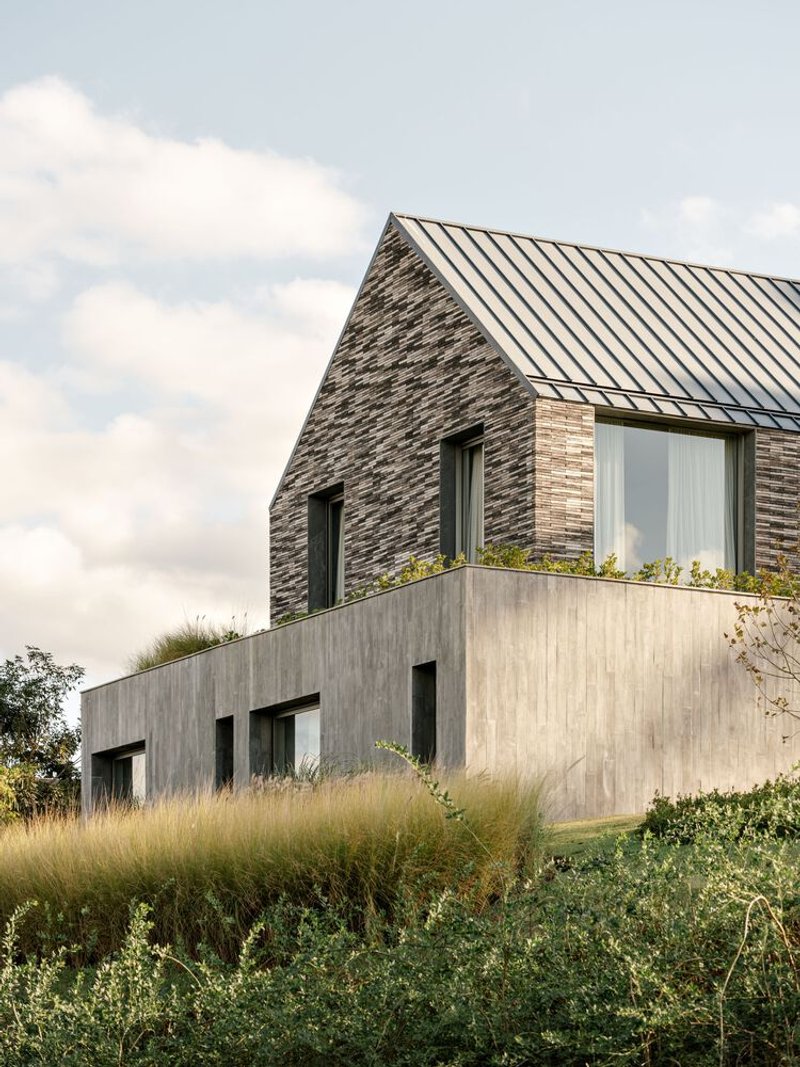
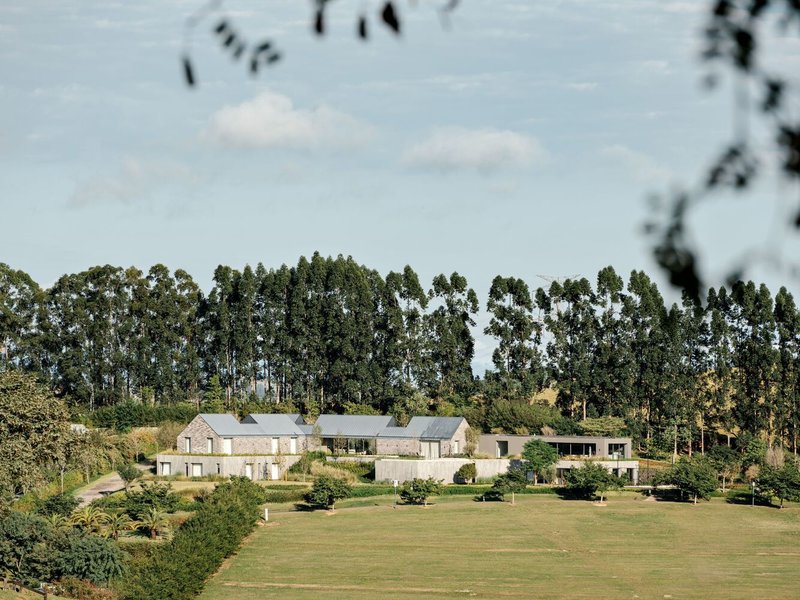
The site's 11-meter slope could have been a liability. Instead, Salomão and Tanaka use it to separate the compound into two experiential registers. At the upper level, all three blocks sit on a shared concrete datum, their rooflines reading as a coherent silhouette against the valley beyond. Below, the concrete base reveals itself as a habitable cliff, its walls stepping down with the terrain and opening onto the surrounding wild grasses and eucalyptus.
The decision to keep the brick volumes and the concrete base visually distinct pays off in legibility. You understand the building's logic at a glance: heavy ground, lighter gabled forms above. The gray brick, used in four tonal variations, avoids the monotony that a single shade would produce at this scale while keeping the palette restrained enough to read as one material family.
The Social Barn
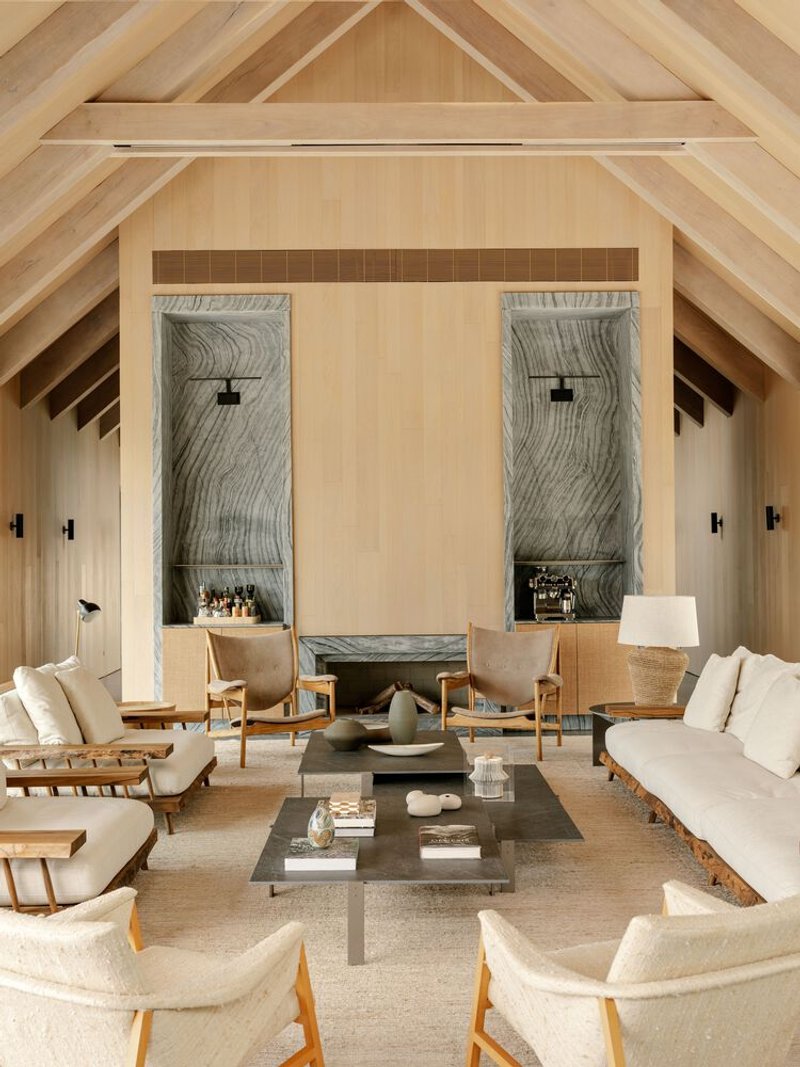
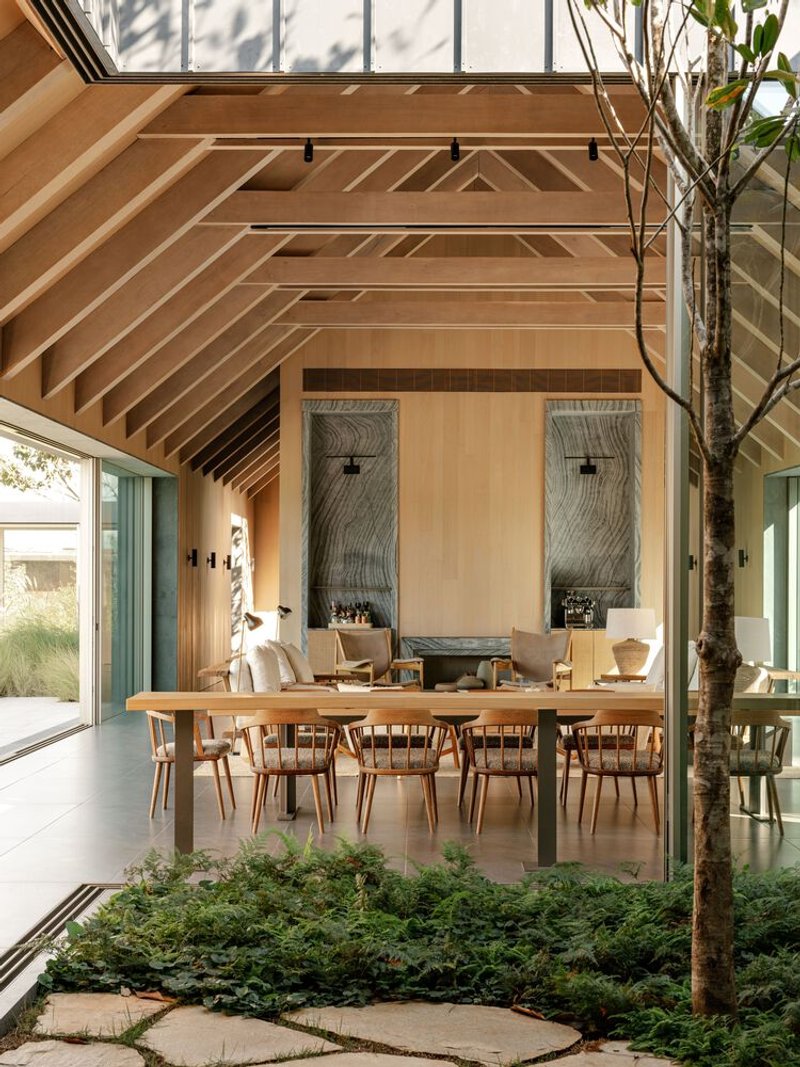
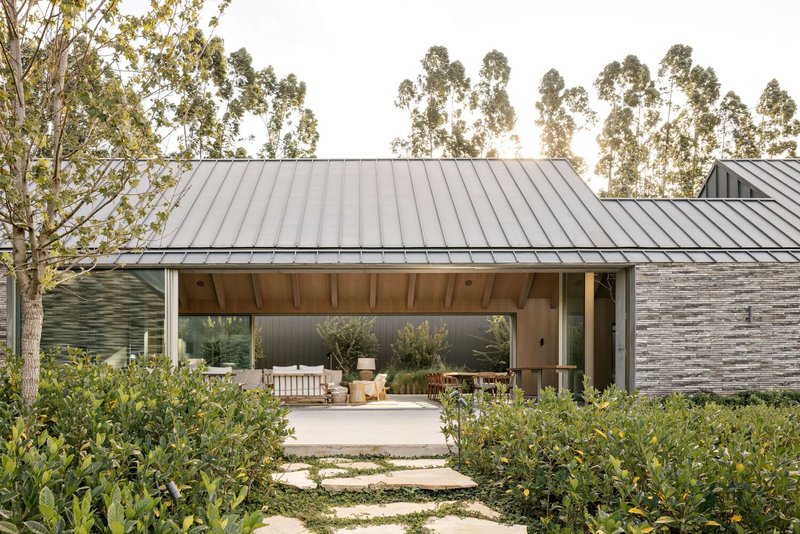
The larger of the two barns, 37 meters by 9, is the public heart of the house. Its double-height living space is defined by exposed gable rafters that run the full width of the roof, their timber warmth countering the cool gray stone of the flanking alcoves and the central fireplace wall. Symmetry here is used deliberately to establish formality without stiffness: the fireplace anchors the room, and the tall proportions make even a generous crowd feel held rather than lost.
Internal gardens puncture the roofline at intervals, pulling daylight into what could otherwise be a dark interior volume. One courtyard sits right beside the dining table, its planted bed and exposed tree trunk turning lunch into a half-outdoor affair. The covered porch at the far end frames a row of eucalyptus trees, extending the living space into the landscape without dissolving the boundary between inside and out.
Threshold and Entry
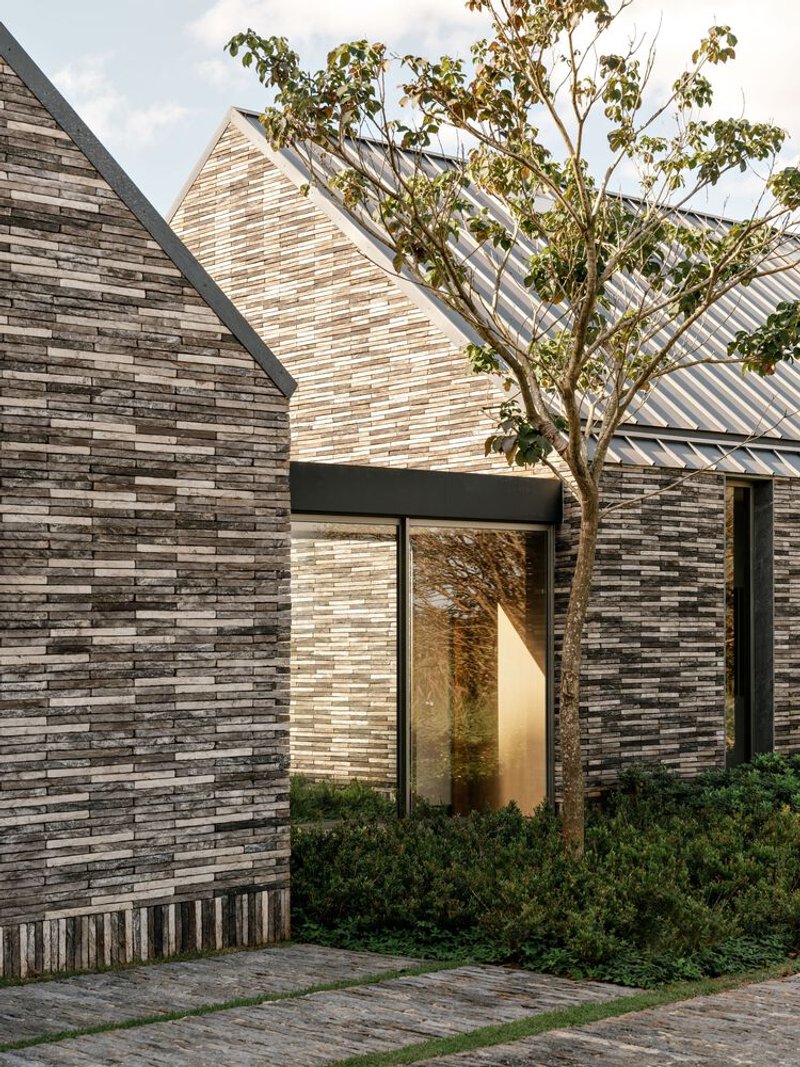
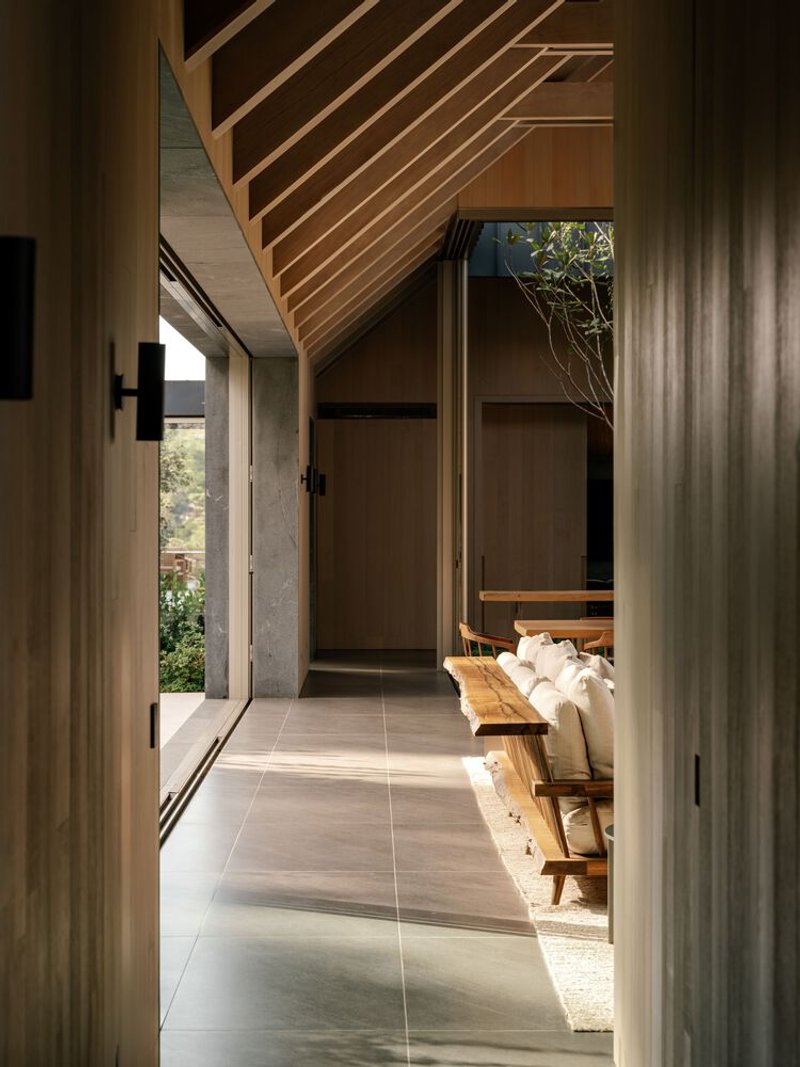
The entry sequence is more deliberate than the compound's sprawling plan might suggest. A layered brick portal creates a deep threshold, its receding gable planes compressing your view before releasing you into the social barn's generous volume. A single young tree stands in the transitional space, its shadows tracing the brickwork throughout the day.
Further inside, a hallway lined with large-format floor tiles and timber battens along the angled ceiling channels afternoon light into a warm golden corridor. The battens follow the roof pitch, reinforcing the barn geometry even in the most utilitarian moments of circulation. It is a small gesture, but it demonstrates the architects' commitment to carrying the design language through every secondary space.
Pool Courtyard and Outdoor Living
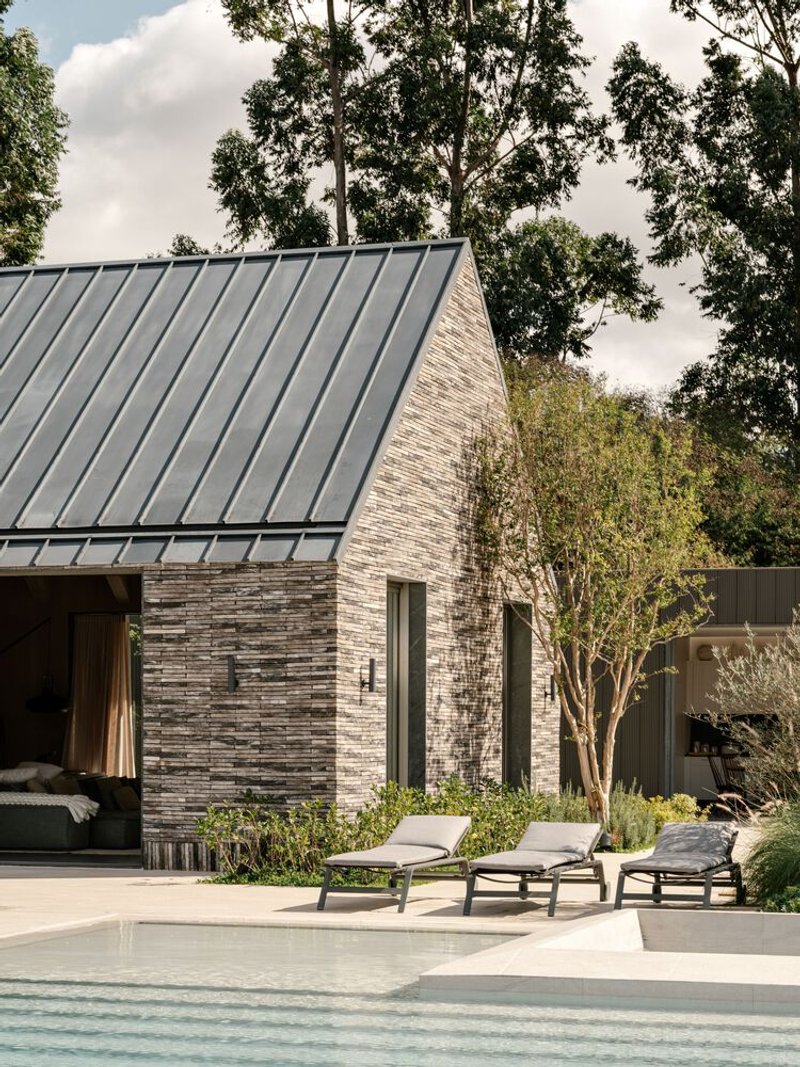
Between the two barns, an outdoor patio with a fireplace and infinity pool operates as the social hinge of the compound. The pool deck faces the standing-seam metal roof and brick facade of the intimate barn, a view that is frankly unusual for poolside architecture: instead of framing distant scenery, the pool frames the building itself. Three loungers face the barn wall like an audience, and the effect is strangely theatrical.
Rodrigo Oliveira's landscape design reinforces the courtyard's role as a transitional zone. Dense planting at the base of the concrete platform gives way to lighter, more ornamental grasses at ground level, creating a decompression gradient that moves from architectural enclosure to open valley in just a few meters. The eucalyptus row along the lawn edge acts as a soft fence, filtering views without blocking them.
Plans and Drawings
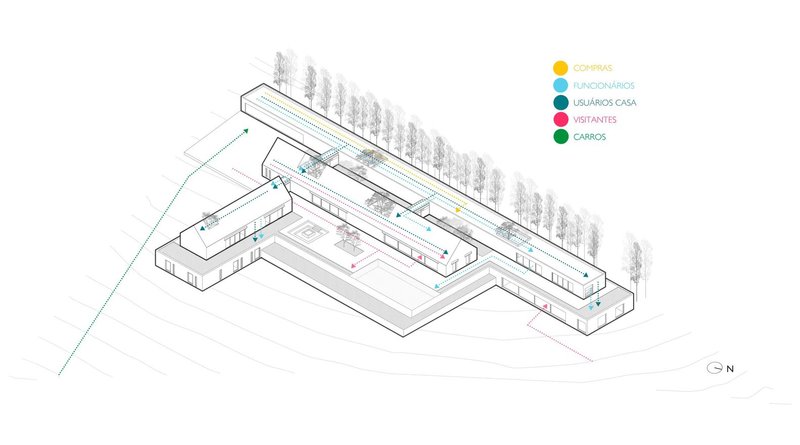
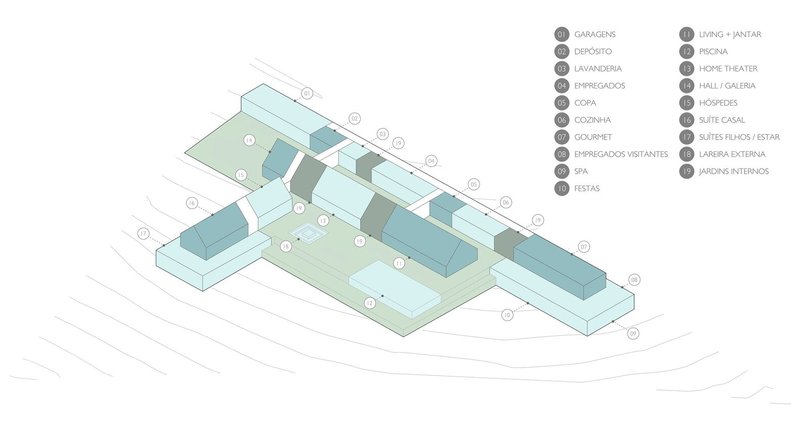
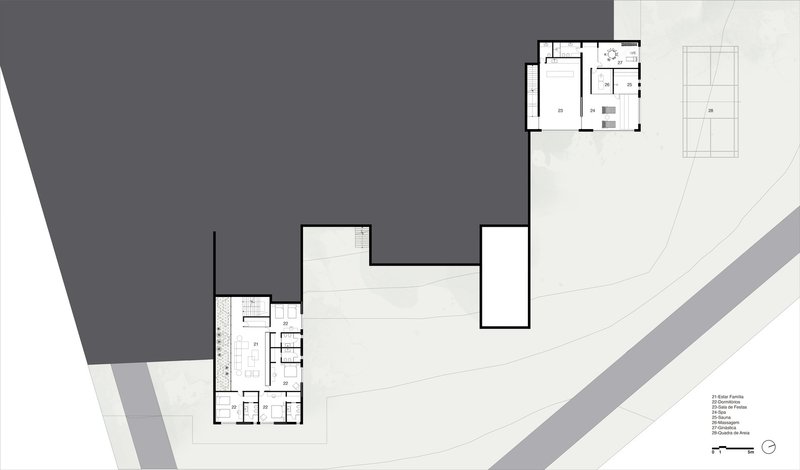
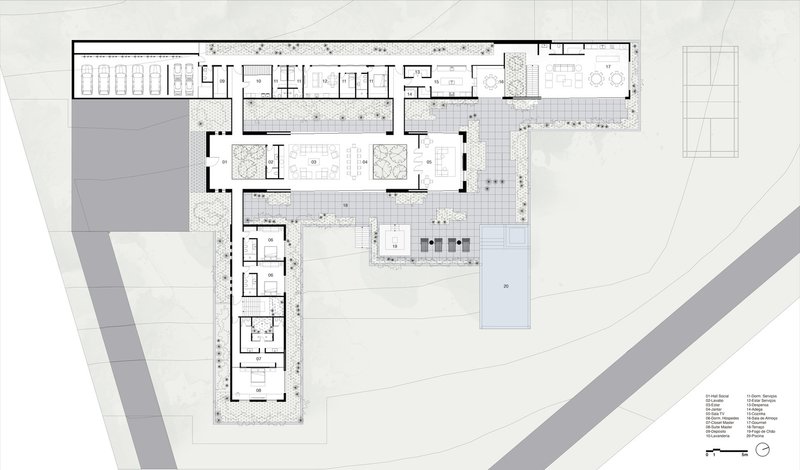
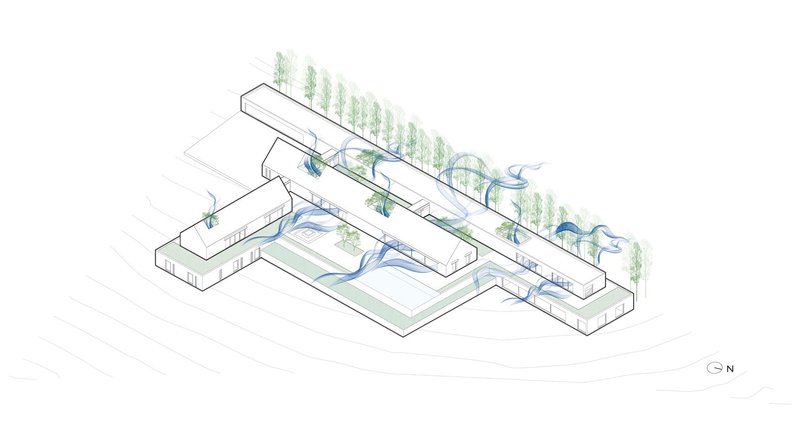
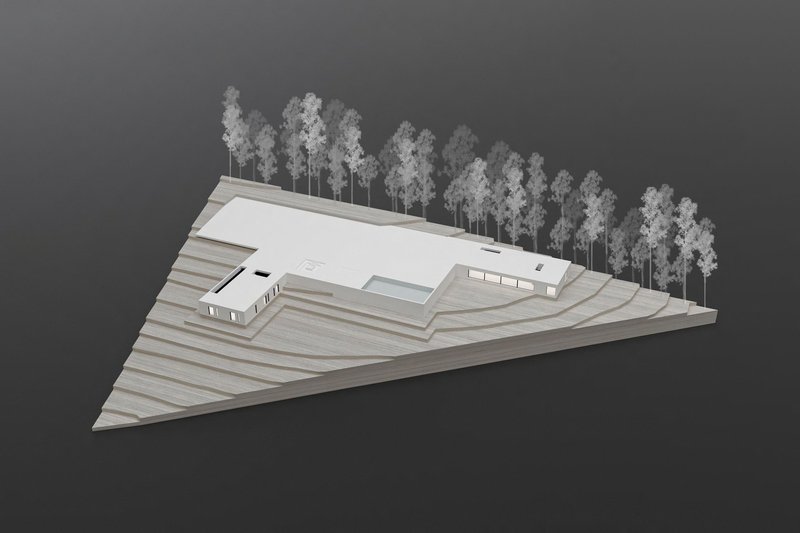
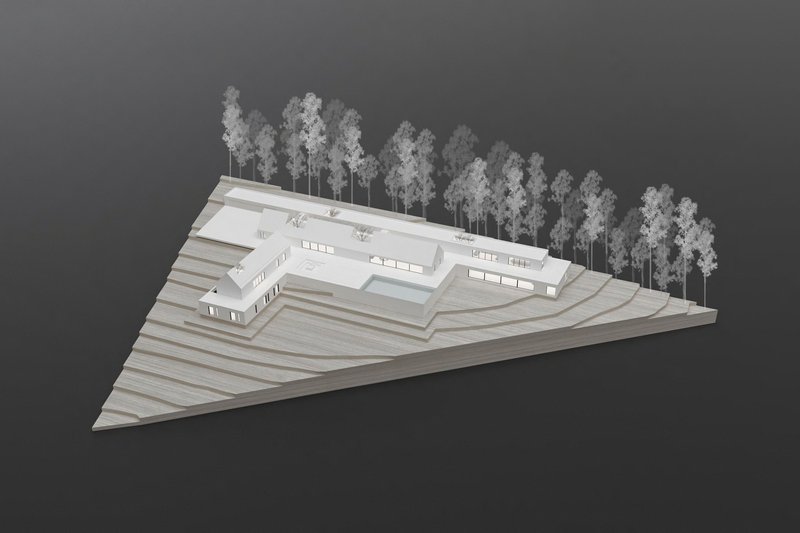
The axonometric drawings reveal how the three blocks wrap into a loose U-shape around the central courtyard, with the service wing running the full 80-meter length of the boundary. Color-coded program zones make the separation clear: social, intimate, and service volumes each occupy their own structure, connected at grade but distinct in section. The air circulation diagram is particularly instructive, showing how rooftop vegetation and courtyard openings generate passive ventilation pathways through the compound.
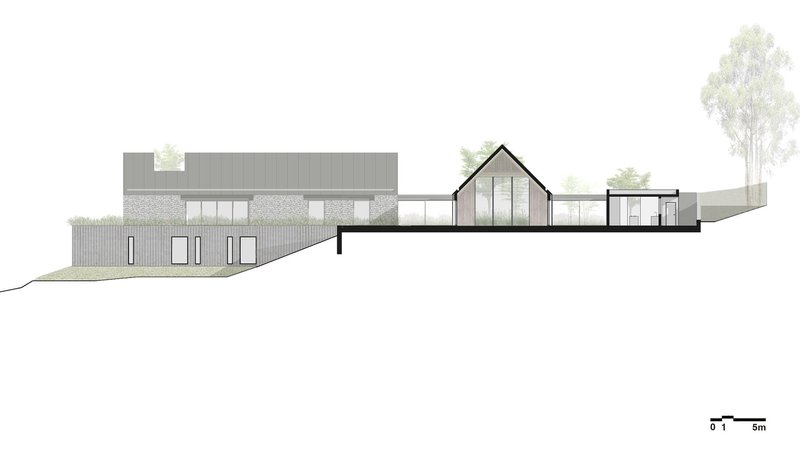
The section drawing through the sloped terrain confirms just how much work the concrete base does. The gabled pavilion steps down across three levels as it follows the hillside, with each terrace creating usable outdoor space on its roof. The physical models, with their exposed courtyard interiors and rooftop openings, suggest the architects tested these moves in three dimensions before committing to the final form. The stepped topography of the model reads almost like a geological cross-section, a reminder that the building is as much an earthwork as it is a house.
Why This Project Matters
CCB House succeeds because it treats the barn typology as a structural proposition rather than a stylistic costume. The gabled roofs are not applied to a conventional plan; they generate the plan, dictating the 9-meter-wide bays that organize every room from the home theater to the master suite. The decision to crack those roofs open for internal gardens turns a potential weakness of the deep barn section, limited natural light, into a defining spatial feature. Meanwhile, the concrete base does the hard topographic work and houses the utilitarian program, keeping the barn volumes free to be generous, open, and singular in purpose.
For architects working with steeply sloped sites and large residential programs, the project offers a useful model: separate the foundation narrative from the living narrative, and let each do what it does best. Concrete absorbs the grade; brick and timber create the domestic atmosphere. The two materials never compete because they occupy different registers. It is a disciplined approach to a program that could easily have become an undifferentiated sprawl, and it produces a house that feels both rooted in its hillside and autonomous from it.
CCB House by Kiko Salomão and Marcio Tanaka. Located in Fazenda Boa Vista, Porto Feliz, Brazil. 1,700 m² on an 8,000 m² plot. Completed 2024. Landscape design by Rodrigo Oliveira. Photography by Fran Parente.
About the Studio
Share Your Own Work on uni.xyz
If projects like this are the kind of work you want to make, uni.xyz is a place to publish your own, find collaborators, and enter design competitions.



Popular Articles
Popular articles from the community

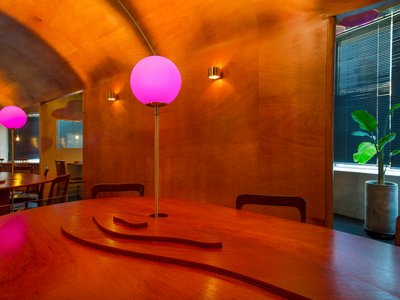
Indiesalon Carves a Plywood Cave into a Seoul Bistro's Second Floor
Munhwa Bistro's second Seongsu branch wraps diners in a laminated timber vault laced with colored light and mirror illusions.
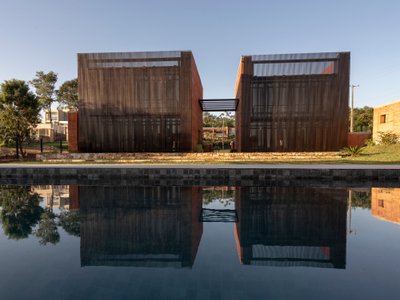
BAUEN Builds Two Rammed Earth Volumes in Paraguay Inspired by the Ovenbird's Nest
In San Bernardino, a house of compacted earth channels the instinct of a constructive bird to shelter life from the Paraguayan summer.
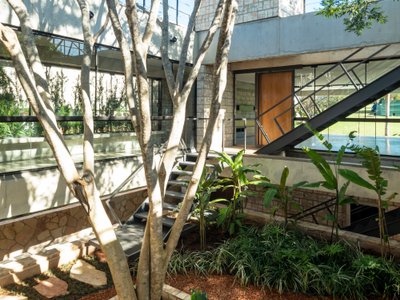
OMCM arquitectos Builds a Summer House in Paraguay from Quarry Waste Blocks and Three Sacred Trees
In the young hillside neighborhood of Altos, a 696-square-meter concrete volume hovers on six pillars around three preserved native Yvyraju trees.
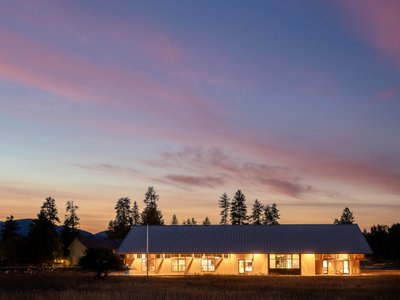
Johnston Architects Reimagines the Methow Valley Hay Barn as a Small-Town Library in Winthrop
A 7,300-square-foot timber library channels the region's agrarian vernacular to serve a rural Washington community of 400 year-round residents.

Similar Reads
You might also enjoy these articles

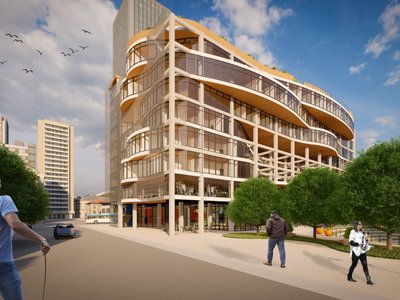
Olio Towers: A Mid-Rise for Performers That Fuses Housing, Rehearsal, and Stage
Located blocks from Houston's Theater District, this modular tower stacks living units around a central performance atrium.
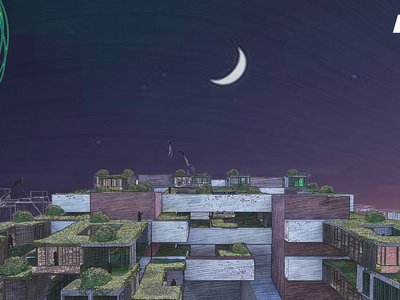
Oasis: Modular Green Housing Carved into Dhaka's Urban Fabric
A shortlisted Plugin Housing entry reclaims unauthorized settlements in Dhaka with stepped concrete volumes, green roofs, and ventilation-driven design.

Black Hole: A Floating Megastructure for the Post-Physical Era
Emiliano Mazzarotto envisions a spherical, self-scaling arena where e-sports, digital hotels, and holographic stadiums replace traditional public space.
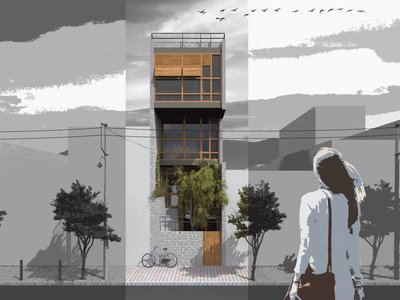
Compact & Sustainable Living in Piraeus: A Four-Level Family Home Built Around Light and Air
A narrow townhouse in one of Greece's densest port cities uses a central atrium and passive strategies to house three generations under one roof.


Explore Architecture Competitions
Discover active competitions in this discipline




The International Standard for Design Portfolios


The Global Benchmark for Architecture Dissertation Awards


The Global Benchmark for Graduation Excellence


Challenge to reimagine the Iron Throne
Comments (0)
Please login or sign up to add comments
No comments yet. Be the first to comment!