

M House by Office Ryu Architect – A Generational Renovation in Japan
M House by Office Ryu Architect renovates a 55-year-old reinforced concrete home, blending heritage with light-filled, modern Japanese living spaces.


M House by Office Ryu Architect is a thoughtful renovation project that transforms a 55-year-old reinforced concrete home into a modern, light-filled living environment. Located in Japan, the residence carries the weight of family history, having been originally constructed by the grandfather of the current owner as a robust, protective shelter for his family.
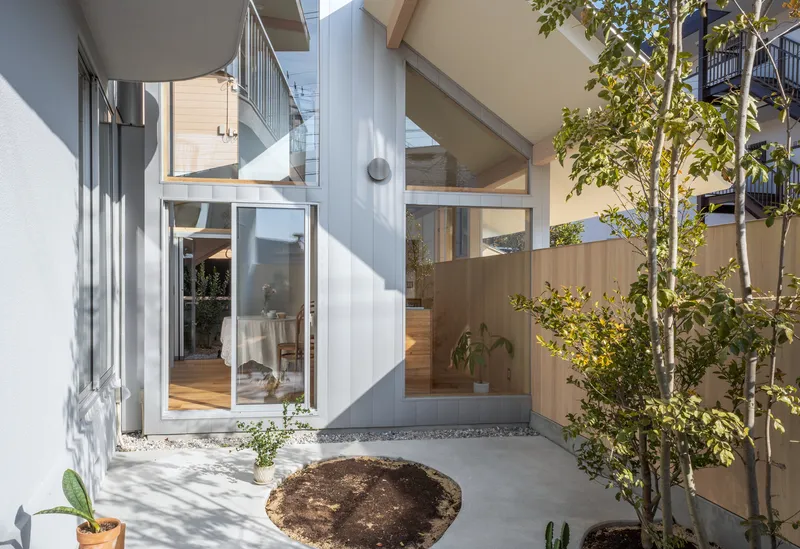
Preserving Heritage, Embracing Modernity
The original structure was built using strong reinforced concrete walls, reflecting postwar Japanese priorities of durability and safety. While the solid RC framework gave the house strength, its closed-off interiors, unmanageable garden, and limited parking space created challenges for contemporary living. The new generation of owners desired a more spacious, open, and flexible home, while still honoring the legacy of their family.

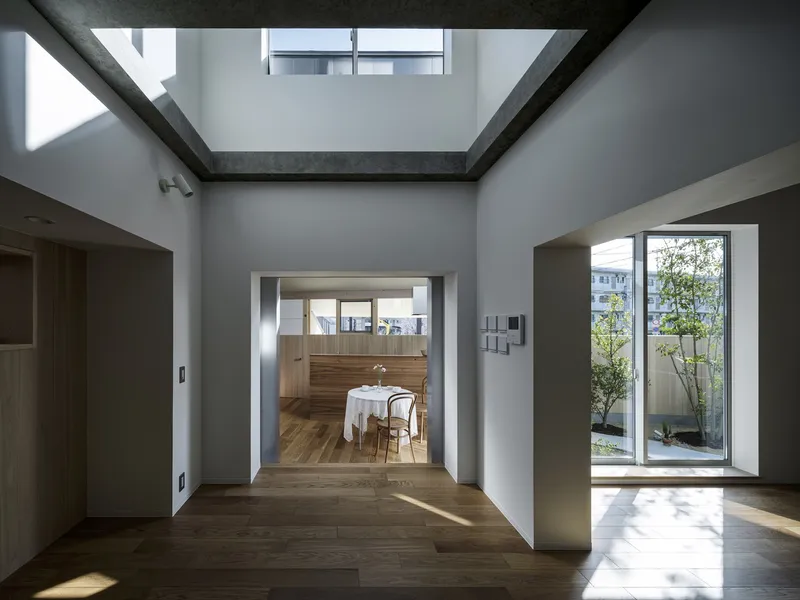
Spatial Expansion and Design Transformation
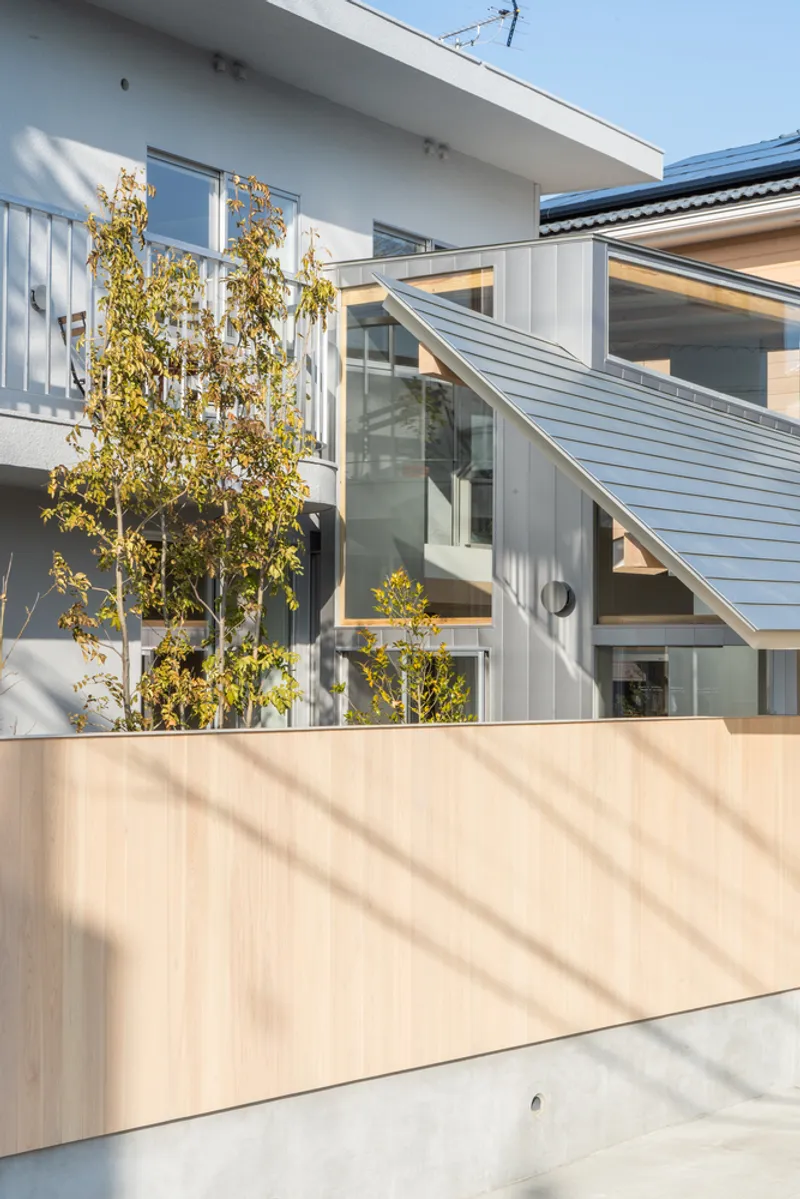
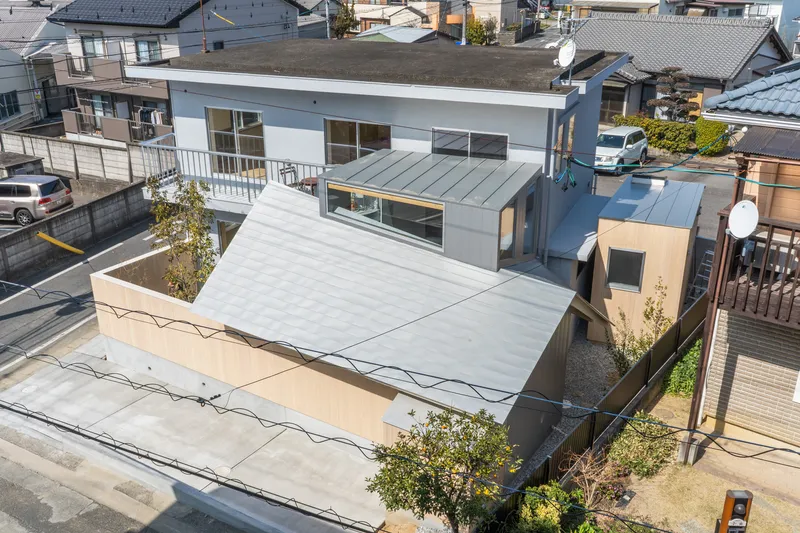
The renovation focused on expanding the southern side of the house to introduce openness without compromising privacy. A wooden fence was carefully designed to wrap the new southern façade, creating a warm, natural contrast to the concrete structure. Above the kitchen, an L-shaped sloping roof envelops the extended volume, framing a cozy and protective living environment that connects interior and exterior life.
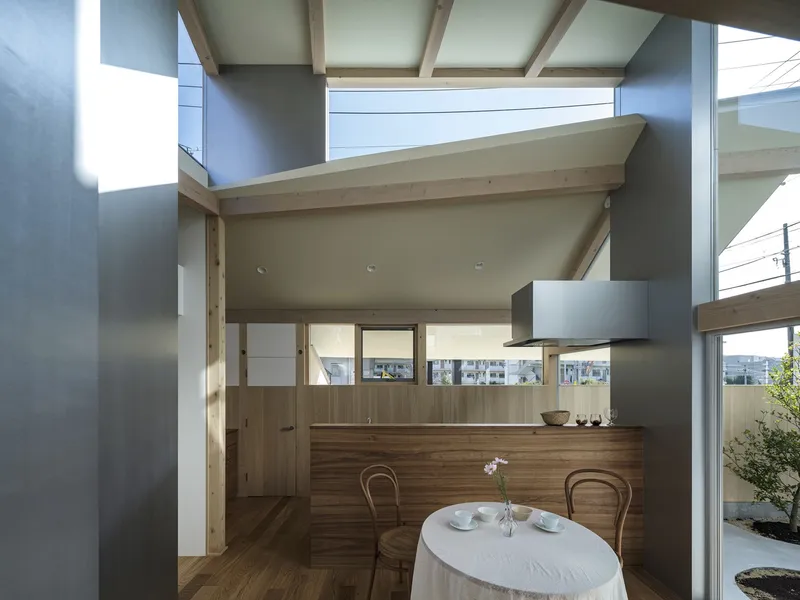
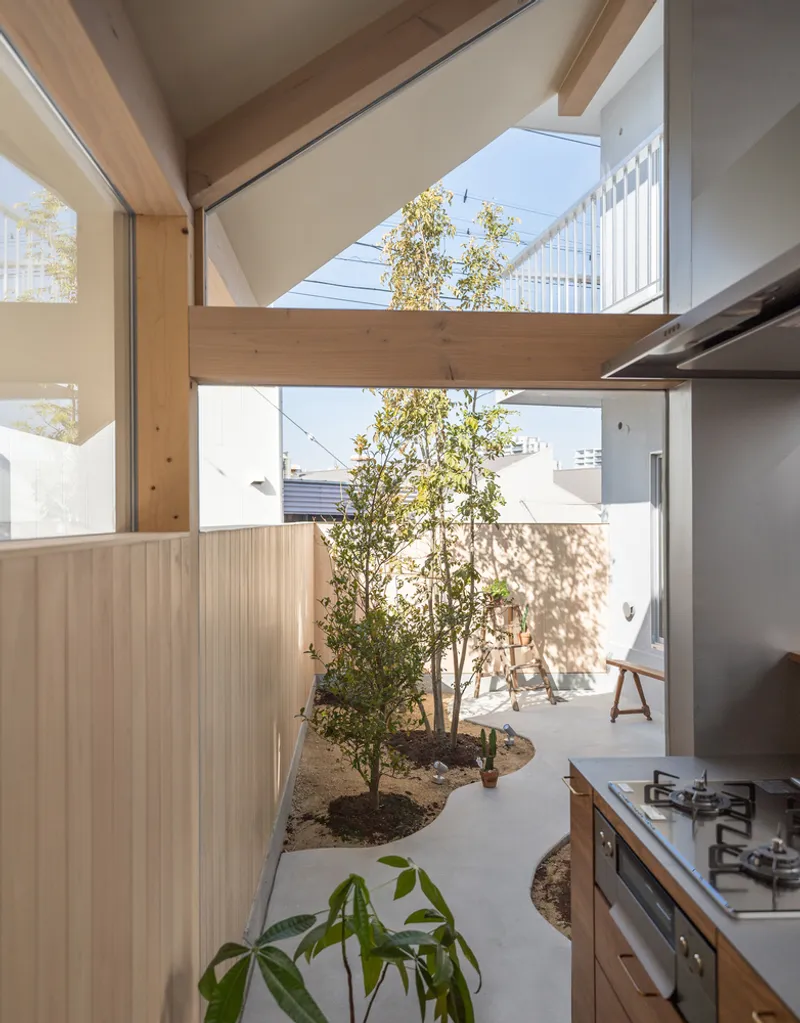
Light, Warmth, and Continuity
Natural light and spatial flow became central to the renovation. Large windows and openings brighten the previously dim interiors, softening the heavy concrete presence. Inside, wood finishes and simple detailing balance warmth and minimalism, ensuring a timeless aesthetic. The renovation merges robust structural integrity with modern Japanese residential design, making the house adaptable for future generations while preserving its original spirit.

A Home for Generations
M House represents more than just a renovation—it is a dialogue between past and present. By retaining the reinforced concrete skeleton while introducing contemporary design strategies, the project embodies the evolution of Japanese housing: protective, enduring, and increasingly open to light, air, and community.
All Photographs are works of Takashi Uemura,


Popular Articles
Popular articles from the community


longwave studio Reorganizes a 112 m² Tainan Apartment Around the Daily Routines of a Family and Two Cats
In Tainan, Taiwan, birch plywood, rust-red furniture and a freestanding plaster wall link arrival, storage, work and family life in one apartment.

Cube Design Draws an Ecological Corridor Between Two Shenzhen Hills with the Nankai Building
Beside Shenzhen's container docks, the Nankai Building pairs stacked balconies with a climbing green screen to connect two hillsides across its height.

LT2A and OPEN Architectes Thread a Brick and Glass High School Through a Wooded Belgian Campus
In Braine-l'Alleud, a 3,000 m² wing for Collège Cardinal Mercier pairs pale brick with a glazed colonnade, deferring to a small chapel and a dense wood.

GROUP A Strips a 1969 Rotterdam Harbor Headquarters to Its Frame and Wraps It in Timber Louvers
In Rotterdam's M4H harbor district, Ferro Offices reuses a 1969 frame, adds one timber storey and reaches BREEAM-NL Outstanding.

Similar Reads
You might also enjoy these articles


Hodi-Mandai Geram
Project Function: Preservation and revitalization of the Intangible heritage and socio-spatial identity of the Hodi by Housing, Cultural Memory Center, Sacred Grove, landscape, local tourism economy


Olio Towers: A Mid-Rise for Performers That Fuses Housing, Rehearsal, and Stage
Located blocks from Houston's Theater District, this modular tower stacks living units around a central performance atrium.

Oasis: Modular Green Housing Carved into Dhaka's Urban Fabric
A shortlisted Plugin Housing entry reclaims unauthorized settlements in Dhaka with stepped concrete volumes, green roofs, and ventilation-driven design.

Black Hole: A Floating Megastructure for the Post-Physical Era
Emiliano Mazzarotto envisions a spherical, self-scaling arena where e-sports, digital hotels, and holographic stadiums replace traditional public space.

Explore Housing Competitions
Discover active competitions in this discipline

Challenge to reimagine the Iron Throne

Photograph architecture without architects

Illustrate the lost glory of Angkor Wat - Render Challenge

Design challenge to reuse E-waste
Comments (0)
Please login or sign up to add comments
No comments yet. Be the first to comment!