
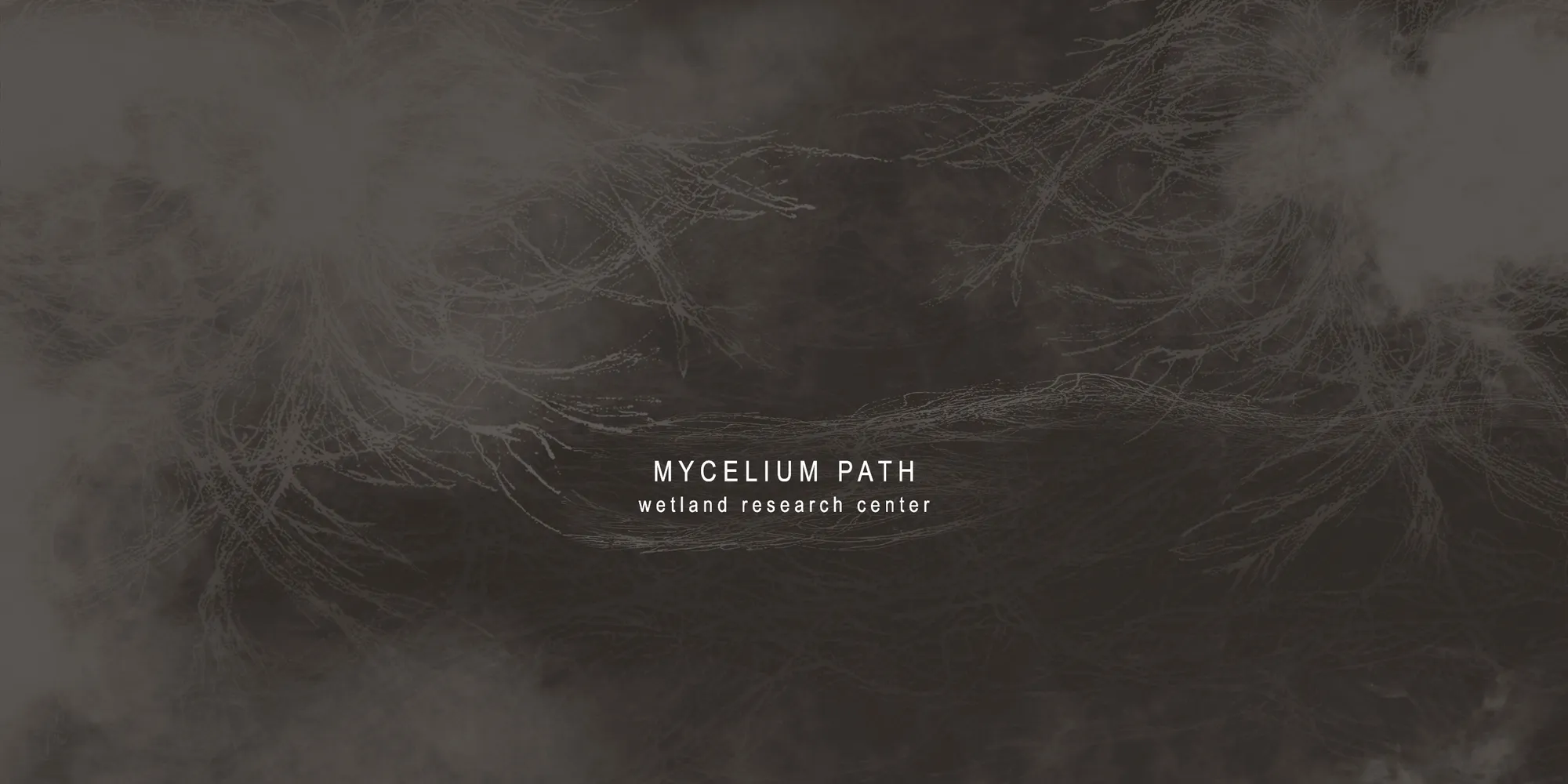
M Y C E L I U M P A T H
W E T L A N D R E S E A R C H C E N T E R
We can meet mushrooms everywhere - in the air, water, on trees, but the most widespread and diverse are in wetlands. They are nature's primary recyclers, producing enzymes that help break down organic matter, turning it into minerals. One should ask how much we actually know about the importance of mushrooms in nature, their impact on the ecosystem and whether they can be the future of sustainable architecture? A discovery by students from London's Brunel University has shown that mushrooms can be used as a building material. Actually, not the whole mushroom, but only one part of it. The mycelium, the vegetative part of the fungus, actually represents the complex root system of the fungus, which consists of hyphae, i.e. microscopically tiny intertwined threads that spread over large undergroun areas. In nature, they “break down” the food source before absorption and help other plants to feed through the soil, bringing them water and minerals (especially low plants that cannot get sunlight from the surrounding tall plants) and making them resistant to parasites, that is, it contributes to the biomass and thereby creates "immunity of plants and trees", which is one of the reasons that we have justified suspicions that by covering a large marshy area with myelium, the chances of restoring an endangered ecosystem increase. Mycelium breaks down plastic and crude oil, which is one of the simplest, cheapest and environmentally sound solutions for purifying water that is susceptible to pollution due to the nearby populated area. It is also a source of food for many invertebrates in the soil, and is considered a "pharmacy for bees" and other pollinators, providing them with resistance to bacteria, fungi and viruses. The mycelium also absorbs radioactive pollutants and heavy metals, which is an answer to the issue of pollution coming from Birmingham as well as the remains of industrial waste dating back to the period of the industrial revolution and the great pollution of the river Tame. However, humans are not the only polluters and the reason for extinct and endangered wetland biodiversity. These are also artificially populated animals - domestic animals, which affect pollution by consuming the plants of woolly animals and spreading feces that do not fertilize, but endanger the wetland world. The result of one of the laboratory researches on the subject of mycelium showed that a network of mycelium spread over the swamp - within 1 hour reduces 67% of Escherichia coli in the soil, and within 24 hours as much as 97%. Just as the world has not yet formed a world about the importance of wetlands, unfortunately, the situation is the same with mushrooms. One of the reasons for this is insufficient investment in laboratory research. The solution is more than obvious - it is necessary to inform the public about the importance of wetlands, which, in addition to their biodiversity, purify all the world's water, but also about the fungi and mycelium that help purify wetlands and heal them. It is also necessary to provide adequate education on how we can contribute to ecology and environmental awareness, because if microscopic hyphae can keep the entire ecosystem healthy - why can't we? Now let's imagine an architecture in which design is practiced, which generates mutual benefit for people and approach, and at the same time connects them! With this visitor project that includes educational and laboratory sectors, I explored the dialogue between characteristic ecology, architecture and the user himself in relation to them in the found local context, as well as his role in changing and creating a better ecosystem of which he himself is a part. While the material of a local and ecological character does not disturb the found ecological state, the interlaced communications and the very membrane of the object properly pay tribute to hyphae and mycelium. The effect of disappearing, but at the same time a symbol of the union of human and natural has the role of leaving a strong impression on visitors, such that the object in symbiosis with the vision and acquired knowledge in the educational sector stays with them even after leaving and gives them a dream for the future. The facility is divided into three sectors, of which each has the function of presenting to visitors both problems and solutions of preserving the wetland ecosystem. Zone 1 contains two sectors - the educational sector and the laboratory sector. Zone 2 is dedicated to nature and the entire wetland area, so it is making a form of a space of immediate experience. The goal is achieved - in a diverse wetland area, architecture does not speak too much by itself, but allows nature to speak through it under the guise of sunlight and diverse vegetation.
"There are some truths, even fundamental ones, that tend to escape us. The most fundamental truth about our home on Earth is that all living things are interconnected. This fact, although important mainly as a physical principle, carries implications even of a spiritual nature.” - Starer, 1956.


Popular Articles
Popular articles from the community


The Ocean Hive: Sustainable Architecture for a Self-Sufficient Civilization at Sea
The Ocean Hive imagines sustainable architecture at sea, where modular habitats, algae, wave power and ocean waste sustain a growing colony.

The Earth Pod: 3D Printed Homes for Resilient Refugee Communities
The Earth Pod reimagines refugee housing through 3D printed homes made from clay, combining resilience, self-sufficiency, and rapid shelter.

Lunar Spiral: Space Architecture Shaped by the Mathematics of the Universe
Lunar Spiral reimagines space architecture through Fibonacci geometry, lunar regolith, levitating habitats, and self-sustaining Moon living.

Hill & Cross Opera: Sculptural Opera House Architecture Shaped by Tallinn’s Landscape and Identity
Hill & Cross Opera reimagines opera house architecture in Tallinn through its sculptural hill, civic plaza, glass wave and a luminous cross.

Similar Reads
You might also enjoy these articles

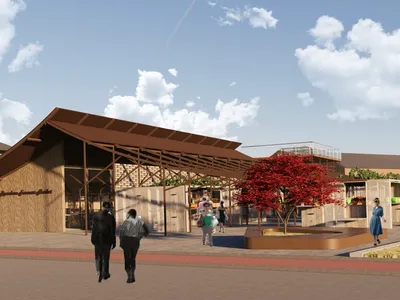
The Rhythm of Seasons
A Farmers' Market Connecting Nature and the City

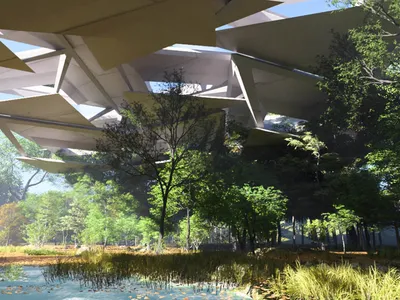

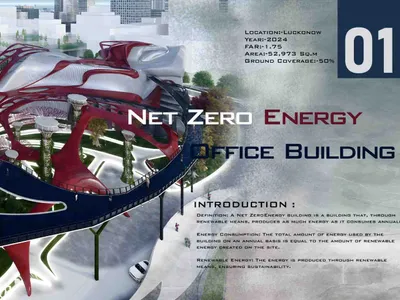
More Than a Building-Designing a Living System
More Than a Building-Designing a Living System
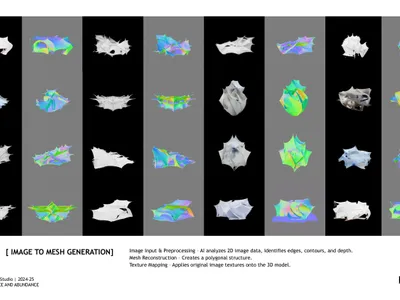
Base Beyond
DESERT COMPOUND ARID: TOURISM OF ABSENCE AND ABUNDANCE

Explore Educational Building Competitions
Discover active competitions in this discipline



Challenge to design public laboratory


Challenge to reimagine the Iron Throne


Photograph architecture without architects


Illustrate the lost glory of Angkor Wat - Render Challenge
Comments (0)
Please login or sign up to add comments
No comments yet. Be the first to comment!