
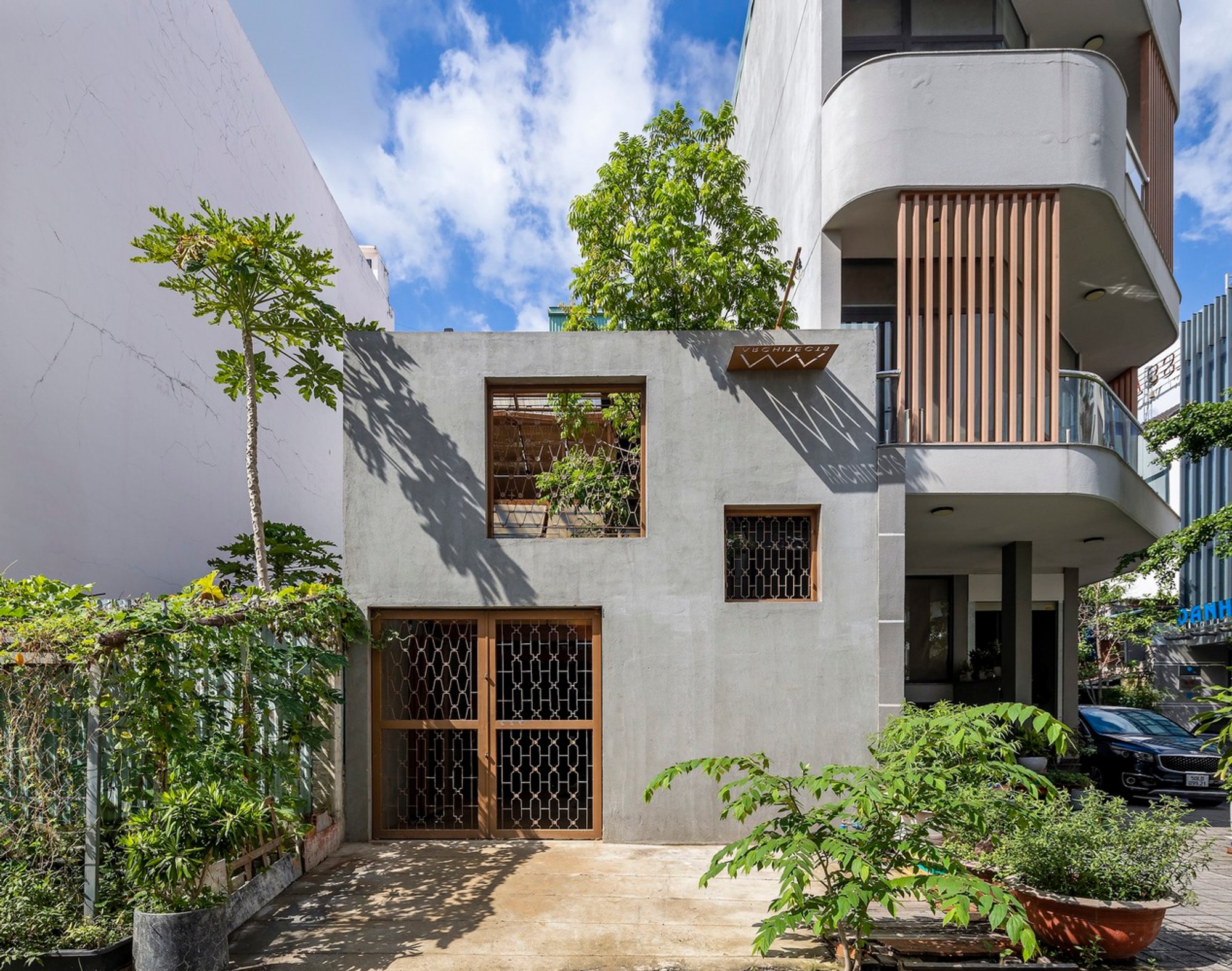
MA Architects Office: A Sustainable Workspace Blending Nature and Minimalism
A sustainable office blending reclaimed materials, biophilic design, and passive cooling, creating a nature-integrated, energy-efficient workspace in Vietnam.

Located in A Phu, Vietnam, the MA Architects Office is a compelling example of how sustainable design can transform the traditional workspace. Designed by MA Architects Vietnam, this project reimagines the modern office environment by integrating natural elements, reclaimed materials, and passive cooling techniques. Spanning 100 square meters, the space prioritizes flexibility, sustainability, and a deep connection with nature—offering a unique alternative to the conventional office settings in Ho Chi Minh City.
A Nature-Driven Architectural Philosophy
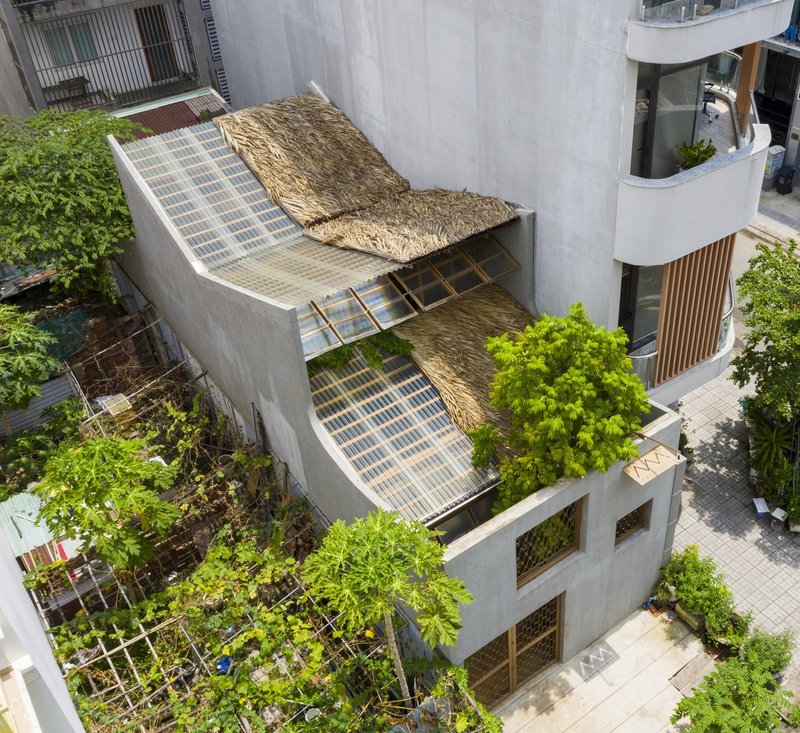
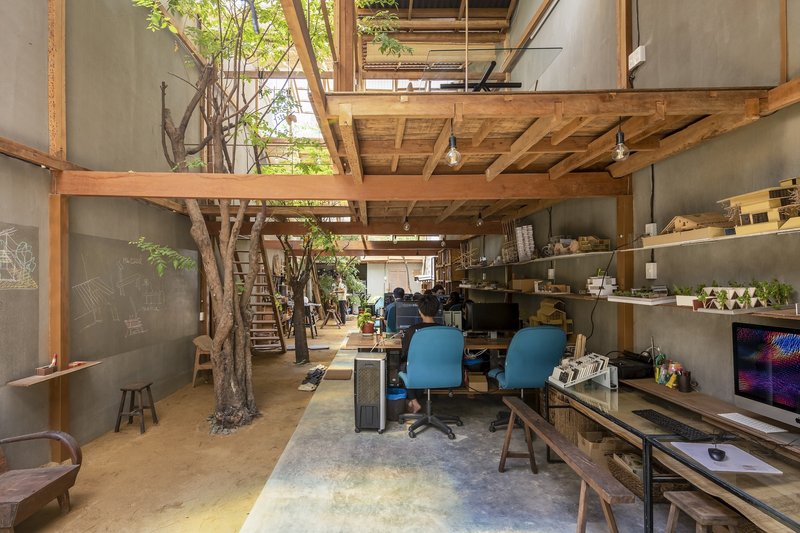
With over five years of experience working in rental offices that often feel restrictive, MA Architects sought to create a space that embodies openness, creativity, and comfort. The design is inspired by the elements of wind, sunlight, greenery, sand, and rain—essentially forming an organic environment where architects can work, collaborate, and innovate.
This workspace is not just an office; it functions as a living ecosystem. The architects envision the occupants as seeds nurtured by the surrounding environment—benefiting from natural ventilation, daylight optimization, and a biophilic design approach. This philosophy results in a workspace that enhances both physical and mental well-being, fostering productivity and creativity.
Sustainable Materials and Resource Optimization
Sustainability is at the heart of this project. The architects chose locally sourced, eco-friendly, and repurposed materials to minimize environmental impact. Key materials include:
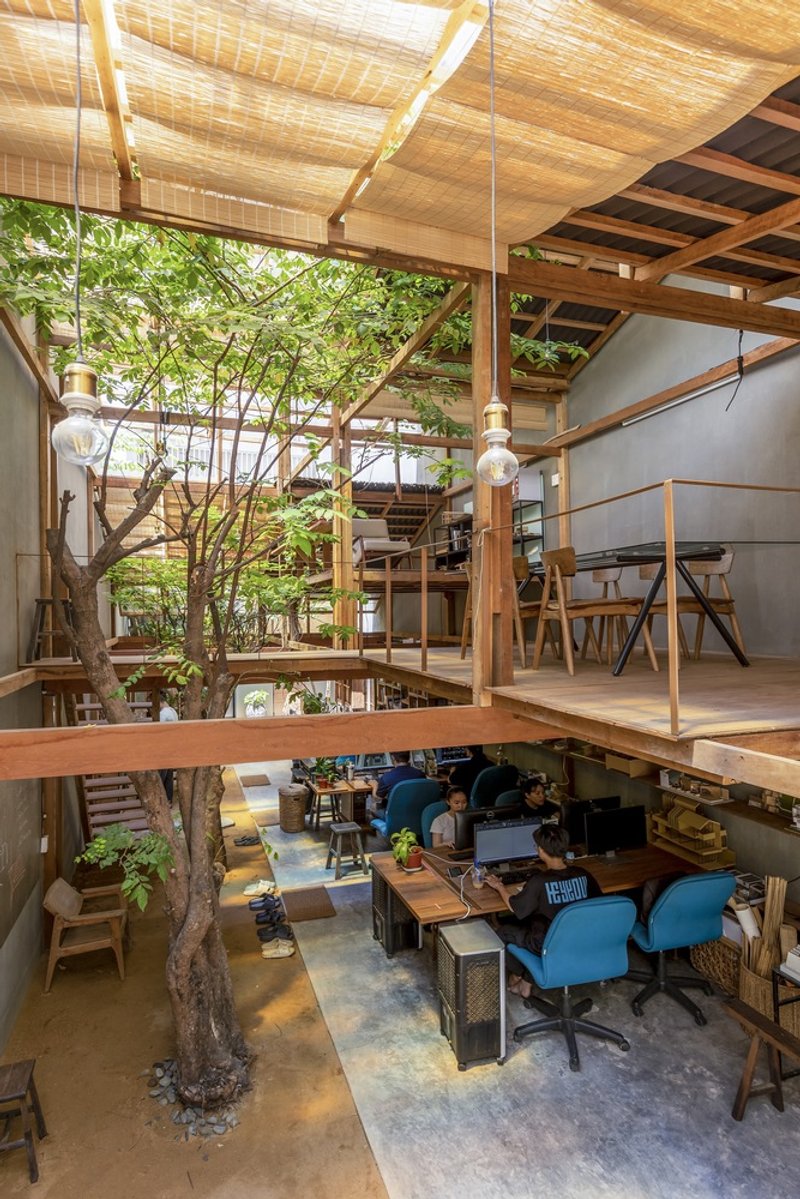
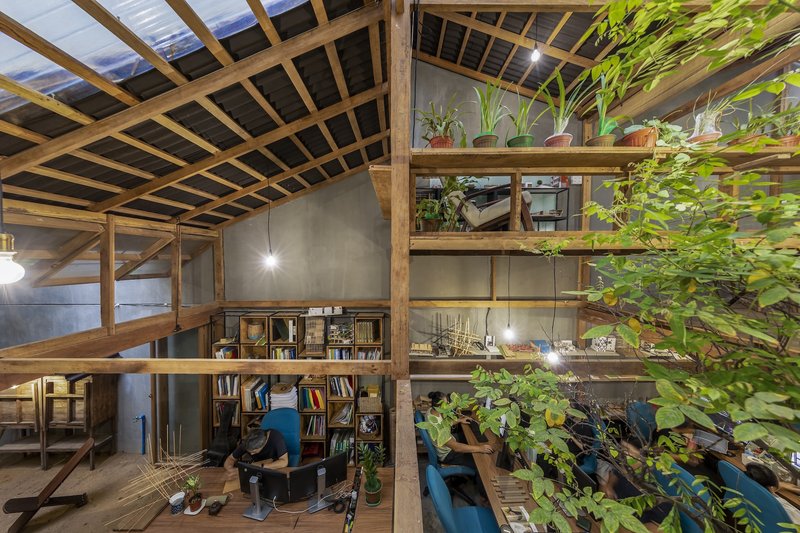
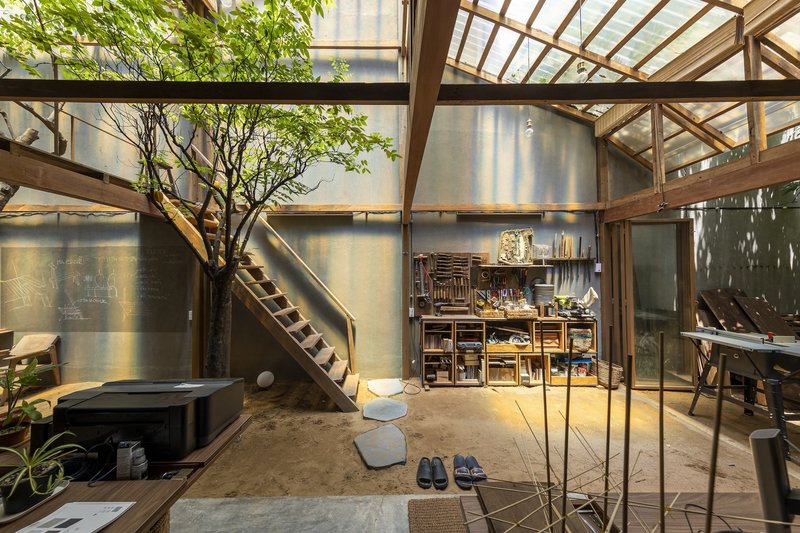
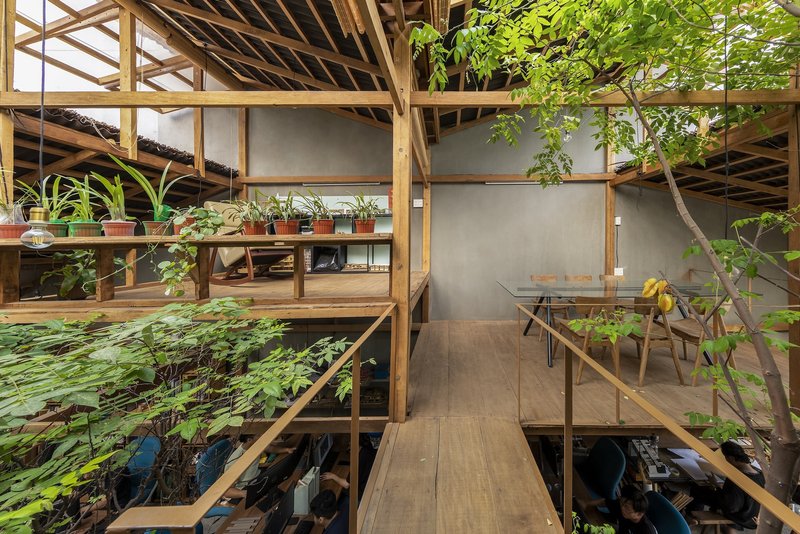
- Reclaimed wood: Used for beams, trusses, flooring, and columns, reinforcing the project’s commitment to circular construction.
- Exposed brick walls: Built with a waterproof layer to enhance durability while maintaining an organic aesthetic.
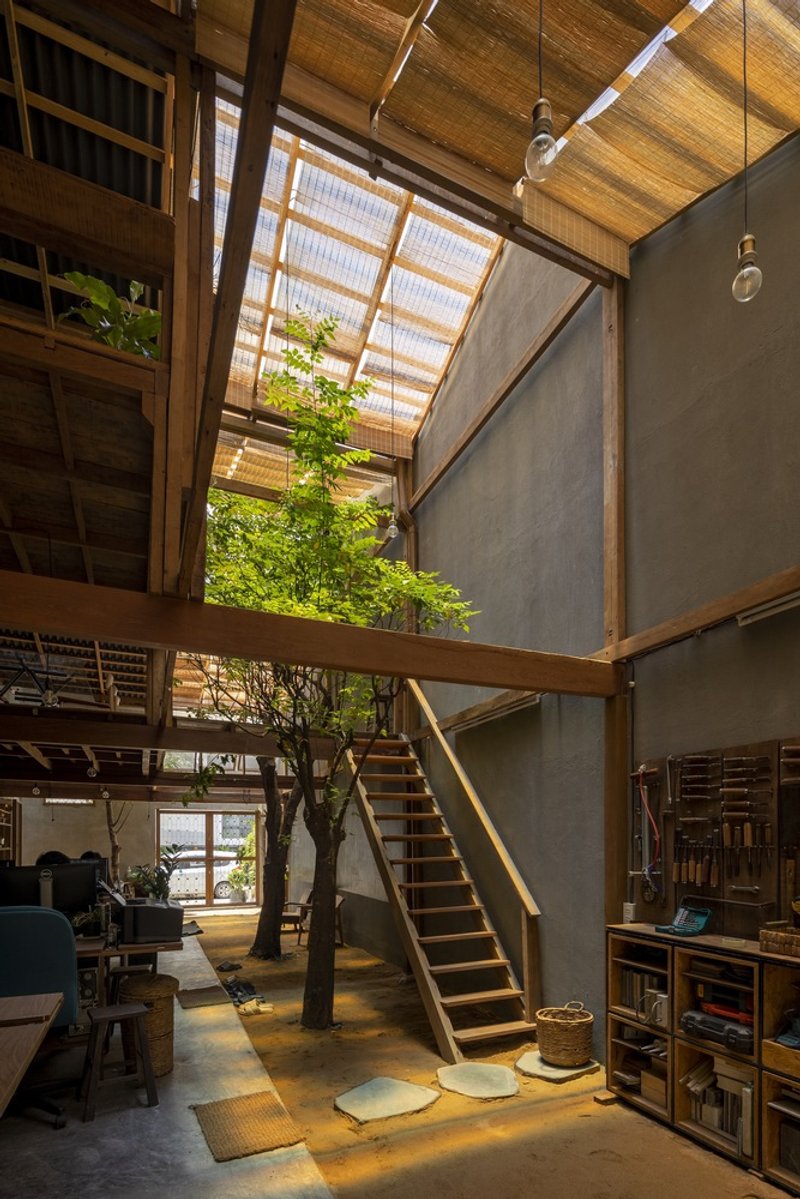
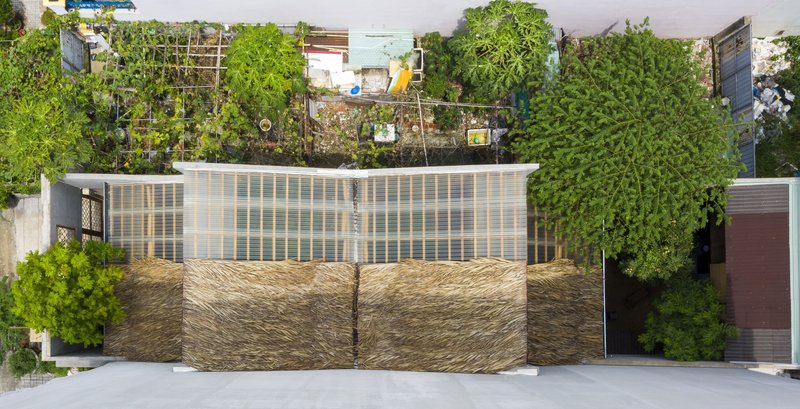
- Eco-tin roofing sheets and dried coconut leaves: These materials provide insulation, reduce heat absorption, and minimize noise pollution.
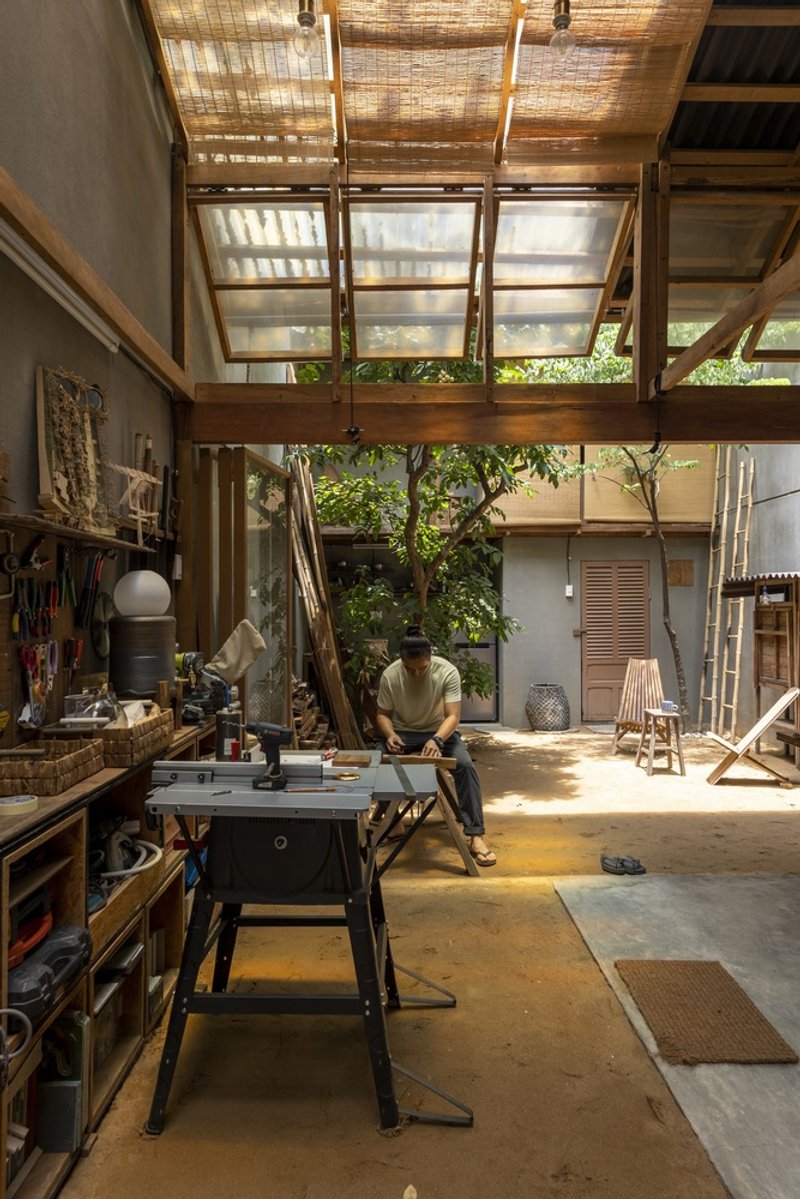
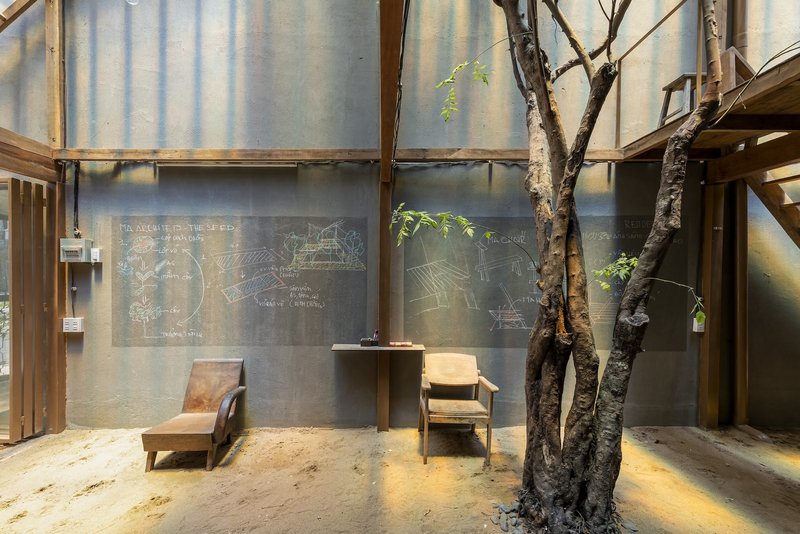
- Bare ground with sand and compacted stones: Instead of traditional flooring, the working space includes compacted earth, which absorbs rainwater, reduces heat, and blends seamlessly with the natural surroundings.
By utilizing recycled and locally available materials, MA Architects Vietnam reduces the project’s carbon footprint while promoting a cost-effective and efficient building process.
Adaptive Spatial Planning in a Compact Plot
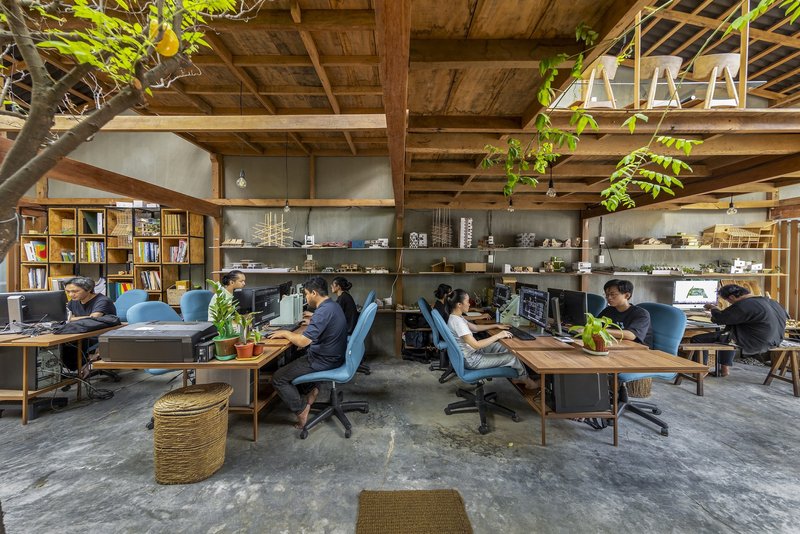
The office is situated on a narrow 5x20 meter plot, a common site layout in Ho Chi Minh City. Despite its compact size, the architects designed an open-plan layout that maximizes airflow and daylight penetration. The workspace is carefully arranged to include:
- Flexible working zones that adapt to various professional needs.
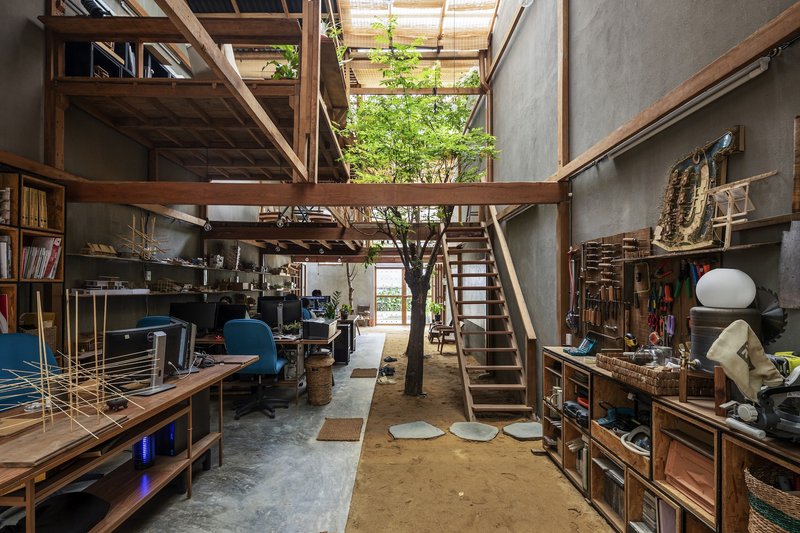
- Green courtyards that improve air quality and provide shaded relaxation areas.
- Minimalist interiors that embrace raw textures and organic materials, enhancing the space’s authenticity.
This thoughtful spatial arrangement ensures thermal comfort and energy efficiency, making the space highly functional while staying true to its sustainable ethos.
Climate Adaptation and Passive Cooling Strategies
Vietnam’s tropical climate presents unique challenges, including high temperatures and humidity. To combat these conditions, MA Architects Office incorporates passive cooling techniques:
- Natural cross-ventilation is achieved through strategic window placement, reducing the reliance on mechanical air conditioning.
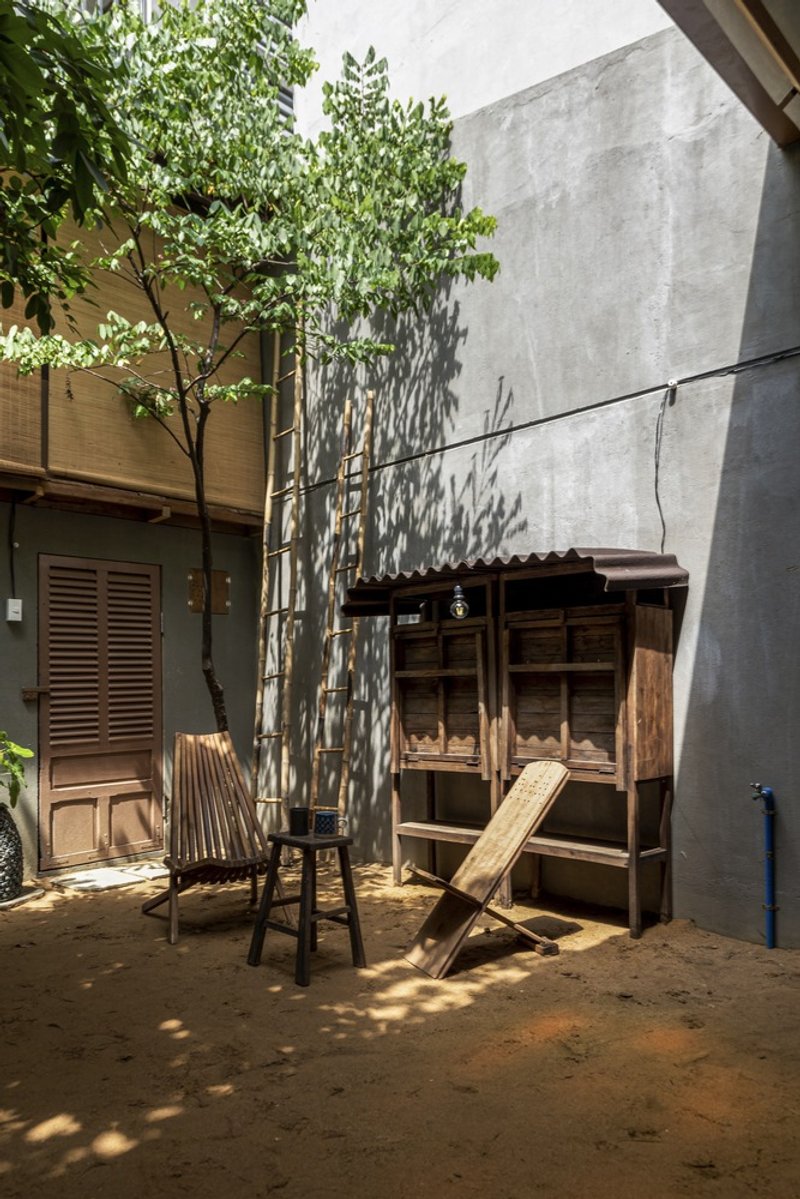
- Shaded outdoor spaces and the use of indigenous trees create a cooler microclimate around the office.
- Permeable surfaces such as compacted sand absorb rainwater and regulate temperature, minimizing heat retention.
These climate-responsive design solutions significantly lower energy consumption and improve overall comfort.
A Blueprint for Future Workspaces
The MA Architects Office is a testament to the potential of sustainable architecture in urban settings. By leveraging reclaimed materials, biophilic principles, and passive cooling techniques, the project presents a scalable model for eco-conscious office design. In an era where workspaces are evolving to prioritize well-being and sustainability, this project stands as an inspiration for architects and designers worldwide.
All Photographs are works of Paul Phan



Popular Articles
Popular articles from the community

Bood Design Bureau Splits a Gilan Residence in Two to Let the Forest In
Double Side House negotiates privacy and openness through interlocking concrete volumes and planted courtyards in northern Iran's humid Caspian lowlands.
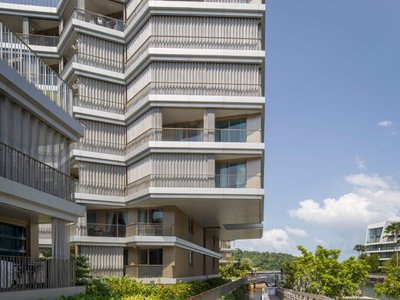
KCAP and DCA Architects Build a Stepped Urban Village on Singapore's King's Dock Waterfront
A 26,000 square meter residential development in Singapore trades tower isolation for terraced courtyards and a planted promenade along the harbor.
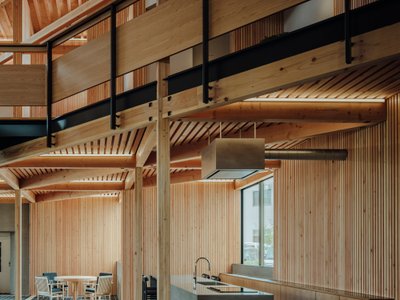
ure LLC Builds a Timber-Framed Suburban Office That Doubles as a Community Living Room in Hiroshima
KItoNOKO wraps sawtooth roofs and corrugated metal around an exposed timber frame to give a commercial district a new civic anchor.
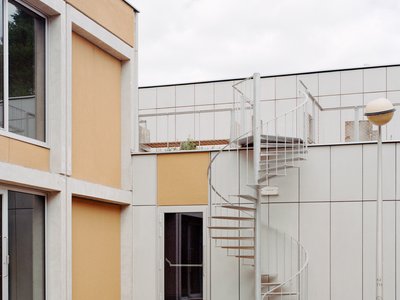
MAKER architecten Rewire a 1972 Brutalist Dormitory on the VUB Campus as a Living Lab
A modular renovation strategy in Belgium breathes new life into Willy Van Der Meeren's modernist student housing without erasing its concrete bones.

Similar Reads
You might also enjoy these articles

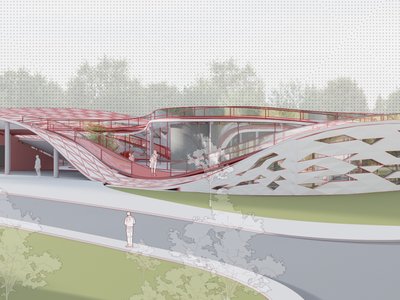
MOTION
This project explores well being through movement. A continuous loop guides users through shifting spatial conditions, connecting public and introspective spaces. By integrating the urban ground and elevating parts of the path, movement becomes a tool for mental clarity and spatial experience.

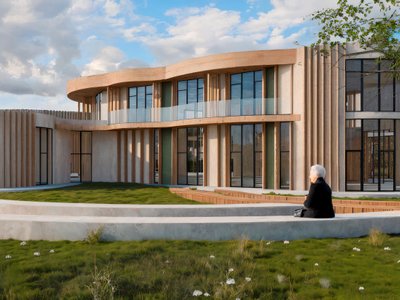
Home On A Leaf
The senior center project in Kielnarowa combines residential, recreational, educational, and cultural functions, promoting an active and sustainable lifestyle. The complex consists of several building

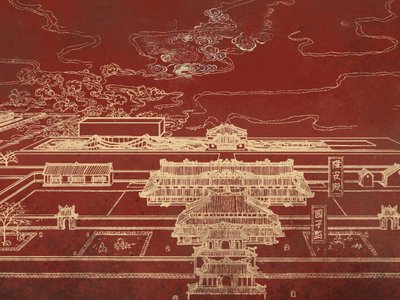
Real Challenges in Hue
Hue Imperial Heritage Museum - Practical Issues
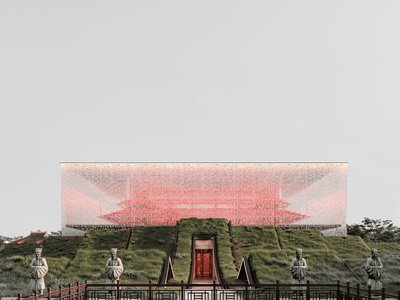
Scenic Transitions — A Hue Journey in Four Frames
Hue Imperial Heritage Museum: A reinterpretation of Hue’s landscapes and heritage through sequences of unfolding views.

Explore Office Building Competitions
Discover active competitions in this discipline




The International Standard for Design Portfolios


The Global Benchmark for Architecture Dissertation Awards


The Global Benchmark for Graduation Excellence


Challenge to reimagine the Iron Throne
Comments (0)
Please login or sign up to add comments
No comments yet. Be the first to comment!