
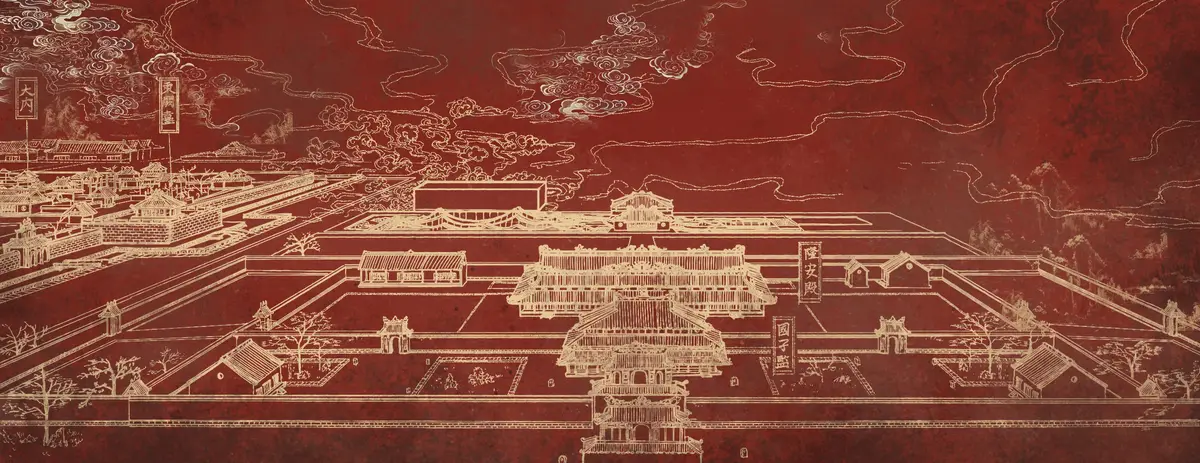
Real Challenges in Hue
Hue Imperial Heritage Museum - Practical Issues

01. Is There Enough Room for Heritage?
In Hue, many assume heritage already has enough space because a large proportion of imperial palaces and tombs still stand. Yet, physical survival does not equal functional completeness. Built heritage is only one layer — spaces for interpretation, preservation, and cultural transmission remain absent. Hue has monuments, but lacks the “intermediate spaces” to decode and communicate them in meaningful, contemporary ways.
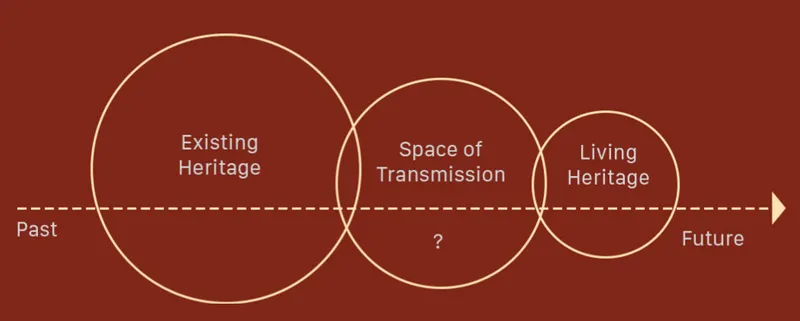
Current shortcomings in Hue:
– Lack of interpretation: Traditional sites remain “silent,” without conveying their spirit.
– Lack of storage & research: Most artifacts are temporarily displayed, without long-term professional conservation.
– Lack of public re-engagement: No spaces allow people to re-approach heritage through a modern lens.
02. Heritage Overburdened
Hue has often relied on a short-term fix: turning monuments into makeshift museums. Yet imperial architecture was never meant to serve as glass display cases. Even small interventions can distort their original essence.
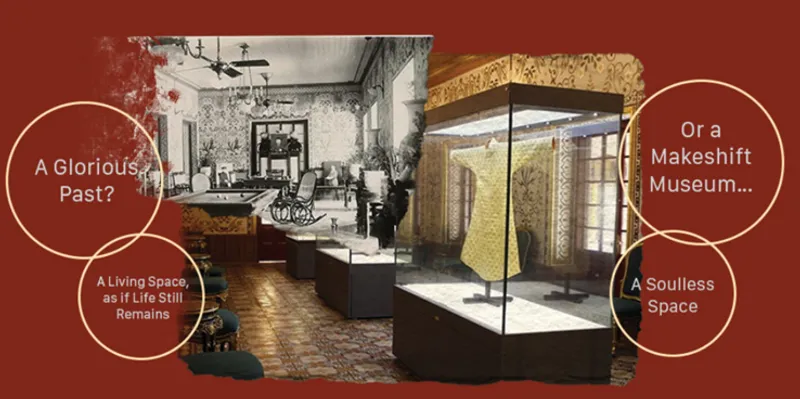
Short-term solutions, long-term consequences:
– Monuments lose authenticity when forced to host unintended functions.
– Context and content blur: visitors struggle to distinguish between original relics and staged exhibits.
– Time is frozen: heritage spaces become static relics, while culture by nature should remain dynamic and evolving.
03. Beyond the Citadel… What Comes Next?
The Imperial Citadel (Đại Nội) is often both the beginning and the abrupt end of a visitor’s heritage journey. After leaving its gates, travelers face a gap: they may visit distant tombs scattered outside the city, or instead slip back into the ordinary urban fabric. With no transitional space, the narrative thread is broken, and most visitors leave with little understanding of what they’ve seen.
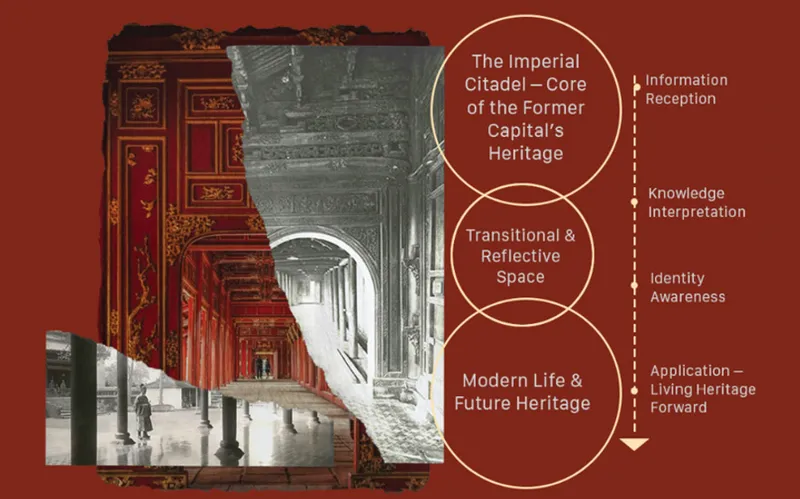
What Hue lacks is not “another site,” but a transitional hub — a place to synthesize, contextualize, and extend the heritage experience through maps, digital tools, layered interpretation, and spaces for personal reflection.
04. Let the Artifacts Live On
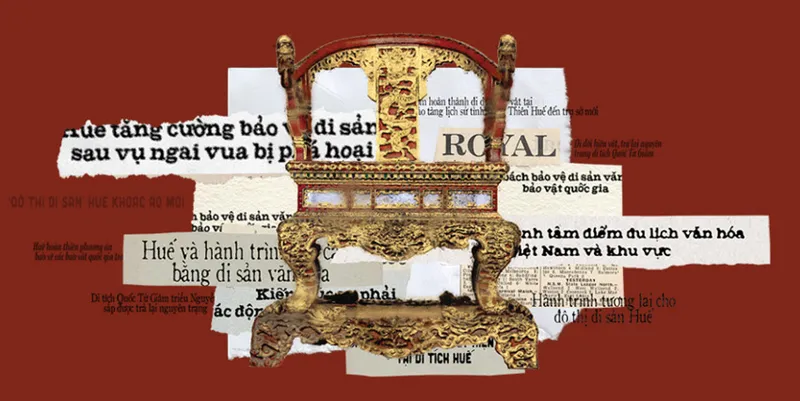
Heritage thrives when placed in the right space and context. Valuable artifacts lose meaning if trapped in the wrong environment, but they are equally endangered if left in original sites without proper climate and security control.
As ICOM & UNESCO emphasize:
– Separate physical storage from memory space: real objects should be conserved, researched, and digitized within professional museum conditions.
– Activate monuments as experiential sites: using replicas, digital reconstructions, sound, light, and rituals to evoke the living spirit of Hue’s heritage.
Choosing the Site: Reconnecting Heritage
People do not come to Hue in search of novelty; they come to touch the depth of its heritage.
And on that journey, the Imperial City is almost always the first destination. Thus, the architect’s role here is not to compete with the monuments, but to create a supportive place—one that helps visitors access heritage more easily, stay longer, and understand more deeply.
A museum placed too far from the heritage axis would struggle to become part of the overall experience. But if placed in the right position—close enough to connect, yet distinct enough to clarify its role—it can meaningfully complete Hue’s heritage ecosystem.M.Arch. Dinh Vinh Nguyen - my supervisor.
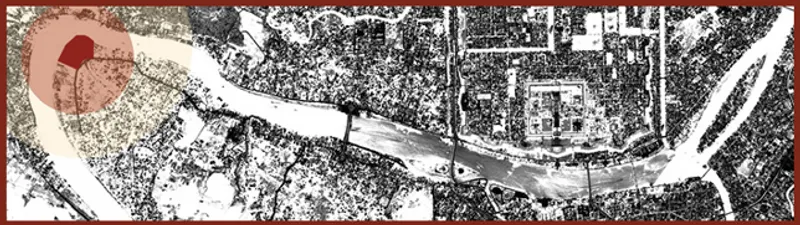
The first option was a 5.59ha vacant land on the outskirts of Thuy Bieu, along the Perfume River.
Pros: Ample land for large-scale design and freedom to create a new landmark.
Cons: Detached from the heritage route, lacking connection with monuments, and dependent on external promotion. Such a large suburban site risks fragmenting the heritage journey and misaligns with the scale of a thematic museum in Vietnam.
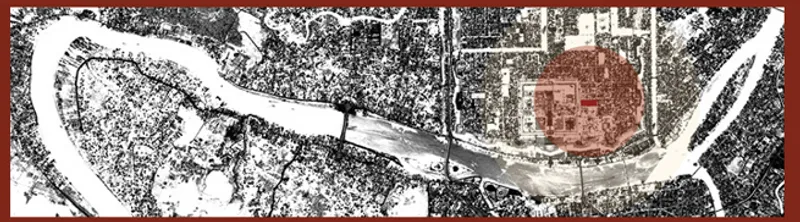
Adjacent to the Imperial Citadel (Chosen Option)
Pros: Seamless integration with monuments, enhancing visitor experience and consolidating the heritage corridor.
Cons: Strict planning controls and limited land size.
Despite the challenges, this site was chosen for its capacity to sustain an authentic, continuous, and accessible heritage experience in the heart of Hue.
Site Issue: Existing Heritage
A. Luc Bo Cultural Space (Imperial Ministry of Education Hall)
History: Former Duc Duc Palace and later administrative and educational offices of the Nguyen Dynasty, now showcasing imperial records and traditional crafts.
Status: Still in use but largely overlooked.
Design Approach: Preserve both architecture and function as a living cultural space.
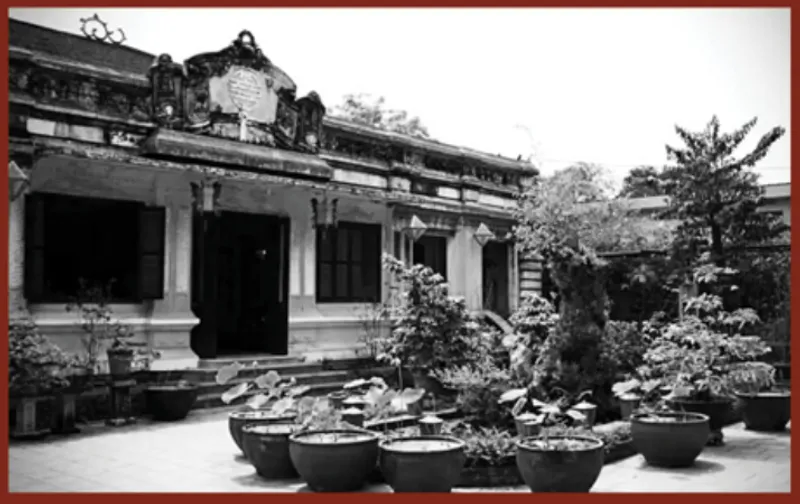
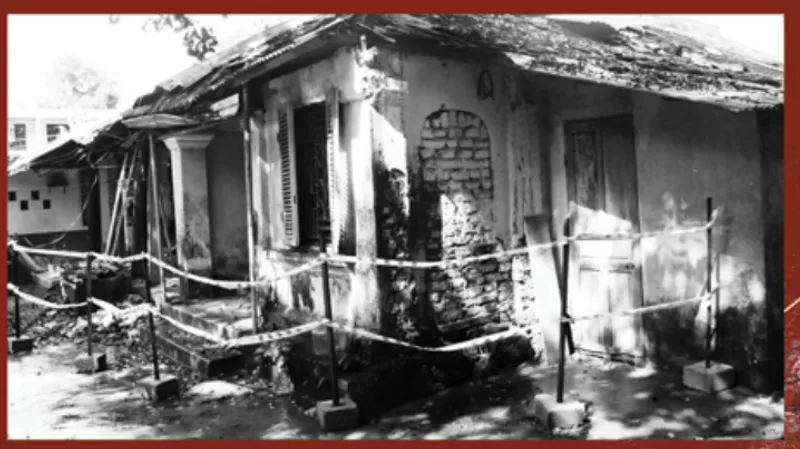
B. Kham Thien Giam (Imperial Astronomy Office)
History: Established in 1803, relocated in 1918; historically used for astronomy, calendar-making, and imperial advisories.
Status: Heavily altered with structural and functional loss.
Design Approach: Restore based on existing structure and historical records; revive the space as an exhibition on imperial astronomy.
Purpose and Problem-Solving:
The Hue Imperial Heritage Museum addresses The Hue Imperial Heritage Museum seeks to resolve key issues facing Vietnam’s first UNESCO World Heritage city. It separates historic monuments from temporary exhibition functions, preserving their authentic spatial and cultural values while gathering precious artifacts into a dedicated, climate-controlled facility for proper conservation. At the same time, the museum reorganizes fragmented knowledge into coherent narratives, offering interpretation and context often missing at original sites. Finally, it acts as a connective hub, bridging Hue’s scattered monuments into a seamless cultural journey, beginning right outside the Imperial Citadel.


Popular Articles
Popular articles from the community


Lunar Spiral: Space Architecture Shaped by the Mathematics of the Universe
Lunar Spiral reimagines space architecture through Fibonacci geometry, lunar regolith, levitating habitats, and self-sustaining Moon living.

Conexión: Biophilic Design Reimagines High-Rise Living in Hong Kong
Conexión reimagines high-rise living in Hong Kong through biophilic design, green facades, shared spaces, daylight, water and nature within.

Co-Life: Senior Housing Design That Reconnects Older Adults With the City
Co-Life reimagines senior housing design through healing gardens, shared streets, workshops, and a sustainable community across generations.

The Musturak Paradise: Senior Living Architecture for a Connected Future in Temara, Morocco
The Musturak Paradise reimagines senior living architecture in Temara via private homes, social spaces, culture, community, and shared care.

Similar Reads
You might also enjoy these articles

Day and Night Park: A Time-Based Urban Newsstand in Beijing
A temporary urban newsstand in Beijing blending travel, light, and reading through poetic colors, compact form, and community-focused design.

Modernist Patio Renovation in El Masnou, Barcelona by Oliver Segura Arquitectura + Cebrià Arquitectura
Modernist patio renovation blending tradition and innovation with a movable pool, leveled floors, and Catalan materials in El Masnou.

Alto Residencial Coop: Cooperative Housing Development in Santiago de Compostela by Carbajo Barrios Arquitectos
A linear cooperative housing complex blending white volumes and perforated metal façades, enhancing community living, natural light, privacy, and urban integration.
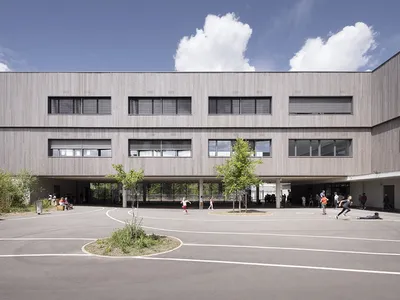
Vil Genis School by BPA ARCHITECTURE – Massy, France
Vil Genis School in Massy, France, features sustainable design, south-facing classrooms, community integration, accessible spaces, and modern educational architecture.

Explore Heritage Protection Competitions
Discover active competitions in this discipline


Challenge to reimagine the Iron Throne

Photograph architecture without architects

Illustrate the lost glory of Angkor Wat - Render Challenge

Bring back Drive In's
Comments (0)
Please login or sign up to add comments
No comments yet. Be the first to comment!