

Scenic Transitions — A Hue Journey in Four Frames
Hue Imperial Heritage Museum: A reinterpretation of Hue’s landscapes and heritage through sequences of unfolding views.

Introduction
Architecture in Hue is never revealed all at once. Instead, it unfolds through layers—foreground, middle ground, and background—each offering a new perspective and emotion. This sense of scenic transition gives Hue its unique rhythm of discovery. The Hue Imperial Heritage Museum adopts this principle, shaping the visitor’s path as a sequence of shifting views: from curiosity to focus, from admiration to reflection.
Journey in Four Frames
Frame 1 — First Encounter
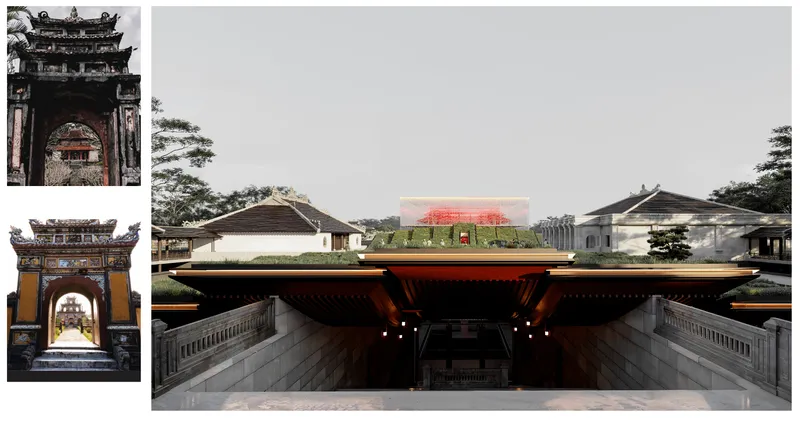
The green roof stretches forward like a ceremonial gate, shading the descent. Through misted glass, the outline of a contemporary pavilion shimmers—visible, but not yet reachable. The moment recalls the view through Ngo Mon into the Citadel, or the glimpse of Minh Lau beyond its arched gate: a distant promise that draws visitors closer.
Frame 2 — Opening Court
A green roof stretches like a ceremonial gate, shading the descent. Through misted glass, a distant contemporary form shimmers—hinted, but not yet reached
Frame 3 — Sacred Focus
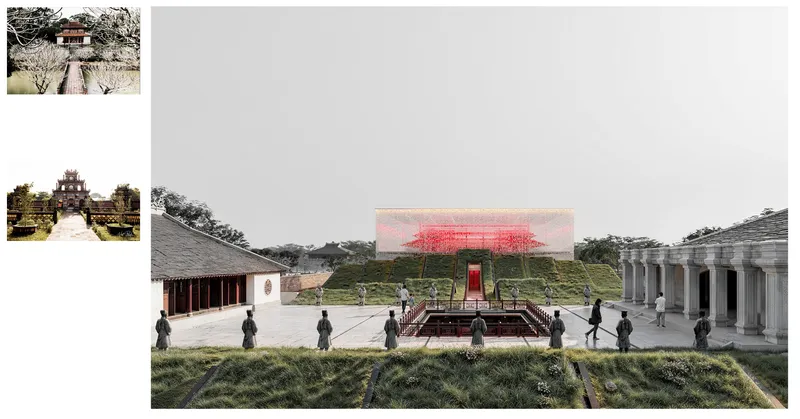
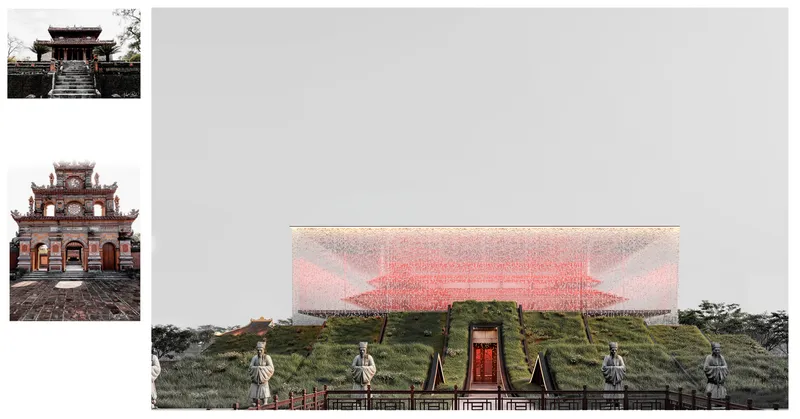
The glass pavilion stands revealed, rain-washed and solemn, gathered by rising topography into a symbolic “main icon” of past and present.
Frame 4 — Return to the Familiar
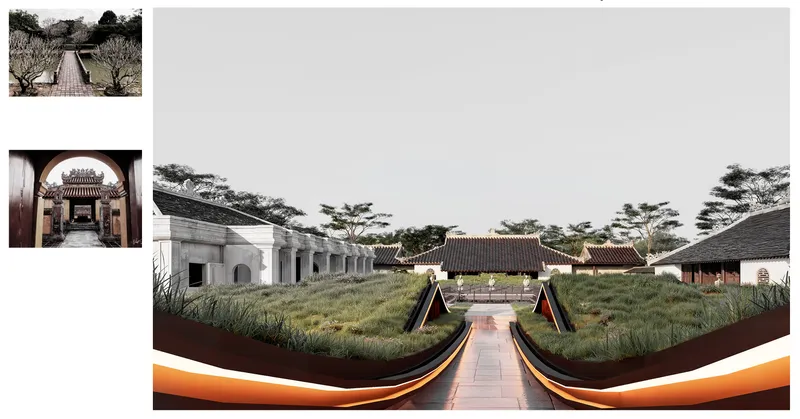
Turning back, relics reappear and the court feels intimate again—closing the journey with a renewed sense of Hue’s living heritage.


Popular Articles
Popular articles from the community


Tsunami Convergenics: Turning Catastrophic Ocean Forces into Underwater Housing Infrastructure
A speculative underwater settlement off the coast of Onagawa, Japan, treats tsunamis and typhoons as energy sources rather than threats.

Faces of the Soviet Avant-Garde: Turning Moscow's Street Names into an Open-Air Museum
A network of sculptural installations across a Moscow residential district transforms forgotten architect names into spatial encounters with cultural memor

Singing Woman: An Opera House That Performs Before the Curtain Rises
Ovidiu Cristian Pavel's conceptual opera house translates Estonia's choral identity into a sculpted waterfront landmark facing the Baltic Sea.

Manzana Morphosis: Stretching Barcelona's Grid into a Living Landscape for 2050
A radical reworking of the Eixample manzana turns density into a tool for generous public space, vertical ecology, and environmental performance.

Similar Reads
You might also enjoy these articles

Shakur's House: Exposed Brick as an Interior Organiser in a 168 m² Mashhad Residence
Brick moves indoors in this Mashhad residence, where masonry walls, glass partitions and teal planes sequence a compact home without closing it off.

Day and Night Park: A Time-Based Urban Newsstand in Beijing
A temporary urban newsstand in Beijing blending travel, light, and reading through poetic colors, compact form, and community-focused design.

Modernist Patio Renovation in El Masnou, Barcelona by Oliver Segura Arquitectura + Cebrià Arquitectura
Modernist patio renovation blending tradition and innovation with a movable pool, leveled floors, and Catalan materials in El Masnou.
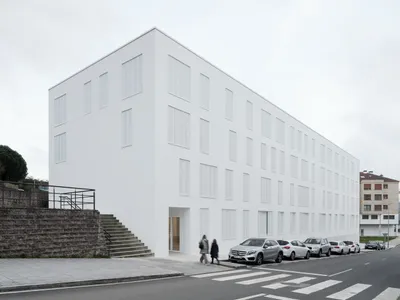
Alto Residencial Coop: Cooperative Housing Development in Santiago de Compostela by Carbajo Barrios Arquitectos
A linear cooperative housing complex blending white volumes and perforated metal façades, enhancing community living, natural light, privacy, and urban integration.

Explore Cultural Architecture Competitions
Discover active competitions in this discipline


Challenge to reimagine the Iron Throne

Photograph architecture without architects

Illustrate the lost glory of Angkor Wat - Render Challenge

Bring back Drive In's
Comments (0)
Please login or sign up to add comments
No comments yet. Be the first to comment!