
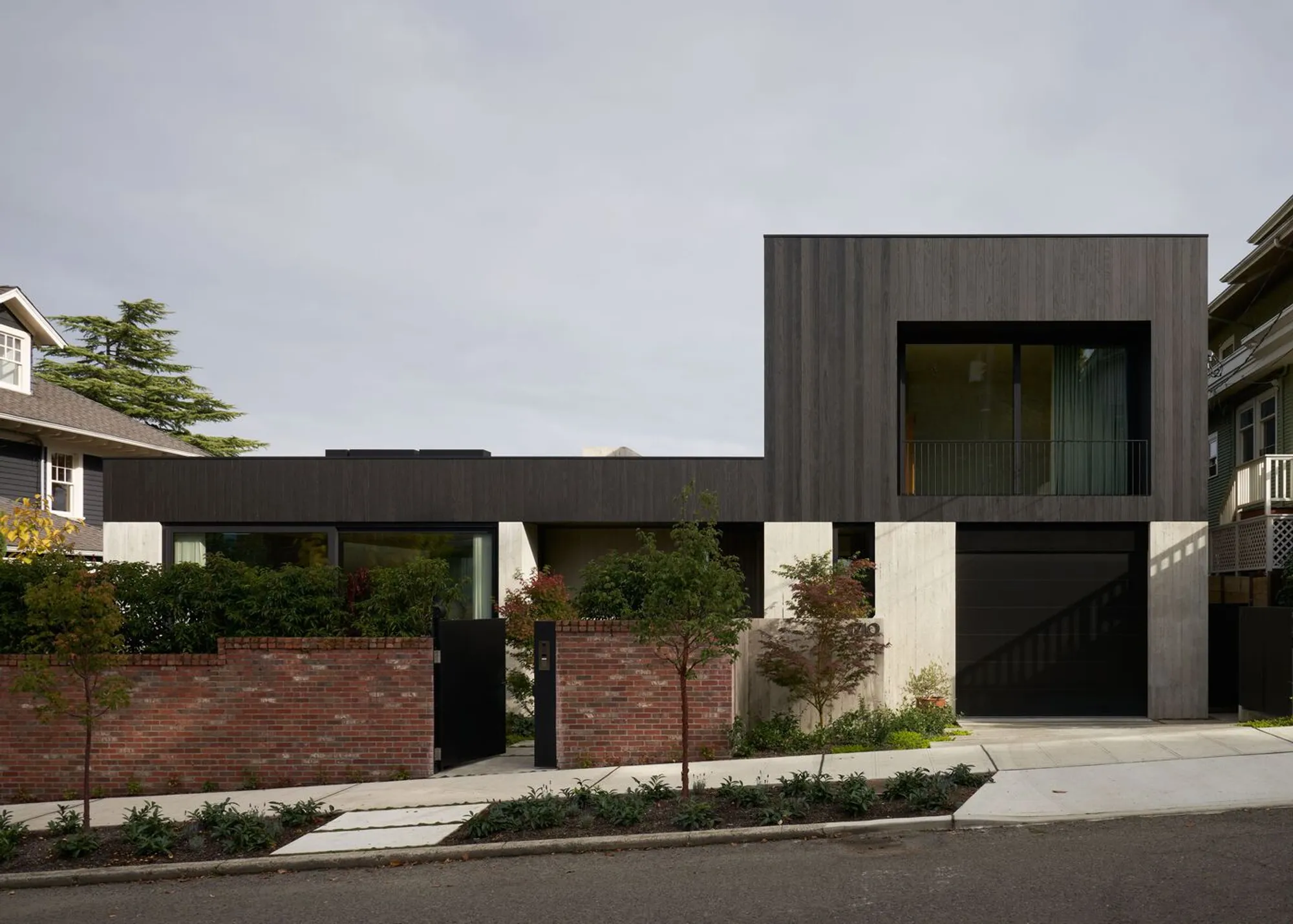
Madrona House in Seattle: A Concrete Courtyard Home Rooted in Light, Landscape, and Longevity
Concrete courtyard home in Seattle, blending textured mass, warm wood volume, passive ventilation, lush gardens, and aging-in-place flexibility.


Madrona House by Daniel Toole Architecture and Carsten Stinn Architecture is a refined example of contemporary residential architecture in Seattle. Nestled within a historic hilltop neighborhood overlooking Lake Washington and the Cascade Mountain Range, this 3,300-square-foot concrete courtyard home balances mass, warmth, sustainability, and aging-in-place design.
Located in Seattle, United States, the residence redefines what a concrete house can be: textural, luminous, environmentally responsive, and deeply connected to its landscape.
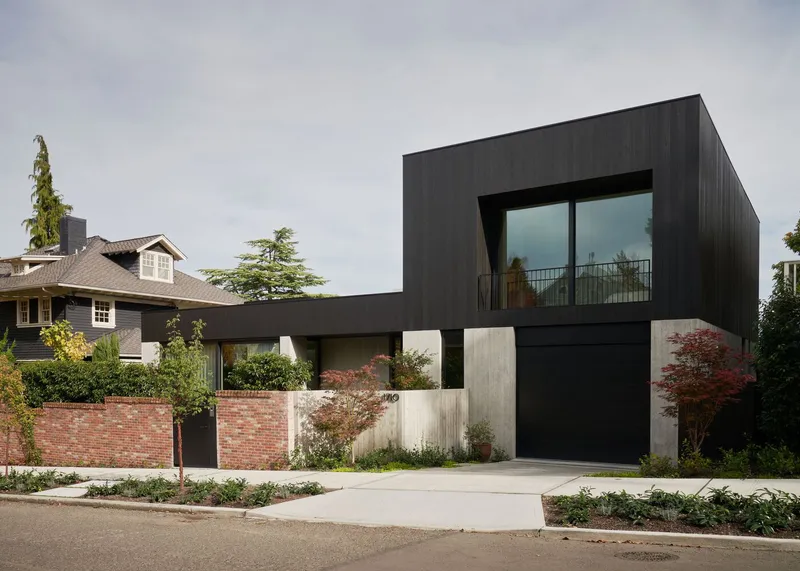
Project Overview: Modern Residential Architecture in Seattle
Location: Seattle, Washington Year: 2021 Area: 3,300 ft² Architects: Carsten Stinn Architecture + Daniel Toole Architecture Interior Design: Daniel Toole Architecture Landscape Design: Dodi Fredericks Structural Engineer: Harriott Valentine Engineers Inc. Photographer: Kevin Scott
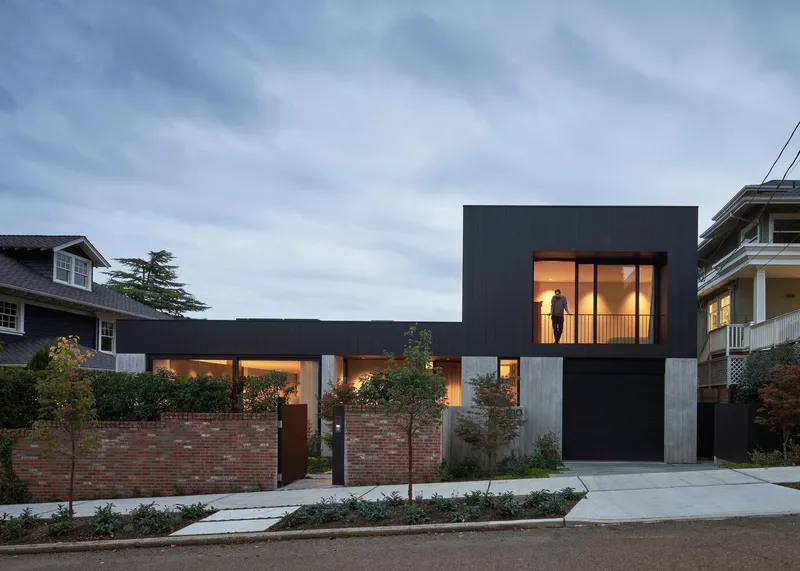
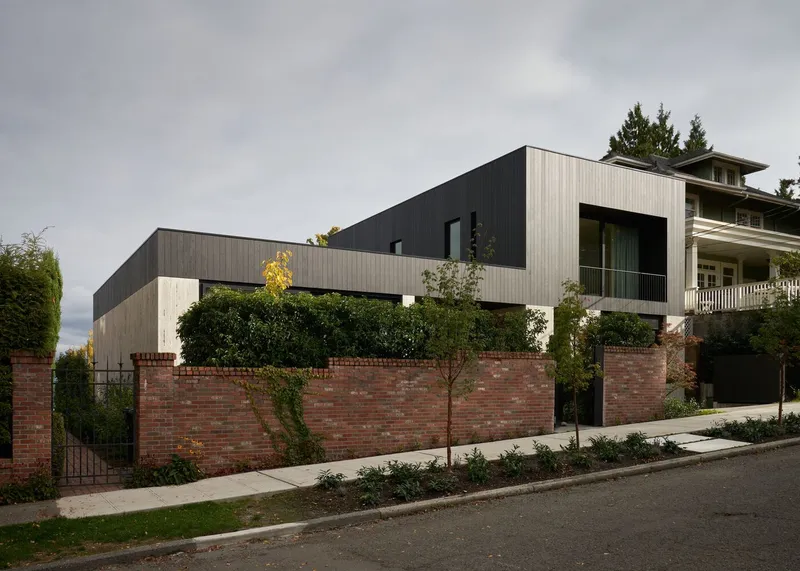
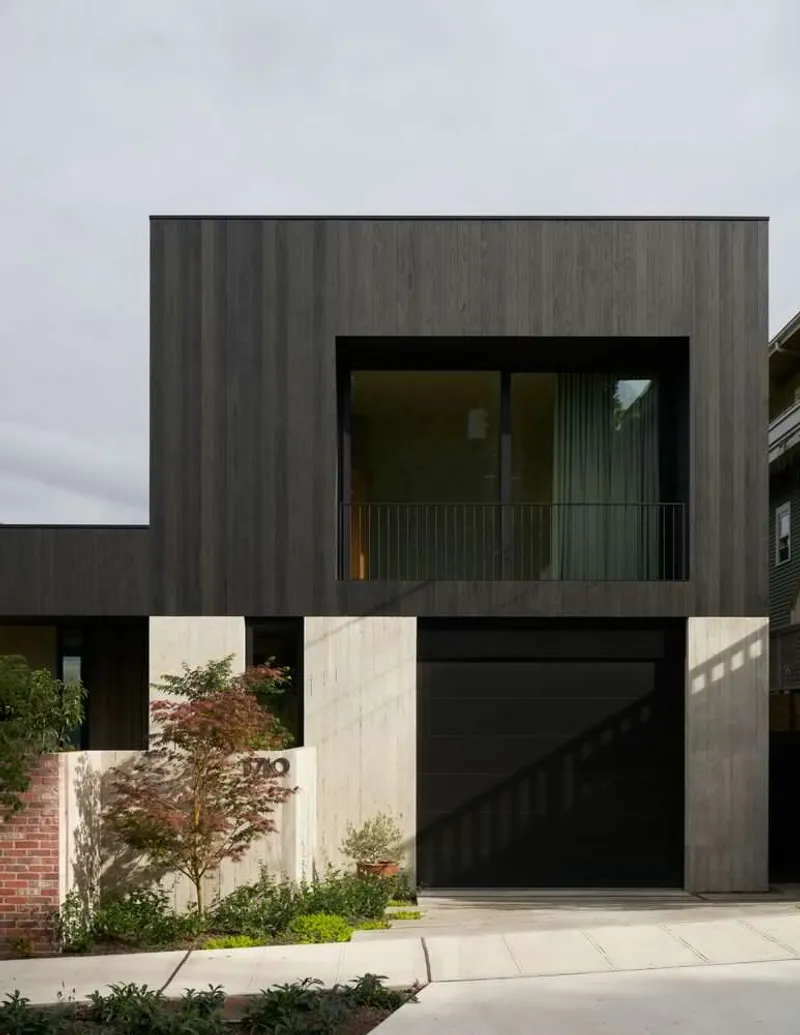
Designed for a recently retired couple downsizing from the historic Craftsman house next door, Madrona House responds to both personal aspirations and contextual sensitivity. One client envisioned a monolithic Swiss-inspired concrete home, while the other desired warmth and neighborhood integration. The result is a layered composition of thick concrete walls, a carved wood volume above, and lush gardens woven throughout.
Thickness & Light: A Concrete House with Warmth and Depth
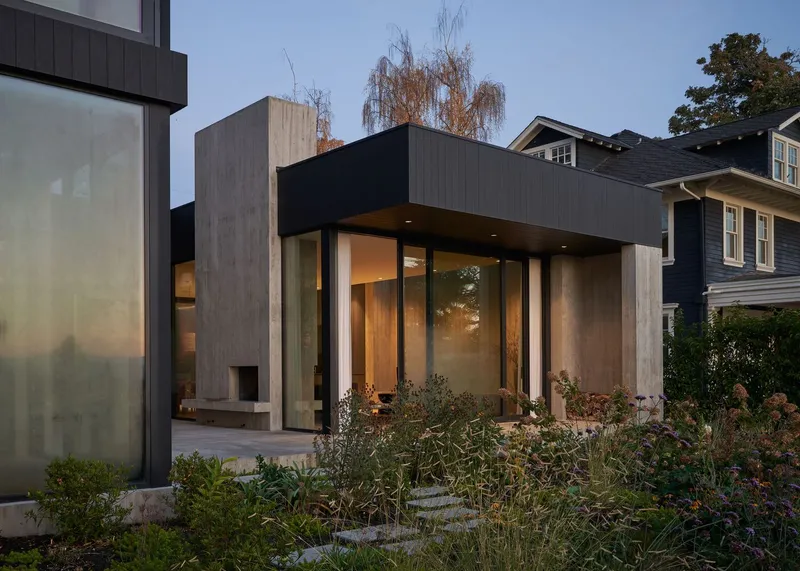
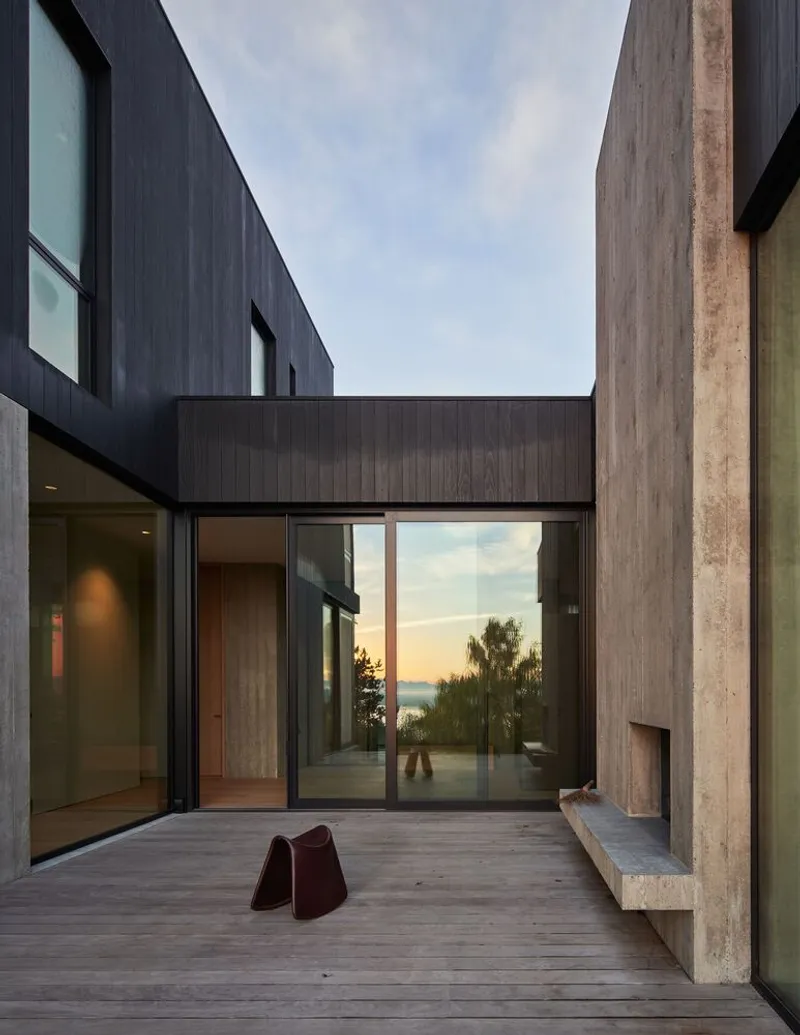
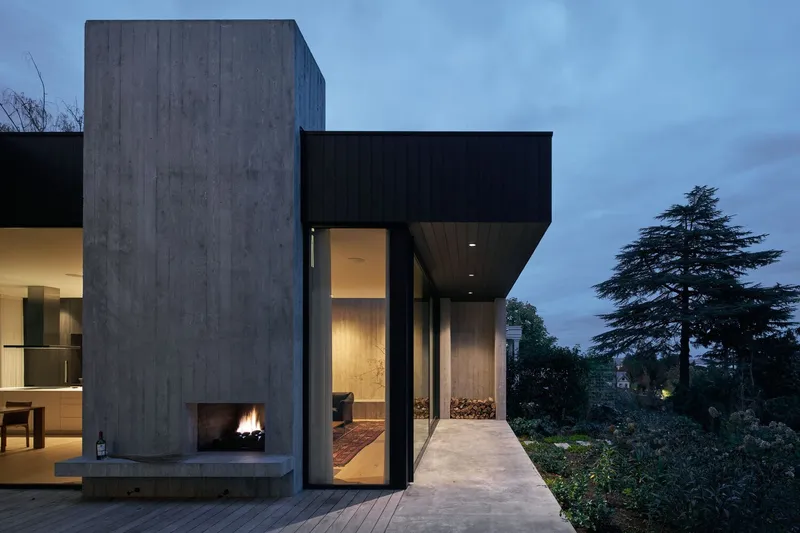
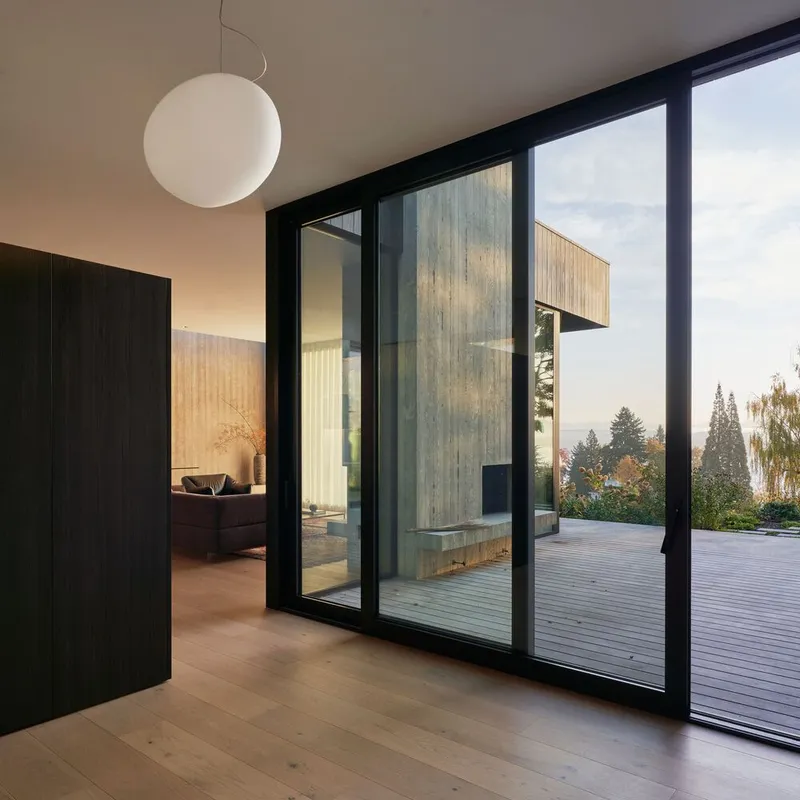
At its core, Madrona House is organized around a central courtyard, ensuring abundant natural light and seamless indoor-outdoor living. The design concept centers on a solid concrete plinth from which a hearth rises, capped by a finely detailed wooden upper volume.
Expressive Concrete Craftsmanship
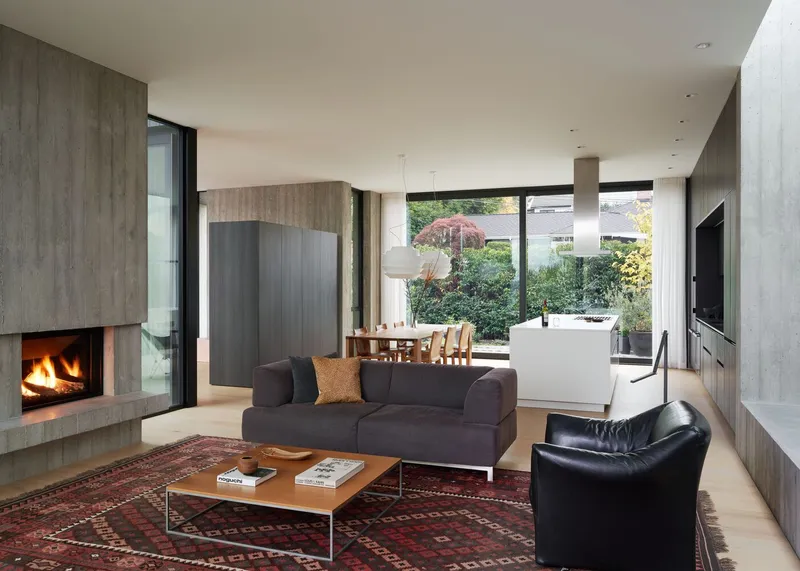
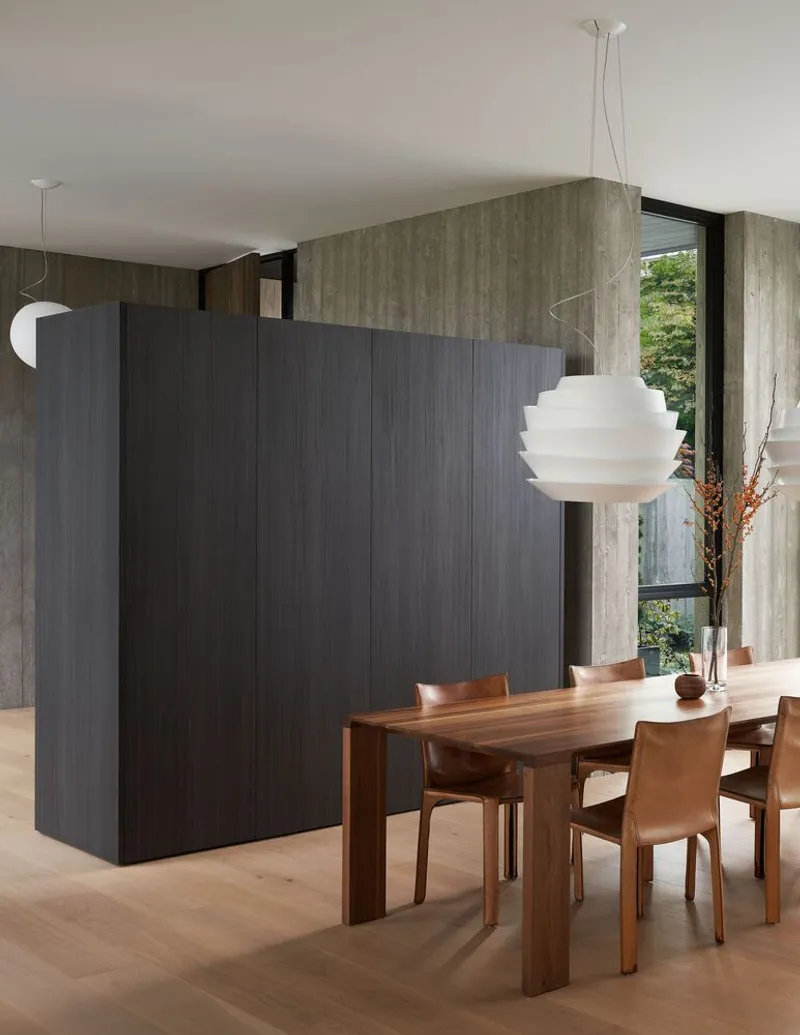
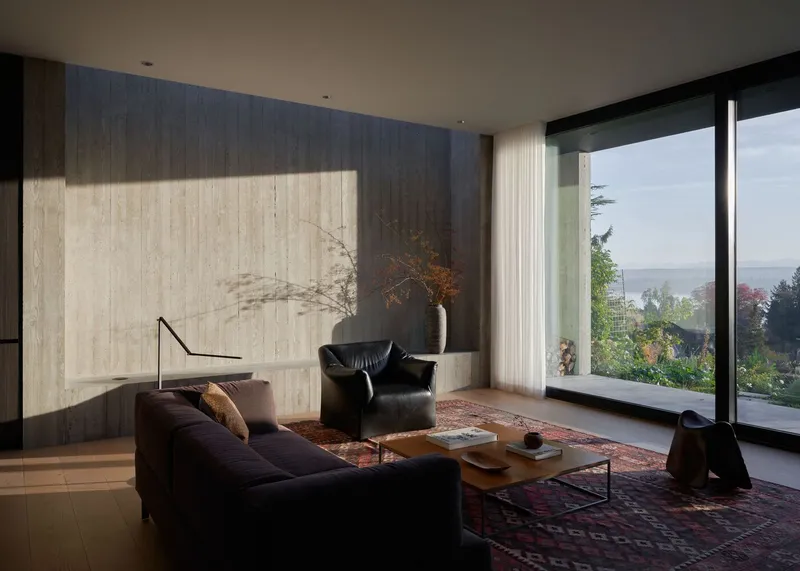
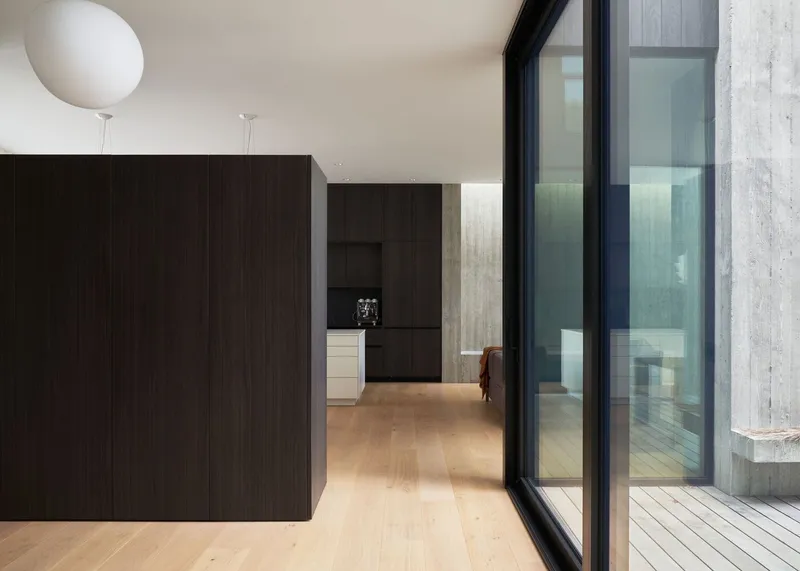
The architects used rough-sawn formwork that was allowed to shrink before pouring, producing irregular vertical fins across the façade. These subtle relief textures shift throughout the day as sunlight changes, reinforcing the home’s sense of permanence and weight.
Glazed openings are deeply inset within thick walls, emphasizing mass while creating sheltered transitional spaces. Minimal detailing: concealed headers, reduced flashing exposure, and a continuous reveal joint between concrete and wood, accentuates the building’s elemental clarity.
Strategic Daylighting in a Dense Urban Context
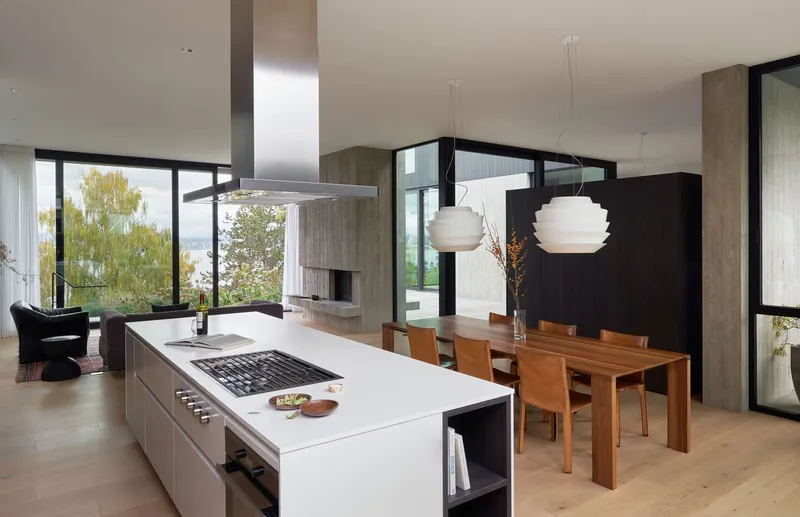
Given the proximity of neighboring homes, particularly a three-story structure to the south, the architects carefully choreographed natural light:
- Open east and west façades invite morning and evening light
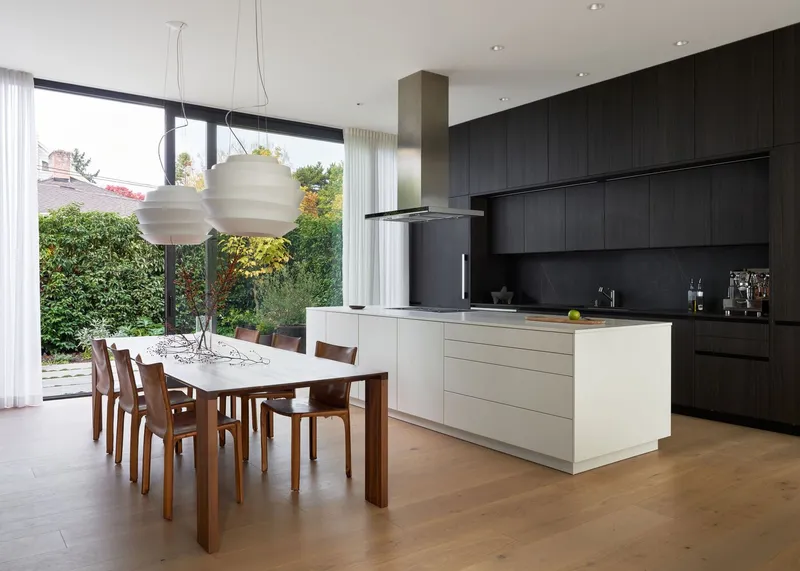
- A central courtyard channels daylight into the heart of the home
- Large skylights enhance vertical illumination
- A north wall in the main living space diffuses reflected southern light
This passive daylighting strategy ensures brightness without compromising privacy, an essential quality in urban residential architecture.
Gardens & Air: Sustainable Design Rooted in Landscape
Despite neighboring houses as close as five feet away, landscape integration was fundamental to the project.
Layered Garden Strategy
- West Entry Grove: A preserved historic brick wall frames the entry and encloses a kitchen herb garden.
- East Meadow: A hillside meadow creates a natural foreground to expansive views of Lake Washington and the Cascade Range.
- Green Roof: Treats stormwater runoff, supports pollinator habitat, and enhances upper-level views with seasonal color.
The landscape design blurs boundaries between built form and ecology, reinforcing biophilic principles in contemporary home design.
Passive Ventilation & Climate Responsiveness
Sustainability at Madrona House goes beyond materials. The home eliminates the need for air conditioning through passive ventilation strategies:
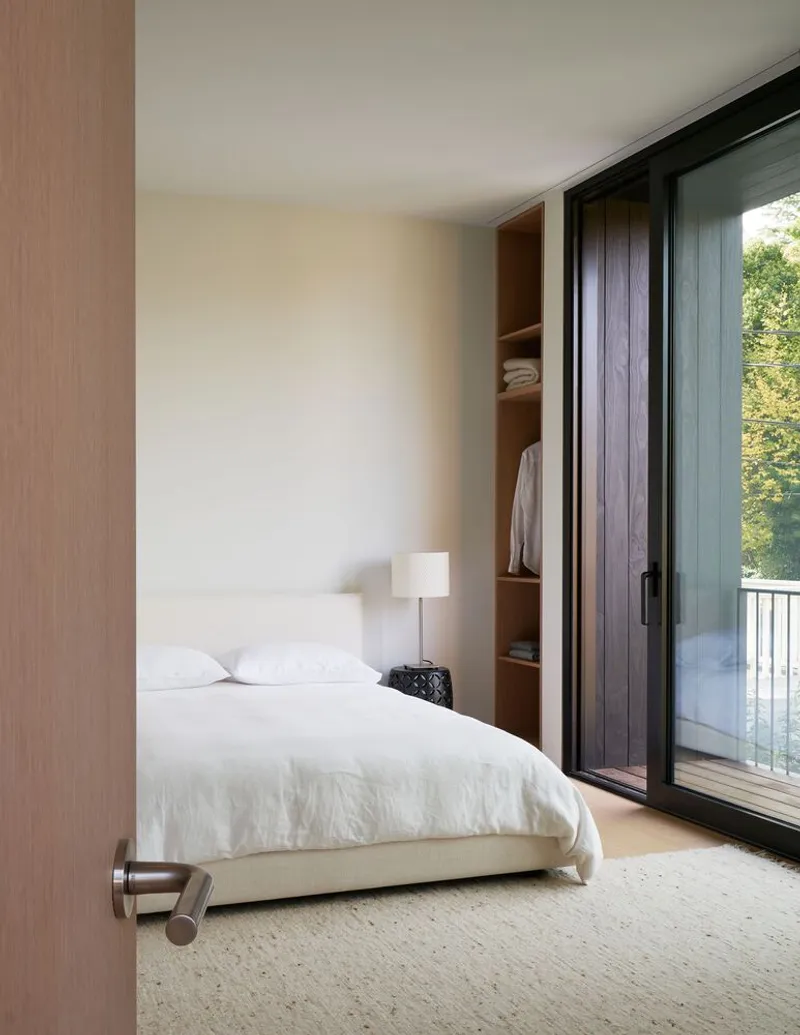
- At least two operable windows per room
- Two venting skylights enabling stack ventilation
- A stairwell acting as a vertical air chimney
This natural ventilation system promotes thermal comfort while reducing energy consumption, an exemplary model of sustainable residential architecture in Seattle’s temperate climate.
Aging in Place: Flexible and Future-Ready Design
Because the project was conceived as a downsizing home, aging in place was a central priority.
Key features include:
- Completely flat ground floor
- Zero-threshold shower adaptable for accessibility
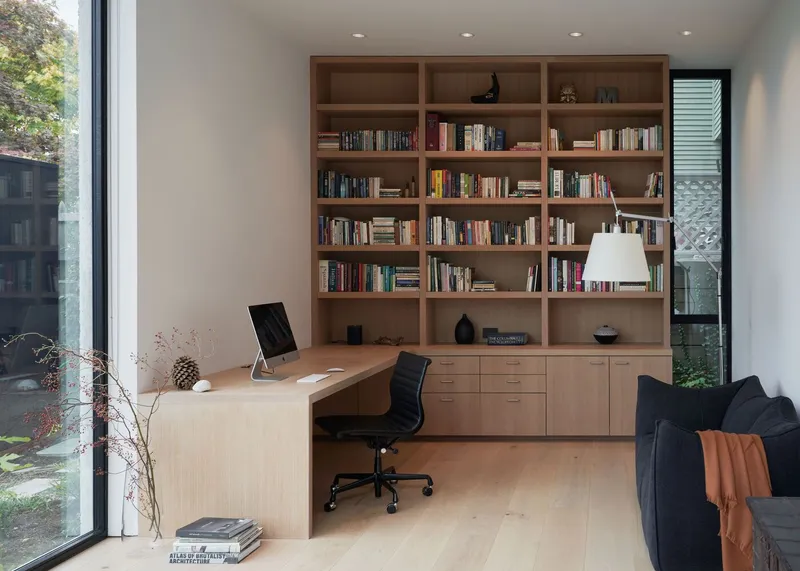
- Office designed for conversion into a main-level bedroom
- Pre-installed elevator pit and shaft (currently used for storage)
These thoughtful interventions ensure long-term livability while maintaining architectural integrity. The house supports evolving needs without compromising spatial quality, an increasingly important strategy in modern home design.
Materiality & Atmosphere: Concrete Meets Wood
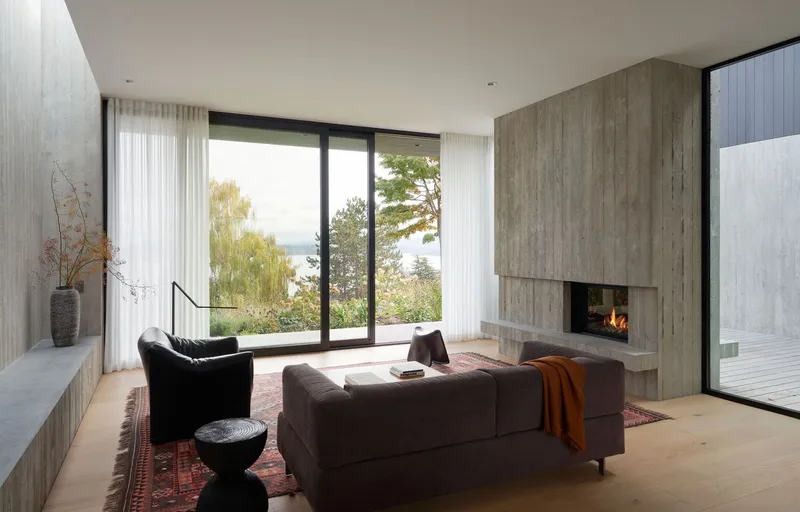
Madrona House achieves a rare balance between solidity and warmth. The tactile concrete plinth anchors the building, while the wood-clad upper volume softens the composition. Interior spaces reflect this dialogue, blending textured surfaces, natural light, and crafted details.
The result is a contemporary Seattle residence that feels both elemental and intimate, robust yet inviting.
A Model for Contemporary Courtyard Homes
Madrona House stands as a compelling example of:
- Concrete residential architecture
- Courtyard house design
- Sustainable urban homes
- Passive ventilation strategies
- Aging-in-place residential planning
- Landscape-integrated architecture
By synthesizing mass, light, ecology, and long-term adaptability, Daniel Toole Architecture and Carsten Stinn Architecture have created a home that responds equally to its site, climate, and clients.
In Seattle’s historic Madrona neighborhood, this house quietly asserts that modern architecture can be bold yet contextual, monolithic yet humane, and sustainable without sacrificing beauty.
All photographs are works of
Kevin Scott




Popular Articles
Popular articles from the community


Conexión: Biophilic Design Reimagines High-Rise Living in Hong Kong
Conexión reimagines high-rise living in Hong Kong through biophilic design, green facades, shared spaces, daylight, water and nature within.

The Musturak Paradise: Senior Living Architecture for a Connected Future in Temara, Morocco
The Musturak Paradise reimagines senior living architecture in Temara via private homes, social spaces, culture, community, and shared care.

Riyadh For All: Intergenerational Urban Design for Active Aging in Rabat
Riyadh For All reimagines urban design in Rabat with intergenerational co-living, adaptive courtyards, and Moroccan cultural exchange today.

The Ocean Hive: Sustainable Architecture for a Self-Sufficient Civilization at Sea
The Ocean Hive imagines sustainable architecture at sea, where modular habitats, algae, wave power and ocean waste sustain a growing colony.


Similar Reads
You might also enjoy these articles

FAMM Arquitectura Organizes Ten Villas Around Courtyards and Jungle in Nosara, Costa Rica
El Molino pairs two elongated volumes with deep overhangs and timber louvers to build a compact coastal community five minutes from the beach.
Oscar Niemeyer's Ibirapuera Park Pavilions Define São Paulo's Cultural Identity in Concrete and Curve
A constellation of modernist volumes set within São Paulo's most important urban park, conceived for the city's 400th anniversary in 1954.
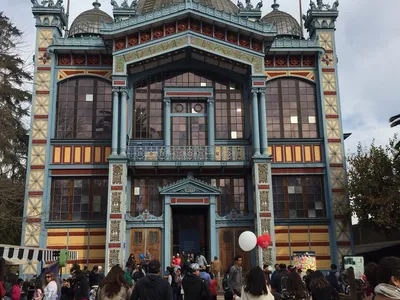
How Henri Picq's 1889 Paris Pavilion Traveled 11,000 Kilometers to Become Santiago's Artequín Museum
A prefabricated iron and glass pavilion built for the Paris Universal Exposition found a second life as a children's art museum in Chile.
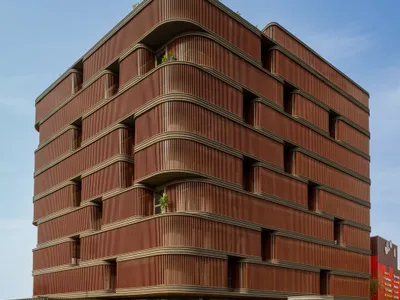
Sanjay Puri Architects Wraps a Jaipur Office Tower in Capsule-Shaped Green Buffers
A nine-level climate-responsive workplace near Jaipur Airport uses stacked planter terraces and aluminium screens to fight 40°C heat.


Explore Residential Building Competitions
Discover active competitions in this discipline


Challenge to design mud housing for contemporary communities


Challenge to reimagine the Iron Throne


Photograph architecture without architects


Illustrate the lost glory of Angkor Wat - Render Challenge
Comments (0)
Please login or sign up to add comments
No comments yet. Be the first to comment!