
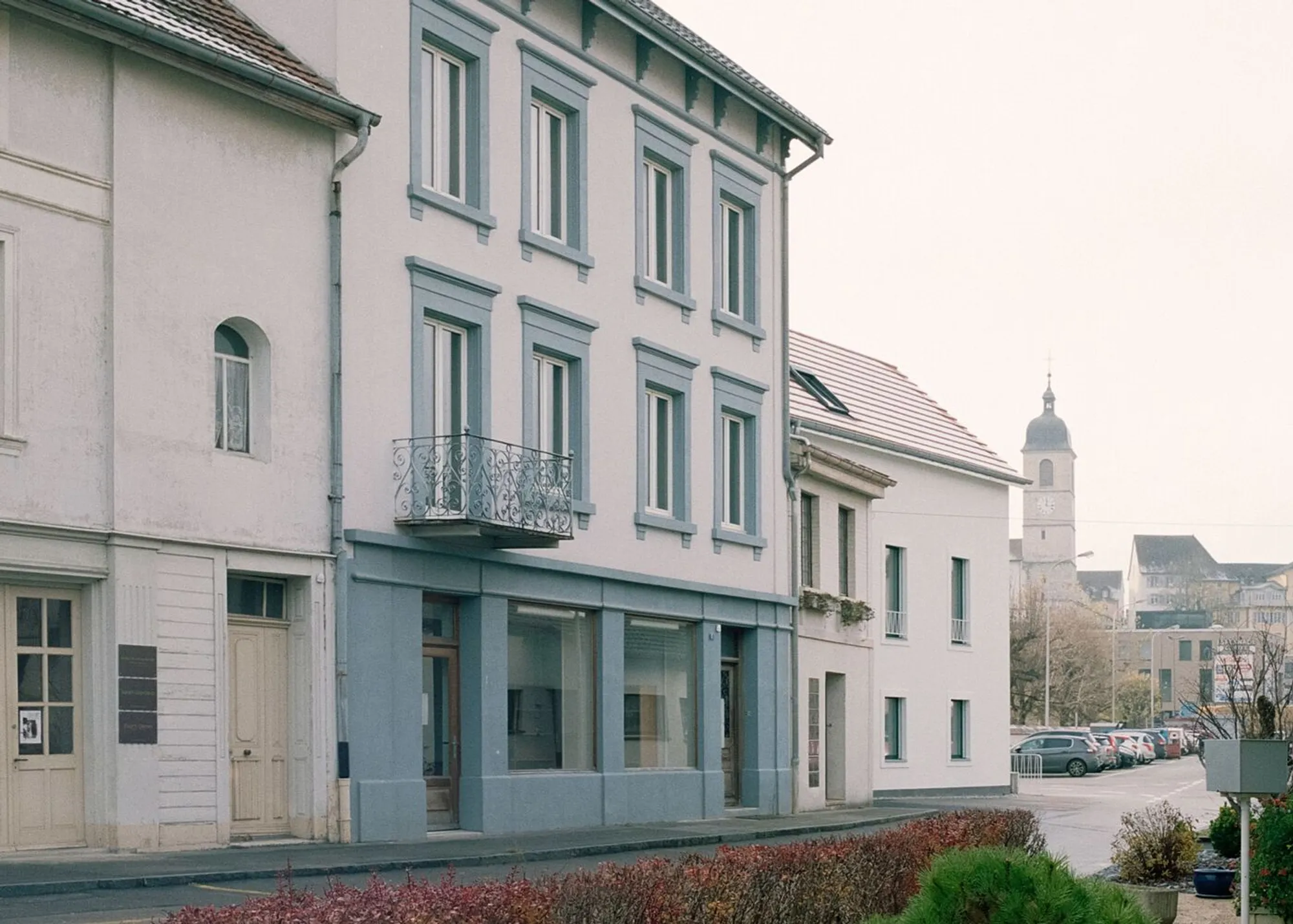
Maison des Vauches: Contemporary Renovation by Bertrand Van Dorp in Porrentruy, Switzerland
Maison des Vauches is a 1960s Swiss house transformed by Bertrand Van Dorp, blending contemporary design, wood interiors, and adaptive renovation.


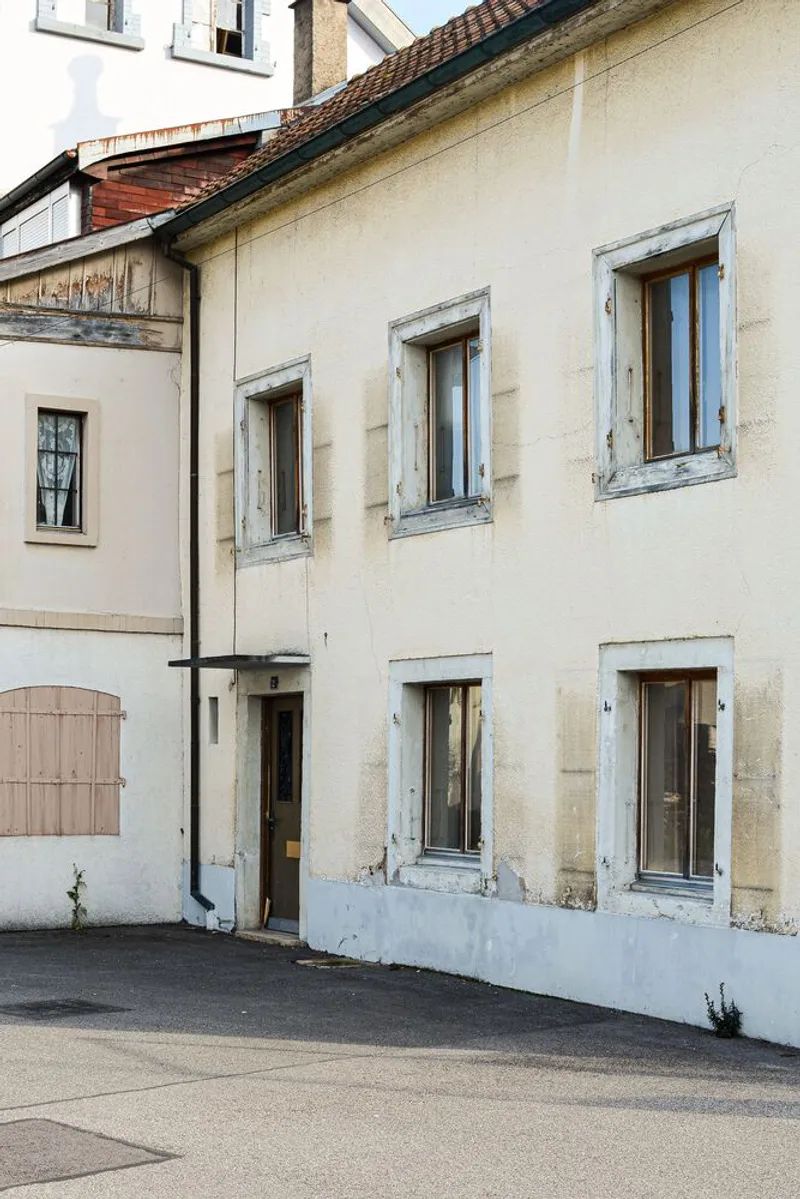
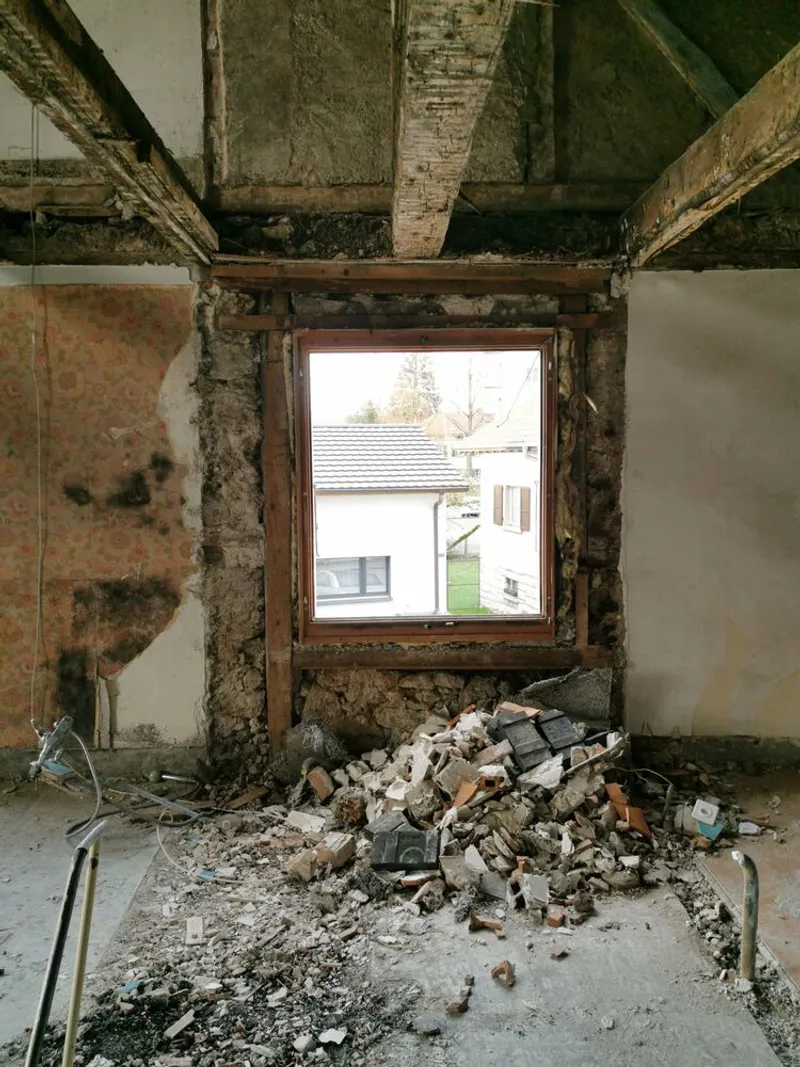
Nestled in the scenic Swiss Jura, Maison des Vauches by architect Bertrand Van Dorp is a masterful example of residential renovation that combines contemporary design with the preservation of an existing structure. Located at the quiet end of a long street in Porrentruy, Switzerland, this modest three-story house, originally built in the late 1960s, had fallen into disrepair. Although unremarkable in its original form, the building’s proportions, location, and core structure offered a significant opportunity for transformation rather than demolition.
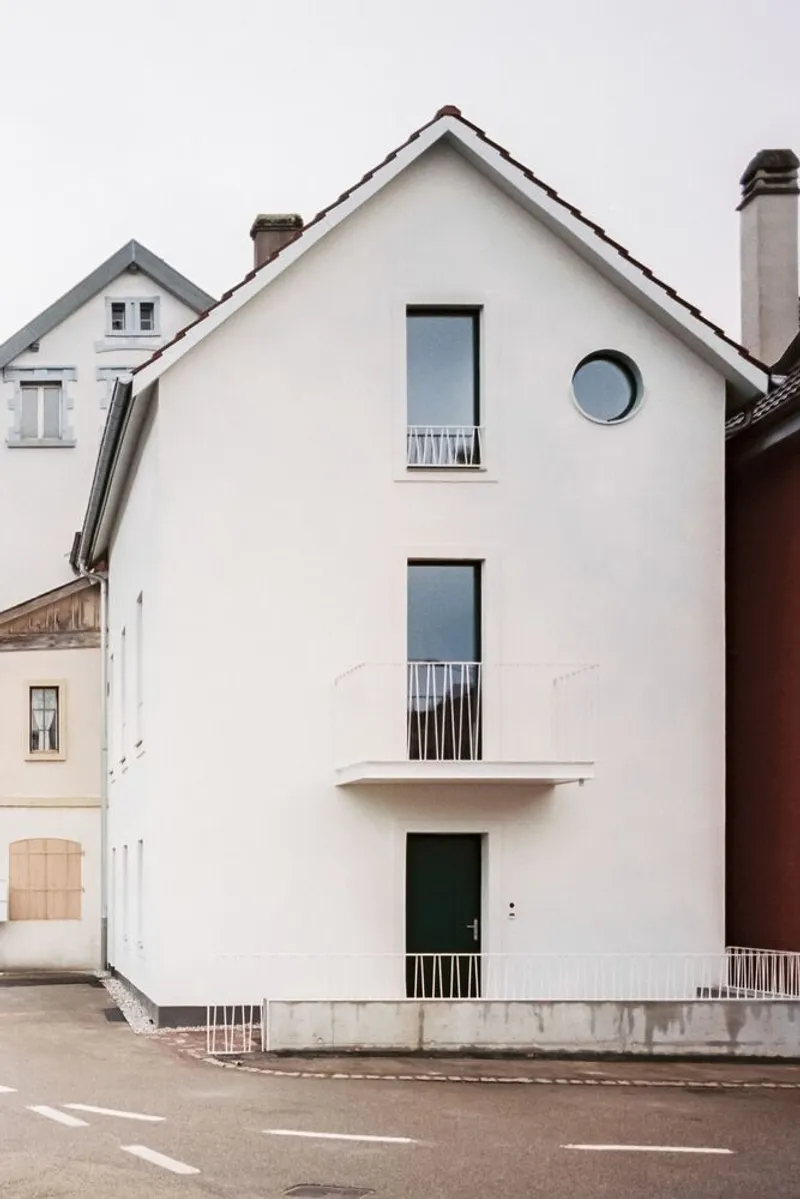
Rather than replacing the house entirely, Van Dorp chose to repurpose and restore the existing structure, giving it a second life while respecting its original function as a family residence. This approach highlights the potential of adaptive reuse in residential architecture, turning a neglected property into a contemporary yet contextually sensitive home.
The renovation sought to introduce character and modernity without clashing with the neighboring conventional homes. Achieving this required a delicate balance between preservation and innovation. The house’s exterior now presents a refined white plaster façade with subtle textures, slender metallic elements, and elongated window openings that enhance verticality while maintaining the original proportions. A small entrance garden, bordered by a 40 cm concrete wall, separates the house from the street, while a metallic balcony canopy leads to a green door, reminiscent of the original shutter color.
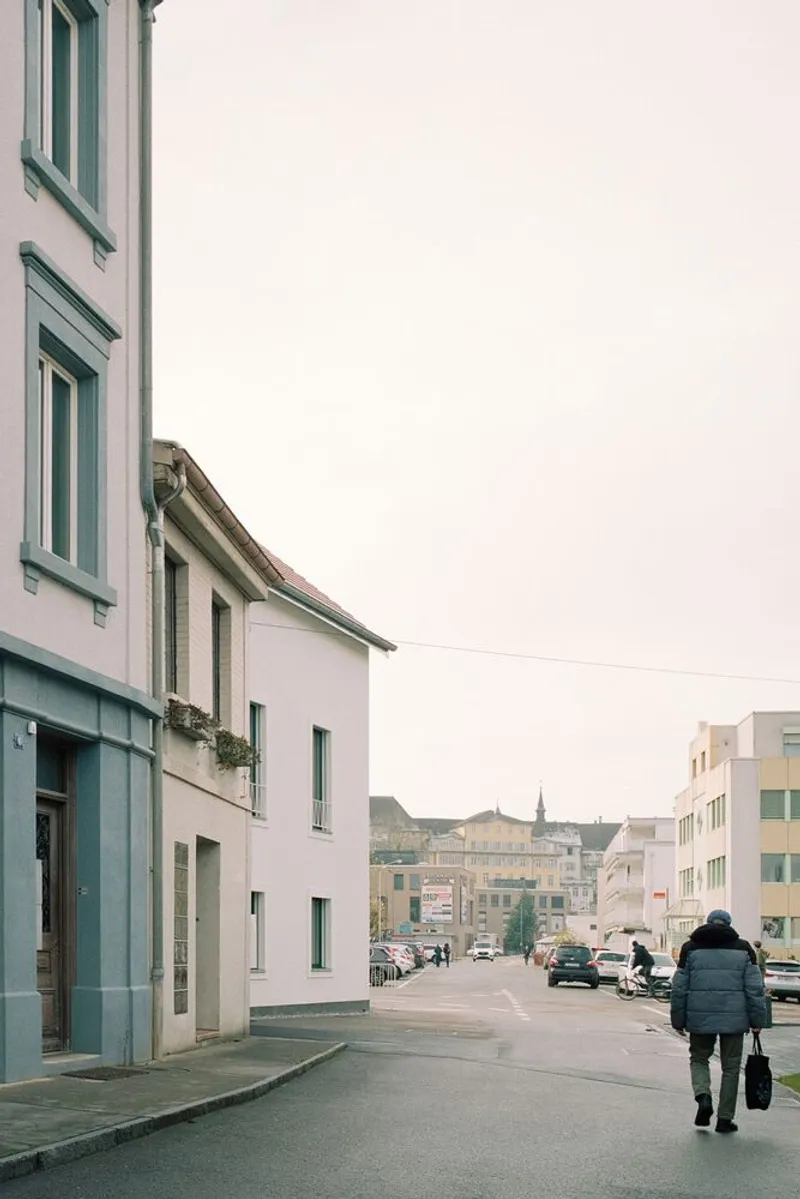
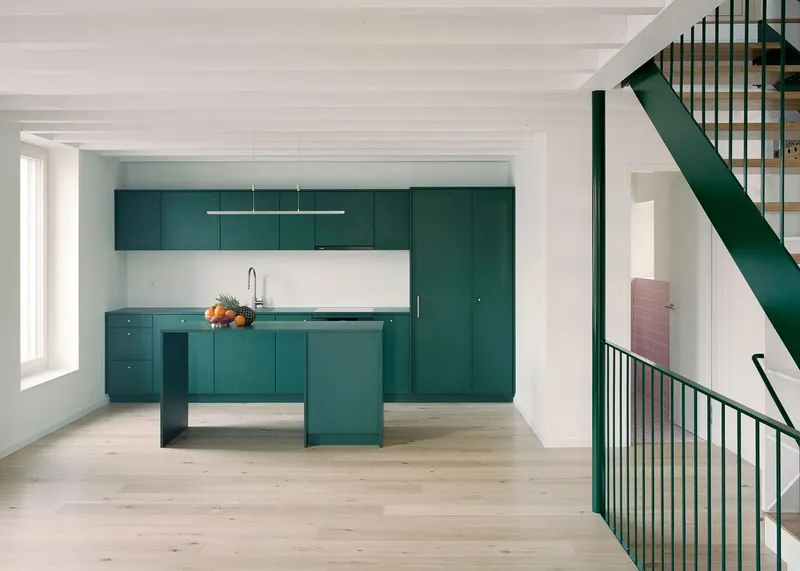
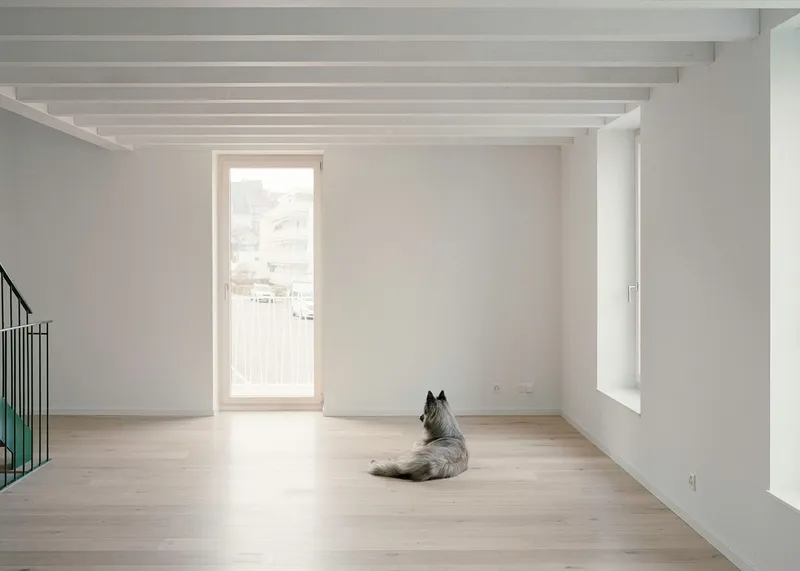
Inside, the project embraces natural materials and craftsmanship. The ground floor, defined by 45 cm thick stone walls, provides a sense of stability and protection. Lower ceilings and muted lighting create intimate spaces that contrast with the openness of the upper floors. The first floor opens into a double-height living area, featuring exposed lasured beams and three generously sized windows, offering abundant natural light and spatial fluidity. The kitchen is subtly integrated along the wall, maintaining a clean, open plan.
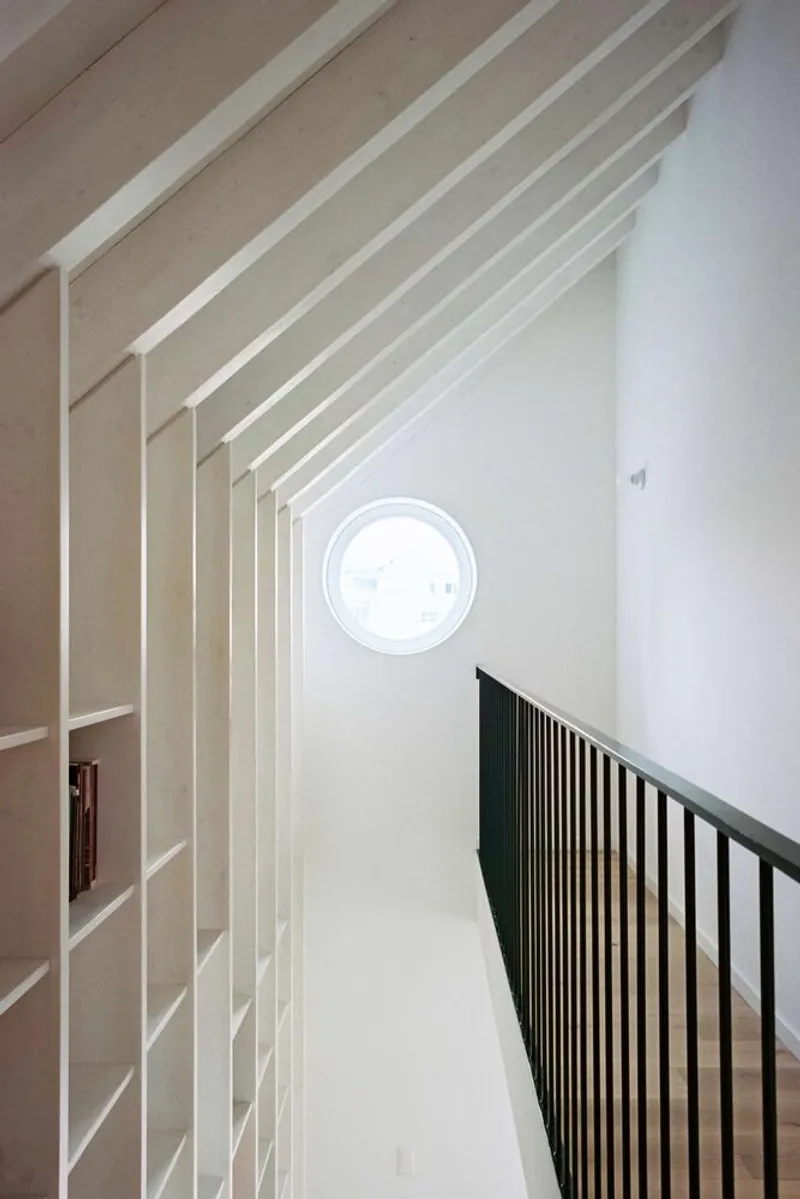
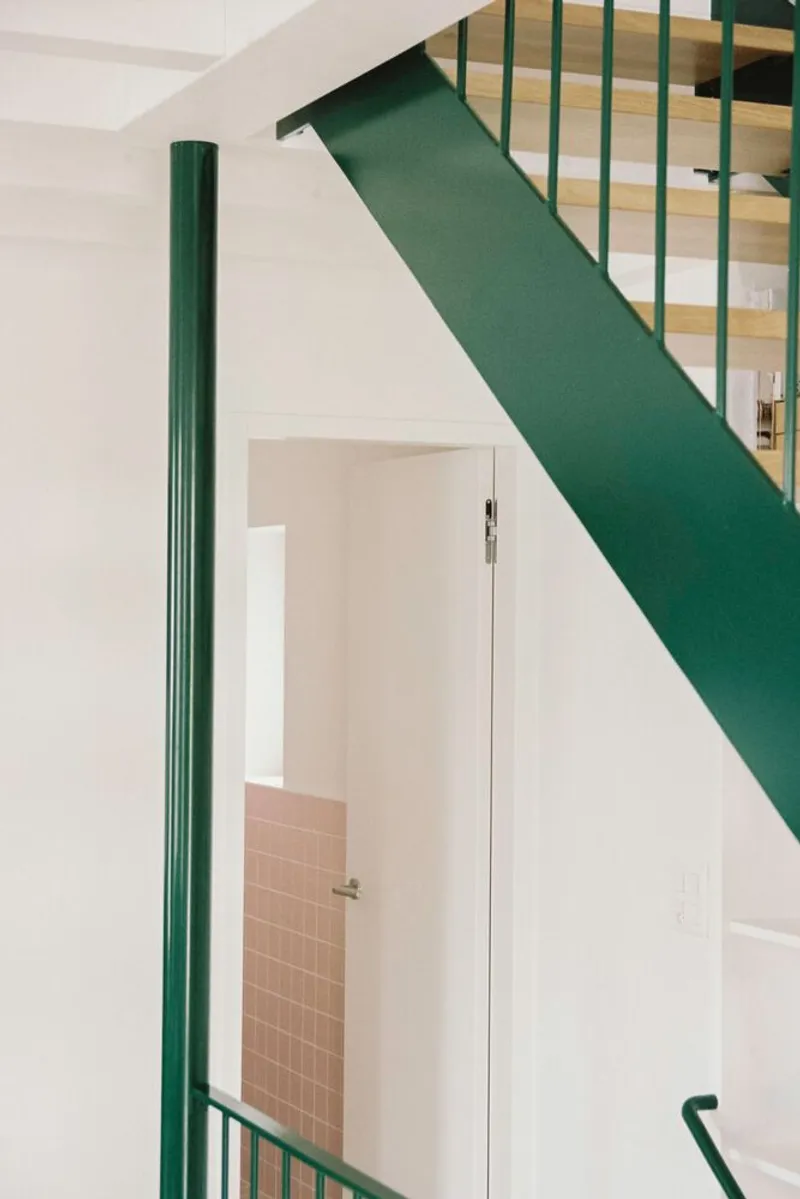
A thin steel staircase leans against a double-height library, emphasizing verticality and connecting the interior with the surrounding landscape through a singular circular window. This design approach creates moments of visual connection with the outside while maximizing the experience of the interior spaces.
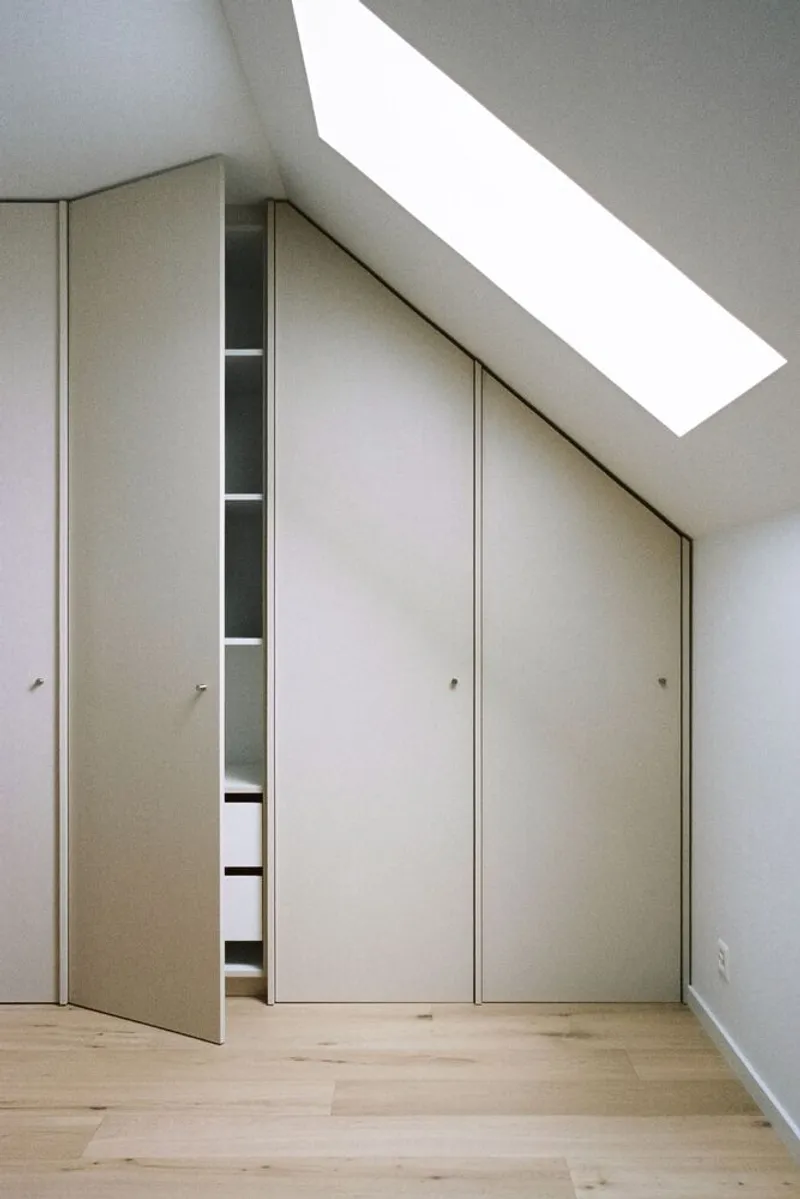
Maison des Vauches demonstrates how constraints in architecture can become opportunities for creativity. By thoughtfully integrating local materials, collaborating with carpenters, and respecting the original building’s proportions, Van Dorp transformed a seemingly ordinary 1960s house into a contemporary architectural statement. The home now balances simplicity, material warmth, and spatial sophistication, offering a model for sensitive residential renovations.
Key Features:
- Location: Porrentruy, Swiss Jura
- Architect: Bertrand Van Dorp
- Year: 2024
- Renovation Type: Residential, Adaptive Reuse
- Materials: Stone, wood, plaster, metal
- Notable Design: Double-height library, open-plan first floor, elongated façade windows
All photographs are works of
Sven Högger



Popular Articles
Popular articles from the community


The Ocean Hive: Sustainable Architecture for a Self-Sufficient Civilization at Sea
The Ocean Hive imagines sustainable architecture at sea, where modular habitats, algae, wave power and ocean waste sustain a growing colony.

Co-Life: Senior Housing Design That Reconnects Older Adults With the City
Co-Life reimagines senior housing design through healing gardens, shared streets, workshops, and a sustainable community across generations.

Co-life: Sustainable Architecture for Age-Friendly Community Living
Co-life reimagines sustainable architecture for seniors through courtyards, rammed earth, shared gardens, and spaces designed for belonging.

Lunar Spiral: Space Architecture Shaped by the Mathematics of the Universe
Lunar Spiral reimagines space architecture through Fibonacci geometry, lunar regolith, levitating habitats, and self-sustaining Moon living.
Similar Reads
You might also enjoy these articles


Hodi-Mandai Geram
Project Function: Preservation and revitalization of the Intangible heritage and socio-spatial identity of the Hodi by Housing, Cultural Memory Center, Sacred Grove, landscape, local tourism economy


Olio Towers: A Mid-Rise for Performers That Fuses Housing, Rehearsal, and Stage
Located blocks from Houston's Theater District, this modular tower stacks living units around a central performance atrium.

Oasis: Modular Green Housing Carved into Dhaka's Urban Fabric
A shortlisted Plugin Housing entry reclaims unauthorized settlements in Dhaka with stepped concrete volumes, green roofs, and ventilation-driven design.

Black Hole: A Floating Megastructure for the Post-Physical Era
Emiliano Mazzarotto envisions a spherical, self-scaling arena where e-sports, digital hotels, and holographic stadiums replace traditional public space.

Explore Residential Building Competitions
Discover active competitions in this discipline


Challenge to design mud housing for contemporary communities


Challenge to reimagine the Iron Throne


Photograph architecture without architects


Illustrate the lost glory of Angkor Wat - Render Challenge
Comments (0)
Please login or sign up to add comments
No comments yet. Be the first to comment!