

Maison SurLeMur by ARBA: A House That Blends Heritage and Modernity
A contemporary French house by ARBA blending heritage and modernity, featuring red zinc roofing, wooden slats, and sustainable urban design.


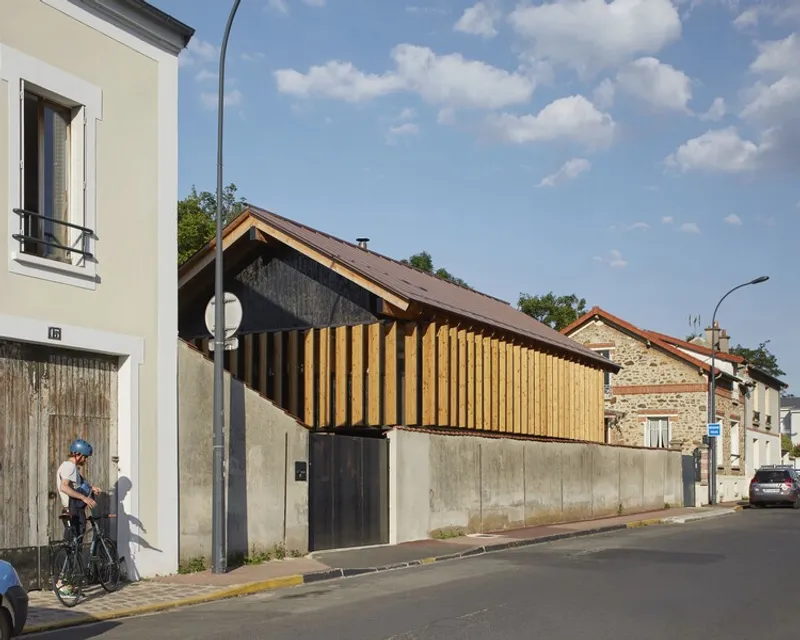
Nestled in the quiet suburb of Fontenay-sous-Bois, France, Maison SurLeMur by ARBA is an architectural reflection on continuity, memory, and light. Completed in 2022, this 132-square-meter family residence transforms a constrained urban plot into a poetic dialogue between past and present. The project’s name—literally “House on the Wall”—captures its defining feature: the preservation and reinterpretation of the original boundary wall that shapes the entire design concept.
Architectural Concept and Context
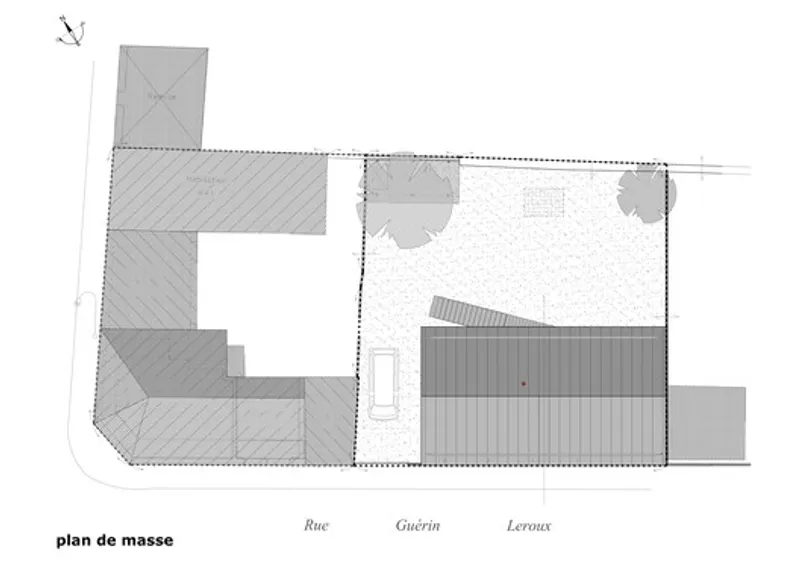
Set along a narrow street, the dwelling aligns itself directly with the existing stone wall at the edge of the property. Rather than demolishing this historic barrier, the architects at ARBA decided to integrate it as a central architectural element. The wall serves as a masonry base from the street view, grounding the architecture in its local context and echoing the textures of traditional French suburban landscapes.
By building along this linear boundary, ARBA maximized the site's potential while maintaining a sense of privacy and intimacy. This gesture establishes a visual continuity with the neighborhood’s vernacular structures and allows for a fluid transition between private and public realms.
Material Expression and Facade Composition
The house is crowned by a 30-degree double-sloped roof clad in red pigmented zinc, whose warm tones reflect the hues of surrounding clay tiles and brick structures. This roof form anchors the project in its suburban setting while introducing a crisp, contemporary profile.
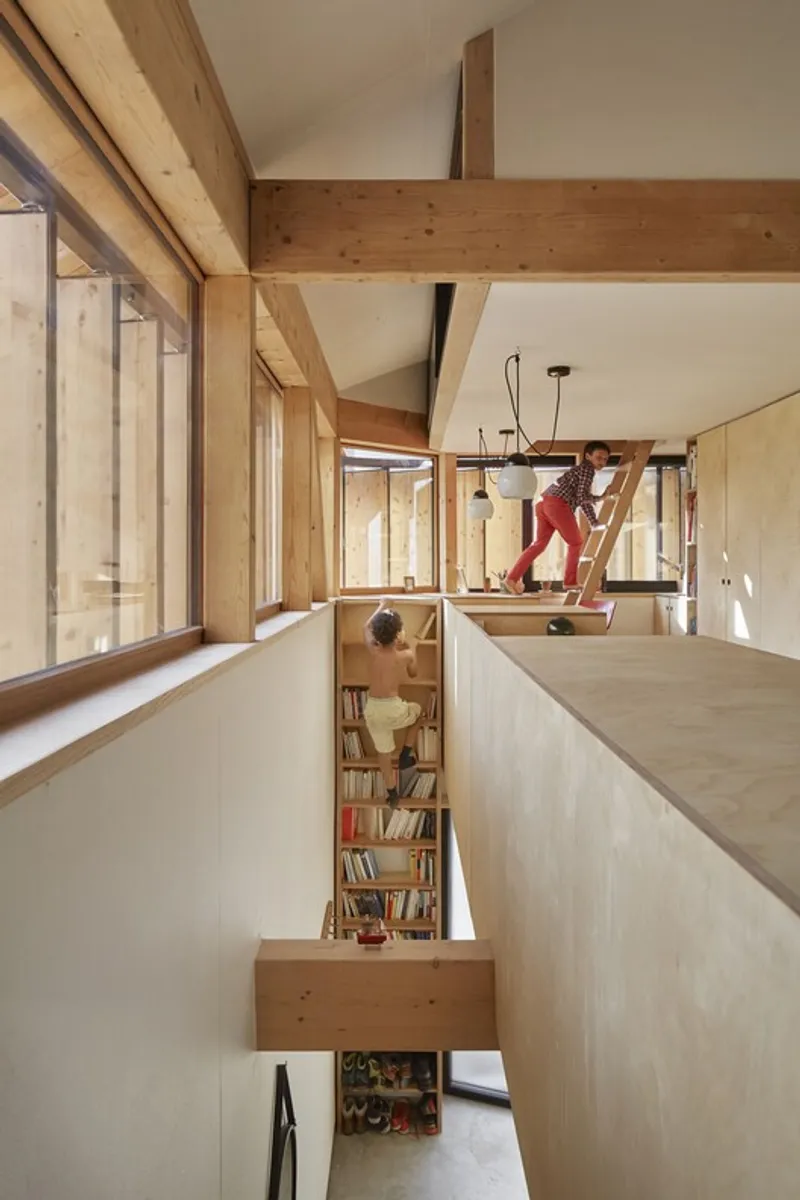
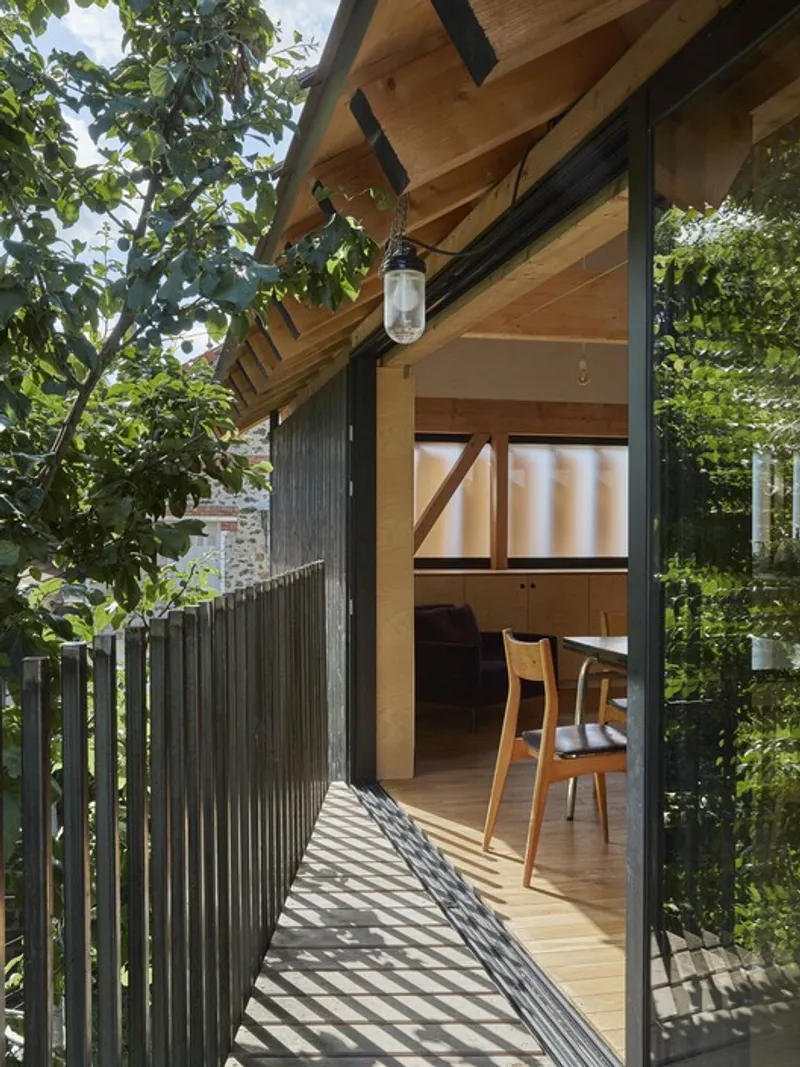
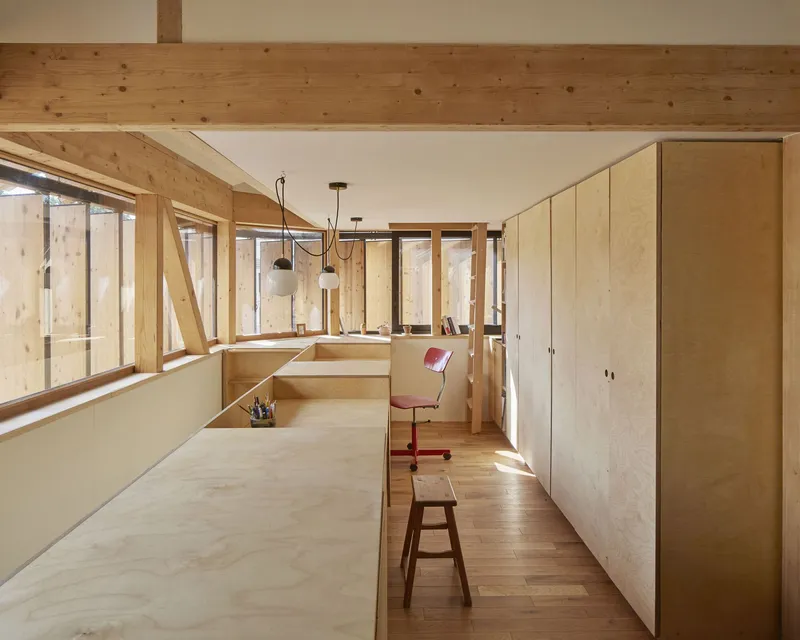
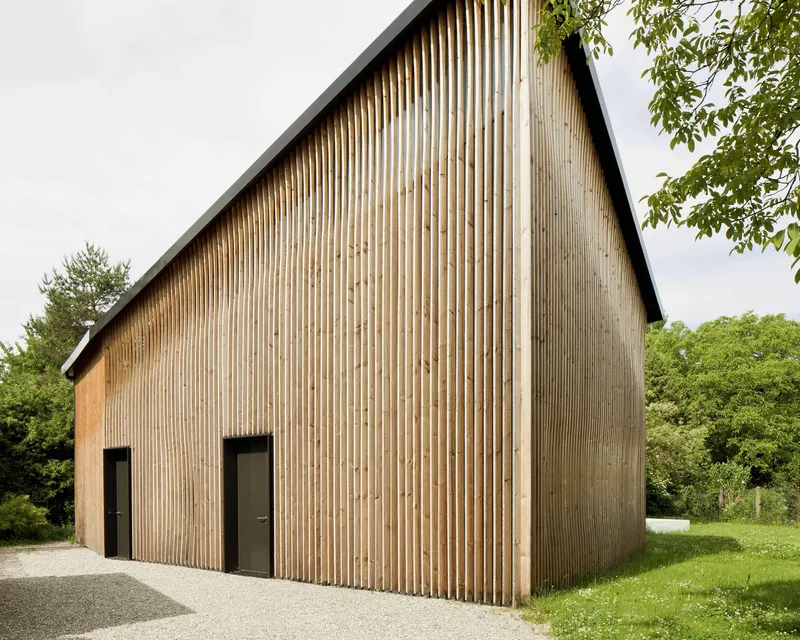
Between the roof’s two slopes, vertical larch wood slats act as both a sun filter and a visual screen. Their rhythm and orientation—rotating subtly from west to east—create a kinetic facade that changes appearance throughout the day as sunlight grazes the surface. The slats allow natural light to penetrate the interiors while maintaining privacy from adjacent plots, meeting urban regulations without compromising openness or comfort.
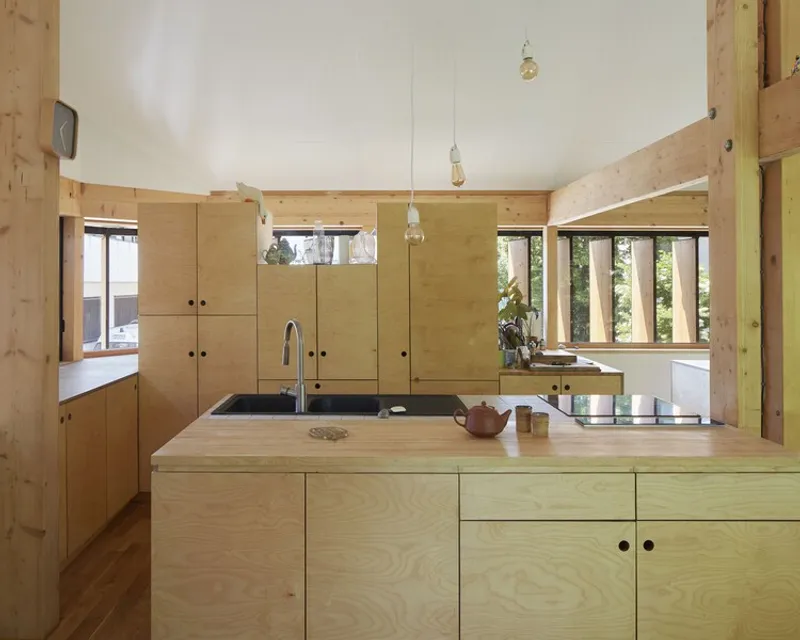
Behind this tactile wooden veil, black pine resin-coated cladding provides a dark, textured background, highlighting the warmth and craftsmanship of the natural wood elements. The interplay of blackened surfaces and raw timber creates a strong architectural identity—one that feels rooted, crafted, and timeless.
Spatial Design and Interior Atmosphere
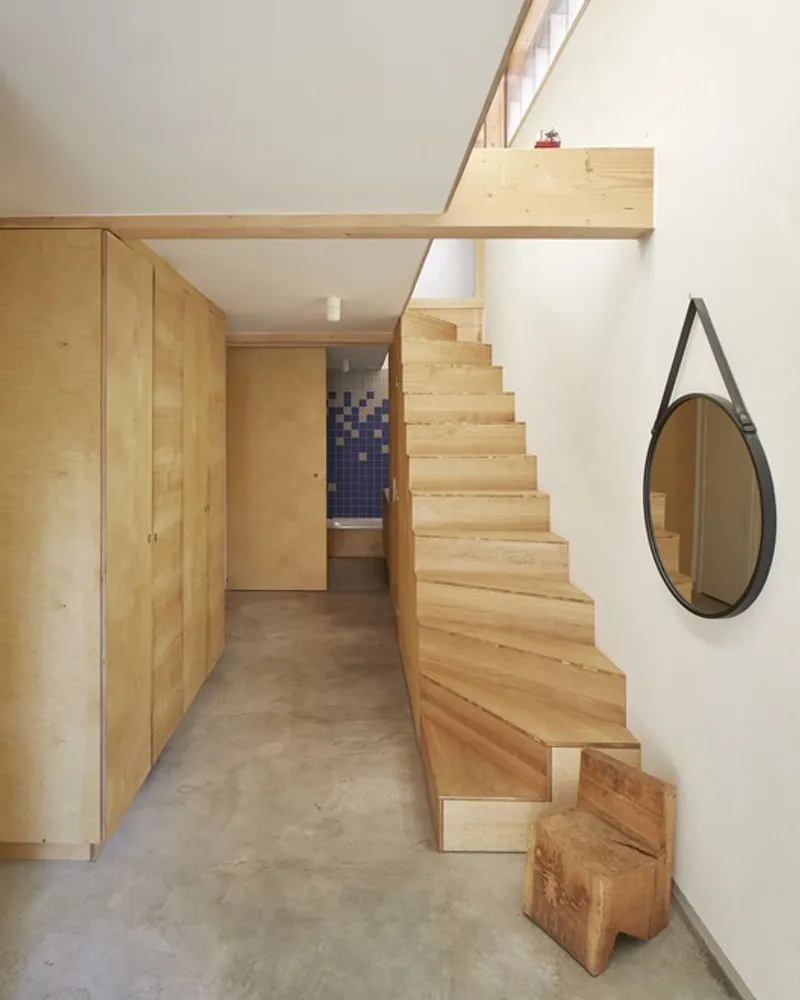
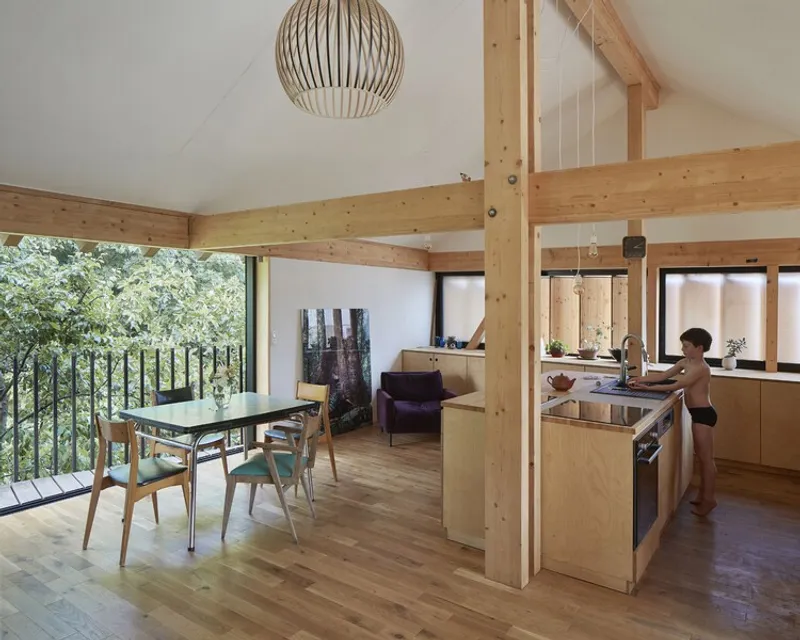
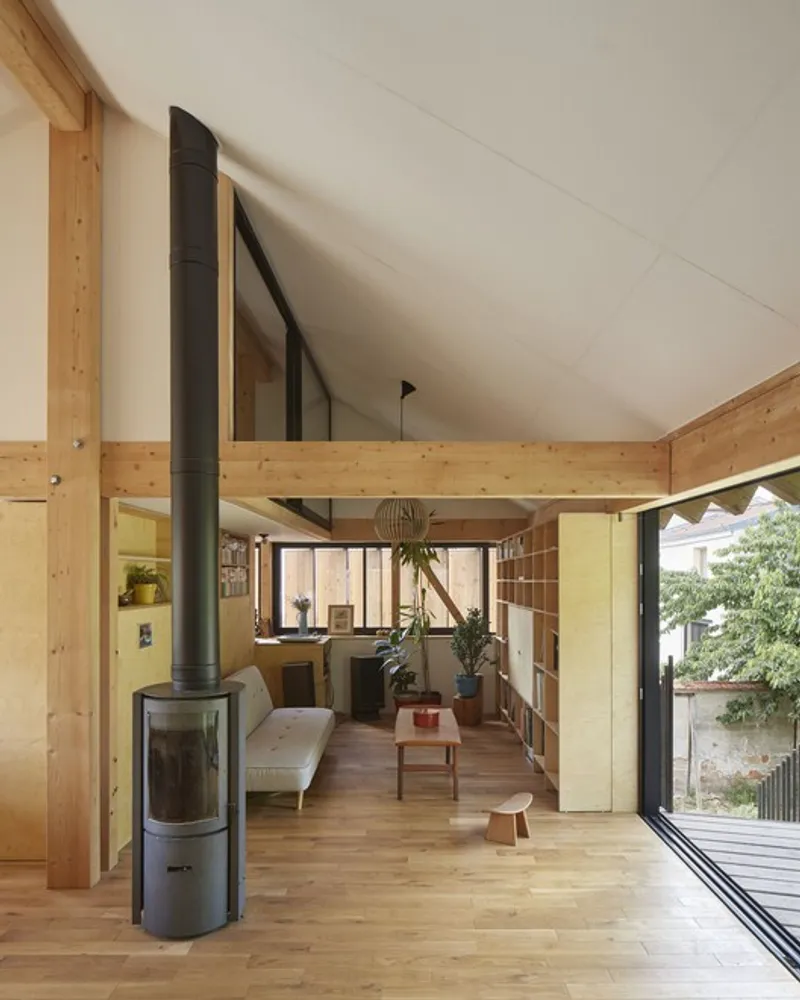
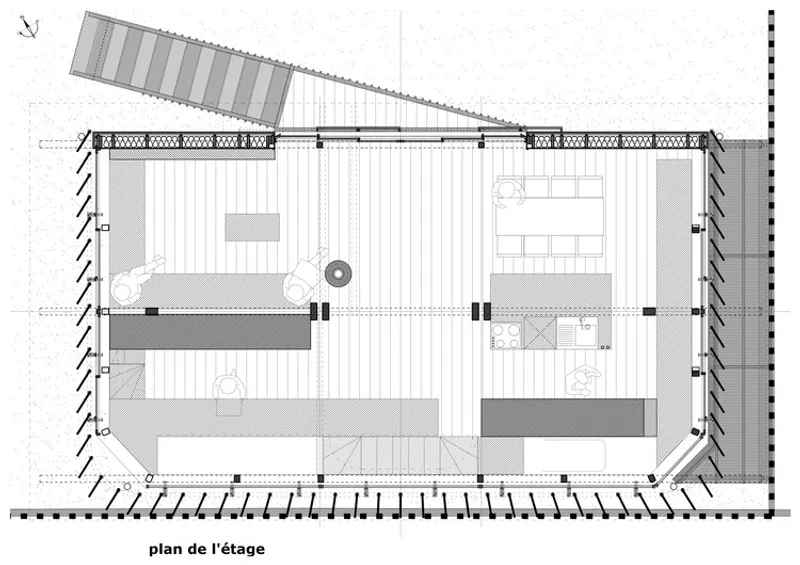
Inside, ARBA conceived Maison SurLeMur as a sequence of spaces that shift from grounded to elevated, from enclosed to open. The upper floor, where common living spaces are located, acts as a bright observatory overlooking the Vergers de l’Îlot, an orchard-like garden landscape to the northeast. This elevated area becomes a stage set against the luminous belt of wood and zinc, capturing filtered views toward the public domain.
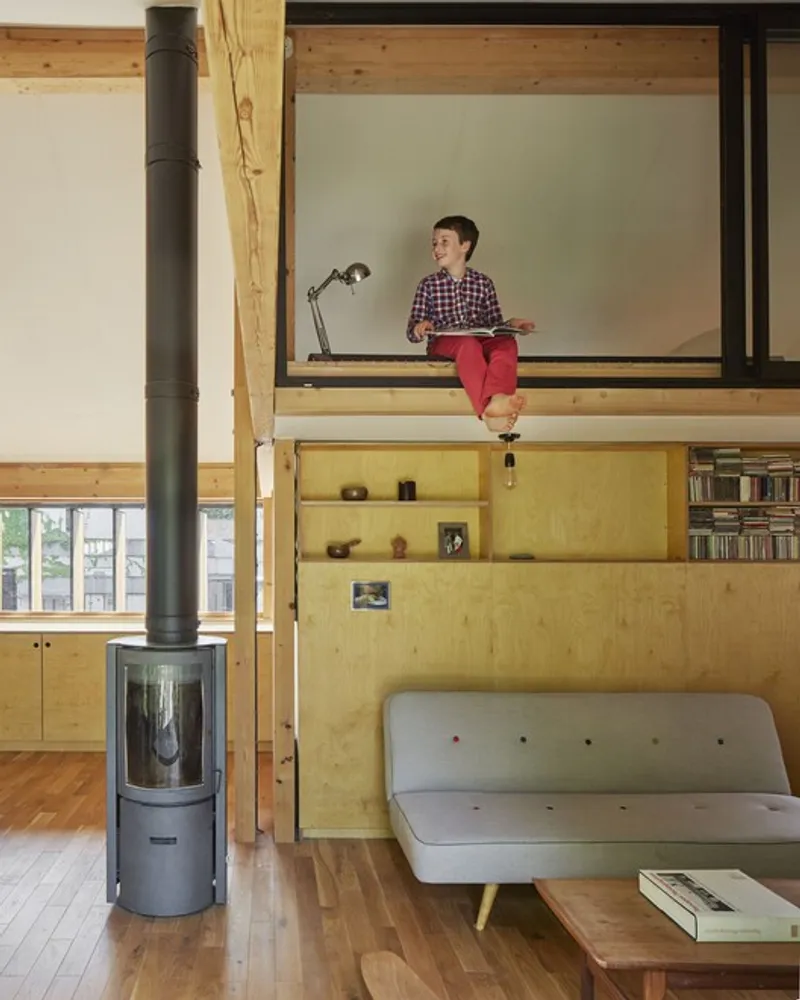
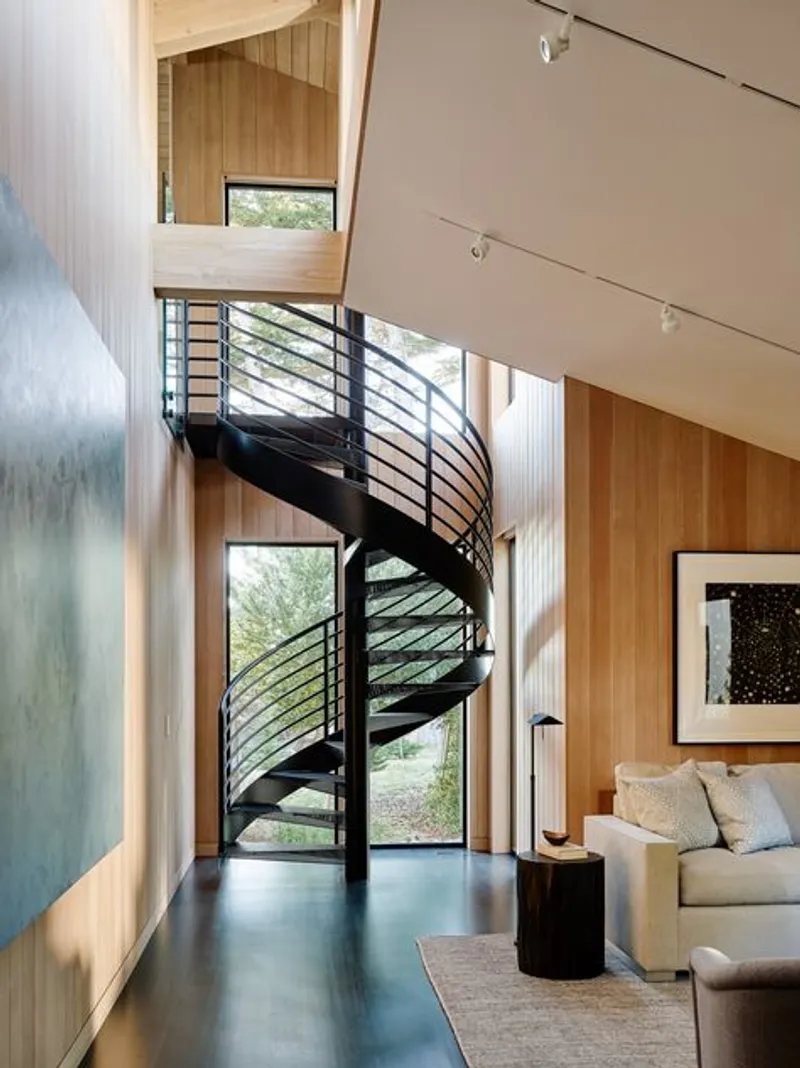
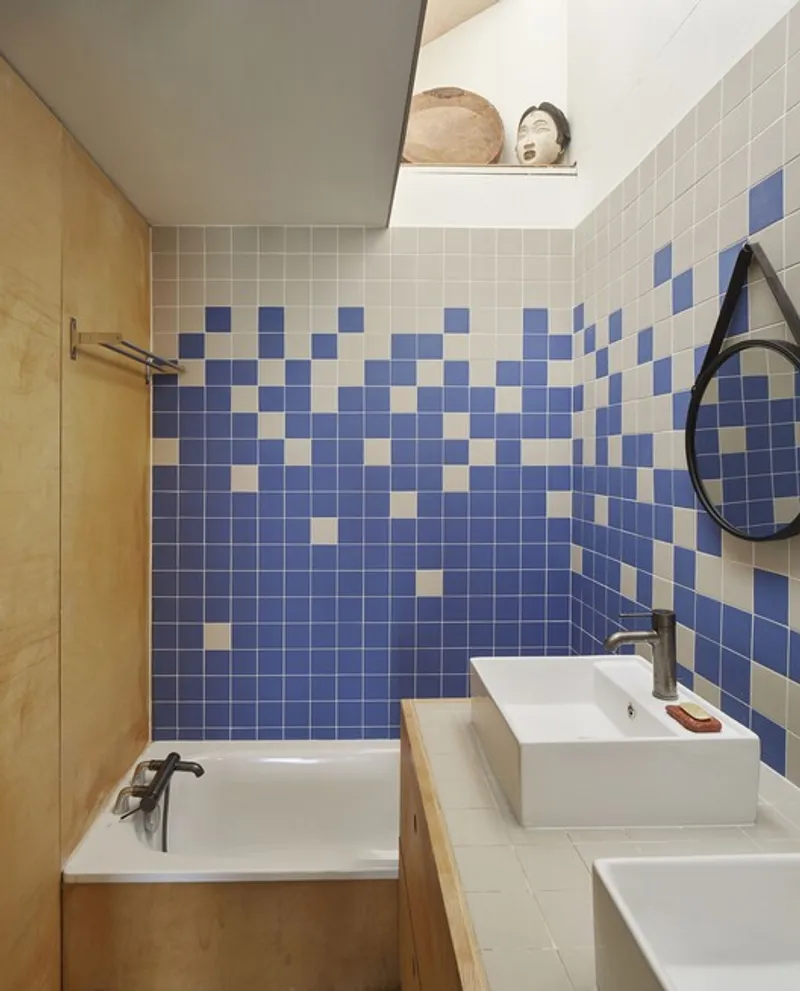
This configuration transforms the everyday experience of domestic life into an act of observation—of light, nature, and urban movement. The interiors balance minimalism with warmth, prioritizing natural light, long sightlines, and material authenticity.
Sustainability and Urban Integration
Beyond aesthetics, Maison SurLeMur embodies a mindful approach to urban sustainability. By reusing the existing masonry wall, the design minimizes waste while preserving the tangible memory of place. The use of locally available wood, durable zinc roofing, and natural resins further reinforces the project’s environmental responsibility.
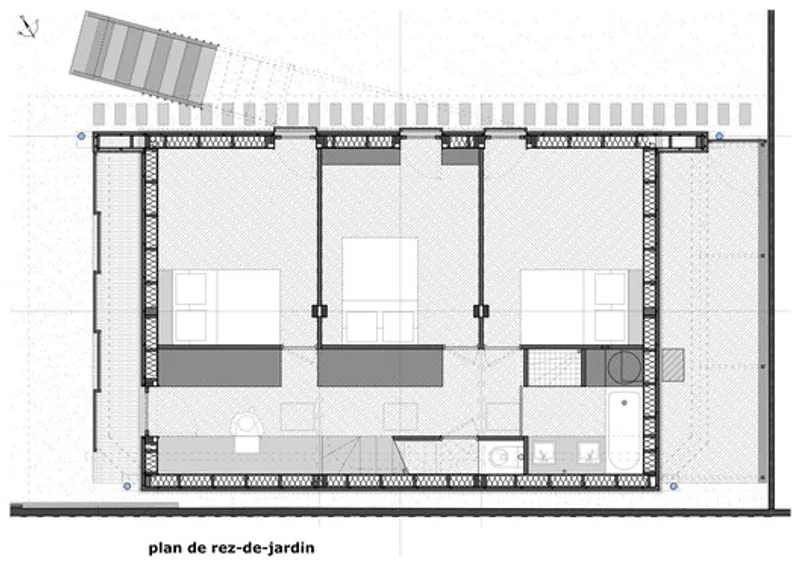
The home’s compact footprint and careful orientation also optimize energy performance. Cross-ventilation, solar shading from the wooden battens, and natural insulation all contribute to reduced energy consumption and a comfortable indoor climate year-round.
A Contemporary Poetic Statement
Maison SurLeMur stands as a thoughtful example of contextual architecture—a home that respects its surroundings while asserting a clear, modern identity. ARBA’s architectural language blends restraint with expressiveness, transforming everyday materials into a rhythmic composition of light, texture, and shadow.
From the street, the preserved wall and red zinc roof root the home in local history. From within, the interplay of raw materials, filtered daylight, and spatial transitions evokes calm introspection. The result is more than a house; it is an architectural narrative about permanence, adaptation, and the quiet beauty of place.
All the photographs are works of Jérémie Léon


Popular Articles
Popular articles from the community


Architekt Andreas Gruber Scatters 23 Dark Timber Chalets Across a South Tyrolean Forest Edge
In Molini di Tures, Amonti Chalets breaks a resort into a hamlet of gabled timber houses, with parking, storage and services pushed into the slope.

Cube Design Draws an Ecological Corridor Between Two Shenzhen Hills with the Nankai Building
Beside Shenzhen's container docks, the Nankai Building pairs stacked balconies with a climbing green screen to connect two hillsides across its height.

GROUP A Strips a 1969 Rotterdam Harbor Headquarters to Its Frame and Wraps It in Timber Louvers
In Rotterdam's M4H harbor district, Ferro Offices reuses a 1969 frame, adds one timber storey and reaches BREEAM-NL Outstanding.

Jaramillo Van Sluys Arquitectura and Urbanismo Turn a Demolished Registry Lot in Quito into an Orchard Plaza
In Quito's Centro Histórico, a 2,800 m² plaza exposes the San Agustín convent wall and redraws its lost Augustinian orchard in volcanic stone.

Similar Reads
You might also enjoy these articles


Hodi-Mandai Geram
Project Function: Preservation and revitalization of the Intangible heritage and socio-spatial identity of the Hodi by Housing, Cultural Memory Center, Sacred Grove, landscape, local tourism economy


Olio Towers: A Mid-Rise for Performers That Fuses Housing, Rehearsal, and Stage
Located blocks from Houston's Theater District, this modular tower stacks living units around a central performance atrium.

Oasis: Modular Green Housing Carved into Dhaka's Urban Fabric
A shortlisted Plugin Housing entry reclaims unauthorized settlements in Dhaka with stepped concrete volumes, green roofs, and ventilation-driven design.

Black Hole: A Floating Megastructure for the Post-Physical Era
Emiliano Mazzarotto envisions a spherical, self-scaling arena where e-sports, digital hotels, and holographic stadiums replace traditional public space.

Explore Architecture Competitions
Discover active competitions in this discipline

Challenge to reimagine the Iron Throne

Photograph architecture without architects

Illustrate the lost glory of Angkor Wat - Render Challenge

Design challenge to reuse E-waste
Comments (0)
Please login or sign up to add comments
No comments yet. Be the first to comment!