
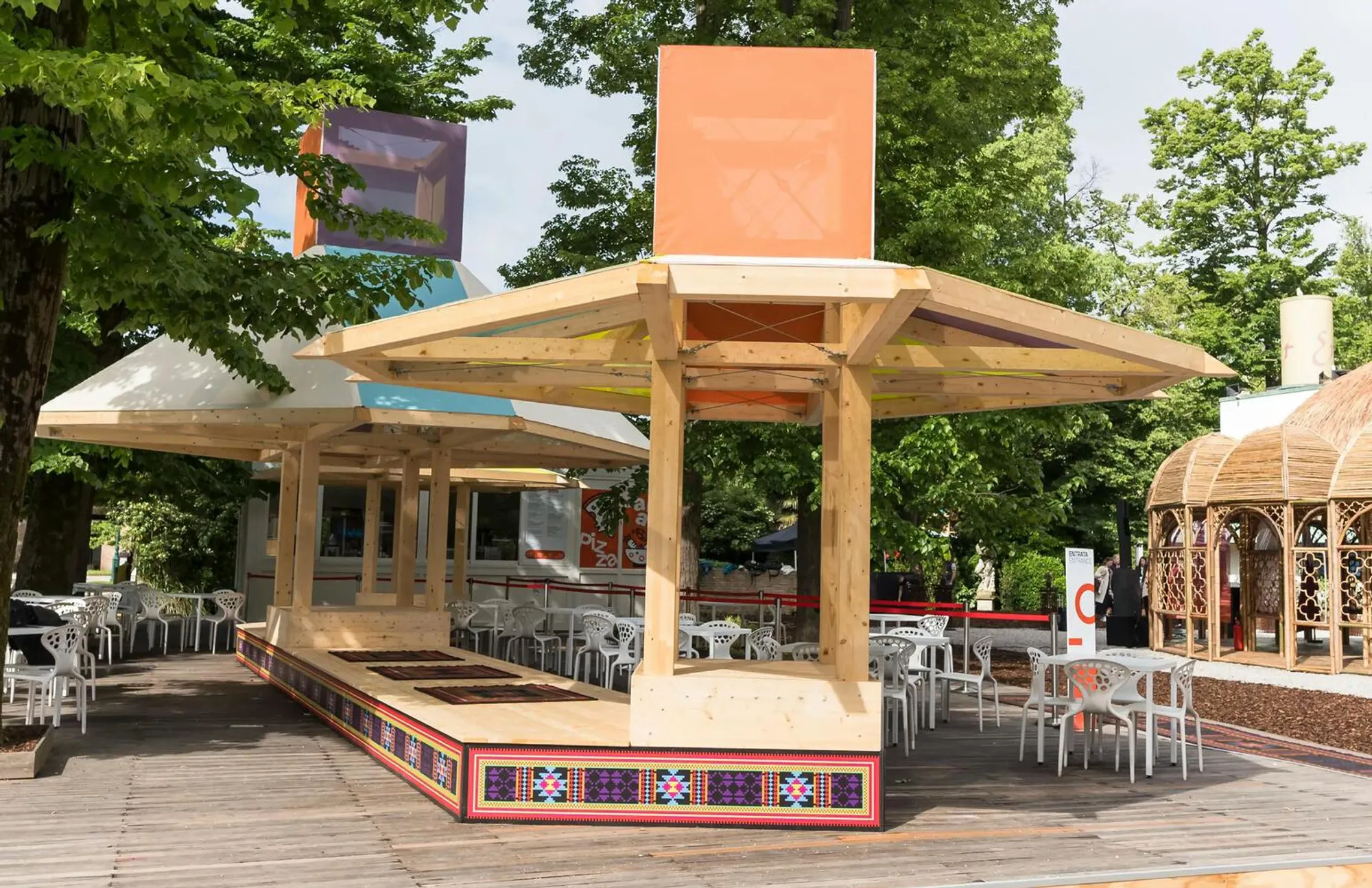
Majlis & The Manama (Wind Catchers) Pavilion: Reinterpreting Gulf Vernacular Architecture at Venice Architecture Biennale 2025
A climate-responsive Gulf pavilion in Venice blending Majlis hospitality and wind-catcher cooling, celebrating cultural memory, communal gathering, and sustainable vernacular architecture.


A Living Celebration of Gulf Identity, Climate Intelligence, and Communal Ritual
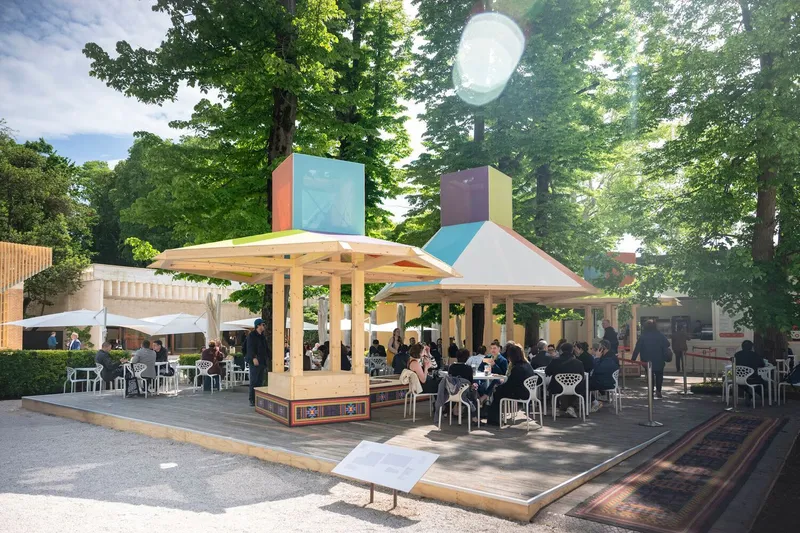
The Majlis & The Manama (Wind Catchers) Pavilion by architects Ahmed and Rashid Bin Shabib transforms traditional Gulf architecture into a contemporary, climate-responsive installation at the 19th Venice Architecture Biennale 2025. This innovative pavilion bridges memory, culture, and environmental performance, drawing from historic forms like the Majlis, Manama, and Barjeel wind catchers to create a space that welcomes conversation, cools naturally, and embodies community values.
Supported by Expo City Dubai, the project positions vernacular Gulf architecture not as nostalgia, but as a future-driven sustainability model, reimagined for modern cities and global audiences.
Reviving Vernacular Wisdom: Architecture as Climate Framework and Cultural Memory
Passive Cooling Rooted in Tradition
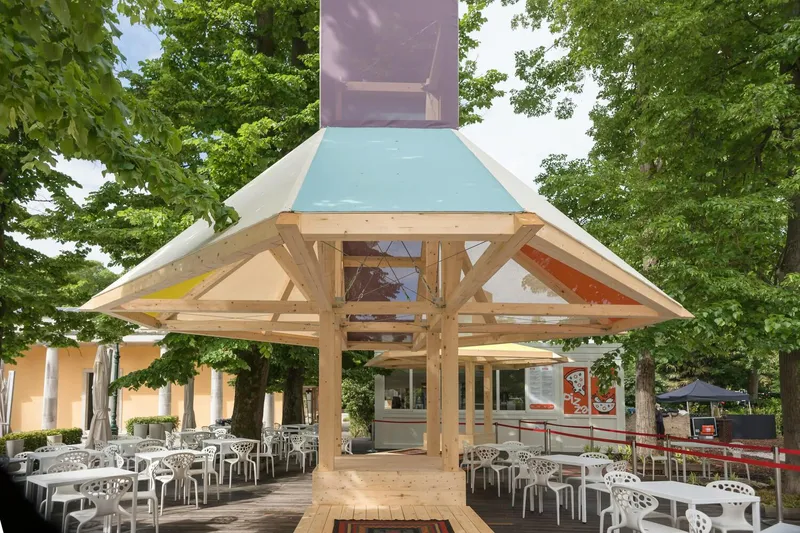
In Gulf culture, the Manama — a lightweight palm-frond shelter — provided natural ventilation and shade during the region’s intense summers. Paired with the iconic Barjeel wind tower system, the architecture of the region acted as a high-performance climate machine, cooling through:
- Elevated, porous construction
- Passive wind-catching systems
- Soaked fabric panels and sails
- Shaded communal seating spaces
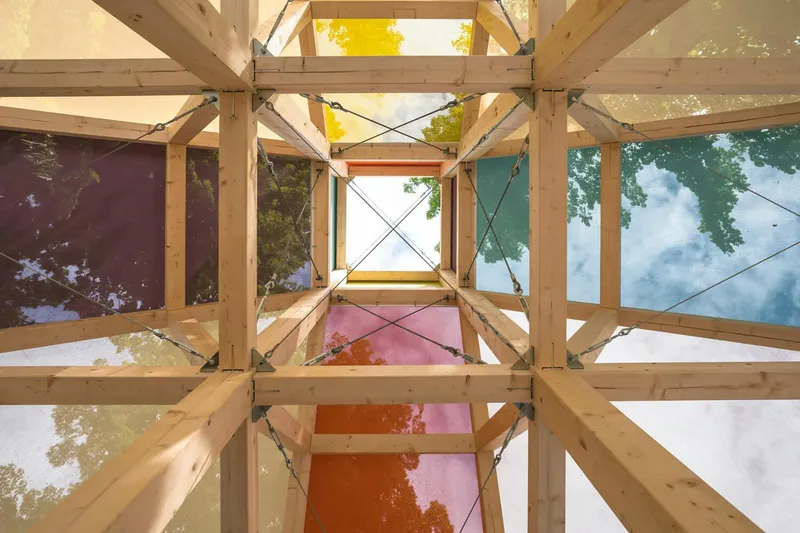
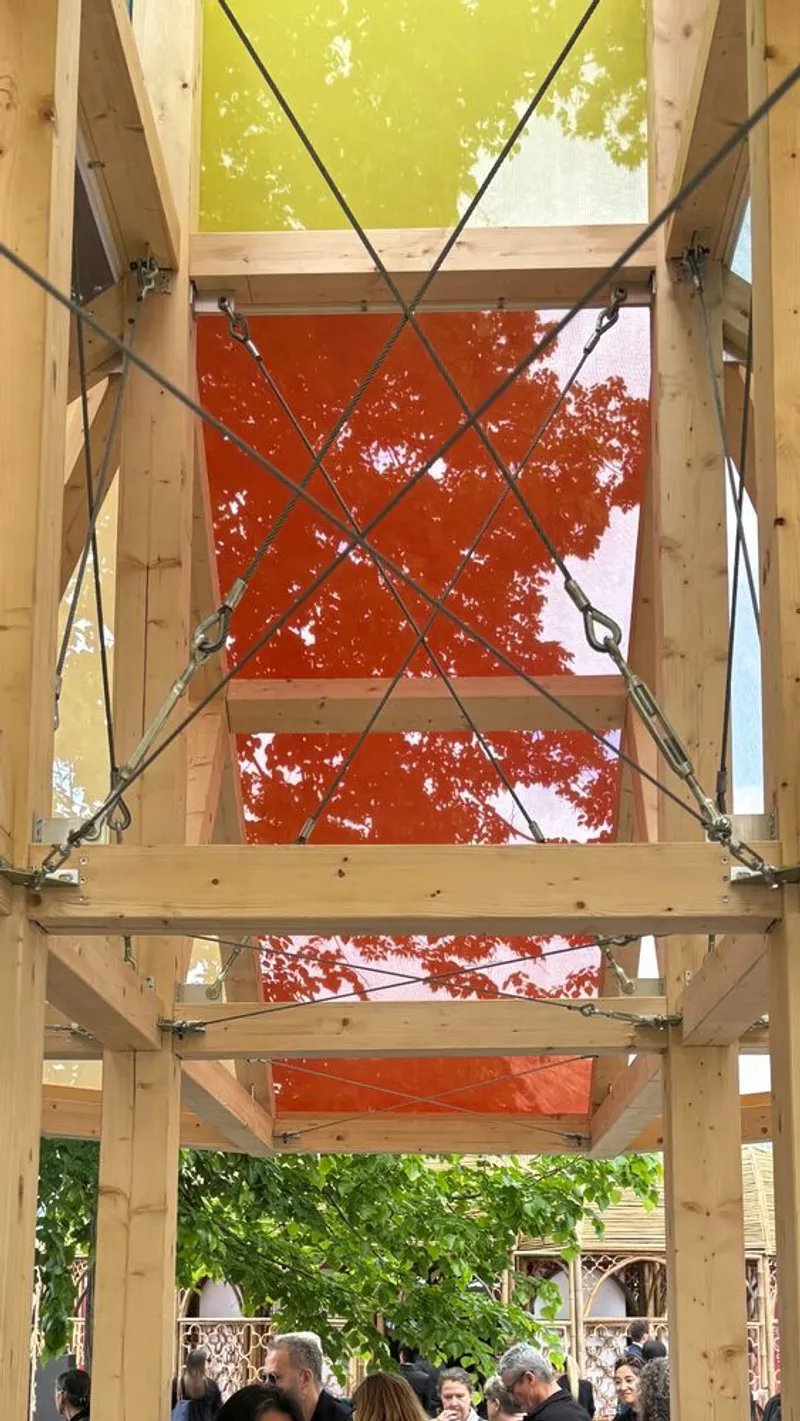
The pavilion abstracts these strategies into a light structural framework wrapped in breathable textiles, creating a tactile atmosphere where air, light, and sound move freely. This is environmental intelligence expressed as architecture.
Majlis as Social Infrastructure: A Place to Sit, Converse, and Belong
Architecture of Hospitality and Kinship
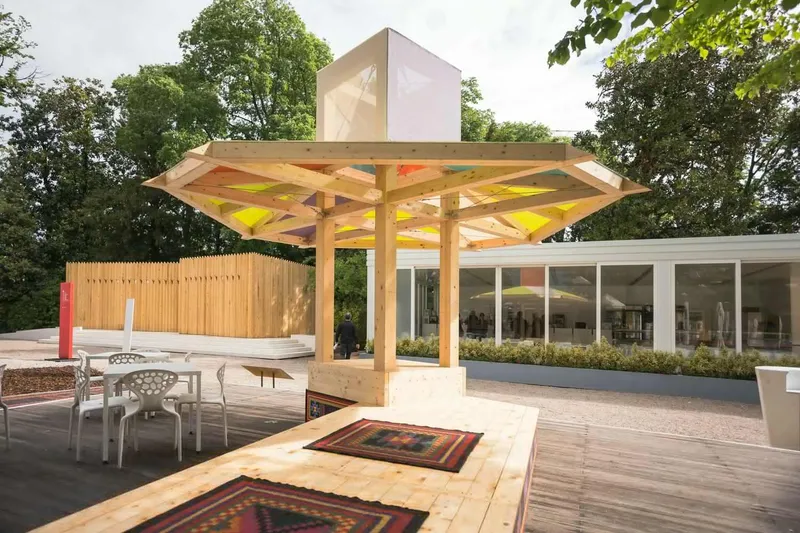
At the heart of the pavilion is the Majlis, historically a social anchor in Gulf homes — a place to welcome guests, share stories, exchange ideas, and celebrate life rituals.
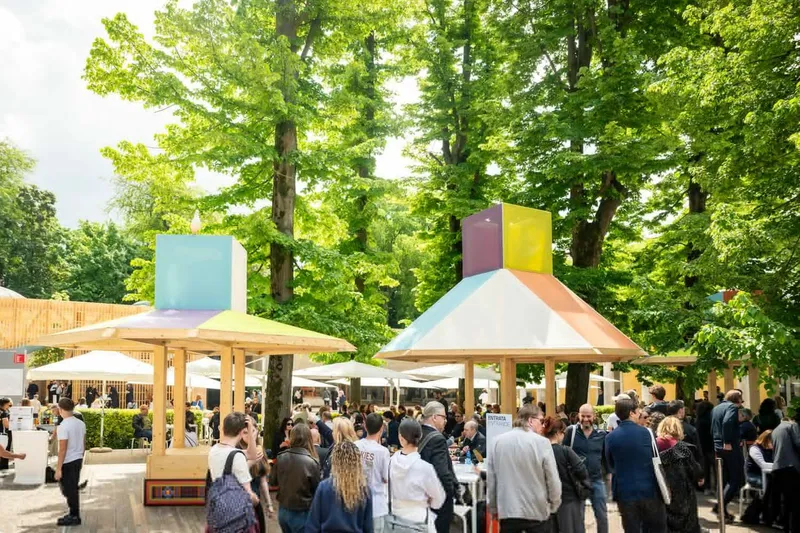
In Venice, the Majlis becomes both public living room and cultural interface, calling visitors to pause, speak, reflect, and reconnect.
The designers reference personal memory — family gatherings, historic photographs, and stories from Dubai’s Shindigha district — reinforcing that vernacular architecture exists not as artifacts but as active carriers of identity and collective memory.
Shade, in Gulf culture, is not only shelter — it is generosity. Here, that generosity is extended to Venice.
A Scaffold for the Future: Merging Emotional and Environmental Intelligence
Adaptive Design for Contemporary Cities
The pavilion acts as a living scaffold, demonstrating how traditional building logics can inform future sustainable design. It celebrates:
- Climatic responsiveness
- Ephemeral materiality
- Cultural continuity
- Social gathering and ritual
Through a fusion of light materials, open structure, fabric filtering, and raised platforms, it proposes a new architectural language where past knowledge guides the future.
This is not preservation — it is evolution.
Venice as a Stage for Gulf Architectural Dialogue
Set within Venice’s global architectural conversation, the pavilion showcases Gulf architecture’s deep ecological awareness — a reminder that sustainable design existed long before modern technology. It frames architecture not only as shelter, but as:
- A climate instrument
- A social space
- A vessel of memory
- A cultural offering
The installation continues the architects’ research into regional environments following the acclaimed publication Anatomy of Sabkhas, part of the UAE Pavilion — Golden Lion winner, Venice 2021.
A Contemporary Ritual of Exchange and Climate Harmony
The Majlis & The Manama Pavilion is a poetic encounter between heritage and innovation. It offers Venice a deeply human architectural experience — a place to meet, breathe, and belong — while presenting the Gulf’s vernacular design as a blueprint for future-ready, climate-responsive cities.
It is not only a pavilion; it is a cultural gesture, a climate lesson, and a living archive of generosity and hospitality.
Discover the Majlis & The Manama (Wind Catchers) Pavilion at the Venice Architecture Biennale 2025. Designed by Ahmed and Rashid Bin Shabib, this contemporary installation reinterprets Gulf vernacular architecture through passive cooling, social ritual, and cultural memory.




Popular Articles
Popular articles from the community


The Earth Pod: 3D Printed Homes for Resilient Refugee Communities
The Earth Pod reimagines refugee housing through 3D printed homes made from clay, combining resilience, self-sufficiency, and rapid shelter.

Hill & Cross Opera: Sculptural Opera House Architecture Shaped by Tallinn’s Landscape and Identity
Hill & Cross Opera reimagines opera house architecture in Tallinn through its sculptural hill, civic plaza, glass wave and a luminous cross.

The Ocean Hive: Sustainable Architecture for a Self-Sufficient Civilization at Sea
The Ocean Hive imagines sustainable architecture at sea, where modular habitats, algae, wave power and ocean waste sustain a growing colony.

Play: Fragments of Their World
Familiar architecture becomes modular playground design, creating safe spaces where displaced children can learn, connect, imagine and play.

Similar Reads
You might also enjoy these articles


Hodi-Mandai Geram
Project Function: Preservation and revitalization of the Intangible heritage and socio-spatial identity of the Hodi by Housing, Cultural Memory Center, Sacred Grove, landscape, local tourism economy


Olio Towers: A Mid-Rise for Performers That Fuses Housing, Rehearsal, and Stage
Located blocks from Houston's Theater District, this modular tower stacks living units around a central performance atrium.

Oasis: Modular Green Housing Carved into Dhaka's Urban Fabric
A shortlisted Plugin Housing entry reclaims unauthorized settlements in Dhaka with stepped concrete volumes, green roofs, and ventilation-driven design.

Black Hole: A Floating Megastructure for the Post-Physical Era
Emiliano Mazzarotto envisions a spherical, self-scaling arena where e-sports, digital hotels, and holographic stadiums replace traditional public space.

Explore Cultural Architecture Competitions
Discover active competitions in this discipline



Challenge to reimagine the Iron Throne


Photograph architecture without architects


Illustrate the lost glory of Angkor Wat - Render Challenge


Bring back Drive In's
Comments (0)
Please login or sign up to add comments
No comments yet. Be the first to comment!