
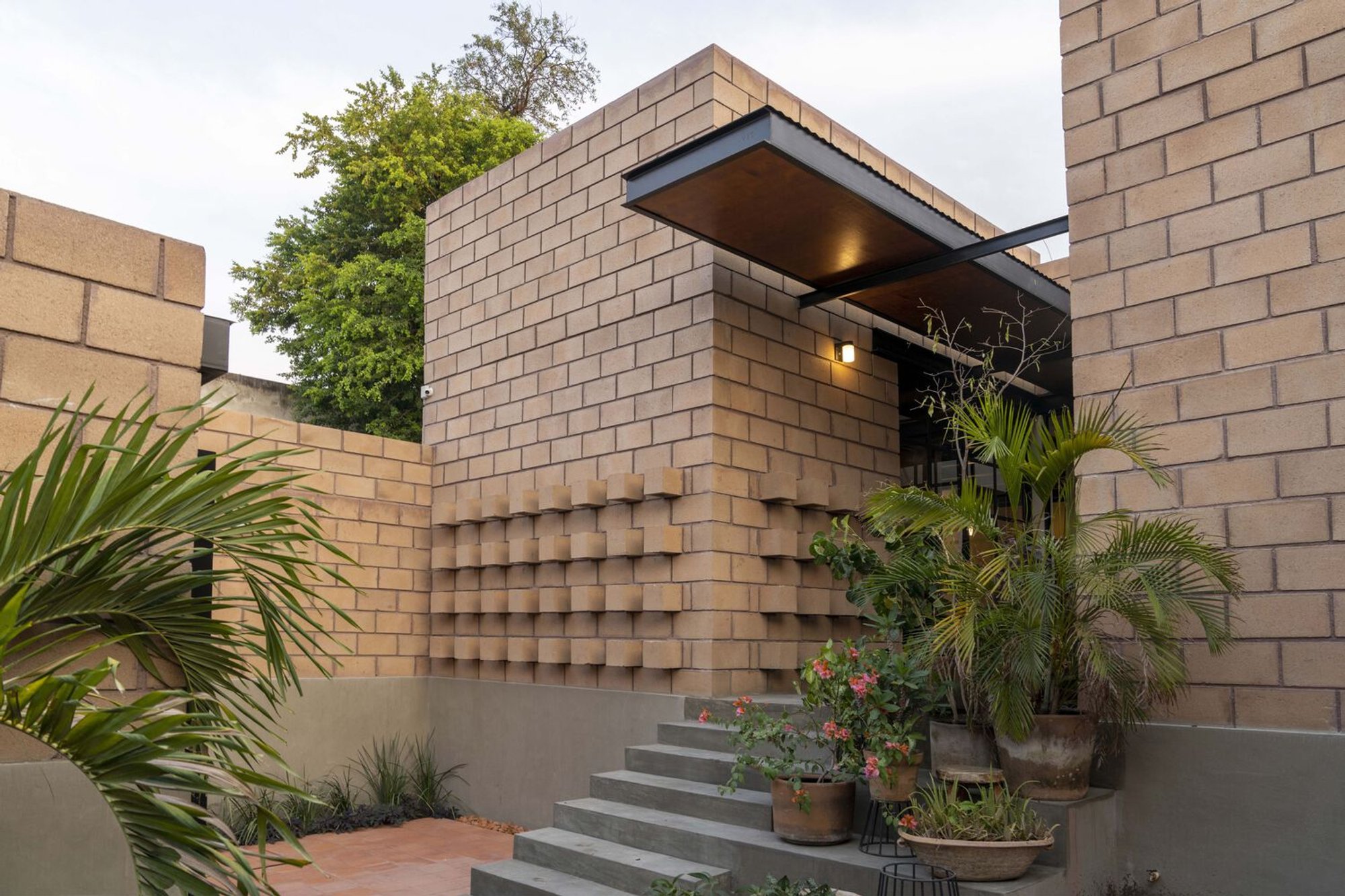
Manantial House by Apaloosa Estudio: A Sustainable Courtyard Home in Tuxtla Gutiérrez, Mexico
Manantial House is a sustainable courtyard residence in Mexico, using local materials, natural light, and passive bioclimatic design.

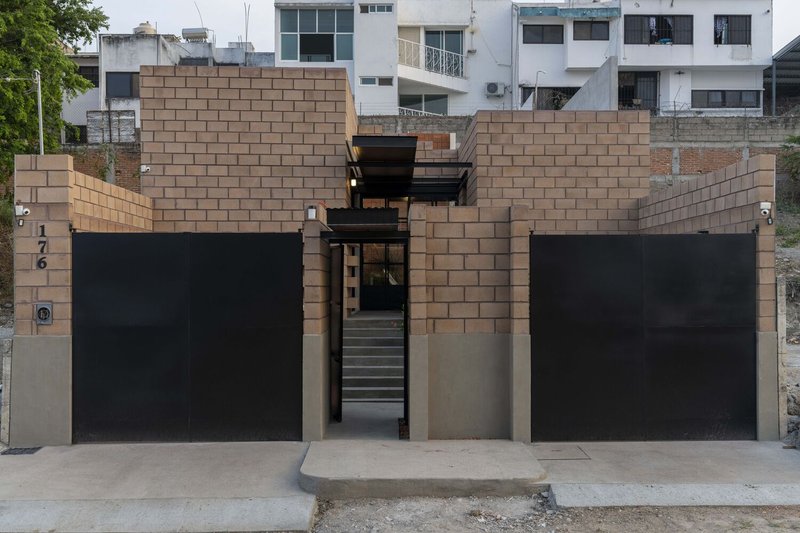
Designed by Apaloosa Estudio de Arquitectura y Diseño, the Manantial House is a compact, sustainable residence located in Tuxtla Gutiérrez, Chiapas, Mexico. Completed in 2023 and spanning just 119 m², the single-story house embraces vernacular architecture, low-cost construction methods, and bioclimatic design principles to respond thoughtfully to its subtropical environment and the client's limited budget.
Context & Concept: A Light-Filled Sanctuary
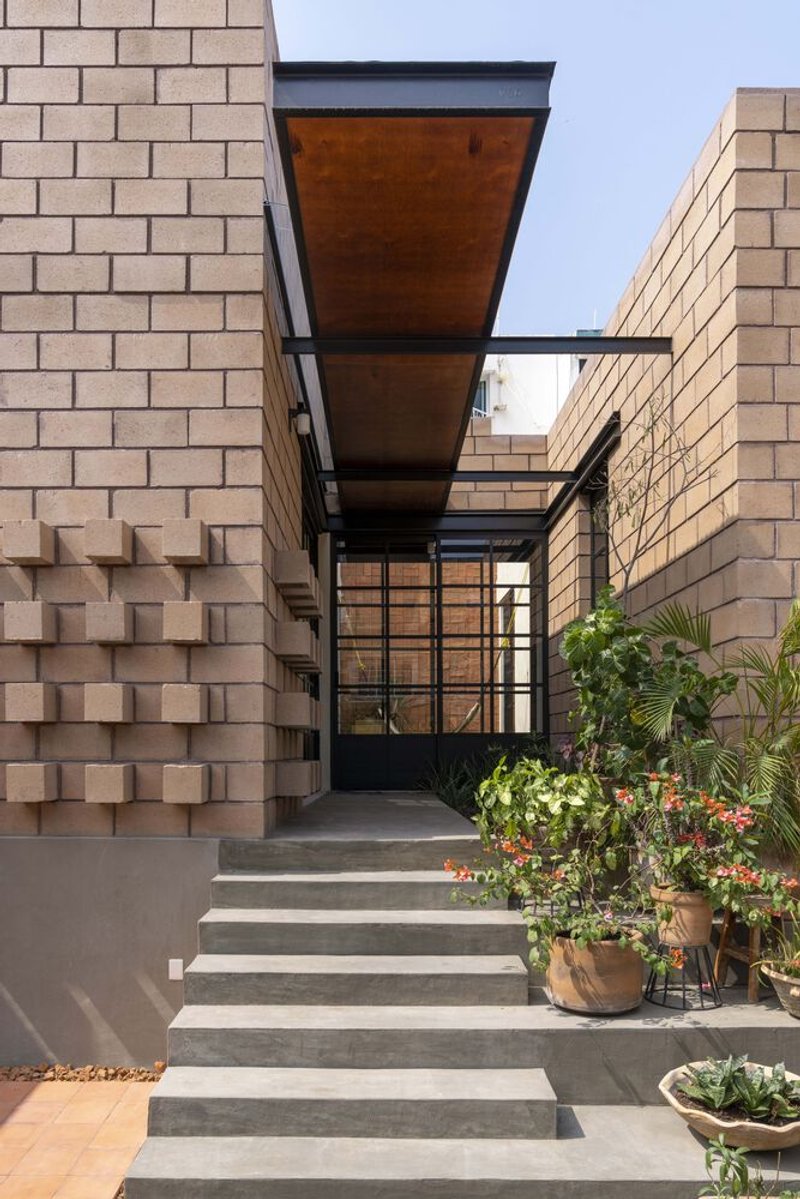
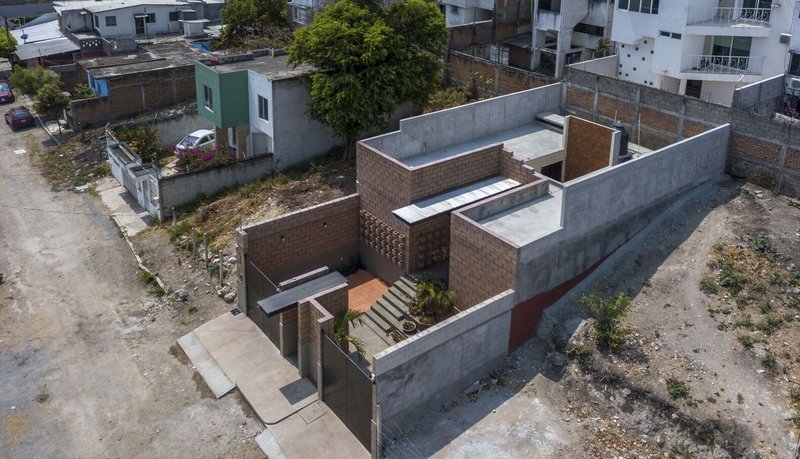
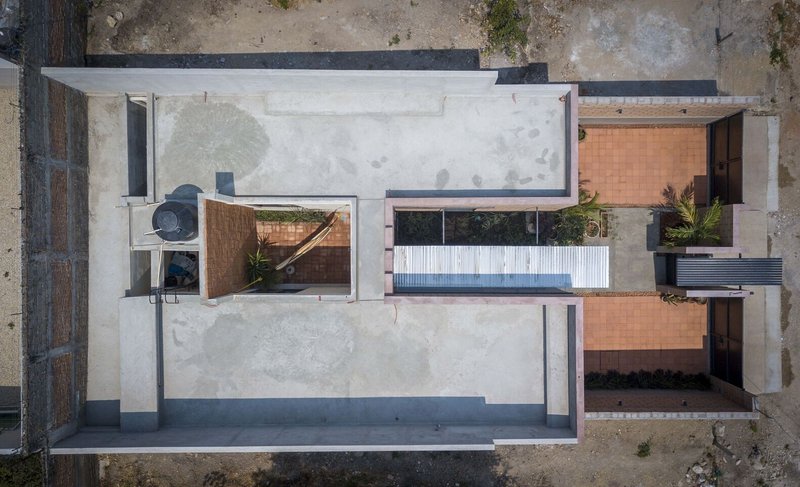
Situated on a narrow 10 x 20 meter plot, the Manantial House features a well-balanced residential program that includes three bedrooms, two bathrooms, a living room, kitchen, service patio, and garage. The design focuses on creating a calm, introspective environment that encourages relaxation and reconnection with natural elements.
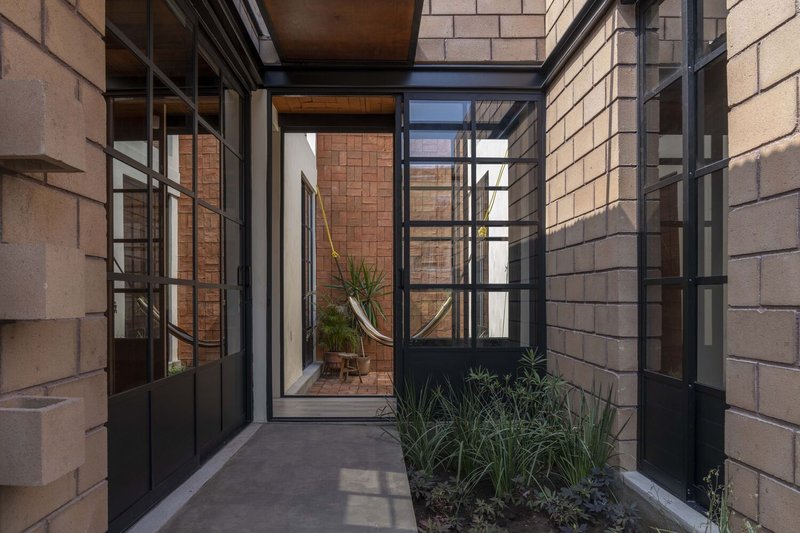
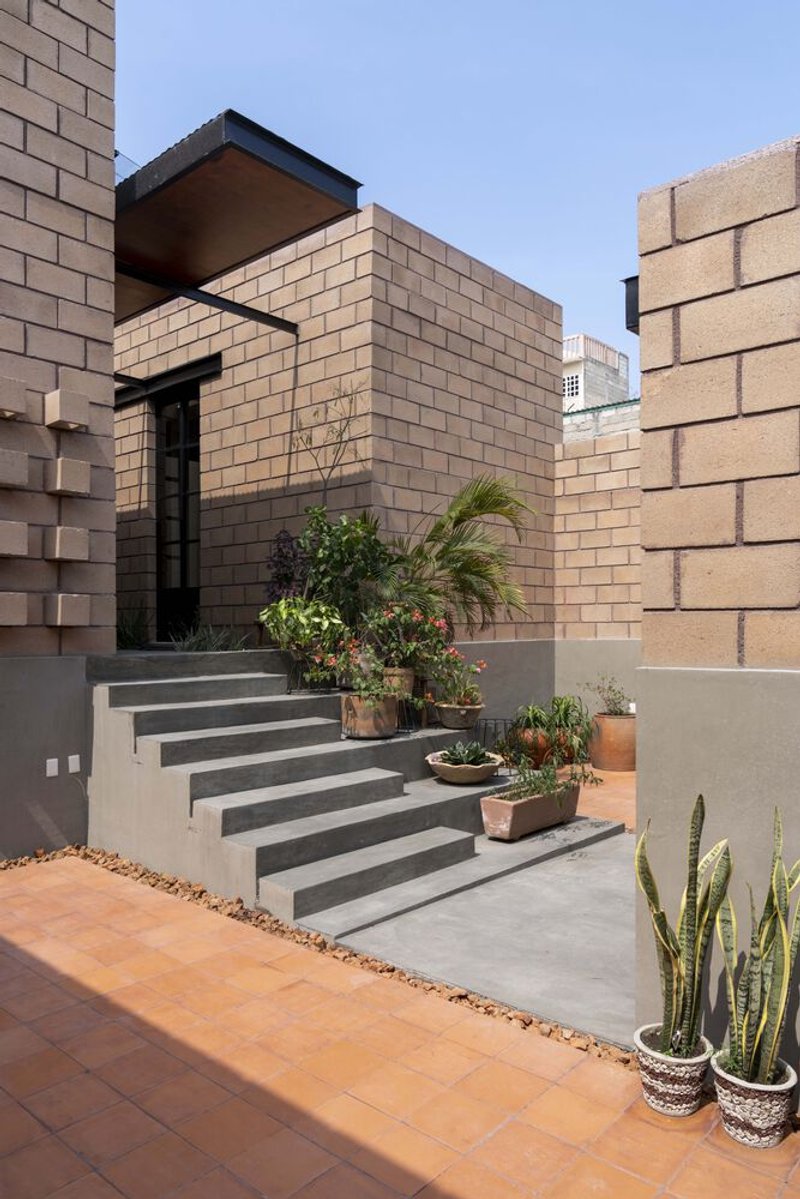
Central to this approach is the use of endemic materials and a deliberate courtyard typology, which transforms the home into a microclimatic refuge. Natural light is used as a primary design tool, creating dynamic patterns and passive thermal comfort throughout the day.
Construction Strategy: Exposed and Economical
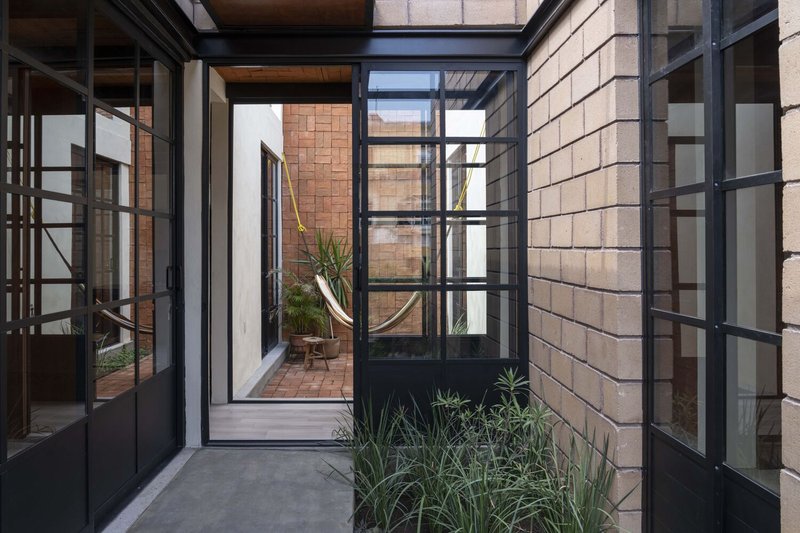
The construction system was guided by the client's need for affordability, speed, and low maintenance. The house is built using alveolar block walls and a Domotej roofing system, a patented self-construction technology developed by the Autonomous University of Chiapas. This modular roofing system allows for lightweight concrete slabs with embedded thermal and acoustic insulation using polystyrene or recycled PET.
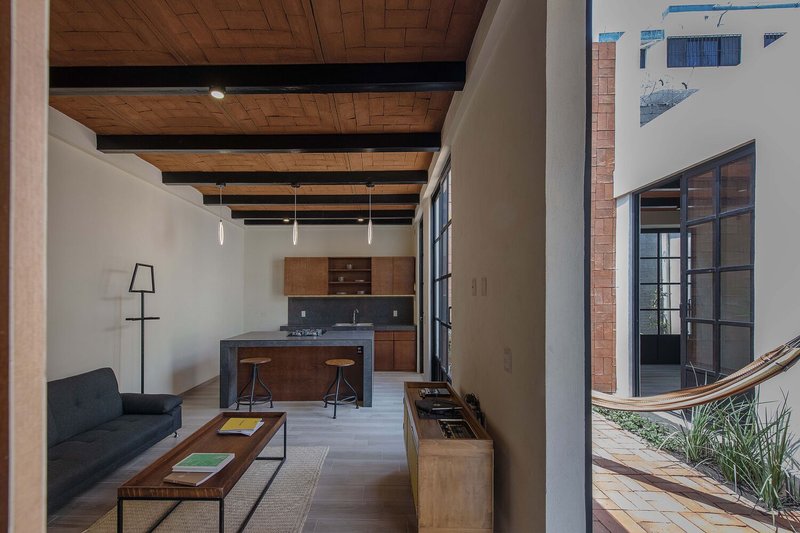
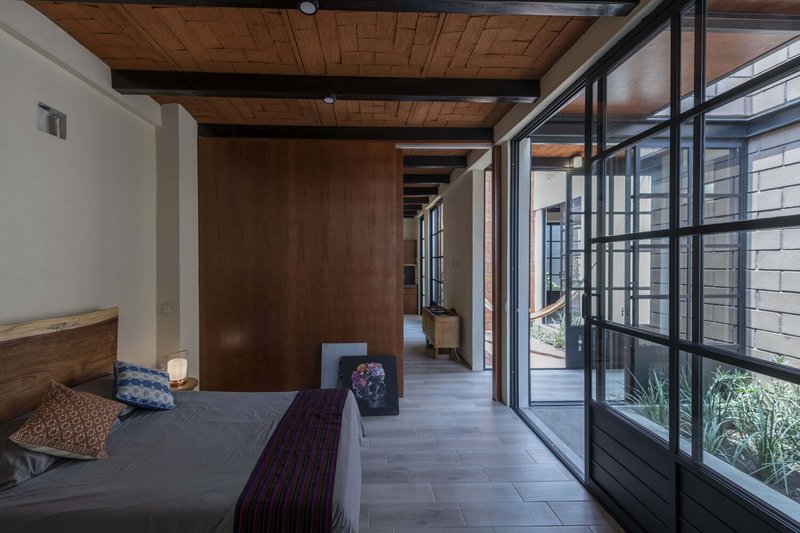
What’s notable is that the entire construction process remains exposed, eliminating the possibility of traditional wall slots for utilities. This necessitated a precise, pre-planned layout of ductwork and installations, highlighting the importance of construction logistics in exposed architecture.
Passive and Active Sustainability
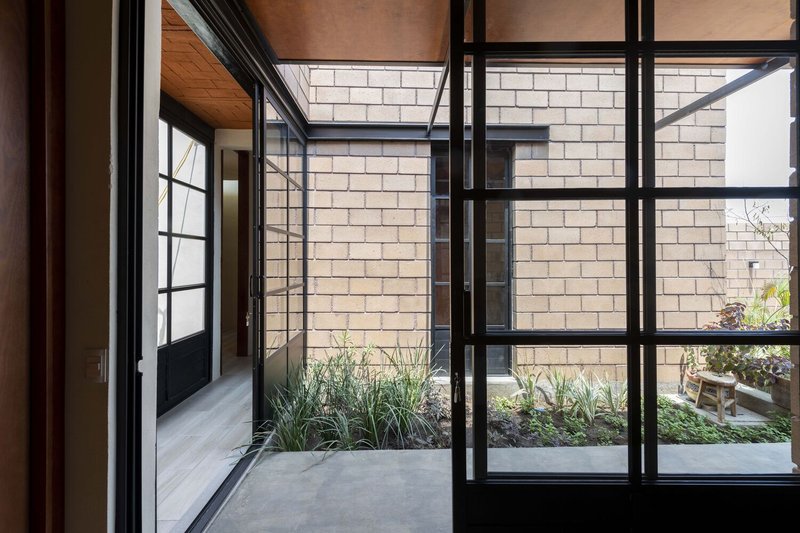
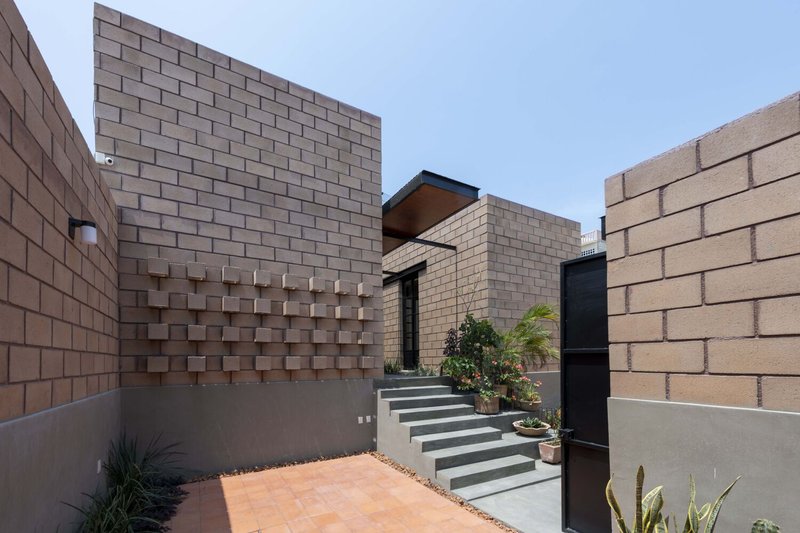
Manantial House is designed with bioclimatic sustainability at its core. Passive strategies include the thoughtful orientation of rooms toward the central courtyard, maximizing cross-ventilation and natural lighting while minimizing direct solar gain. This courtyard also functions as a garden and open-air corridor, distributing air and light while creating a connection to nature from all interior spaces.
On the active side, sustainability measures include:
- Rainwater harvesting
- Redirection of neighboring runoff
- Use of local materials and Domotej roofing
- Thermal and acoustic insulation via filler blocks
These strategies collectively reduce environmental impact while enhancing indoor comfort in a region known for its heat and humidity.
Spatial Experience and Material Expression
The house’s interior spaces are simple yet expressive, with materials like brick, raw concrete, and wood revealing the structural honesty of the build. The interior palette is warm and earthy, emphasizing natural ventilation, open connections between rooms, and views to planted courtyards from every major space—including the bedrooms and living areas.
The garage is sunken slightly due to a pre-existing site cut, subtly separating it from the domestic space and improving the elevation flow across the site. Structural efficiency was achieved by embedding columns within alveolar blocks and capping the structure with a reinforced upper beam chain that anchors the roofing system.
Manantial House is an architectural response to economic limitations, environmental conditions, and a desire for a simple, breathable, and adaptable home. It stands as a model of affordable bioclimatic housing in Mexico, marrying architectural ingenuity with social responsibility, sustainable technology, and a profound respect for place.
All Photographs are works of Jaime Navarro



Popular Articles
Popular articles from the community

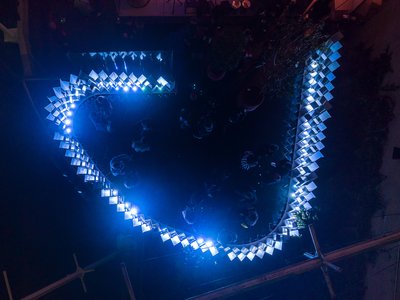
Rojkind Arquitectos and Think Parametric Build a Glueless Pavilion from 67 Interlocking Panels
A serpentine fiber-cement installation in Chapultepec Park celebrates a decade of architectural media in Mexico City.
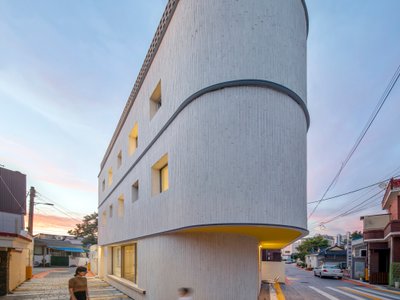
YOAP Architects Round a Corner in Yeongcheon with a Cylindrical Community Hub
A 197-square-meter brick and ribbed-clad tower turns a forgotten alley corner in South Korea into a public garden with a low threshold.
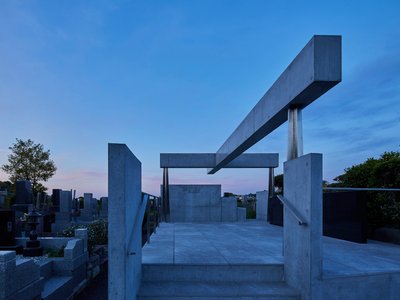
Takeshi Hosaka Architects Suspends a Concrete Cross Above a Yokohama Cemetery
A 28-square-meter burial renovation in Yokohama lifts the symbol of resurrection into the sky so mourners see it against heaven.
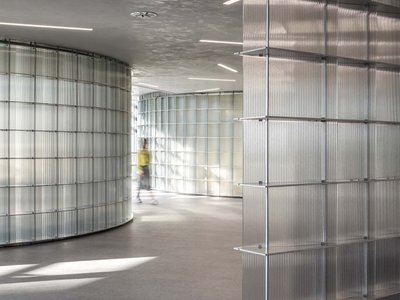
HCCH Studio Wraps a Shanghai High-Rise Office in Curved Walls of Translucent Glass
A 1,000 square meter fit-out in Lujiazui replaces the typical tech-office palette with layered glass, micro-cement, and quiet rigor.
Similar Reads
You might also enjoy these articles

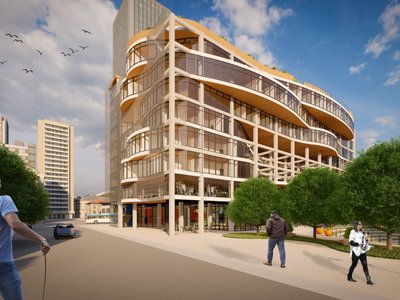
Olio Towers: A Mid-Rise for Performers That Fuses Housing, Rehearsal, and Stage
Located blocks from Houston's Theater District, this modular tower stacks living units around a central performance atrium.

Oasis: Modular Green Housing Carved into Dhaka's Urban Fabric
A shortlisted Plugin Housing entry reclaims unauthorized settlements in Dhaka with stepped concrete volumes, green roofs, and ventilation-driven design.

Black Hole: A Floating Megastructure for the Post-Physical Era
Emiliano Mazzarotto envisions a spherical, self-scaling arena where e-sports, digital hotels, and holographic stadiums replace traditional public space.
Compact & Sustainable Living in Piraeus: A Four-Level Family Home Built Around Light and Air
A narrow townhouse in one of Greece's densest port cities uses a central atrium and passive strategies to house three generations under one roof.


Explore Architecture Competitions
Discover active competitions in this discipline




The International Standard for Design Portfolios


The Global Benchmark for Architecture Dissertation Awards


The Global Benchmark for Graduation Excellence


Challenge to reimagine the Iron Throne
Comments (0)
Please login or sign up to add comments
No comments yet. Be the first to comment!