
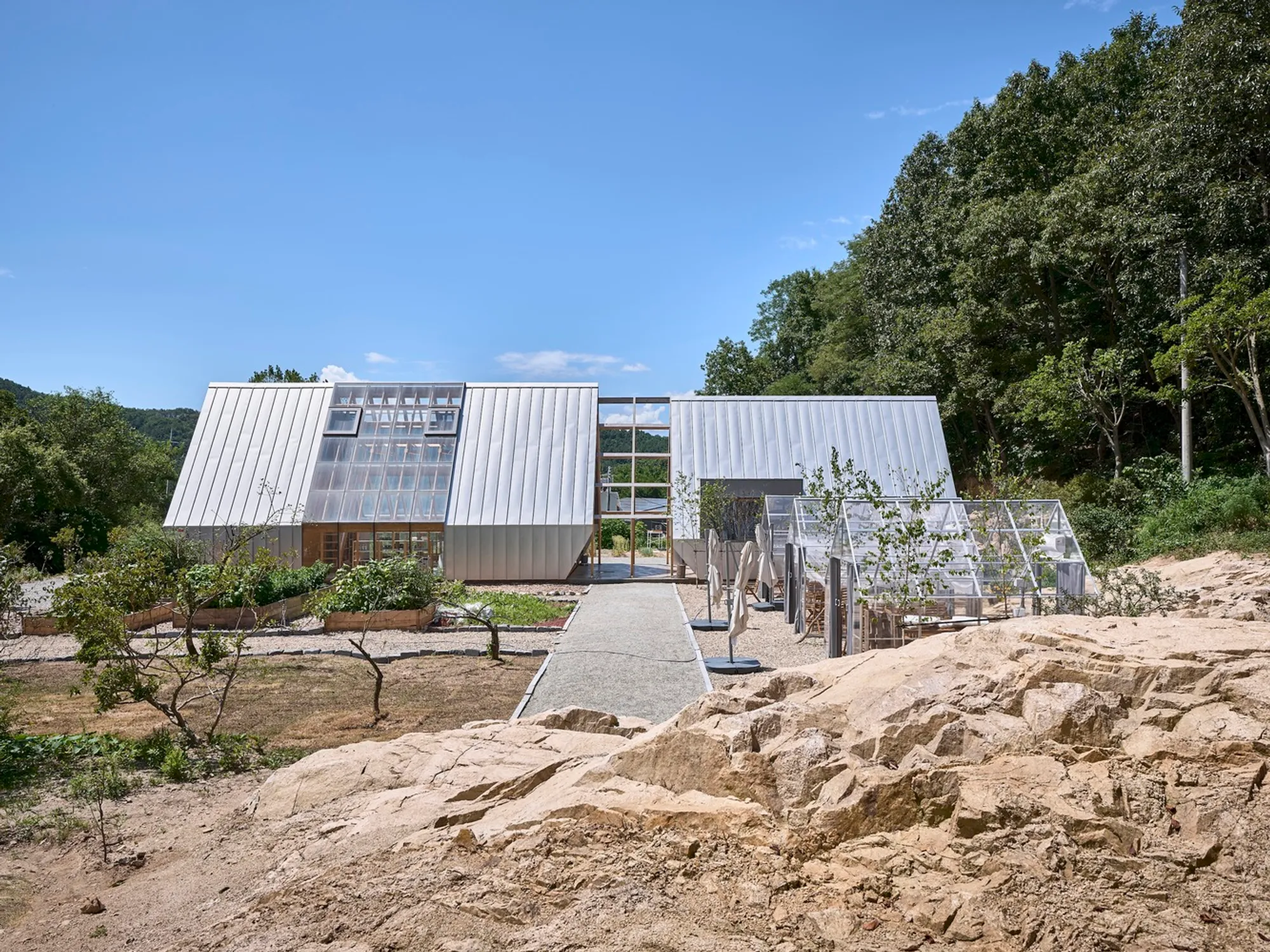
Mangmi Farm by Todot Architects and Partners: A Forest Sanctuary in Yangpyeong
Mangmi Farm blends birch-inspired architecture with natural materials, creating a peaceful, community-centered retreat in South Korea’s forested hills.


Architecture Rooted in Nature
Nestled in the serene valley where three mountains converge, Mangmi Farm is located in Mangmi Village, Yangpyeong, South Korea—a quiet, forested site where time appears to slow down. Designed by Todot Architects and Partners, the project was commissioned by a retired couple seeking to enrich their rural lifestyle with a small community space, glasshouse, and campground.
The site’s most remarkable feature is the surrounding birch forest, with trees that have stood for decades. These trees not only informed the design direction but also serve as living memory keepers, quietly shaping the identity of the space.
Biomimetic Design Inspired by Birch Trees
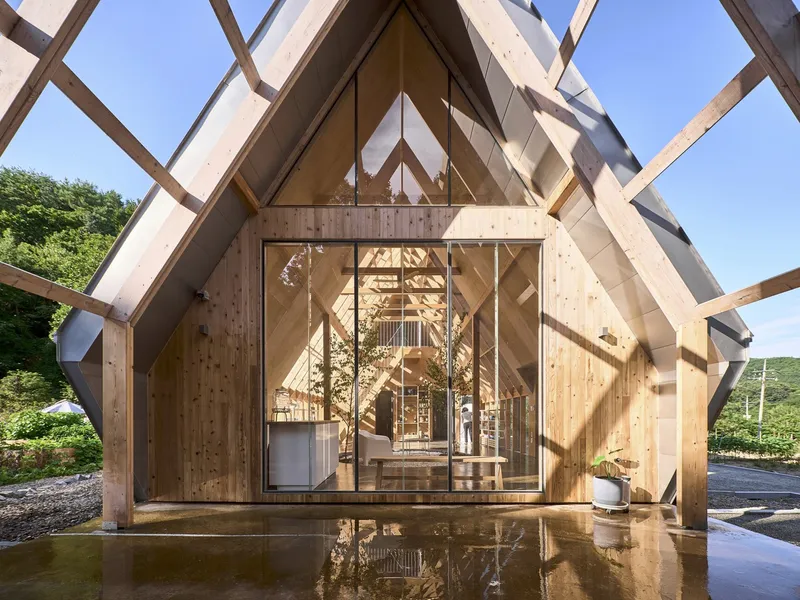
The architectural approach draws inspiration from the birch tree’s slim, silver silhouette. The design envisions the built form as a modest, silvery unit camouflaged among the greens of the forest, much like a birch blending seamlessly into its habitat.
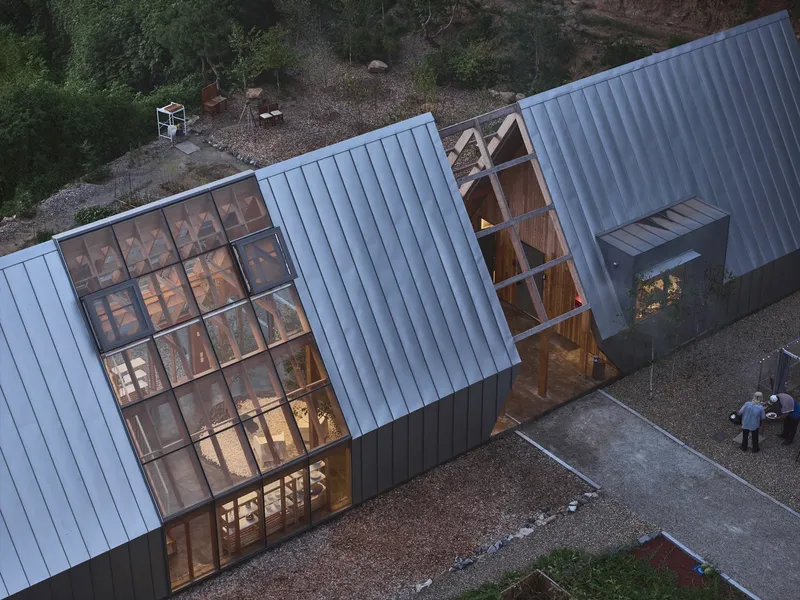
By using galvanized steel roofs to reflect the sheen of birch bark and selecting cedar cladding that ages into a silver-gray tone, the materials allow the building to visually dissolve into its natural setting over time.
Geometric Simplicity: The Isosceles Triangle
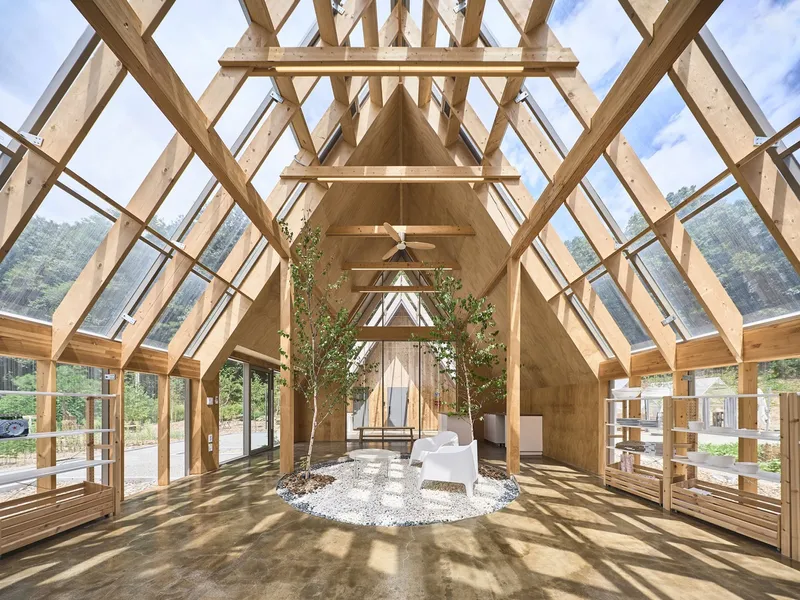
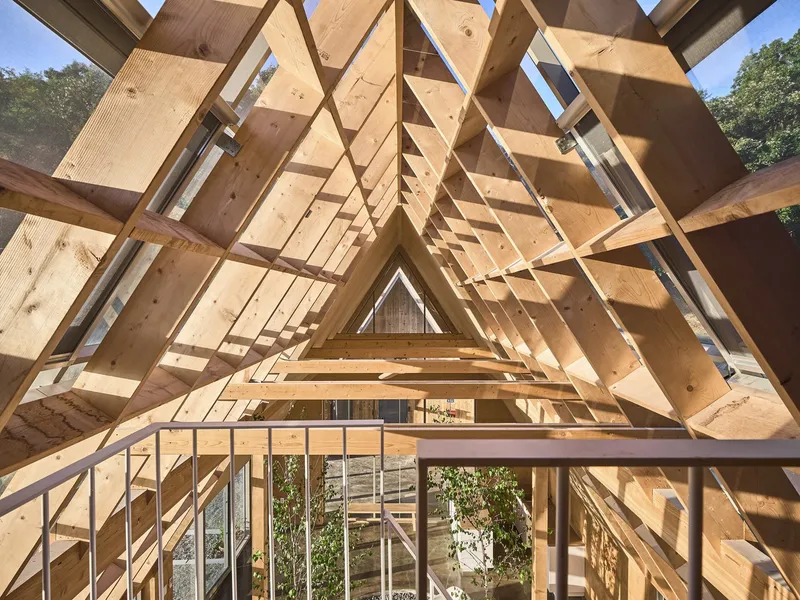
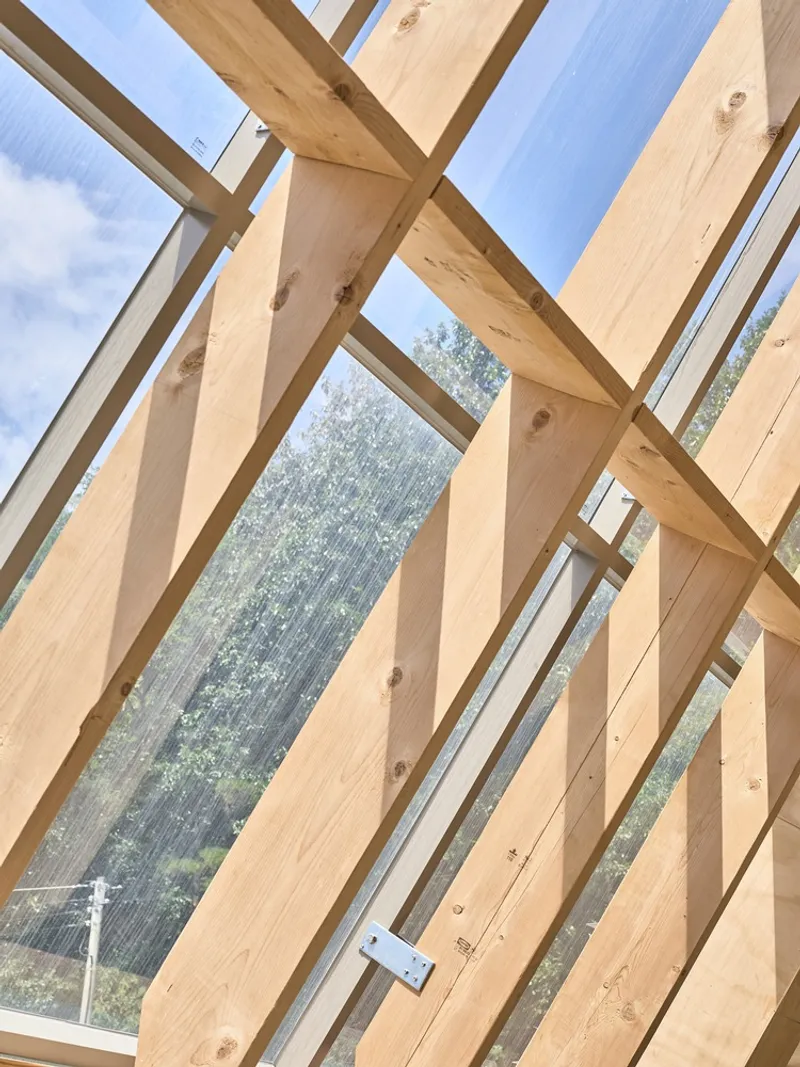
At the heart of the design is a simple yet symbolic geometric form—the isosceles triangle, reminiscent of a primitive tree shape. This form is not only symbolic but also practical, enabling the seamless integration of roof and walls into a unified volume. By leveraging the standard length of SPF structural wood (20 ft) and angling the structure at 60 degrees, the architects managed to build a three-story space without requiring additional wood segments.

A Tactile Experience of Wood
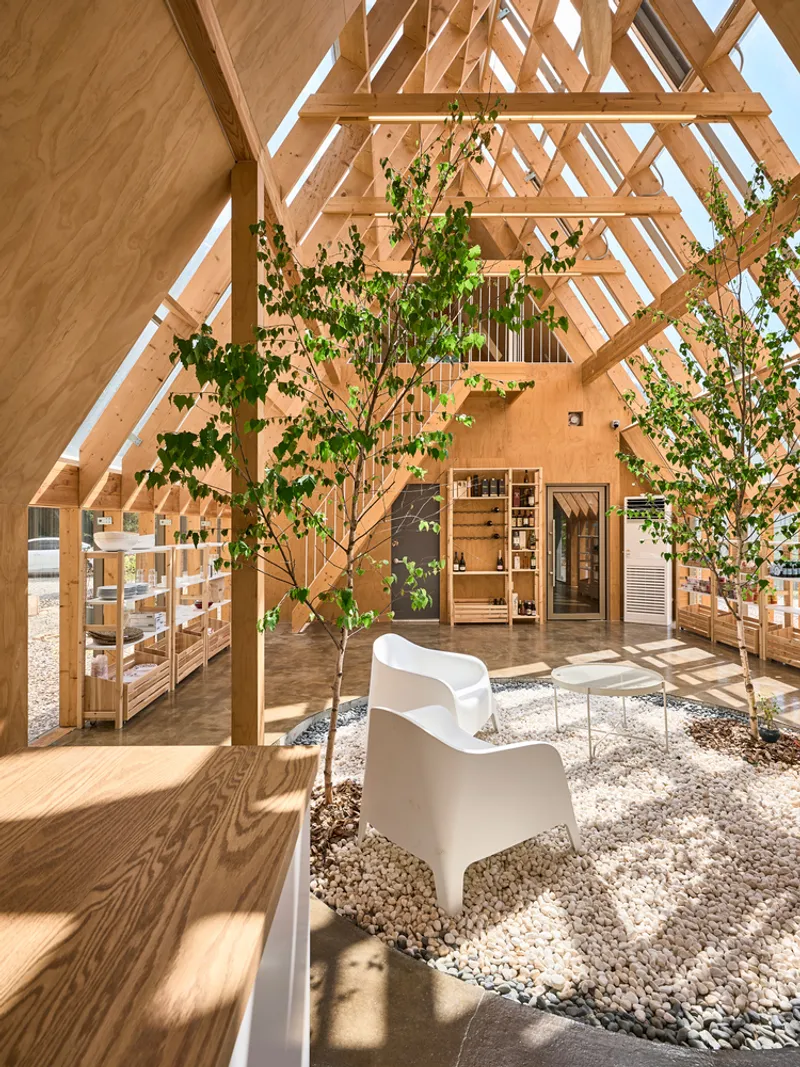
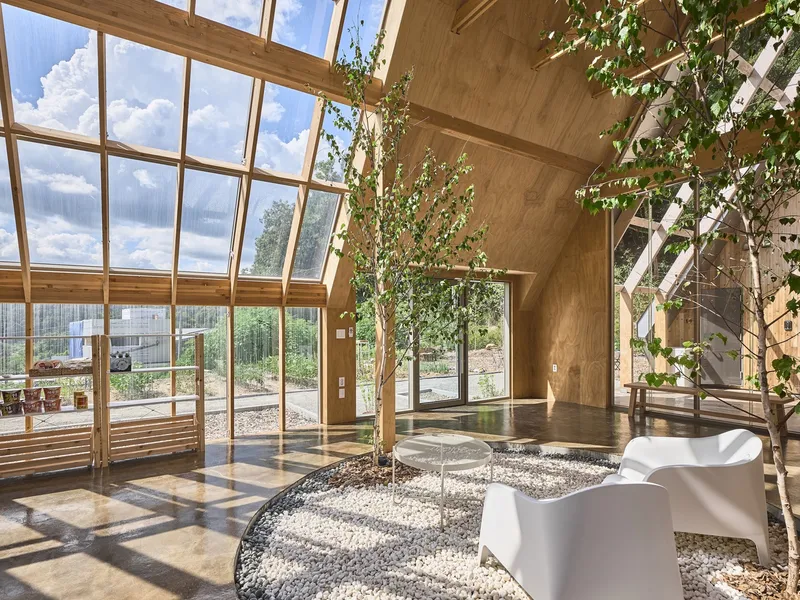
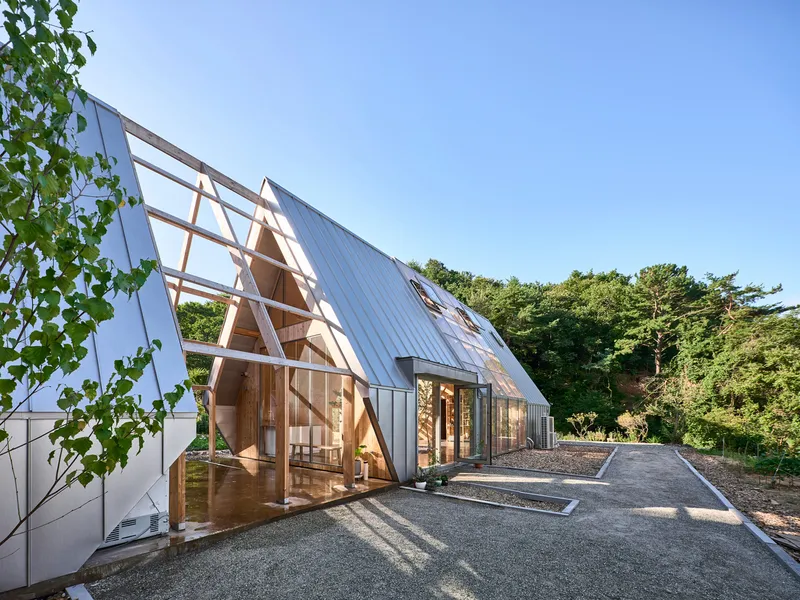
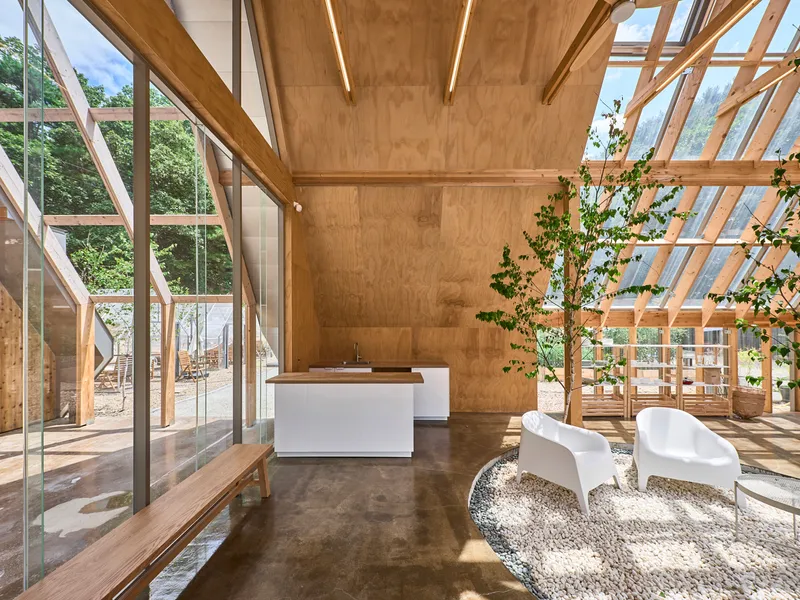
The extensive use of wood throughout the interior and exterior enhances the warmth and texture of the space. From spruce rafters and pine plywood walls to oak stair treads and cedar siding, the building offers a rich sensory experience. Each material was chosen for its visual warmth, grain character, and its interaction with natural light.
This layered wood palette, paired with large curtain wall windows, brings the outside in—maximizing daylight, deepening the spatial experience, and reinforcing the calming, retreat-like atmosphere of the farm.
Architecture as Forest: Organic Arrangement and Site Integration
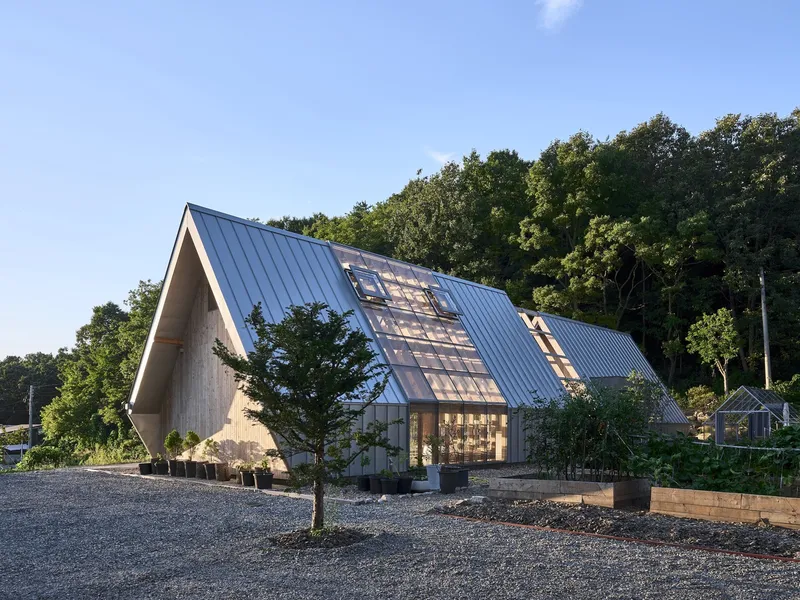
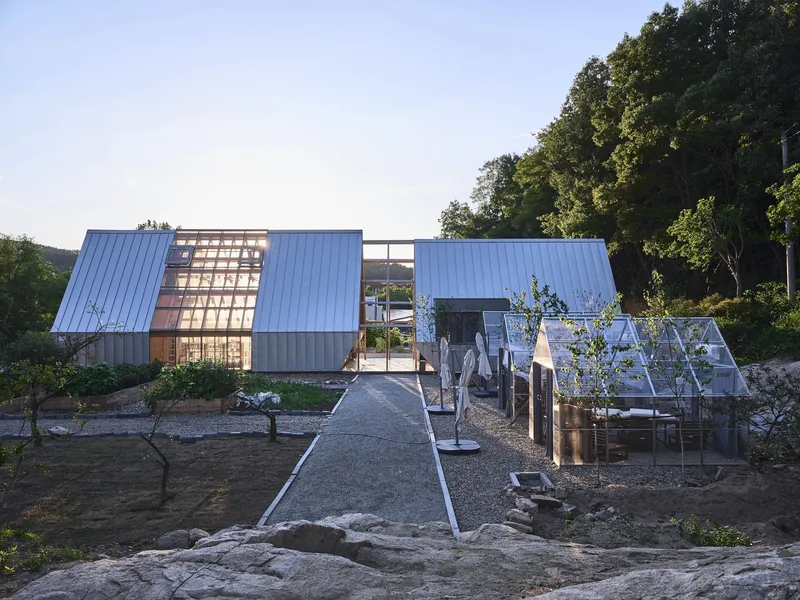
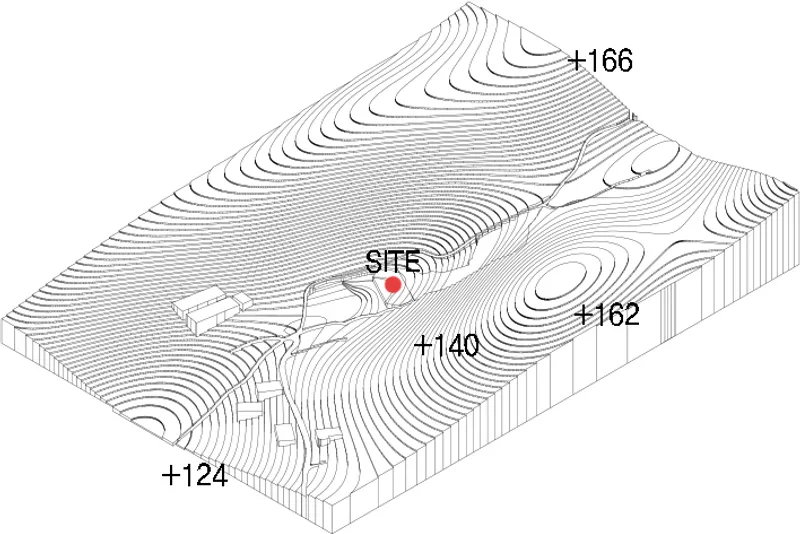
Mangmi Farm’s site plan respects the existing topography, starting from a low entry point and rising gently with the terrain. As visitors move uphill, they encounter a thoughtfully arranged cluster of cabins and community spaces—each appearing organically nestled among the trees.
The building masses are placed to mimic the natural entanglement of a forest, offering shifting views, shaded pockets, and moments of discovery. This progression fosters a spatial rhythm aligned with the natural contours of the land, blurring the boundaries between built and natural environments.
A Place for Urban Refuge and Community
Designed to offer urban dwellers a peaceful escape, Mangmi Farm fosters a deeper connection with nature. It’s not just a physical retreat but also a communal haven that encourages relaxation, reflection, and social interaction in a natural setting.
By harmonizing sustainable materials, biophilic design principles, and land-sensitive planning, Todot Architects and Partners created more than just architecture—they built an immersive experience rooted in ecological harmony and rural simplicity.
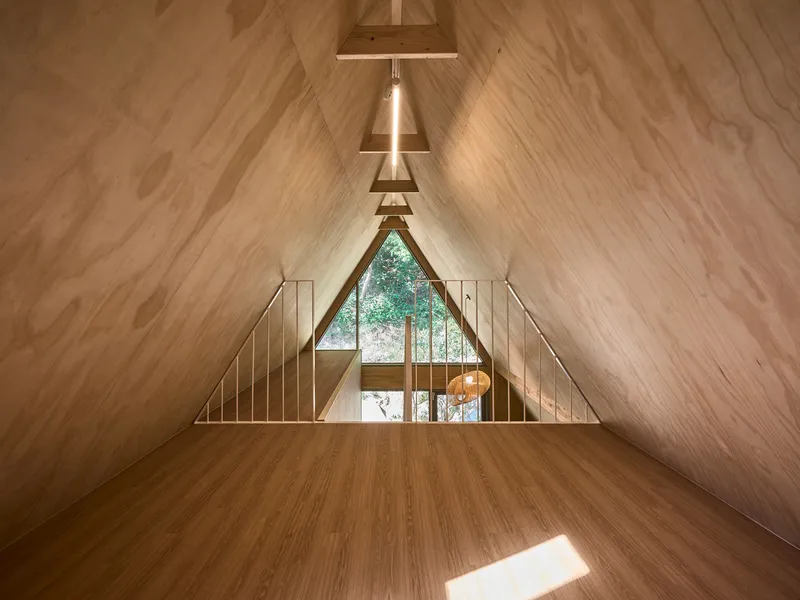
All Photographs are works of Jinbo Choi.



Popular Articles
Popular articles from the community


Co-Life: Senior Housing Design That Reconnects Older Adults With the City
Co-Life reimagines senior housing design through healing gardens, shared streets, workshops, and a sustainable community across generations.

Hill & Cross Opera: Sculptural Opera House Architecture Shaped by Tallinn’s Landscape and Identity
Hill & Cross Opera reimagines opera house architecture in Tallinn through its sculptural hill, civic plaza, glass wave and a luminous cross.

Riyadh For All: Intergenerational Urban Design for Active Aging in Rabat
Riyadh For All reimagines urban design in Rabat with intergenerational co-living, adaptive courtyards, and Moroccan cultural exchange today.

The Musturak Paradise: Senior Living Architecture for a Connected Future in Temara, Morocco
The Musturak Paradise reimagines senior living architecture in Temara via private homes, social spaces, culture, community, and shared care.


Similar Reads
You might also enjoy these articles


Hodi-Mandai Geram
Project Function: Preservation and revitalization of the Intangible heritage and socio-spatial identity of the Hodi by Housing, Cultural Memory Center, Sacred Grove, landscape, local tourism economy


Olio Towers: A Mid-Rise for Performers That Fuses Housing, Rehearsal, and Stage
Located blocks from Houston's Theater District, this modular tower stacks living units around a central performance atrium.

Oasis: Modular Green Housing Carved into Dhaka's Urban Fabric
A shortlisted Plugin Housing entry reclaims unauthorized settlements in Dhaka with stepped concrete volumes, green roofs, and ventilation-driven design.

Black Hole: A Floating Megastructure for the Post-Physical Era
Emiliano Mazzarotto envisions a spherical, self-scaling arena where e-sports, digital hotels, and holographic stadiums replace traditional public space.

Explore Food Forest Competitions
Discover active competitions in this discipline



Challenge to reimagine the Iron Throne


Photograph architecture without architects


Illustrate the lost glory of Angkor Wat - Render Challenge


Design challenge to reuse E-waste
Comments (0)
Please login or sign up to add comments
No comments yet. Be the first to comment!