
Manjodaya House by Ecumene Habitat Solutions: Harmonizing Modern Architecture with Vernacular Design in Bangalore
Manjodaya House blends vernacular design with modern minimalism, featuring jali walls, native landscaping, and vastu-aligned, light-filled interiors.


Context and Concept: A Dual Home Design Amid Transitioning Landscapes
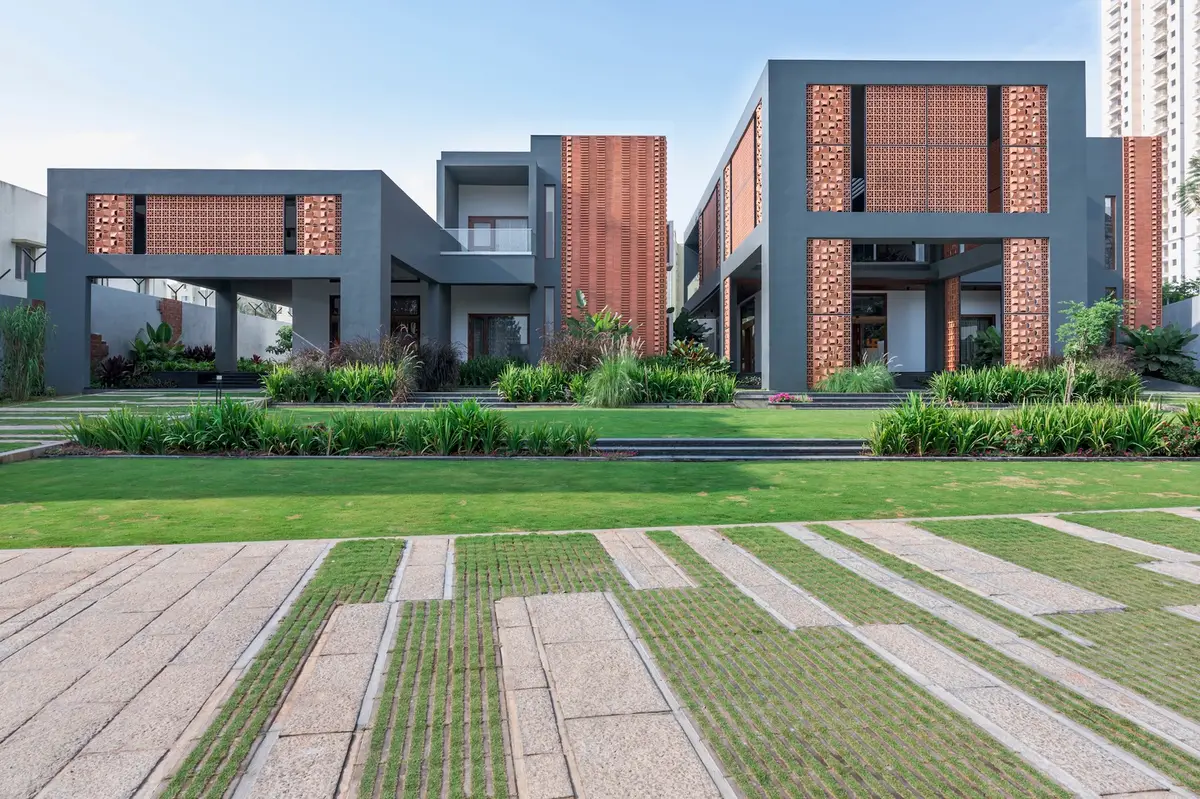
Located in the rapidly urbanizing locale of Electronic City, Bengaluru, the Manjodaya House comprises two residences for brothers thoughtfully integrated into a single plot, creating a sense of community while maintaining distinct architectural identities. The site, once rural, is now at the edge of rapid urban transformation, influencing the architects’ vision of creating a residence that anchors its users in nature, culture, and community.
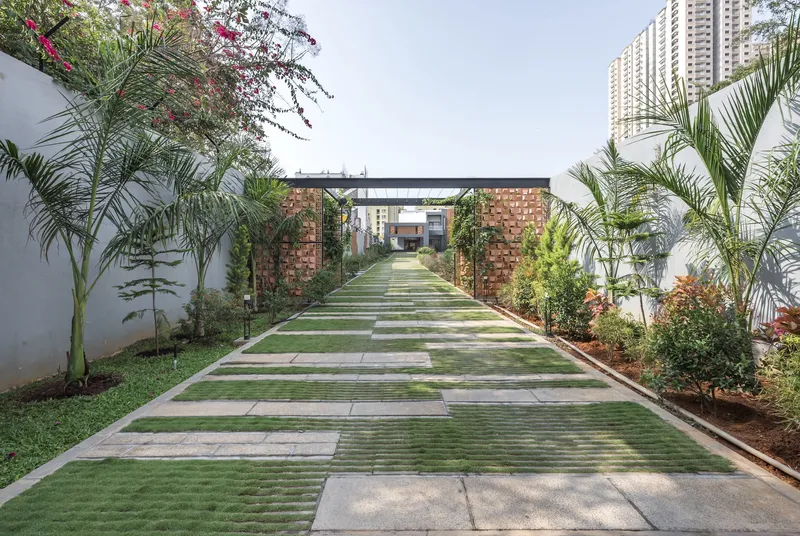
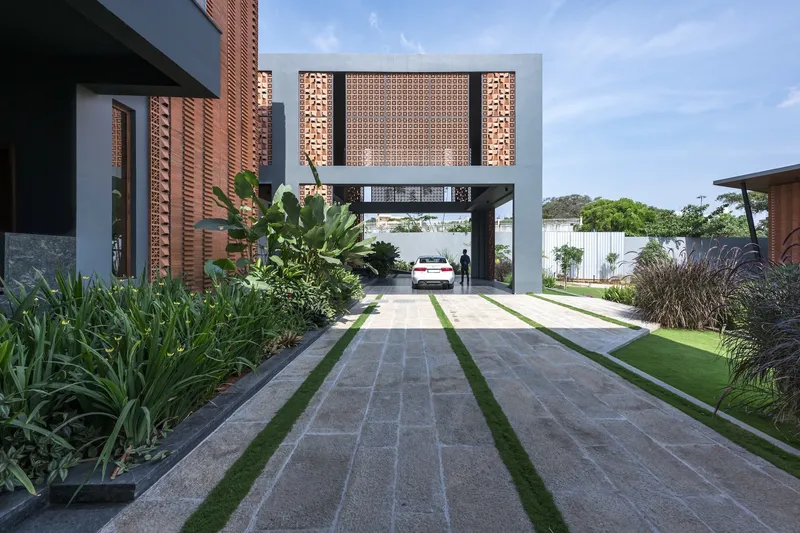
Framed by a lush, native landscape, the design emphasizes sustainability and spatial harmony. A pergola-lined entry guides visitors along a green pathway that introduces the material palette — clay jali walls, metal beams, and creeping plants — all reflecting the architectural ethos rooted in vernacular wisdom with contemporary expression.


Spatial Composition: Orchestrating Movement and Experience
At the heart of the plot lies a central courtyard and lawn, around which the two homes and a clubhouse are arranged. This open green space serves as a shared nucleus and strengthens the familial and architectural bond between the structures.
The entrance is thoughtfully designed with Sadarahalli granite and grass pavers, enhancing both visual interest and water permeability. From here, the journey into the home unfolds organically, guided by landscape and architecture working in tandem.
Material Language and Light Play: Jali Walls and Natural Finishes
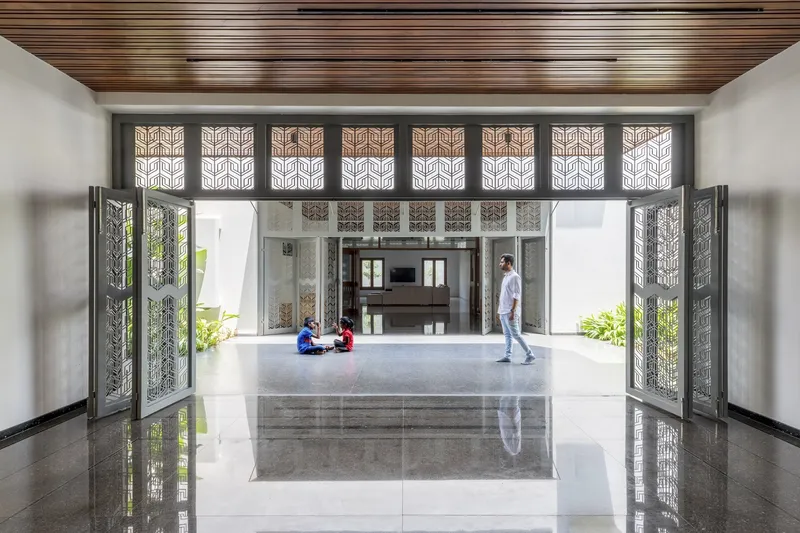
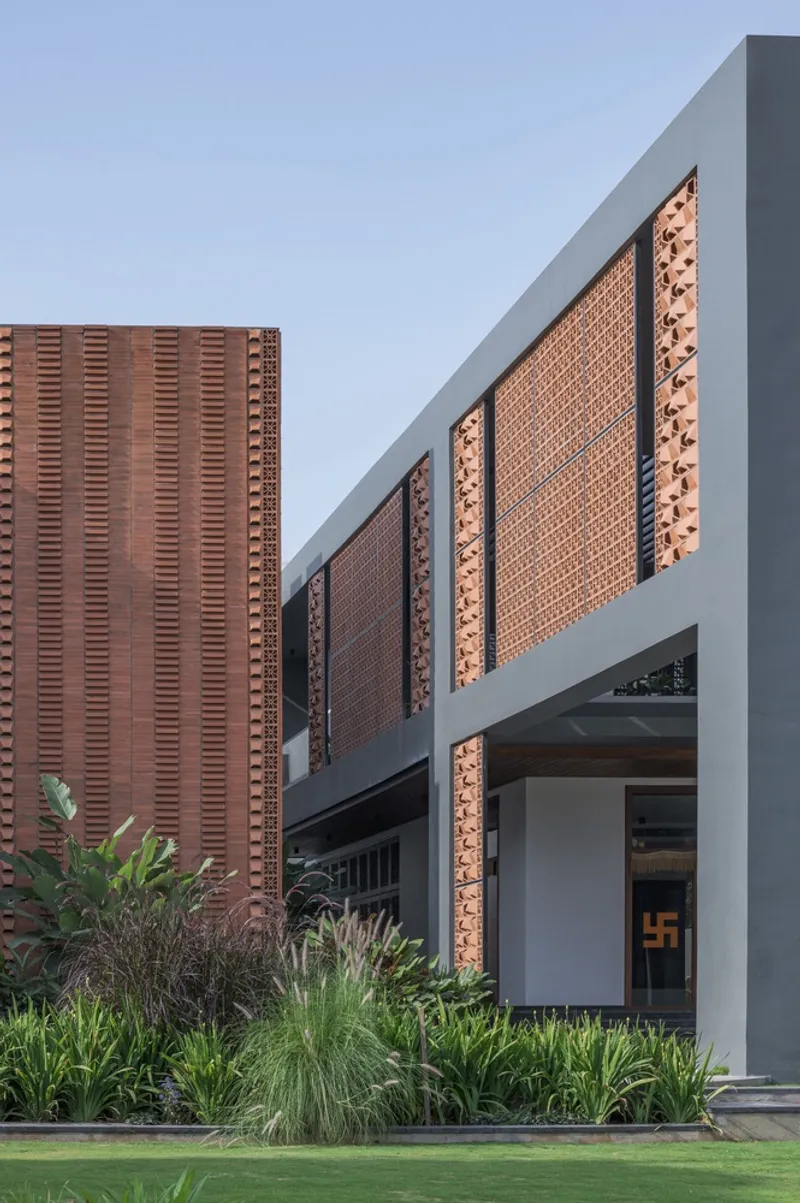
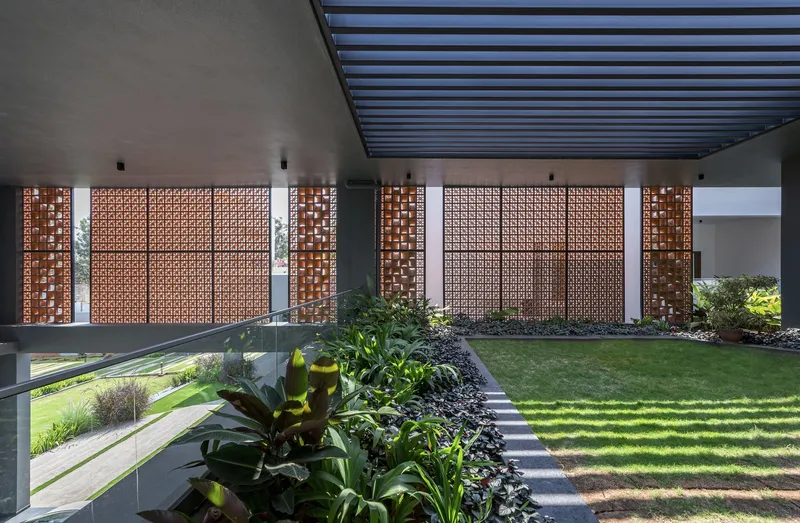
A standout feature of Manjodaya House is its terracotta jali walls, which serve both aesthetic and functional purposes. By integrating camp jali blocks and a unique four-petal terracotta pattern, the house achieves an engaging play of light and shadow, crafting a poetic dialogue with the passage of time.
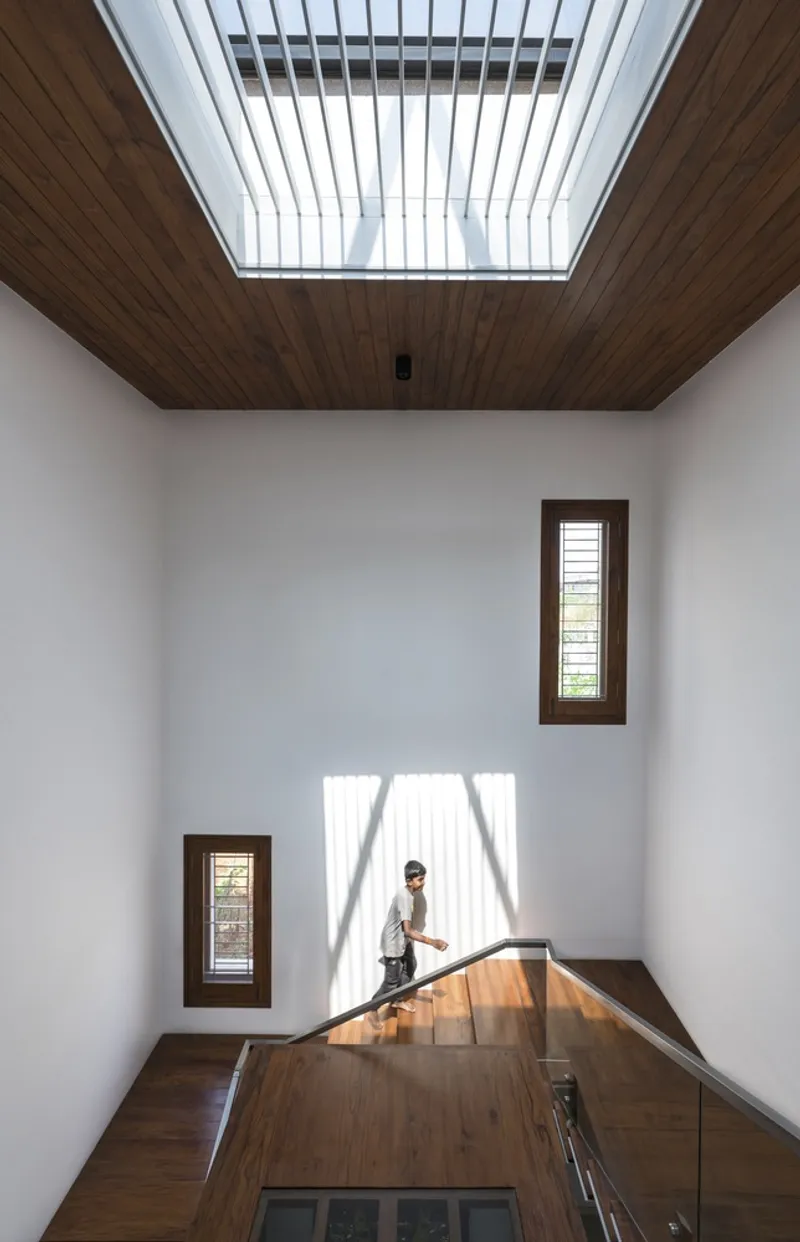
Each house, while similar in materiality, offers distinct spatial experiences. The Southeast home features a low, horizontal profile, while the Southwest home boasts double-height volumes, a roof garden, and a skylight that enhances the connection to the sky and surroundings.

Interior Design: Vastu-Aligned, Spacious, and Minimalist
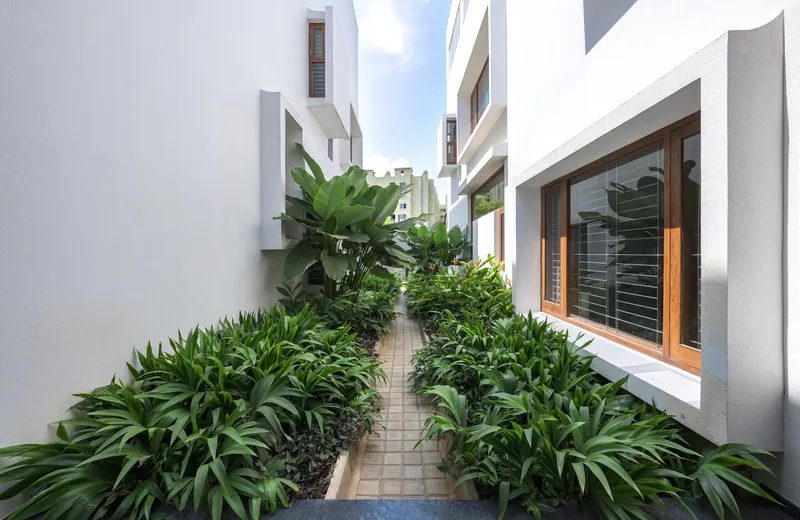
Inside, the homes are designed with vastu principles in mind, blending spiritual alignment with modern luxury. The interiors are restrained yet impactful, using a minimal color palette dominated by white walls, natural wood, and terracotta finishes. These elements collectively create a warm, timeless ambiance.
A key innovation is the extendable living room, which acts as a flexible connector between the two homes. This space can be transformed into a multipurpose hall, perfect for social gatherings, religious events, or family functions.


Architectural Features: Woodwork, Steel Craft, and Craftsmanship
Every design decision in Manjodaya House echoes a commitment to craftsmanship and detail. One of the highlights is the custom-designed steel staircase—crafted from L-shaped CNC-cut steel beams with wood inlay—eliminating joints for a seamless, monolithic appearance.
The ceilings extensively feature wood, and an intricately carved wooden wall becomes the focal point of the living area, adding texture and narrative to the otherwise minimalist interiors.
A Dialogue Between Tradition and Modernity
Manjodaya House is more than a residence — it is a design manifesto that gracefully bridges the rural past and urban future of Bengaluru. With a climate-responsive layout, natural materials, and community-oriented planning, Ecumene Habitat Solutions delivers a project that resonates with timeless Indian values through a modern architectural lens.
Whether it’s the sustainable use of local materials or the thoughtful integration of indoor and outdoor spaces, Manjodaya House stands as a benchmark in contemporary Indian residential architecture.
All the photographs are works of Atik Bheda


Popular Articles
Popular articles from the community


Lunar Spiral: Space Architecture Shaped by the Mathematics of the Universe
Lunar Spiral reimagines space architecture through Fibonacci geometry, lunar regolith, levitating habitats, and self-sustaining Moon living.

Play: Fragments of Their World
Familiar architecture becomes modular playground design, creating safe spaces where displaced children can learn, connect, imagine and play.

Co-life: Sustainable Architecture for Age-Friendly Community Living
Co-life reimagines sustainable architecture for seniors through courtyards, rammed earth, shared gardens, and spaces designed for belonging.

ALGAL REALM: A Bio-Integrated Lunar Habitat Design for Life Beyond Earth
ALGAL REALM reimagines lunar habitat design with algae-powered life support, 3D-printed regolith, and vertical living for a lunar future.

Similar Reads
You might also enjoy these articles


Hodi-Mandai Geram
Project Function: Preservation and revitalization of the Intangible heritage and socio-spatial identity of the Hodi by Housing, Cultural Memory Center, Sacred Grove, landscape, local tourism economy


Olio Towers: A Mid-Rise for Performers That Fuses Housing, Rehearsal, and Stage
Located blocks from Houston's Theater District, this modular tower stacks living units around a central performance atrium.

Oasis: Modular Green Housing Carved into Dhaka's Urban Fabric
A shortlisted Plugin Housing entry reclaims unauthorized settlements in Dhaka with stepped concrete volumes, green roofs, and ventilation-driven design.

Black Hole: A Floating Megastructure for the Post-Physical Era
Emiliano Mazzarotto envisions a spherical, self-scaling arena where e-sports, digital hotels, and holographic stadiums replace traditional public space.

Explore Vernacular Architecture Competitions
Discover active competitions in this discipline

Challenge to reimagine the Iron Throne

Photograph architecture without architects

Illustrate the lost glory of Angkor Wat - Render Challenge

Design challenge to reuse E-waste
Comments (0)
Please login or sign up to add comments
No comments yet. Be the first to comment!