
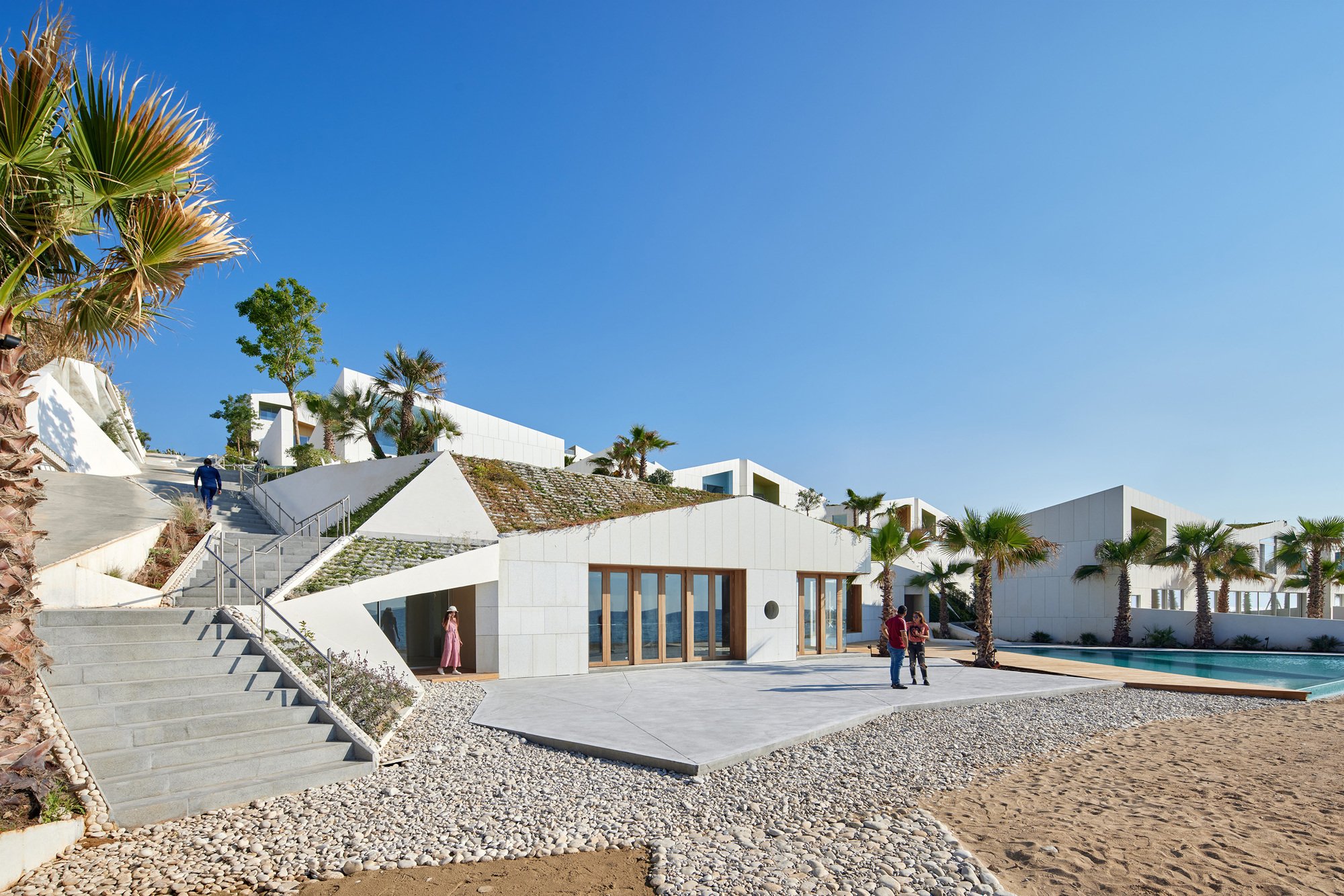
Marea Residential Complex: Reimagining Mediterranean Coastal Living
Sixty-unit terraced residential complex in Batroun, Lebanon, cascading toward Mediterranean with triangulated green roofs, diverse housing types, and integrated landscape architecture.

Introduction: A Vision Born from Transformation
Along the Mediterranean coastline just outside Batroun, one of the world's most ancient cities, rises Marea—a residential complex that challenges conventional approaches to development in Lebanon and the broader Mediterranean region. Designed by New York-based architecture firm WORKac and developed by visionary owner Chafic Saab, this multi-family housing project represents a radical departure from typical residential development patterns in the region, embracing density, diversity, and community in equal measure.
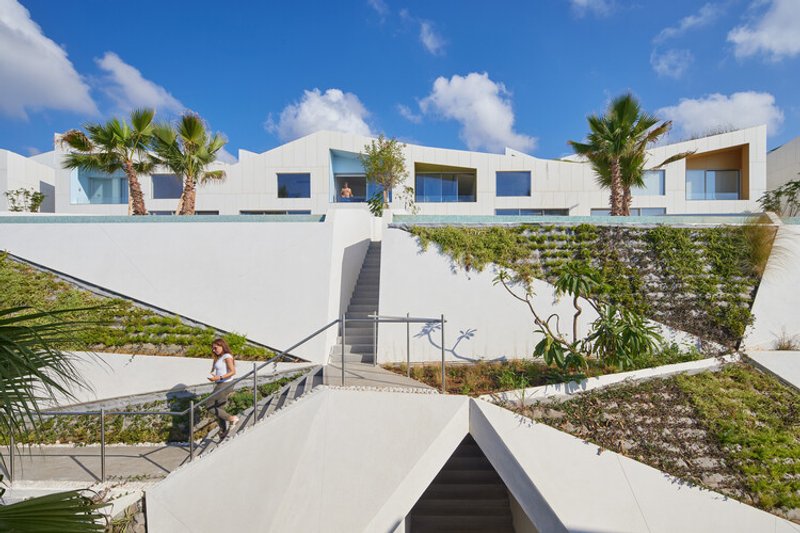
The name "Marea," meaning "tide" in Spanish and Italian, evokes the rhythmic relationship between land and sea that defines this project. Comprising sixty residential units organized in four terraced rows that cascade down a steep slope toward the Mediterranean, Marea investigates how contemporary architecture can create high-density living environments that simultaneously celebrate collective infrastructure and preserve individual privacy, all while maximizing the extraordinary coastal views that make this location so compelling.
From Military Camp to Coastal Community: A Site's Redemptive Journey
The history embedded in Marea's site adds profound meaning to the project's aspirations. During the Syrian occupation of Lebanon, this coastal land served as a Syrian army camp—a place of control and division rather than community and connection. When Syrian forces withdrew in 2005, they left behind a landscape of half-demolished structures, concrete blocks, rusted steel, plastic tents, abandoned tires, and scattered garbage. The site stood as a physical manifestation of conflict and abandonment, a scar on Lebanon's coastal landscape.
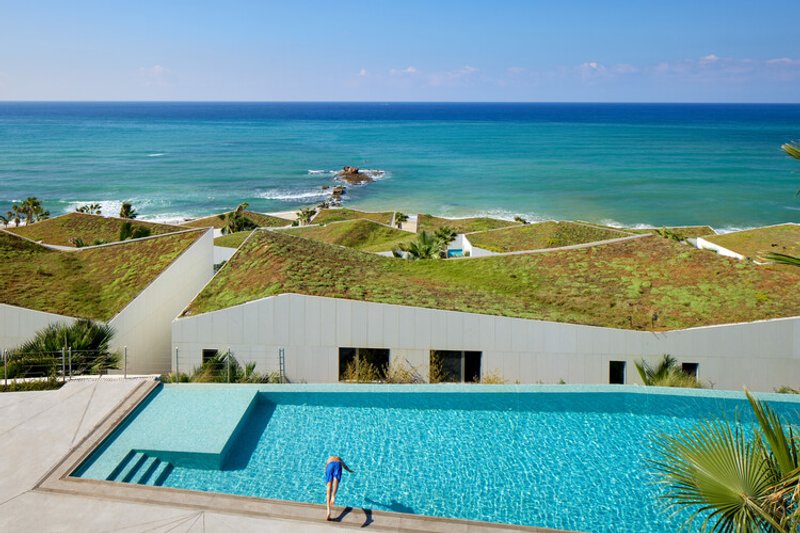
Yet when Chafic Saab first walked through this desolate terrain following the army's departure, he experienced something unexpected. Despite the destruction surrounding him, the unobstructed view of the Mediterranean remained intact and breathtaking. That vista sparked within him a feeling of profound optimism and the possibility that this wounded place could be transformed into a site of new life, community, and hope. This moment of vision would ultimately shape not just a real estate development, but an architectural and social experiment in coastal living.
The site's location in Batroun added another layer of complexity to Saab's vision. At the time of his initial visit, Batroun remained largely overlooked by developers and residents alike. The city was considered psychologically distant from Beirut—the journey requiring passage through what had recently been occupied territory. Lebanese preferences traditionally favored mountain summer residences over seaside properties, further diminishing Batroun's appeal for residential development. The prevailing wisdom suggested that investing in coastal property here was, at best, unconventional and, at worst, foolhardy.
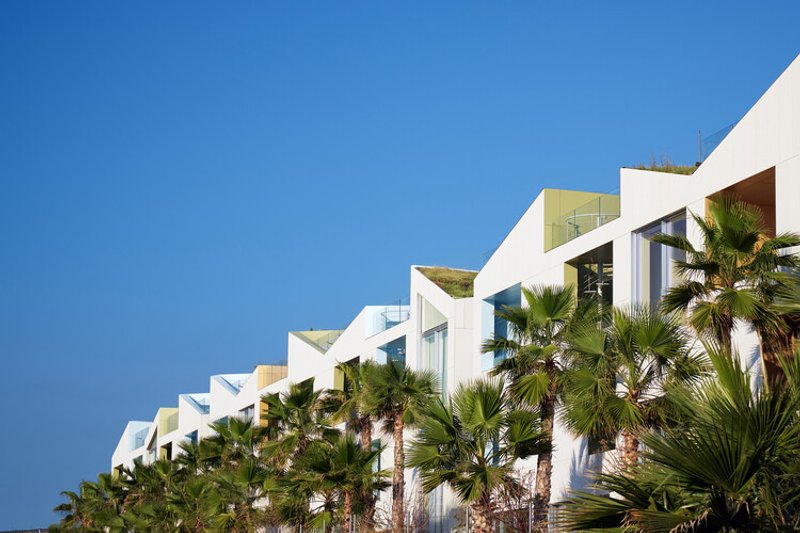
However, Batroun was beginning to experience a renaissance, driven in significant part by the energetic leadership of its mayor. Over the fifteen years preceding Marea's development, the area gradually became more desirable as infrastructure improved, cultural activities increased, and tourism began to flourish. Saab's vision aligned with this emerging transformation, positioning Marea not as a speculative gamble but as a catalyst for reimagining what coastal Lebanese living could become.
A Collaborative Design Process: Client and Architect as Partners
In 2017, WORKac received the commission to conceptualize and ultimately design Marea. The relationship between Saab and the architectural firm evolved into a genuine collaboration—a partnership between a client with deep personal investment in the project's success and architects bringing fresh perspectives on density, landscape, and Mediterranean urbanism.
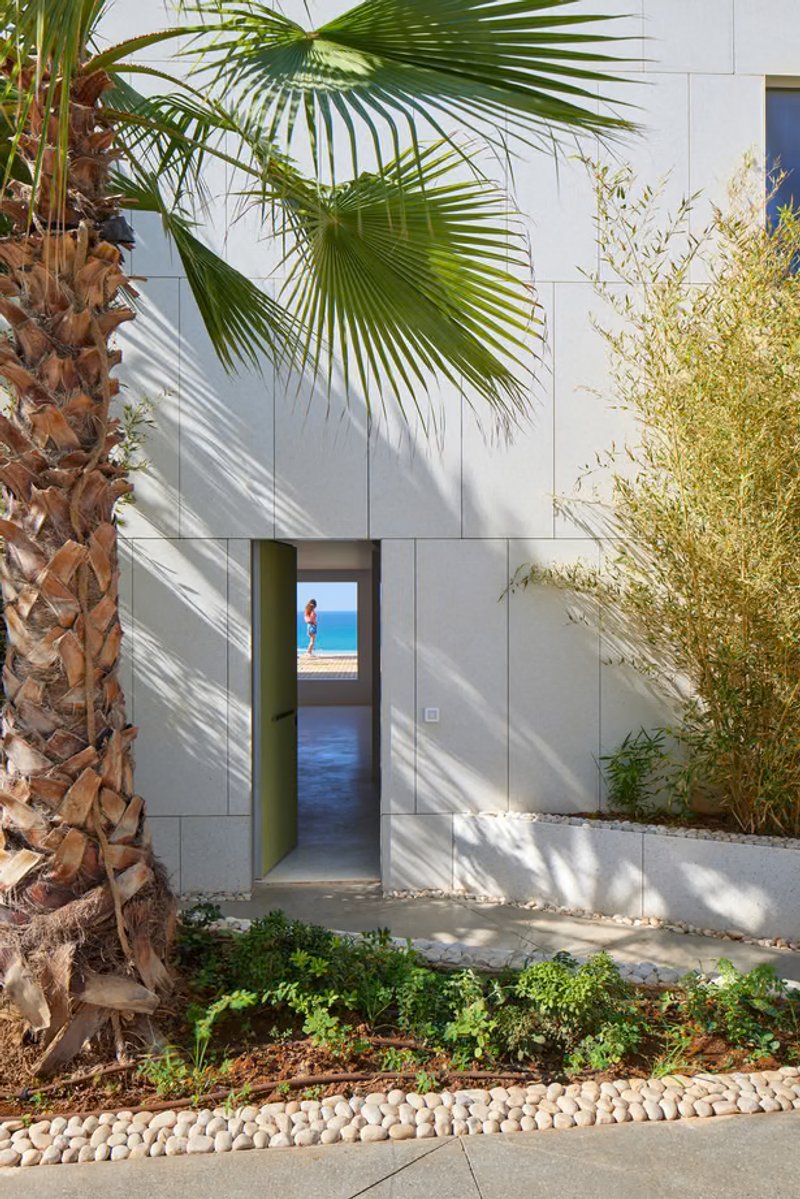
Saab's commitment extended far beyond typical developer involvement. He lived on site for three years during the construction process, personally overseeing every aspect of the project's realization. This wasn't merely quality control; it was a demonstration of belief in the vision he and WORKac were creating together. Following completion, Saab made Marea his permanent home, the ultimate testament to confidence in the community he had helped bring into existence.
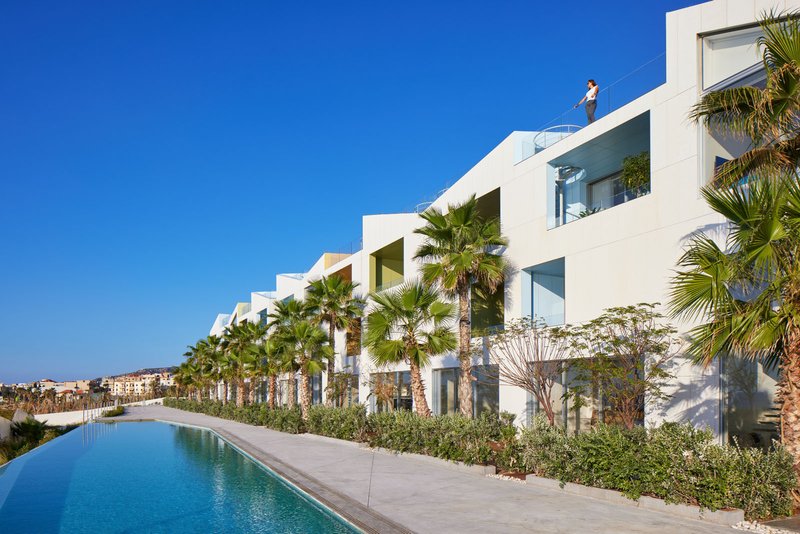
The client's initial concept established the project's radical foundation: create a multi-family housing development in Lebanon that would embrace variety in unit sizes, ranging from very small studio apartments through duplexes and combined houses to stand-alone villas. This diversity stood in stark contrast to typical development patterns, which tend toward homogeneity in unit types and target markets. Saab understood that authentic communities require economic and demographic diversity, and his brief to WORKac reflected this social vision.
Design Philosophy: Density as Opportunity, Not Compromise
WORKac's response to the brief embraced density as an architectural opportunity rather than a constraint to be minimized. The firm recognized that thoughtful density in housing could generate vibrant communities while ensuring that each residential unit, regardless of size, would capture optimal views of the Mediterranean. This approach required sophisticated three-dimensional planning that considered sight lines, privacy, access to light, and the psychological experience of living in proximity to neighbors.
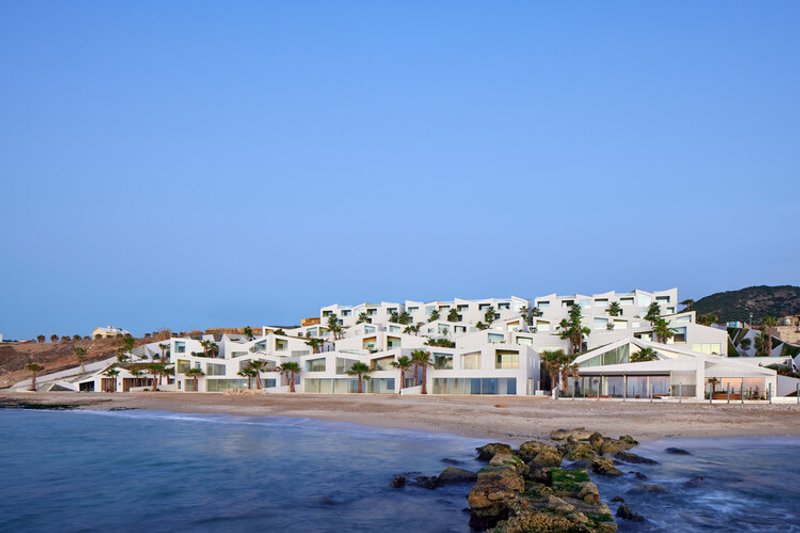
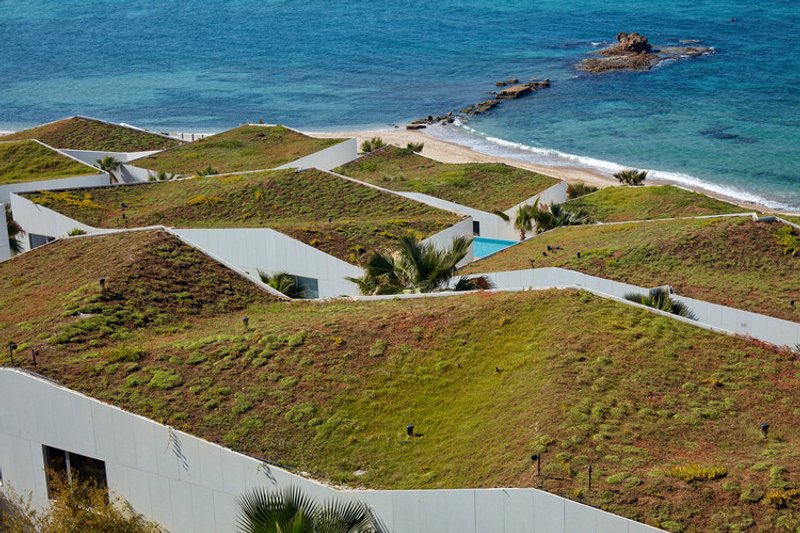
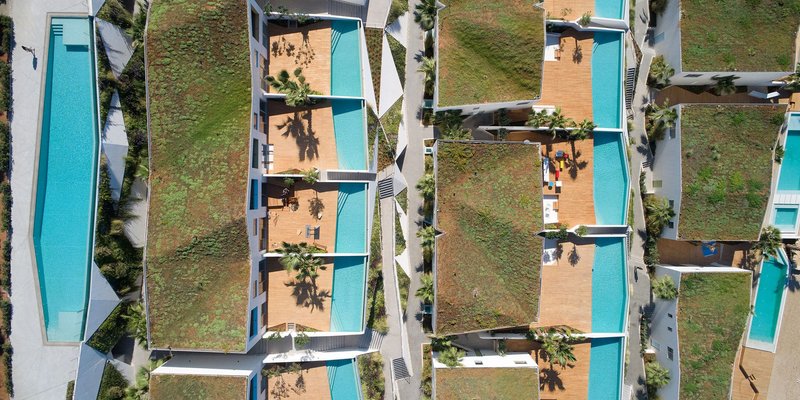
The architectural concept drew inspiration from what makes Lebanon itself so magical: the incredible compression of diverse landscapes within a small geographic area, most dramatically visible in the rapid transition from mountain peaks to Mediterranean coastline. Marea architecturally mirrors this geographical compression through its organization and formal language. The project brings together landscape and architecture in an integrated whole, with a vista of triangulated green roofs suggesting an undulating topography that descends toward the sea—a built landscape that echoes the natural terrain's dynamic character.
Organizational Logic: Terraced Rows and Progressive Scale
The sixty residential units organize themselves in four terraced rows that step down the steep coastal slope toward the beach. This organization follows a logical progression that responds to both topography and program. Smaller studio apartments occupy the upper tiers, where the steeper slope and greater distance from the water make them appropriate for compact dwellings that maximize their elevated vantage points.
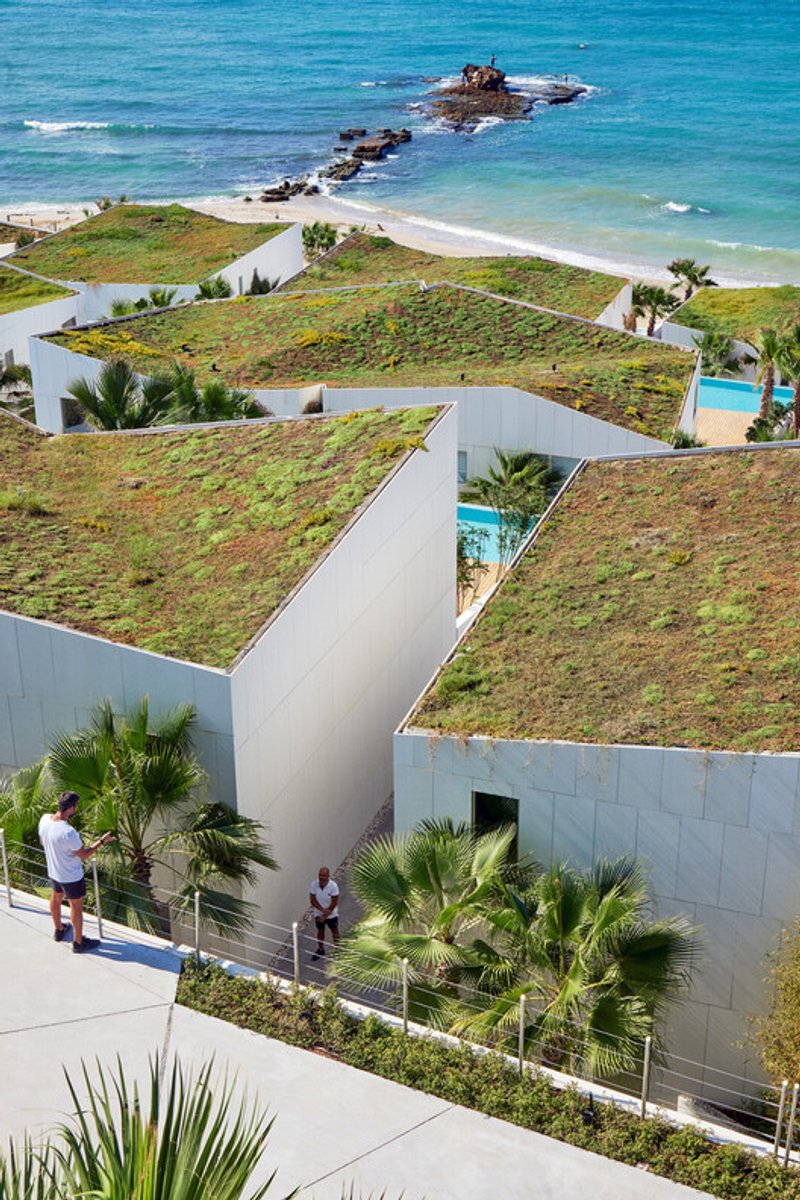
As the rows descend, the units progressively increase in size—studios give way to townhouses, which transition to semi-detached houses, culminating in individual villas on the lower tiers closest to the Mediterranean. This gradient of scale creates visual interest and programmatic diversity while ensuring that every residence, from the most modest studio to the largest villa, enjoys unobstructed views of the sea. The democratic distribution of this precious resource—the coastal vista—represents one of Marea's most significant achievements.
Access to the public beach serves as another equalizing element. Each owner, regardless of unit size or location within the complex, enjoys passage to the shoreline through a carefully designed network of ramps, stairs, and streets that connect the units. This circulation system transforms what could have been a series of isolated dwellings into an interconnected community where movement through the site becomes a social experience.
Landscape Architecture: When Terrain Becomes Building
One of Marea's most innovative aspects lies in the deliberate blurring between architecture and landscape. While the residential structures merge into the planted terrain, the landscape itself becomes architectural—a constructed topography that shapes movement, defines spaces, and creates the experiential framework for daily life.
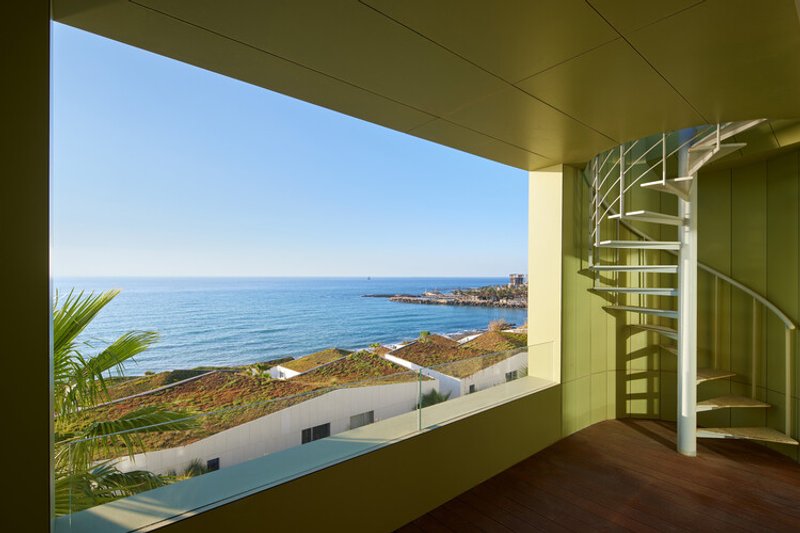
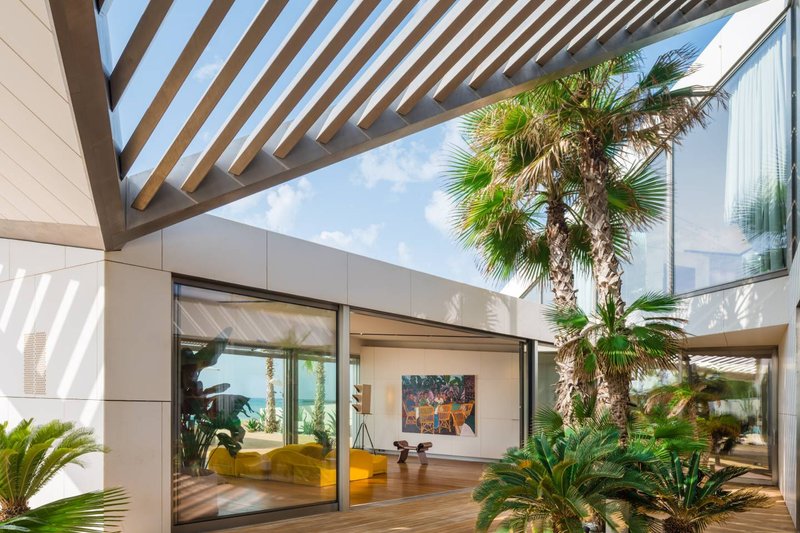
The houses nestle within a complex geometry of planted, triangulated folds. These geometric manipulations of the ground plane aren't merely decorative; they actively generate the project's organizational elements. The folded landscape creates the "streets" that provide pedestrian circulation, wooden patios that extend living spaces outdoors, swimming pools that serve individual units or small clusters of residents, and lush planting beds that soften the density and provide natural cooling.
This approach to landscape-as-architecture required careful coordination between architectural design, structural engineering, landscape architecture, and irrigation systems. The triangulated geometry, while visually striking, emerged from functional requirements: managing drainage on the steep slope, creating level platforms for pools and patios, establishing privacy buffers between units, and maximizing planting areas within a dense development.
Infrastructure and Circulation: Invisible Systems Supporting Visible Life
Marea's success depends significantly on infrastructure decisions that remain largely invisible to residents and visitors. Perhaps most significantly, vehicular circulation has been relegated to golf carts and an underground network of parking. This decision transforms the character of the community, eliminating the visual and acoustic dominance of automobiles that characterizes most contemporary developments.
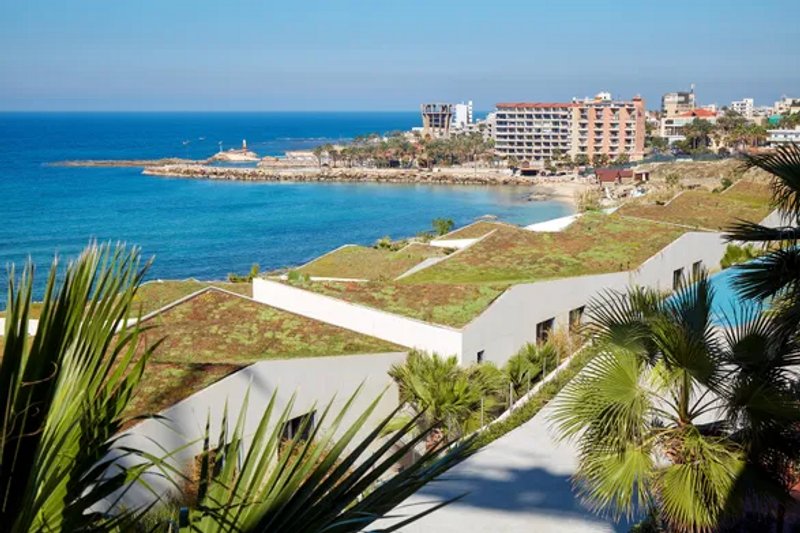
The underground infrastructure serves multiple purposes beyond parking. It houses freshwater cisterns—critical in Lebanon's context of inconsistent water supply—and provides storage space for residents. This subsurface zone sits behind and beneath the geometric landscape, structurally supporting the folded terrain while remaining experientially absent from daily life above.
By removing cars from the visible realm, Marea recovers space and atmosphere for pedestrian life. The streets that cascade down the sides of the site and weave between blocks of villas function as genuinely social spaces. Residents circulate on foot or in quiet golf carts, creating opportunities for casual encounters. As in classic Mediterranean hill towns, neighbors stop to chat or wave hello as they navigate through the constructed landscape. These micro-interactions, seemingly minor, accumulate into the social fabric that transforms a collection of housing units into an authentic community.
Privacy and Community: Balancing Opposing Desires
High-density development inevitably raises concerns about privacy. Marea addresses this challenge through multiple architectural strategies that allow residents to feel both connected to their community and protected within their private domains.
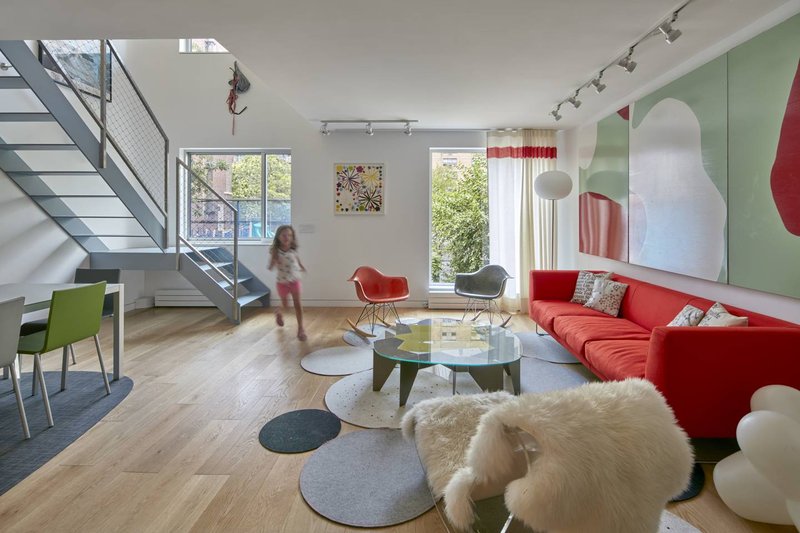
Every unit features a double-height living space—a generous vertical dimension that creates a sense of spaciousness even in the smaller studios. These living areas open onto private patios for most units, while upper-tier residences enjoy roof decks that capitalize on their elevated positions. Each unit provides access to either a private swimming pool or a pool shared among a small cluster of neighbors, ensuring that the luxury of water and outdoor living extends throughout the development rather than remaining exclusive to the largest villas.
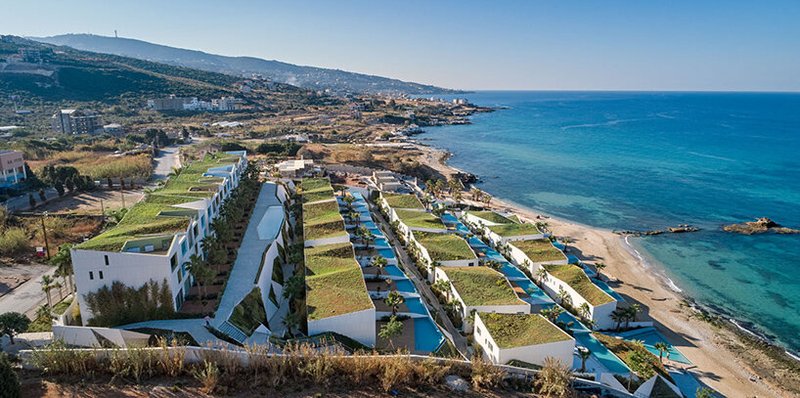
The triangulated landscape geometry contributes significantly to privacy. The folds create visual barriers and buffer zones between adjacent units, while the varied angles prevent direct sight lines into neighboring living spaces. Strategic planting reinforces these geometric screens, with vegetation providing both visual privacy and acoustic dampening.
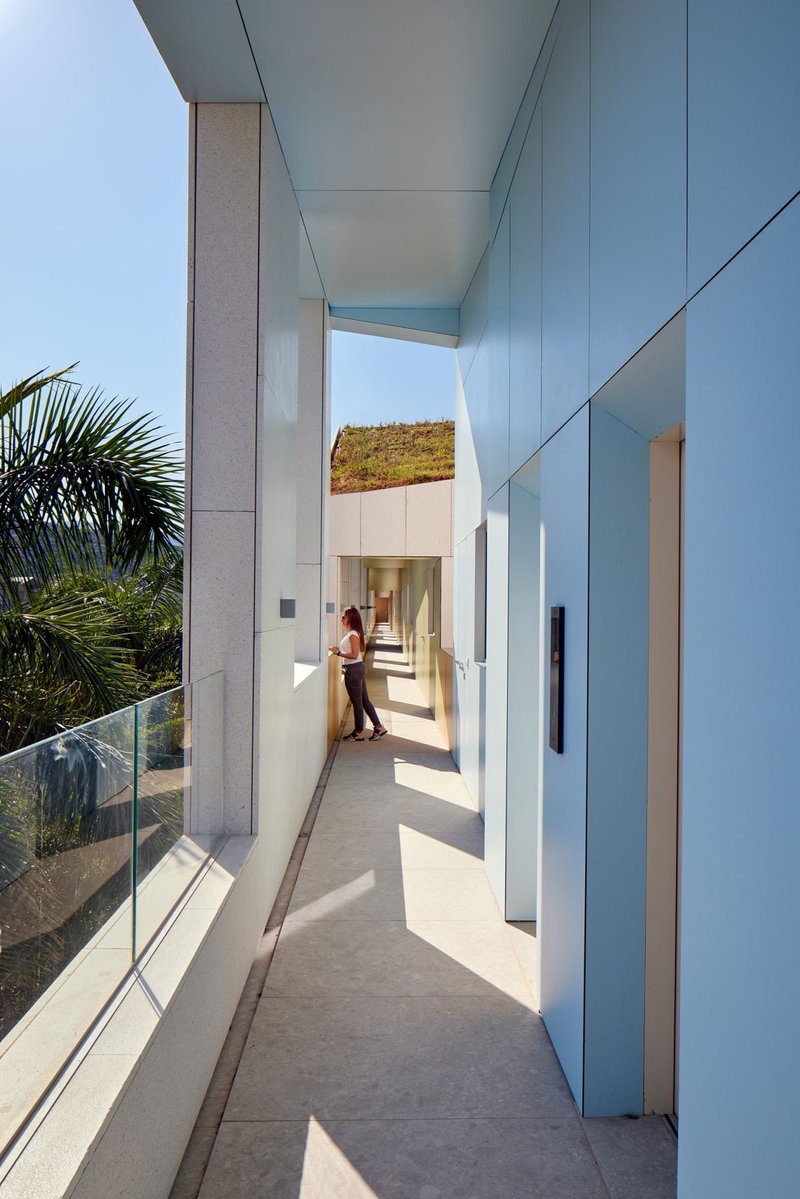
Despite the density, residents report feeling that their units offer substantial privacy—a testament to the careful calibration of distances, angles, sight lines, and landscaping. The design achieves the delicate balance of allowing residents to choose their level of social engagement: easily accessible when desired, but equally capable of retreat into private realms.
Material and Construction: Building in Complex Conditions
Realizing Marea required navigating Lebanon's complex construction context, particularly given the project's development timeline spanning from 2017 through the multiple overlapping crises that struck the country beginning in 2020. Lebanon faced economic collapse, currency devaluation, fuel shortages, the devastating Beirut port explosion, and the ongoing challenges of political instability—any one of which might have derailed a project of this ambition.
That Marea reached completion and full occupancy despite these obstacles speaks to the resilience of both client and architects, as well as the dedication of the construction teams who persevered through extraordinary difficulties. The project stands as a testament to what remains possible even in contexts of profound instability, demonstrating architecture's capacity to create spaces of order, beauty, and community amid chaos.
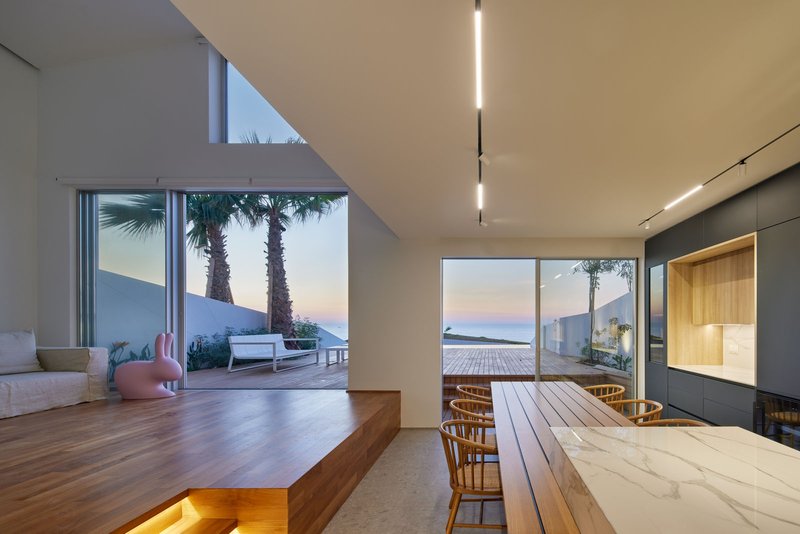
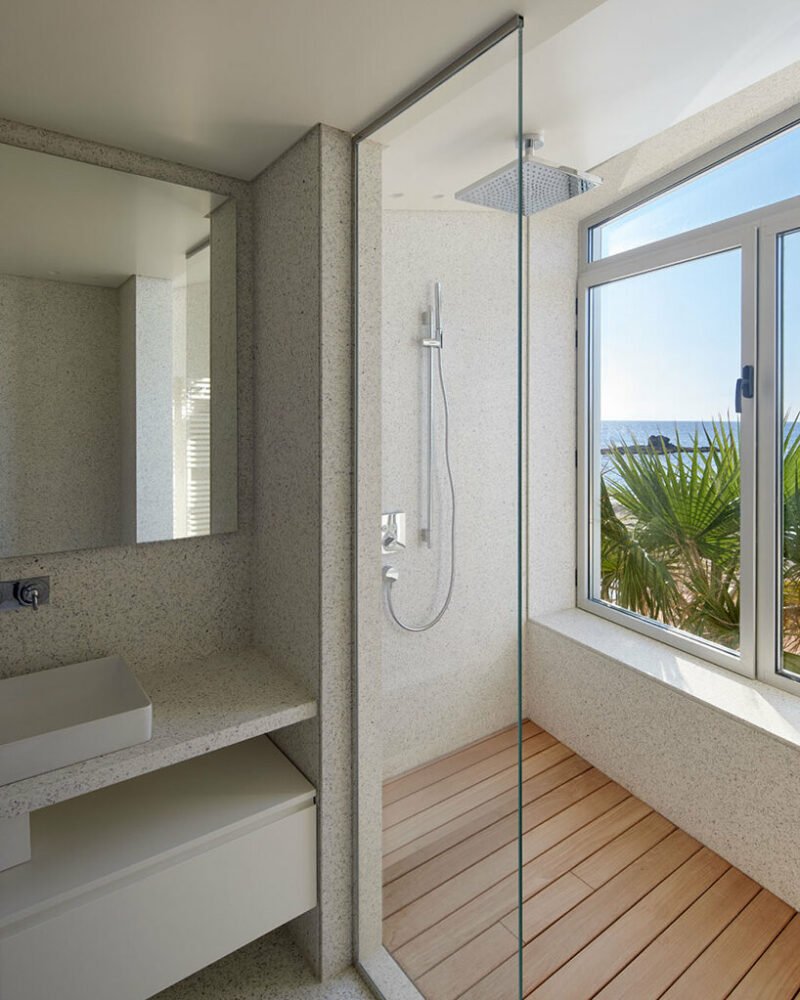
The material palette responds to Mediterranean climate and coastal conditions. The structures employ durable materials capable of withstanding salt air and intense sun. The green roofs provide both thermal mass and visual continuity with the landscape, while the wooden patios introduce warmth and texture that soften the geometric rigor. Pool surfaces catch and reflect light, creating dancing patterns that animate the spaces throughout the day.
Social Life and Urban Character: A Thriving Community
The ultimate measure of Marea's success lies not in architectural awards or publications, but in the lived reality of the community that has formed within its triangulated landscape. The project is now fully occupied, with residents ranging from full-time inhabitants like Chafic Saab himself to part-time residents who divide their time between Marea and other locations.
The shared restaurant on the beach has evolved into a destination that attracts visitors from across Lebanon, adding an urban vitality to Marea's streets and passageways, particularly in the evenings. This influx of outside guests integrates the development into the broader social fabric of Batroun rather than creating an isolated enclave. The restaurant serves as an anchor for community life, a place where residents gather and where the boundary between private residential development and public coastal culture becomes permeable.
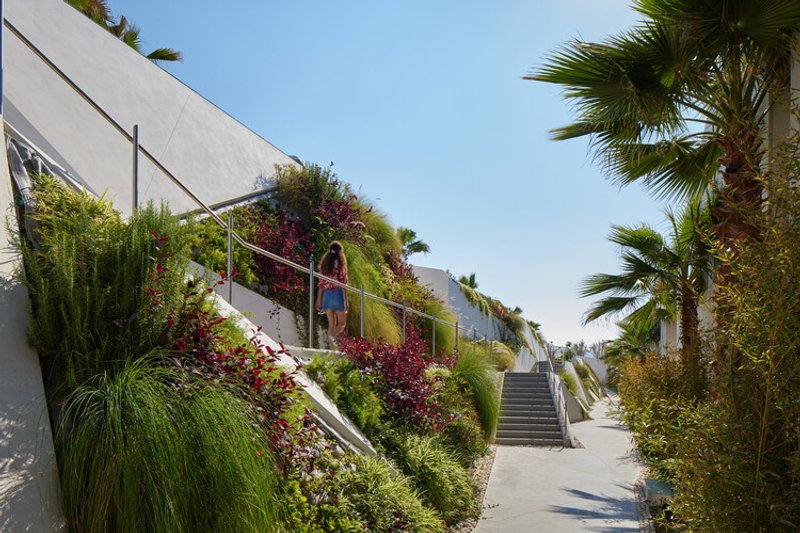
The diversity of unit types has succeeded in attracting a demographically varied community. Young professionals in studios live alongside families in townhouses and individuals or couples in villas. This variety generates a more resilient social structure than developments targeting a single demographic, with different age groups and life stages enriching the community's character.
A Model for Density and Community
Marea stands as a powerful demonstration that density in urban development need not compromise quality of life. Indeed, when thoughtfully designed, density can foster a sense of collectivity and community while maintaining individual difference and privacy. This balance—between collective and individual, between shared infrastructure and private realms, between community and autonomy—represents one of the central challenges of contemporary urbanism.
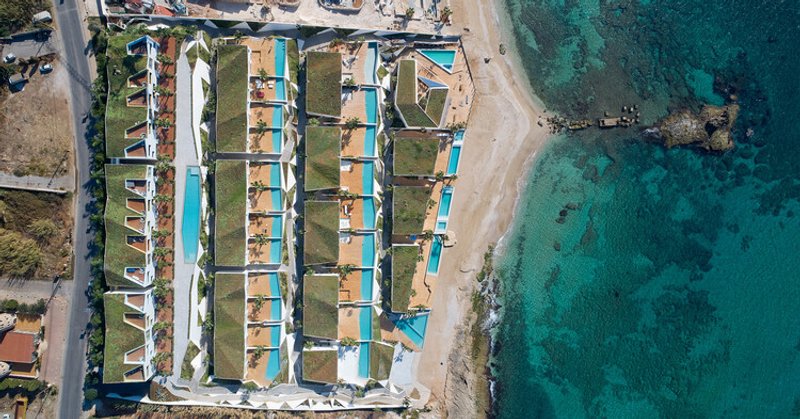
The project offers specific lessons for coastal development in the Mediterranean region and beyond. It demonstrates that variety in unit types can coexist within a unified architectural vision, that landscape and architecture can merge into a single experiential whole, that high density can preserve privacy and views, and that infrastructure decisions (like the elimination of visible cars) profoundly shape social life.
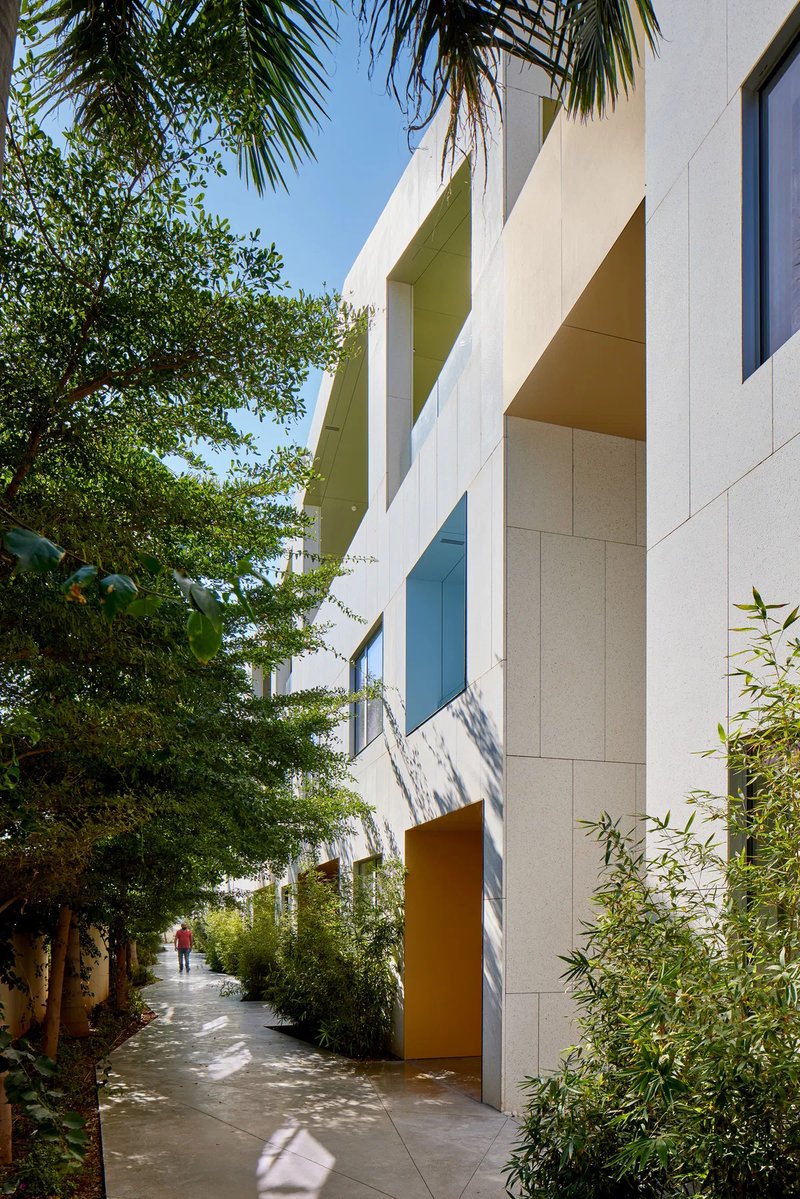
Marea also models a development approach that values long-term community building over short-term profit maximization. Saab's willingness to live on site during construction and to make Marea his permanent home reflects a commitment to place-making that extends far beyond typical developer involvement. This investment—financial, temporal, and emotional—contributed significantly to the project's success in creating an authentic community rather than merely a collection of real estate units.
Resilience and Hope: Architecture in Challenging Times
Perhaps Marea's most profound significance lies in what it represents for Lebanon specifically. Completed and fully occupied despite the tremendous overlapping crises that have battered the country since 2020, the project embodies resilience and hope. It demonstrates that even in contexts of extraordinary difficulty, it remains possible to create beautiful, functional, community-centered architecture.
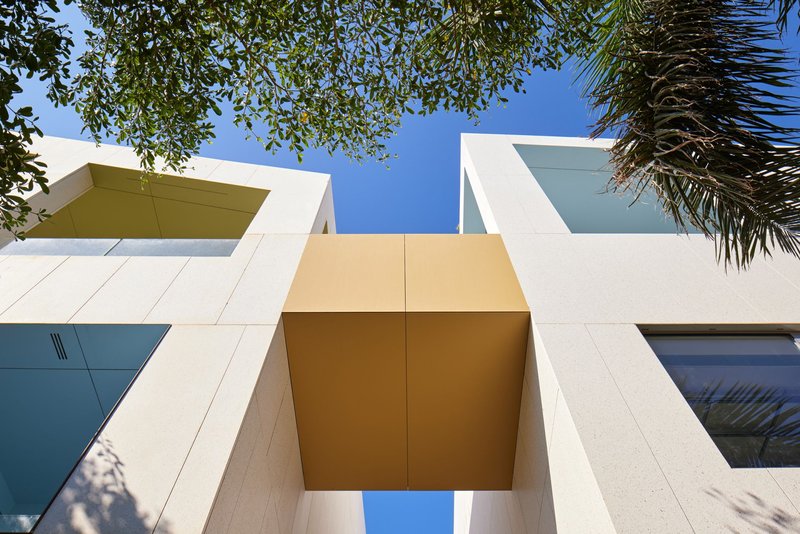
The site's transformation from abandoned military camp to thriving coastal community provides a powerful metaphor for Lebanon's own aspirations—the possibility of moving beyond conflict and division toward shared spaces of beauty and collective life. Marea doesn't ignore or deny the challenges surrounding it; rather, it asserts that architecture can create pockets of order, community, and optimism that sustain people through difficult times.


Popular Articles
Popular articles from the community

Terra e Tuma Scatters Four Concrete Pavilions Through the Atlantic Forest in Mairiporã
A fragmented compound of music studio, art studio, chapel, and living quarters preserves every tree on a steep forested hillside near São Paulo.
A.N. Tombazis and K-Studio Bury a Luxury Resort into a Peloponnese Hillside
Mandarin Oriental Costa Navarino scatters 99 earth-sheltered rooms across 140 hectares above the Bay of Navarino in Pilos, Greece.

The Memory of World: Skyscraper Architecture as a Vertical Exhibition of Human Civilization
A vertical museum in Hong Kong transforms skyscraper architecture into a journey through six eras of humanity, nature, memory, and progress.
Community Library in Girona: A Replicable Model for Inclusive Library Architecture
A modular community library in Girona transforms learning, culture, and climate-responsive design into a shared civic network for all users.
Similar Reads
You might also enjoy these articles

Hodi-Mandai Geram
Project Function: Preservation and revitalization of the Intangible heritage and socio-spatial identity of the Hodi by Housing, Cultural Memory Center, Sacred Grove, landscape, local tourism economy

Olio Towers: A Mid-Rise for Performers That Fuses Housing, Rehearsal, and Stage
Located blocks from Houston's Theater District, this modular tower stacks living units around a central performance atrium.
Oasis: Modular Green Housing Carved into Dhaka's Urban Fabric
A shortlisted Plugin Housing entry reclaims unauthorized settlements in Dhaka with stepped concrete volumes, green roofs, and ventilation-driven design.

Black Hole: A Floating Megastructure for the Post-Physical Era
Emiliano Mazzarotto envisions a spherical, self-scaling arena where e-sports, digital hotels, and holographic stadiums replace traditional public space.


Explore Housing Competitions
Discover active competitions in this discipline




The International Standard for Design Portfolios


The Global Benchmark for Architecture Dissertation Awards

The Global Benchmark for Graduation Excellence


Challenge to reimagine the Iron Throne
Comments (0)
Please login or sign up to add comments
No comments yet. Be the first to comment!