
Marilu House by Piúna Arquitetura: A Thoughtful Renovation Honoring Countryside Heritage
Marilu House blends countryside heritage with modern design, featuring wood, open social spaces, and serene outdoor living for families.


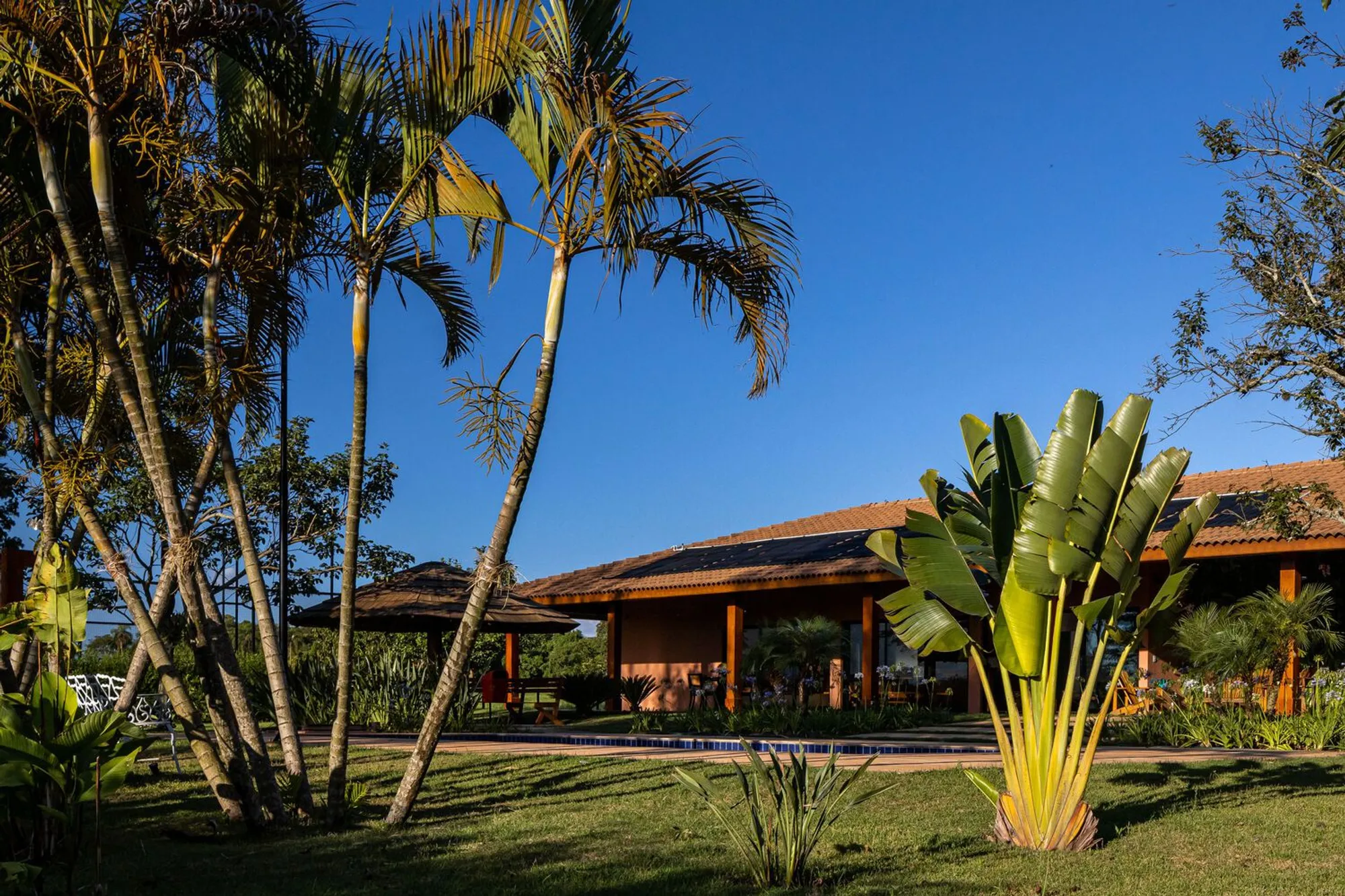
Marilu House, designed by Piúna Arquitetura, is a stunning countryside retreat located in Arandu, in the interior of São Paulo, Brazil. Spanning 574 m² and completed in 2019, the renovation of this family home pays homage to its historical roots while introducing sophisticated contemporary details. This architectural project beautifully balances heritage preservation, modern living, and family comfort, transforming the house into a welcoming weekend haven for multigenerational gatherings.
Preserving History with a Contemporary Vision
The design brief focused on retaining the house’s original volume, a characteristic example of 20th-century countryside architecture in Brazil. Rather than erase its past, the architects chose to preserve key structural elements and enrich them with modern construction techniques and carefully curated material choices. The result is a home that maintains its historical essence while seamlessly integrating modern sophistication and expanded spaces to accommodate the family’s evolving needs.
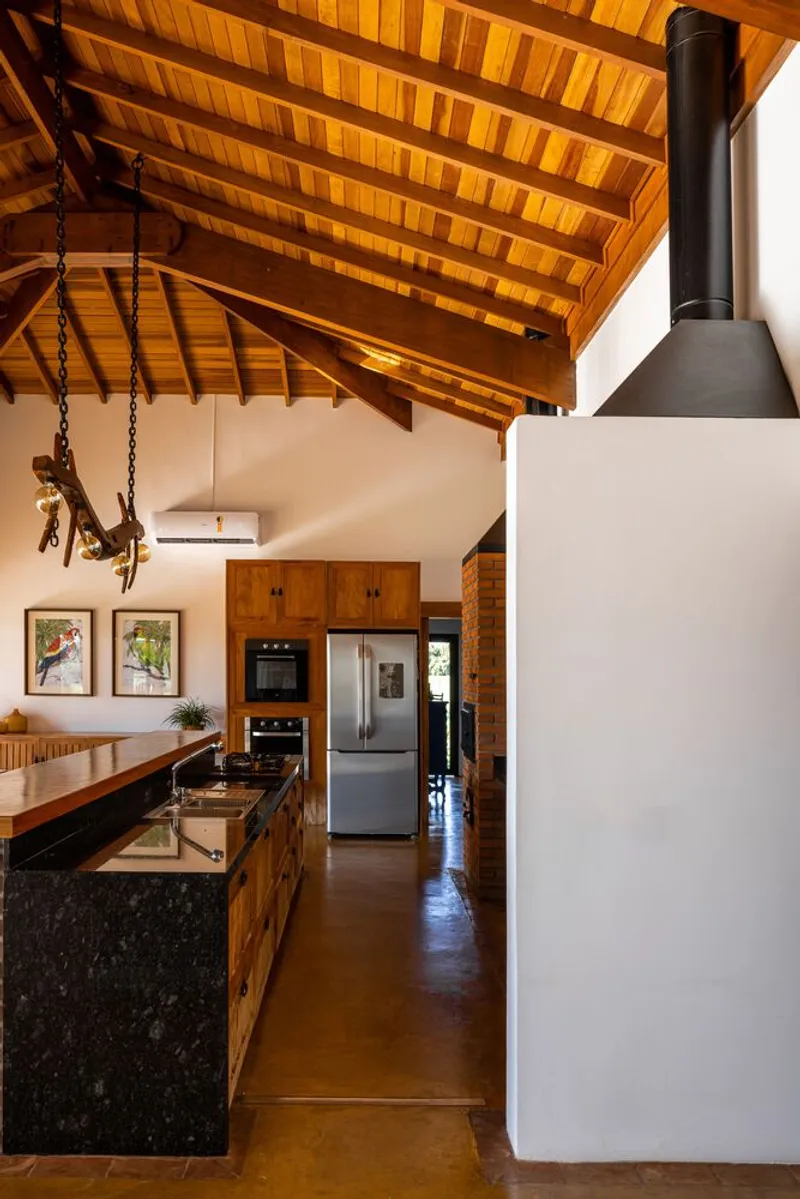
Thoughtful Layout: Blending Social and Private Spaces
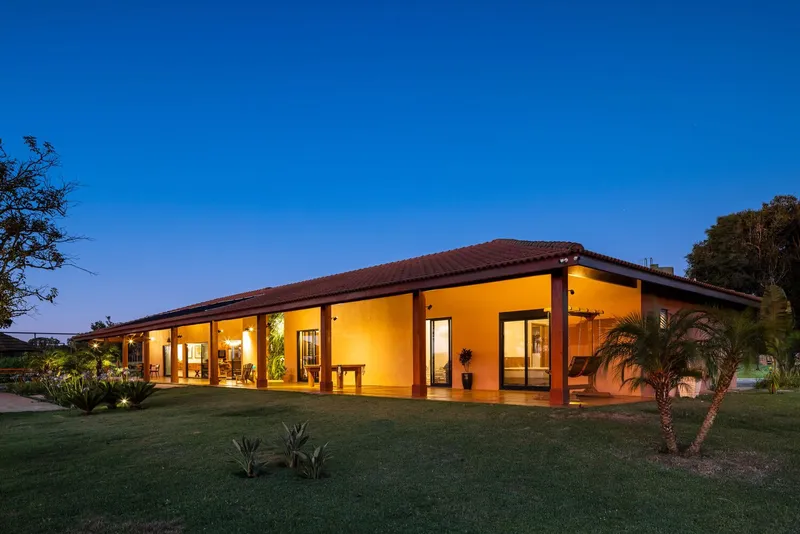
Marilu House unfolds across a single floor, offering intuitive zoning between public and private areas. Visitors are welcomed through the east-facing entrance hall, which acts as a connective threshold between the original structure and the new extension.
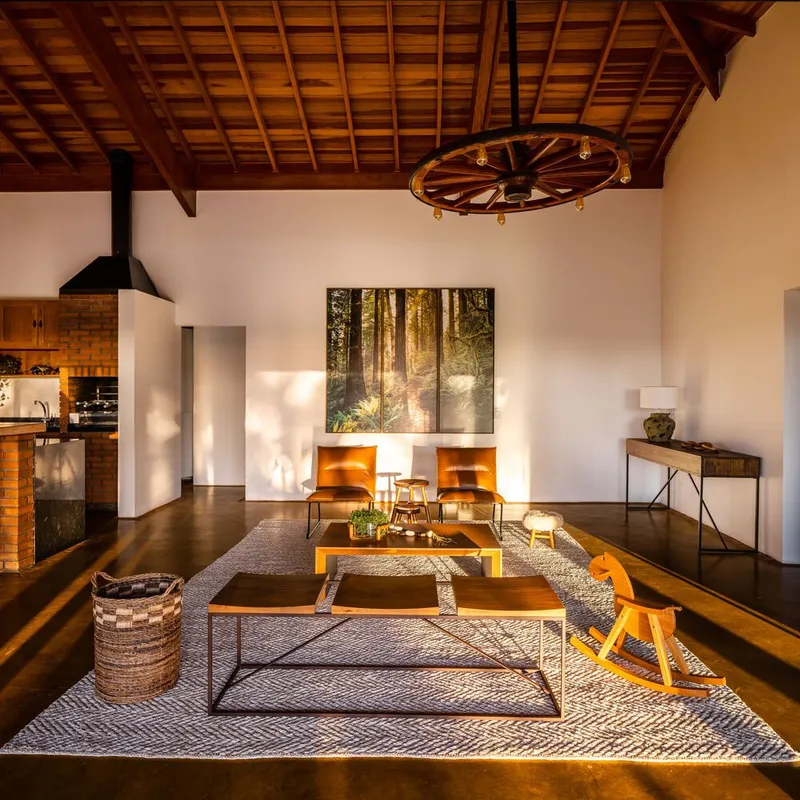
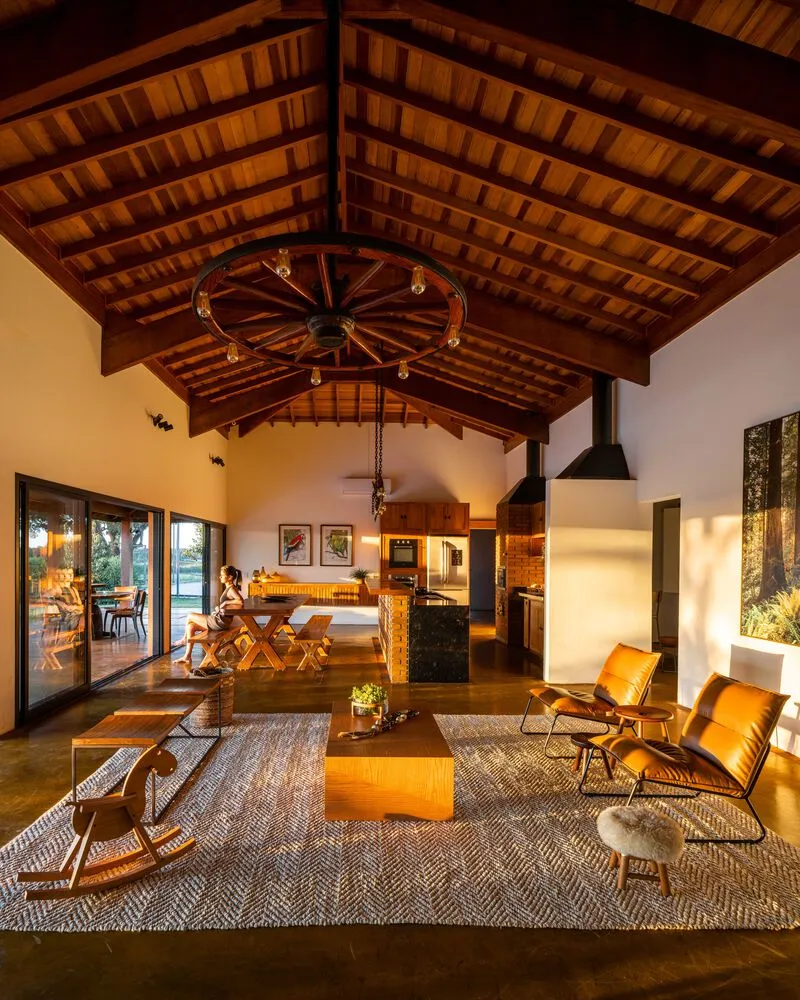
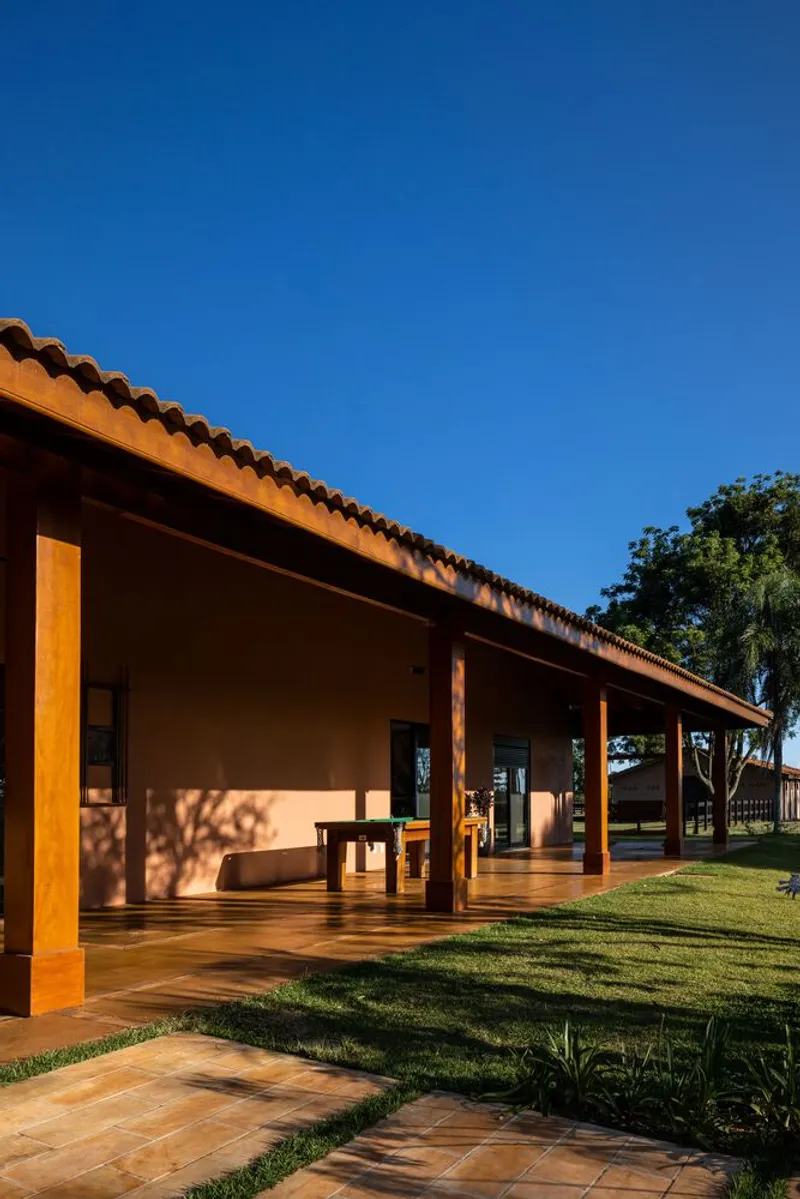
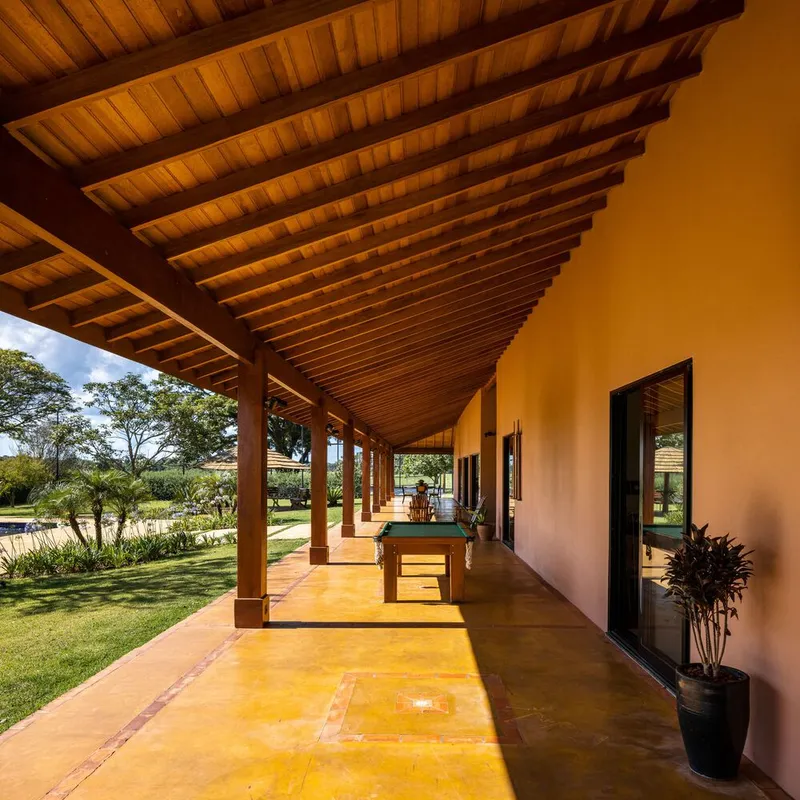
The heart of the home is a large, open-plan social space that combines the living room, dining area, and barbecue zone into one fluid environment, fostering family interaction and communal meals. Three expansive glass openings lead directly onto a west-facing veranda, which stretches the full length of the house, providing a shaded outdoor walkway and framing breathtaking views of the surrounding landscape.
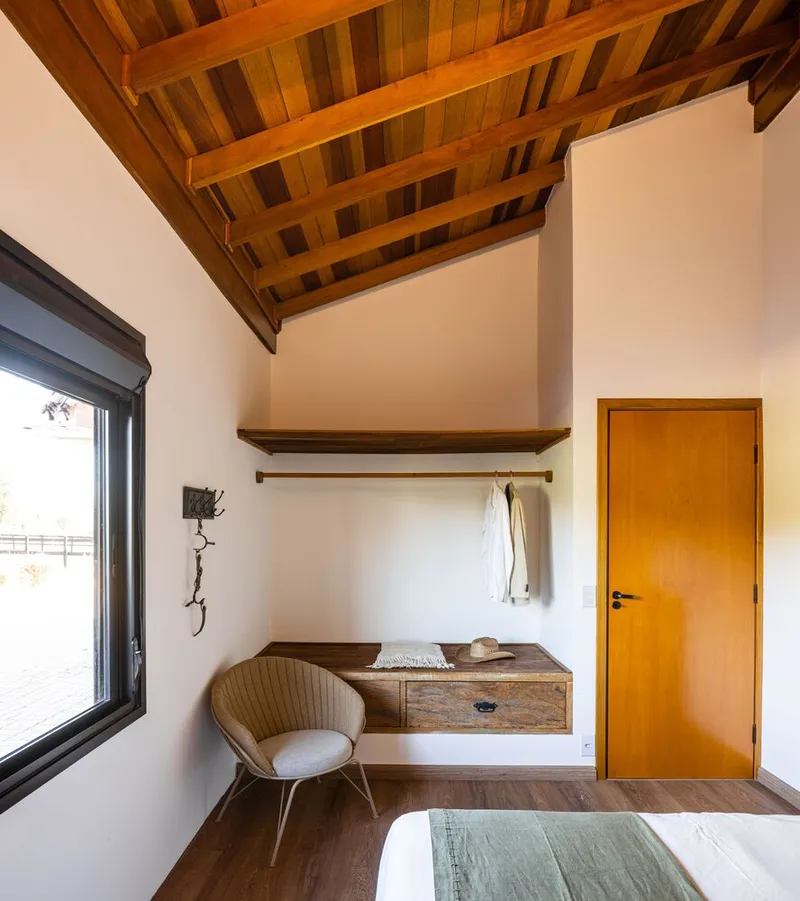
To ensure privacy, the three suites and intimate bedroom areas are positioned at the far end of the house, away from the social zones, minimizing acoustic disturbances. The leisure wing, thoughtfully designed for relaxation, includes a sauna, whirlpool, shower, and toilet, while a discreet service entrance at the back connects the parking area directly to the laundry room.
Craftsmanship, Materials, and Emotional Memory
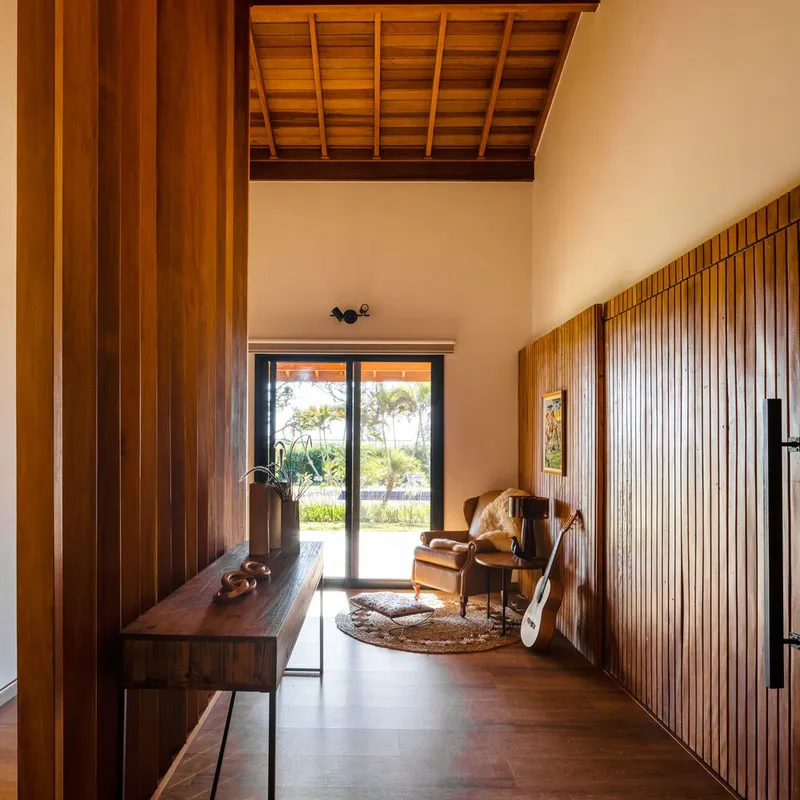
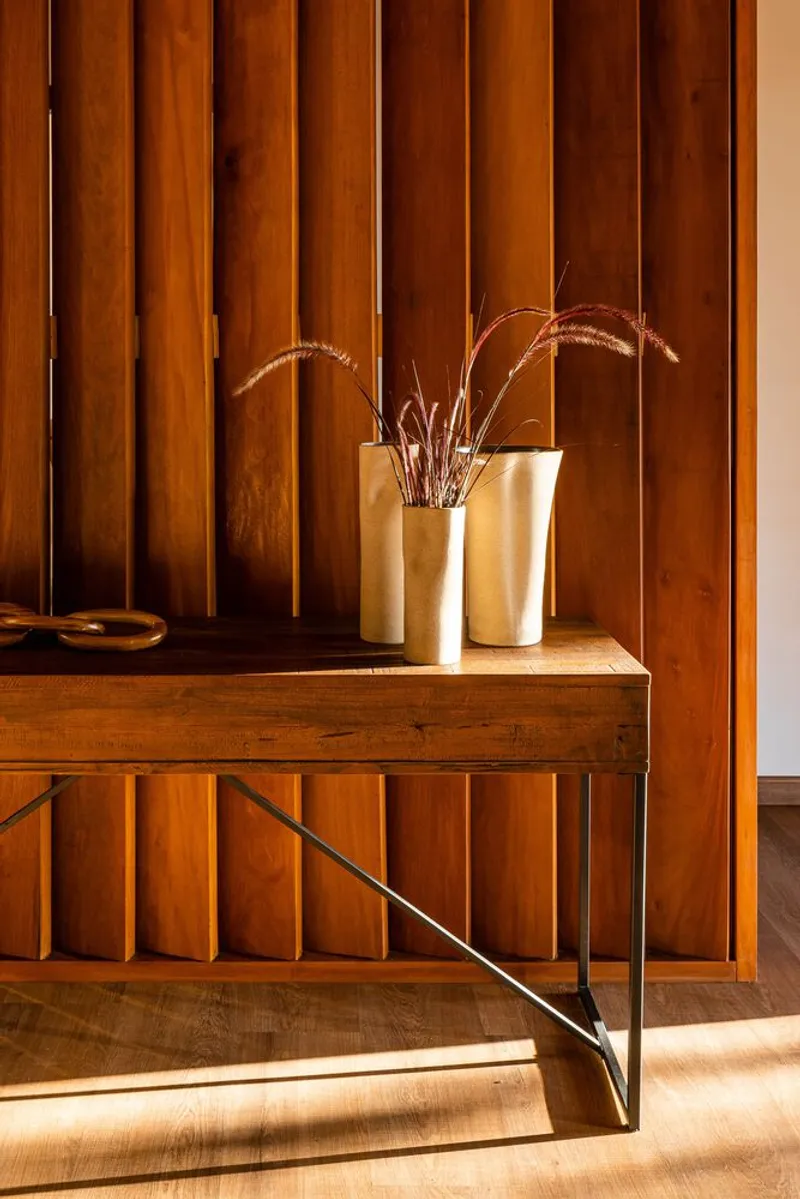
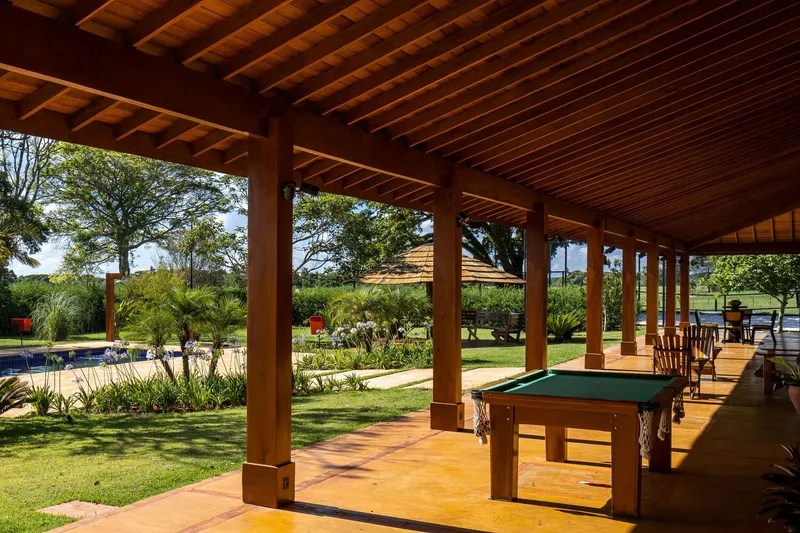
A defining feature of the Marilu House renovation is the extensive use of wood — both as a structural and decorative element. Warm timber surfaces appear in the exposed pillars of the veranda, the gourmet counter, the TV room paneling, and the pitched roof, enhancing the project’s natural warmth and textural richness.
The flooring throughout is finished in burnt cement with a mustard hue, creating a subtle backdrop for the rustic brick and ceramic detailing that complements the home’s earthy color palette. These material choices bring a tactile, grounded feel to the interiors, harmonizing modern design with the rustic countryside charm.
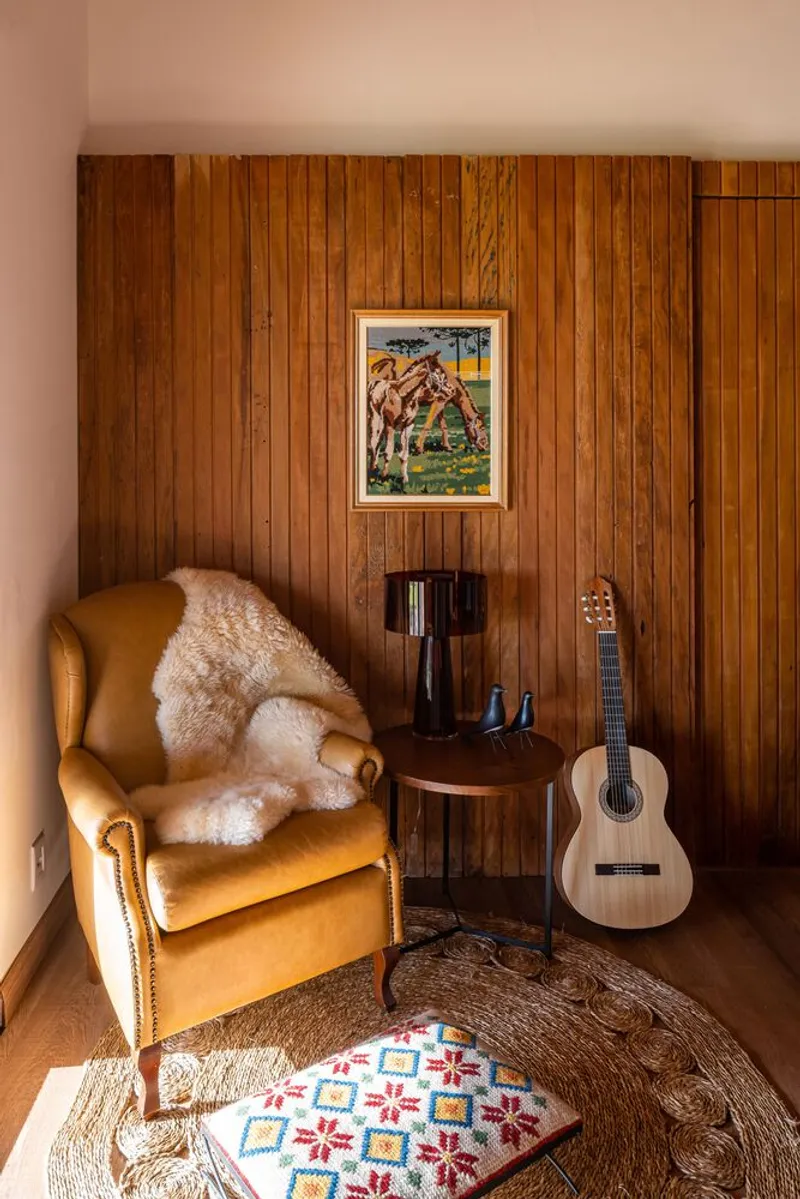
Personal artifacts lend the house deep emotional resonance. The TV room, once the old kitchen, is now a cozy retreat accentuated by wooden panels and filled with meaningful family heirlooms. Long wooden tables and benches in the gourmet area have been central to family meals for decades. A hand-embroidered horse painting by the family’s great-grandmother and a lovingly crafted footrest by the eldest daughter create intimate corners rich with personal history and sentimental value.
Outdoor Living and Landscape Integration
The outdoor veranda is arguably the most vital space in the entire project. Covered and expansive, it supports a seamless indoor-outdoor flow, inviting guests to relax, dine, and gather in comfort. Just steps away, the dark blue-tiled swimming pool adds a dramatic contrast to the main house’s warm tones, becoming a focal point of the outdoor leisure experience.
A lush vertical garden of orchids and foliage acts as a green bridge, marking the union between the preserved original building and the newly added volume. This living wall enhances the sensory experience of the space, adding texture, color, and vibrancy to the architectural composition.
All Photographs are works of Manuel Sá




Popular Articles
Popular articles from the community


Co-life: Sustainable Architecture for Age-Friendly Community Living
Co-life reimagines sustainable architecture for seniors through courtyards, rammed earth, shared gardens, and spaces designed for belonging.

Co-Life: Senior Housing Design That Reconnects Older Adults With the City
Co-Life reimagines senior housing design through healing gardens, shared streets, workshops, and a sustainable community across generations.

Play: Fragments of Their World
Familiar architecture becomes modular playground design, creating safe spaces where displaced children can learn, connect, imagine and play.

Lunar Spiral: Space Architecture Shaped by the Mathematics of the Universe
Lunar Spiral reimagines space architecture through Fibonacci geometry, lunar regolith, levitating habitats, and self-sustaining Moon living.


Similar Reads
You might also enjoy these articles


Hodi-Mandai Geram
Project Function: Preservation and revitalization of the Intangible heritage and socio-spatial identity of the Hodi by Housing, Cultural Memory Center, Sacred Grove, landscape, local tourism economy


Olio Towers: A Mid-Rise for Performers That Fuses Housing, Rehearsal, and Stage
Located blocks from Houston's Theater District, this modular tower stacks living units around a central performance atrium.

Oasis: Modular Green Housing Carved into Dhaka's Urban Fabric
A shortlisted Plugin Housing entry reclaims unauthorized settlements in Dhaka with stepped concrete volumes, green roofs, and ventilation-driven design.

Black Hole: A Floating Megastructure for the Post-Physical Era
Emiliano Mazzarotto envisions a spherical, self-scaling arena where e-sports, digital hotels, and holographic stadiums replace traditional public space.


Explore Architecture Competitions
Discover active competitions in this discipline



Challenge to reimagine the Iron Throne


Photograph architecture without architects


Illustrate the lost glory of Angkor Wat - Render Challenge


Design challenge to reuse E-waste
Comments (0)
Please login or sign up to add comments
No comments yet. Be the first to comment!