
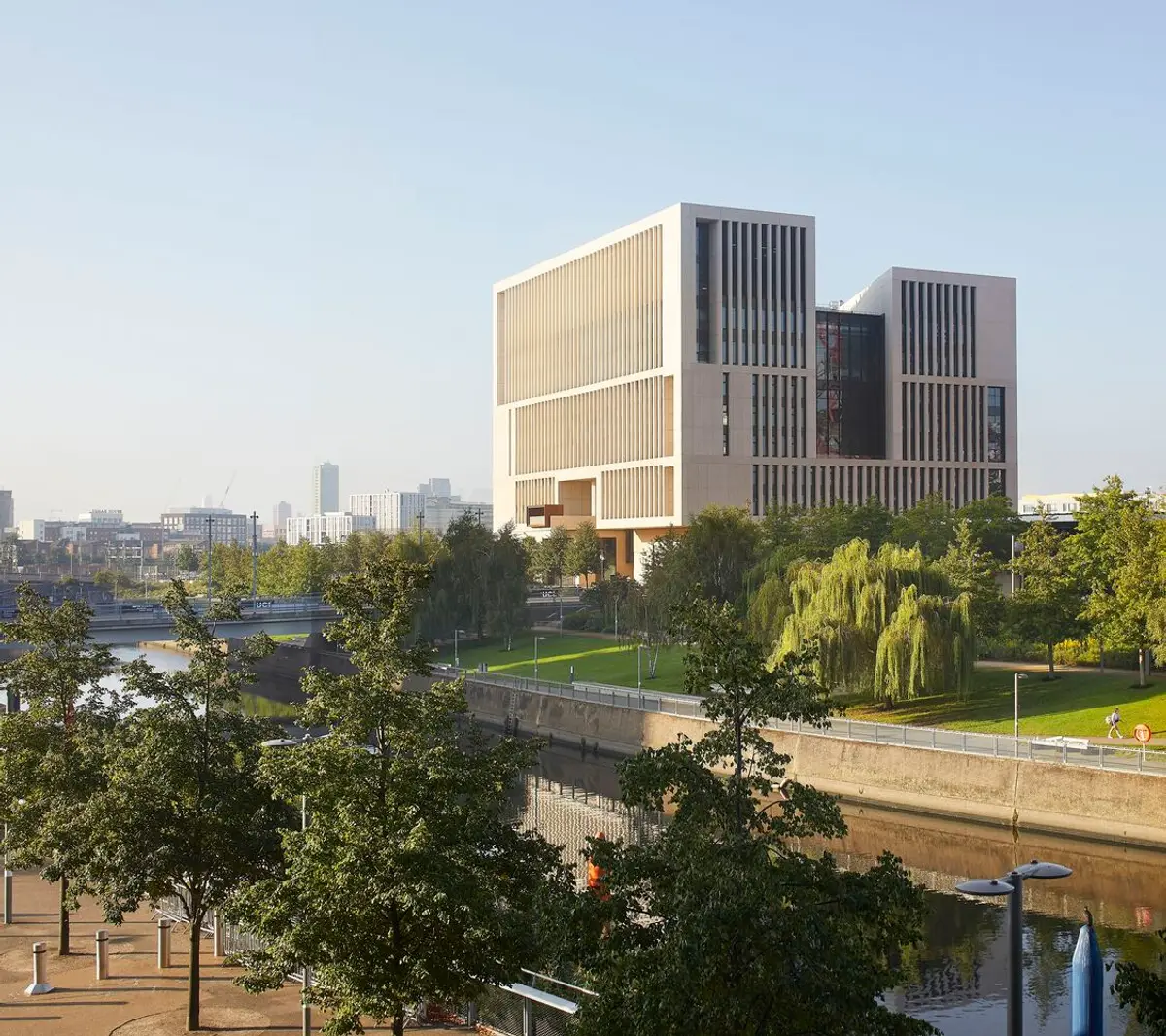
Marshgate UCL East Building by Stanton Williams: A New Era in Educational Architecture
Marshgate UCL East by Stanton Williams is a sustainable, cross-disciplinary academic hub fostering innovation, collaboration, and community engagement in London.


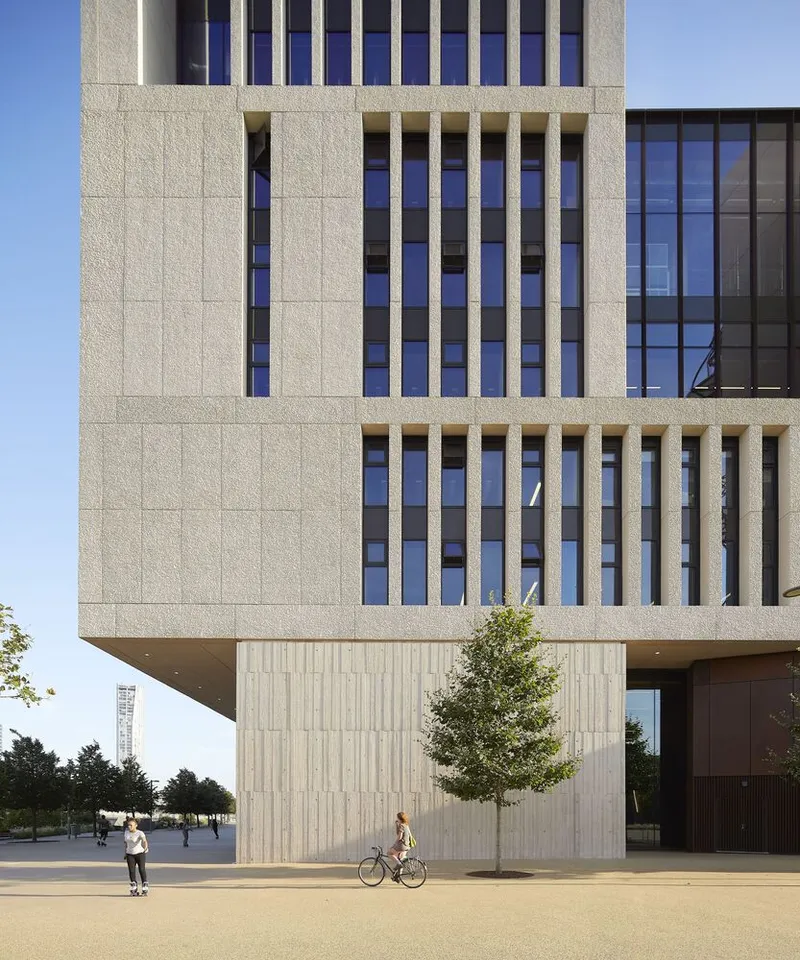
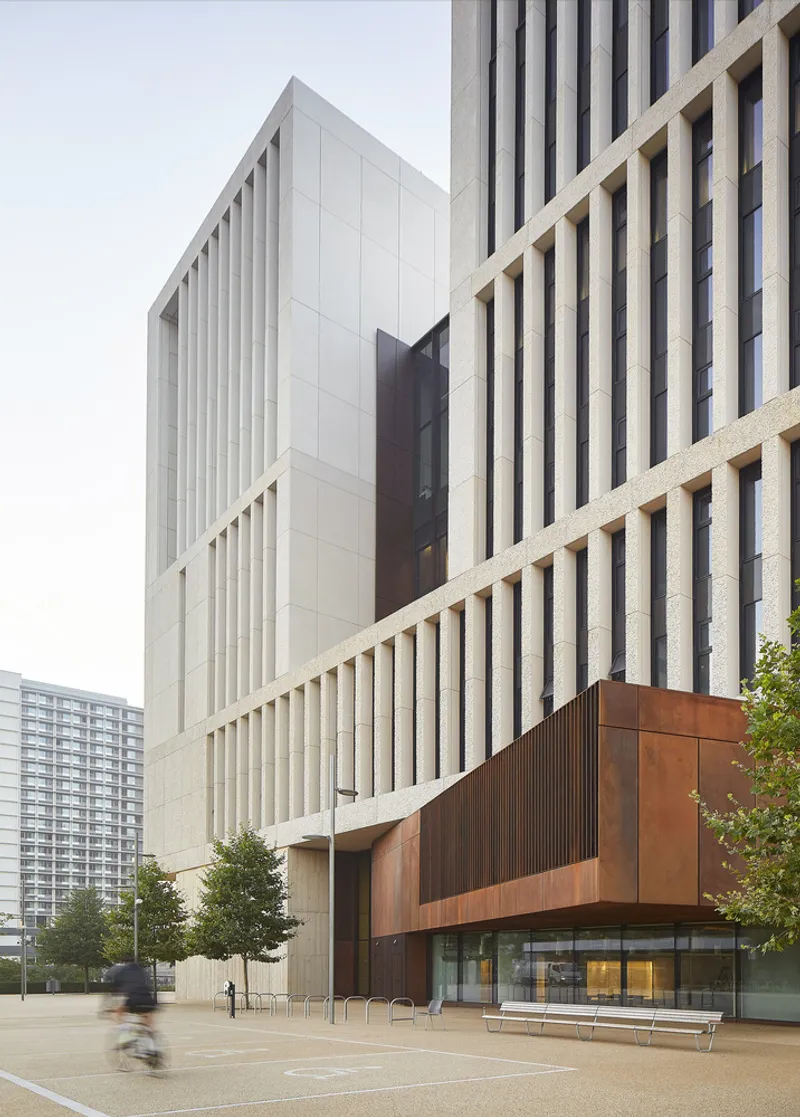
The Marshgate UCL East Building, designed by Stanton Williams, stands as a landmark academic facility within London’s Queen Elizabeth Olympic Park. This 35,000 sqm state-of-the-art structure redefines university architecture, fostering collaborative, cross-disciplinary learning while addressing global social, environmental, and technological challenges.
A New Standard for University Campuses
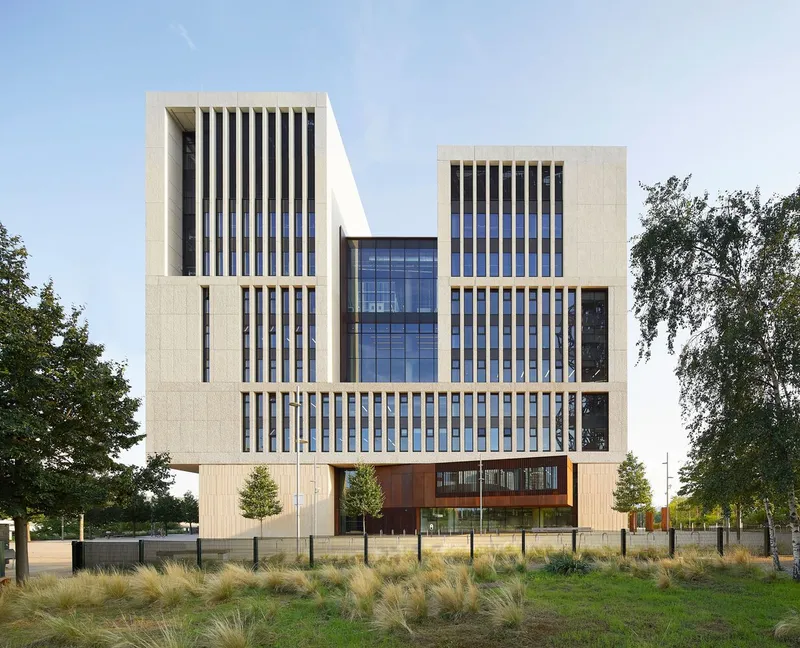
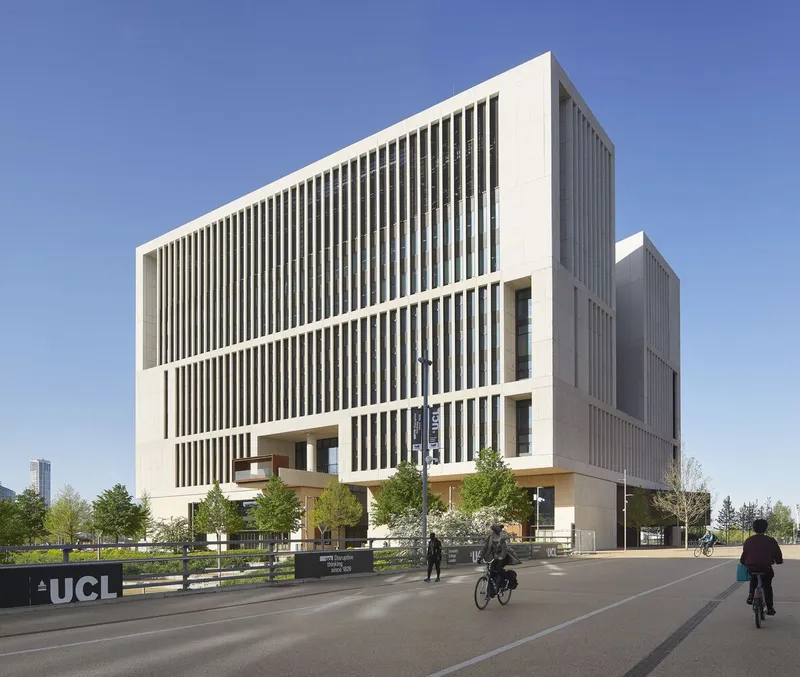
Marshgate is UCL’s largest single building, offering eight floors of adaptable spaces for teaching, research, and collaboration. It serves a diverse range of disciplines, including engineering, robotics, green technologies, creative industries, and global health. Designed to break traditional academic silos, the building encourages interdisciplinary interactions among students, faculty, and the public.
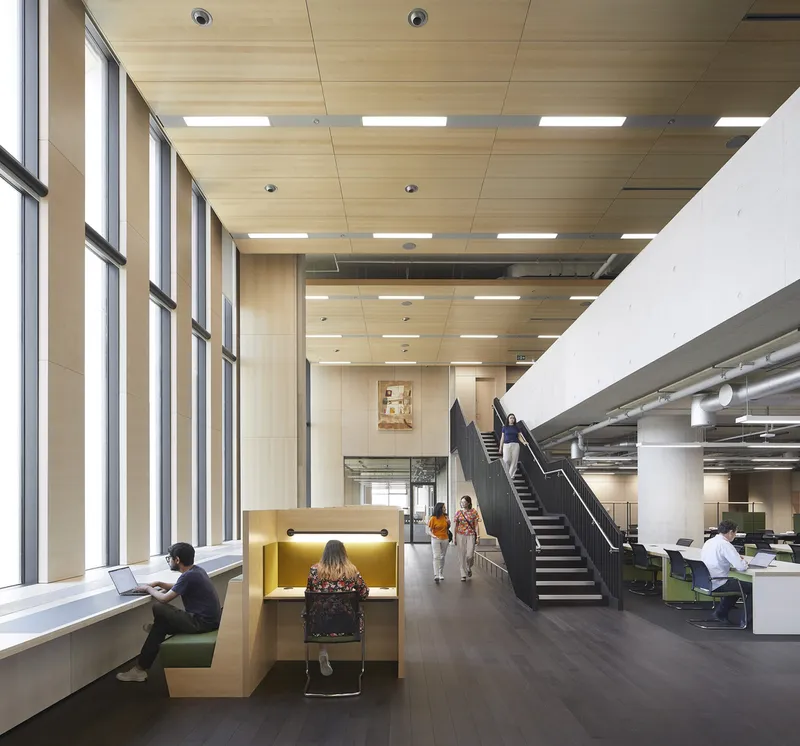
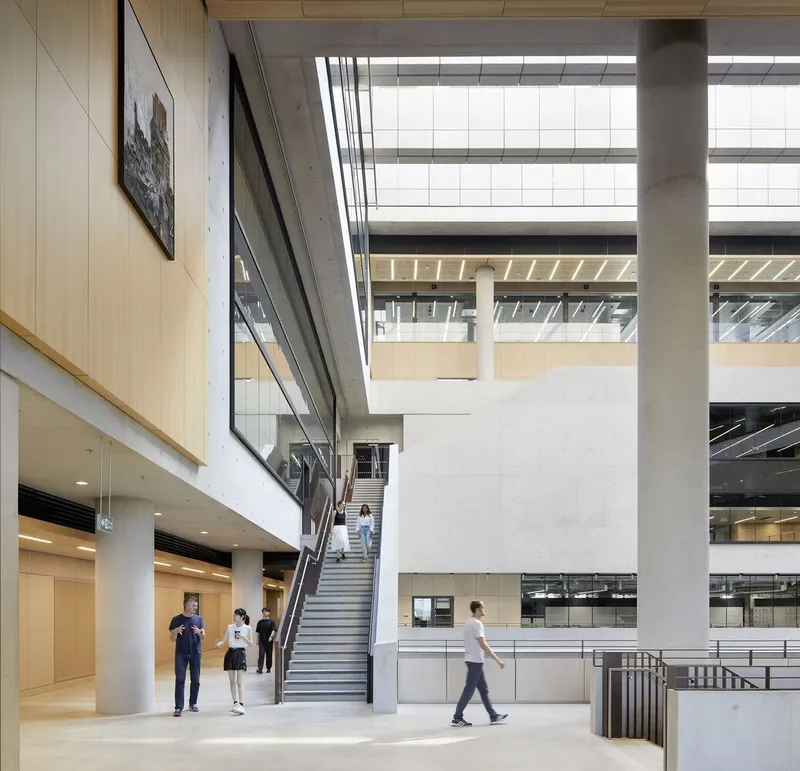
The architectural design organizes the building into ‘neighborhoods’, each with double-height collaboration zones, supporting informal discussions, exhibitions, and engagement with schools, community organizations, and local businesses. The ground floor integrates public amenities, including a café, exhibition spaces, and learning hubs, reinforcing the university’s commitment to community engagement.
Innovative Spatial Design & Functionality
The building’s layout is structured to maximize functional efficiency and user experience. While public spaces dominate the lower levels, academic and research facilities are centralized, and specialized laboratories and workshops occupy the upper floors. This strategic placement emerged from extensive user consultations, ensuring optimal alignment with UCL’s academic and research needs.
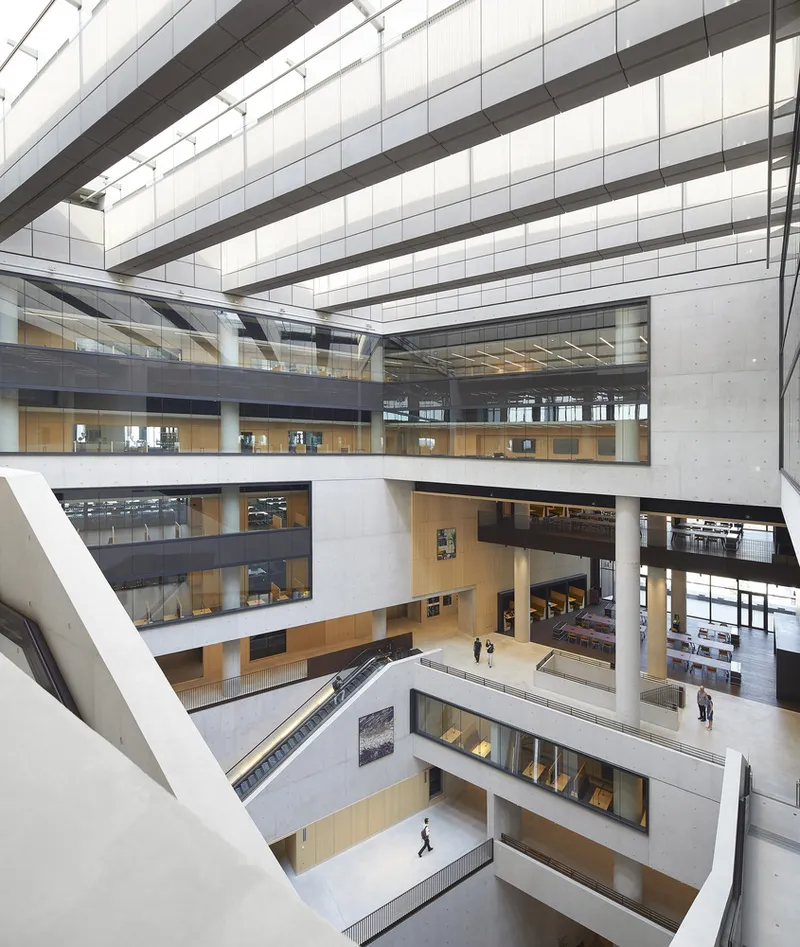
A central atrium, illuminated by natural daylight, vertically connects the building’s activities, with highly visible staircases and escalators fostering spontaneous interactions. Additional facilities include:
- Fabrication workshops & media studios
- Exhibition areas & design studios
- Lecture theatres & a library
- An executive suite for industry-academic collaboration
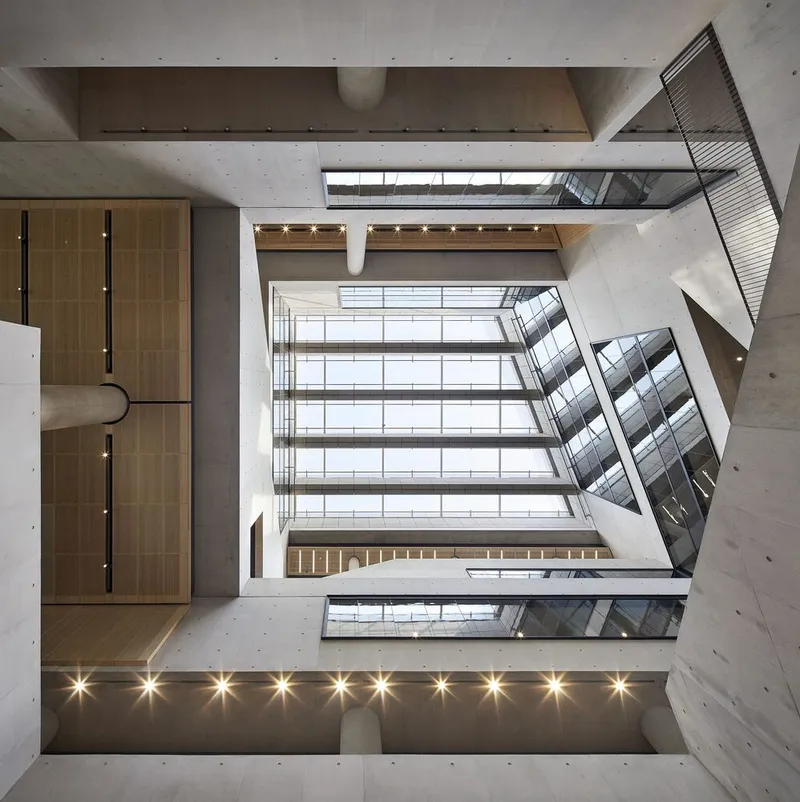
Architectural Vision: A Fusion of Heritage & Modernity
Moving away from glass-dominated facades, Marshgate reflects the solidity and permanence of UCL’s historic Bloomsbury campus. The precast concrete panels, textured in subtly graded tones, reference the site’s industrial past, while harmonizing with the contemporary Olympic Park structures. The design optimizes natural daylight and ventilation, enhancing both aesthetic appeal and energy efficiency.
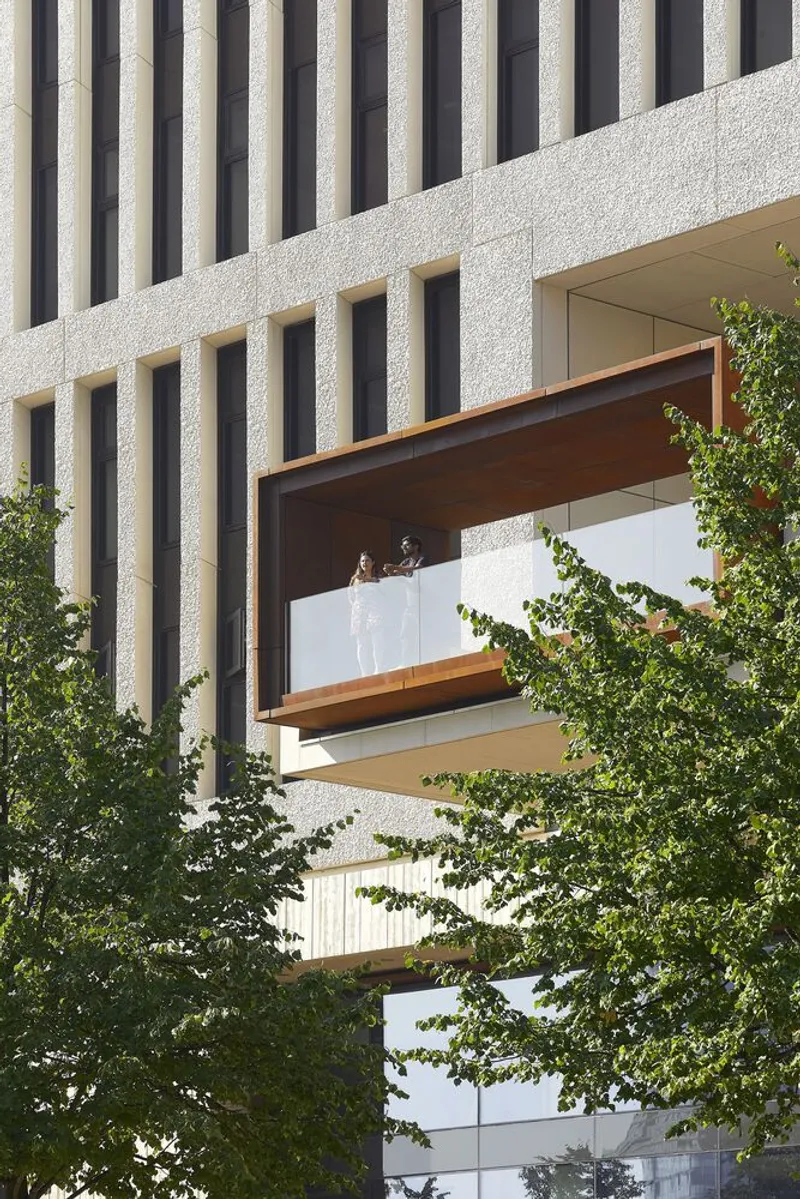
A Model for Sustainable Architecture
Sustainability is embedded into every aspect of Marshgate’s design. The BREEAM Excellent-rated building integrates:
- Passive design strategies to reduce energy demand
- High-performance thermal facade for solar shading
- All-electric infrastructure, partially powered by renewable energy
- A commitment to achieving net-zero carbon by 2035
Together with One Pool Street, another key component of the UCL East masterplan, Marshgate is a defining element in UCL’s largest expansion in 200 years. The building also plays a key role in Stratford’s SHIFT innovation district, a pioneering hub bringing together education, technology, and local communities to shape the future of sustainable urban development.
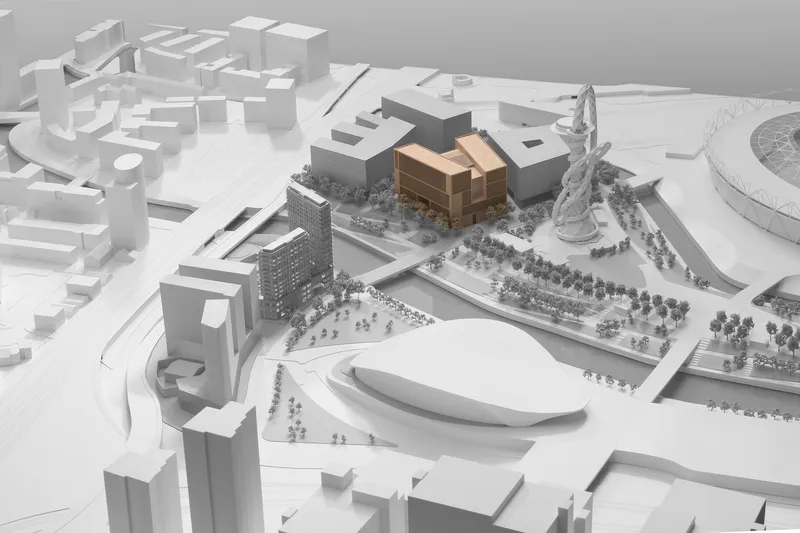
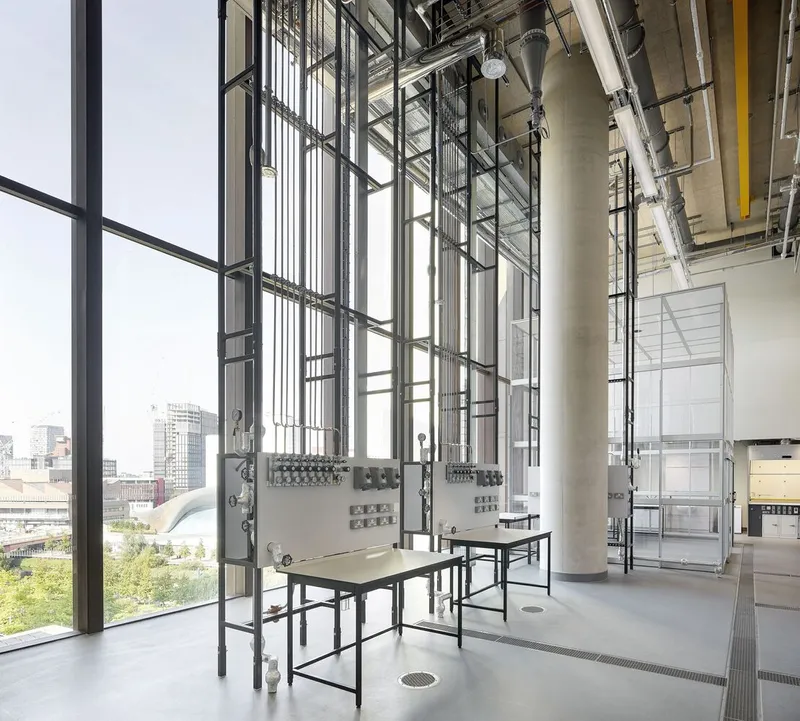
All Photographs are works of Hufton+Crow, Ståle Eriksen


Popular Articles
Popular articles from the community


LT2A and OPEN Architectes Thread a Brick and Glass High School Through a Wooded Belgian Campus
In Braine-l'Alleud, a 3,000 m² wing for Collège Cardinal Mercier pairs pale brick with a glazed colonnade, deferring to a small chapel and a dense wood.

David Macias Steps a Doorless Stone and Plaster House Down a Tropical Colombian Hillside
In the humid hills of Colombia, Threshold House replaces the front door with an open void and terraces its 850 m² down the slope instead of fighting it.

Jaramillo Van Sluys Arquitectura and Urbanismo Turn a Demolished Registry Lot in Quito into an Orchard Plaza
In Quito's Centro Histórico, a 2,800 m² plaza exposes the San Agustín convent wall and redraws its lost Augustinian orchard in volcanic stone.

U.GA Architects Wraps an Oval Rooftop Pool in Curved Board-Formed Concrete on Busan's Jeollidan-gil
In Busan's Jeonpo-dong, a 454 m² mixed-use block stacks a neighborhood facility, guest rooms and an oval rooftop pool inside spiraling concrete walls.

Similar Reads
You might also enjoy these articles


Hodi-Mandai Geram
Project Function: Preservation and revitalization of the Intangible heritage and socio-spatial identity of the Hodi by Housing, Cultural Memory Center, Sacred Grove, landscape, local tourism economy


Olio Towers: A Mid-Rise for Performers That Fuses Housing, Rehearsal, and Stage
Located blocks from Houston's Theater District, this modular tower stacks living units around a central performance atrium.

Oasis: Modular Green Housing Carved into Dhaka's Urban Fabric
A shortlisted Plugin Housing entry reclaims unauthorized settlements in Dhaka with stepped concrete volumes, green roofs, and ventilation-driven design.

Black Hole: A Floating Megastructure for the Post-Physical Era
Emiliano Mazzarotto envisions a spherical, self-scaling arena where e-sports, digital hotels, and holographic stadiums replace traditional public space.

Explore Staarch Architects Competitions
Discover active competitions in this discipline

Challenge to design public laboratory

Challenge to reimagine the Iron Throne

Photograph architecture without architects

Illustrate the lost glory of Angkor Wat - Render Challenge
Comments (0)
Please login or sign up to add comments
No comments yet. Be the first to comment!