
MAS Architecture Workshop Stacks Concrete Volumes into a Layered Family Villa in Ho Chi Minh City
Villa 68 carves courtyards and light wells through a board-formed concrete house in a new urban district of Saigon.


New urban districts in Ho Chi Minh City tend to produce houses that seal themselves off from the street with blank walls and tinted glass. Villa 68, designed by MAS Architecture Workshop for a young family, takes a different approach: it stacks and shifts concrete volumes to create a 500 m² house that is simultaneously porous and private. Board-formed concrete, courtyards, skylights, and a sculptural helical staircase do most of the architectural heavy lifting here, turning a standard residential plot into something closer to a sectional puzzle.
What makes this project genuinely interesting is the way it treats depth. Rather than organizing rooms along a single plane, lead architect Nguyen Cong Thanh has staggered floor plates and punched voids through the section so that daylight, air, and sightlines operate vertically as much as horizontally. The result is a house that feels far larger than its footprint and far cooler than a sealed box in a tropical city has any right to be.
A Street Presence Built from Weight and Shadow

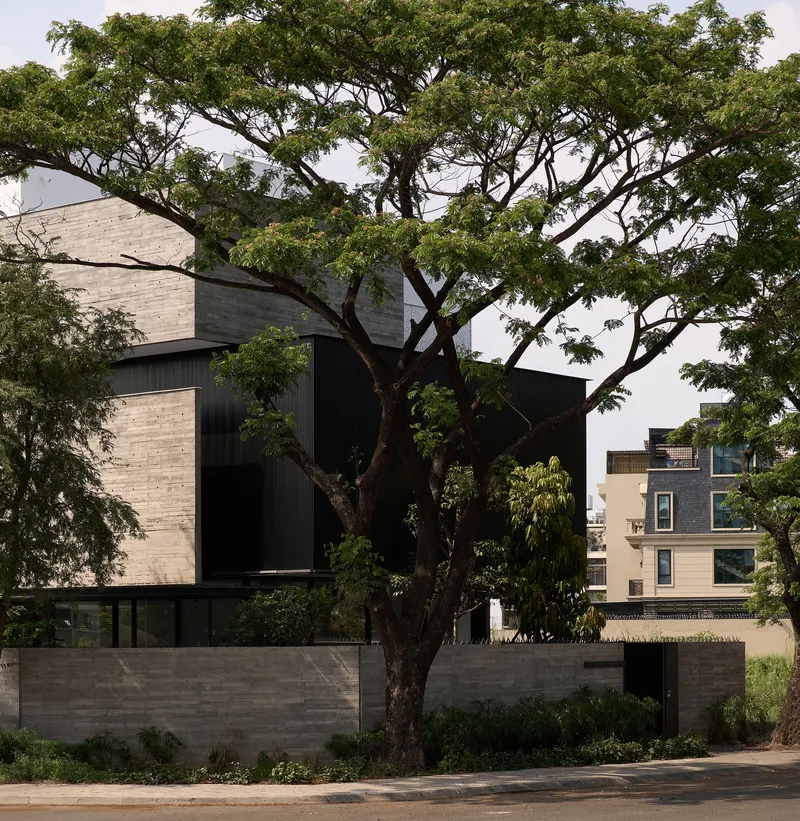

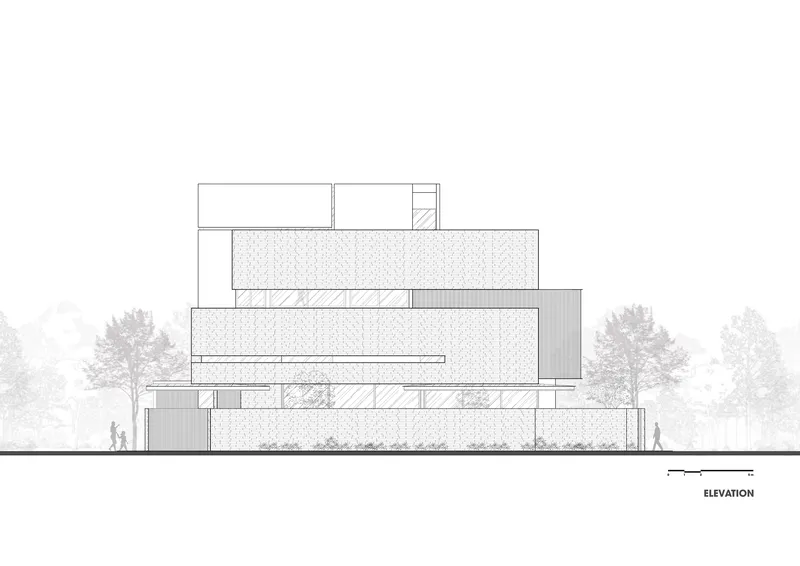
From the street, Villa 68 reads as a composition of heavy, textured masses: board-formed concrete panels with pronounced horizontal banding, panels of black corrugated metal, and cantilevered upper volumes that overhang the ground level. Mature trees in the foreground soften the geometry considerably, and recessed openings keep the facade from becoming a fortress wall. The effect is monolithic but not hostile.
The material contrast between raw concrete and dark metal gives each volume a distinct identity in the stack. You can read the house as three or four separate boxes pushed together, which is exactly what the axonometric sequence at the end of this article confirms. It is a strategy borrowed more from commercial or institutional architecture than from the typical Saigon villa, and it pays dividends in visual clarity.
Concrete as Both Structure and Surface

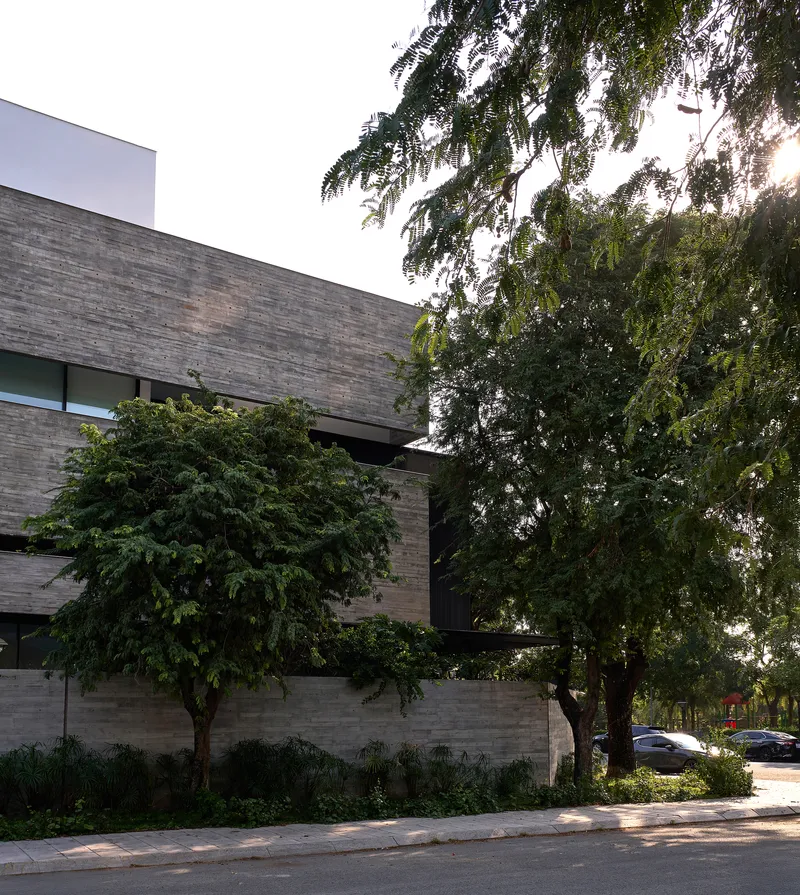
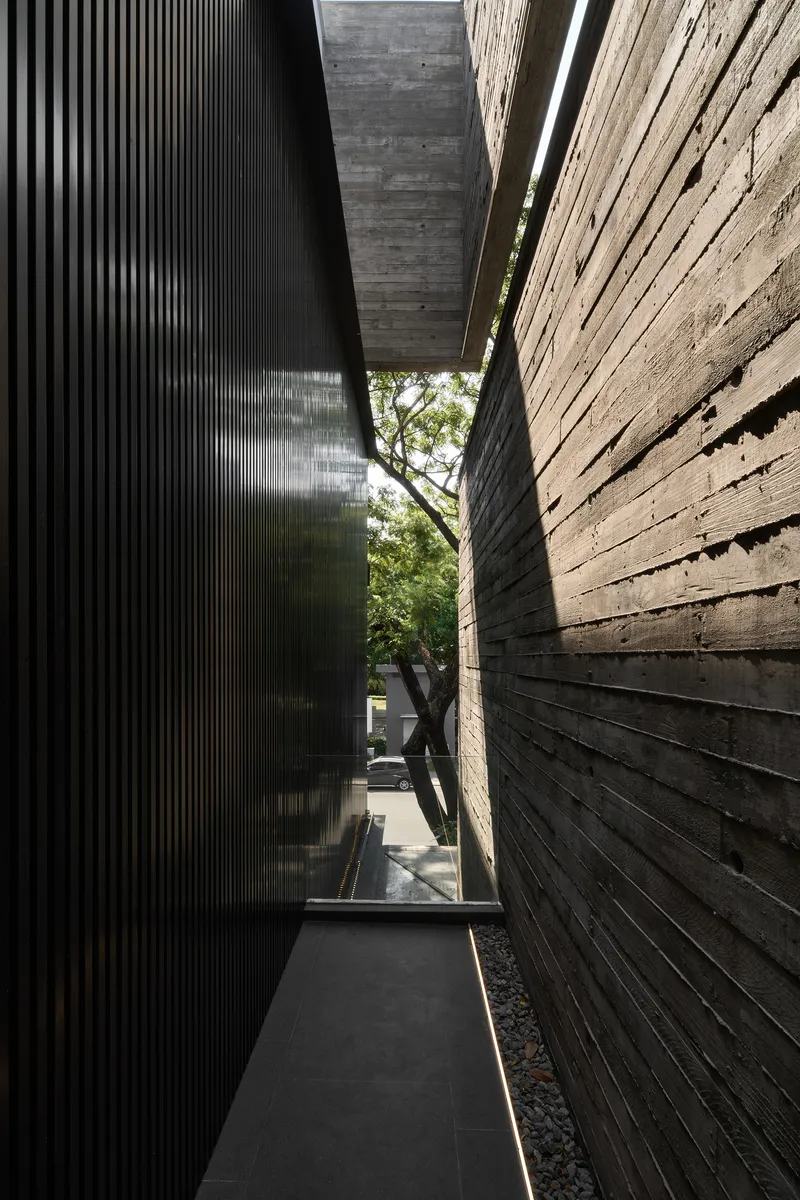
Board-formed concrete is the dominant material inside and out. The formwork grain runs horizontally on the exterior, producing a tactile surface that catches raking light and tropical rain equally well. In the narrow passage between walls, the texture becomes almost geological: two rough planes compressing a sliver of space with a single tree glimpsed at the far end. It is a detail that rewards slow movement through the house.
Choosing concrete as both structure and finish eliminates the need for cladding and simplifies the construction logic. In a tropical climate, exposed concrete also accumulates patina and moss over time, which means the building will look better at ten years than it does now. That long-term bet on aging well is one of the smartest decisions in the project.
The Helical Staircase as Spatial Engine
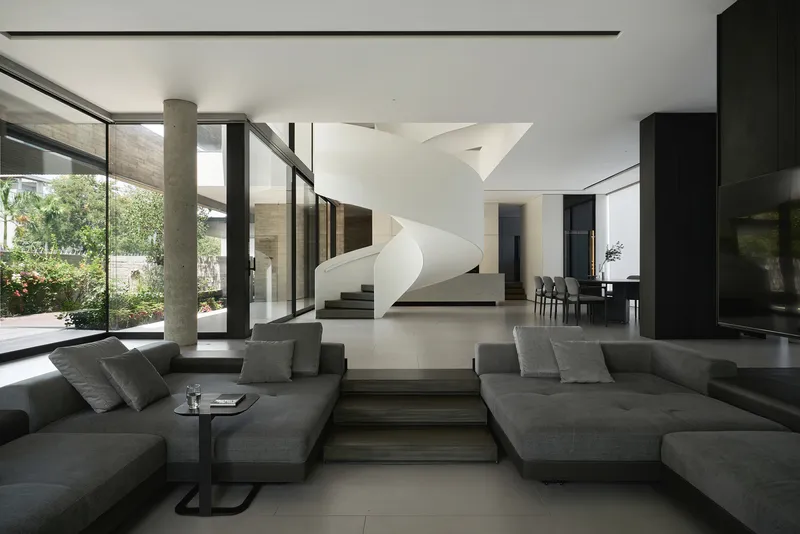
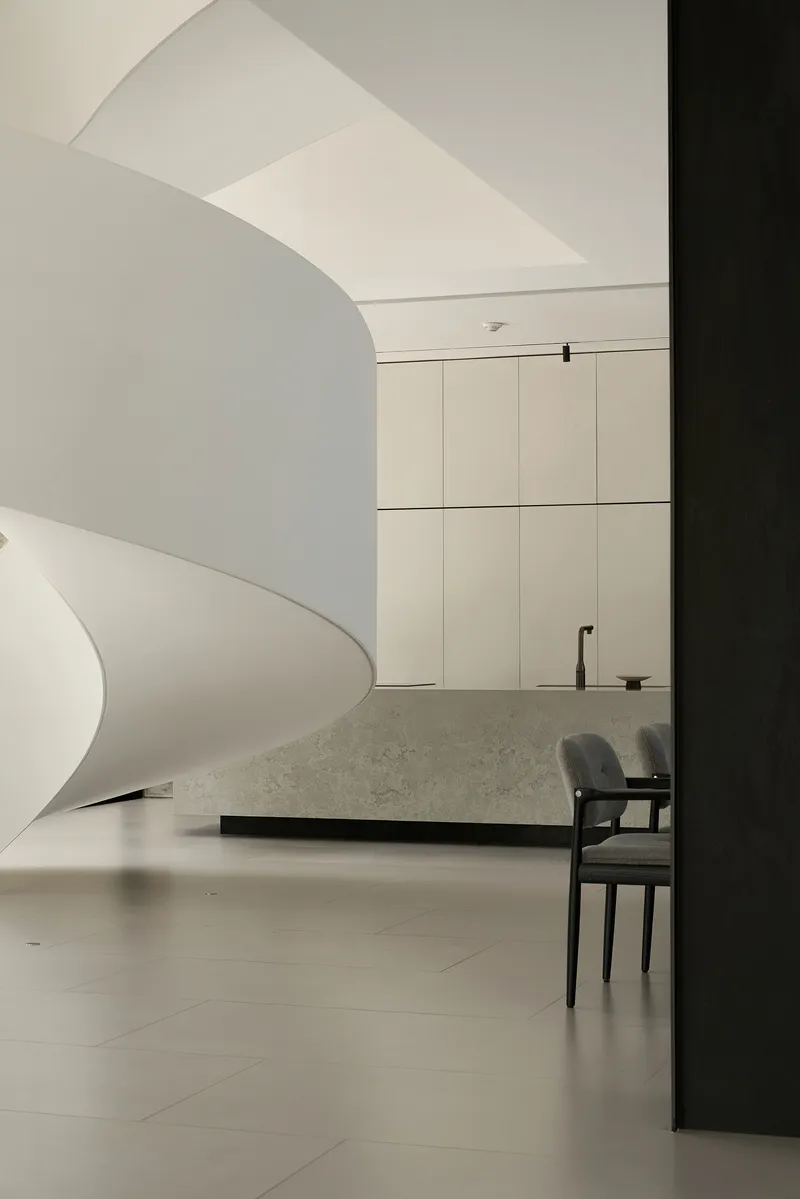
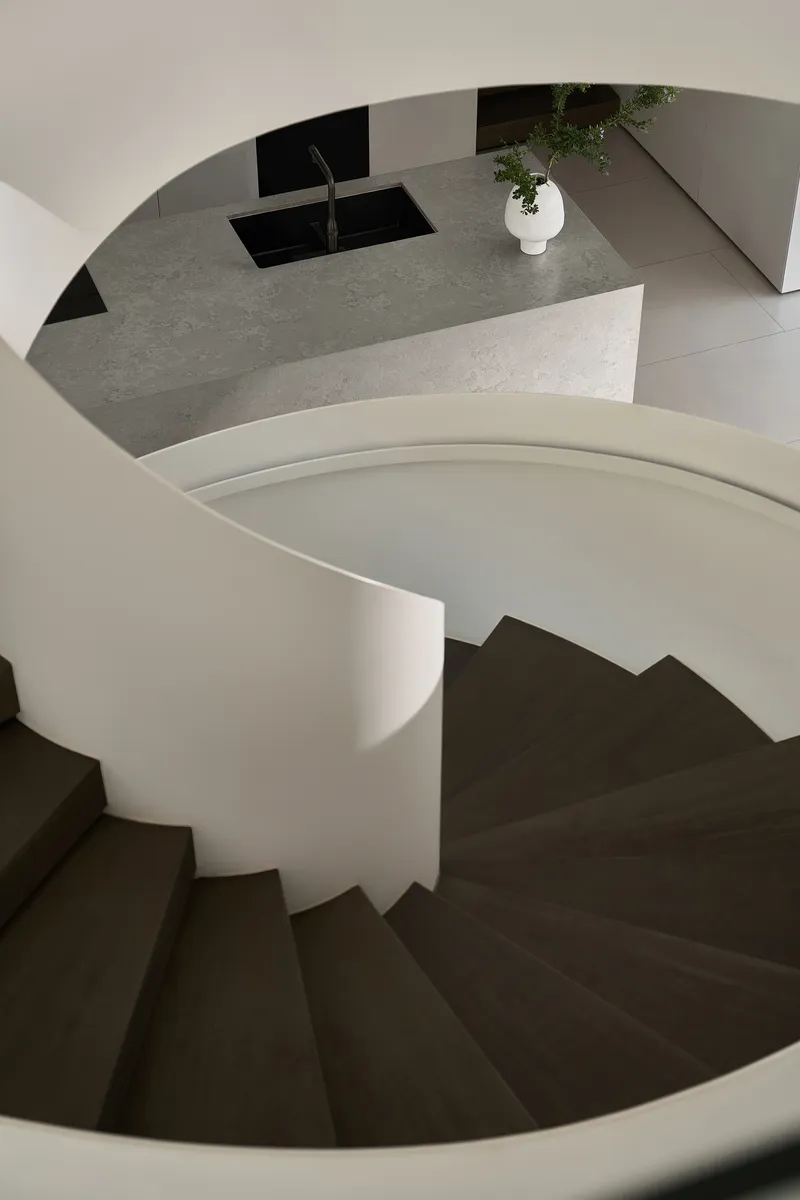
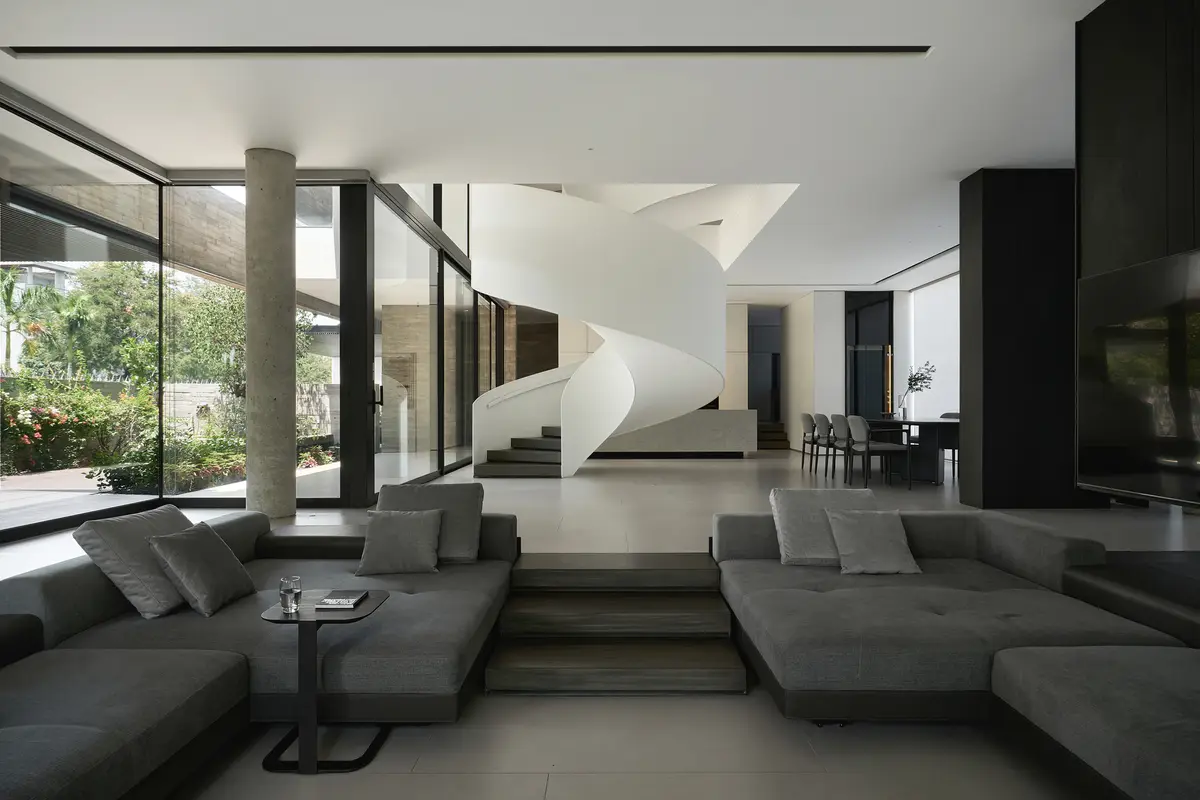
A white helical staircase sits at the heart of the plan and functions as the vertical spine of the entire house. In the double-height living room it becomes a sculptural event, its smooth curves playing against the rough concrete and timber surfaces around it. Viewed from above, the dark treads spiral tightly beside a terrazzo kitchen island, collapsing the domestic program into a single graphic frame.
Functionally, the spiral organizes circulation without consuming a lot of plan area. Because it sits adjacent to the courtyard glazing, it also acts as a light well: you walk up into increasingly bright conditions, which makes the ascent feel expansive rather than claustrophobic. The curved glass balustrade on the upper landing reinforces this openness, pulling the eye out toward the planted courtyard below.
Courtyards, Skylights, and the Vertical Section
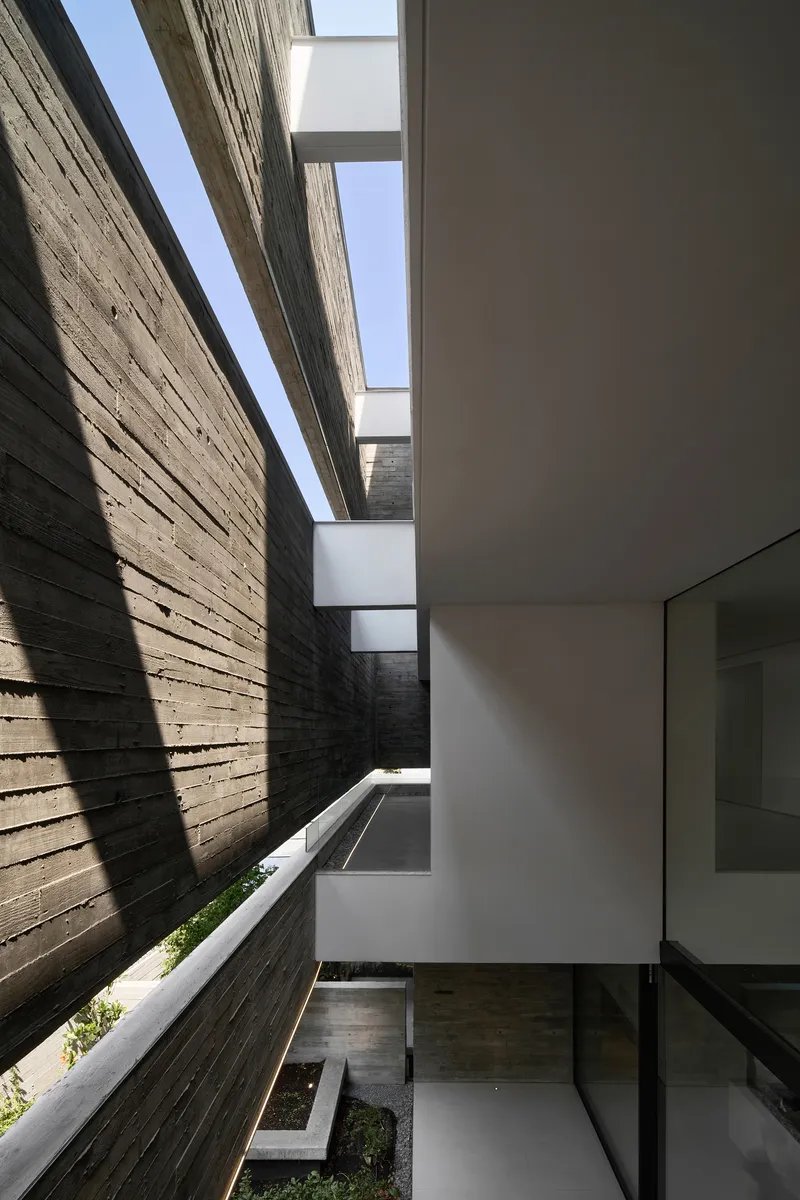
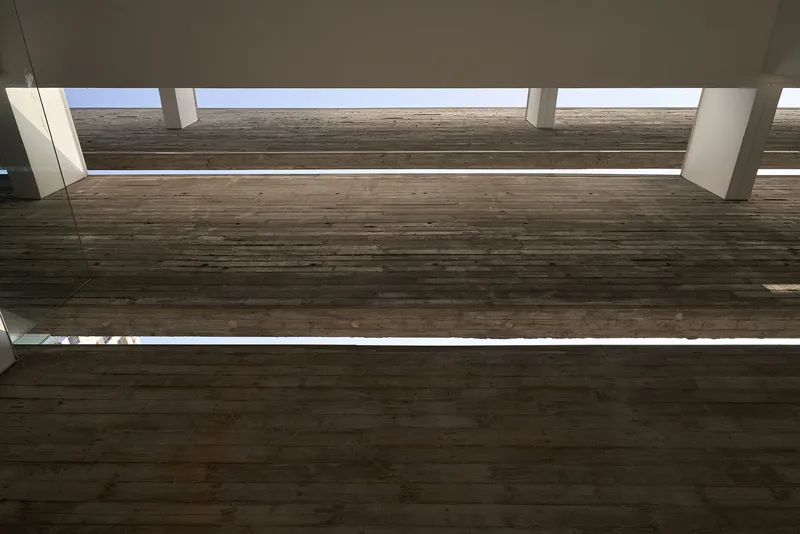
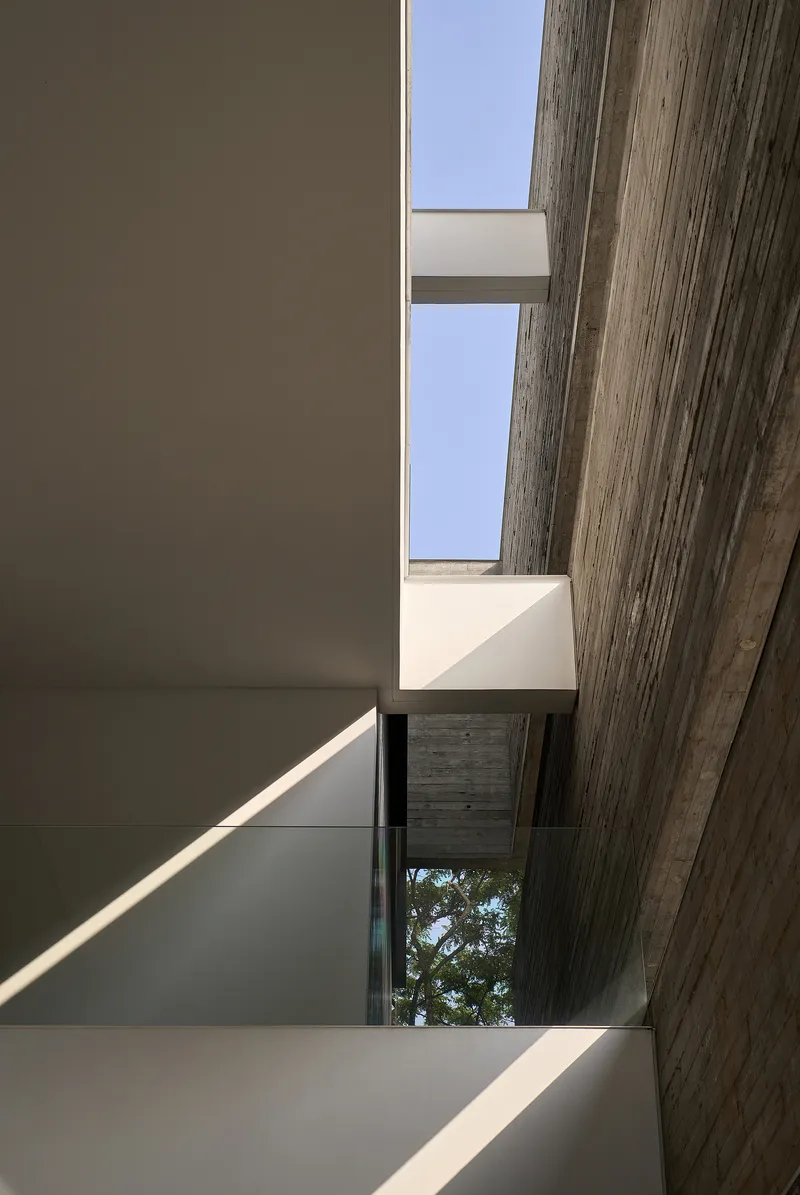
Villa 68 relies on a network of courtyards and linear skylights to ventilate and illuminate its deep plan. A narrow courtyard flanked by board-formed concrete walls admits light to the lower levels while planted beds add humidity and greenery to the microclimate. Overhead, continuous skylight strips run between volumes, and a timber bridge spans the gap between two wings, turning the roof into an inhabited landscape.
The stairwell skylight is particularly well handled. Board-formed concrete beams frame a rectangle of sky, and the plaster walls below diffuse the light softly downward. It is a detail that proves you do not need curtain walls to flood a tropical house with daylight; you just need well-placed holes.
Interior Atmosphere: Calm Materials, Generous Light

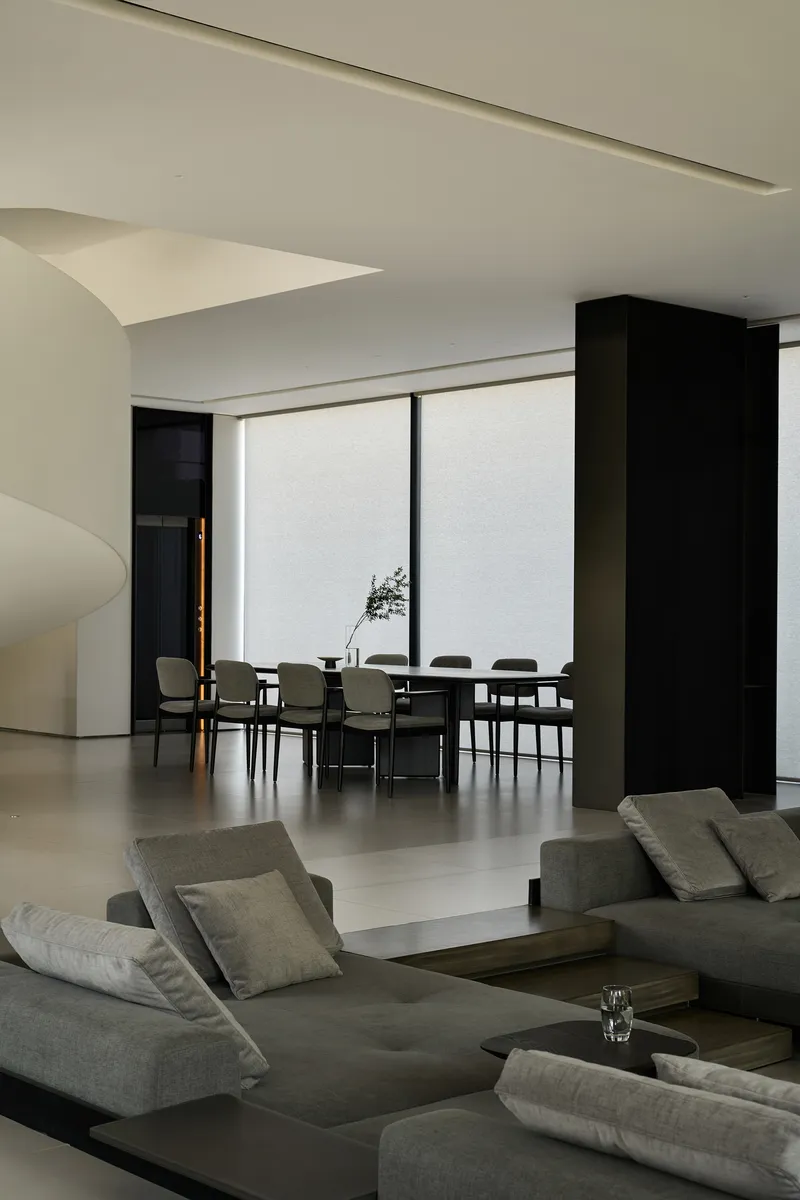
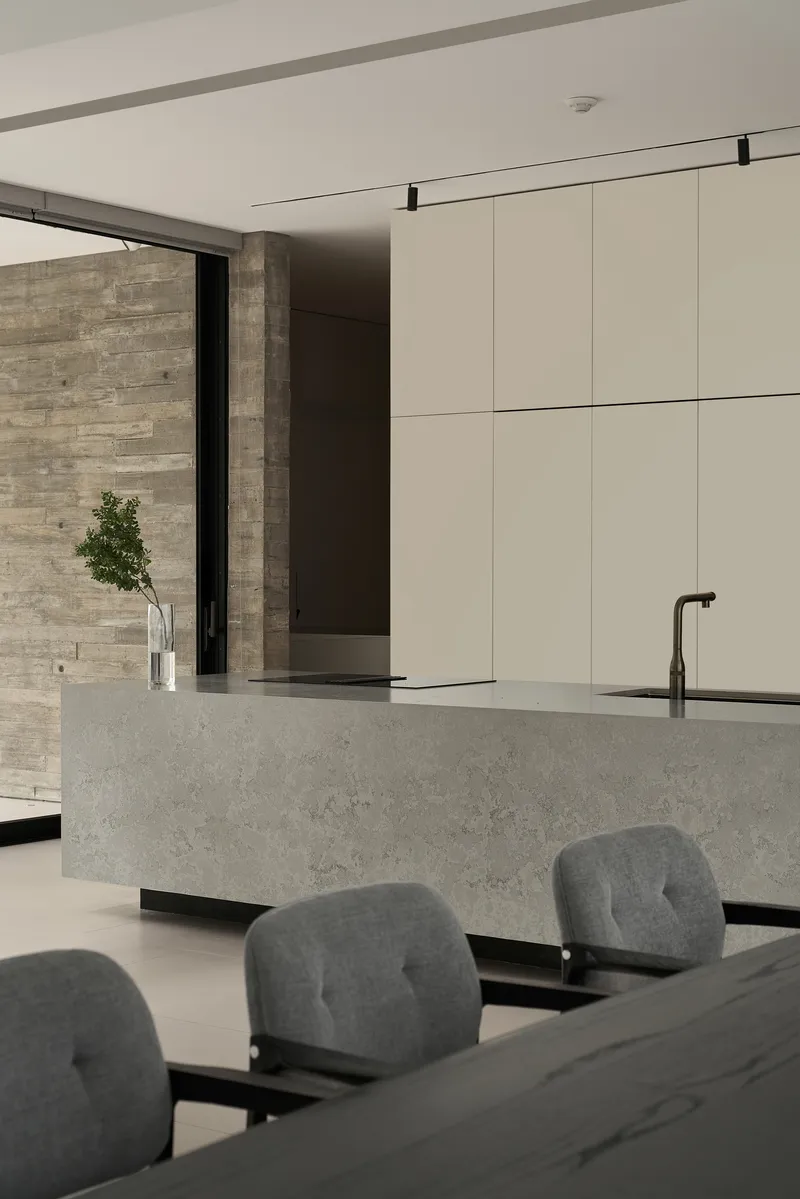
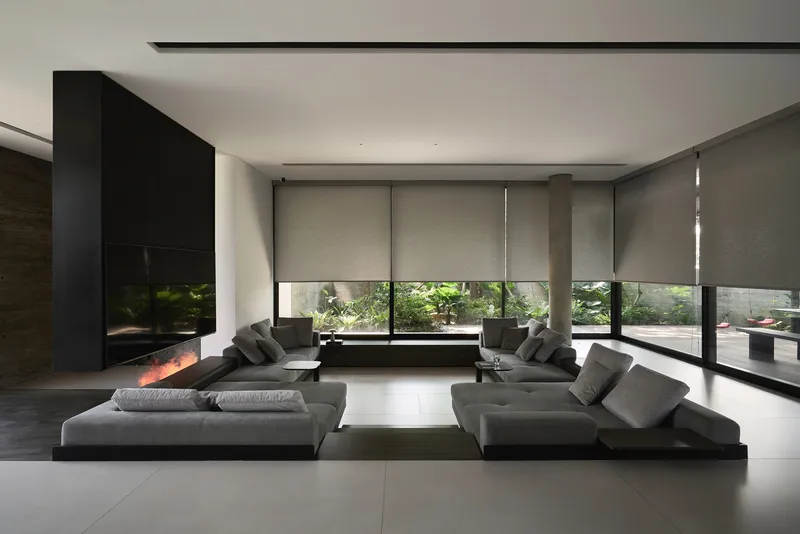
Inside, the palette quiets down. White plaster, pale paneled cabinetry, terrazzo surfaces, and travertine accents replace the muscular concrete of the exterior. The dining area sits beneath the helical staircase and opens through large windows onto the courtyard, making it one of the most pleasant rooms in the house. Black steel columns in the living room provide structural support without visual heaviness, and low grey seating keeps the proportions of the double-height space legible.
The terrazzo island with its black sink and faucet, framed by a travertine wall visible through a glass door, is a snapshot of the material discipline at work here. Every surface has been chosen not for novelty but for tactile compatibility. Nothing screams; everything hums.
Upper Levels: Private Rooms with Borrowed Views

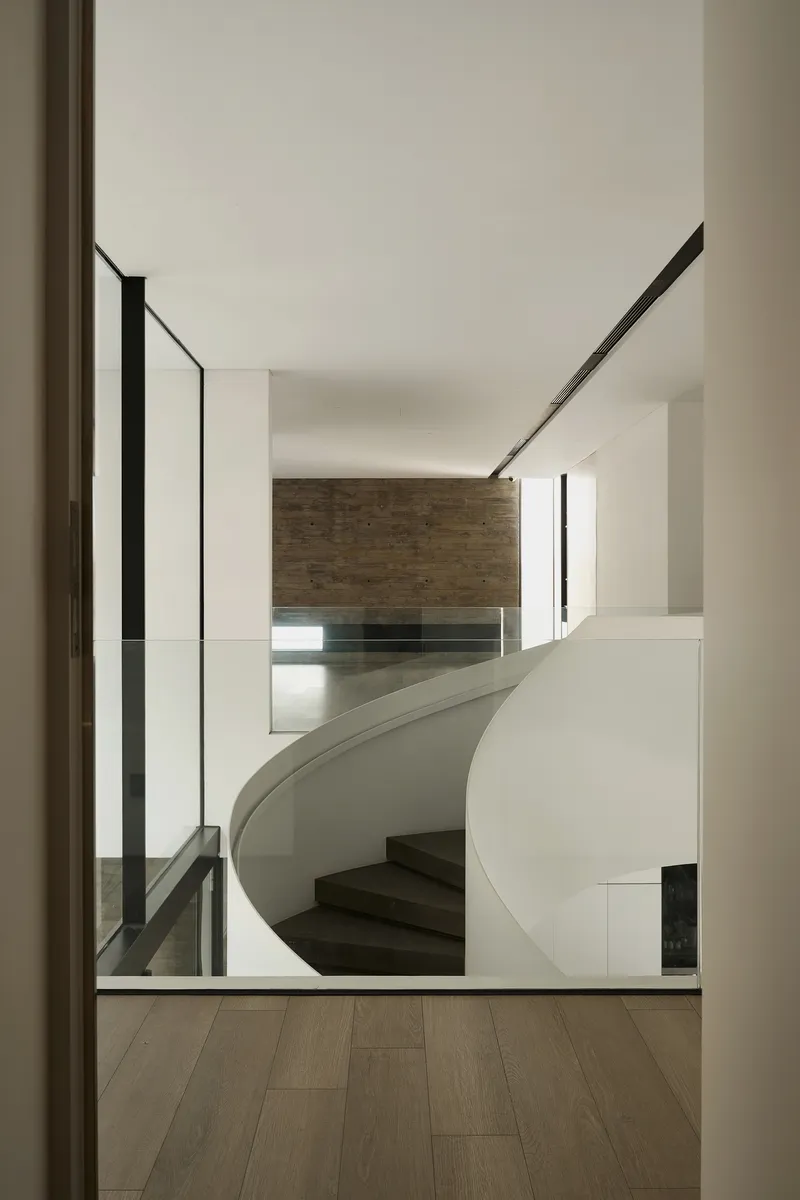
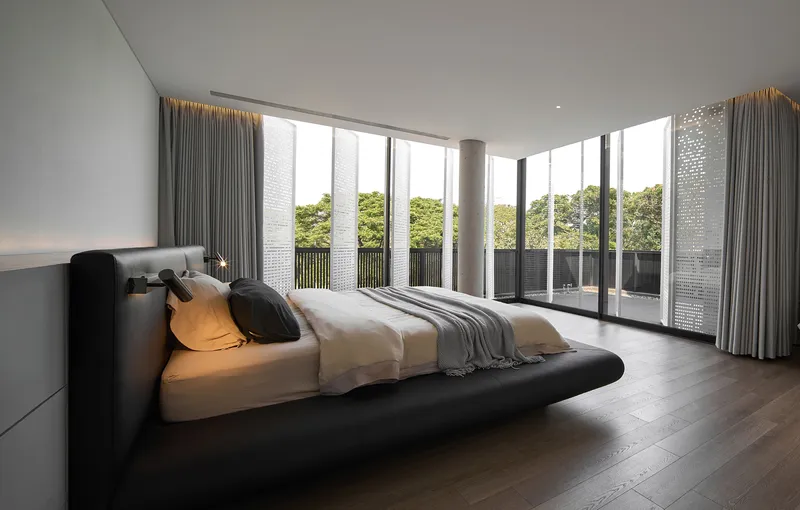
On the upper floors, recessed linear lighting guides movement along corridors that overlook the stair void. The spatial drama continues: a view through a doorway catches the white staircase descending toward a timber-clad wall, and the corner bedroom opens on two sides through floor-to-ceiling glass overlooking greenery. Grey curtains filter daylight to a soft glow, making the room function equally well for sleep and for quiet contemplation.

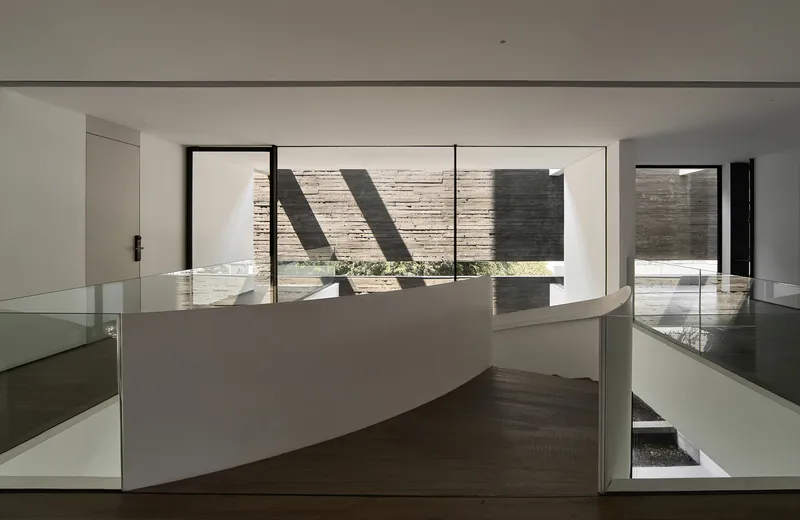
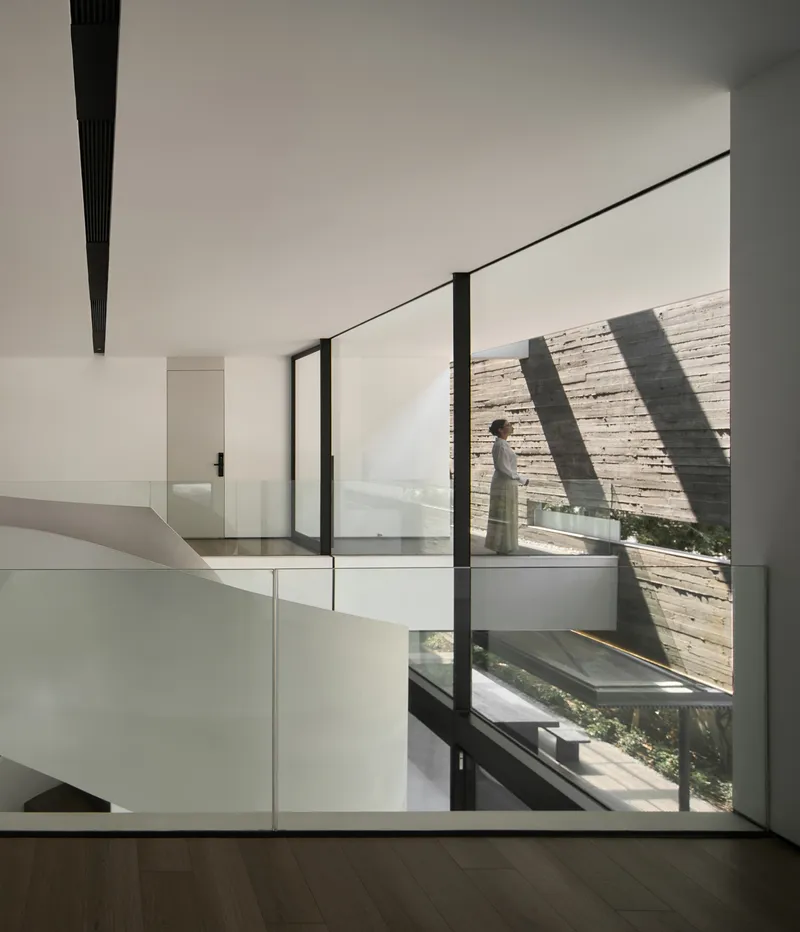
A secondary dark timber staircase occupies a narrower slot in the plan, lit by vertical skylights that cast striped shadows across the treads. It is more intimate than the helical stair and connects the private rooms to the upper terrace. The upper landing with its curved glass balustrade and full-height glazing onto the courtyard terrace ties the vertical circulation back to the exterior, reinforcing the idea that in this house, every corridor is also a window.
Outdoor Rooms and the Planted Threshold
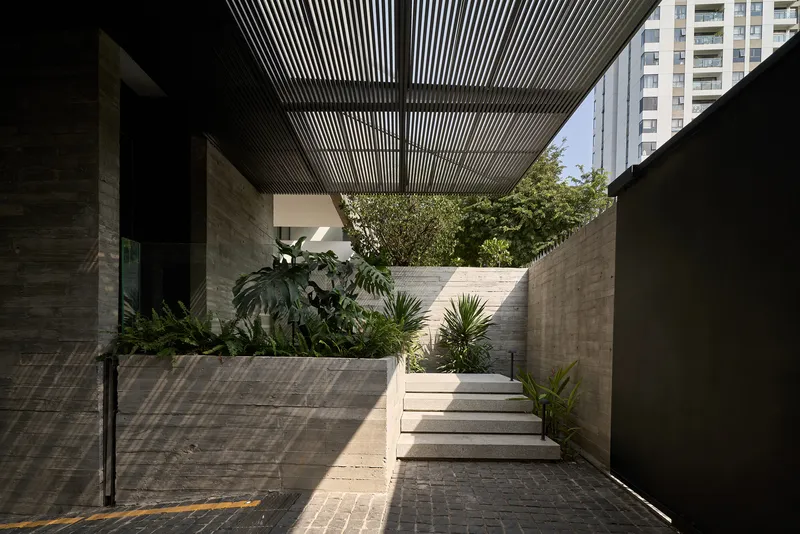

The exterior courtyard with its timber slatted pergola is as carefully designed as any interior room. Shadows from the slats create a rhythmic pattern on the concrete steps and planted beds below, turning afternoon light into a kind of moving ornament. It is a strategy common in Southeast Asian houses but executed here with unusual precision.
Inside, roller shades filter garden light into the living room, and angular shadows from the pergola structure fall across board-formed concrete walls visible through the floor-to-ceiling glazing. The boundary between inside and out is not erased so much as made porous: you always know which side you are on, but the atmosphere flows freely between them.
Plans and Drawings

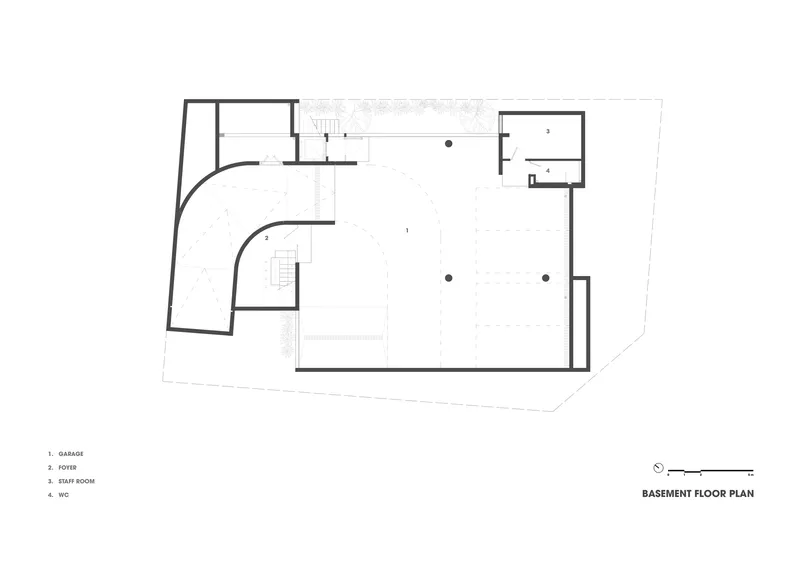
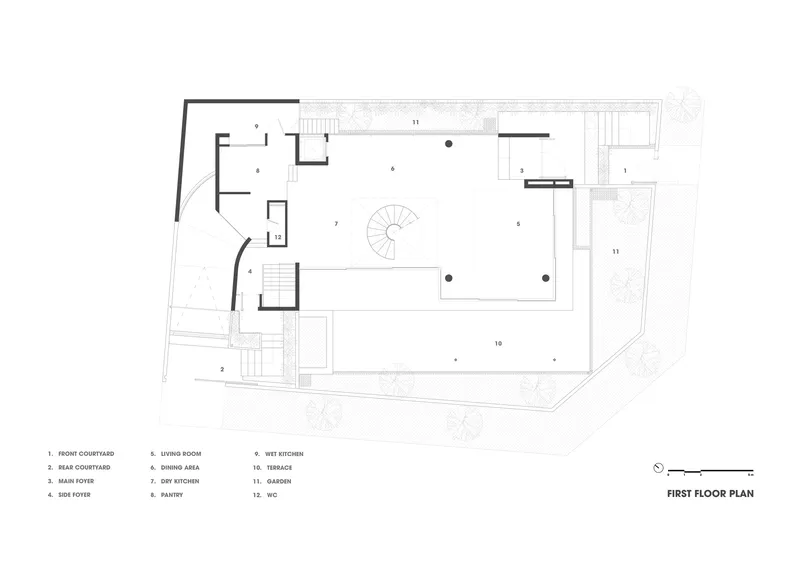
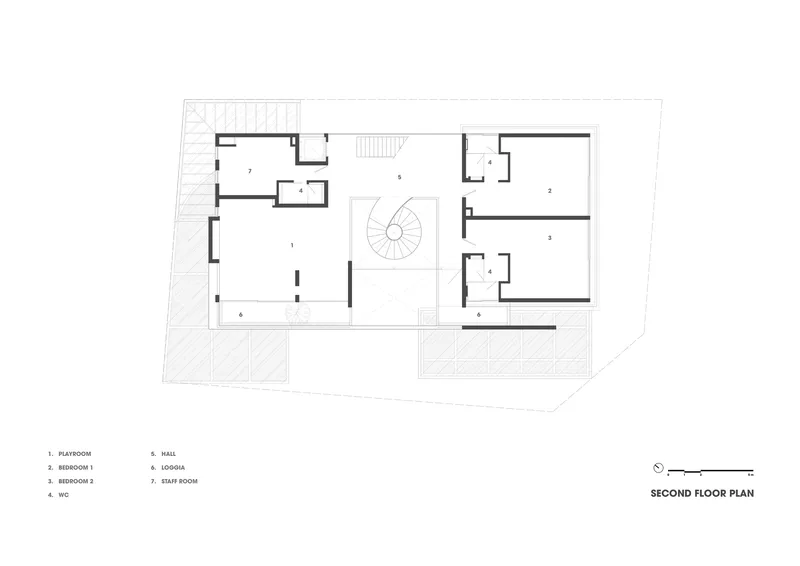
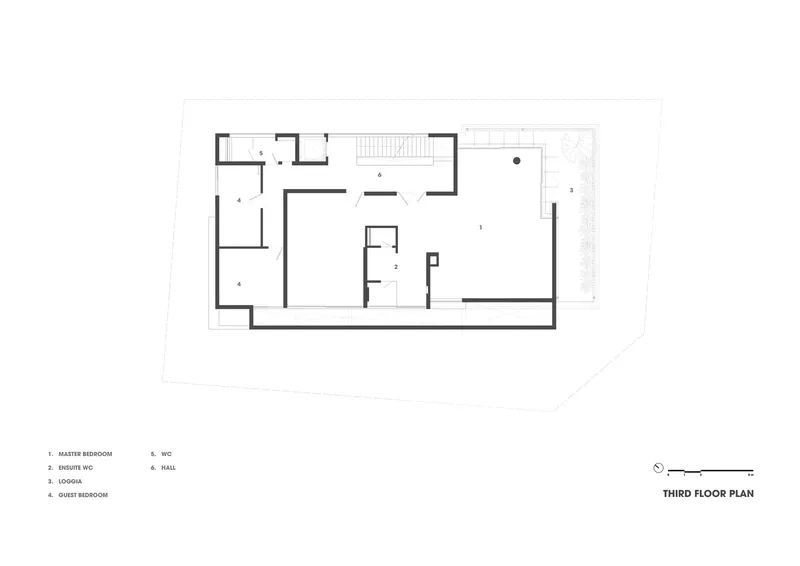
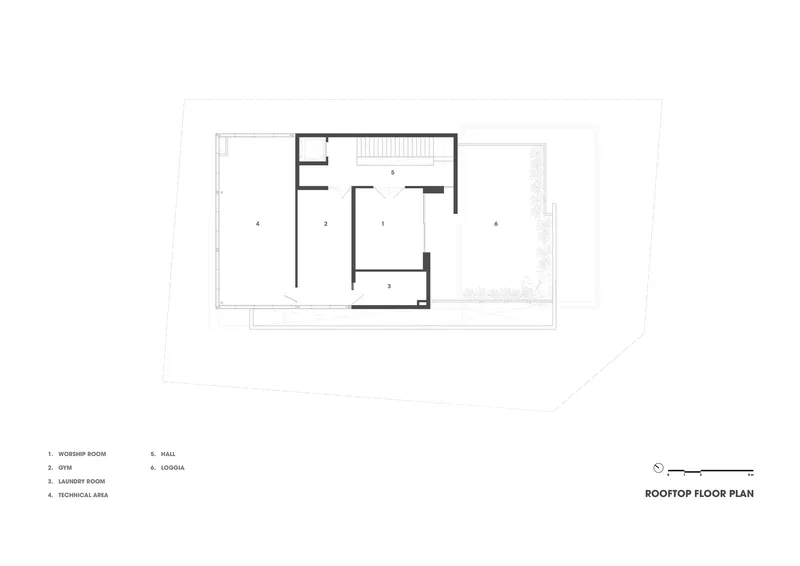
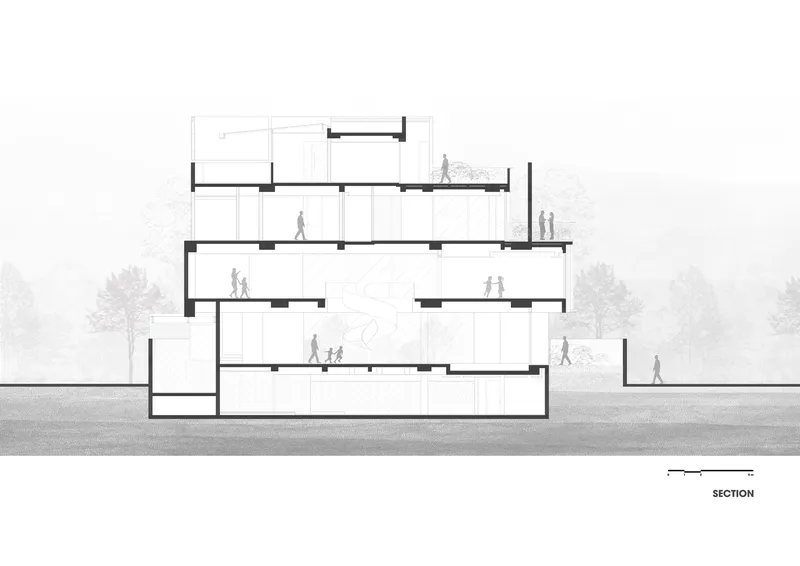
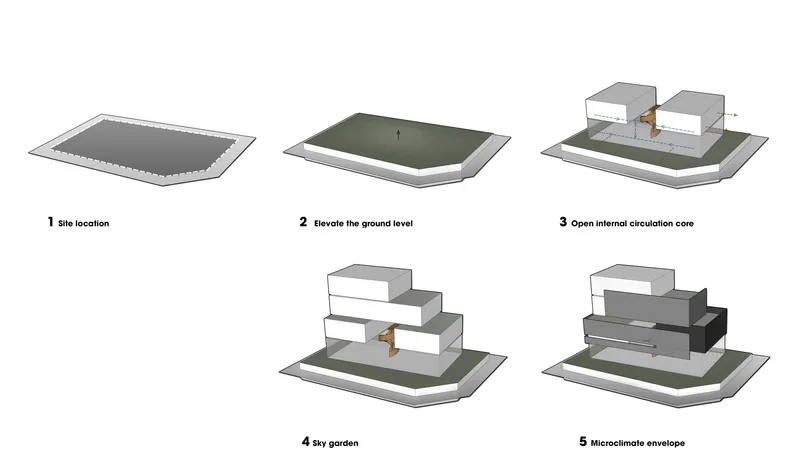
The site plan reveals Villa 68's position within the surrounding urban fabric, close to a waterfront edge that likely influenced the orientation of the courtyards. The floor plans, from basement garage to rooftop worship room, show how the spiral staircase anchors every level while the plan pinwheels around it, sending wings toward different courtyards and gardens. The staggered section is where the real story lives: terraces appear at unexpected levels, and inhabited space extends from the basement to a rooftop terrace without ever feeling like a vertical extrusion.
The axonometric sequence is especially instructive. It breaks the design into five stages, from site excavation through to the final massing envelope, making the additive logic of the composition legible. You can see how each volume was placed to create the courtyard gaps and light wells that define the house's interior experience. It is a rare case where the diagram actually explains the architecture.
Why This Project Matters
Villa 68 matters because it demonstrates that a family house in a rapidly developing Asian city does not have to choose between density and quality of life. By working the section as aggressively as the plan, MAS Architecture Workshop has produced a house that is compact on the ground but expansive in experience. The courtyards and skylights deliver passive cooling and natural light that reduce dependence on mechanical systems, and the board-formed concrete will age gracefully in a climate that destroys most surface finishes within a decade.
More broadly, the project argues for a kind of residential architecture that takes craft seriously without descending into decoration. The formwork textures, the terrazzo detailing, the precise placement of skylight strips: these are not luxury gestures but structural decisions that happen to produce beauty. In a market flooded with generic villas dressed in imported stone, that commitment to material honesty is both refreshing and instructive.
Villa 68 by MAS Architecture Workshop, lead architect Nguyen Cong Thanh. Ho Chi Minh City, Vietnam. 500 m². Completed 2025. Photography by Wuyhoang Studio.
About the Studio
Share Your Own Work on uni.xyz
If projects like this are the kind of work you want to make, uni.xyz is a place to publish your own, find collaborators, and enter design competitions.


Popular Articles
Popular articles from the community


Temporary Home for Dogs: A Reversed Zoo Rethinks Animal Shelter Architecture
In Bucharest, a sinuous corridor and freed landscape flip the logic of containment, designing a shelter that works to make itself unnecessary.

Tsunami Convergenics: Turning Catastrophic Ocean Forces into Underwater Housing Infrastructure
A speculative underwater settlement off the coast of Onagawa, Japan, treats tsunamis and typhoons as energy sources rather than threats.

Opera on the Sea: Driftwood Logic Shapes a Timber Opera House on Estonia's Coast
Trevor Orgill's opera house translates the entangled drift of floating timber into a civic building where wood, water, and music converge.

The Amber Palace Opera: A Geological Fiction Surfaces on Tallinn's Baltic Waterfront
Pierre Brillard reimagines a Baltic legend as a public landscape, opera house, and waterfront promenade rooted in Tallinn's coastal identity.

Similar Reads
You might also enjoy these articles

Pixel Gardens: One Repeated Module Stacked Into a Terraced Social Housing Tower for Famagusta
Salem Bader's shortlisted housing tower builds a vertical neighbourhood from one repeated module, offsetting units to carve terraces, light and air.

Bao Huynh Watercolor Atelier: A Serene Art Retreat in Hội An
Bao Huynh Watercolor Atelier in Hội An blends multifunctional art spaces, sustainable design, local materials, and family-friendly living in a serene environment.

Atelier Macri Concept Store Interior Design by CASE-REAL
Atelier Macri store features a "ko" counter, walnut wood details, cork displays, blending retail, gallery, and seamless customer experiences.

Manuel Vargas Izquierdo Stadium and High-Performance Sports Center: Architectural Excellence in Jalpa de Méndez
The Manuel Vargas Izquierdo Stadium blends sustainable design, inclusive sports facilities, and cultural-inspired architecture, revitalizing Jalpa de Méndez’s public spaces.


Comments (0)
Please login or sign up to add comments
No comments yet. Be the first to comment!