
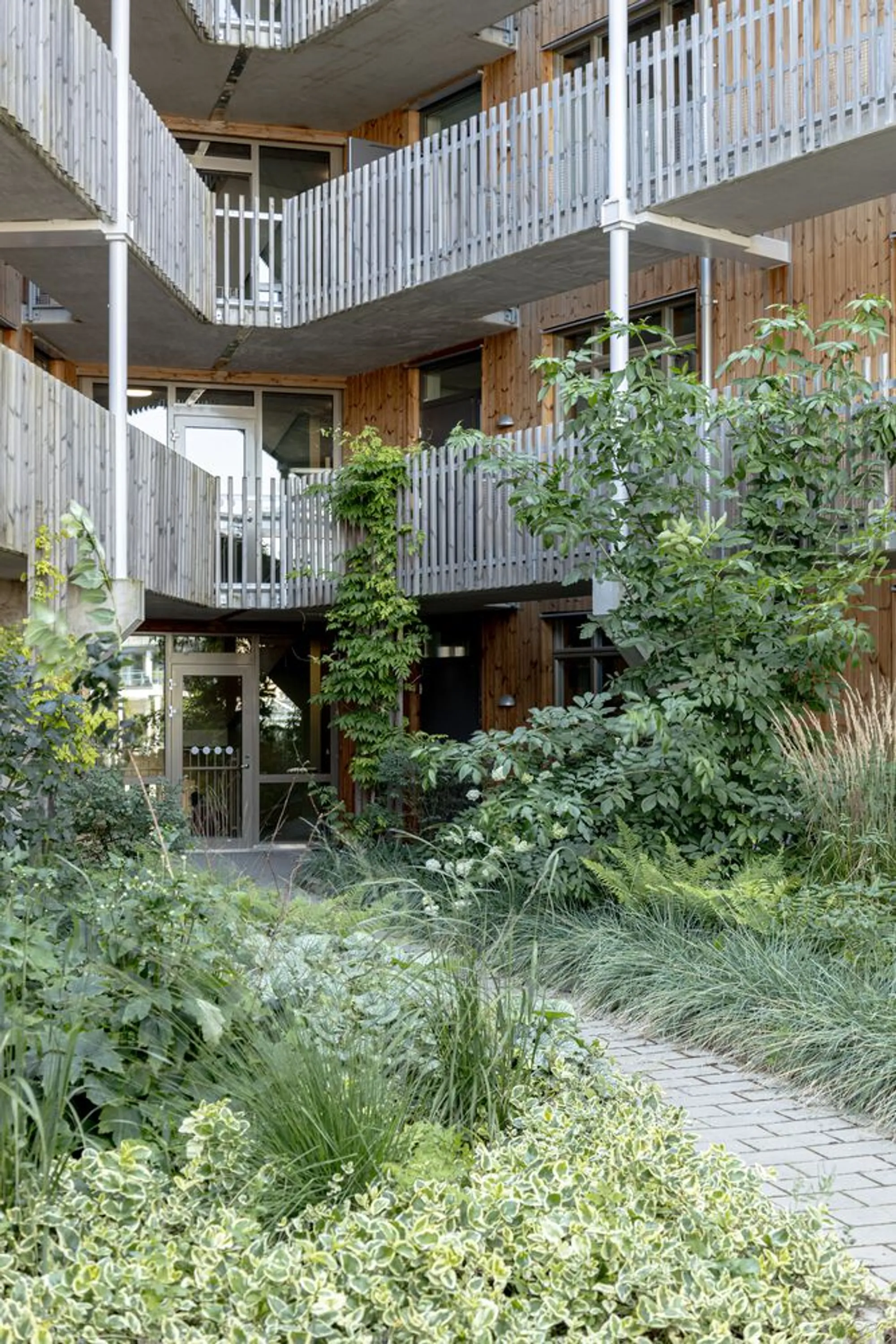
STADSTUDIO Wraps a Swedish Apartment Block in Timber, Concrete, and Dense Courtyard Gardens
Måsen 21 in Sweden layers raw materials and generous planting to give multi-family housing a tactile, grounded identity.


Multi-family housing often gets reduced to a single material gesture: a brick box, a rendered slab, a timber wrapper. STADSTUDIO's Måsen 21 Apartments refuse that simplification. The project assembles a vocabulary of board-formed concrete, vertical timber screening, white render, and metal roofing into a composition that reads differently from every angle. No two facades behave the same way, yet the whole thing holds together because every element shares a deliberate roughness, a willingness to weather.
What makes the project worth studying is not the material palette alone but how it works with the ground plane. The courtyard gardens are not decorative afterthoughts. They are dense, layered, and they do real spatial work: separating circulation from private thresholds, softening the mass of stacked balconies, and providing a microclimate that makes outdoor corridors feel sheltered rather than exposed. The architecture and landscape are designed as one system, and the result is a residential project that feels more generous than its footprint would suggest.
Two Faces, One Building
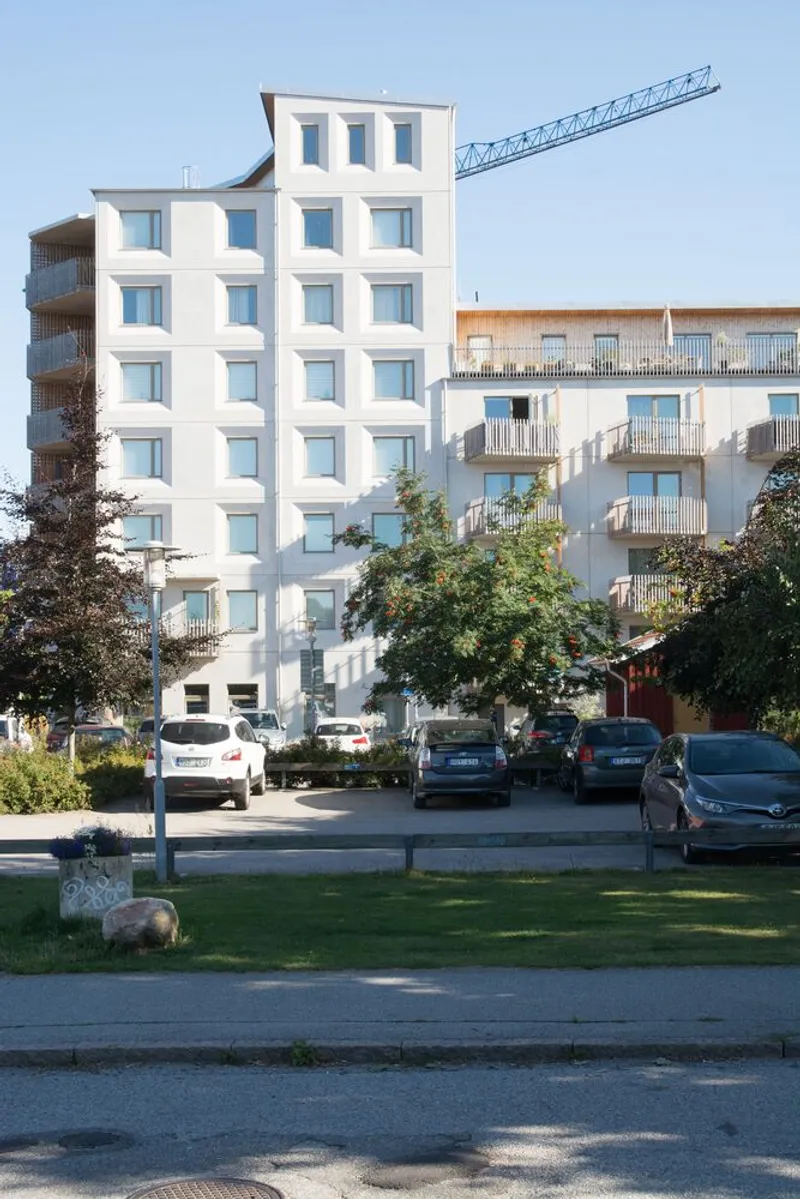
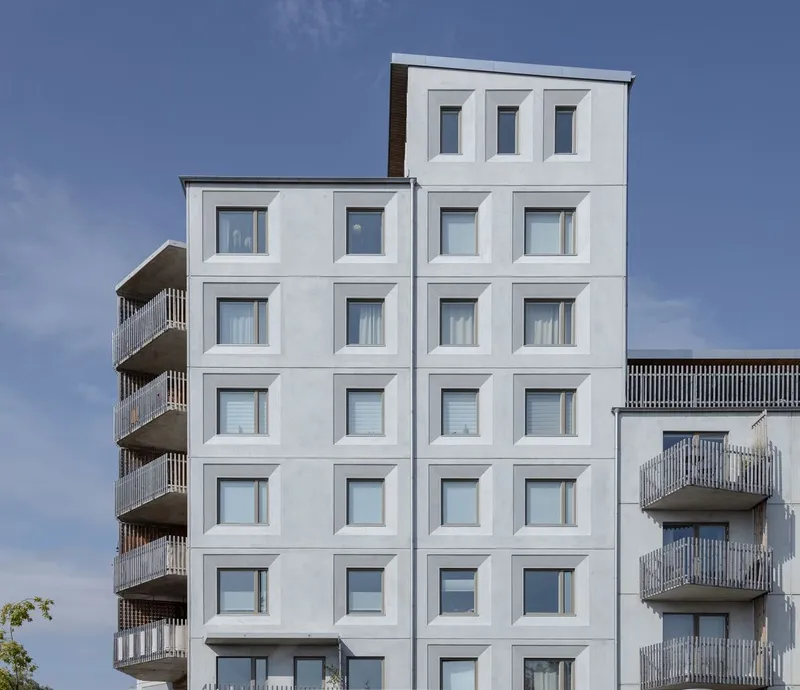
From the street, Måsen 21 presents a crisp white facade punctuated by a disciplined grid of framed windows and flanked by balconies behind vertical screening. It is orderly, urban, and deliberately understated. The massing reads as a series of stacked volumes rather than a single monolith, which breaks the scale down to something approachable for a residential neighborhood. There is confidence in the restraint here: no ornamental flourishes, no signature colour, just proportion and rhythm.
The shift from clean render to exposed concrete and timber happens almost immediately as you move around the building. The two street-facing facades establish civic decorum; everything else is allowed to be warmer and more tactile. That duality is the project's organizing idea, and it works because it is legible without being heavy-handed.
Concrete and Timber in Conversation
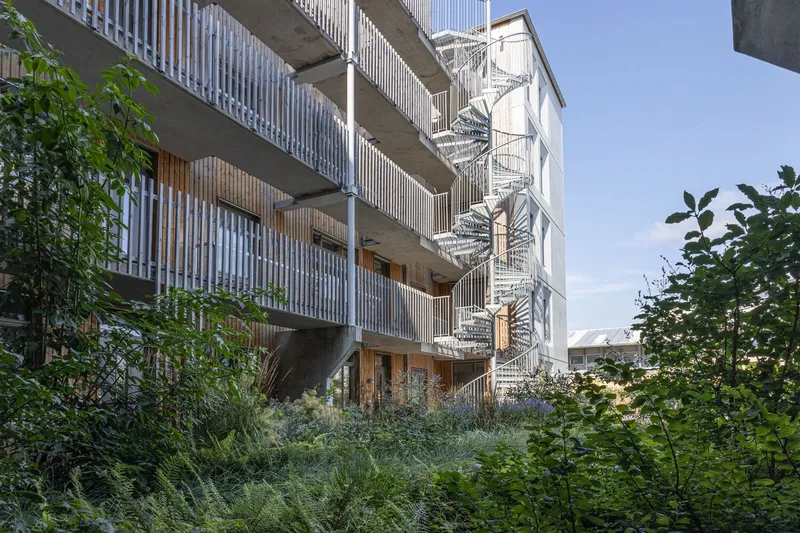
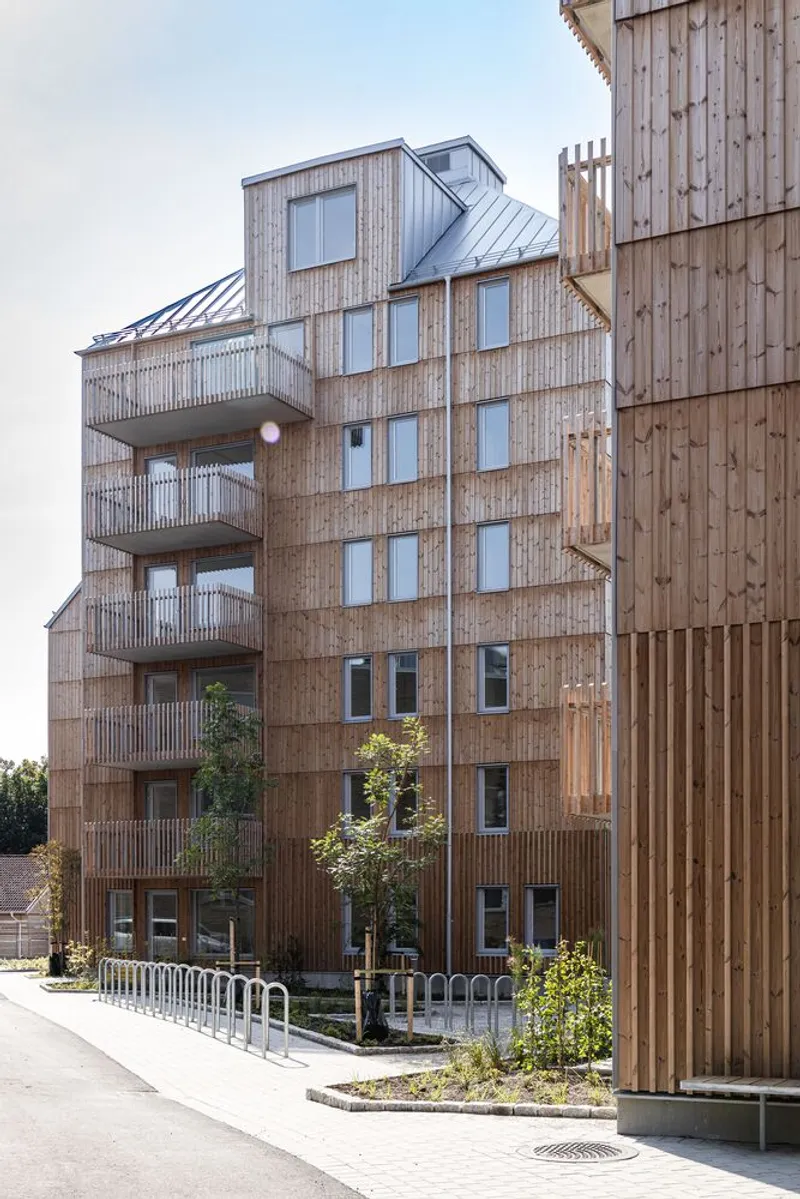
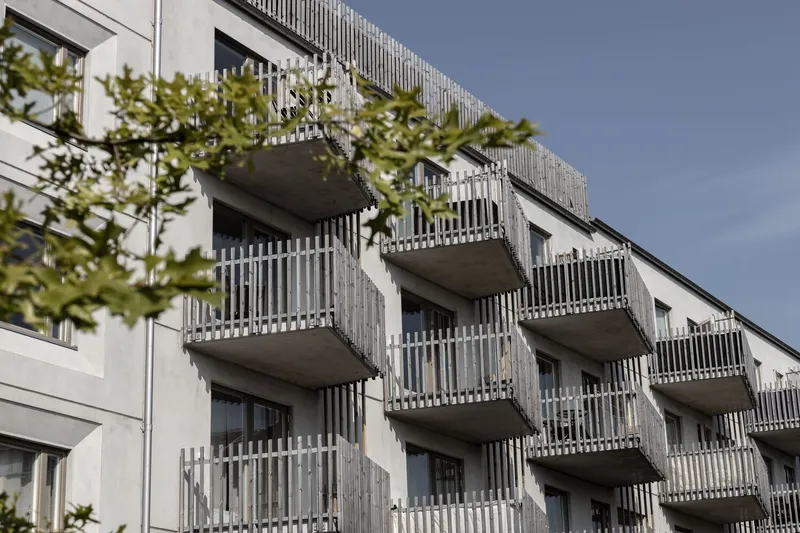
The rear and courtyard facades tell a different story. Board-formed concrete balconies project outward in a staggered pattern, creating a deep relief that catches light and shadow throughout the day. Vertical timber screening filters views and provides a degree of privacy without sealing residents off from fresh air. Metal cladding panels appear at intervals, their matte finish mediating between the warmth of wood and the coolness of concrete.
What keeps this from becoming a materials catalogue is consistency of intention. Every surface is load-bearing in a visual sense: the concrete is structural, the timber is protective, the metal sheds water. Nothing is applied purely for effect. The staggered balconies do double duty, giving each unit an outdoor room while generating the irregular silhouette that keeps the massing from feeling repetitive.
Access as Architecture
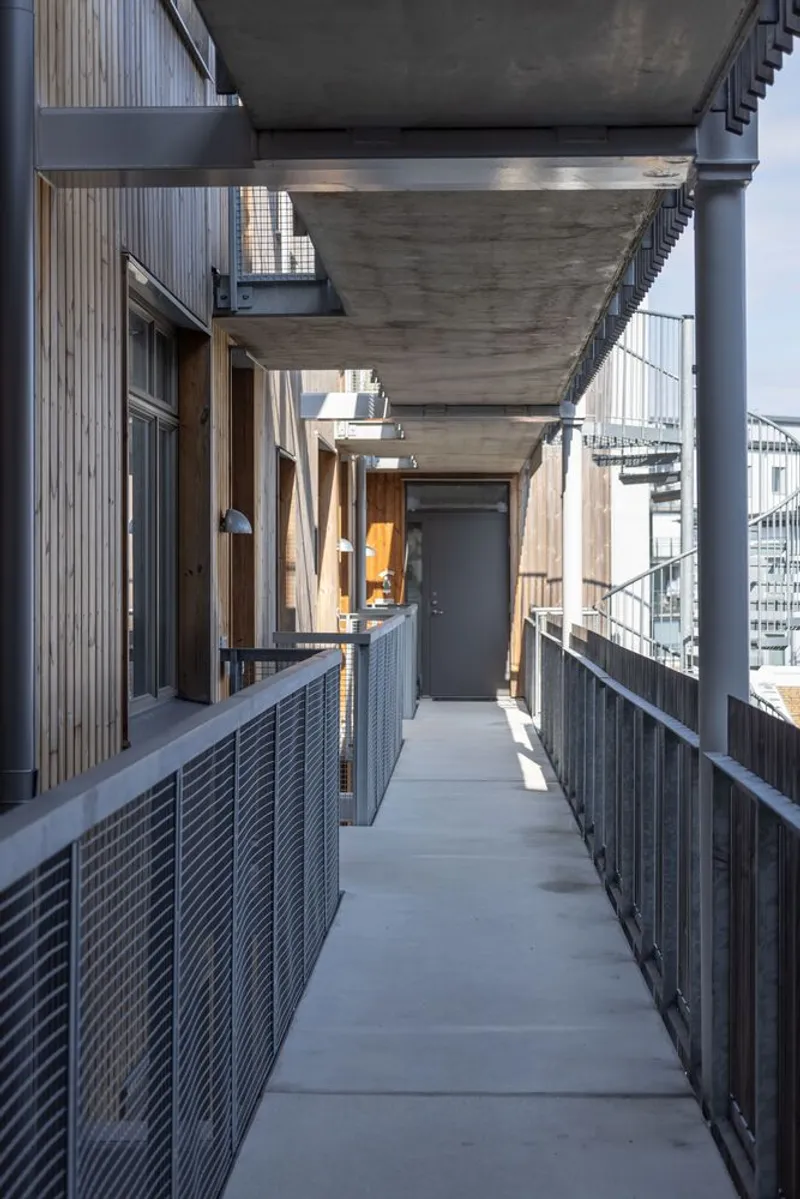
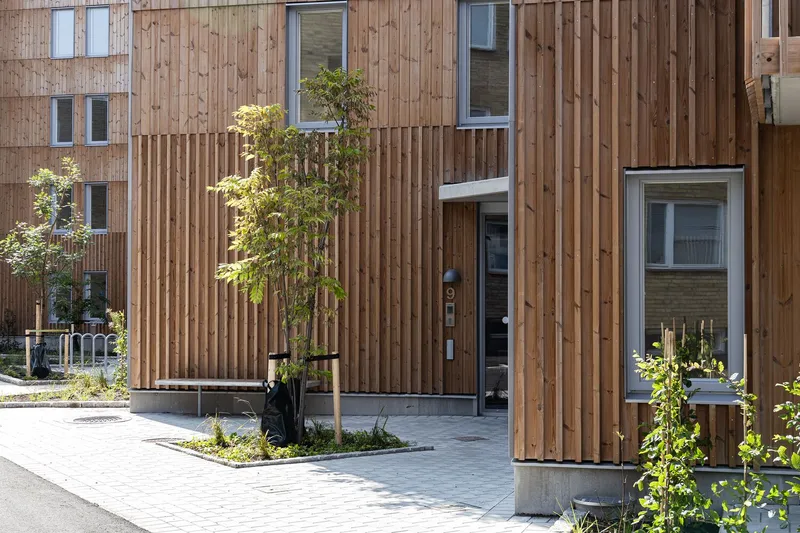
External access corridors are a feature that many architects avoid because they often feel bleak. Here, STADSTUDIO turns them into something worth inhabiting. The corridors run beneath deep concrete soffits that provide shelter, while mesh balustrades keep sightlines open to the courtyard below. At dusk the recessed lighting transforms these passages into warm, inhabited thresholds rather than utilitarian walkways.
At ground level, the entry sequence uses vertical timber slats and planted cutouts to signal arrival without building a monumental lobby. It is a residential scale, not a commercial one, and it respects the pace of someone coming home on foot. The paved pedestrian circulation integrates with the landscape so that the boundary between corridor and garden blurs.
The Courtyard as a Living Room
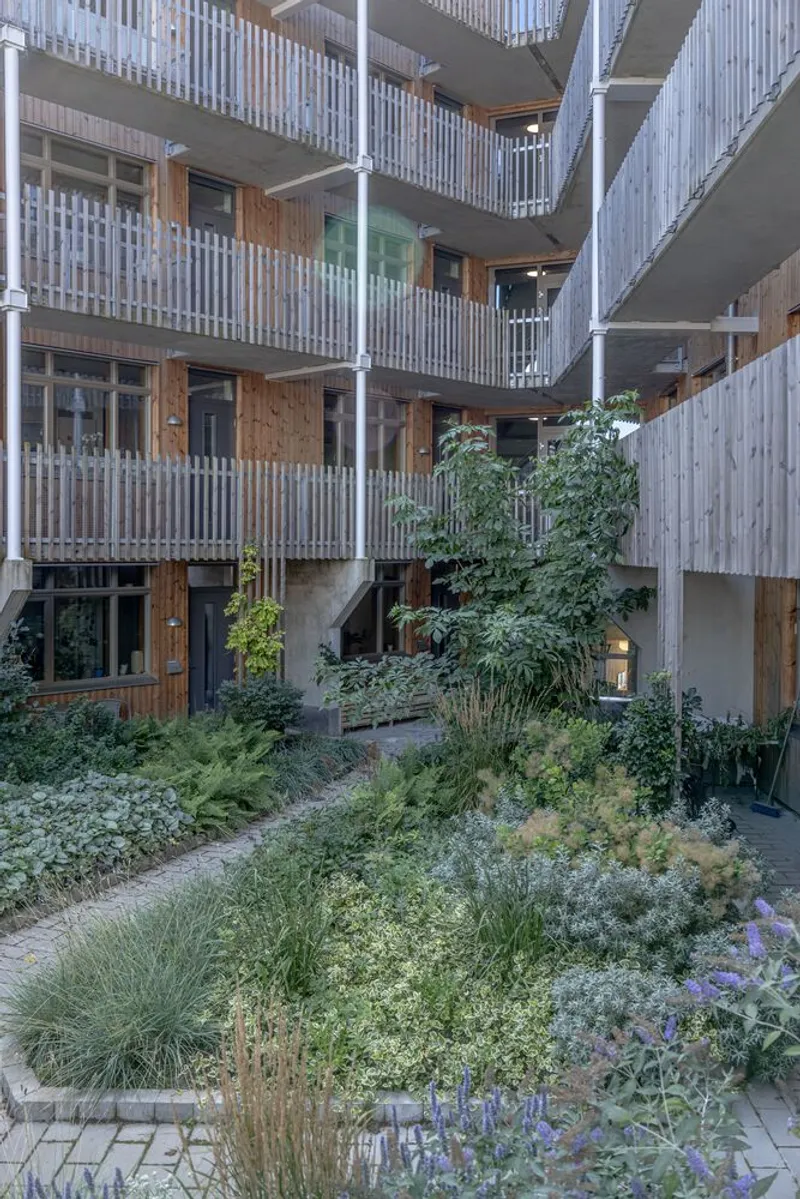
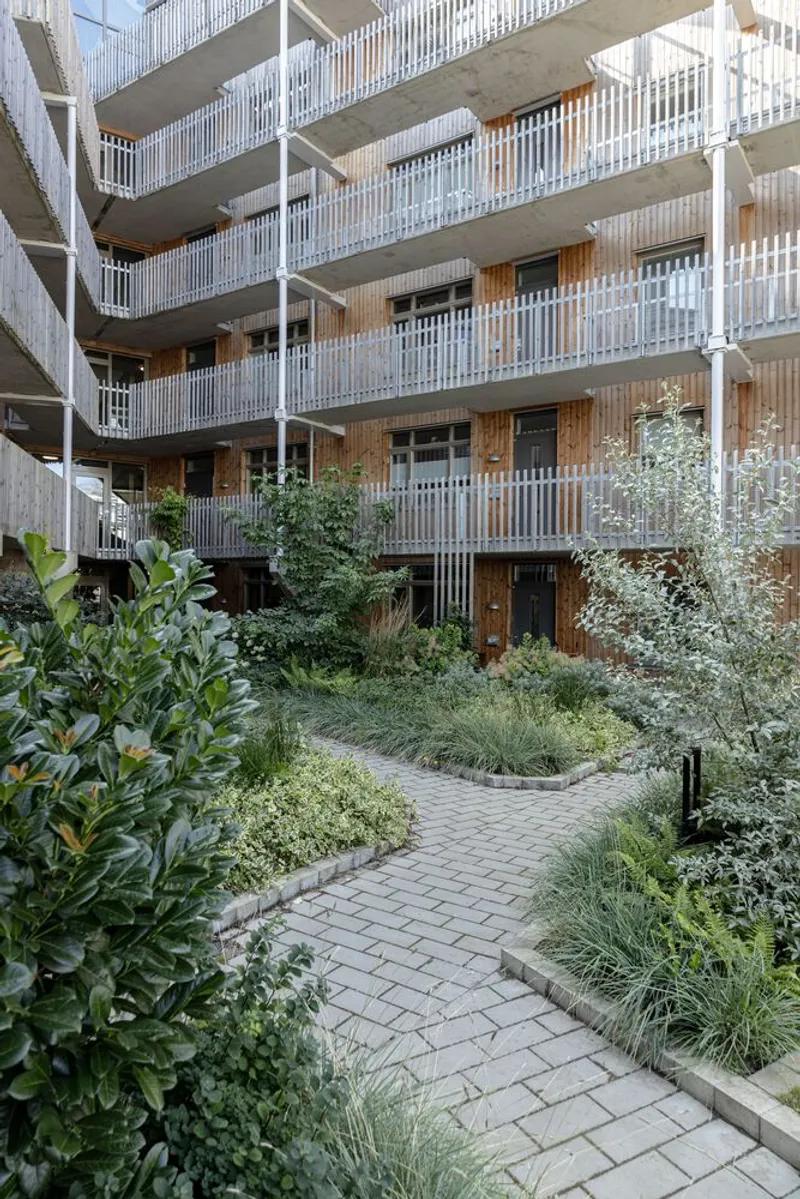
The interior courtyard is the project's most persuasive argument. Dense plantings of ornamental grasses, flowering shrubs, and ground cover line paved pathways that meander between building wings. The planting is not minimal; it is abundant, almost unruly, and that deliberate density turns the courtyard into a space with real atmosphere rather than a leftover gap between structures.
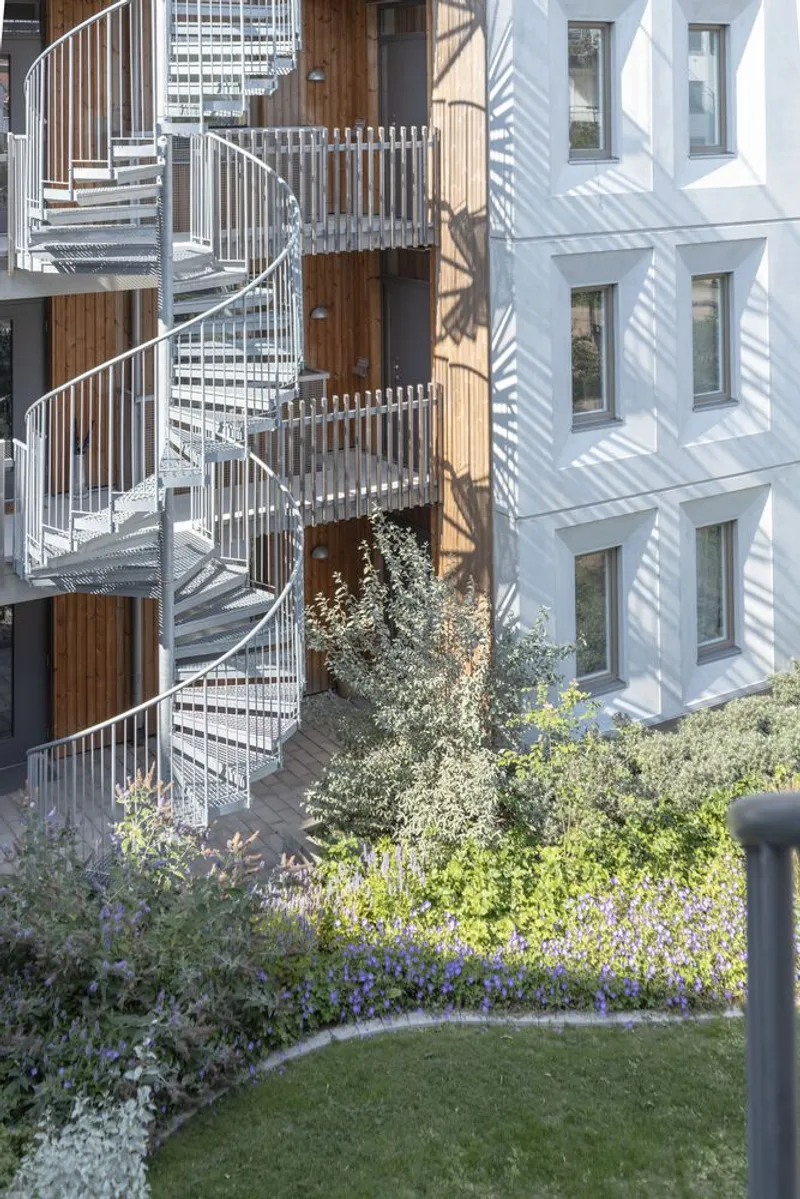
Looking up from the garden, the stacked balconies frame the sky in irregular increments, and the combination of concrete, timber, and foliage creates a palette that shifts with the seasons. A metal spiral staircase threads between levels, connecting upper balconies to the ground plane and reinforcing the idea that the courtyard belongs to every resident, not just those on the ground floor. It is a genuinely communal landscape, and it makes the difference between a housing scheme and a neighborhood.
Balconies That Build the Section
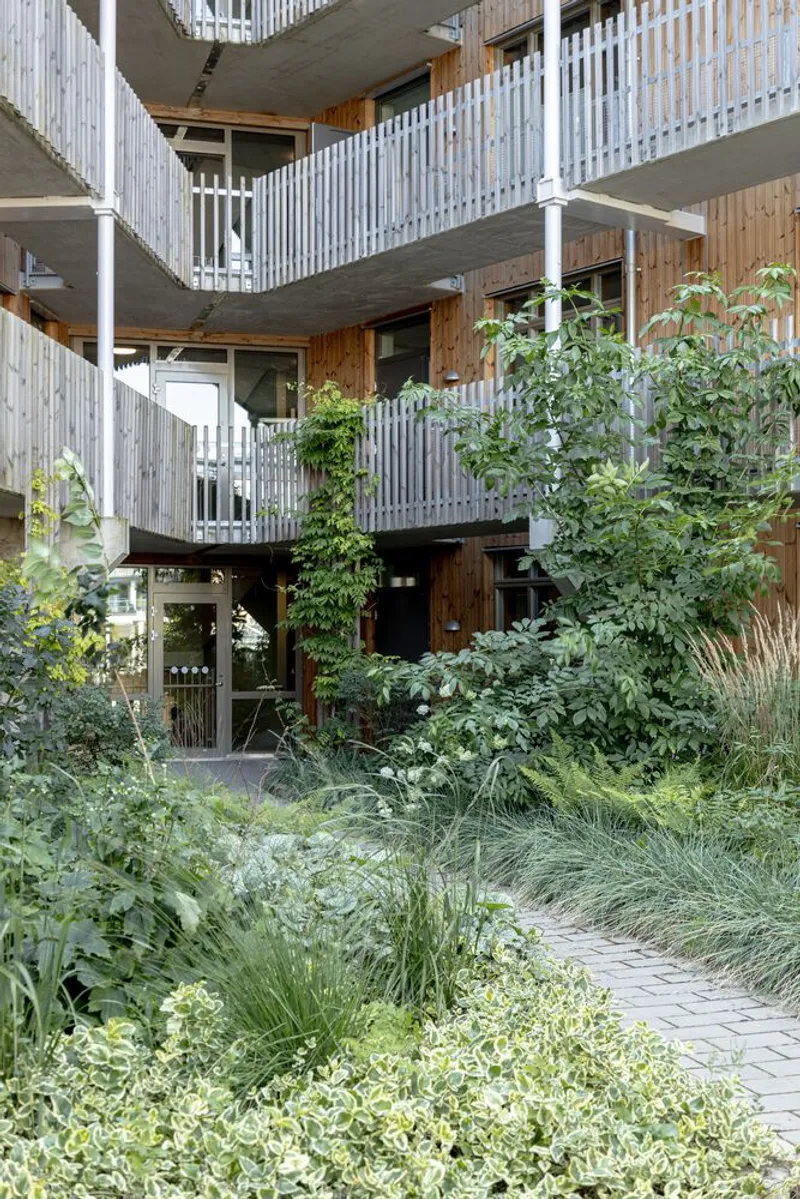
Seen from the courtyard, the balconies are the building's most expressive element. Their staggered arrangement means that each unit gets its own slice of sky and garden view without looking directly into a neighbor's living room. The vertical timber screens act as adjustable filters: open enough for air and light, closed enough for privacy. The concrete balcony slabs are left unclad, and their raw texture gives the facade a geological quality, as if the building were eroding slowly into the garden below.
The spiral staircase at the courtyard edge serves as both functional escape route and sculptural punctuation. Its open metal treads spiral upward through the timber-clad volumes, offering a vertical promenade through the section. It is a small detail that signals a bigger commitment: nothing about the shared spaces in this project feels like an afterthought.
Why This Project Matters
Måsen 21 is not trying to reinvent housing. It is trying to do housing well, and it succeeds by treating every component, from the street facade to the courtyard planting to the access corridor, as an equally important design problem. STADSTUDIO demonstrates that a limited palette of honest materials, combined with a serious investment in landscape, can produce multi-family housing that is both durable and genuinely pleasant to live in.
The lesson here is one of integration. Too many residential projects treat landscape as decoration and circulation as plumbing. Måsen 21 treats them as architecture, and the result is a building that rewards attention at every scale. For studios working on similar programs, this is a case study in how specificity of detail and generosity of shared space can elevate the ordinary into something residents might actually feel proud to call home.
Måsen 21 Apartments by STADSTUDIO, Sweden. Photography by Johanna Jonsson.
About the Studio
Share Your Own Work on uni.xyz
If projects like this are the kind of work you want to make, uni.xyz is a place to publish your own, find collaborators, and enter design competitions.




Popular Articles
Popular articles from the community


The Musturak Paradise: Senior Living Architecture for a Connected Future in Temara, Morocco
The Musturak Paradise reimagines senior living architecture in Temara via private homes, social spaces, culture, community, and shared care.

Conexión: Biophilic Design Reimagines High-Rise Living in Hong Kong
Conexión reimagines high-rise living in Hong Kong through biophilic design, green facades, shared spaces, daylight, water and nature within.

Co-Life: Senior Housing Design That Reconnects Older Adults With the City
Co-Life reimagines senior housing design through healing gardens, shared streets, workshops, and a sustainable community across generations.

Hill & Cross Opera: Sculptural Opera House Architecture Shaped by Tallinn’s Landscape and Identity
Hill & Cross Opera reimagines opera house architecture in Tallinn through its sculptural hill, civic plaza, glass wave and a luminous cross.

Similar Reads
You might also enjoy these articles


Hodi-Mandai Geram
Project Function: Preservation and revitalization of the Intangible heritage and socio-spatial identity of the Hodi by Housing, Cultural Memory Center, Sacred Grove, landscape, local tourism economy


Olio Towers: A Mid-Rise for Performers That Fuses Housing, Rehearsal, and Stage
Located blocks from Houston's Theater District, this modular tower stacks living units around a central performance atrium.

Oasis: Modular Green Housing Carved into Dhaka's Urban Fabric
A shortlisted Plugin Housing entry reclaims unauthorized settlements in Dhaka with stepped concrete volumes, green roofs, and ventilation-driven design.

Black Hole: A Floating Megastructure for the Post-Physical Era
Emiliano Mazzarotto envisions a spherical, self-scaling arena where e-sports, digital hotels, and holographic stadiums replace traditional public space.

Explore Housing Competitions
Discover active competitions in this discipline



Challenge to reimagine the Iron Throne


Photograph architecture without architects


Illustrate the lost glory of Angkor Wat - Render Challenge


Design challenge to reuse E-waste
Comments (0)
Please login or sign up to add comments
No comments yet. Be the first to comment!