

M'awee
Cultural center Design for Morocco

Each building can be considered as a phenomenon due to its location in both ancient contexts : time and place.
The concept of oasis means settlement in the desert. We began our initial studies by analyzing the type of climate in the region, then examining what has happened in Moroccan architecture. Moroccan architecture has paid special attention to the culture and customs of the region and at the same time has reacted to its climate.
In the second stage, we evaluated the identified site in Morocco, where there are many influential factors, including view, proximity, existing vegetation, prevailing wind and topography of the site . Paying attention to all these points leads us to the right design of architecture, an architecture that is supposed to figure out certain events within itself and have an impact on the region, an impact that can be negative or positive.We are trying to figure out a new kind of Moroccan architecture.
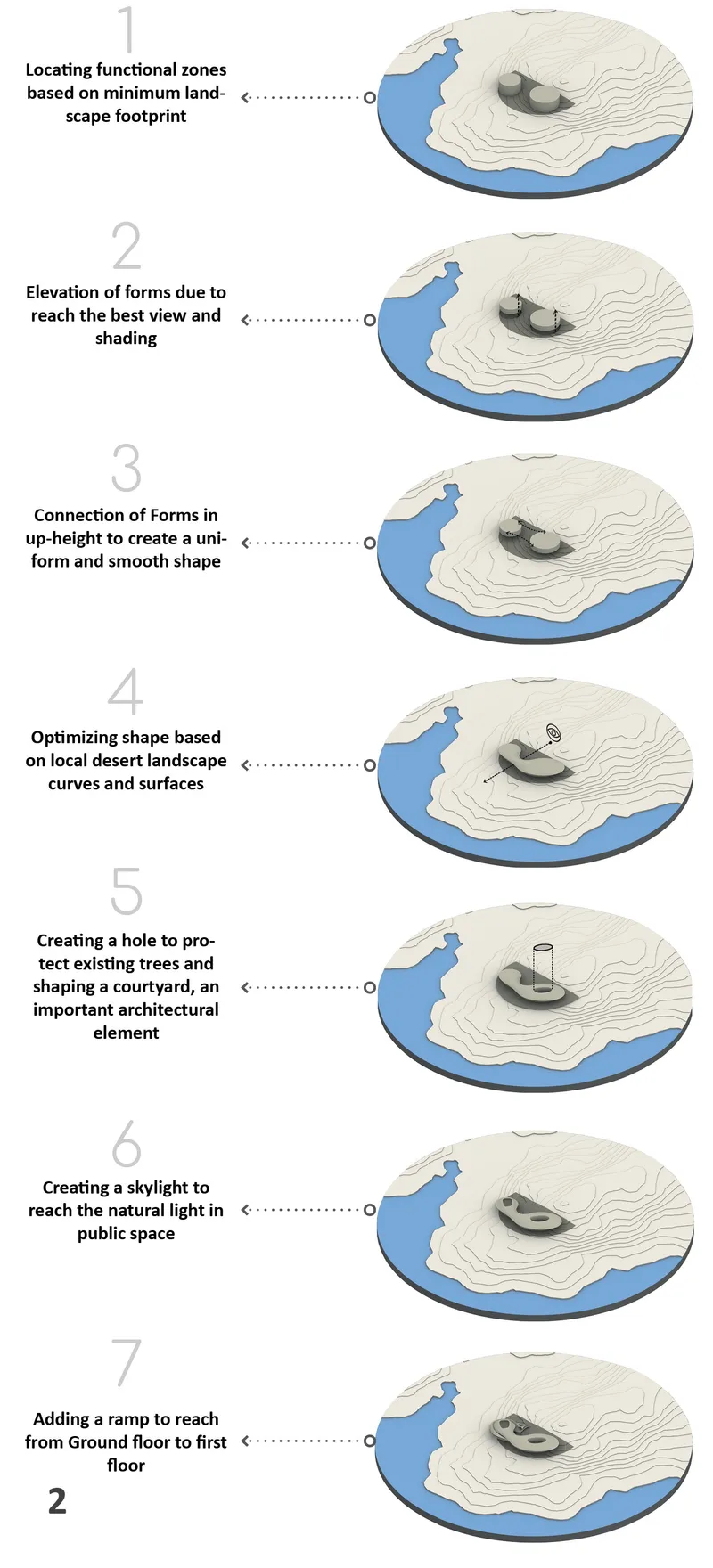
As mentioned before, the concept of oasis has a special appeal, so we tried to associate this concept with users in the Project. The main concept of the project is a desert shading tree that uses shading and the Canteliver mode of its branches to shape the building. The reason for using this concept is the need to use the concept of shade and shading in the desert.
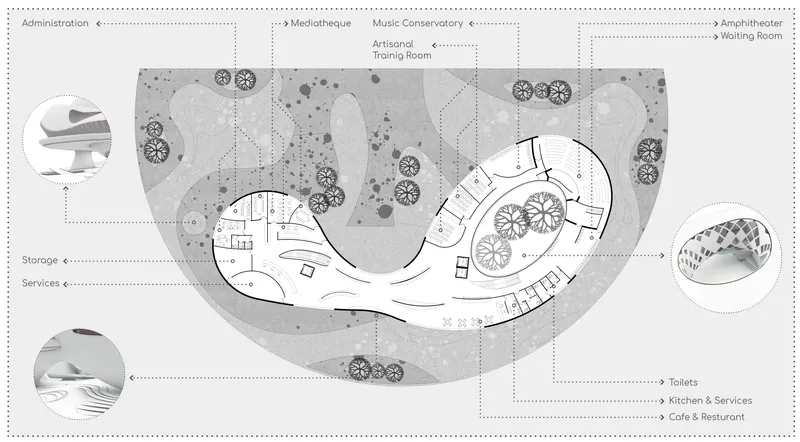
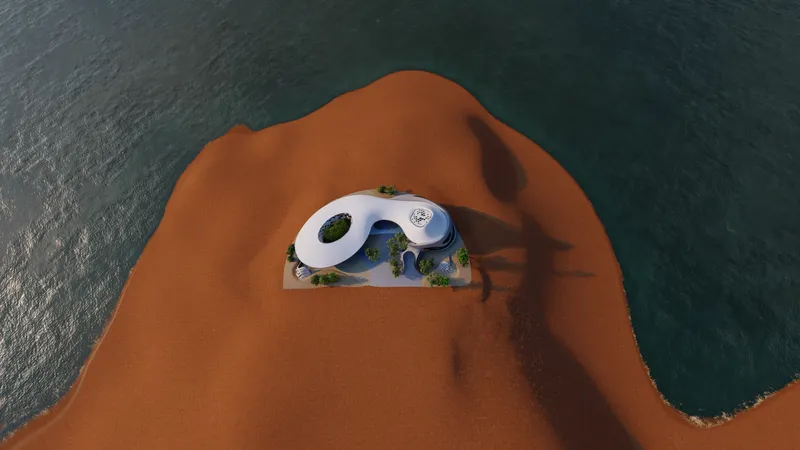
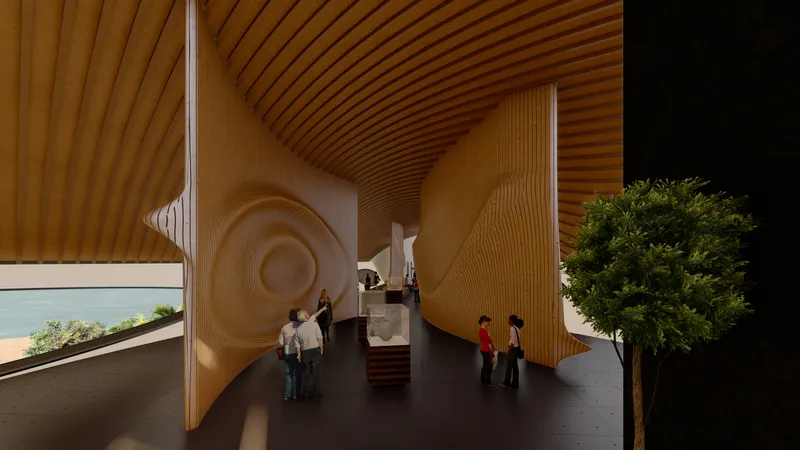
We have an opening in the middle of the form in the direction of the site entrance, which extends the view to the lake and attracts visitors to the site entrance. Due to the importance of landscape view on the site, the level of the form has been raised so that we can make better use of the surrounding landscape and the exhibition spaces can be shaded during the day.The form of the building is considered in a part of the plan site so that the trees are not cut down and even a part of the form is left empty so that the trees are not cut down, which causes ventilation and provides daylight. The low-occupancy level inspired by the Vachellia tortilis tree.
Creating diverse perspectives from the moment of being placed in the circulation to the end, connecting with the green space and respecting it in the outside and inside space (positioning the project mass according to the site trees and maintaining them), were all goals in We achieved this project.


Popular Articles
Popular articles from the community


Singing Woman: An Opera House That Performs Before the Curtain Rises
Ovidiu Cristian Pavel's conceptual opera house translates Estonia's choral identity into a sculpted waterfront landmark facing the Baltic Sea.


graciastudio Turns a Viewless Tijuana Lot Inward Around a Courtyard of Concrete, Timber and Trees
In Tijuana, Jorge Gracia's GA2 House stacks a timber-clad private floor over exposed concrete and replaces a missing view with a planted interior patio.

Cube Design Draws an Ecological Corridor Between Two Shenzhen Hills with the Nankai Building
Beside Shenzhen's container docks, the Nankai Building pairs stacked balconies with a climbing green screen to connect two hillsides across its height.

LT2A and OPEN Architectes Thread a Brick and Glass High School Through a Wooded Belgian Campus
In Braine-l'Alleud, a 3,000 m² wing for Collège Cardinal Mercier pairs pale brick with a glazed colonnade, deferring to a small chapel and a dense wood.

Similar Reads
You might also enjoy these articles

Vereda Arquitetos Renovates a 40-Square-Meter Apartment Inside Niemeyer's Copan Building
A compact unit in São Paulo's most iconic residential tower gets a material overhaul that pairs exposed concrete with bold blue Formica.

Shakur's House: Exposed Brick as an Interior Organiser in a 168 m² Mashhad Residence
Brick moves indoors in this Mashhad residence, where masonry walls, glass partitions and teal planes sequence a compact home without closing it off.

Day and Night Park: A Time-Based Urban Newsstand in Beijing
A temporary urban newsstand in Beijing blending travel, light, and reading through poetic colors, compact form, and community-focused design.

Modernist Patio Renovation in El Masnou, Barcelona by Oliver Segura Arquitectura + Cebrià Arquitectura
Modernist patio renovation blending tradition and innovation with a movable pool, leveled floors, and Catalan materials in El Masnou.

Explore Cultural Center Competitions
Discover active competitions in this discipline


Comments (0)
Please login or sign up to add comments
No comments yet. Be the first to comment!