
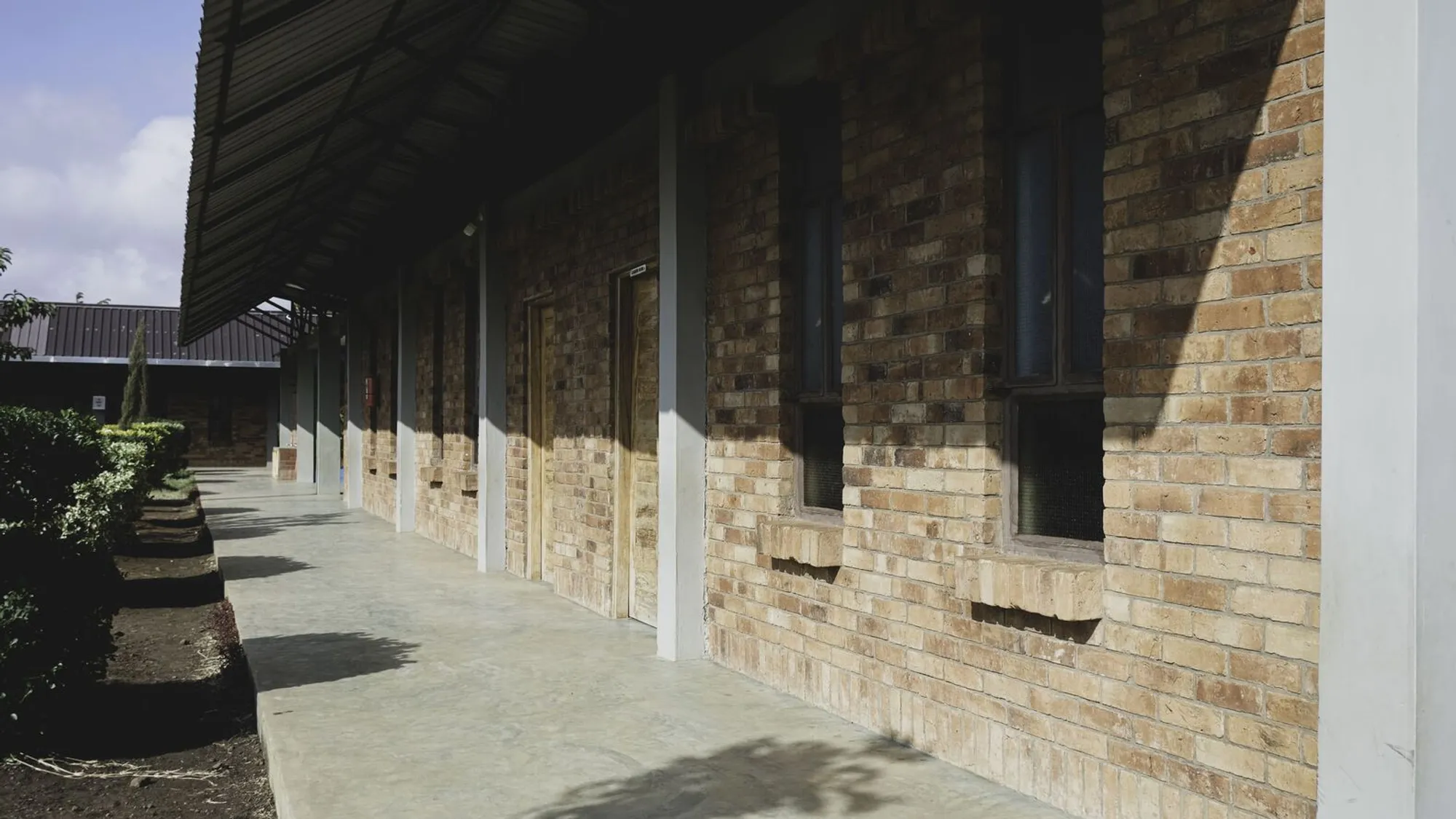
SSZA Builds a Three-Pavilion School Around a Courtyard in Arusha with Local Brick and Solar Power
Mbalamwezi School uses two types of locally sourced brick, rainwater harvesting, and 80% solar energy to serve a fast-growing Tanzanian neighborhood.


Winning a competition in January 2018 was the easy part. What followed for Sebastián Silva Zunza Arquitecto (SSZA) and NGO partner Kutembea was a three-to-four-year construction process that drew on local labor, international volunteers, and materials sourced within a single kilometer of the site. Completed in 2021, Mbalamwezi School sits a few kilometers south of Arusha in a neighborhood that is expanding fast and was desperately short of educational infrastructure. At 713 square meters, it is compact, but the ambition encoded in its layout is anything but modest.
The interesting move here is not the program, which is familiar, but the logistics of delivery. Lead architects Sebastián Silva Zunza and Nicole Schiappacasse worked with local builder Asantely to survey what was actually available on the ground before committing to a material palette. The result is a campus built from two types of locally produced brick, pressed and tinted for primary walls, exposed for interior facades, topped with pre-painted zinc-coated sheets on metallic trusses. It runs on 80% solar energy and collects rainwater in a 100,000-liter tank. The architecture was designed around constraints, and the constraints turned out to be generative.
Three Pavilions, One Courtyard
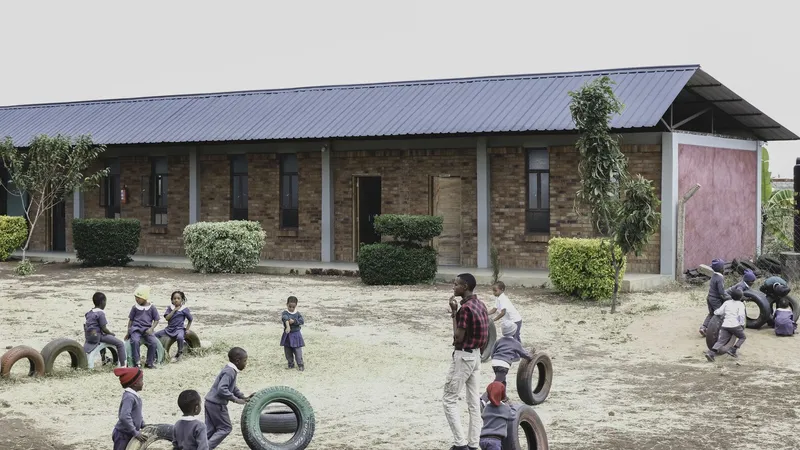
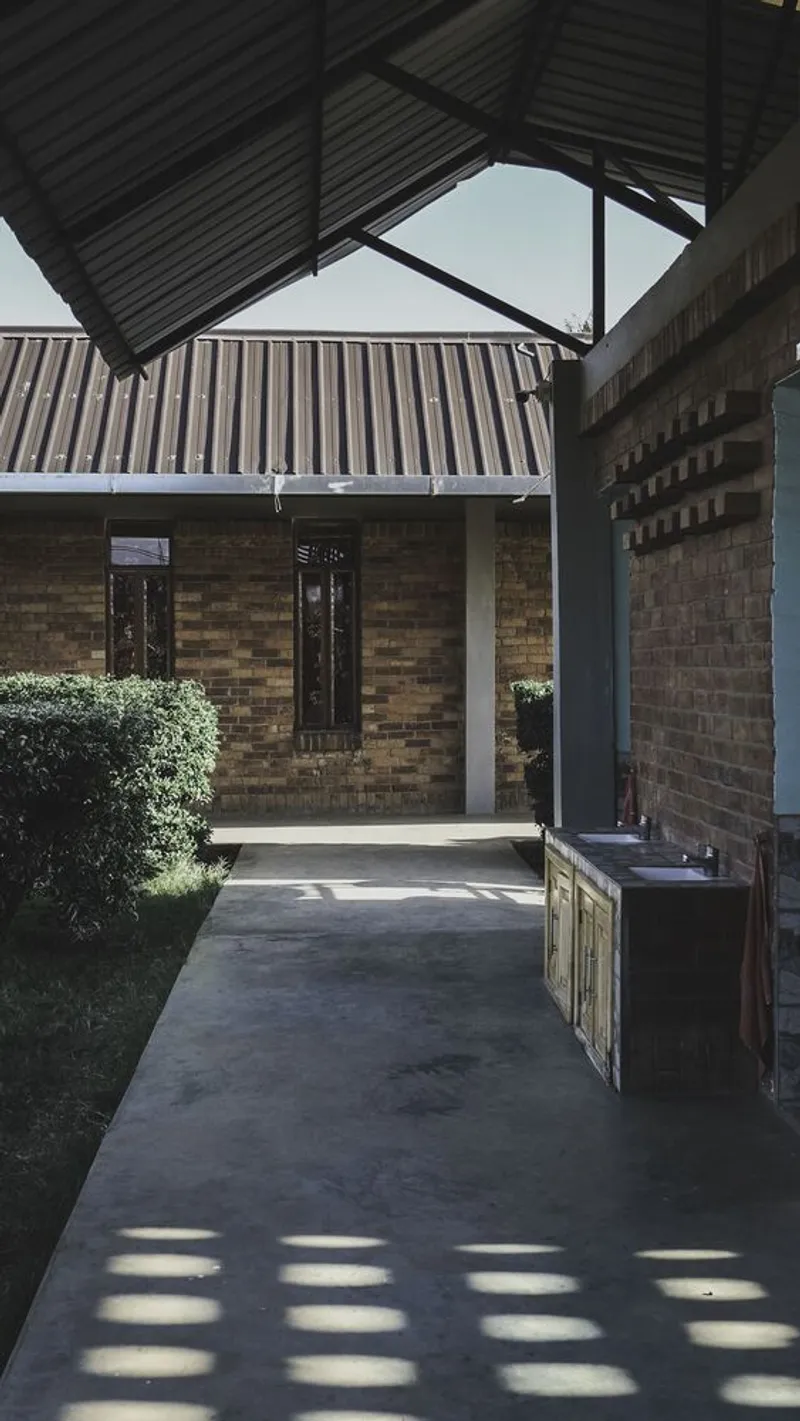
The school is organized as three pavilions enclosing a central courtyard. The first pavilion is oriented to block the prevailing southeast wind and houses the dining hall, kitchen, storage, and a shop that sells produce from the school garden, generating supplementary income. The second pavilion faces the street and contains administrative offices, dormitories, bathrooms, and quarters for staff and volunteers, with rooms looking onto the garden rather than the activity zones. The third pavilion holds three classrooms, an open learning space, and bathrooms, completing the courtyard enclosure.
The courtyard is the real heart of the project. It functions as a meeting plaza, a play area (recycled tires serve as seating), and a climatic buffer. The three-pavilion configuration keeps circulation intuitive and separates noisy communal spaces from quieter learning and living quarters without the need for long corridors or complicated wayfinding.
Brick as Identity
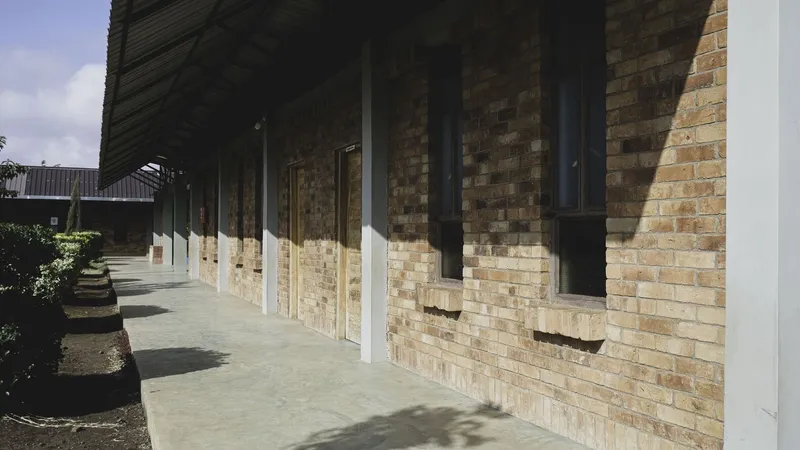
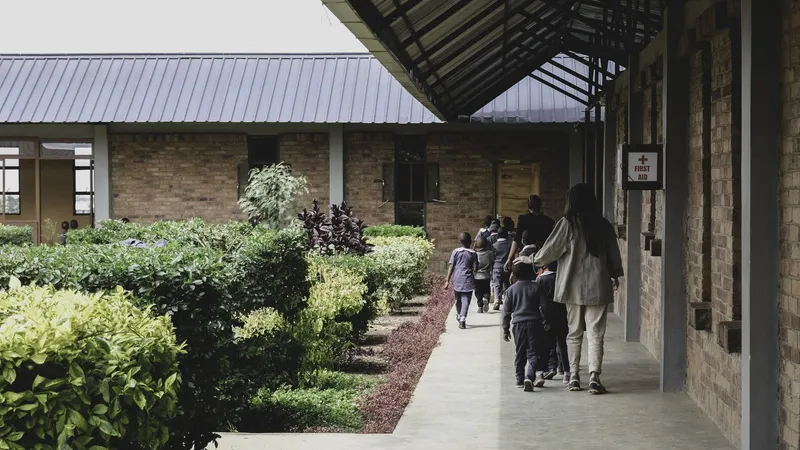
The two brick types do real architectural work. Pressed, tinted bricks form the exterior walls and establish a warm, earthy tone that reads as solid and protective from the street. Exposed bricks on the interior facades create a lighter, more textured surface that catches dappled light under the roof overhangs. The decision to source both within a one-kilometer radius was pragmatic, cutting transport costs and emissions, but it also rooted the building in its immediate context in a way that imported materials never could.
Alternating brick tones along the covered corridors give rhythm to what could otherwise be monotonous passages. White-painted columns punctuate the walkways, providing contrast and marking bays. The material palette is restrained, two bricks, concrete, timber rafters, zinc roofing, but the variation in how those materials are assembled keeps the experience rich.
Solar Canopy and Rainwater Infrastructure
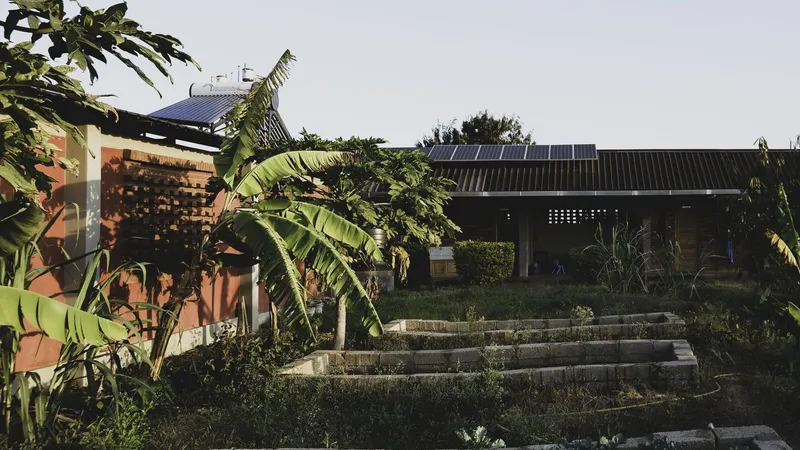
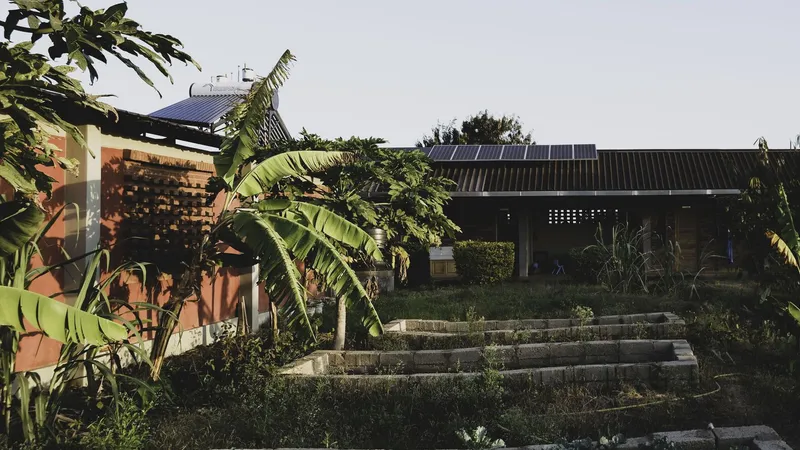
Solar panels mounted on the metallic truss roof are not an afterthought bolted onto a finished building. They are integral to the section: the pitched roof angle accommodates both panel orientation and rainwater runoff. Collected water feeds a cylindrical 100,000-liter storage tank used primarily for irrigation and sanitation. Together, these systems allow the school to operate with minimal reliance on Arusha's strained municipal grid.
The dusk images of the stepped concrete seating area, flanked by banana palms with the solar canopy overhead, capture something rare in school architecture: a space that feels genuinely communal and comfortable rather than institutional. The stepped seating doubles as an informal amphitheater, a social space that costs almost nothing to build and requires zero maintenance.
Covered Circulation and Climate Response
Covered walkways and deep roof overhangs are the primary passive strategy. Exposed timber roof structures throw shifting shadows across the concrete floors throughout the day, moderating heat gain without mechanical cooling. The first pavilion's orientation against the southeast wind is a straightforward but effective gesture: it turns the courtyard into a sheltered microclimate where children can gather comfortably.
The timber structure is left visible everywhere, not for aesthetic reasons alone but because concealing it would add material, cost, and maintenance. Honesty of structure is a byproduct of working within tight budgets, and here it reads as an asset rather than a compromise.
Plans and Drawings
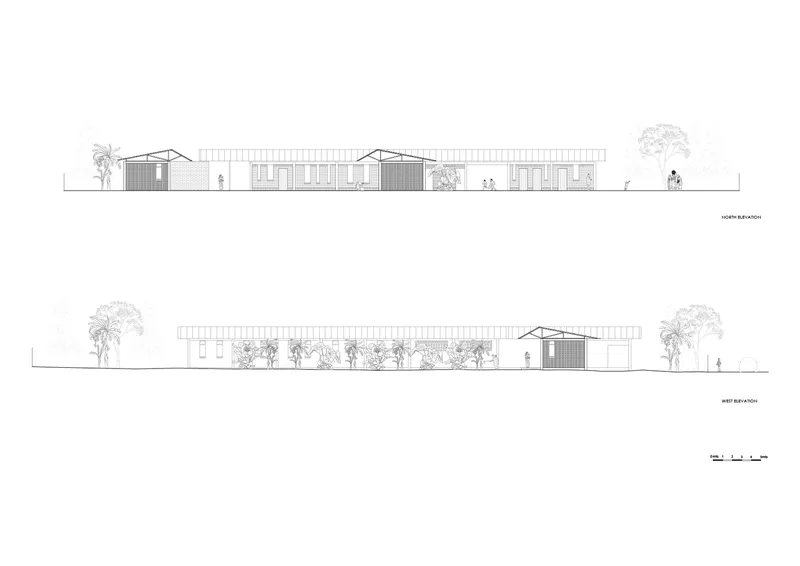
The north and west elevation drawings confirm the low, horizontal profile that the photographs suggest. Pitched roof volumes step and overlap without competing, producing a roofline that stays close to the ground and below the surrounding tree canopy. The flanking trees drawn into the elevations are not decorative: they indicate that the landscape strategy treats planting as part of the building's environmental performance, providing shade and wind filtration at the campus perimeter.
Why This Project Matters
Mbalamwezi School matters because it was designed around real scarcity and came out the other side as a dignified, fully functional campus. The 80% solar energy figure, the hyper-local brick supply chain, the rainwater tank, the phased construction with local and volunteer labor: none of these are revolutionary on their own. Stacked together and executed with care over four years, they constitute a credible model for educational architecture in contexts where budgets are tight and infrastructure is unreliable.
The school is already full and planning an expansion of 14 additional classrooms. That is the clearest endorsement an educational building can receive. The question now is whether the pavilion-and-courtyard logic can scale without losing the spatial intimacy that makes the current campus work. If SSZA and Kutembea get that next phase right, Mbalamwezi will be more than a good school. It will be a replicable strategy.
Mbalamwezi School, designed by Sebastián Silva Zunza Arquitecto (SSZA), Arusha, Tanzania. 713 m². Completed 2021. Photography by Sebastián Silva Zunza.
About the Studio
Share Your Own Work on uni.xyz
If projects like this are the kind of work you want to make, uni.xyz is a place to publish your own, find collaborators, and enter design competitions.




Popular Articles
Popular articles from the community


The Earth Pod: 3D Printed Homes for Resilient Refugee Communities
The Earth Pod reimagines refugee housing through 3D printed homes made from clay, combining resilience, self-sufficiency, and rapid shelter.

The Musturak Paradise: Senior Living Architecture for a Connected Future in Temara, Morocco
The Musturak Paradise reimagines senior living architecture in Temara via private homes, social spaces, culture, community, and shared care.
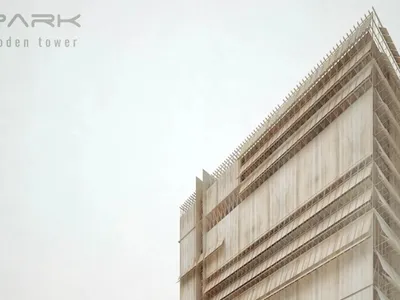
EW PARK: Sustainable Architecture Reimagines the Future of Urban Parking
EW PARK reimagines city parking as a modular wooden tower combining automation, solar energy, electric mobility, and adaptable urban design.

Riyadh For All: Intergenerational Urban Design for Active Aging in Rabat
Riyadh For All reimagines urban design in Rabat with intergenerational co-living, adaptive courtyards, and Moroccan cultural exchange today.


Similar Reads
You might also enjoy these articles


Hodi-Mandai Geram
Project Function: Preservation and revitalization of the Intangible heritage and socio-spatial identity of the Hodi by Housing, Cultural Memory Center, Sacred Grove, landscape, local tourism economy


Olio Towers: A Mid-Rise for Performers That Fuses Housing, Rehearsal, and Stage
Located blocks from Houston's Theater District, this modular tower stacks living units around a central performance atrium.

Oasis: Modular Green Housing Carved into Dhaka's Urban Fabric
A shortlisted Plugin Housing entry reclaims unauthorized settlements in Dhaka with stepped concrete volumes, green roofs, and ventilation-driven design.

Black Hole: A Floating Megastructure for the Post-Physical Era
Emiliano Mazzarotto envisions a spherical, self-scaling arena where e-sports, digital hotels, and holographic stadiums replace traditional public space.


Explore Educational Building Competitions
Discover active competitions in this discipline



Challenge to design public laboratory


Challenge to reimagine the Iron Throne


Photograph architecture without architects


Illustrate the lost glory of Angkor Wat - Render Challenge
Comments (0)
Please login or sign up to add comments
No comments yet. Be the first to comment!