
Melody Garden
music in the garden

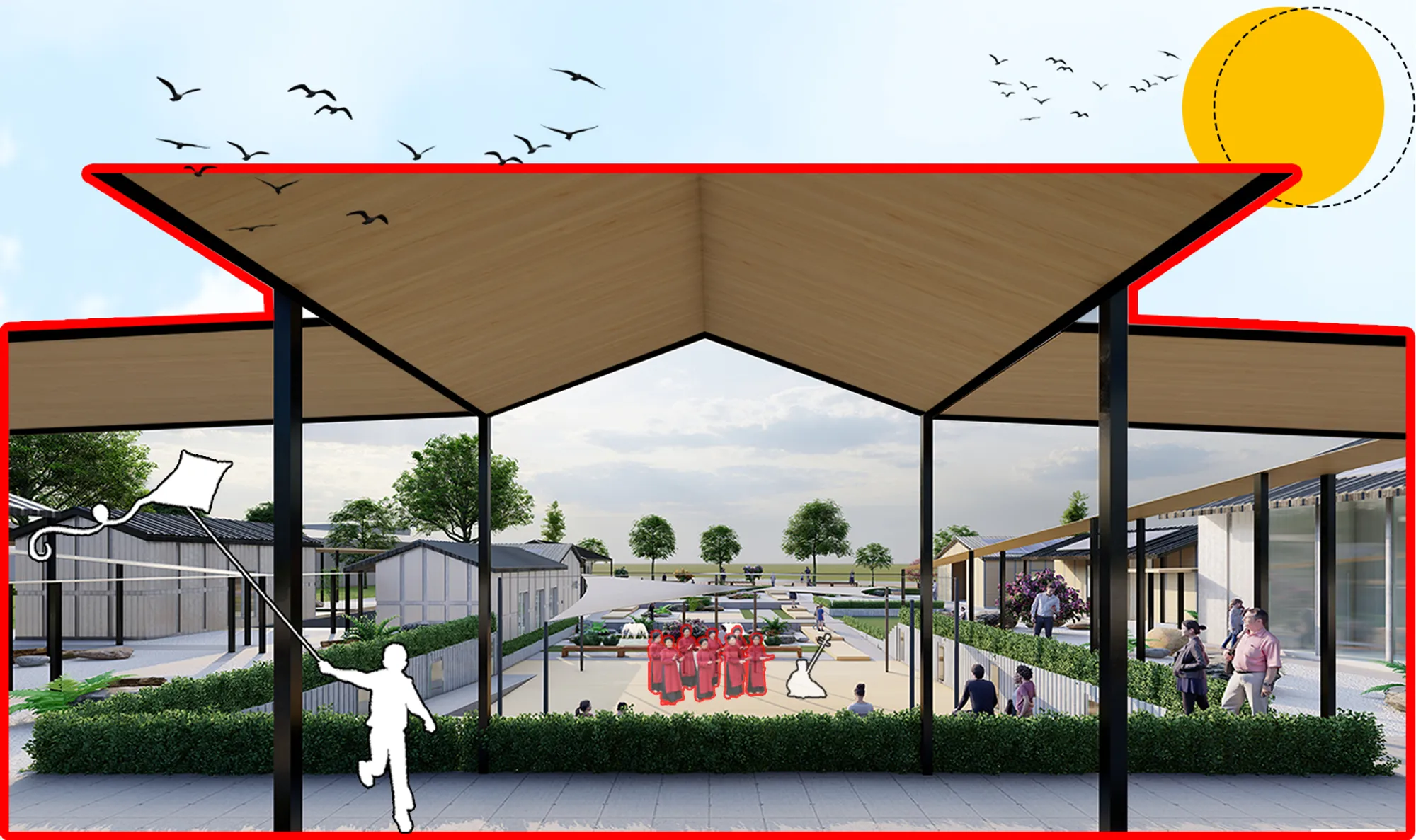
Located between 2 lakes in Hanoi, Vietnam, the land is also adjacent to a temple. One of the lakes is Ho Tay Lake, Hanoi's largest freshwater lake, and the other is Dam Tri Lake, known as the lung of the neighborhood. There are places where various activities are held, many historical buildings and modern structures around Ho Tay Lake. The main starting point of the project was to provide the connection between the 2 lakes and to preserve and maintain the green status of the land. At the same time, preserving the place of the land in the urban memory (watching the view, resting and entertainment) was another important point. The project aims to convey Ca Tru Music Culture, which needs protection, to people with flexible spaces that use traditional and local together, meditative spaces that reflect the calmness of music, and common areas for demonstration purposes. Inspired by the idea of a Zen garden belonging to the close Japanese culture and examples of which can be found in Hanoi, the project was named Melody Garden.
A slope of 50 cm was created on the land where there was no slope since it was filled. Thanks to this slope, a middle area where Ca Tru Music can be exhibited, close to the road at the border of the land, which is used quite frequently, and where people who come to the land can meet immediately is designed. This middle area is in the form of an amphitheater to suit the desired open-air theatre. Because Hanoi has a rainy climate, the open-air theater is protected by a truss system. Small amphitheater courtyards were designed for the common use of the education units and contributing to the flexibility of the spaces. These courtyards are connected with the open-air theater in the center and are suitable for disabled use.
When we look at the immediate surroundings, a rectangular and square structure is generally seen. Trapezoidal metal sheet material is seen in most of the structures. In the project, this local material was used both in the building and in the landscape walls. The wooden material used emphasizes the traditional. Wooden material is used in pivot doors, façade and pergola system, which cools the interior together with the water element. The spaces are designed in a way and in harmony with the environment. At the main entrance to the land, the auditorium-mini-theatre, which will be used extensively by the public, and the museum-gallery are constructed together. As you progress, you come across the open-air theater and educational units in the center. Different experiences are offered at different elevations in the project, where it is aimed to sometimes pause and sometimes take people around the field. The water element, which contributes to this experience, is intended to make you feel the calmness of the music. The above-water seating areas, on the other hand, offer areas where people can have a good time.
The roads reach the sitting and viewing area by the water and are protected by the pergola system. While walking these roads, it is possible to encounter Zen Gardens with different small plants.
Rainwater collection system and solar panels were used with a sustainable design approach, suitable for Hanoi with a tropical monsoon climate.


Popular Articles
Popular articles from the community


The Ocean Hive: Sustainable Architecture for a Self-Sufficient Civilization at Sea
The Ocean Hive imagines sustainable architecture at sea, where modular habitats, algae, wave power and ocean waste sustain a growing colony.

Co-Life: Senior Housing Design That Reconnects Older Adults With the City
Co-Life reimagines senior housing design through healing gardens, shared streets, workshops, and a sustainable community across generations.

The Musturak Paradise: Senior Living Architecture for a Connected Future in Temara, Morocco
The Musturak Paradise reimagines senior living architecture in Temara via private homes, social spaces, culture, community, and shared care.

The Earth Pod: 3D Printed Homes for Resilient Refugee Communities
The Earth Pod reimagines refugee housing through 3D printed homes made from clay, combining resilience, self-sufficiency, and rapid shelter.

Similar Reads
You might also enjoy these articles

The Rhythm of Seasons
A Farmers' Market Connecting Nature and the City

More Than a Building-Designing a Living System
More Than a Building-Designing a Living System
Base Beyond
DESERT COMPOUND ARID: TOURISM OF ABSENCE AND ABUNDANCE

Explore Landscape Architecture Competitions
Discover active competitions in this discipline




Bring back Drive In's


Design challenge to reuse E-waste
Comments (0)
Please login or sign up to add comments
No comments yet. Be the first to comment!