
Meomum Zip House by Todot Architects and Partners – A Tranquil Forest Retreat Designed for Rest, Reflection, and Connection
Meomum Zip House blends arched cloisters, serene landscapes, and dual-family privacy to create a peaceful forest retreat focused on rest and reflection.


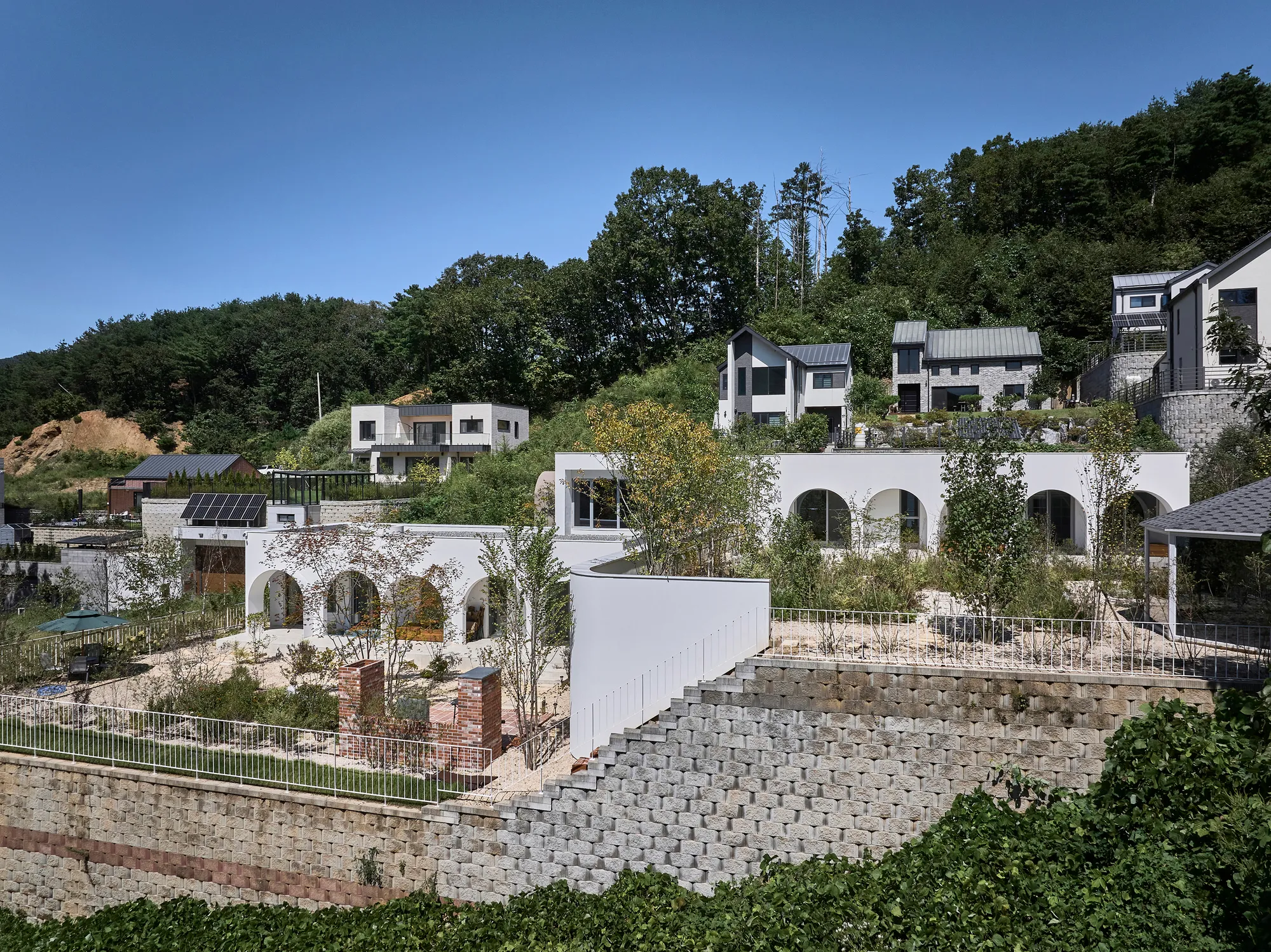
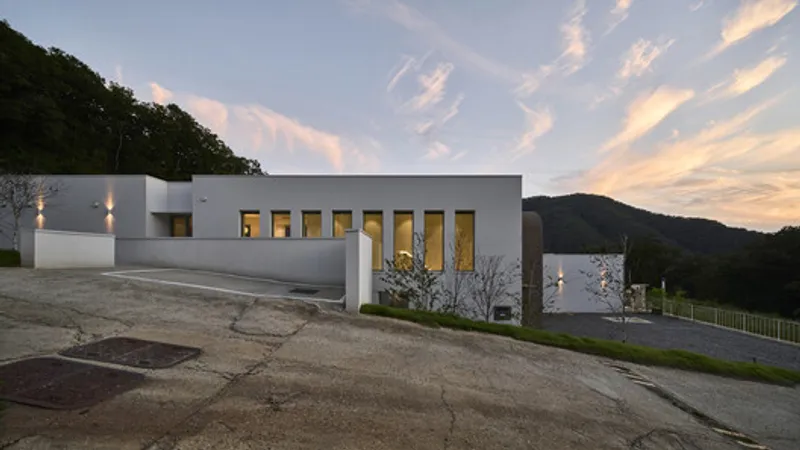
Meomum Zip House, designed by Todot Architects and Partners, is a serene architectural retreat located in the lush, elevated forests of Yangpyeong, South Korea. Completed in 2025, this 197 m² residence serves as a thoughtful escape for a couple who run a mid-sized company, while also offering a peaceful stay for their employees. The project blends architectural elegance, sensitive site response, and a deep philosophy of stillness—“Meomum,” the act of staying and pausing.
A Forest-Edge Sanctuary on Challenging Terrain
The house sits on two adjacent plots in the scenic Sudaewool area in Munho-ri, an elevated forest region designated as a residential development complex. Although the clients wished for a dual-family arrangement—one for themselves and one for employees—strict regulations in the waterside protection area prevented constructing multiple buildings or multi-household units.
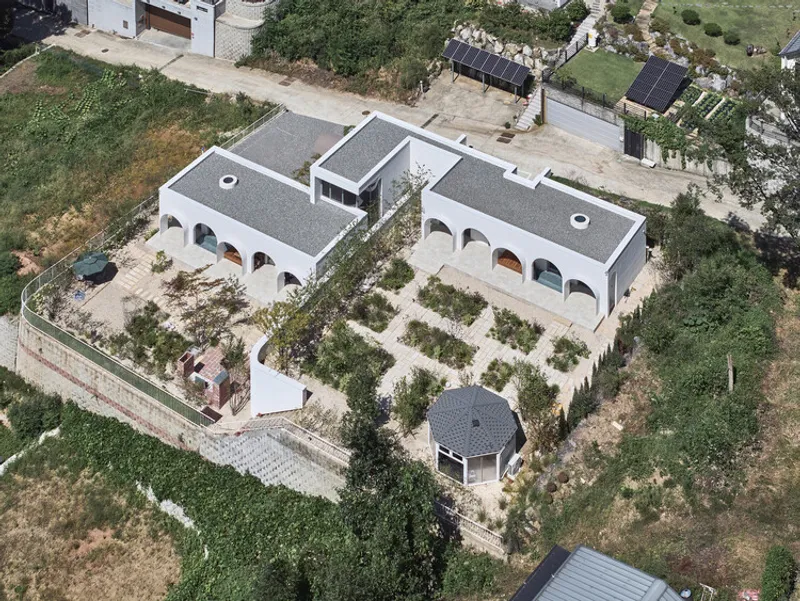
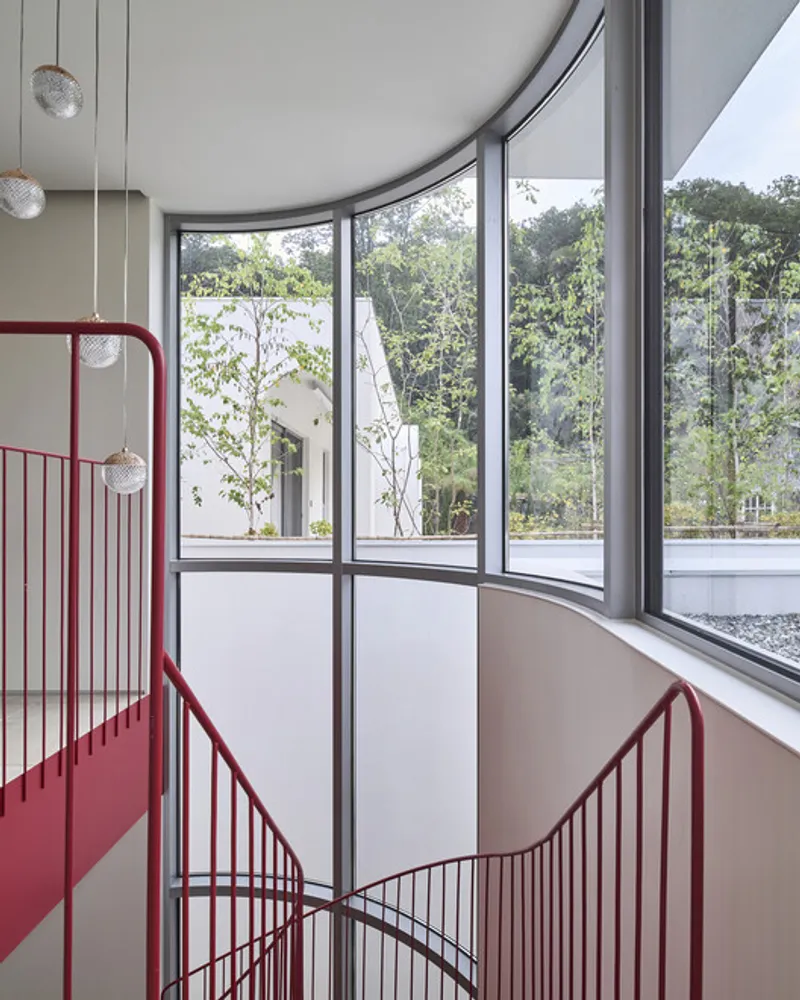
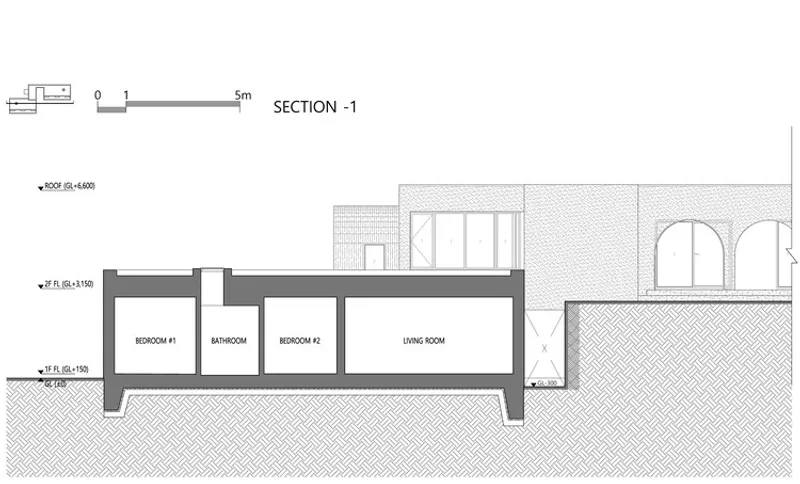
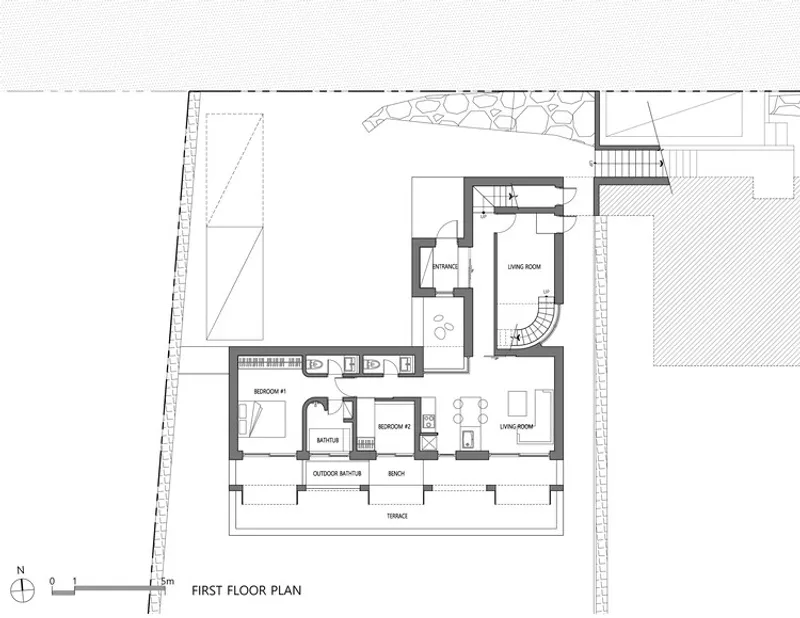
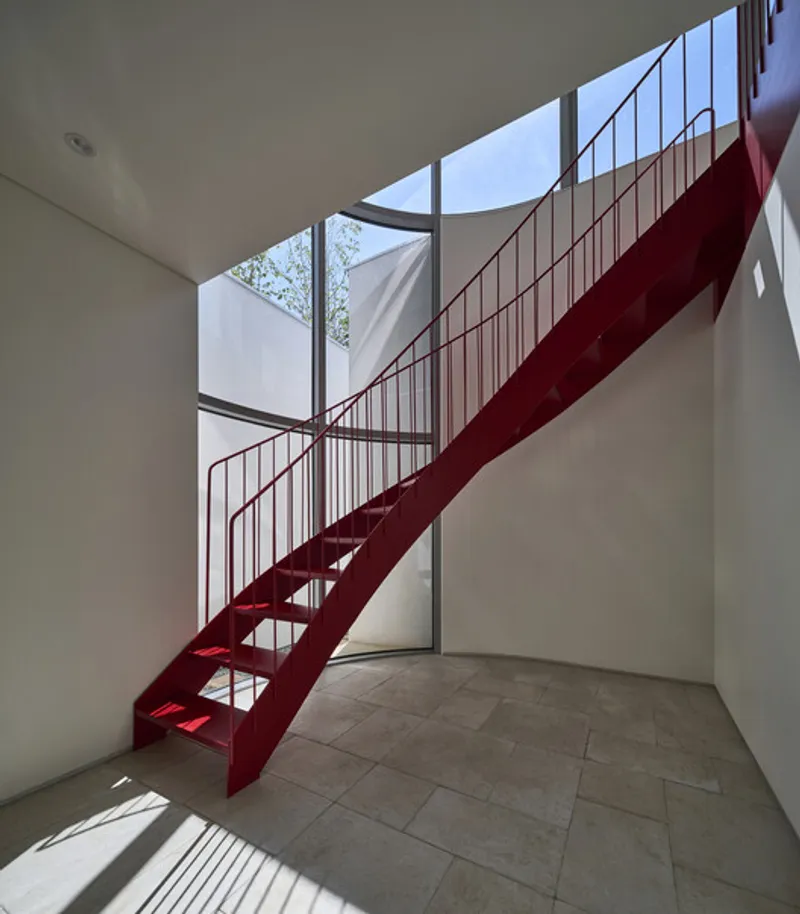
To overcome these constraints, the architects designed two identical homes on two plots with a 3-meter elevation difference, connecting them through a dramatic two-story entrance hall. This solution preserved legal compliance while delivering privacy, independence, and comfort for both families.

Cloistered Arches: The Heart of Meomum
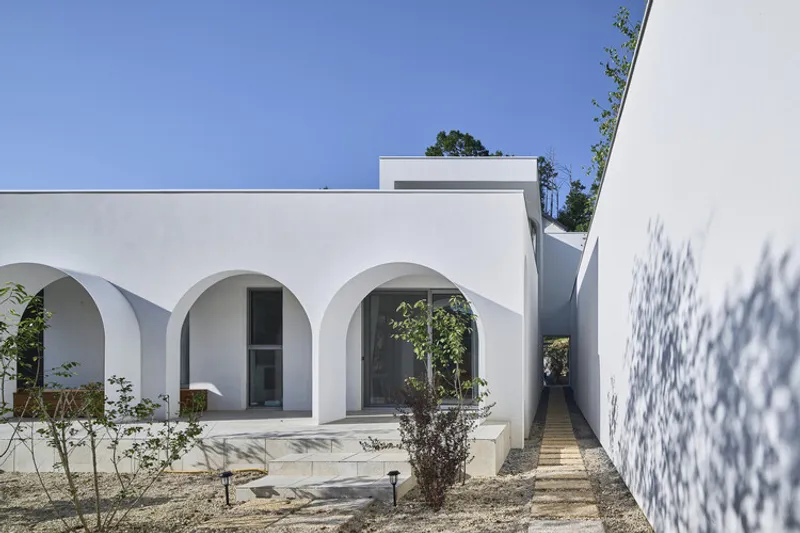
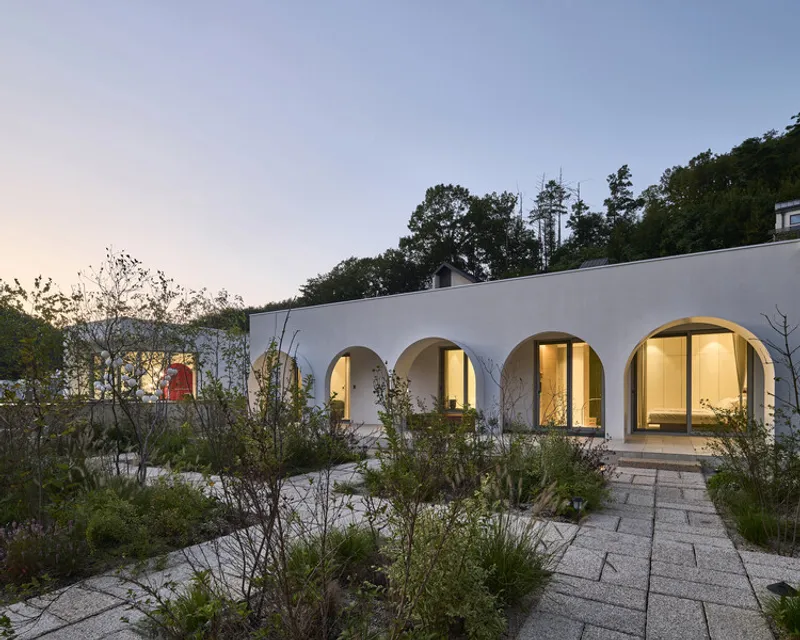
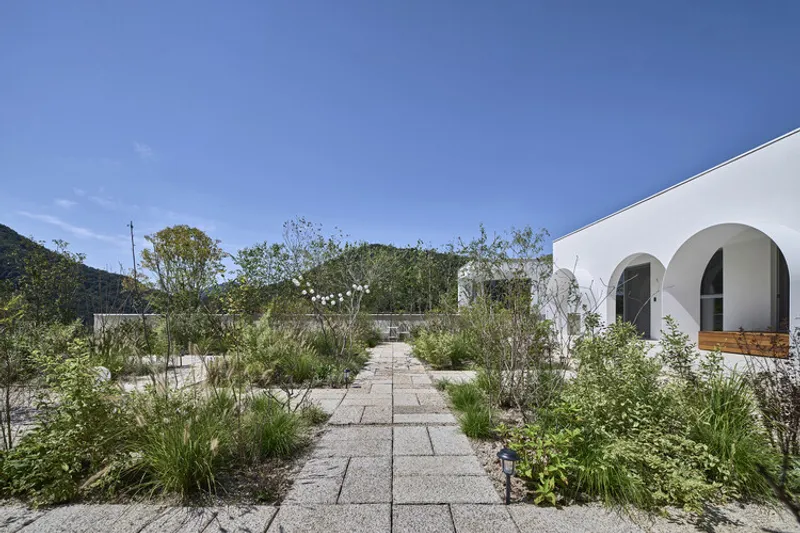
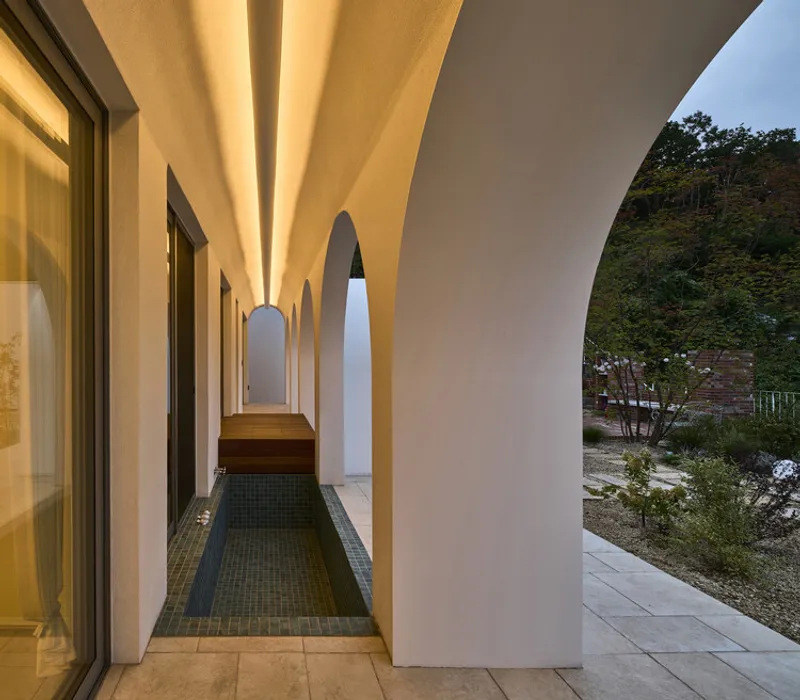
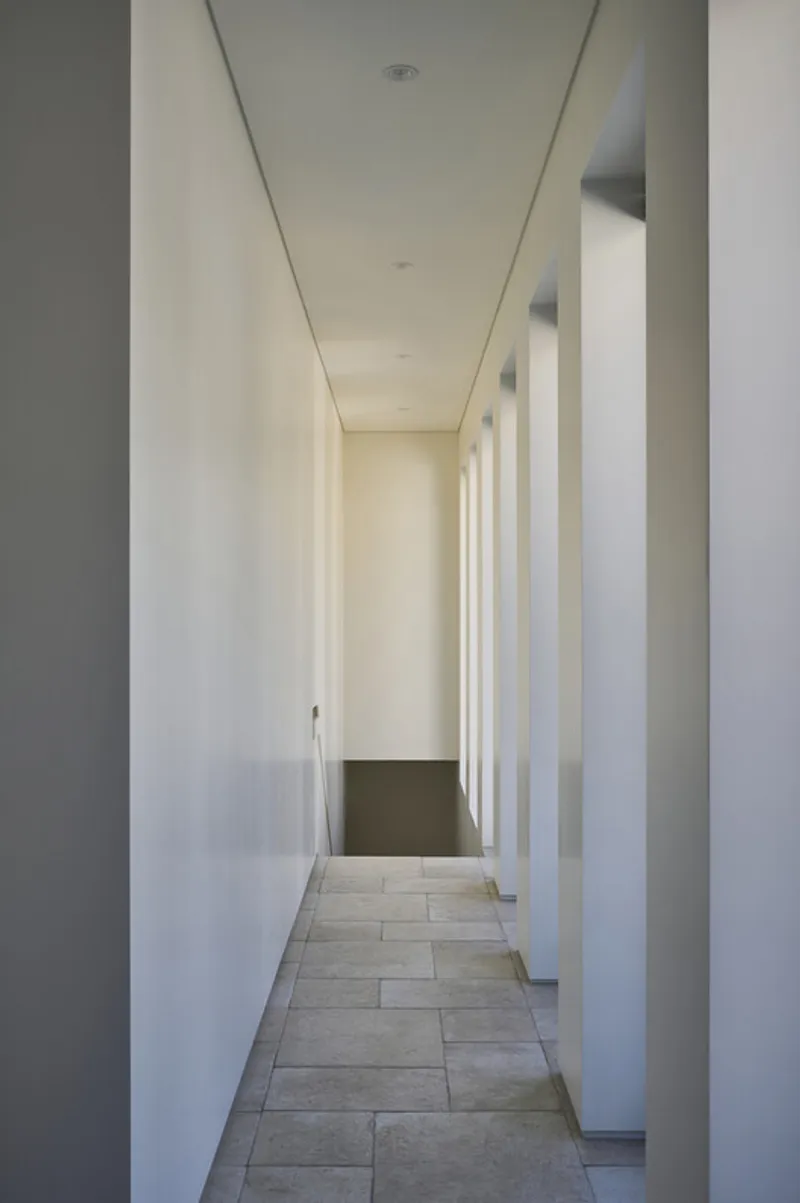
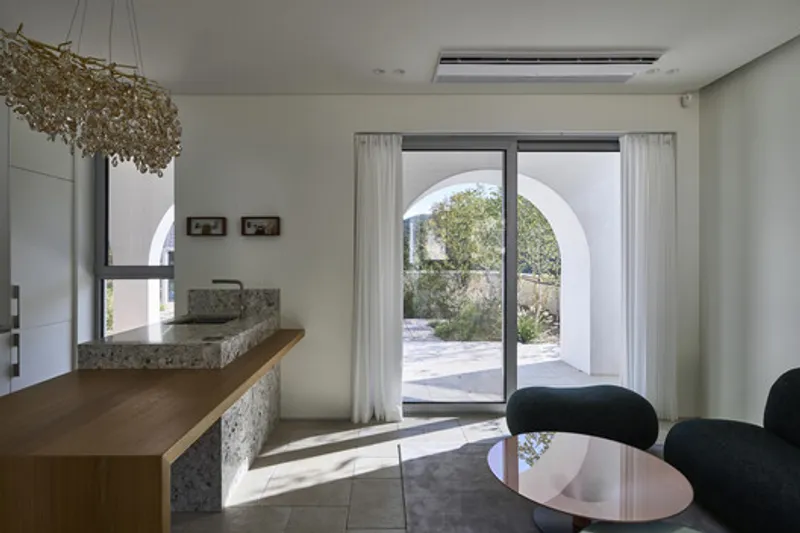
The signature architectural element of Meomum Zip House is the continuous cloister of arches that wraps the structure. Traditionally, a cloister is a covered walkway surrounding a building, but here it becomes the home’s emotional core—an elongated space designed for pausing, resting, and lingering.
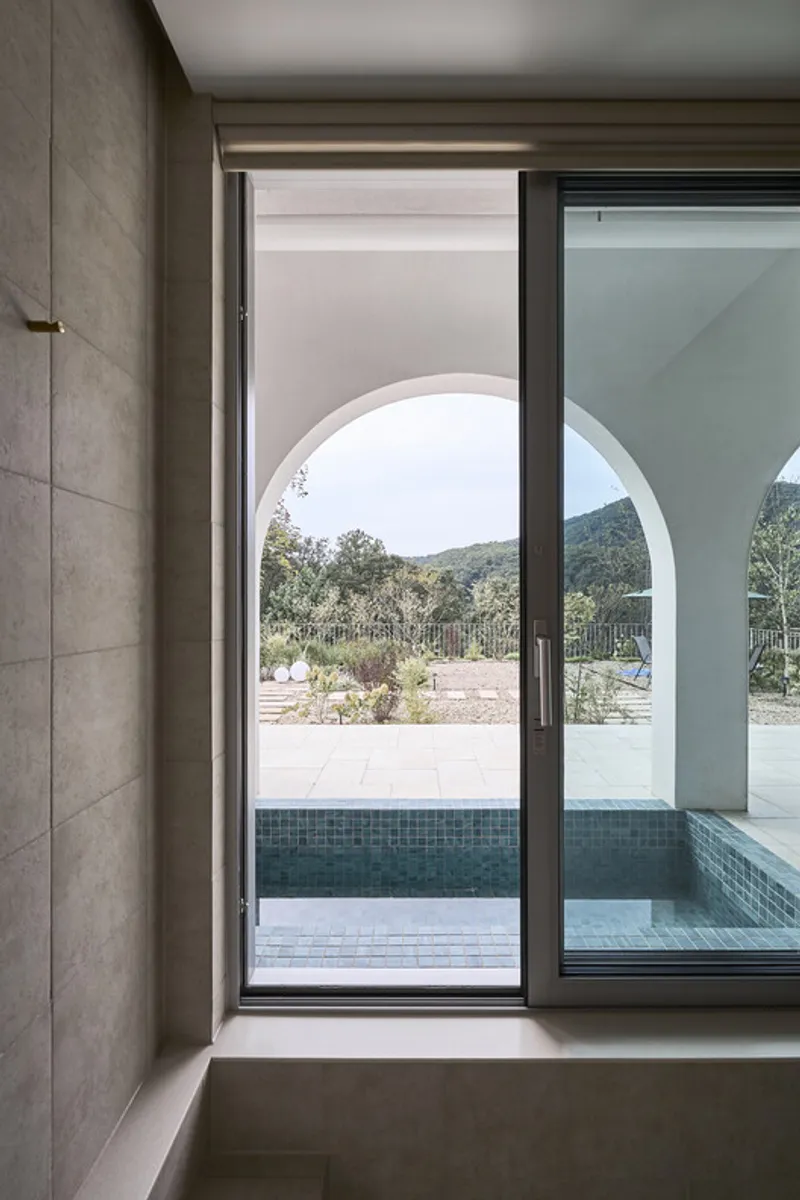
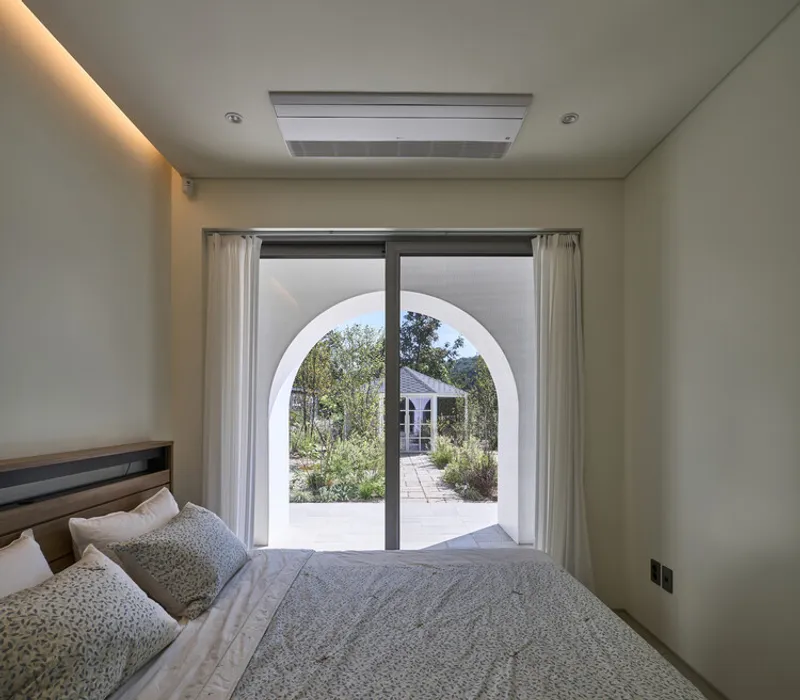
During midday, warm southern sunlight filters through the arches, filling the interiors with soft, indirect light. The toenmaru, a narrow wooden porch typical of Korean architecture, extends from the rooms into the cloister, seamlessly merging indoor relaxation with outdoor tranquility. A small bathtub nearby enhances the spirit of restful staying—another interpretation of Meomum.
Framing Nature in Every Season
The arched openings lead the eye to expansive landscapes—distant mountains, wide skies, and carefully curated gardens. Each season beautifully occupies these frames before passing, making nature a living, breathing part of the home. The cloister does not just connect rooms; it connects people to time, memory, and changing landscapes.
Layered Gardens and Spaces for Togetherness
Both the upper and lower gardens offer places designed for meaningful pauses:
- The Tea House on the upper level feels like stepping into another world, offering solitude and calm.
- The fire pit in the lower garden creates a warm gathering spot for shared memories, conversations, and storytelling.
These spaces ensure the house feels alive throughout the day and across the seasons.


Fire as the Heartbeat of the Home
Fire—symbolic of nourishment, warmth, and connection—forms the emotional core of the house. Events around the fire pit or within the glowing interiors become cherished memories for anyone who stays here, even briefly. Every moment spent in Meomum Zip House is a reminder of rest, reflection, and the desire to return.
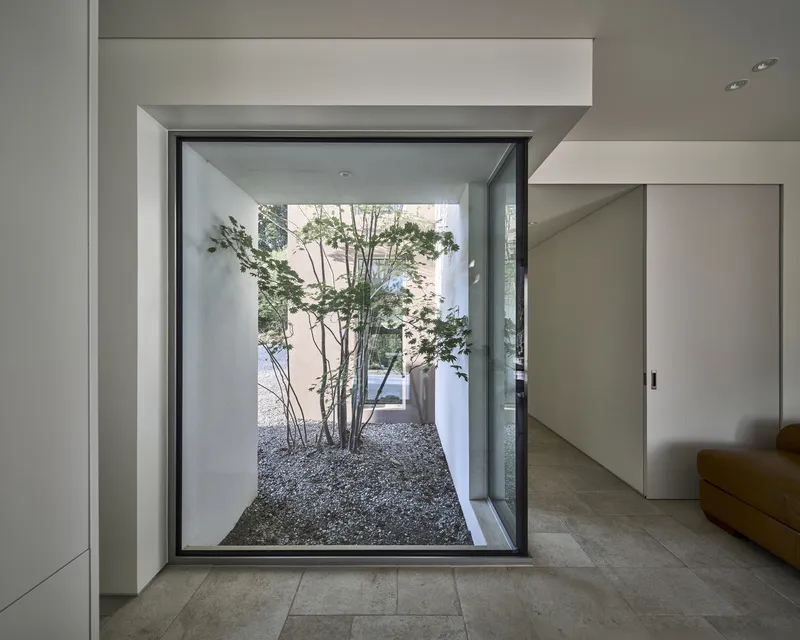
A House Built to Be Remembered
Meomum Zip House embodies the philosophy of stillness. It is not just a place to stay—it is a place that encourages one to return, rediscover, and rebuild memories. By fusing architectural restraint, natural beauty, and meaningful spatial sequences, Todot Architects and Partners created a retreat that feels both timeless and deeply human.
All the photographs are works of Jinbo Choi




Popular Articles
Popular articles from the community


The Earth Pod: 3D Printed Homes for Resilient Refugee Communities
The Earth Pod reimagines refugee housing through 3D printed homes made from clay, combining resilience, self-sufficiency, and rapid shelter.

Conexión: Biophilic Design Reimagines High-Rise Living in Hong Kong
Conexión reimagines high-rise living in Hong Kong through biophilic design, green facades, shared spaces, daylight, water and nature within.

Riyadh For All: Intergenerational Urban Design for Active Aging in Rabat
Riyadh For All reimagines urban design in Rabat with intergenerational co-living, adaptive courtyards, and Moroccan cultural exchange today.
AL-JANNAH: Sustainable Architecture and Permaculture for Afghan Widows
AL-JANNAH uses sustainable architecture and permaculture to create resilient oasis of housing, learning, work and renewal for Afghan widows.


Similar Reads
You might also enjoy these articles


Hodi-Mandai Geram
Project Function: Preservation and revitalization of the Intangible heritage and socio-spatial identity of the Hodi by Housing, Cultural Memory Center, Sacred Grove, landscape, local tourism economy


Olio Towers: A Mid-Rise for Performers That Fuses Housing, Rehearsal, and Stage
Located blocks from Houston's Theater District, this modular tower stacks living units around a central performance atrium.

Oasis: Modular Green Housing Carved into Dhaka's Urban Fabric
A shortlisted Plugin Housing entry reclaims unauthorized settlements in Dhaka with stepped concrete volumes, green roofs, and ventilation-driven design.

Black Hole: A Floating Megastructure for the Post-Physical Era
Emiliano Mazzarotto envisions a spherical, self-scaling arena where e-sports, digital hotels, and holographic stadiums replace traditional public space.


Explore Housing Competitions
Discover active competitions in this discipline



Challenge to reimagine the Iron Throne


Photograph architecture without architects


Illustrate the lost glory of Angkor Wat - Render Challenge


Design challenge to reuse E-waste
Comments (0)
Please login or sign up to add comments
No comments yet. Be the first to comment!