
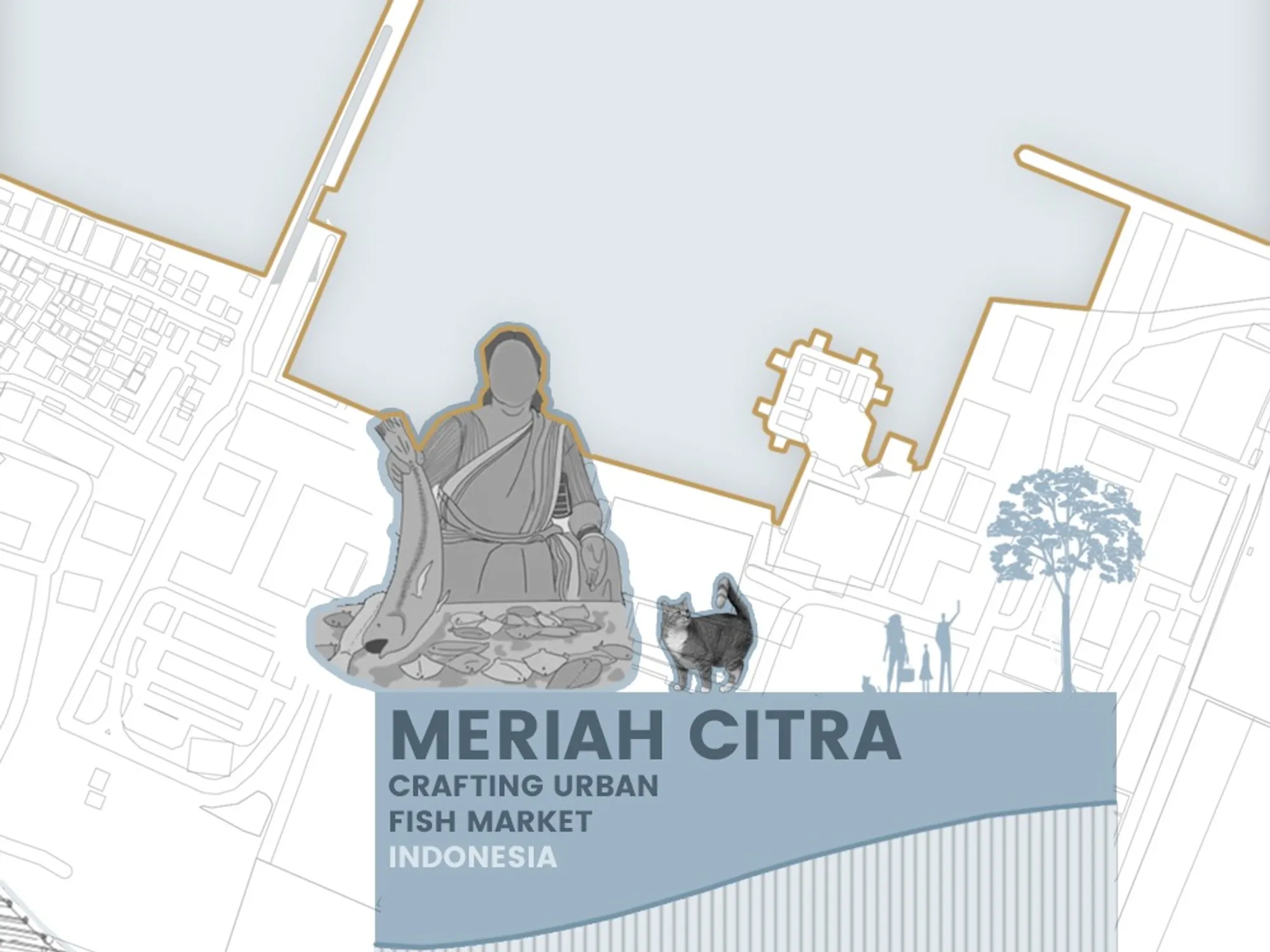
MERIAH CITRA
CRAFTING URBAN FISH MARKET, JAKARTA, INDONESIA

The allure of the ocean's bounty, the vibrant hues of marine life, and the rich aromas of the sea are the elements that beckon us to a fish market. The design transcends an immersive experience that harmonizes culture, commerce, and sustainability.
The fish market is designed to embody the essence of maritime commerce but also embraces modern principles of design and functionality. The design is such that the fishes are presented with the utmost freshness, hygiene, and aesthetic appeal, inviting the visitors. This design venture balances the practical aspects of a marketplace with the aesthetics that elevate the space.
Our focal points include optimizing the layout and spatial organization to ensure operational efficiency, integrating sustainable practices like using lower embodied carbon materials such as bamboo and bricks to promote environmental consciousness, and embracing neighboring structures ensuring a connection between each other.
With a blend of creativity, functionality, and a sustainable ethos, our design will strive to create a fish market that not only meets the demands of the seafood industry but also delights and educates visitors about traditional practices of fish preservation.
Methods of design investigation
Starting with understanding the project brief and objectives thoroughly, the purpose, goals, scope, and constraints, of the design project were listed. This followed comprehensive research on traditional Indonesian markets as well as modern fish markets. Dwelling more into activities relating to a typical Indonesian market like smoking squids, and fish preservation methods the functions and area statement were finalized. A detailed site study was then done through the lenses of climate, views, access points, and neighboring structures.
The finalization of programs
Integrating the research findings into design possibilities, sketches, diagrams, and mood boards to visualize potential directions for the project was the primary step. Summarizing the findings the design was proposed with assessments on economic feasibility, environment stability, and relation between spaces and elements.
THE CONCEPT:
The design is created to accommodate the fish-selling activities, and fish preservation techniques with leisure elements for the visitors as well as vendors. The plan is defined by the site and is zoned according to the surrounding context. The fish-selling stalls are placed near the existing fish market for better communication with neighboring vendors. The Auction hall, proposed behind the fish stalls, is a large space with a mezzanine for the patrons to have a better look at the event and accommodate a larger group of people. The cafe is provided beside the auction hall for the relaxation of the patrons and vendors and is designed at a higher level for the view of the eternal sea. These two spaces are divided by a lane where traditional fish preservation techniques are practiced and showcased to visitors to preserve them in the long run. It accommodates the techniques of sun-drying fish, smoking squid, and salt brining.
The shape of the roof is deciphered from their traditional houses which were inspired by a boat. It is designed to create a penetration of sunlight throughout the intervention. The sun-drying region and the auction hall an open to the sky space.
Use of Materials:
Bamboo: With attributes like strength, flexibility, carbon sequestration, cost-effectiveness, and durability bamboo proved as the perfect alternative for roofs and columns. Since a fish market is susceptible to dampness the columns have concrete footings.
Concrete Plinths: Hygiene being an utmost concern, the concrete plinth was selected which also served water resistance and strength.
Brick walls: Taking hints from the traditional building system bricks were chosen as the building elements to respect the roots of the culture. Bricks being porous absorb moisture keeping the auction hall hygienic.
How was a specific objective attempted to be met?
The objective was to encompass the integration of functional, aesthetic, environmental, and socio-economic considerations to create a holistic and efficient space that caters to the needs of vendors, customers, and the surrounding community. This was catered by methods of visualization, communication, and investigation of the design.
How will the project transform with the passing of time?



Popular Articles
Popular articles from the community


Riyadh For All: Intergenerational Urban Design for Active Aging in Rabat
Riyadh For All reimagines urban design in Rabat with intergenerational co-living, adaptive courtyards, and Moroccan cultural exchange today.

Conexión: Biophilic Design Reimagines High-Rise Living in Hong Kong
Conexión reimagines high-rise living in Hong Kong through biophilic design, green facades, shared spaces, daylight, water and nature within.

Co-life: Sustainable Architecture for Age-Friendly Community Living
Co-life reimagines sustainable architecture for seniors through courtyards, rammed earth, shared gardens, and spaces designed for belonging.

Co-Life: Senior Housing Design That Reconnects Older Adults With the City
Co-Life reimagines senior housing design through healing gardens, shared streets, workshops, and a sustainable community across generations.

Similar Reads
You might also enjoy these articles

The Rhythm of Seasons
A Farmers' Market Connecting Nature and the City


More Than a Building-Designing a Living System
More Than a Building-Designing a Living System
Base Beyond
DESERT COMPOUND ARID: TOURISM OF ABSENCE AND ABUNDANCE

Explore Fish Market Competitions
Discover active competitions in this discipline




Challenge to reimagine the Iron Throne


Photograph architecture without architects


Illustrate the lost glory of Angkor Wat - Render Challenge


Design challenge to reuse E-waste
Comments (0)
Please login or sign up to add comments
No comments yet. Be the first to comment!