
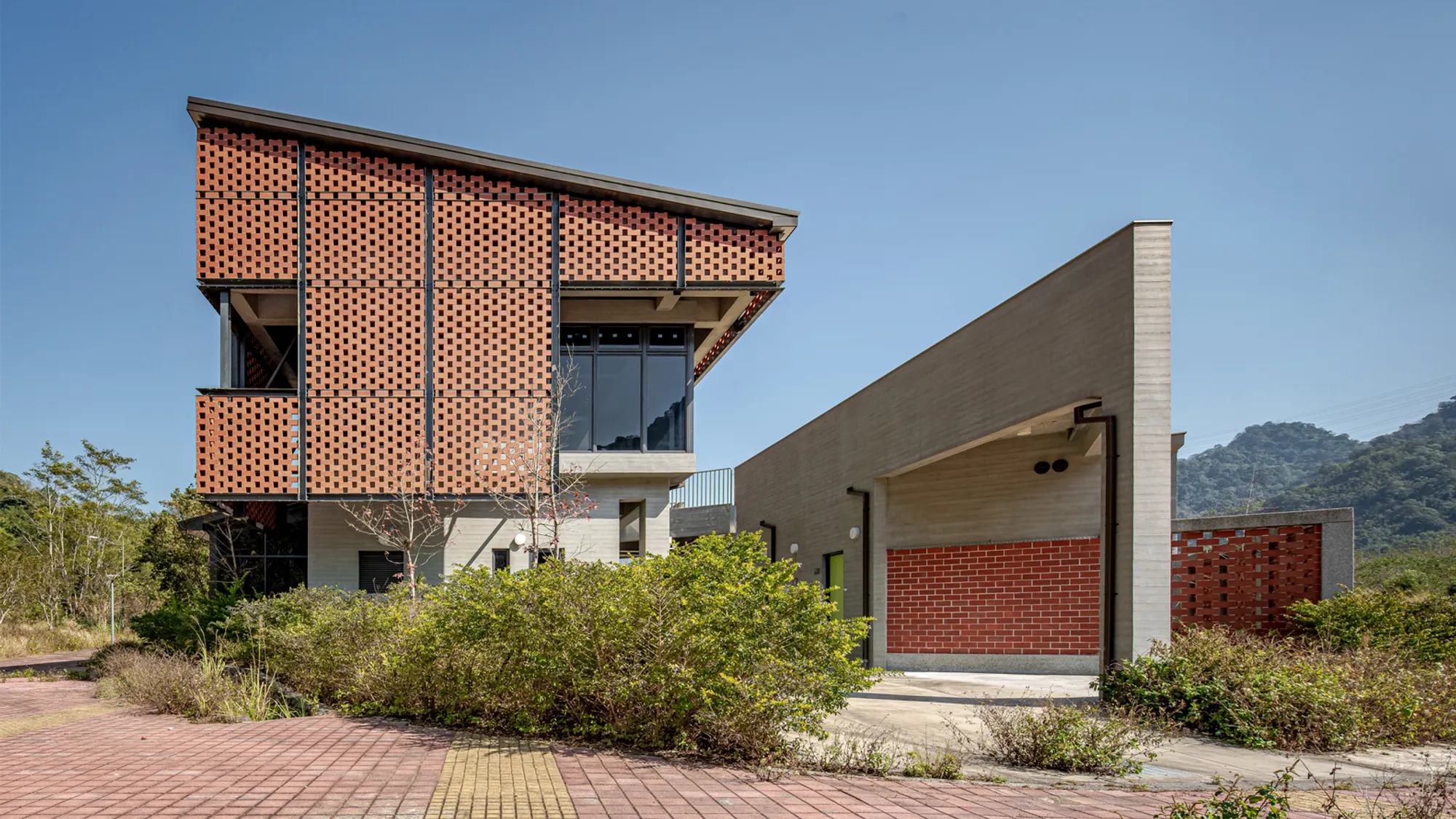
Miaoli Hakka Literature Garden Visitor Center by Guu Architects & Associates
The Miaoli Hakka Literature Garden Visitor Center blends Hakka cultural heritage, scenic landscapes, and contemporary design for immersive public experiences.


Contextual Integration in Hakka Heritage
The Miaoli Hakka Literature Garden Visitor Center is thoughtfully situated within the Hakka Literature Garden in Gongguan, Miaoli. Set in the Houlong River valley, the site is historically shaped by Hakka settlements and Taiwan’s rich mining heritage. Visitors are welcomed by expansive scenic views, including a cherry blossom trail leading to the surrounding mountains and a direct sightline toward the historic mining pit across the river. This careful integration ensures the project bridges cultural heritage, natural landscape, and community engagement.
Architectural Concept and Axial Design
Instead of following conventional approaches to Hakka culture, the design focuses on spatial experience and contextual analysis. The project is guided by two primary axes that orient visitors both to the natural landscape and the cultural fabric of Miaoli:
- Mountain-Valley Axis: Parallel to the surrounding mountains and valley, this axis extends to Fude Village, offering sweeping views and subtly connecting visitors to local settlements.
- Solar Path Axis: Aligned with the summer solstice sun path, this axis links the historical mining site to the future literary museum, guiding circulation at the ground level.
The architecture emphasizes minimal spatial mass, allowing visitors to observe the scenery while participating in local cultural activities.
Form, Function, and Geometry
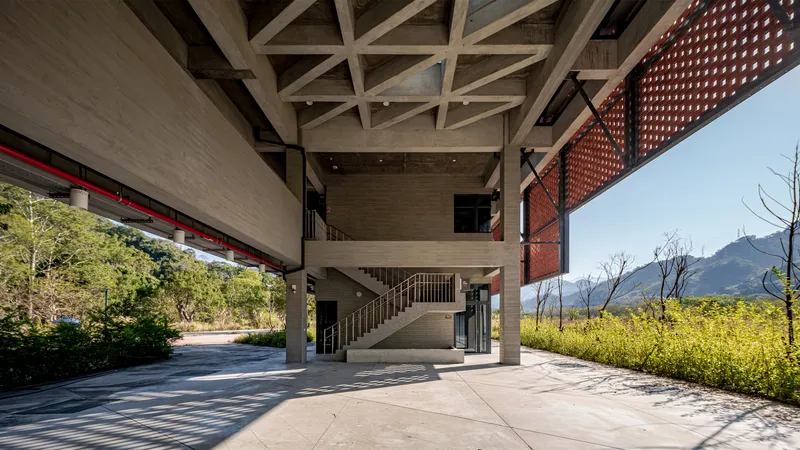
The building comprises a large overarching roof and multiple smaller geometric volumes, designed to reinforce the axial sightlines and circulation paths. These forms respond to Miaoli’s expansive natural and historical context, subtly revealing the beauty of the valley while fulfilling the programmatic needs of a contemporary visitor center.
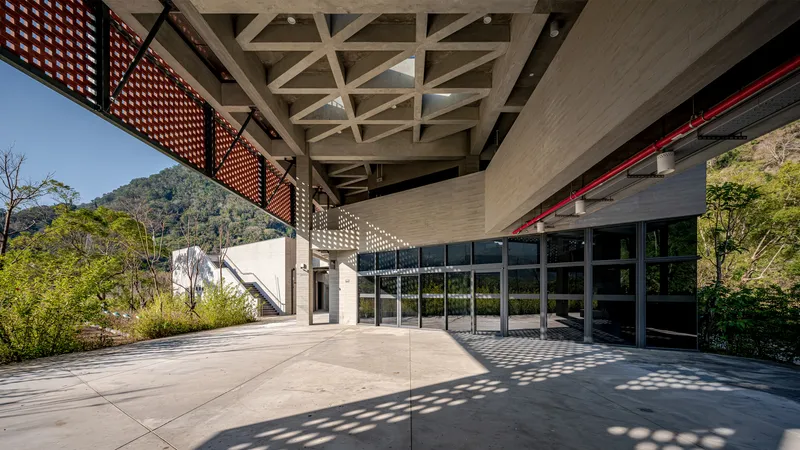
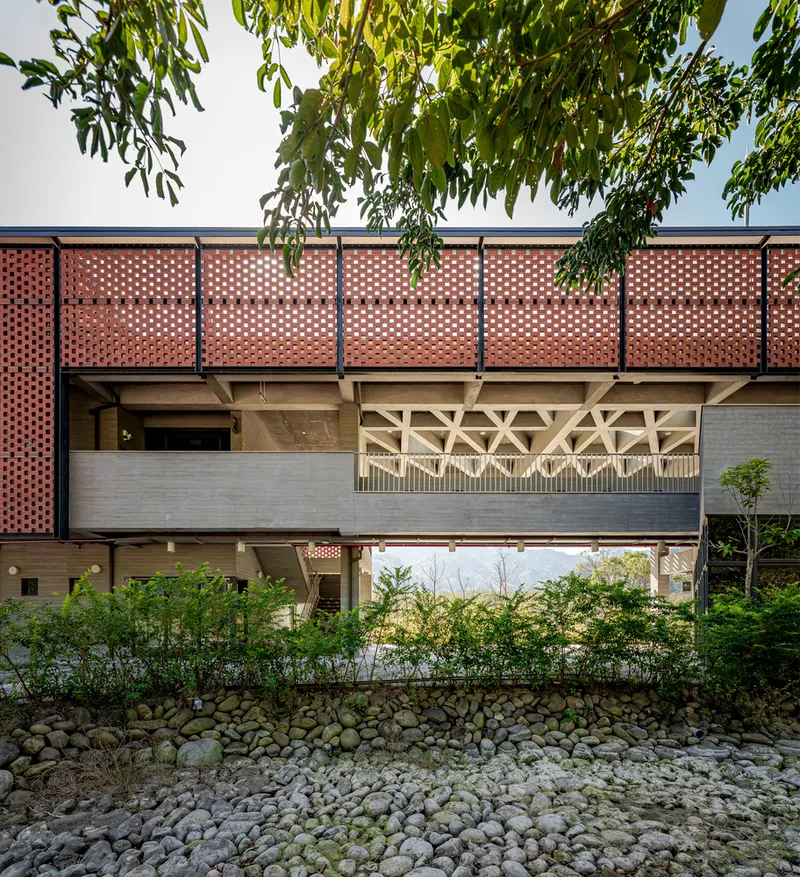
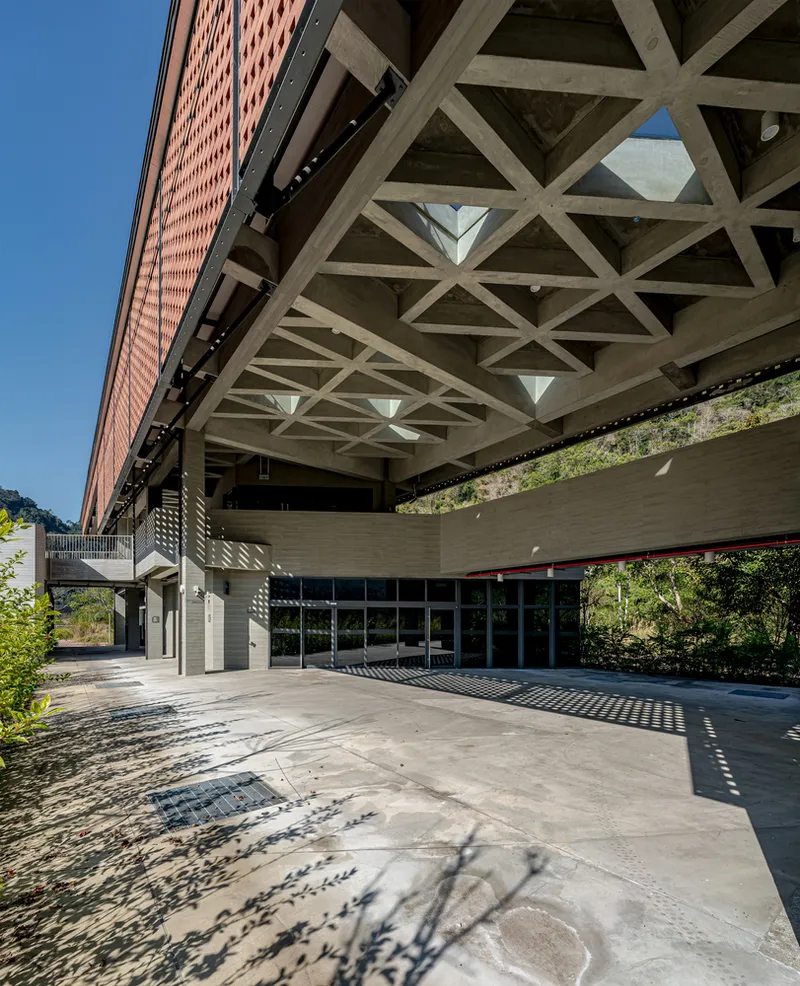
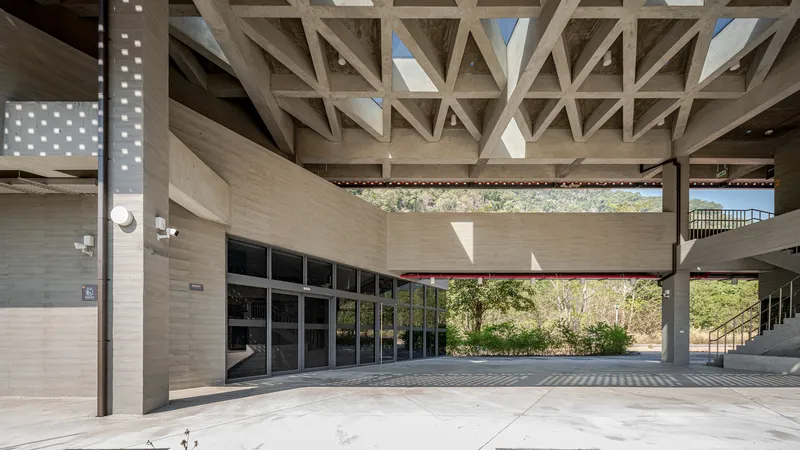
Semi-outdoor corridors and transitional passages blur the boundaries between indoors and outdoors, allowing natural light, wind, and local ecology to flow freely. At the heart of the structure, a large-span semi-outdoor plaza under the main roof creates an open gathering space for public events, community interaction, and spontaneous cultural activities. A triangular truss system spanning the plaza reflects the geometric relationships of the axes while addressing the structural challenges of the long span.
Materiality and Cultural Expression
Material choices in the visitor center subtly reflect Hakka architectural traditions.
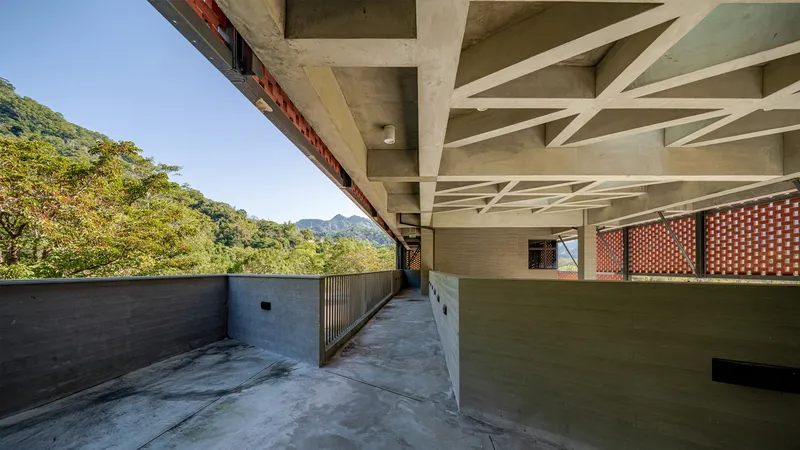
- Board-formed concrete walls recall the solidity and texture of stacked stone walls commonly found in Hakka architecture.
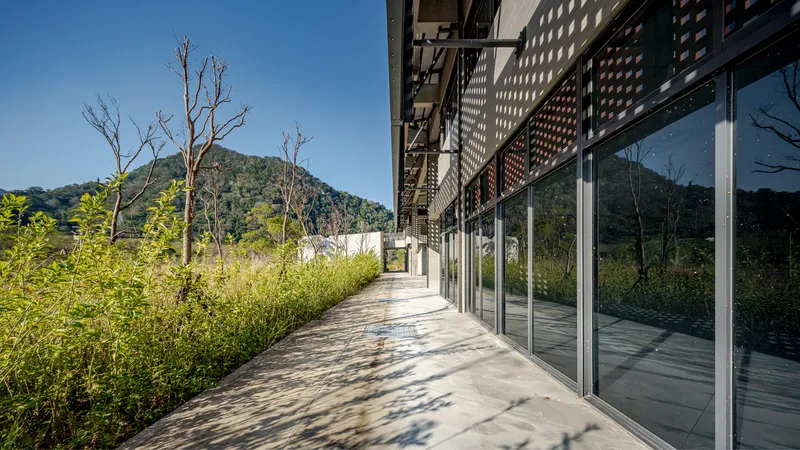
- Suspended terracotta-brick screen walls evoke the tactile memory of traditional Hakka communal houses. The perforations in the screens filter shifting sunlight along the axes, highlighting natural rhythms and connecting the built environment with the surrounding landscape.
The combination of contextual geometry, sustainable design strategies, and cultural references allows the building to emerge as a contemporary interpretation of Hakka heritage.
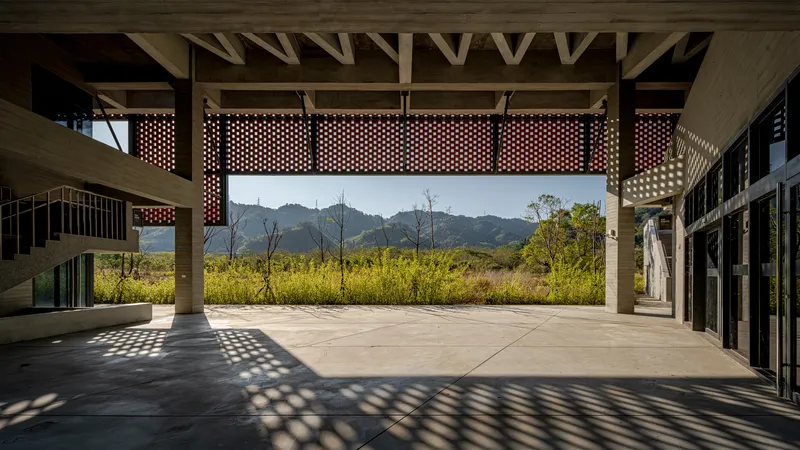
Experiencing Miaoli’s Hakka Culture
Visitors to the Miaoli Hakka Literature Garden Visitor Center are immersed in a design that integrates nature, culture, and history. From scenic pathways and semi-outdoor corridors to open plazas and sunlight-filtering walls, every aspect of the architecture fosters a dialogue between people and place, past and present. This makes the center not only a functional cultural hub but also a symbol of Miaoli’s Hakka identity and ecological sensitivity.
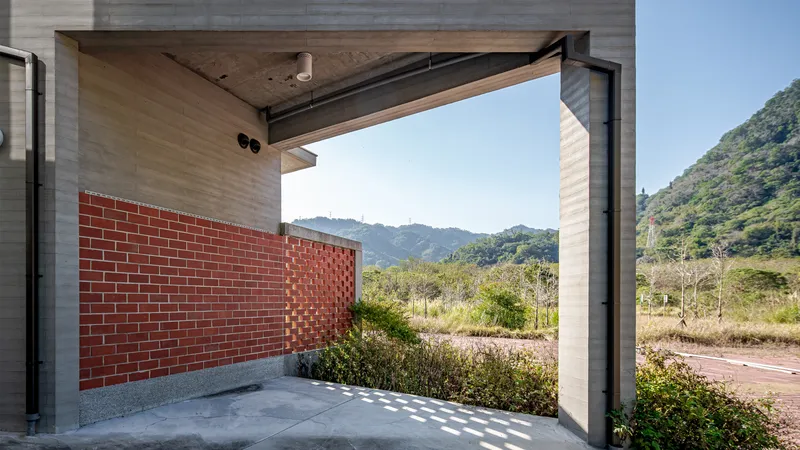
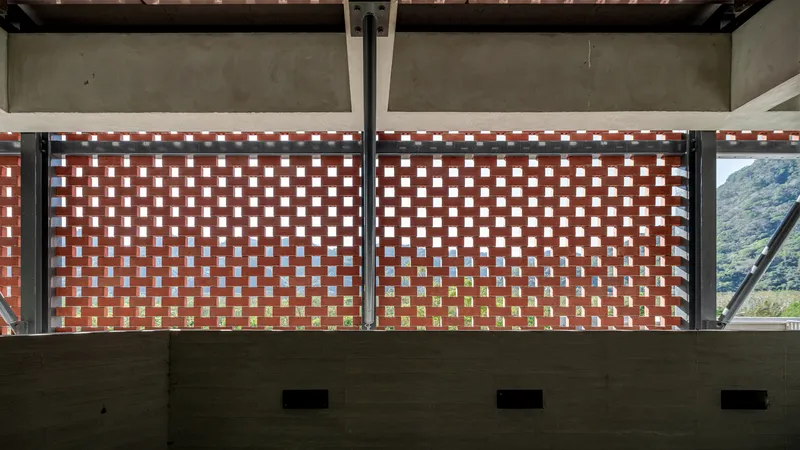
All Photographs are works of Rex Chu



Popular Articles
Popular articles from the community


The Ocean Hive: Sustainable Architecture for a Self-Sufficient Civilization at Sea
The Ocean Hive imagines sustainable architecture at sea, where modular habitats, algae, wave power and ocean waste sustain a growing colony.

Hill & Cross Opera: Sculptural Opera House Architecture Shaped by Tallinn’s Landscape and Identity
Hill & Cross Opera reimagines opera house architecture in Tallinn through its sculptural hill, civic plaza, glass wave and a luminous cross.

The Earth Pod: 3D Printed Homes for Resilient Refugee Communities
The Earth Pod reimagines refugee housing through 3D printed homes made from clay, combining resilience, self-sufficiency, and rapid shelter.

Co-Life: Senior Housing Design That Reconnects Older Adults With the City
Co-Life reimagines senior housing design through healing gardens, shared streets, workshops, and a sustainable community across generations.


Similar Reads
You might also enjoy these articles


Hodi-Mandai Geram
Project Function: Preservation and revitalization of the Intangible heritage and socio-spatial identity of the Hodi by Housing, Cultural Memory Center, Sacred Grove, landscape, local tourism economy


Olio Towers: A Mid-Rise for Performers That Fuses Housing, Rehearsal, and Stage
Located blocks from Houston's Theater District, this modular tower stacks living units around a central performance atrium.

Oasis: Modular Green Housing Carved into Dhaka's Urban Fabric
A shortlisted Plugin Housing entry reclaims unauthorized settlements in Dhaka with stepped concrete volumes, green roofs, and ventilation-driven design.

Black Hole: A Floating Megastructure for the Post-Physical Era
Emiliano Mazzarotto envisions a spherical, self-scaling arena where e-sports, digital hotels, and holographic stadiums replace traditional public space.

Explore Landscape Design Competitions
Discover active competitions in this discipline



Challenge to reimagine the Iron Throne


Photograph architecture without architects


Illustrate the lost glory of Angkor Wat - Render Challenge


Design challenge to reuse E-waste
Comments (0)
Please login or sign up to add comments
No comments yet. Be the first to comment!