

Milieu de l’Île: Montreal’s Innovative Intergenerational Housing Cooperative
Milieu de l’Île is a 91-unit intergenerational cooperative in Montreal, combining sustainable design, community-focused living, and affordable, energy-efficient housing.


Creating Affordable, Community-Focused Housing in Montreal
In the heart of a newly developing Montréal district, Milieu de l’Île emerges as a pioneering model of intergenerational cooperative housing. This 91-unit project was initiated by a group of committed residents determined to confront the city’s escalating housing crisis. By offering affordable, off-market housing, the cooperative ensures accessibility while fostering a strong sense of community and belonging.
Milieu de l’Île is located in the vibrant city of Montréal, Canada, and was designed by Pivot Coopérative d’Architecture. Covering an area of 1,525 m², this project was completed in 2024 and showcases innovative approaches to residential architecture.
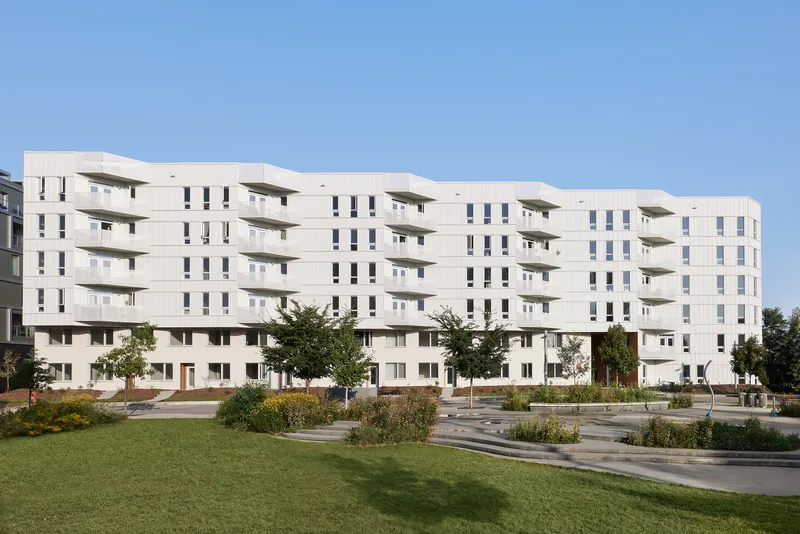
From the earliest stages, future residents actively shaped the project through codesign workshops. These sessions identified priorities, lifestyle needs, and shared values, embedding collaboration and social cohesion into the building’s design. The resulting architecture reflects both collective aspiration and urban sensitivity.
Harmonizing with the Urban Context
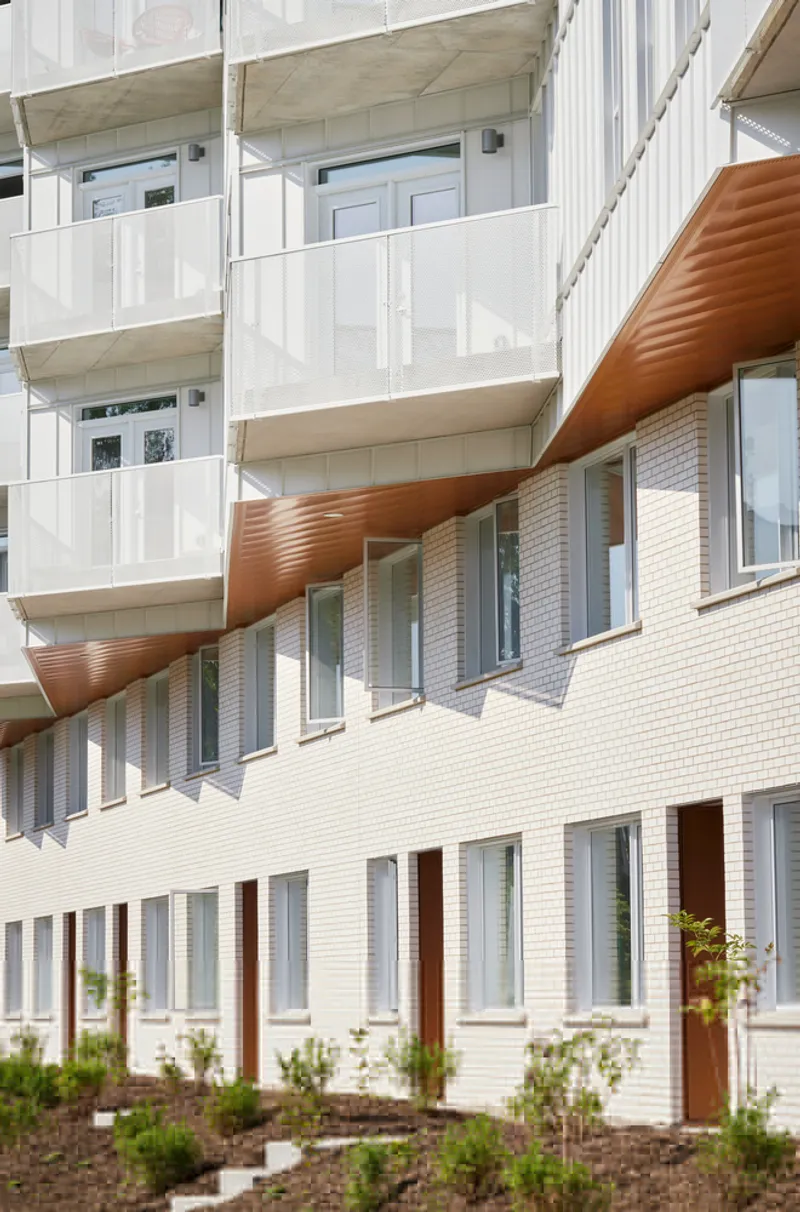
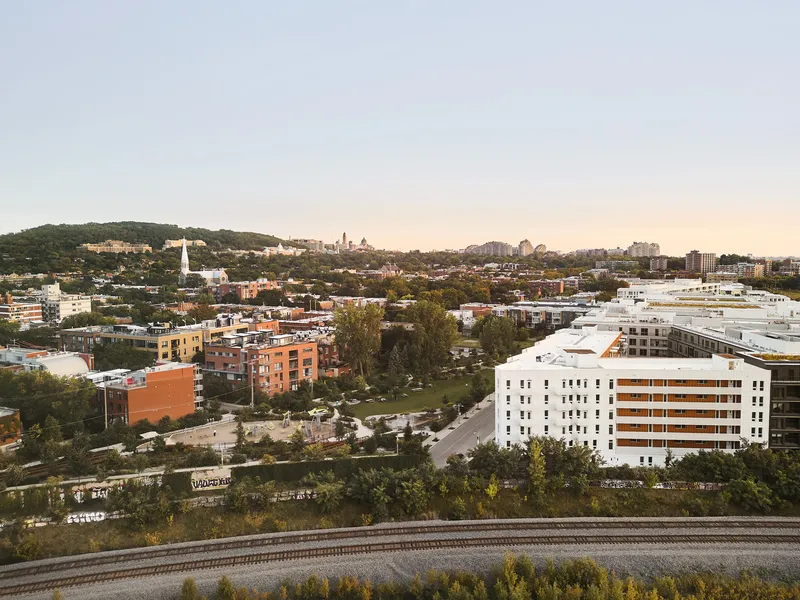
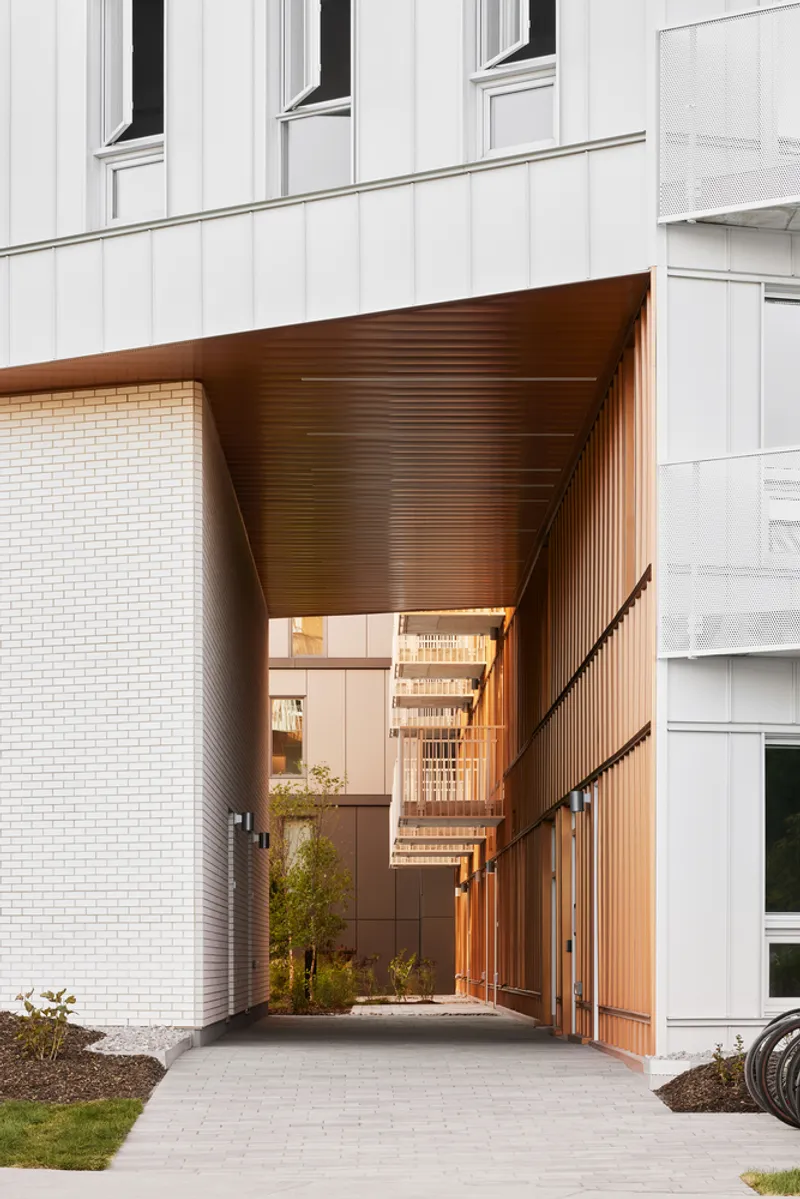
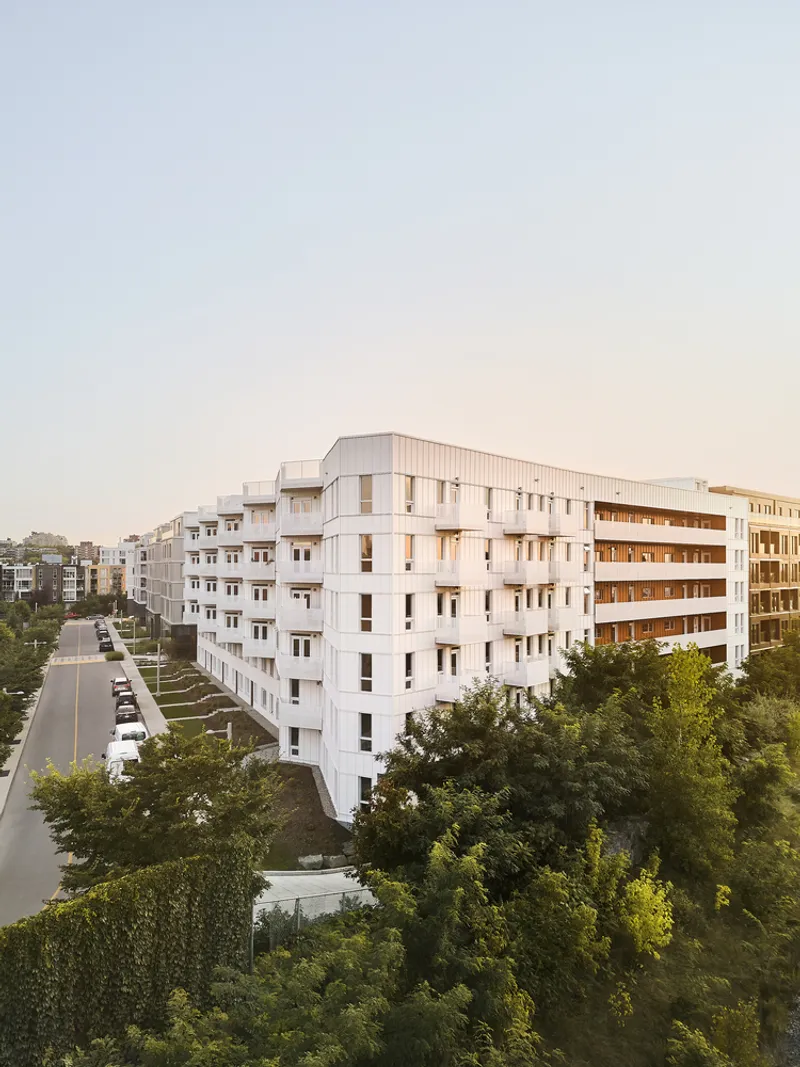
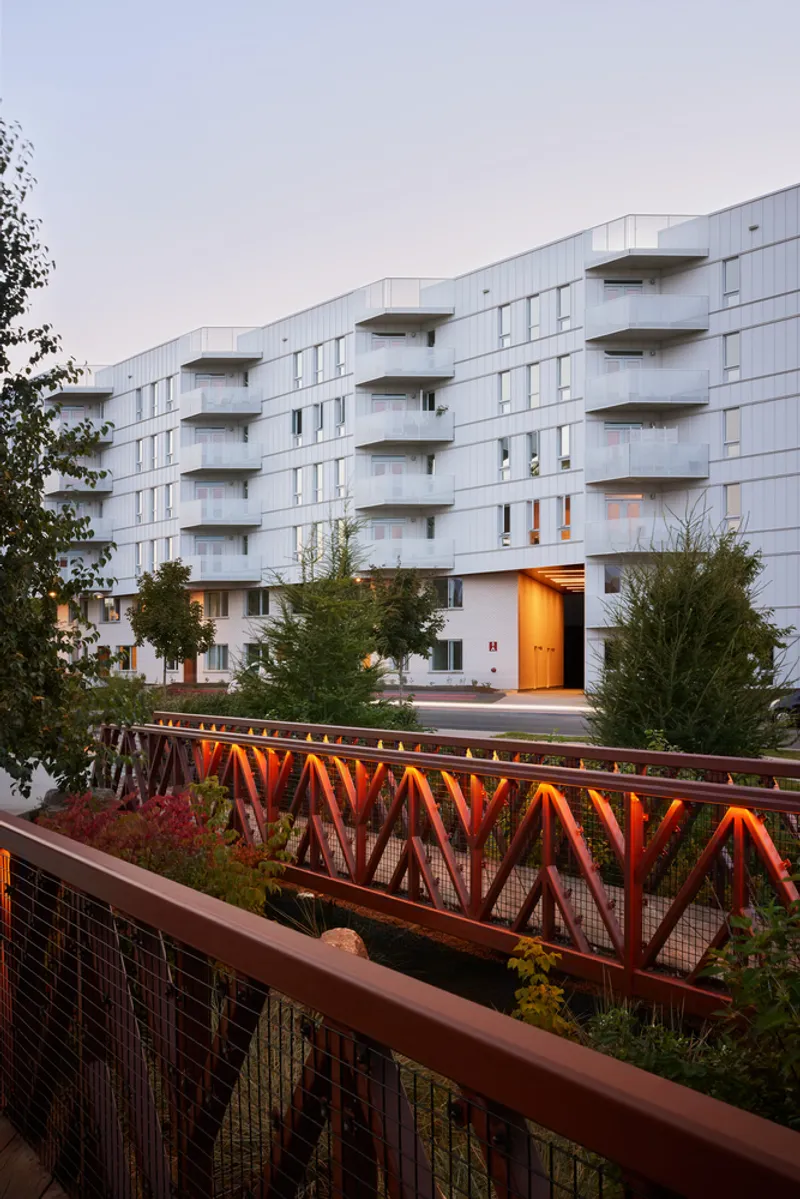
Milieu de l’Île is composed of two interlocking volumes designed to respect and enhance the surrounding neighborhood. A two-story brick section accommodates family units and maintains the intimate scale of nearby residential streets, while a six-story white metal volume resonates with the larger, institutional scale of adjacent university buildings.
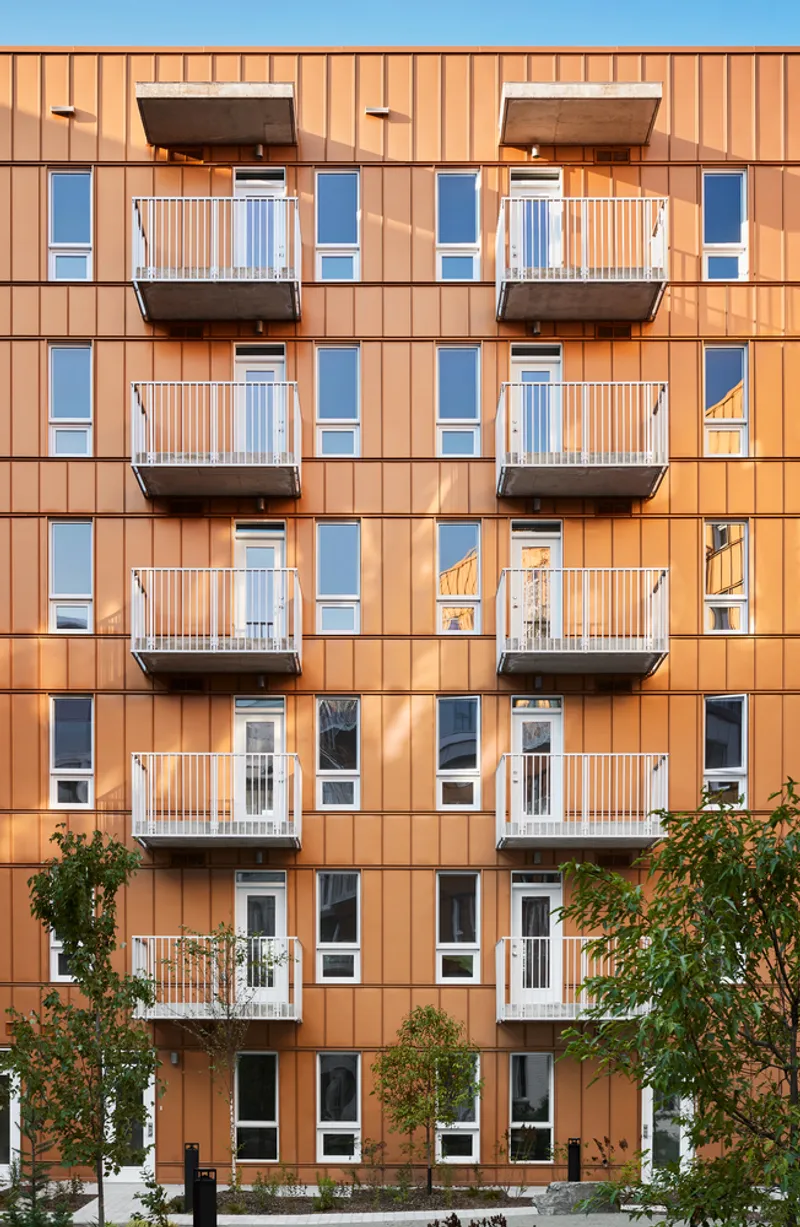
The building’s design echoes the layered development of Montreal’s industrial architecture, where structures evolve over time with varied materials and construction methods. Sculpted metal facades provide both aesthetic rhythm and functional benefits: they protect privacy, optimize sunlight, and frame views from the balconies. The juxtaposition of brick and metal conveys a dialogue between tradition and contemporary urban growth.
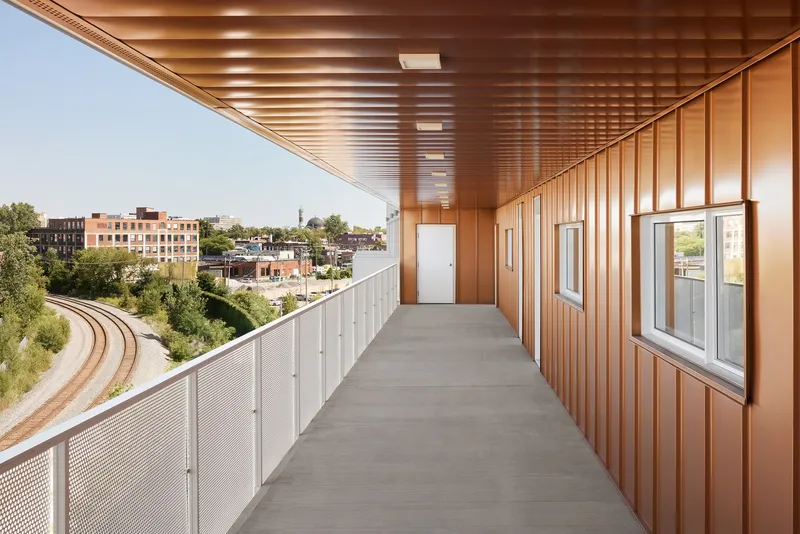
Shared spaces are accented with copper elements, marking communal areas where residents gather. These warm, reflective surfaces project the cooperative’s energy outward, connecting the building to the neighborhood via a welcoming porte-cochere.
Sustainable, Bioclimatic Design
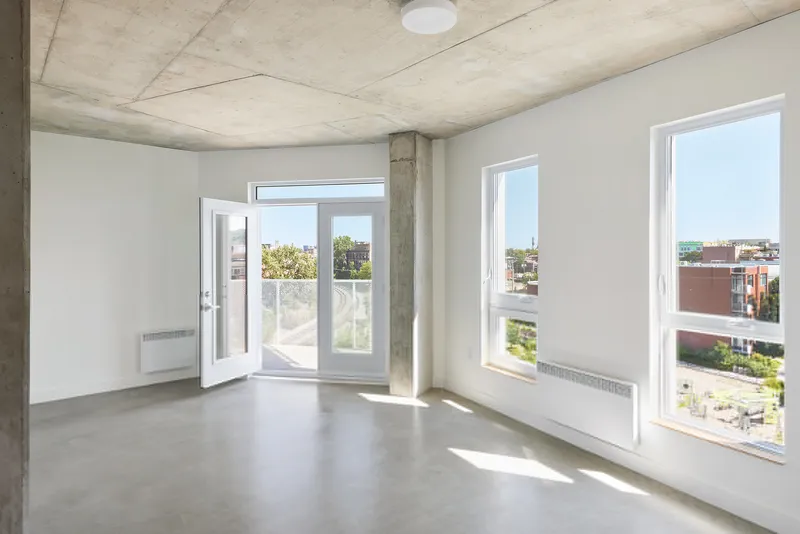
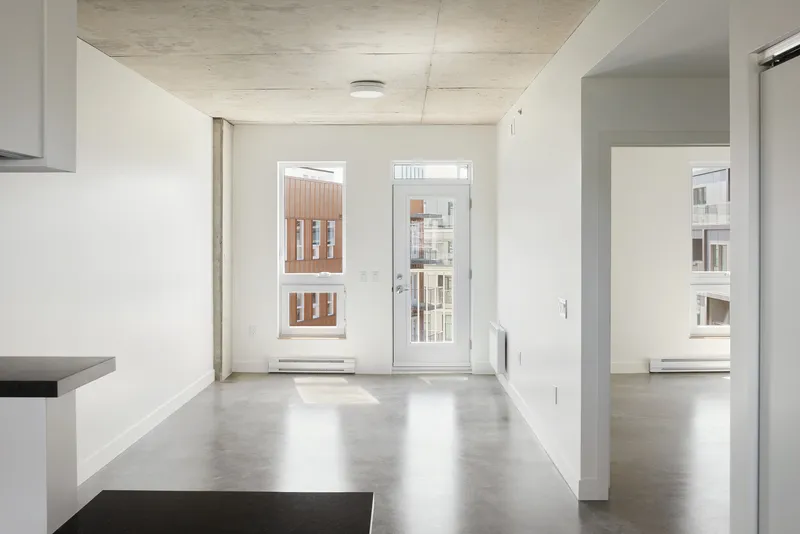
Milieu de l’Île is situated in a LEED AQ-certified neighborhood and exceeds standard energy performance requirements. Bioclimatic strategies were integral to the design, enhancing comfort while reducing environmental impact:
- Maximized cross-ventilation for natural cooling and air circulation
- A Canadian well beneath the courtyard preheats incoming air
- Facade angles and orientations optimize sunlight and shading
These features create a healthier, more energy-efficient living environment while demonstrating how sustainability and design excellence can coexist in dense urban contexts.
Fostering Community and Stability
Beyond its architectural innovation, Milieu de l’Île provides social stability by offering secure, non-speculative housing. The cooperative strengthens community bonds, encourages intergenerational interaction, and restores the fundamental purpose of residential architecture: to create spaces for life, connection, and well-being.
All photographs are works of Annie Fafard


Popular Articles
Popular articles from the community


David Macias Steps a Doorless Stone and Plaster House Down a Tropical Colombian Hillside
In the humid hills of Colombia, Threshold House replaces the front door with an open void and terraces its 850 m² down the slope instead of fighting it.

LT2A and OPEN Architectes Thread a Brick and Glass High School Through a Wooded Belgian Campus
In Braine-l'Alleud, a 3,000 m² wing for Collège Cardinal Mercier pairs pale brick with a glazed colonnade, deferring to a small chapel and a dense wood.

U.GA Architects Wraps an Oval Rooftop Pool in Curved Board-Formed Concrete on Busan's Jeollidan-gil
In Busan's Jeonpo-dong, a 454 m² mixed-use block stacks a neighborhood facility, guest rooms and an oval rooftop pool inside spiraling concrete walls.

Juan García Correa, John González and Claudia Rueda Sink a Circular Amphitheater into a Manizales Engineering Building
On the La Nubia campus in Manizales, Colombia, the S1 Building folds labs and offices into a hillside of ramped lawns that double as a campus route.

Similar Reads
You might also enjoy these articles


Hodi-Mandai Geram
Project Function: Preservation and revitalization of the Intangible heritage and socio-spatial identity of the Hodi by Housing, Cultural Memory Center, Sacred Grove, landscape, local tourism economy


Olio Towers: A Mid-Rise for Performers That Fuses Housing, Rehearsal, and Stage
Located blocks from Houston's Theater District, this modular tower stacks living units around a central performance atrium.

Oasis: Modular Green Housing Carved into Dhaka's Urban Fabric
A shortlisted Plugin Housing entry reclaims unauthorized settlements in Dhaka with stepped concrete volumes, green roofs, and ventilation-driven design.

Black Hole: A Floating Megastructure for the Post-Physical Era
Emiliano Mazzarotto envisions a spherical, self-scaling arena where e-sports, digital hotels, and holographic stadiums replace traditional public space.

Explore Community Housing Competitions
Discover active competitions in this discipline

Challenge to design mud housing for contemporary communities

Challenge to reimagine the Iron Throne

Photograph architecture without architects

Illustrate the lost glory of Angkor Wat - Render Challenge
Comments (0)
Please login or sign up to add comments
No comments yet. Be the first to comment!