
Minas House by Sabella Arquitetura: Modern Design Embracing Minas Gerais Landscape
Minas House by Sabella Arquitetura blends modern design with Minas Gerais landscapes, featuring delta-wing layout, panoramic views, modular structure, natural materials, and an internal garden.


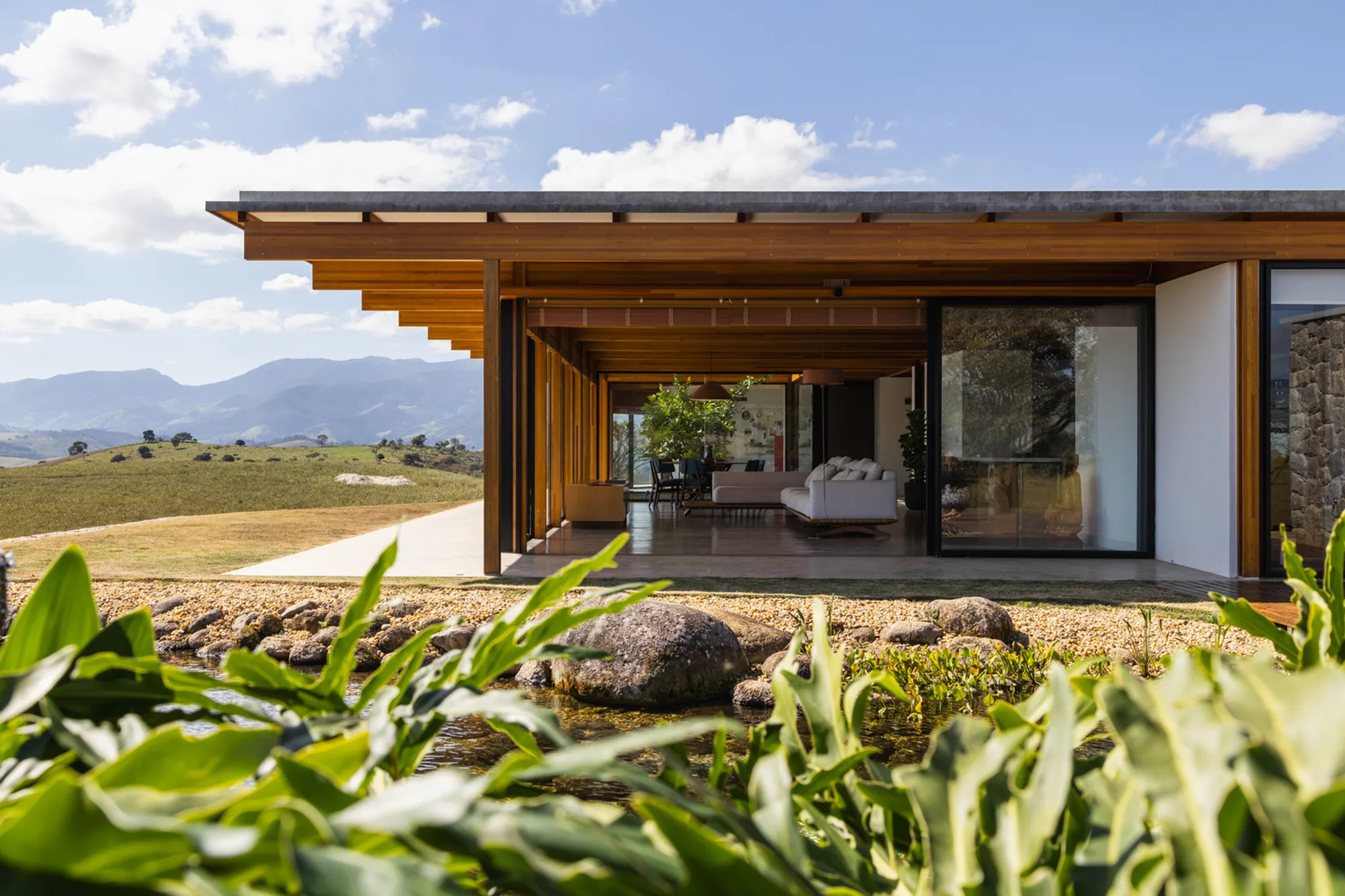
Nestled in the serene hills of southern Minas Gerais, Minas House by Sabella Arquitetura represents a masterful integration of modern architecture with the natural landscape. Architect Frederico Sabella, during his first visit to the farm in Itanhandu, was captivated by the expansive cornfield views from the hillside. Instead of placing the house at the summit, Sabella strategically positioned it three to four meters below to create a sheltered, welcoming environment, optimizing both privacy and connection with the terrain.
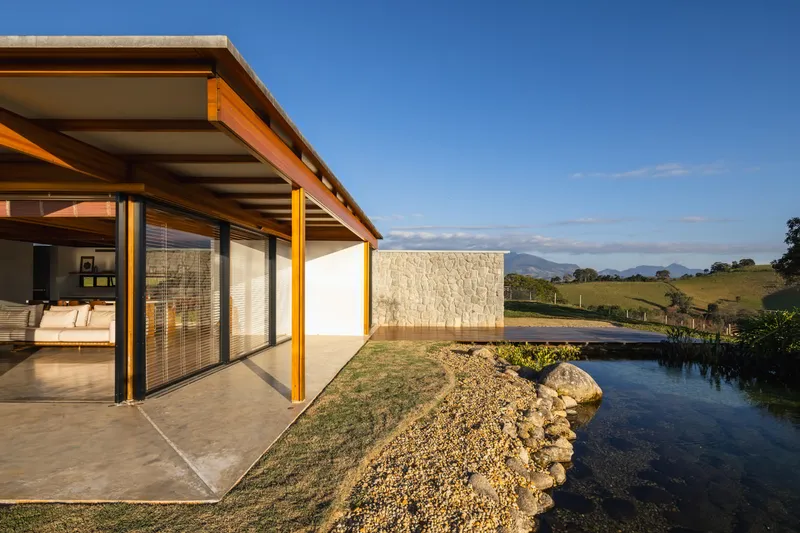
The residence adopts a delta-wing layout oriented toward the landscape, subtly guiding sightlines to the picturesque surroundings while maintaining the seclusion of the master suite at one end of the “intimate arm.” A stone wall anchors the rear of the wing, blending seamlessly with the facade. Originally a solid feature, the wall is now enhanced with high hopper windows and a recessed entrance, softening its presence while welcoming visitors into the home.
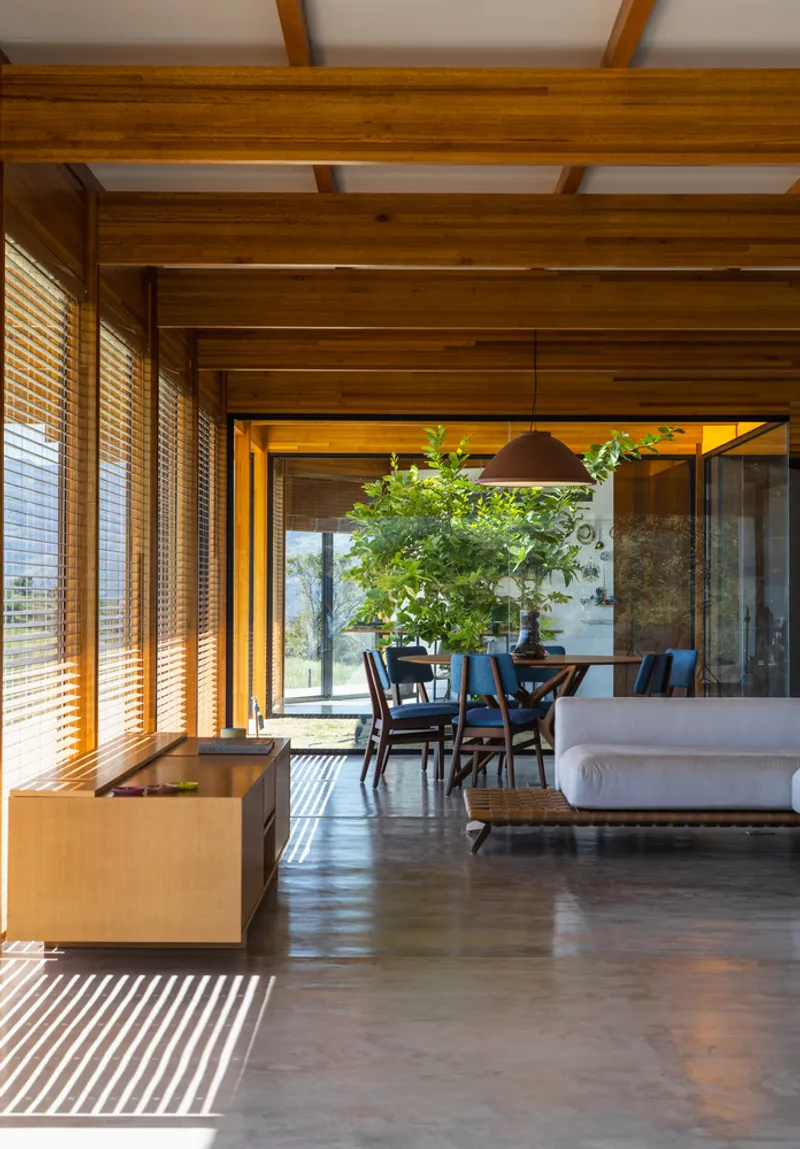
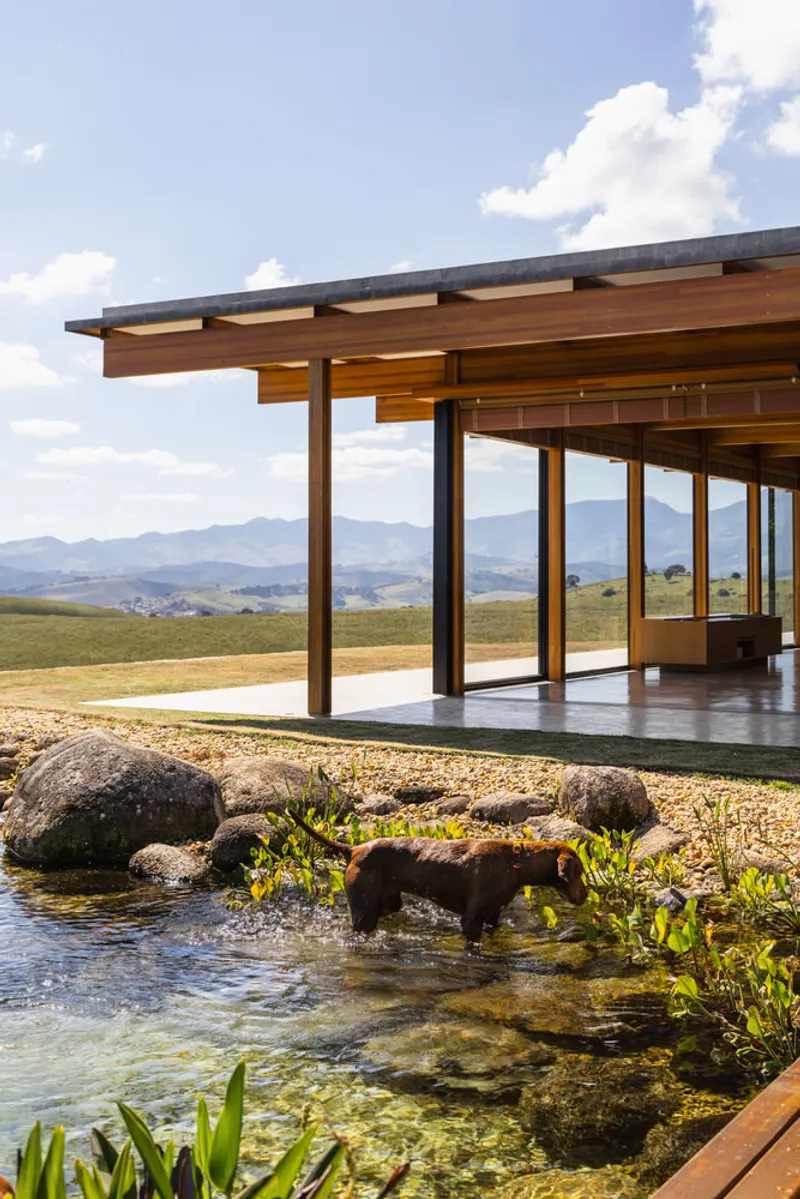
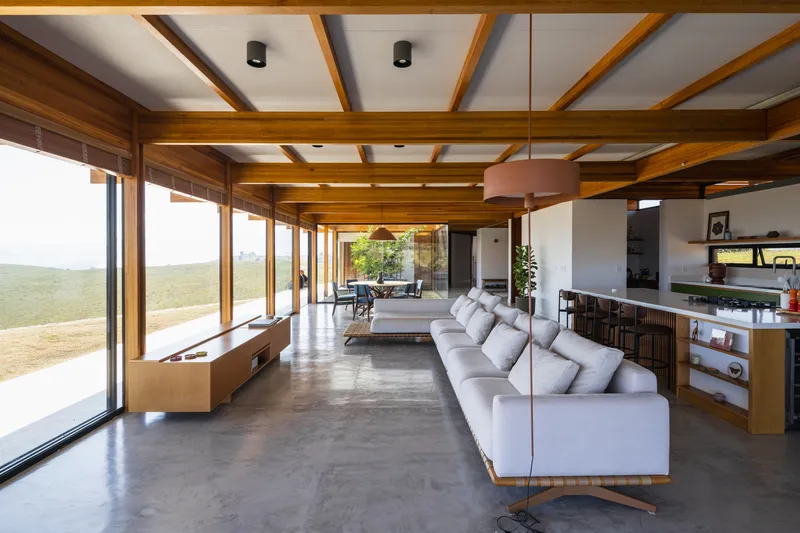
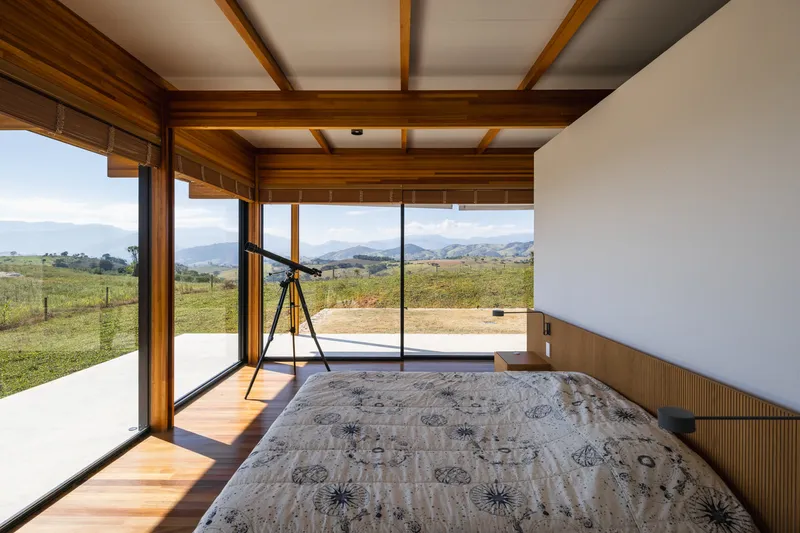
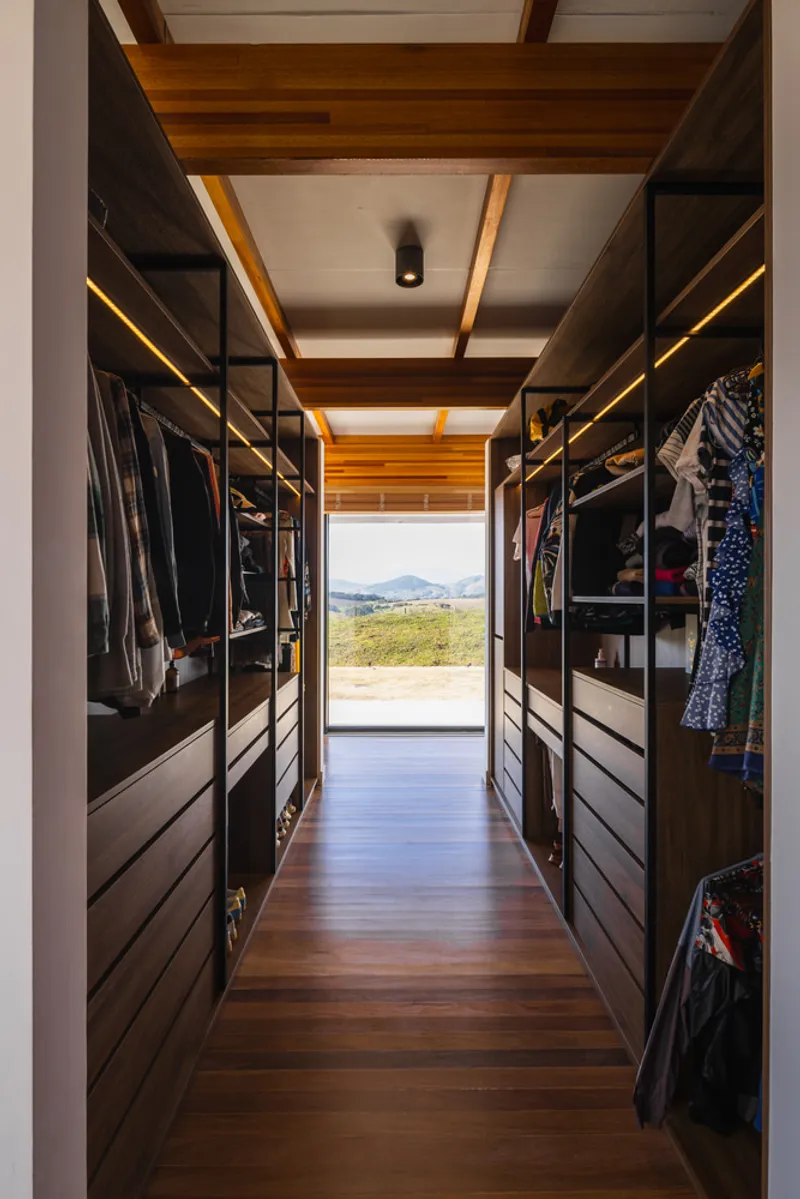
Approaching the house along an olive-lined path, visitors encounter a courtyard flanked by two walls: a modest garage wall and a larger one that screens the interior, heightening anticipation. Upon entry, floor-to-ceiling glass panels reveal panoramic mountain views, seamlessly connecting the interior spaces with the natural environment.
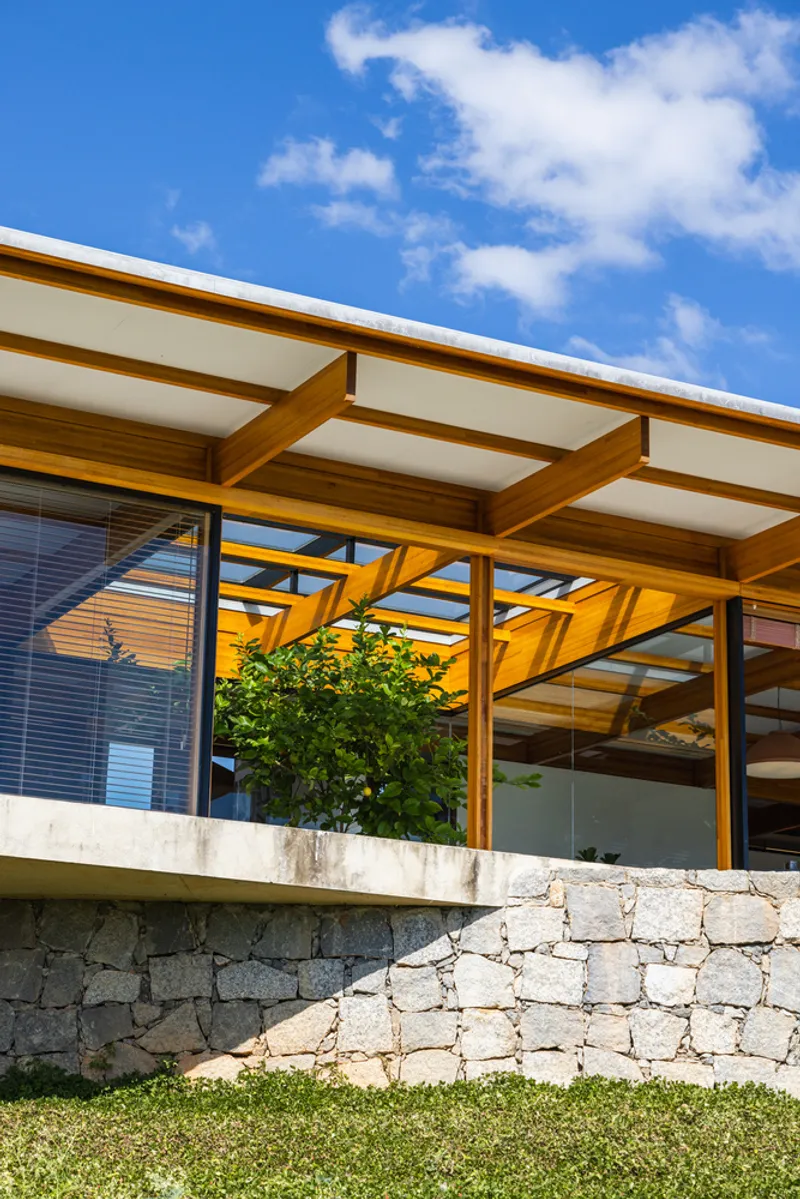
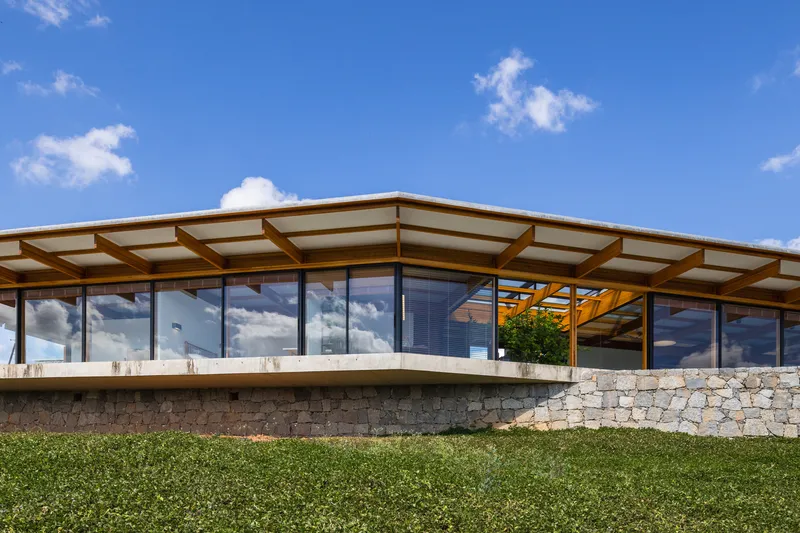
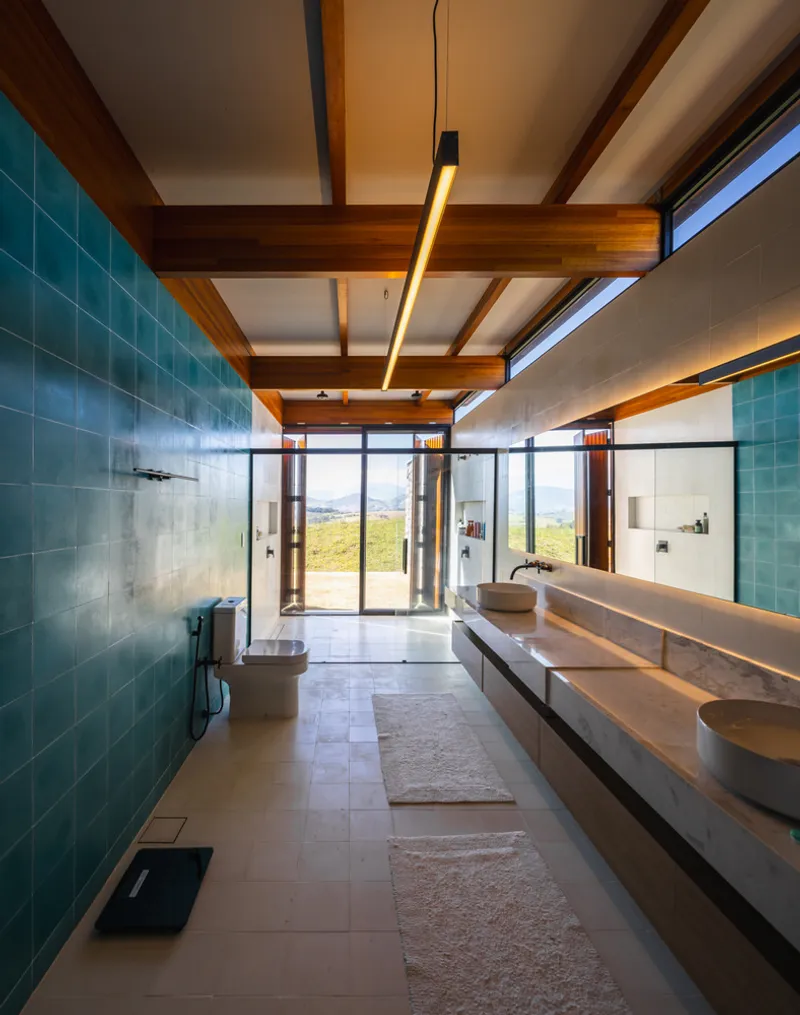
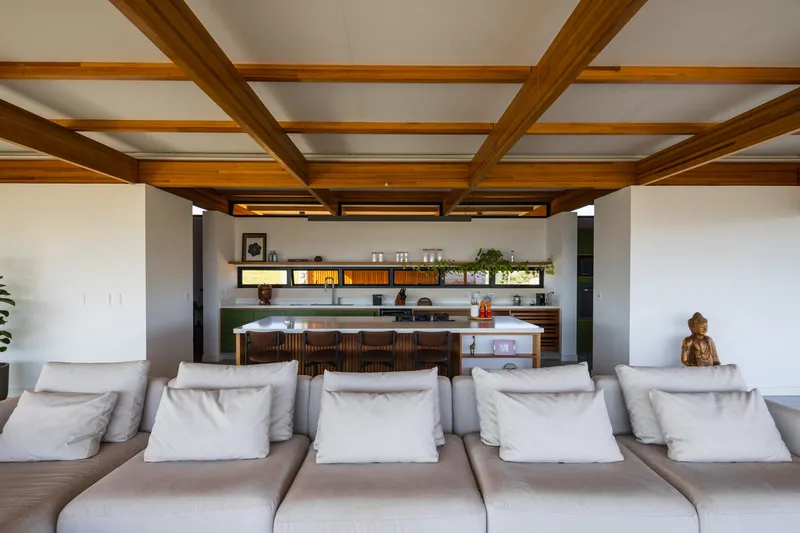
Designed with human scale in mind, the 280 m² layout includes an internal garden, offering an intimate yet spacious feel. Interior ceilings reach 2.80 meters, maintaining comfortable proportions throughout. The flat roof is engineered with cementitious panels supporting a waterproof EVA membrane, which channels rainwater through a central gutter. The modular structure allowed rapid construction, with double laminated wooden columns installed every two meters in just 15 days, aligning perfectly with the glazed facade to remain almost invisible externally.
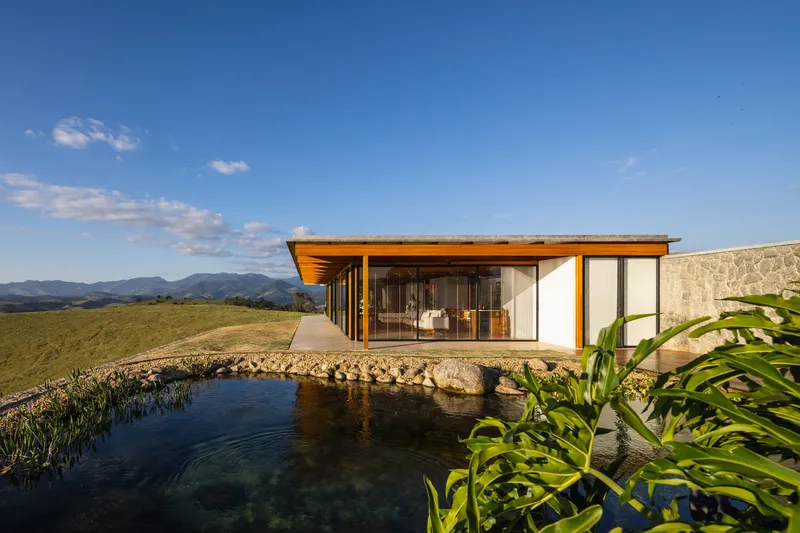
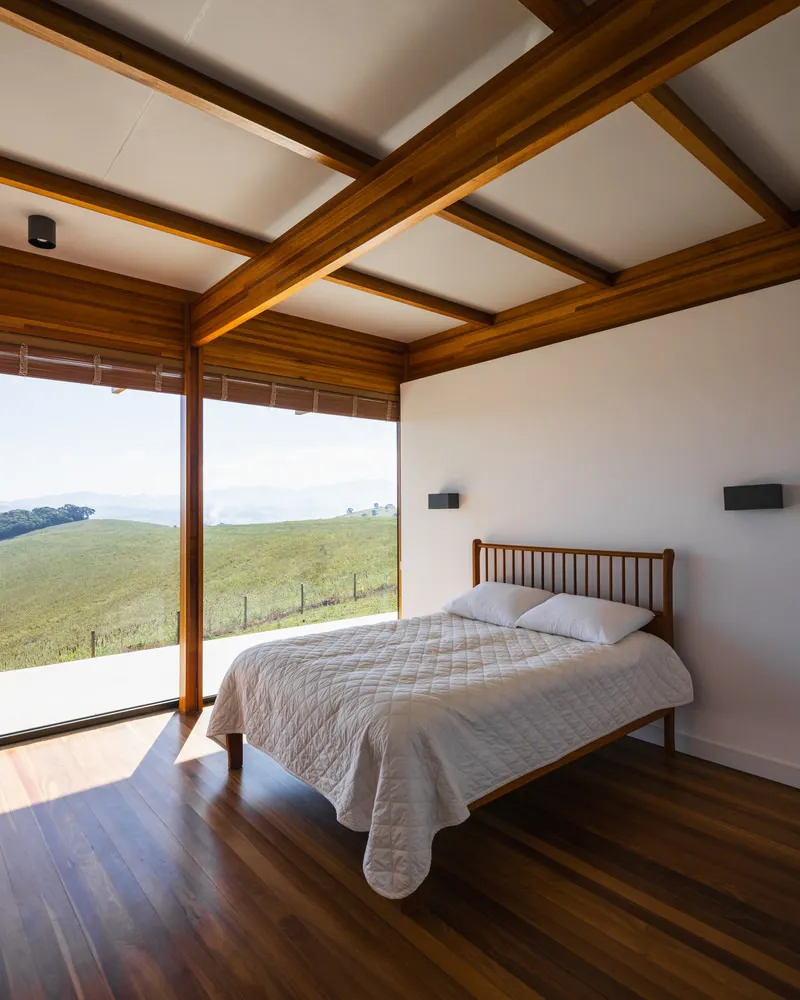
Materiality emphasizes elegance without excess. Cementitious porcelain tiles flow from the veranda into social and service areas, while hydraulic tiles accent bathroom walls, and warm wood covers bedroom floors and shutters. A unique feature enhancing the home’s charm is the artificial lake, envisioned by the resident, acting as a pool adorned with plants, stones, and koi. This water feature not only visually anchors the home to its surroundings but also provides a refreshing retreat for pets.




Popular Articles
Popular articles from the community


The Earth Pod: 3D Printed Homes for Resilient Refugee Communities
The Earth Pod reimagines refugee housing through 3D printed homes made from clay, combining resilience, self-sufficiency, and rapid shelter.

Riyadh For All: Intergenerational Urban Design for Active Aging in Rabat
Riyadh For All reimagines urban design in Rabat with intergenerational co-living, adaptive courtyards, and Moroccan cultural exchange today.

Conexión: Biophilic Design Reimagines High-Rise Living in Hong Kong
Conexión reimagines high-rise living in Hong Kong through biophilic design, green facades, shared spaces, daylight, water and nature within.

Hill & Cross Opera: Sculptural Opera House Architecture Shaped by Tallinn’s Landscape and Identity
Hill & Cross Opera reimagines opera house architecture in Tallinn through its sculptural hill, civic plaza, glass wave and a luminous cross.


Similar Reads
You might also enjoy these articles


Hodi-Mandai Geram
Project Function: Preservation and revitalization of the Intangible heritage and socio-spatial identity of the Hodi by Housing, Cultural Memory Center, Sacred Grove, landscape, local tourism economy


Olio Towers: A Mid-Rise for Performers That Fuses Housing, Rehearsal, and Stage
Located blocks from Houston's Theater District, this modular tower stacks living units around a central performance atrium.

Oasis: Modular Green Housing Carved into Dhaka's Urban Fabric
A shortlisted Plugin Housing entry reclaims unauthorized settlements in Dhaka with stepped concrete volumes, green roofs, and ventilation-driven design.

Black Hole: A Floating Megastructure for the Post-Physical Era
Emiliano Mazzarotto envisions a spherical, self-scaling arena where e-sports, digital hotels, and holographic stadiums replace traditional public space.


Explore Architecture Competitions
Discover active competitions in this discipline



Challenge to reimagine the Iron Throne


Photograph architecture without architects


Illustrate the lost glory of Angkor Wat - Render Challenge


Design challenge to reuse E-waste
Comments (0)
Please login or sign up to add comments
No comments yet. Be the first to comment!