

So Studio Sculpts a Pink Marble Interior That Treats Retail Like a Temple
AVVENN's commercial space in China pairs veined stone, spiraling stairs, and sunken volumes to elevate shopping into spatial ceremony.


Most retail interiors operate on a simple transaction: merchandise up front, fitting rooms in back, cash wrap somewhere in between. So Studio's interior for AVVENN refuses that formula entirely. Instead the practice treats the commercial floor as a sequence of carved, compressed, and expanded volumes where every surface, from pink marble walls to blue-veined stair treads, does the work that branding alone cannot.
What makes the project genuinely interesting is its willingness to borrow from typologies that have nothing to do with selling clothes. A sunken timber bath, a mirrored column capital that bounces garden light into the ceiling, a spiraling stair that reads more like a gallery rotunda than a circulation device: these moves belong to spas, museums, and sacred buildings. So Studio grafts them onto a commercial program without apology, and the result is a space where lingering feels more natural than browsing.
Arrival and Storefront


At dusk the storefront reads as a glowing vitrine, the illuminated signage modest enough to let the interior do the talking. Step inside and the spatial hierarchy reveals itself quickly: a central cylindrical column anchors the ground floor while a curved stone bench and the spiraling staircase beyond it set up a gentle procession deeper into the plan. Glass partitions filter views without blocking them, so you sense the full depth of the space before you have committed to entering it.
The Spiral Stair as Centerpiece


The staircase is the most overtly expressive element in the project, and it earns that position. Marble treads in a deep blue vein wrap upward between blush-pink stone walls, their curve tight enough to generate real spatial compression. The white balustrade with its integrated strip light traces the helix with surgical precision, turning a vertical connector into a piece of freestanding sculpture.
Seen from above, the spiral flattens into an almost graphic composition, the blue and pink marbles reading like geological strata sliced open. It is the kind of stair people will photograph whether or not they intend to buy anything, which is, of course, part of the point: in contemporary retail, spatial spectacle is inventory.
Material Choreography: Stone, Timber, Concrete


So Studio keeps the palette narrow but plays its materials against one another with real discipline. Veined marble lines the reception counter and shelving units, where it acts as a grounding, geological presence. Pale timber paneling appears alongside it, softening the atmosphere and providing a domestic counterweight to all that stone. Exposed concrete columns, still bearing their tie marks, offer a third register: rougher, more honest, a reminder that the building has bones beneath the polish.
The shelving unit captured in image five is a small masterclass in restraint. Horizontal white dividers sit flush against the marble, creating a grid that recedes into shadow. The merchandise becomes almost secondary to the frame that holds it.
Borrowed Typologies: The Sunken Bath and Mirrored Capital


Two moments push the project beyond typical retail vocabulary. The first is a sunken bath surrounded by timber, capped with a white cylindrical hood that draws the eye upward. It might function as a display or consultation zone, but its formal lineage is the Japanese soaking tub or the Roman impluvium: a void in the floor that slows you down and reorients your attention.
The second is a concrete column whose capital has been replaced with a mirror. Greenery from an adjacent courtyard bounces off this reflective surface through a square ceiling opening, pulling the landscape into the architecture. It is a small gesture with an outsized effect, turning a structural element into a periscope.
Display and Furniture Details


Display strategies shift from zone to zone. Glass-enclosed rails isolate individual garments, elevating a single white piece to the status of an artifact. Elsewhere, curved marble benches with red fabric accents double as seating and merchandise platforms, while hanging rail systems along the perimeter walls maintain the clean lines the rest of the interior demands. Floor-to-ceiling windows overlooking mature trees ensure that daylight remains part of the display language.


Custom furniture carries the same material logic as the architecture. A circular counter conceals curved timber seating elements with integrated storage drawers, their felt-lined compartments precise enough for jewelry or small accessories. A timber table beneath a tapered white ceiling element frames views of the trees outside, reinforcing the idea that every transaction here is meant to feel unhurried.
Ceiling and Light


Overhead, the project is just as considered. Clerestory windows frame tree branches above the reception desk, while cylindrical white pendants drop into the space like lanterns. In other zones, radial ceiling beams converge around a central point, creating a soft visual vortex above a curved timber table. Recessed linear lighting outlines soffits and transitions without ever becoming the main event. The ceiling is consistently treated as a fifth elevation, not an afterthought.
Plans and Drawings


The section drawing confirms what the photographs suggest: a double-height volume allows the spiral stair to operate as a sculptural object rather than a corridor. Interior elevations reveal the layering of pink paneling, pendant lighting, and display alcoves with a degree of compositional control that approaches furniture design. These drawings make clear how tightly So Studio coordinated materials and proportions across both levels.
Why This Project Matters
Retail architecture sits at a permanent crossroads between spectacle and function, and most projects tip too far in one direction. AVVENN finds a credible middle ground by investing in material quality and spatial variety rather than gimmickry. The spiral stair, the mirrored column, the sunken timber enclosure: these are not Instagram set pieces. They are spatial ideas rooted in a long history of interiors designed to slow people down and reward their attention.
So Studio's real achievement here is demonstrating that a minimalist material palette does not have to mean a minimal experience. By restricting itself to stone, timber, concrete, and white plaster, the practice forces every curve, joint, and opening to carry meaning. The result is a commercial interior that feels closer to a private gallery than a shop, which may be exactly what a brand like AVVENN needs in an era when the best reason to visit a store is the store itself.
AVVENN by So Studio. Photographs by Minjie Wang.
About the Studio
Share Your Own Work on uni.xyz
If projects like this are the kind of work you want to make, uni.xyz is a place to publish your own, find collaborators, and enter design competitions.


Popular Articles
Popular articles from the community

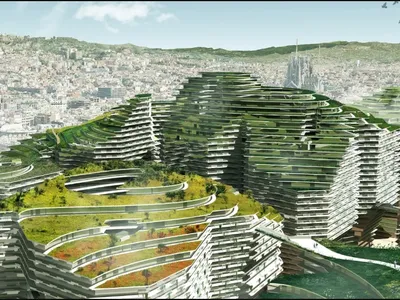
Manzana Morphosis: Stretching Barcelona's Grid into a Living Landscape for 2050
A radical reworking of the Eixample manzana turns density into a tool for generous public space, vertical ecology, and environmental performance.
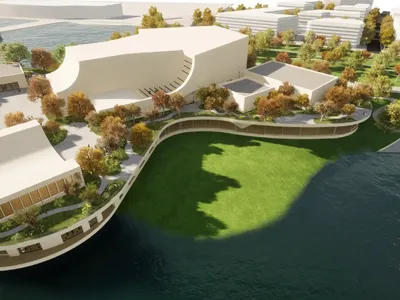
The Amber Palace Opera: A Geological Fiction Surfaces on Tallinn's Baltic Waterfront
Pierre Brillard reimagines a Baltic legend as a public landscape, opera house, and waterfront promenade rooted in Tallinn's coastal identity.
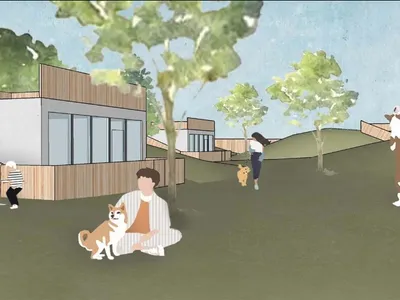
Temporary Home for Dogs: A Reversed Zoo Rethinks Animal Shelter Architecture
In Bucharest, a sinuous corridor and freed landscape flip the logic of containment, designing a shelter that works to make itself unnecessary.
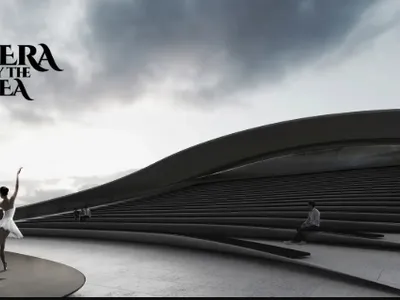
Opera by the Sea Estonia: Three Shells Dissolving Architecture into Tallinn's Coastline
A winning opera house proposal replaces monumental form with interconnected shells that blur the boundary between building, park and Baltic Sea.

Similar Reads
You might also enjoy these articles


Hodi-Mandai Geram
Project Function: Preservation and revitalization of the Intangible heritage and socio-spatial identity of the Hodi by Housing, Cultural Memory Center, Sacred Grove, landscape, local tourism economy

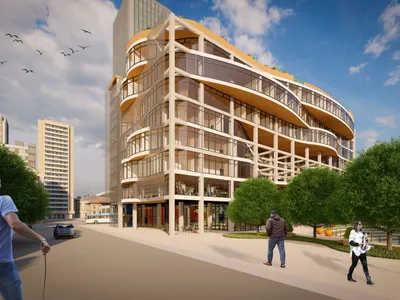
Olio Towers: A Mid-Rise for Performers That Fuses Housing, Rehearsal, and Stage
Located blocks from Houston's Theater District, this modular tower stacks living units around a central performance atrium.
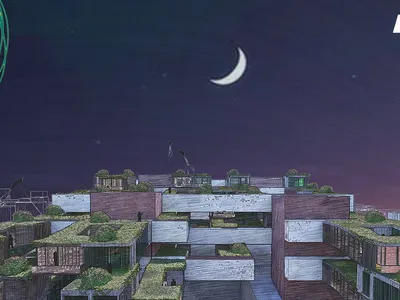
Oasis: Modular Green Housing Carved into Dhaka's Urban Fabric
A shortlisted Plugin Housing entry reclaims unauthorized settlements in Dhaka with stepped concrete volumes, green roofs, and ventilation-driven design.

Black Hole: A Floating Megastructure for the Post-Physical Era
Emiliano Mazzarotto envisions a spherical, self-scaling arena where e-sports, digital hotels, and holographic stadiums replace traditional public space.
Explore Vertical Space Competitions
Discover active competitions in this discipline

Challenge to reimagine the Iron Throne

Photograph architecture without architects

Illustrate the lost glory of Angkor Wat - Render Challenge

Design challenge to reuse E-waste
Comments (0)
Please login or sign up to add comments
No comments yet. Be the first to comment!