
MK House by Atelier 12: Compact Living with Open, Connected Spaces in Hanoi
MK House in Hanoi by Atelier 12 features open, sunlit spaces, natural materials, and seamless family connections on a compact urban plot.


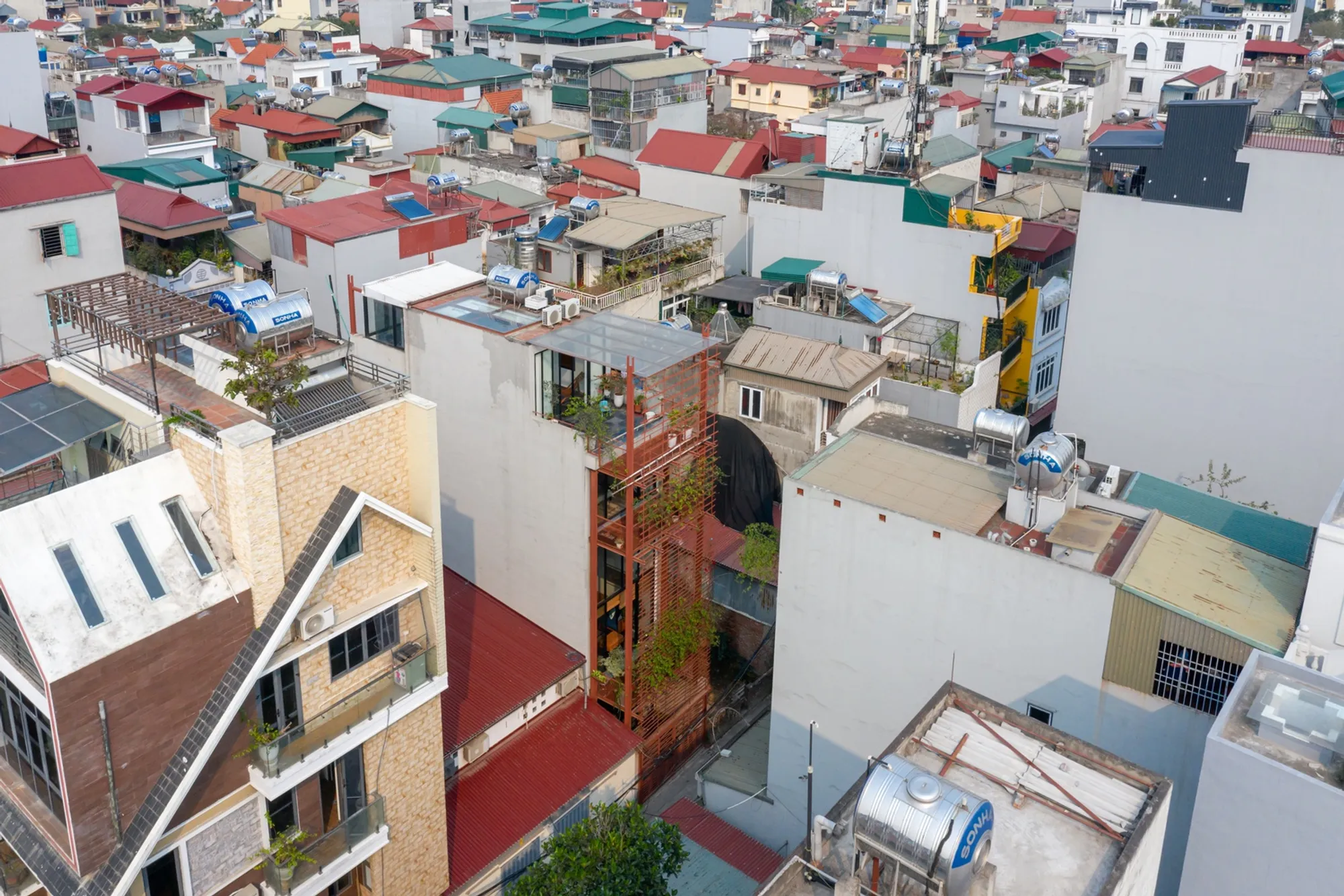
In the bustling city of Hanoi, where streets are tight and urban density constantly increases, living spaces have gradually become enclosed and segmented. Typical Hanoi homes prioritize privacy and separation, often creating emotional and spatial distance between family members. Against this backdrop, MK House emerges as a thoughtful response, designed for a small family of three on a compact 4x11-meter plot. The guiding principle was simple: a home sufficient for living, working, and playing without barriers.
Embracing Openness in a Dense Urban Context
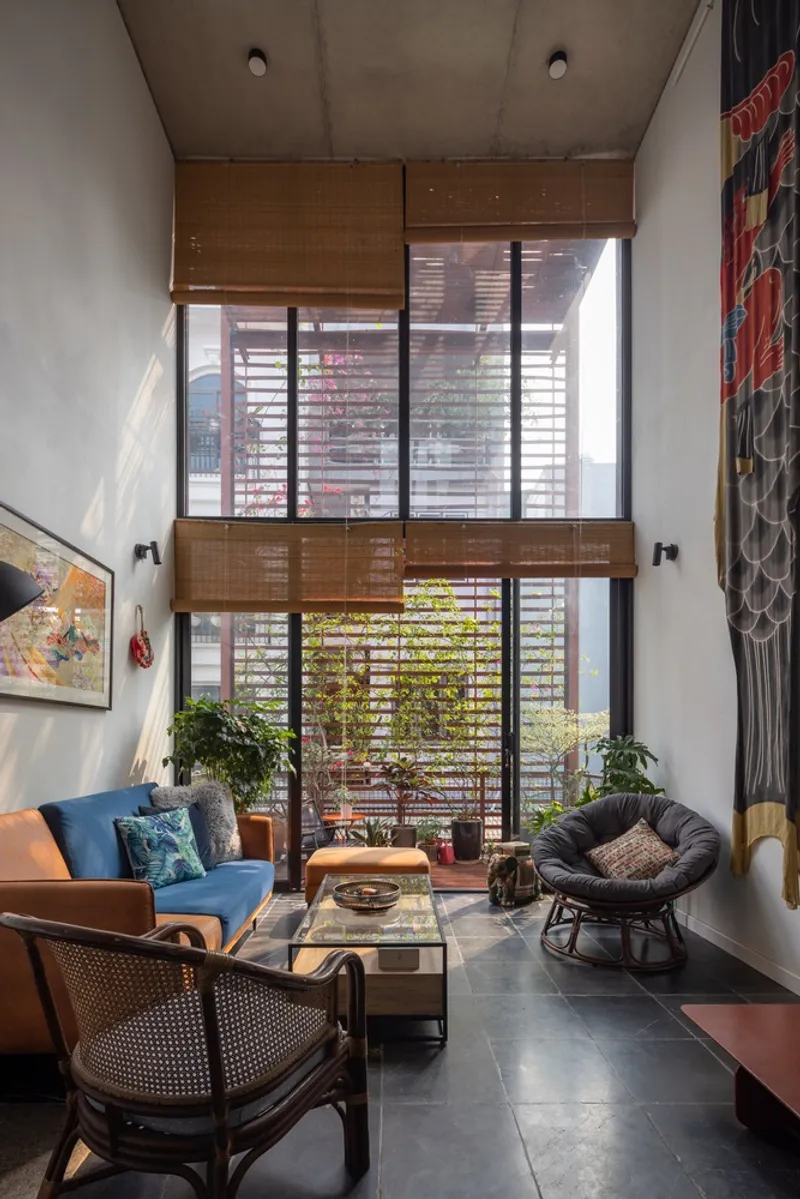
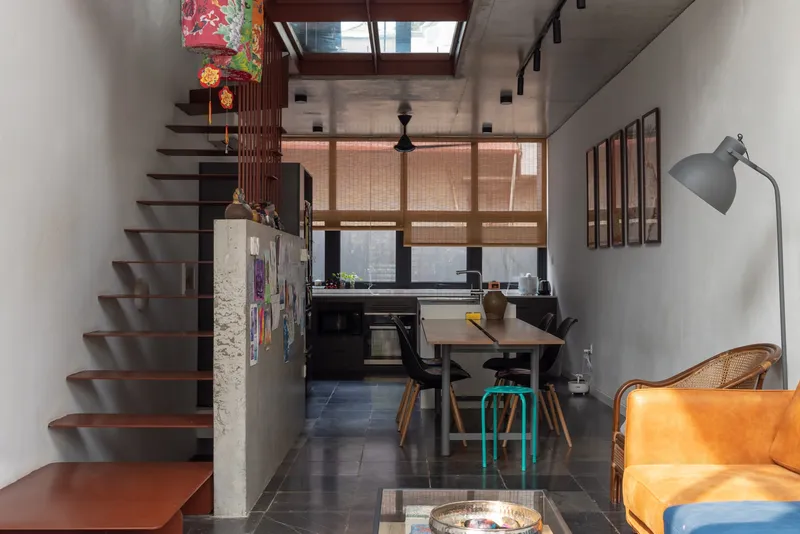
Atelier 12 approached MK House with the vision of breaking away from traditional spatial fragmentation. The design emphasizes open floor plans, minimal partitions, and strong connections with natural elements such as sunlight and ventilation. This approach nurtures an environment where family members remain connected despite the compact site, creating a living space that is both functional and emotionally resonant.
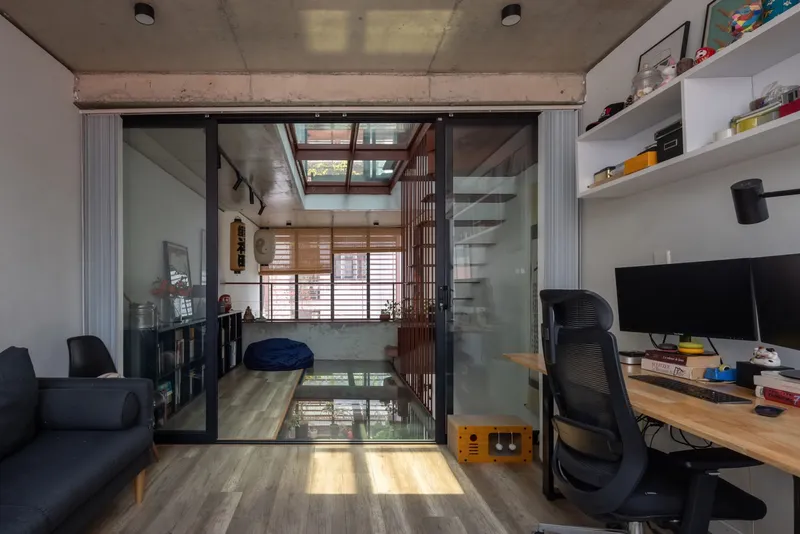
On the lower floor, the homeowner’s workspace occupies almost the entire area, providing an open and flexible environment. Family functions—living room, kitchen, dining area, and bedrooms—are situated on the upper floors. The 4-meter width demanded efficient spatial organization to maximize ventilation, internal circulation, and visual connectivity.
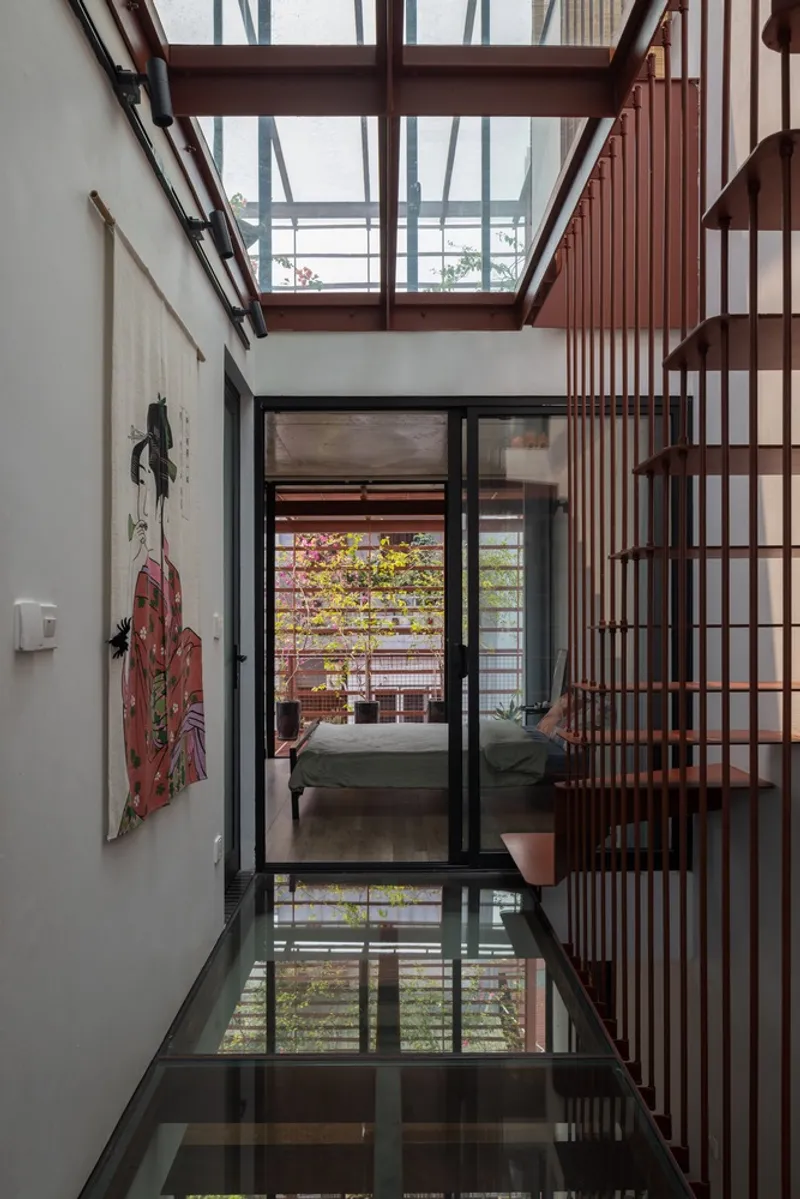
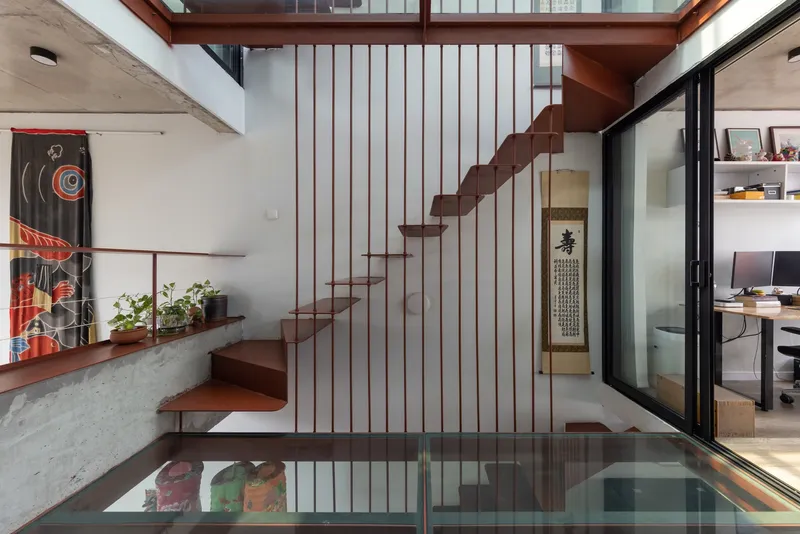
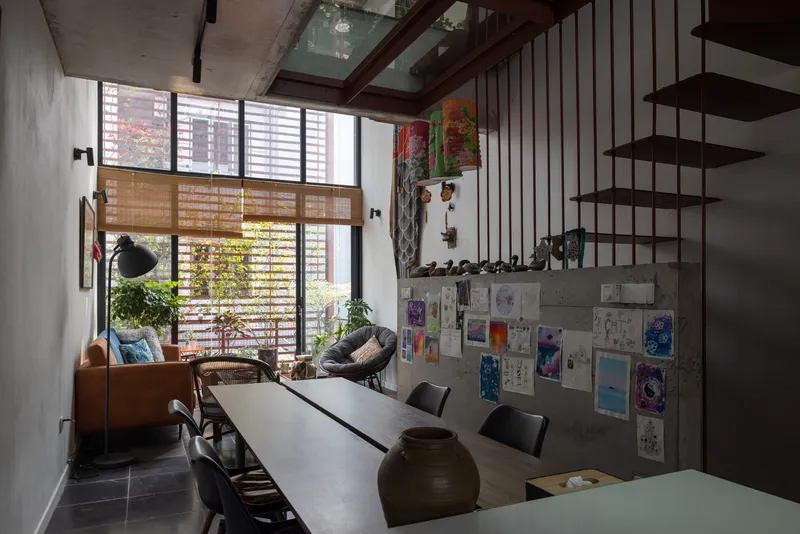
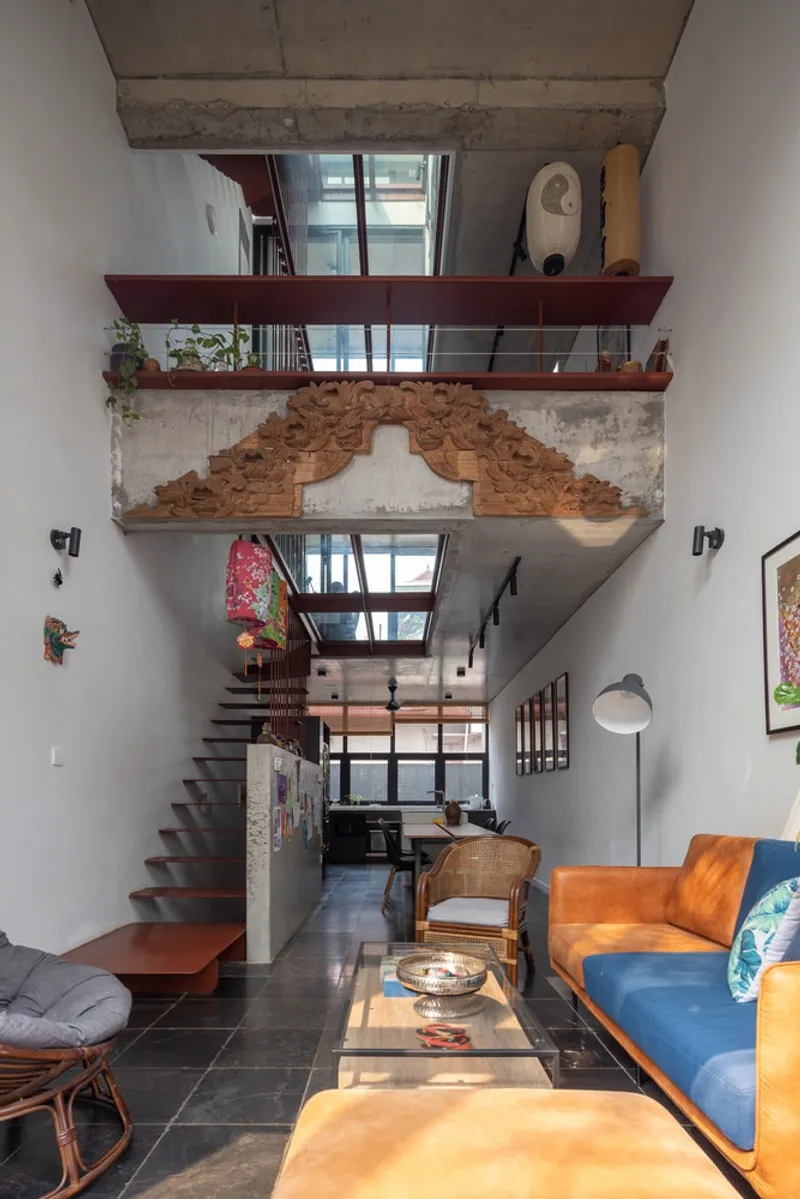
A transparent-floored corridor combined with a hollow steel staircase serves as a flexible vertical platform. This multifunctional element facilitates natural light penetration, airflow, and seamless visual connections across floors, enhancing interaction between family members.
A Facade Inspired by Tradition
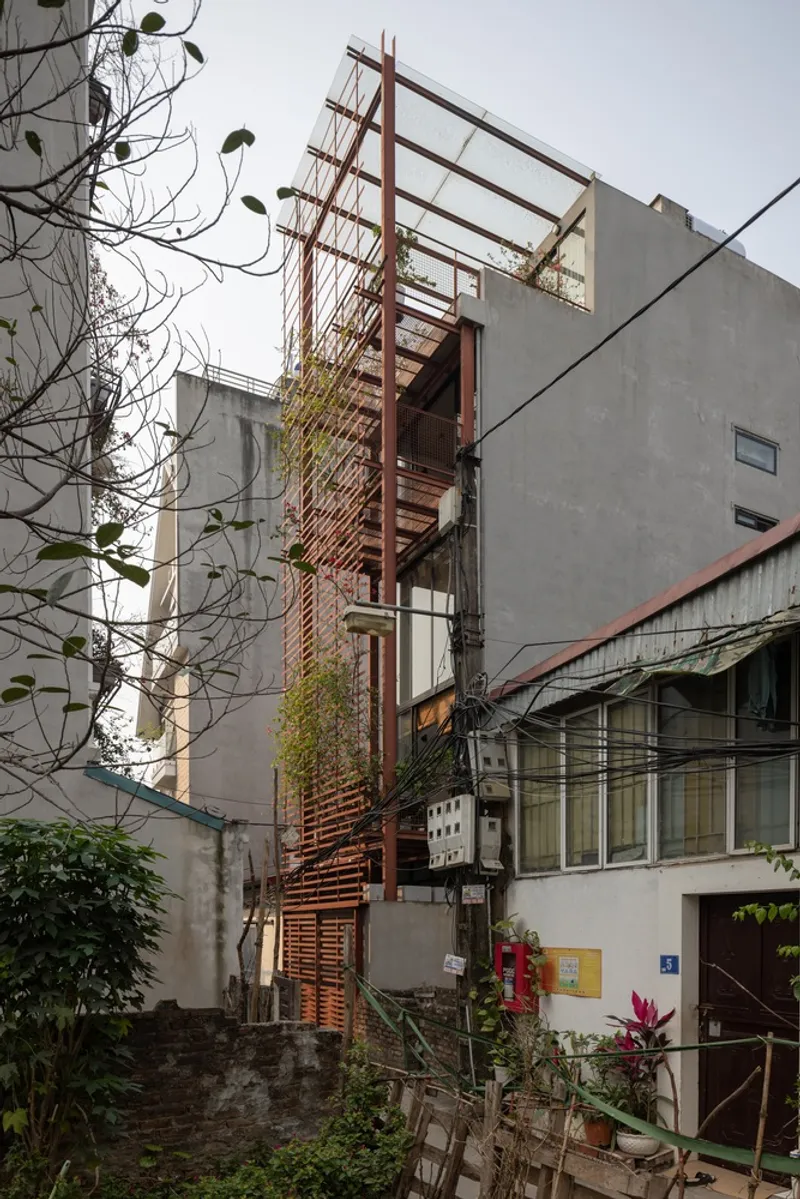
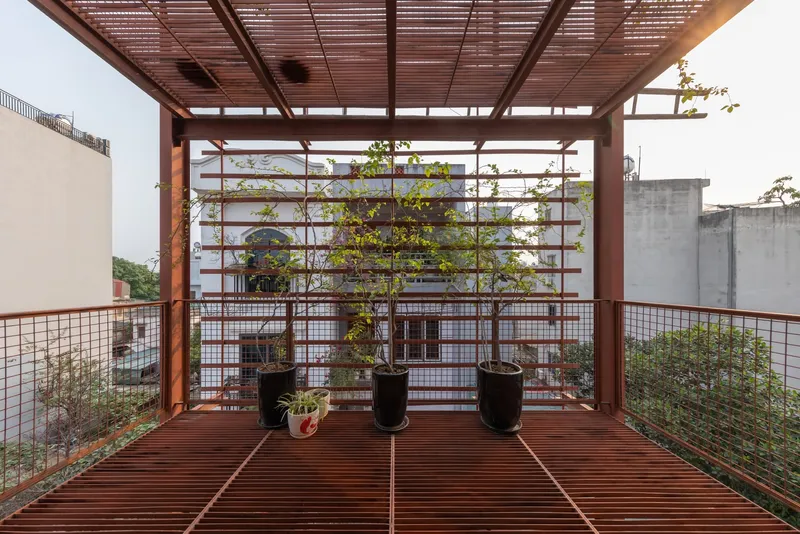
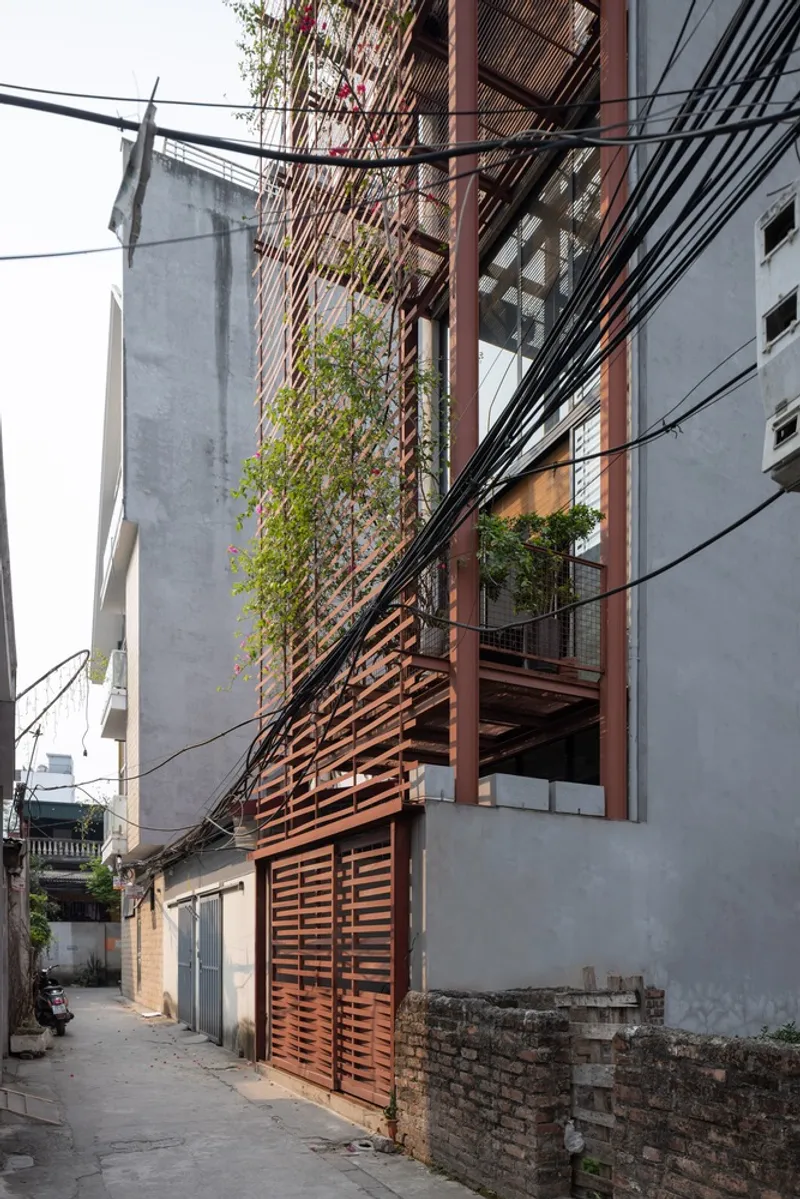
The front setback area, restricted by planning regulations, presented an opportunity for a lighter, innovative structure. Atelier 12 designed a hollow steel floor system with a facade woven from thin steel strips, reminiscent of traditional “liếp tre” bamboo blinds. This facade functions as a balcony, seasonal buffer, vertical garden, and flowing steel curtain that gently mediates the transition between the house and the street. It symbolizes the subtle, adaptable relationship with nature found in Vietnamese architecture.
Fostering Cultural and Spiritual Connections
Beyond functional needs, MK House reflects the homeowner's cultural and spiritual values. Carefully curated over years, these elements contribute to the soul of the house, creating a living environment that preserves memories, identity, and aesthetics.
The home prioritizes sufficiency over extravagance, focusing on natural light, spatial clarity, and human connections. Features such as sunlight filtering through door cracks or glimpses of relatives in separate rooms foster a nurturing, healthy spiritual life.
Materials and Design Highlights
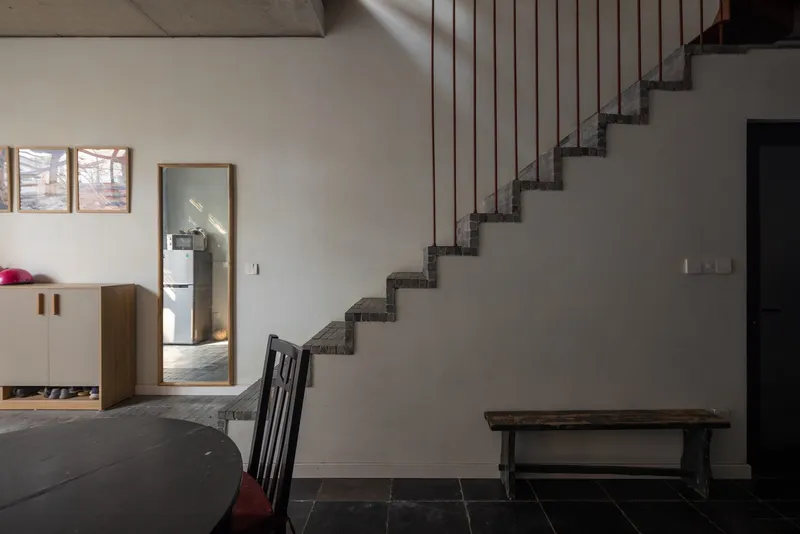
The home combines local and sustainable materials, including An Cuong wood, Thanh Hoa stone, and KINGLED lighting systems. Interior finishes emphasize warmth, texture, and tactile engagement, with wood prominently featured throughout the living spaces.
MK House: A Model for Compact Urban Living
MK House demonstrates how thoughtful design can transform small urban plots into vibrant, connected, and human-centered homes. By balancing openness, natural elements, and cultural identity, Atelier 12 redefines urban living in Hanoi while honoring tradition and modernity.
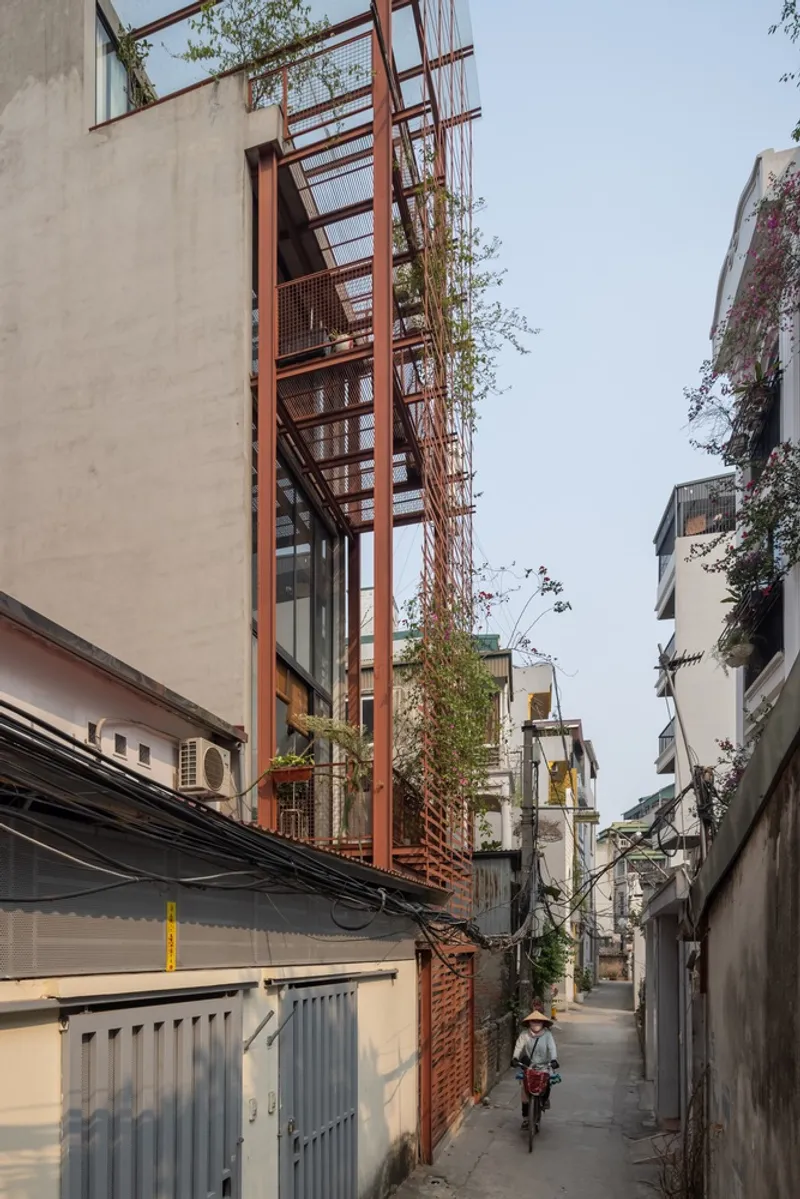
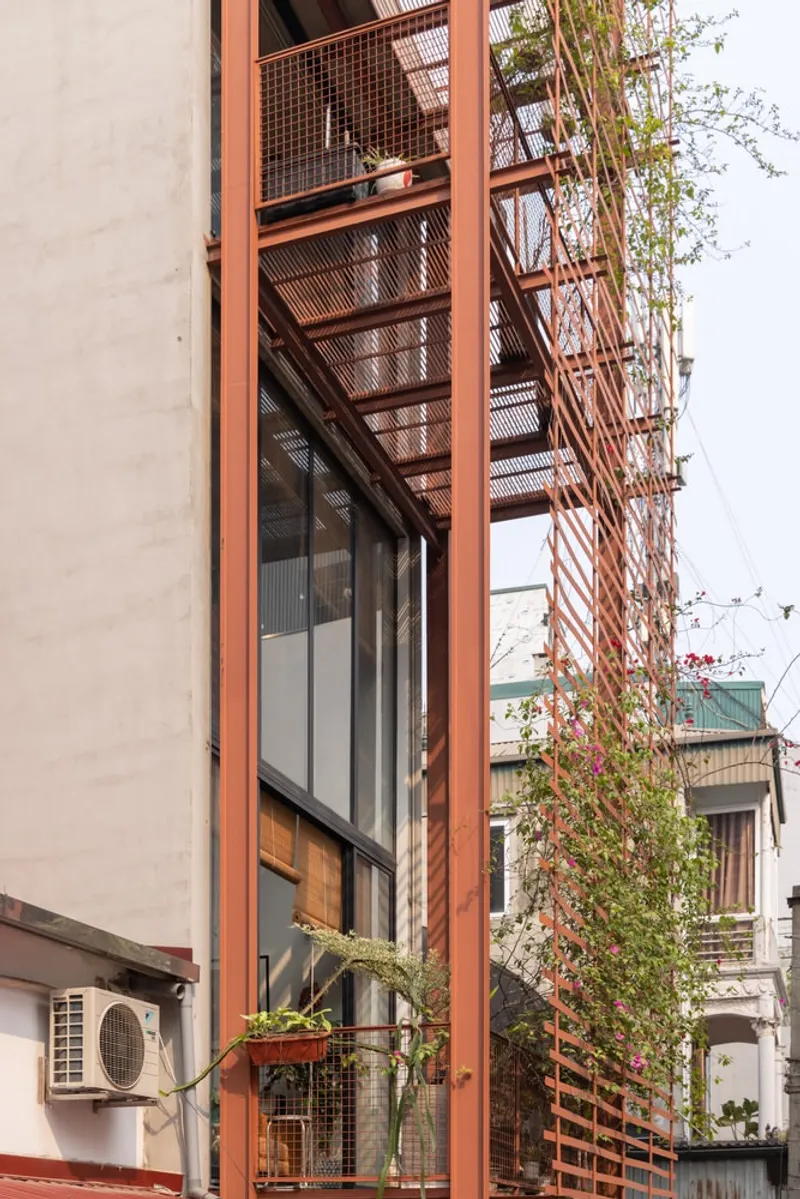
All photographs are works of Chimnon studio




Popular Articles
Popular articles from the community


Co-life: Sustainable Architecture for Age-Friendly Community Living
Co-life reimagines sustainable architecture for seniors through courtyards, rammed earth, shared gardens, and spaces designed for belonging.

Co-Life: Senior Housing Design That Reconnects Older Adults With the City
Co-Life reimagines senior housing design through healing gardens, shared streets, workshops, and a sustainable community across generations.

The Ocean Hive: Sustainable Architecture for a Self-Sufficient Civilization at Sea
The Ocean Hive imagines sustainable architecture at sea, where modular habitats, algae, wave power and ocean waste sustain a growing colony.

The Musturak Paradise: Senior Living Architecture for a Connected Future in Temara, Morocco
The Musturak Paradise reimagines senior living architecture in Temara via private homes, social spaces, culture, community, and shared care.

Similar Reads
You might also enjoy these articles


Hodi-Mandai Geram
Project Function: Preservation and revitalization of the Intangible heritage and socio-spatial identity of the Hodi by Housing, Cultural Memory Center, Sacred Grove, landscape, local tourism economy


Olio Towers: A Mid-Rise for Performers That Fuses Housing, Rehearsal, and Stage
Located blocks from Houston's Theater District, this modular tower stacks living units around a central performance atrium.

Oasis: Modular Green Housing Carved into Dhaka's Urban Fabric
A shortlisted Plugin Housing entry reclaims unauthorized settlements in Dhaka with stepped concrete volumes, green roofs, and ventilation-driven design.

Black Hole: A Floating Megastructure for the Post-Physical Era
Emiliano Mazzarotto envisions a spherical, self-scaling arena where e-sports, digital hotels, and holographic stadiums replace traditional public space.


Explore Housing Competitions
Discover active competitions in this discipline



Challenge to reimagine the Iron Throne


Photograph architecture without architects


Illustrate the lost glory of Angkor Wat - Render Challenge


Design challenge to reuse E-waste
Comments (0)
Please login or sign up to add comments
No comments yet. Be the first to comment!