

Mobile Pavilion by prototype + Sets Studio: A Traveling Cultural Hub That Activates Urban Spaces
A modular, mobile pavilion designed to activate public spaces, foster community engagement, and promote cultural exchange across Ukrainian cities.


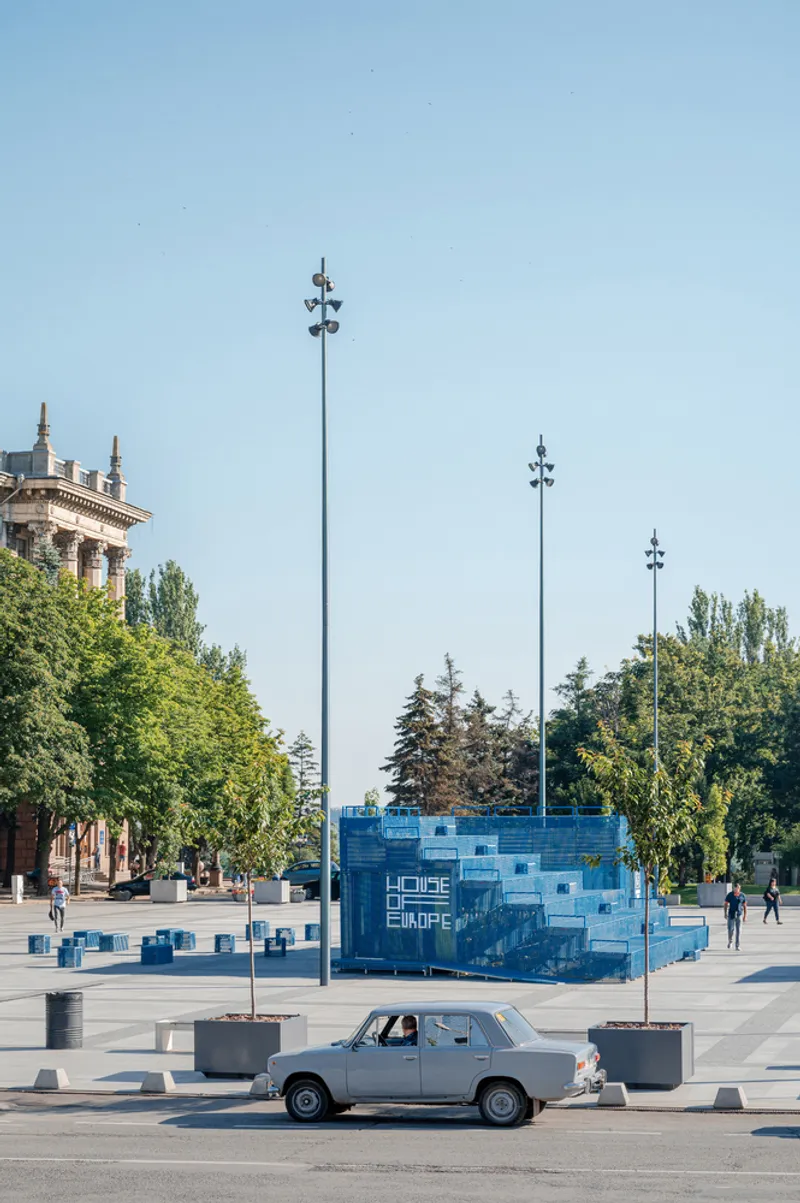
The Mobile Pavilion, a modular architectural project designed by SETS Studio in collaboration with PROTOTYPE, is a transportable and reconfigurable public installation developed under the initiative of House of Europe. This contemporary pavilion acts as a catalyst for community engagement and urban revitalization, offering an architectural response to the evolving needs of regional cities across Ukraine.
A Context-Independent Design Rooted in Public Dialogue
The design was conceived during a competition in which architects were not informed of the pavilion’s future locations. This unique condition gave rise to a context-independent design strategy, enabling the structure to function across diverse urban backdrops. At its core, the pavilion serves as a platform for dialogue, exchange, and activation of underutilized public spaces.
Architectural Concept and Form
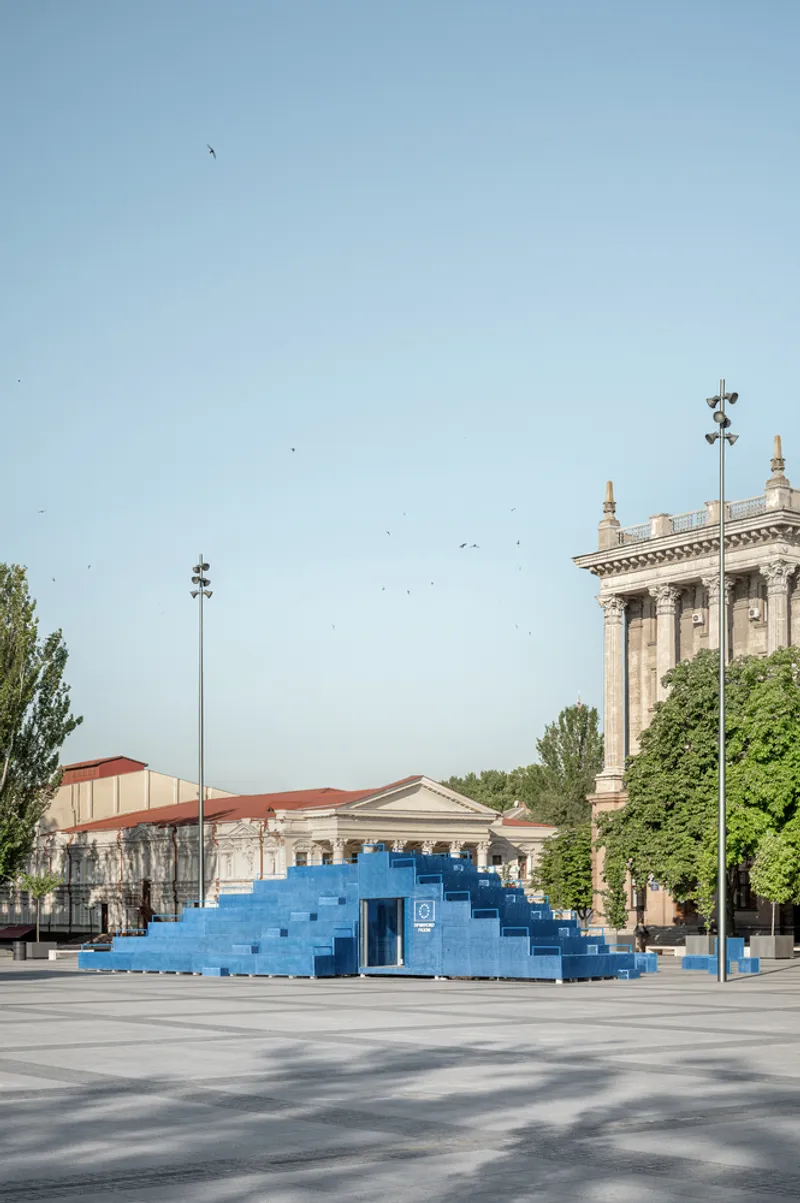
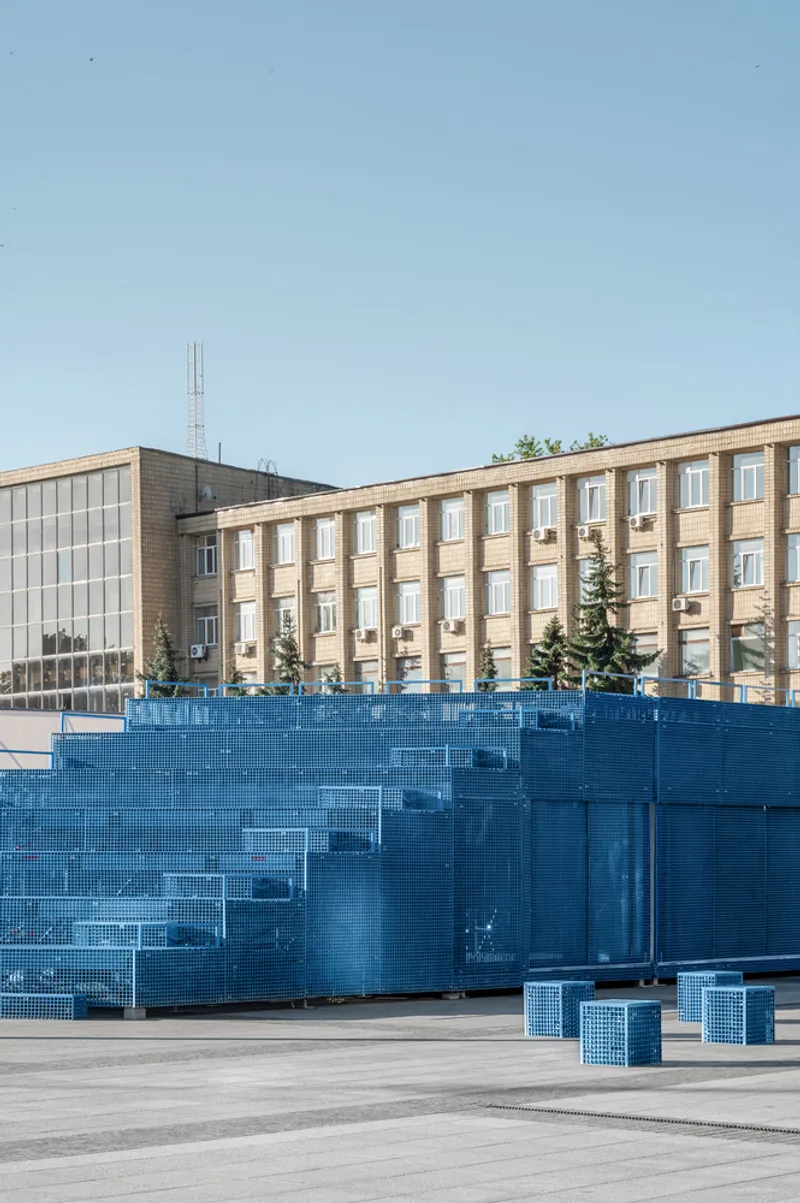
The centerpiece of the Mobile Pavilion is a pair of sculptural amphitheaters, designed to transform the urban experience. These amphitheaters can be arranged in multiple configurations, adapting to various site conditions and event formats. Whether used for performances, discussions, or leisure, the amphitheaters extend the possibilities of public space, inviting community interaction.
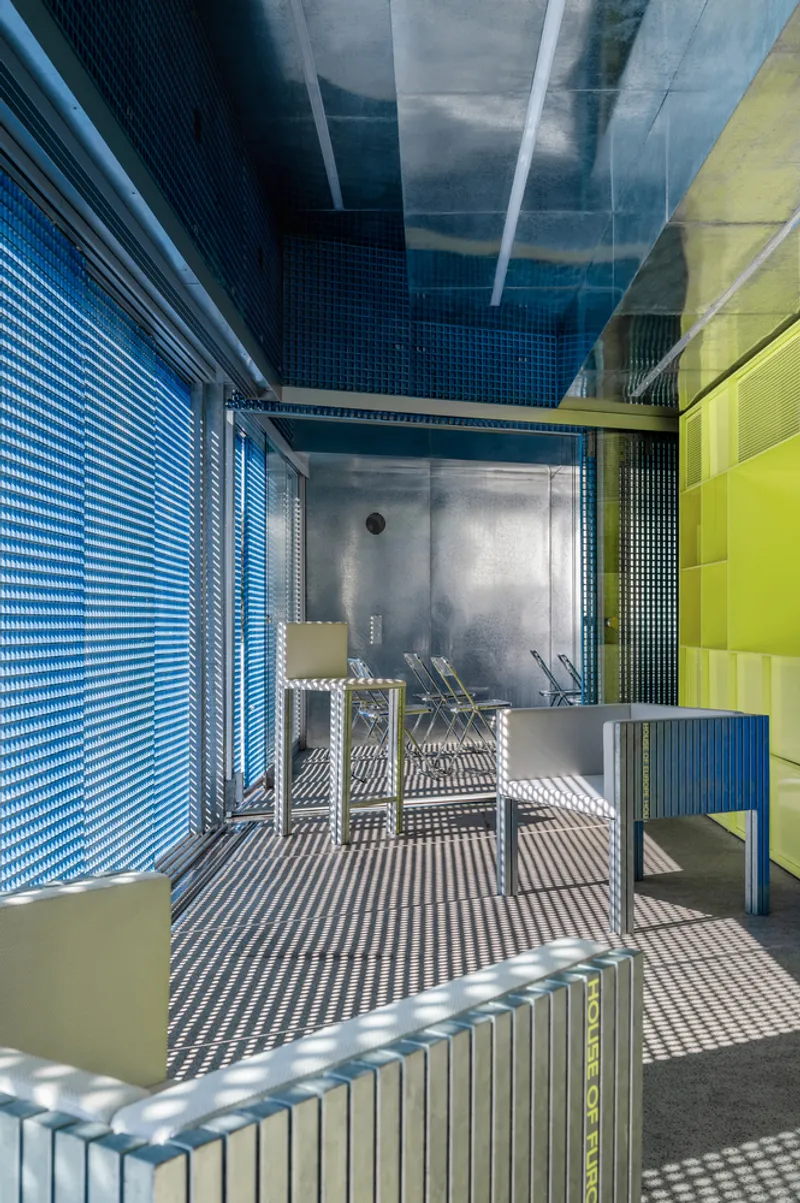
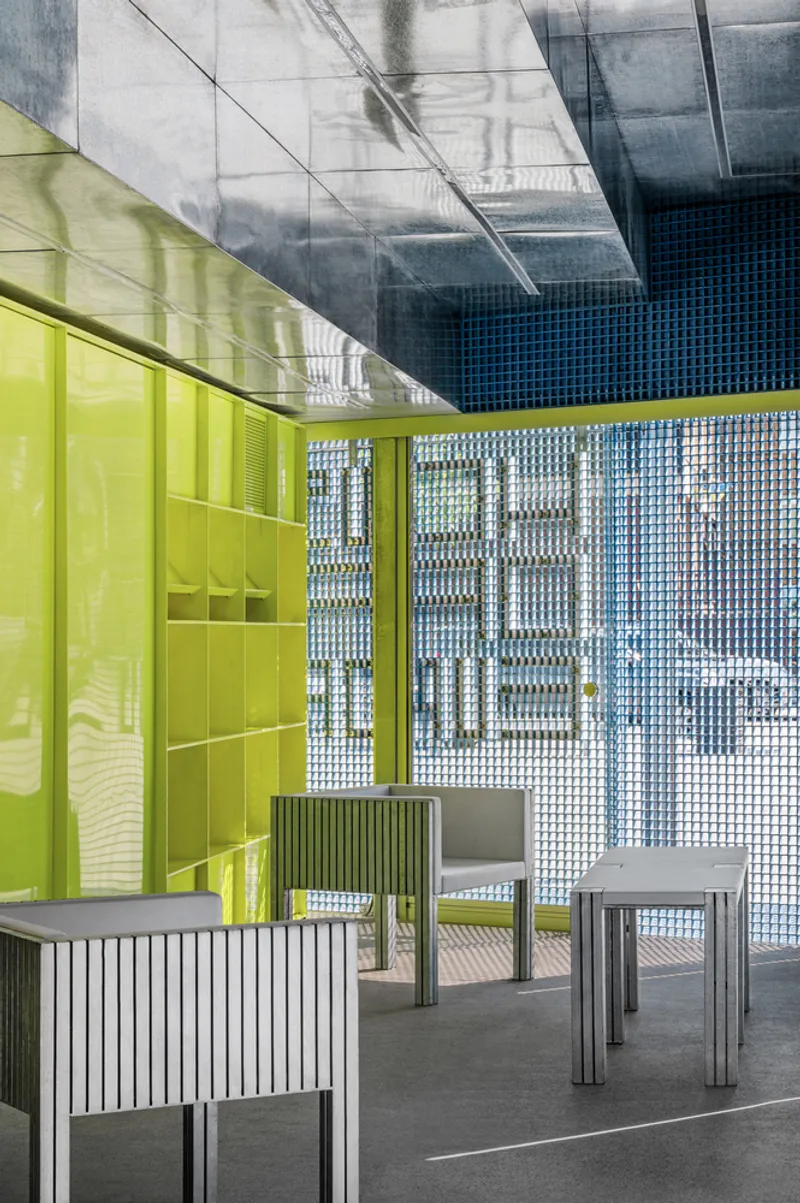
Inside, the pavilion houses a versatile interior program with workshop zones, an information library, and a café corner. These spaces are designed to support educational programs, cultural events, and casual social interaction, reinforcing the pavilion’s role as a traveling civic hub.
Sustainable Materials and Modular Flexibility
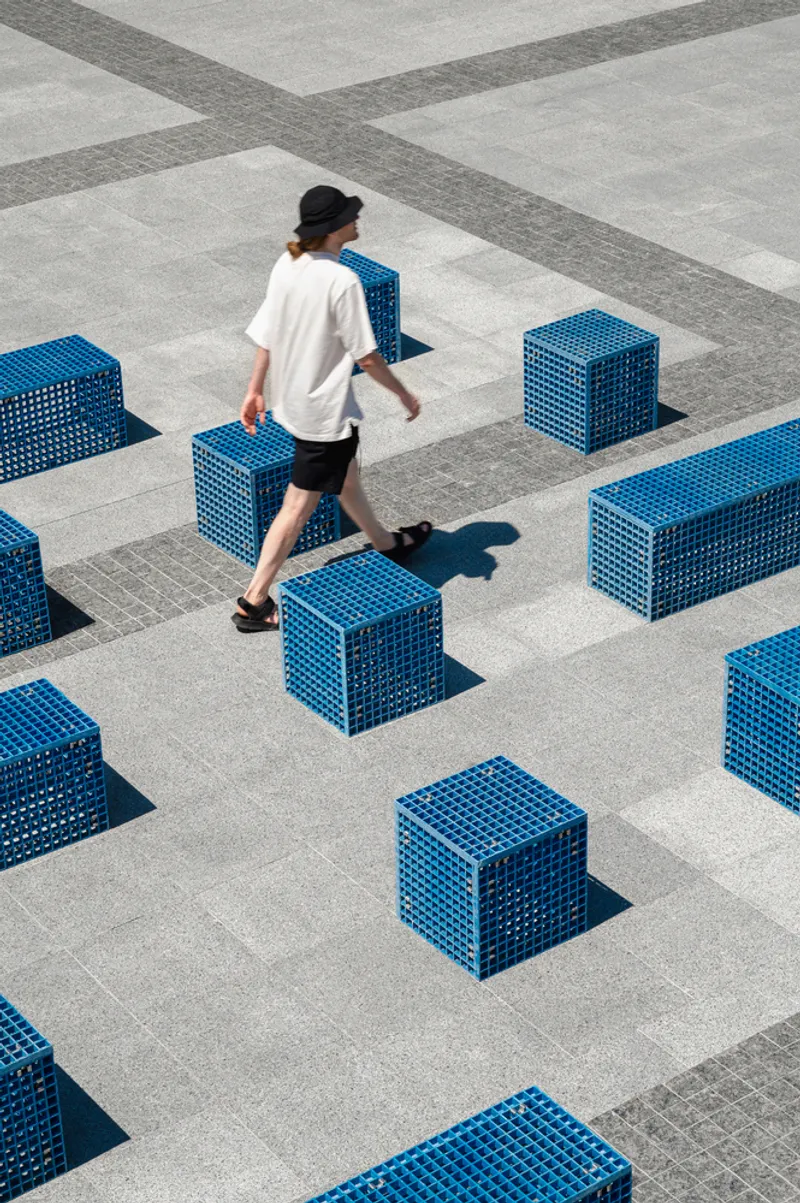
In keeping with sustainable architecture principles, the Mobile Pavilion is constructed from recyclable and industrial-grade modular components, such as LAYHER scaffolding systems and FRP grating panels. These materials not only enhance the structure’s durability and ease of assembly but also support secondary use after the pavilion's life cycle concludes.
The exterior shell features galvanized metal sheeting, chosen for its resistance to weather and wear, while the flooring consists of recycled rubber, offering both resilience and comfort. The pavilion’s modular construction ensures efficient transportation and rapid deployment, enabling it to travel seamlessly between cities.

Interior Layout: Flexibility Meets Function
Beneath the amphitheater structures, two primary interior zones are defined:
- A workshop and office area designed for hands-on learning and collaborative work.
- A library and café area, complete with sliding glass doors that invite openness and transparency.
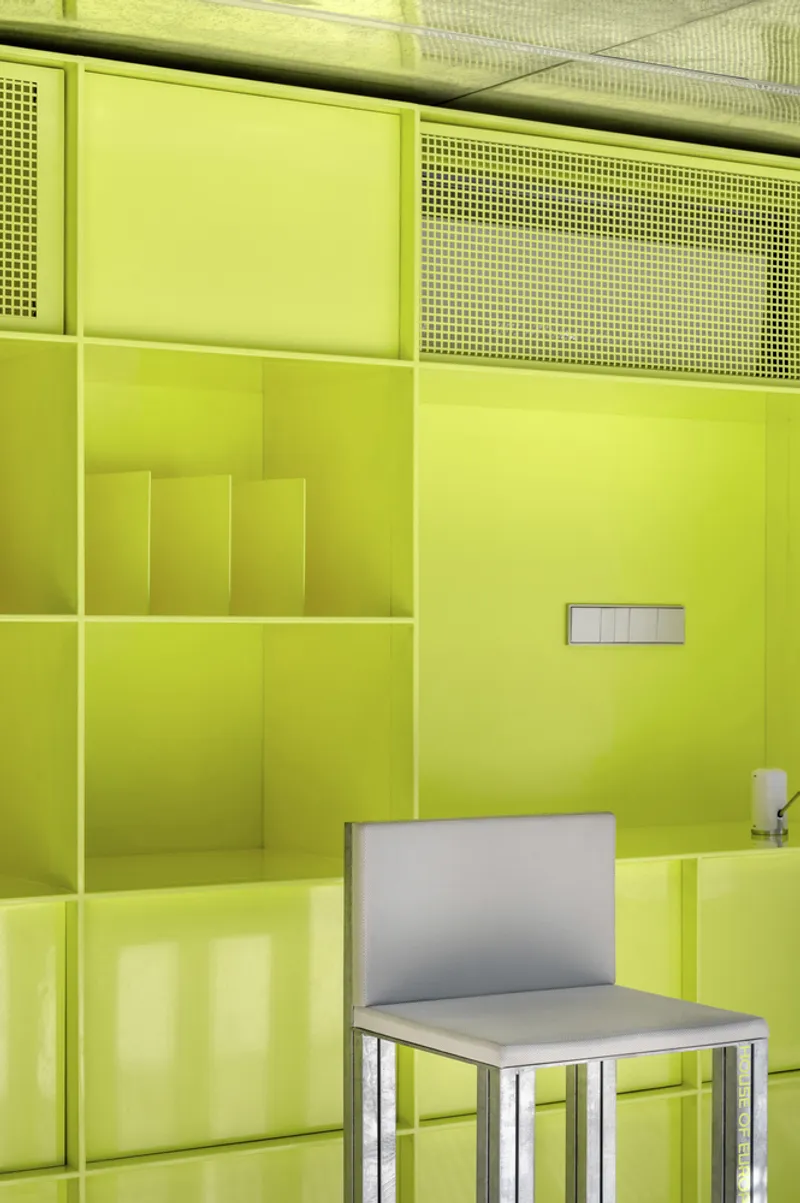
The furnishings blend public and domestic aesthetics, using robust materials to create an environment that feels both welcoming and functional. Portable tables, stackable chairs, and multifunctional shelving systems support a wide range of uses, from lectures to exhibitions.
Engaging Design That Transforms Urban Environments
The Mobile Pavilion’s design intentionally contrasts its surrounding urban fabric, becoming a focal point in each new location. Its bold geometric form, open platforms, and integrated seating encourage curiosity and participation. The structure acts like an interactive playground, inviting visitors to shape their own experiences.
Every detail of the design reinforces the pavilion’s mission: to activate public life, enrich the urban environment, and inspire meaningful interaction.
Architectural Impact and Legacy
As the pavilion continues its journey across Ukraine, it brings with it a unique architectural statement—a mobile infrastructure for community building, education, and cultural dialogue. Through its flexibility, portability, and sustainable design ethos, the Mobile Pavilion challenges traditional notions of fixed architecture, proving that transformative spaces don’t have to be permanent to have a lasting impact.
All Photographs are works of Yevhenii Avramenko


Popular Articles
Popular articles from the community


The Amber Palace Opera: A Geological Fiction Surfaces on Tallinn's Baltic Waterfront
Pierre Brillard reimagines a Baltic legend as a public landscape, opera house, and waterfront promenade rooted in Tallinn's coastal identity.
Manzana Morphosis: Stretching Barcelona's Grid into a Living Landscape for 2050
A radical reworking of the Eixample manzana turns density into a tool for generous public space, vertical ecology, and environmental performance.

Cloaked Colonization: A Mobile Underwater Habitat That Moves Like a Fish
Micah Abaya's shortlisted EHC Pacific entry reimagines ocean settlement as a dispersed network of self-sustaining architectural organisms.
Tsunami Convergenics: Turning Catastrophic Ocean Forces into Underwater Housing Infrastructure
A speculative underwater settlement off the coast of Onagawa, Japan, treats tsunamis and typhoons as energy sources rather than threats.

Similar Reads
You might also enjoy these articles


Hodi-Mandai Geram
Project Function: Preservation and revitalization of the Intangible heritage and socio-spatial identity of the Hodi by Housing, Cultural Memory Center, Sacred Grove, landscape, local tourism economy


Olio Towers: A Mid-Rise for Performers That Fuses Housing, Rehearsal, and Stage
Located blocks from Houston's Theater District, this modular tower stacks living units around a central performance atrium.

Oasis: Modular Green Housing Carved into Dhaka's Urban Fabric
A shortlisted Plugin Housing entry reclaims unauthorized settlements in Dhaka with stepped concrete volumes, green roofs, and ventilation-driven design.

Black Hole: A Floating Megastructure for the Post-Physical Era
Emiliano Mazzarotto envisions a spherical, self-scaling arena where e-sports, digital hotels, and holographic stadiums replace traditional public space.

Explore Building Prototype Competitions
Discover active competitions in this discipline

Challenge to design a portable theatre

Challenge to design a portable music platform

Challenge to design an open learning module for the elderly

Challenge to reimagine the Iron Throne
Comments (0)
Please login or sign up to add comments
No comments yet. Be the first to comment!