
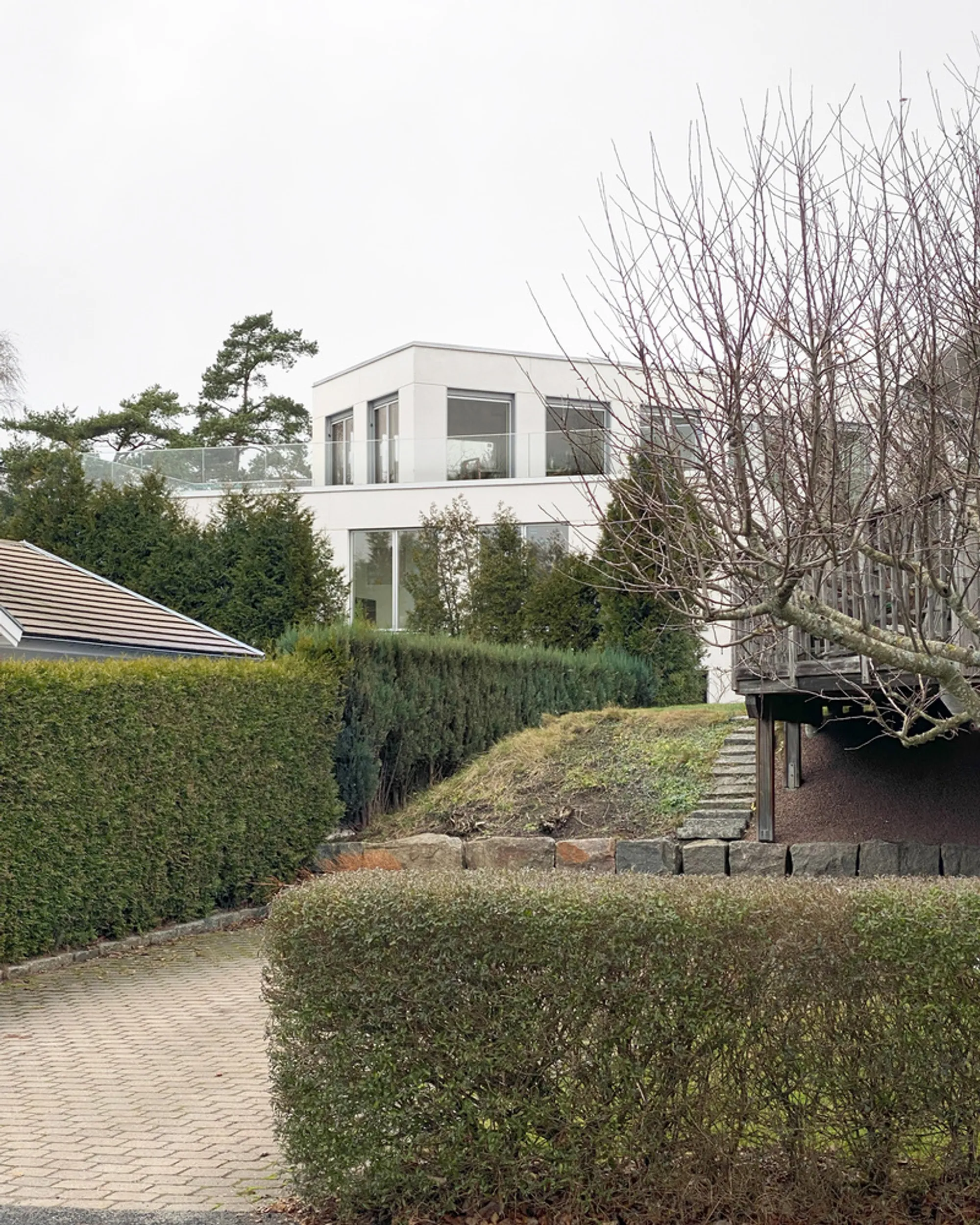
Reppen Vilson Carves Two Rotated Concrete Volumes into a Rocky Gothenburg Hillside
Villa Näset turns a leftover plot with ten meters of elevation change into a sculptural debut commission overlooking the Swedish coast.


Every neighborhood has a plot nobody wants: oddly shaped, too steep, wedged between existing houses like an afterthought. On the outskirts of Gothenburg, Reppen Vilson found exactly that kind of site for their very first commission and turned it into Villa Näset, a 430-square-meter residence built entirely from lightweight concrete blocks, plastered white inside and out. The plot drops roughly ten meters from one edge to the other, a topographic challenge that the architects weaponized rather than fought.
What makes Villa Näset worth studying is not just the material commitment or the ocean views, but the rotational logic that organizes everything. Two two-story volumes, offset by 45 degrees, connect at different levels to separate private life from social life with an almost clinical precision. Two independent staircases serve these two worlds. The result is a house that reads as a single monolith from the street but unfolds into a far more complex organism once you step inside.
Anchored to the Rock
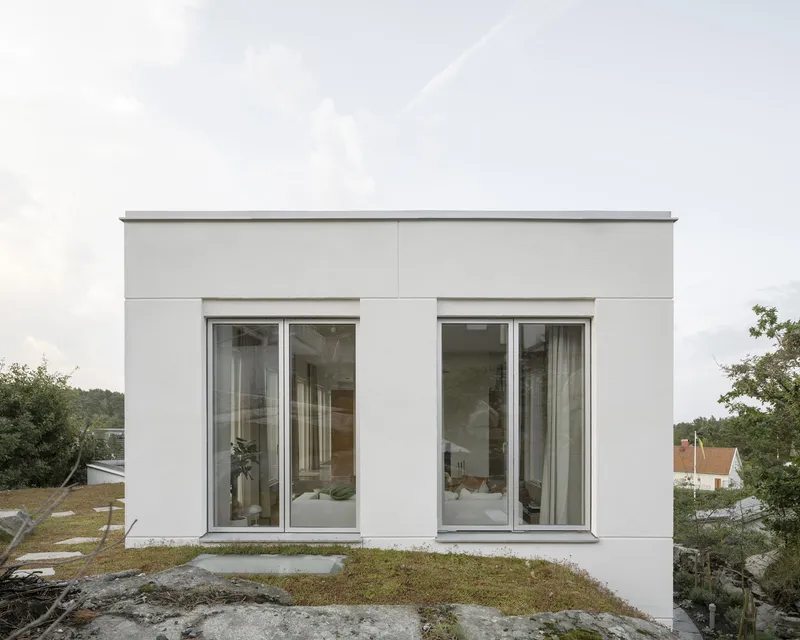
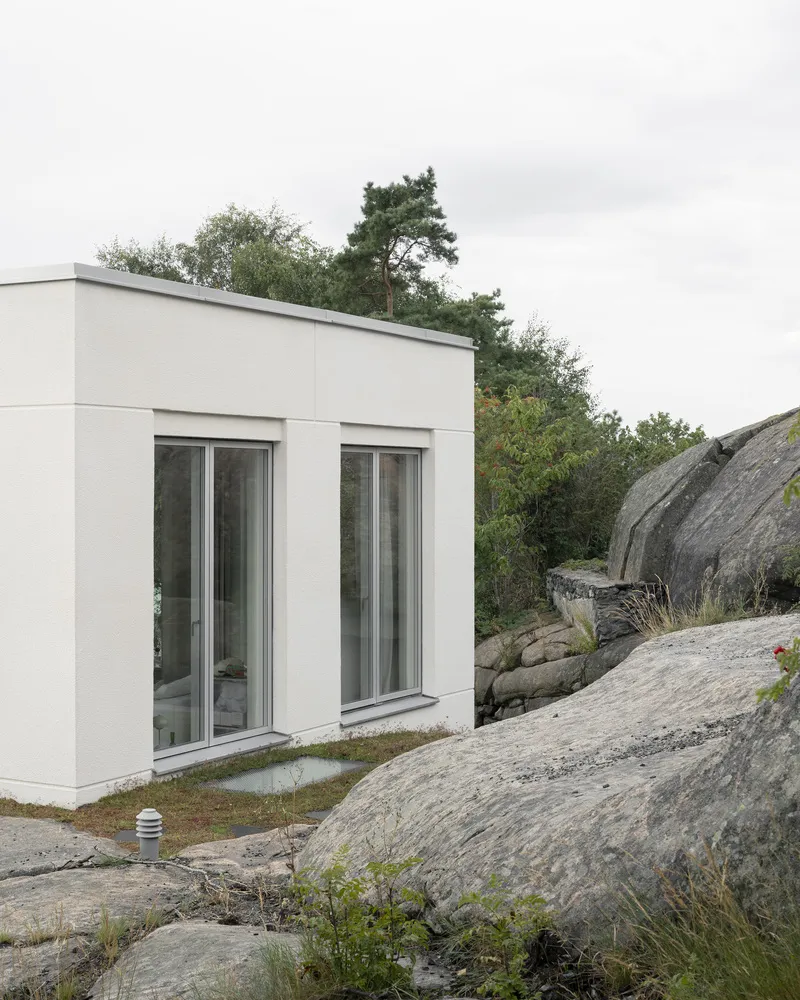
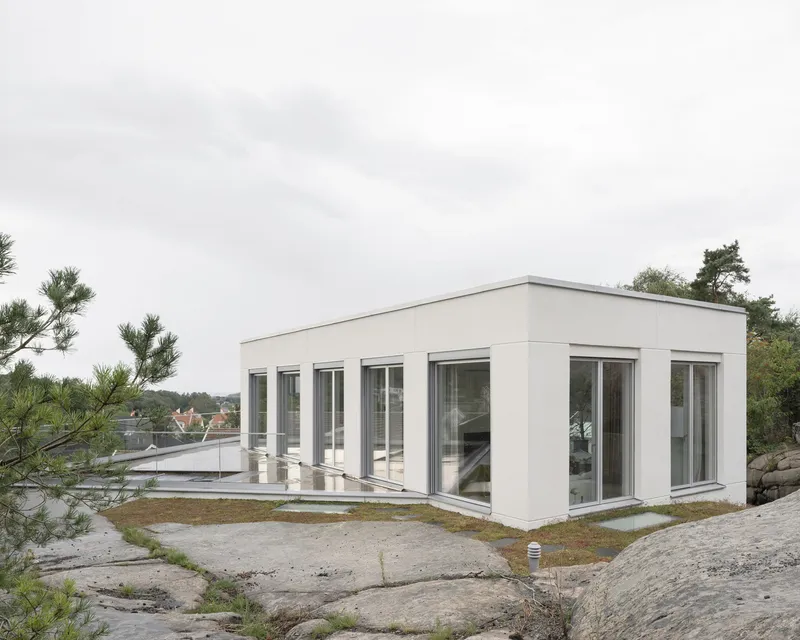
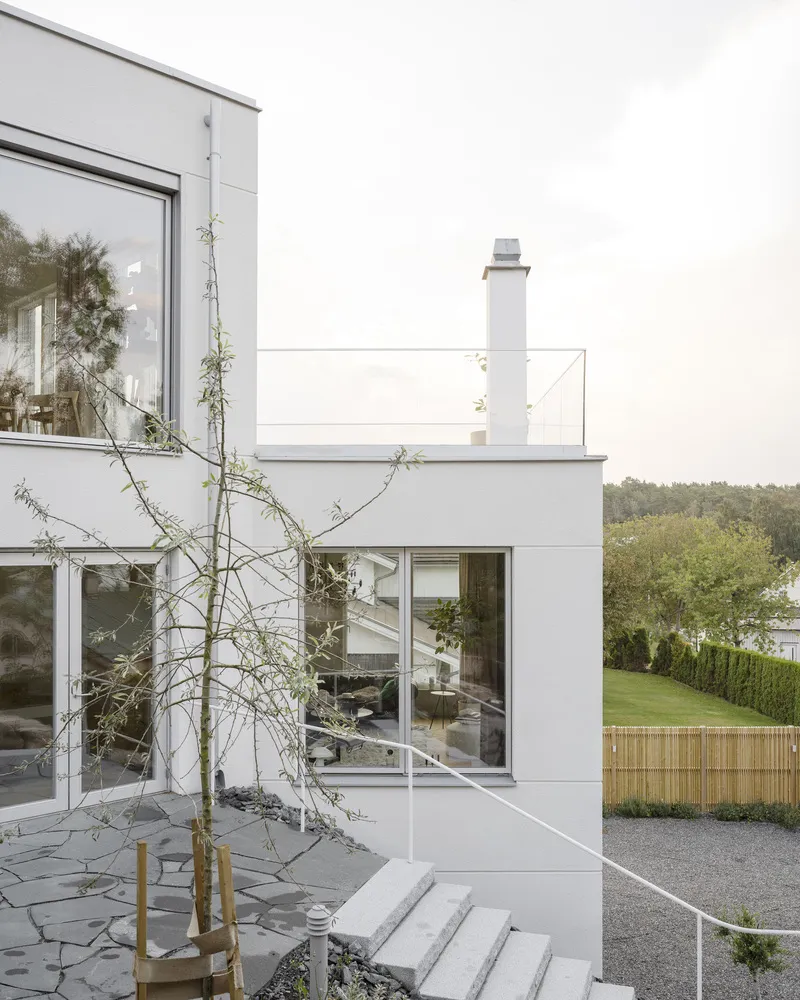
Villa Näset does not sit on its site so much as grow out of it. The white rendered volumes emerge directly from exposed granite outcrops, their flat roofs and clean edges forming a deliberate contrast with the rough, mossy stone. There is no manicured lawn mediating between architecture and geology. Glazed doors open straight onto bedrock, and the building's lower levels tuck into the slope rather than leveling it.
The strategy is practical as well as theatrical. By embedding subterranean spaces into the hillside, the architects could illuminate them through light wells that channel daylight deep into the plan. The site's dramatic fall becomes an asset: every floor gains a different relationship to the ground, and the house never feels buried even when it is partially below grade.
A White Monolith Among the Pines
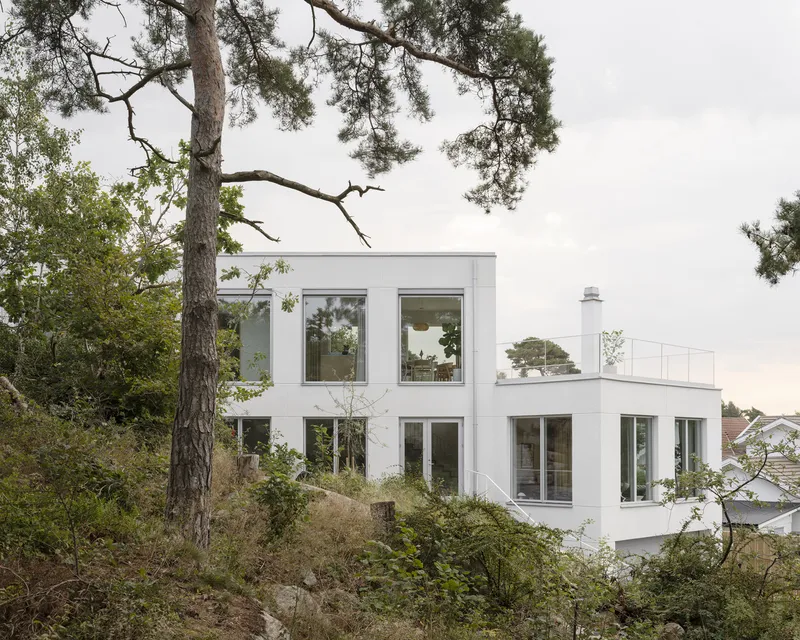
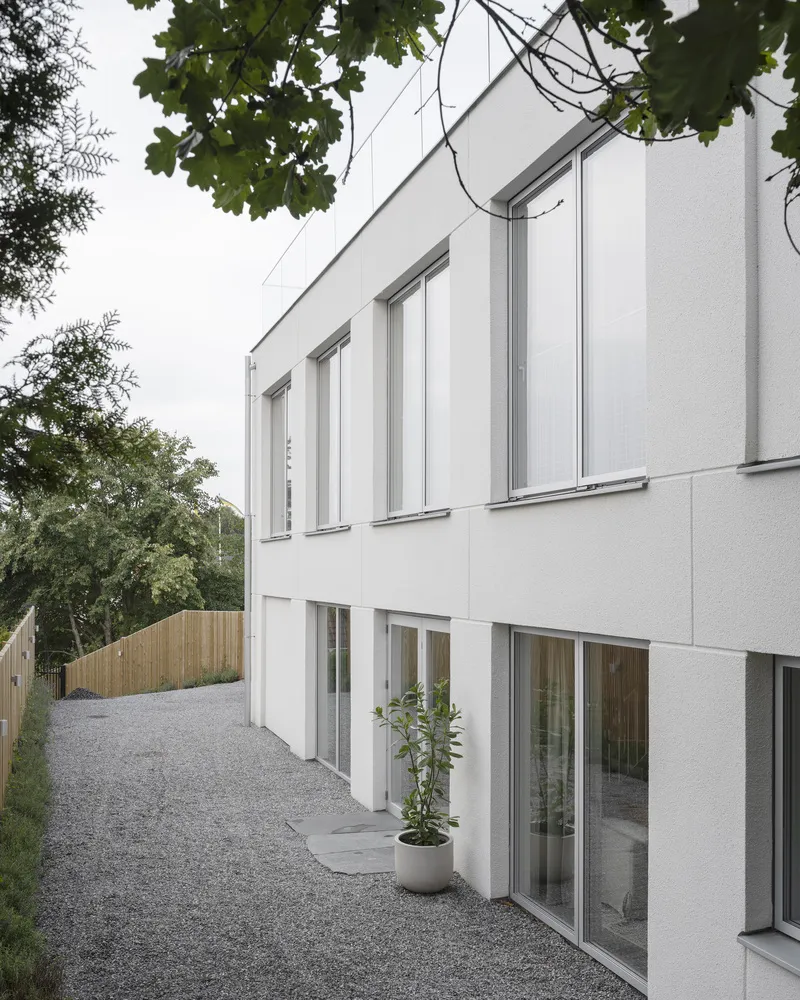
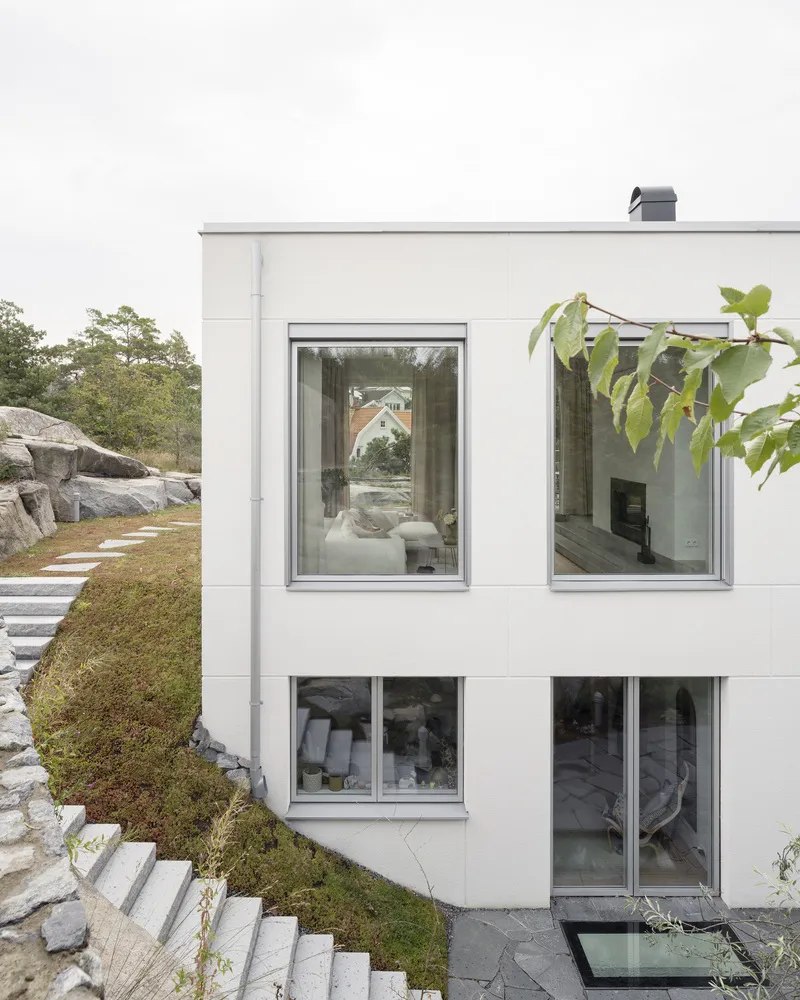
From a distance, the plastered facade reads as a single bright volume punched with carefully proportioned openings. Mature pine trees frame the house on nearly every side, and the architects have been disciplined about keeping the palette to white plaster, glass, and the occasional flash of timber at thresholds. The restraint pays off: the building holds its own against the dark trunks and rough stone without shouting.
Stacked windows on the sloped side create a vertical rhythm that tracks the hillside's gradient, while broader picture windows on the upper levels reach toward the ocean view. The fenestration is not random; it maps the interior hierarchy of private and communal spaces onto the exterior in a legible way.
Two Staircases, Two Lives
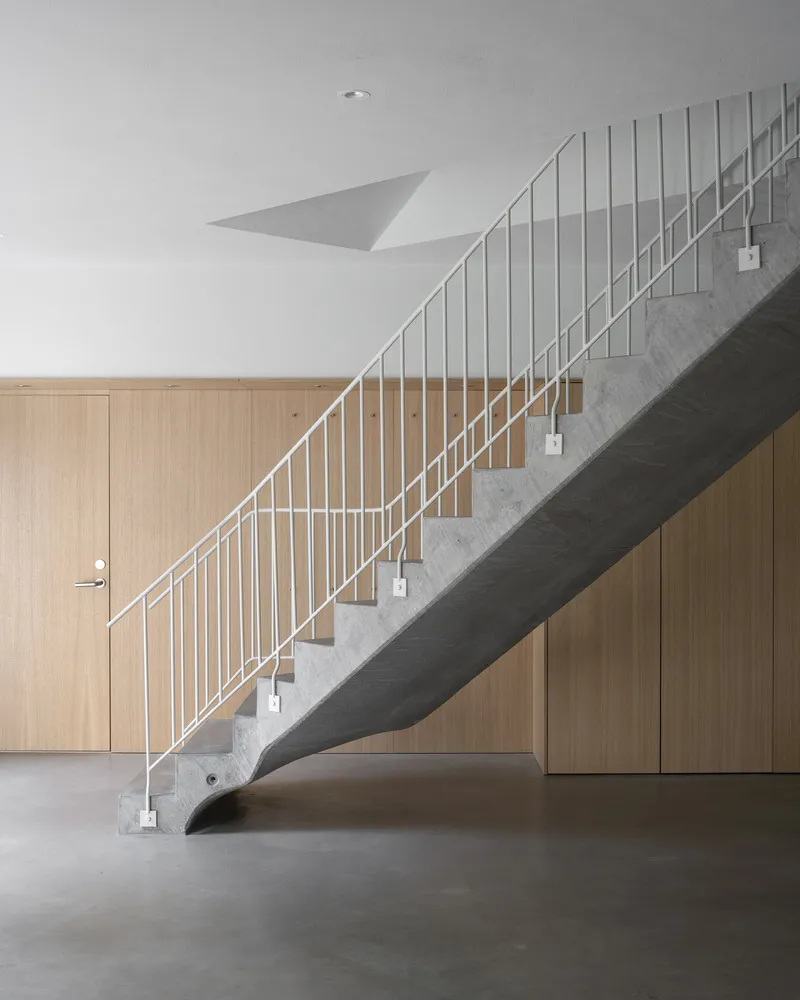
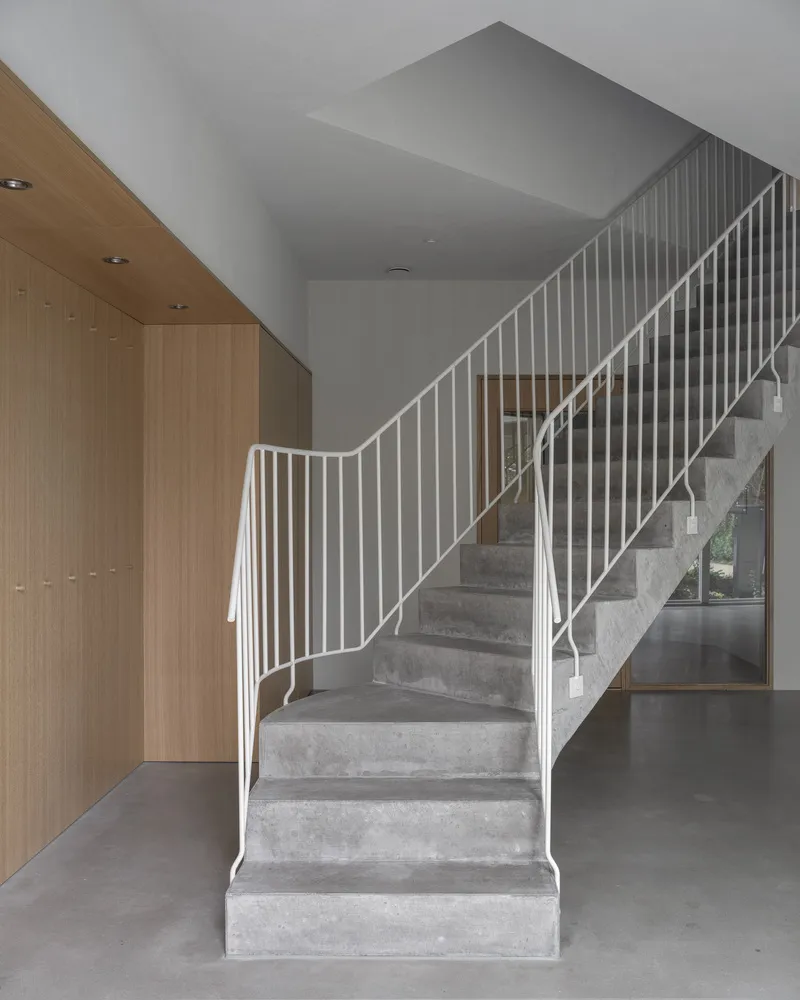
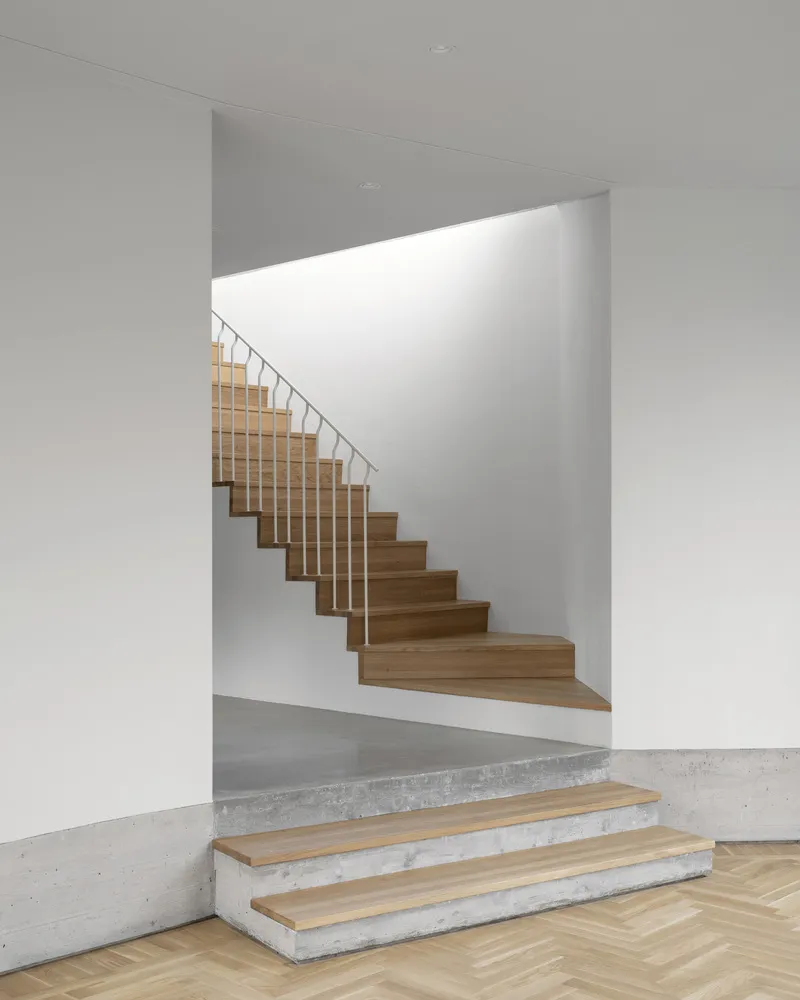
The organizational core of Villa Näset is its pair of staircases, each visually and physically independent. One is a taut concrete spiral bordered by a timber-clad storage wall, its white vertical rod balustrade casting fine shadow lines as you ascend. The other is warmer, timber-treaded, and lit from above by a generous skylight. The contrast is intentional: one serves the private quarters, the other the social floors.
This dual-circulation concept is rare in residential work of this scale, and it gives the house an almost institutional generosity. Two people can move through the building simultaneously without crossing paths. For a family that wanted both togetherness and solitude, the architecture delivers that duality structurally rather than relying on closed doors.
Sunken Living Rooms and Material Thresholds
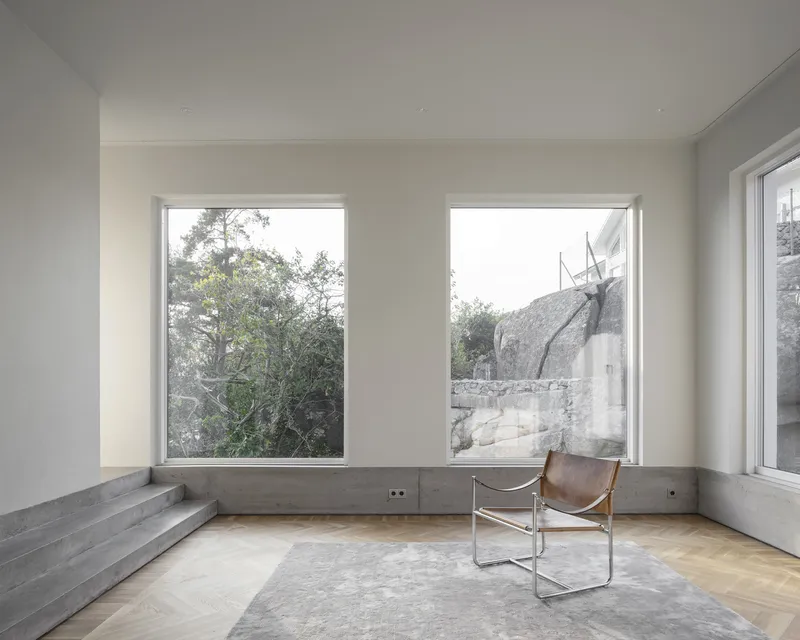
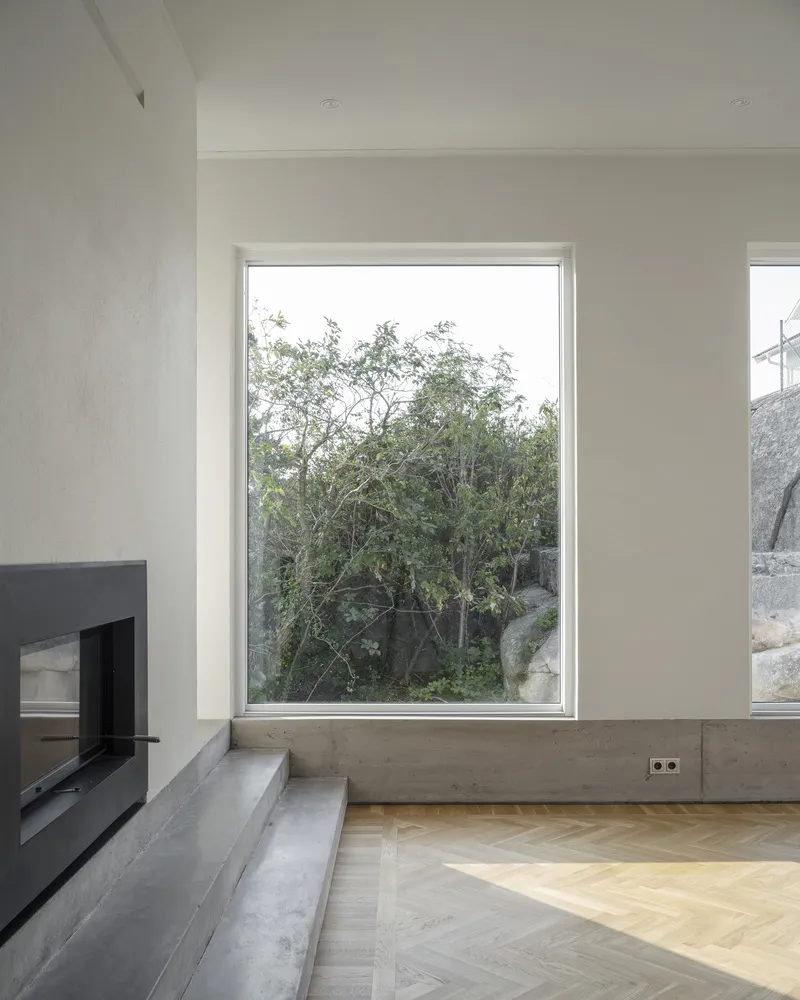
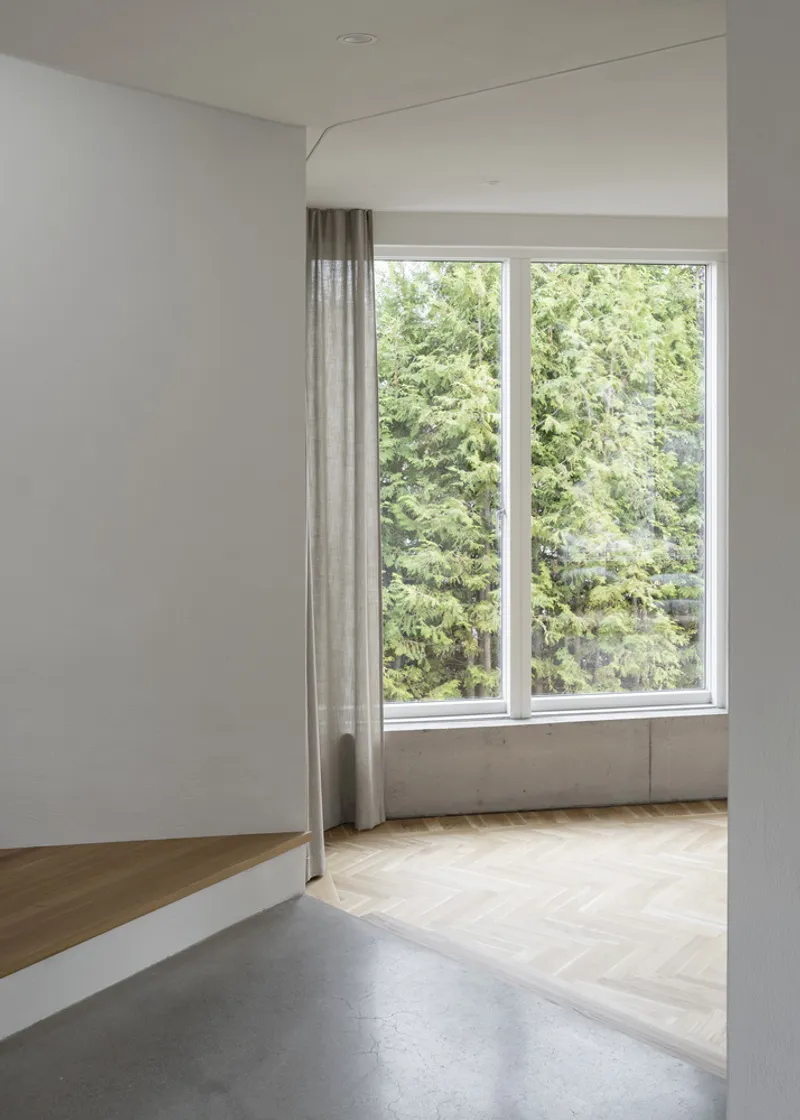
The living rooms sit slightly below the surrounding floor level, a move borrowed from mid-century conversation pits but executed here with the weight of cast-in-place concrete. Herringbone oak parquet fills these sunken zones, bordered by concrete bases that double as informal seating ledges. The material shift is deliberate: you feel the transition from hard, cool concrete to warm timber underfoot before you register it visually.
Tall windows in these lower rooms frame close views of rockface and tree canopy, grounding the social spaces in the immediate landscape. The polished concrete floors elsewhere in the house maintain a continuous surface that amplifies natural light, while the oak zones signal places to pause and settle in. It is a simple material vocabulary, but the consistency with which it is applied gives every room a clear identity.
Craft in the Details
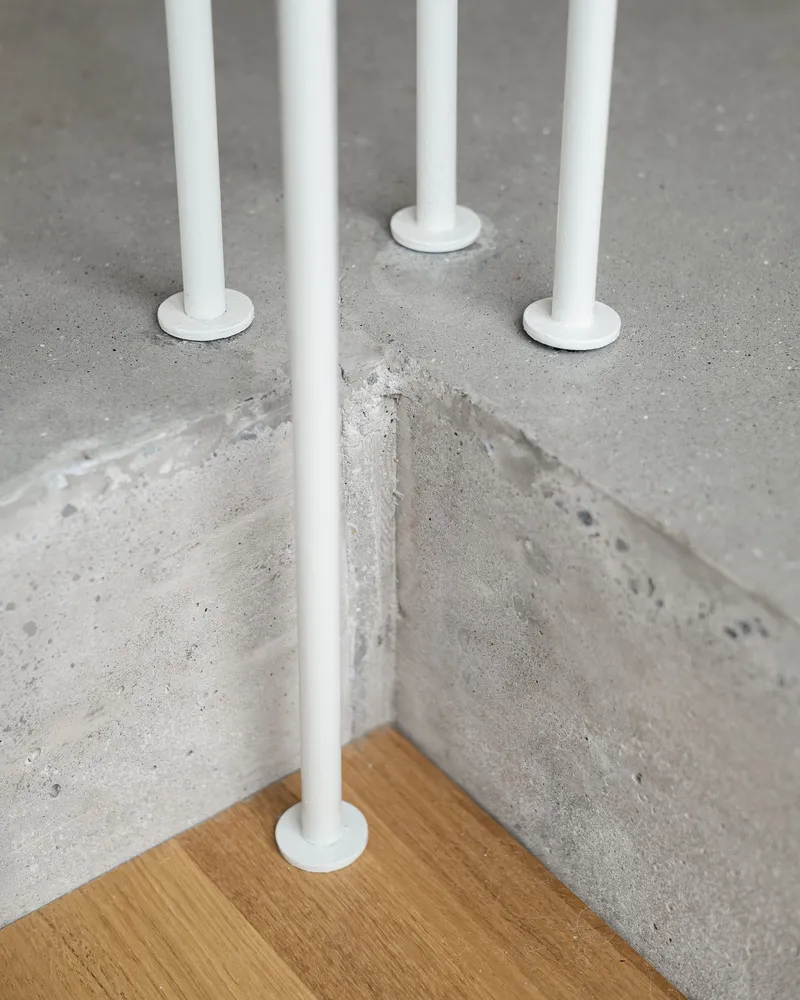
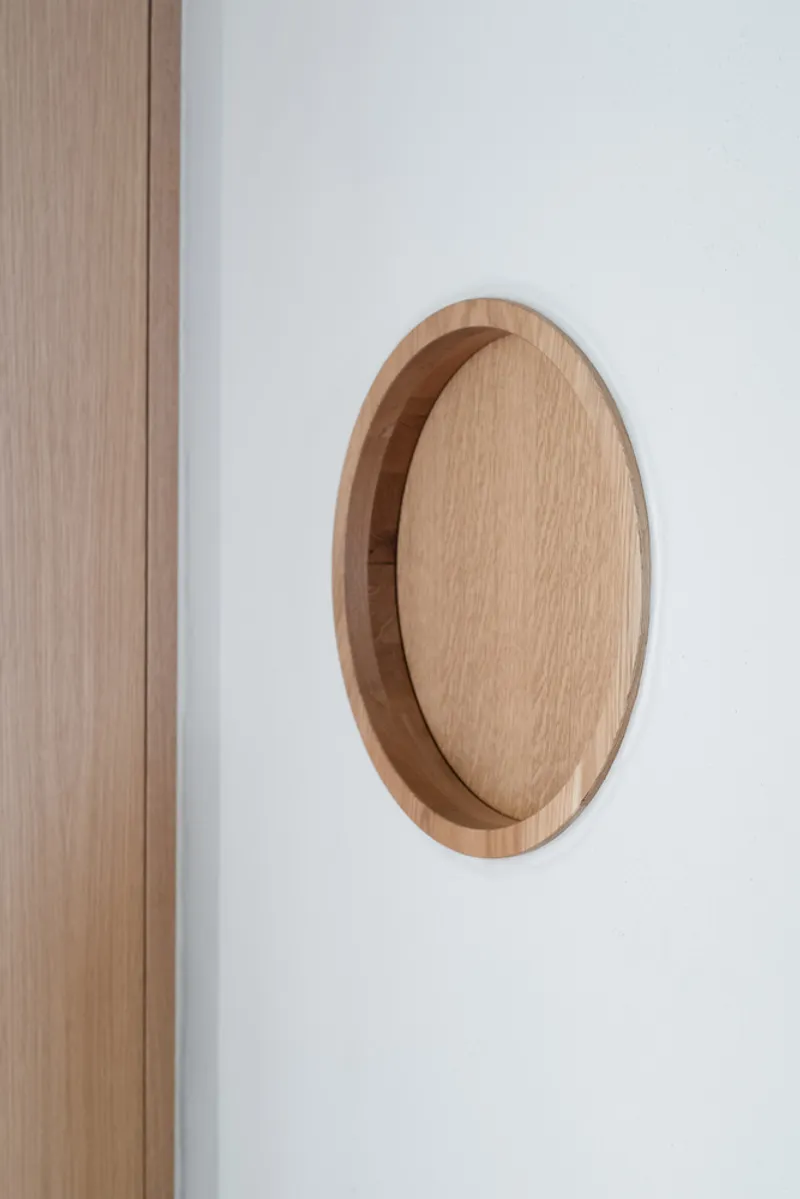

For a debut project, the detailing is remarkably assured. Steel railing posts land precisely on polished concrete at the stair corner, their white finish barely distinguishable from the plaster walls. Pocket door pulls sit flush with the wall surface, recessed into oak panels that disappear when closed. An oval timber-framed opening in one wall hints at playfulness without breaking the overall discipline.
These moments add up. They tell you that the architects were not simply designing volumes and plans but thinking about how a hand reaches for a door, how a railing meets a tread, how a child moves between rooms. The craft is quiet, which is exactly right for a house built from such assertive geometry.
Terrace as Reward
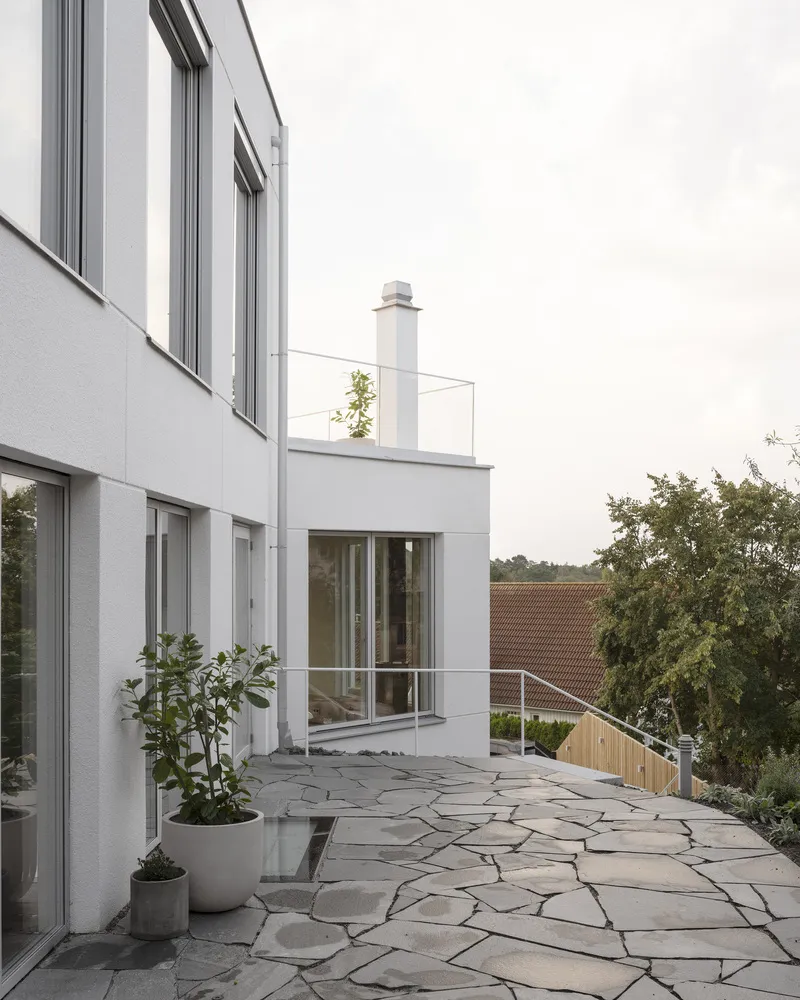
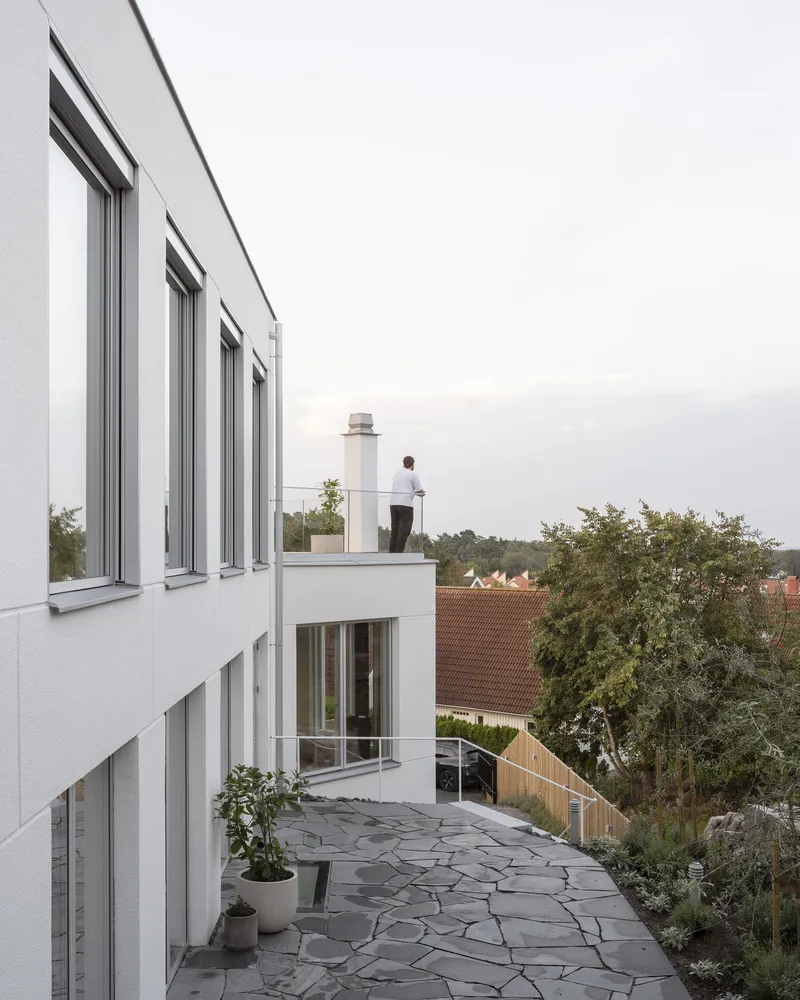
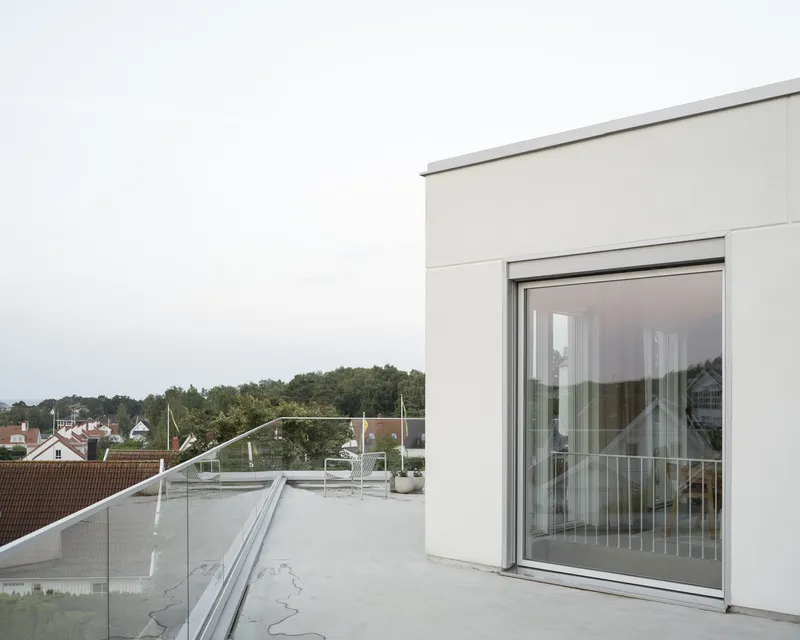
The rooftop terrace is where the building's relationship to landscape reaches its payoff. Irregular flagstone paving, glass balustrades, and a recessed swim spa transform the roof into a flat platform that compensates for the steep terrain below. At dusk, the terrace becomes a belvedere: you are standing above the treetops, looking out toward the ocean with the neighborhood rooftops arrayed below.
Integrating the swim spa into the building's volume rather than placing it as an appliance on the terrace is a small but telling decision. It keeps the roofscape clean and reinforces the idea that outdoor space here is architecture, not afterthought.
Interiors Calibrated to Light
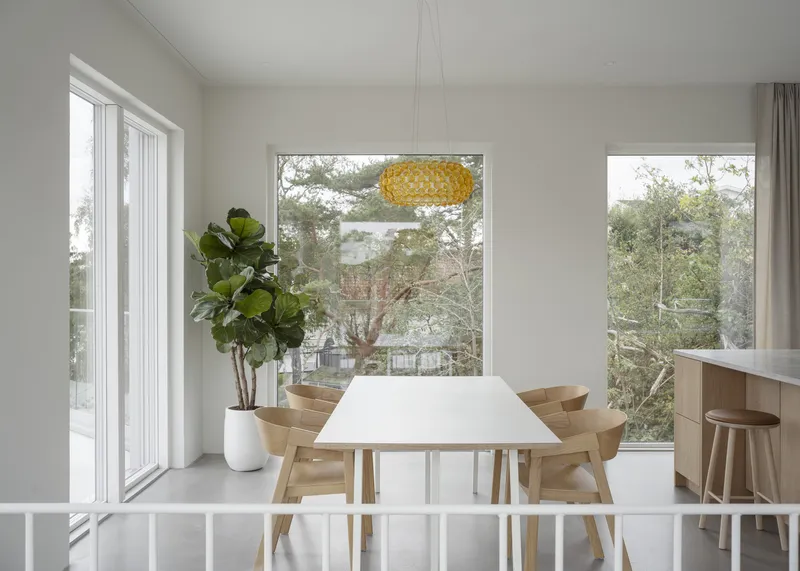
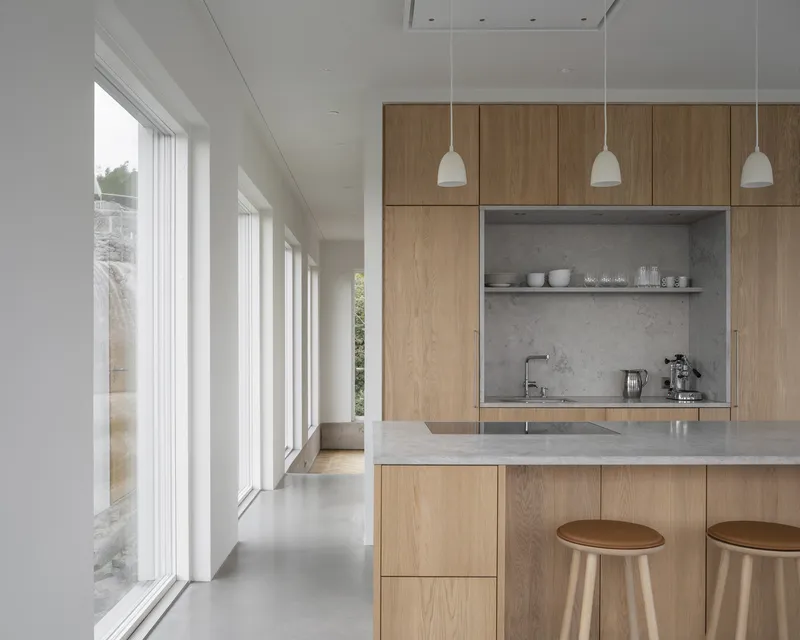
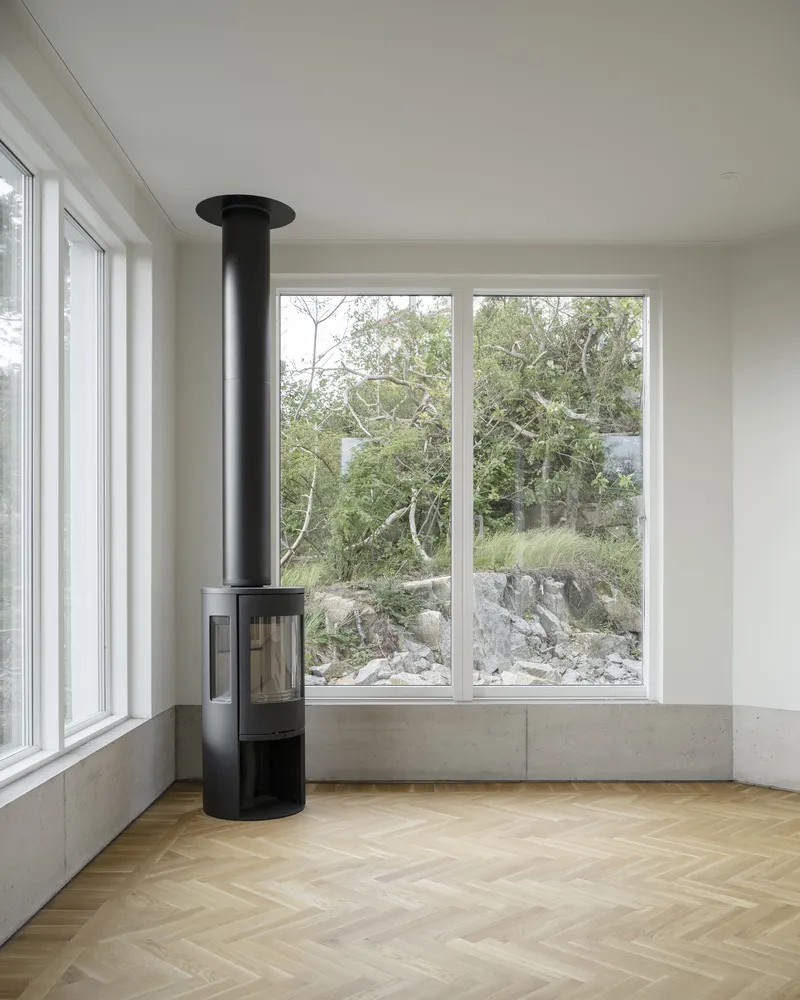
The 45-degree rotation between volumes means that almost every room catches light from an unexpected angle. The dining room looks out over treetops through a picture window, while the kitchen, with its oak cabinetry and concrete countertop, is lit by a softer, more diffused glow. A cylindrical black stove anchors a corner room where herringbone oak meets a panoramic view of rocky landscape, proving that warmth in a concrete house is not just metaphorical.
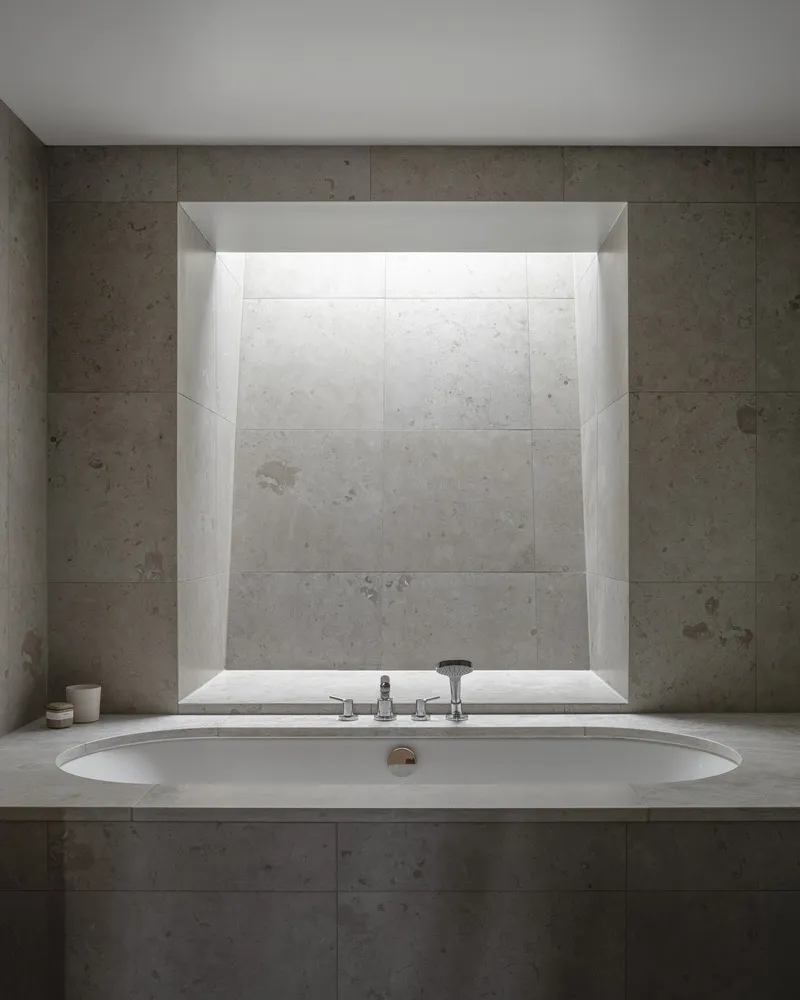
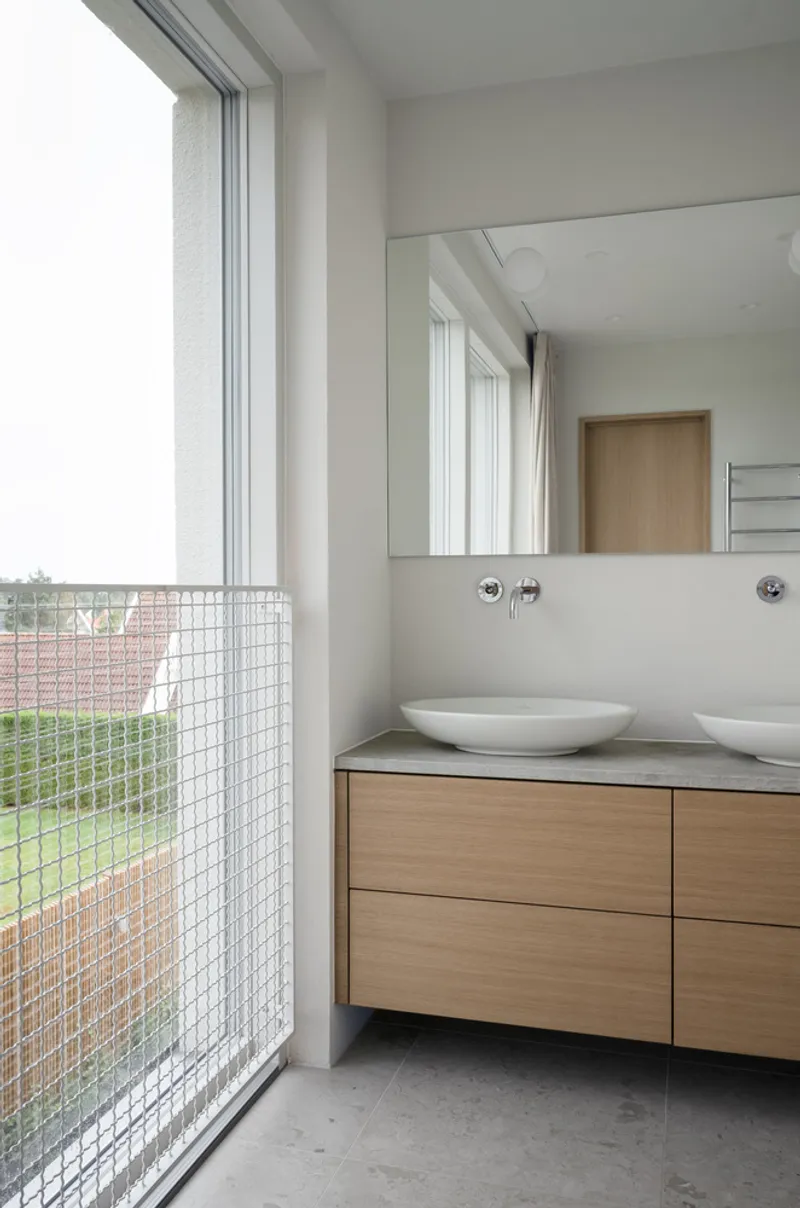
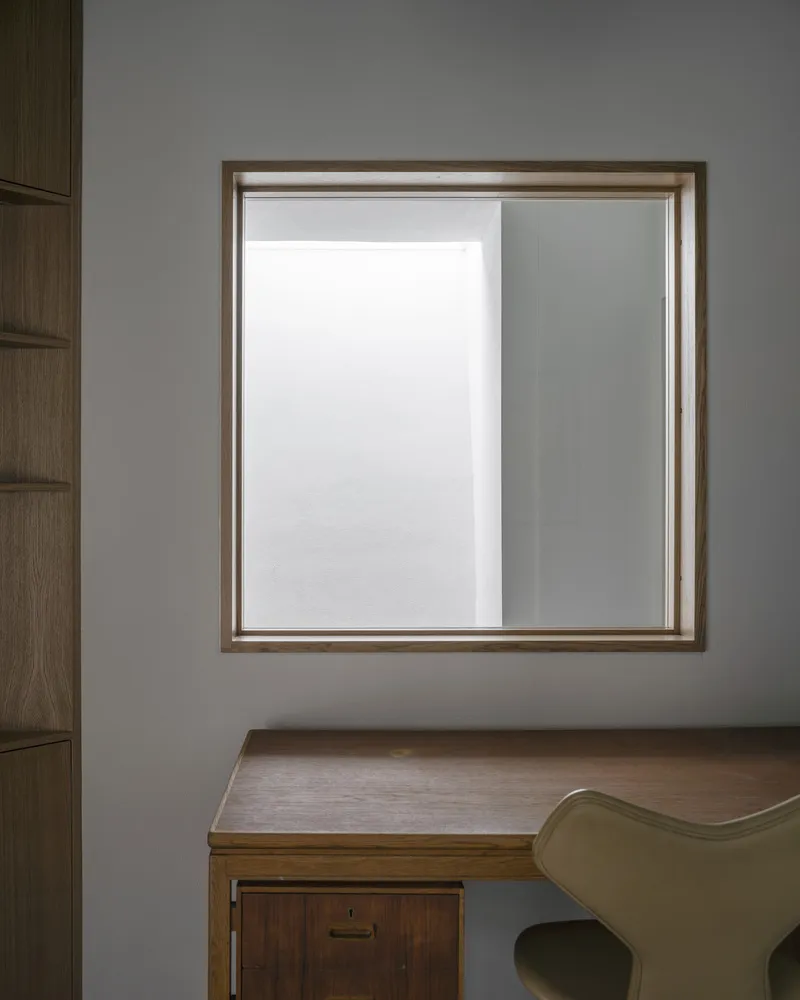
Even the bathrooms and private study spaces receive considered natural light. A recessed window niche above a concrete vanity, a mesh-screened opening overlooking rooftops, a timber-framed window casting soft diffused light across a desk: each aperture is sized and positioned to serve a specific moment in the daily routine. The house is tuned to its latitude with real precision.
Plans and Drawings
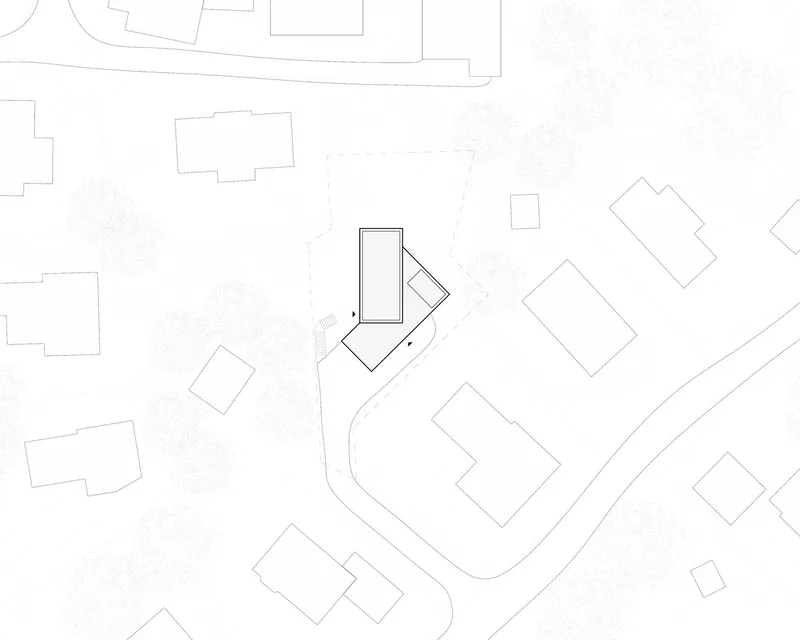
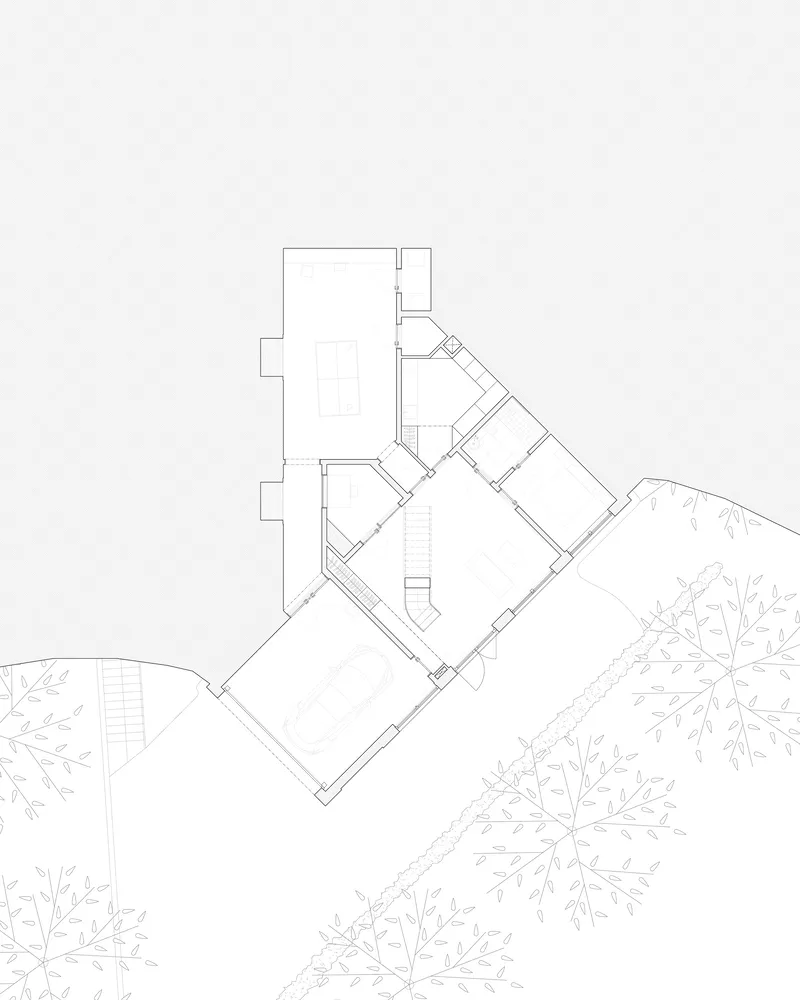
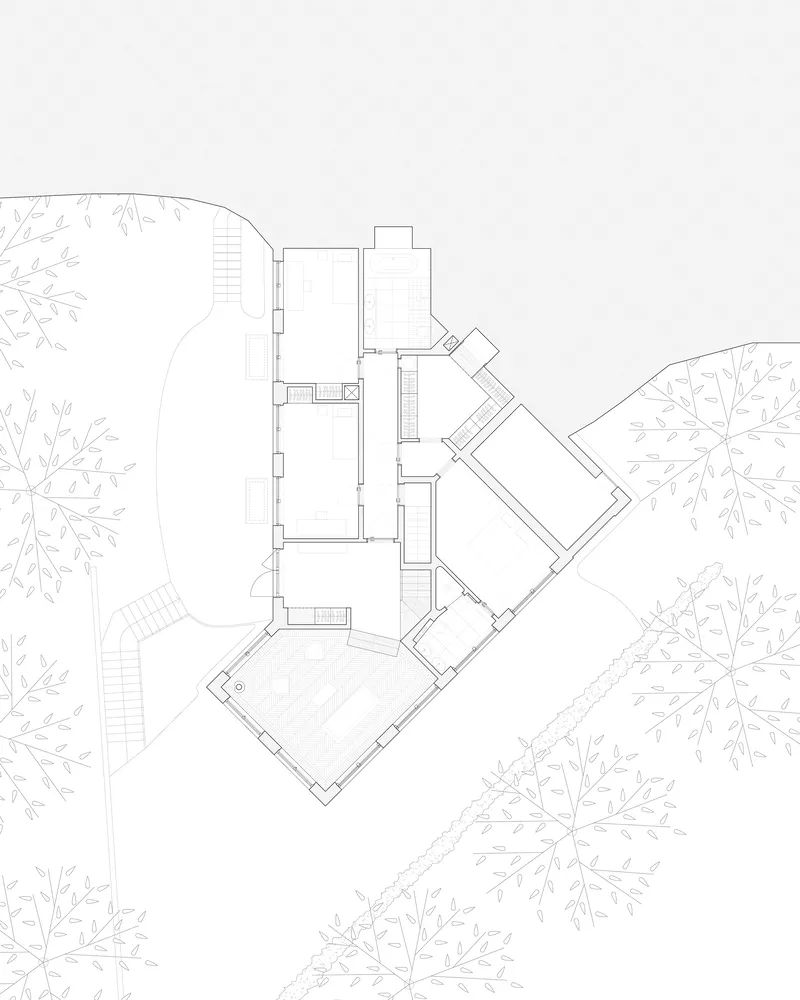
The site plan confirms just how unconventional the plot is: a sliver of land between existing structures, accessed by a winding road, with the building footprint torqued to fit. The floor plans reveal how the 45-degree rotation generates interlocking rooms that shift orientation from one level to the next. Exterior staircases at the periphery reinforce the idea of multiple circulation paths, while tree canopies drawn on the plan remind you that the landscape is not backdrop but co-author.
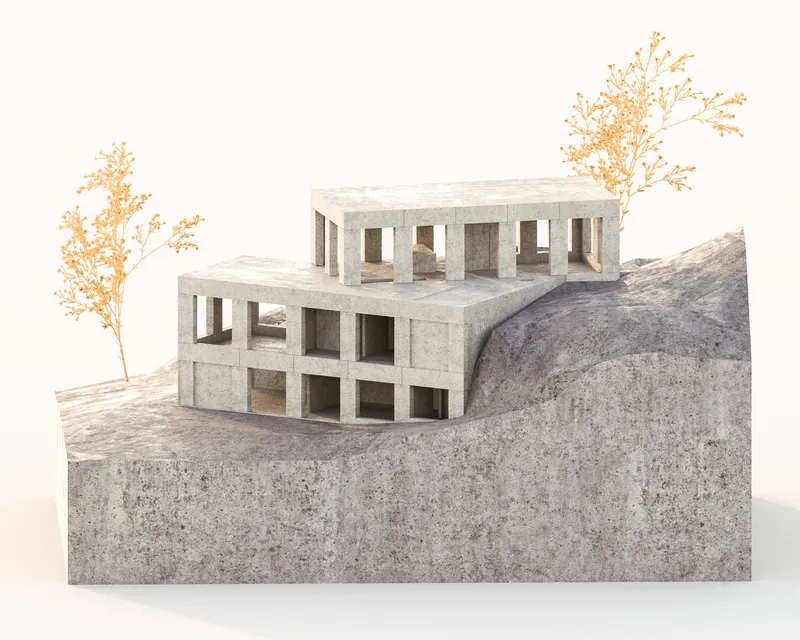
A physical model of the concrete block structure shows the terraced volumes stepping into the hillside, rooftop terrace exposed. It captures what the plans cannot: the building's three-dimensional relationship to a site that falls away in every direction.
Why This Project Matters
Villa Näset is notable not because it invents a new type but because it executes a familiar one, the monolithic concrete house, with uncommon rigor on a site that should have defeated it. The rotational geometry is not a formal gesture for its own sake; it generates distinct zones of privacy and community, optimizes daylight on a north-facing slope, and produces outdoor spaces at multiple levels. That every decision traces back to site conditions rather than stylistic preference is what separates this from the growing catalog of white concrete villas along Scandinavian coastlines.
As a debut commission, it sets a high bar for Reppen Vilson. The project demonstrates that a leftover plot, the kind developers pass over and neighbors forget about, can yield architecture as considered and spatially rich as any prime waterfront lot. If this is what the studio produces when given a ten-meter slope and an irregular boundary, the commissions that follow should be worth watching closely.
Villa Näset by Reppen Vilson. Gothenburg, Sweden. 430 square meters. Completed 2024. Photography by Johan Dehlin and Reppen Vilson.
About the Studio
Share Your Own Work on uni.xyz
If projects like this are the kind of work you want to make, uni.xyz is a place to publish your own, find collaborators, and enter design competitions.




Popular Articles
Popular articles from the community


EW PARK: Sustainable Architecture Reimagines the Future of Urban Parking
EW PARK reimagines city parking as a modular wooden tower combining automation, solar energy, electric mobility, and adaptable urban design.

Riyadh For All: Intergenerational Urban Design for Active Aging in Rabat
Riyadh For All reimagines urban design in Rabat with intergenerational co-living, adaptive courtyards, and Moroccan cultural exchange today.

Co-life: Sustainable Architecture for Age-Friendly Community Living
Co-life reimagines sustainable architecture for seniors through courtyards, rammed earth, shared gardens, and spaces designed for belonging.

The Earth Pod: 3D Printed Homes for Resilient Refugee Communities
The Earth Pod reimagines refugee housing through 3D printed homes made from clay, combining resilience, self-sufficiency, and rapid shelter.


Similar Reads
You might also enjoy these articles


Hodi-Mandai Geram
Project Function: Preservation and revitalization of the Intangible heritage and socio-spatial identity of the Hodi by Housing, Cultural Memory Center, Sacred Grove, landscape, local tourism economy


Olio Towers: A Mid-Rise for Performers That Fuses Housing, Rehearsal, and Stage
Located blocks from Houston's Theater District, this modular tower stacks living units around a central performance atrium.

Oasis: Modular Green Housing Carved into Dhaka's Urban Fabric
A shortlisted Plugin Housing entry reclaims unauthorized settlements in Dhaka with stepped concrete volumes, green roofs, and ventilation-driven design.

Black Hole: A Floating Megastructure for the Post-Physical Era
Emiliano Mazzarotto envisions a spherical, self-scaling arena where e-sports, digital hotels, and holographic stadiums replace traditional public space.


Explore Architecture Competitions
Discover active competitions in this discipline



Challenge to reimagine the Iron Throne


Photograph architecture without architects


Illustrate the lost glory of Angkor Wat - Render Challenge


Design challenge to reuse E-waste
Comments (0)
Please login or sign up to add comments
No comments yet. Be the first to comment!