

Rosa Bonheur: A Cultural Centre in Coral and Green
Modal Architecture renovated a suburban cultural centre near Paris, adding a coral terracotta tower, pale green metalwork, and a new public square.


Fontenay-aux-Roses is a quiet commune in the southern suburbs of Paris, the kind of place where civic buildings carry decades of accumulated use without much architectural attention. The Rosa Bonheur Cultural Centre, renovated by Modal Architecture, was exactly that: a stone building on a steep site, hemmed in by streets at two different levels, with a 6-metre drop between them. The renovation solves the slope, restores the heritage fabric, and adds a coral terracotta tower that gives the building a public face it never had.
The project is modest in scale but precise in its moves. A new elevator and stair tower clad in salmon-pink terracotta tiles provides accessible entry from the lower street. Pale green metalwork marks the new additions. The original stone rubble walls are cleaned and left exposed. Inside, the halls are white, flexible, and quiet: timber-slatted walls, rolling benches, and a projector-ready ceiling. The cultural centre now works for lectures, exhibitions, performances, and community events without needing to be reconfigured each time.
The Terracotta Tower and the Slope
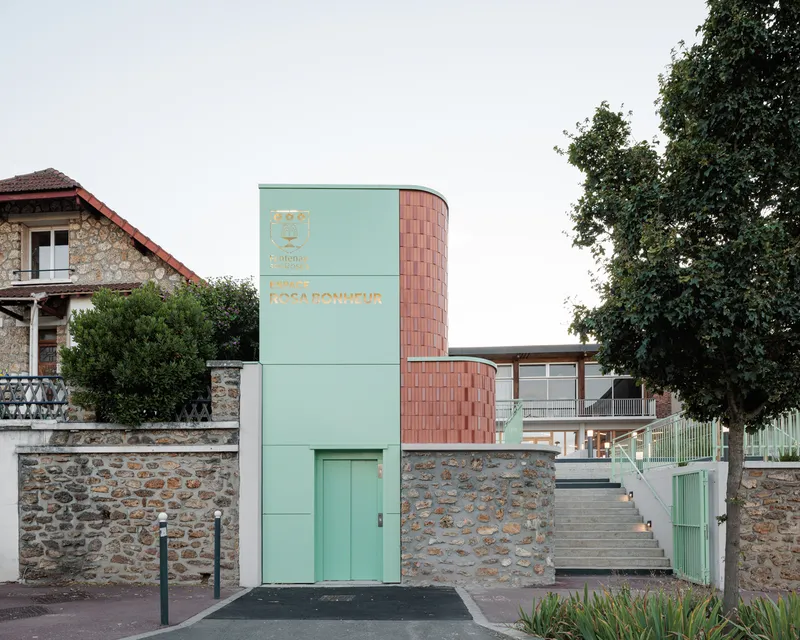


The defining addition is the elevator tower that bridges the 6-metre level change between the two bordering streets. It is clad in coral terracotta tiles arranged in a diamond pattern, with pale green metal trim and gold laser-cut lettering reading Espace Rosa Bonheur. The tower is deliberately colourful in a neighbourhood of grey and beige. It signals that something civic is happening here.
The colour choice is specific. Coral is warm enough to register against the grey suburban context but muted enough to age without looking garish. The pale green metalwork is a deliberate contrast: cool against warm, smooth against textured. Together they create a material identity that is recognisable from across the public square.
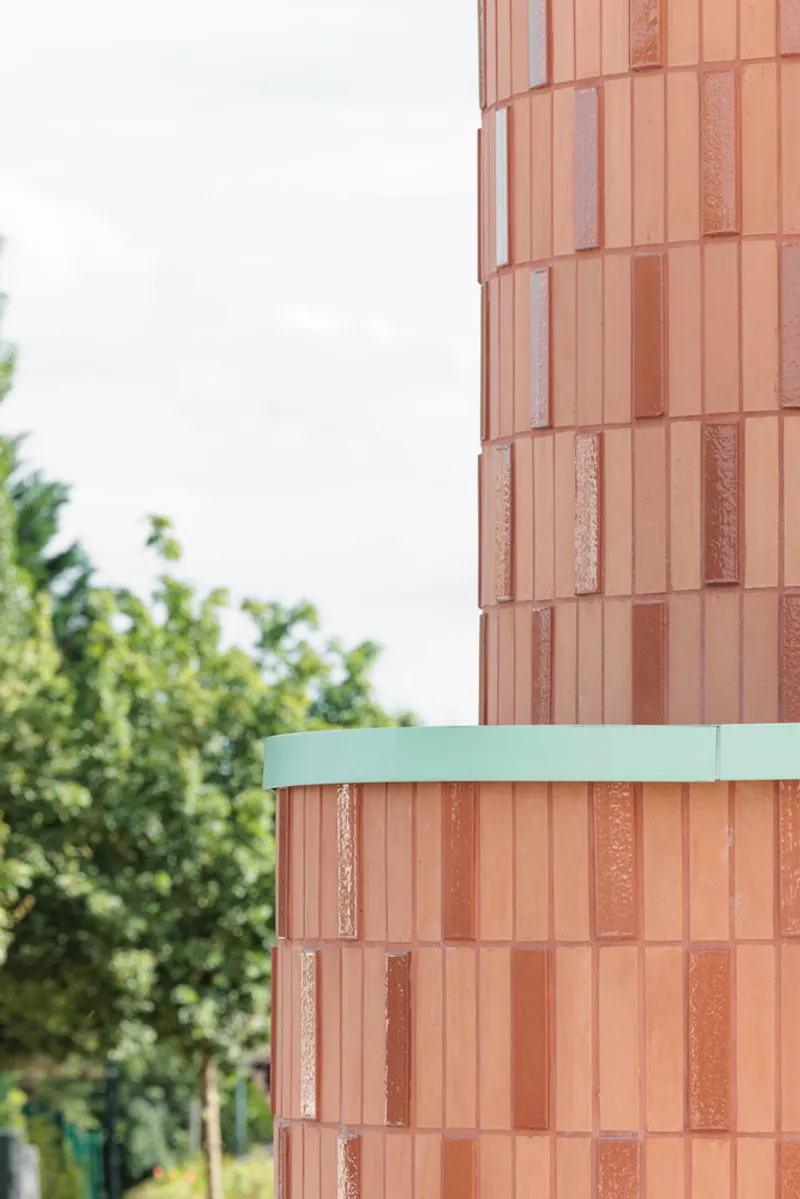

Heritage Fabric: Stone and Metal
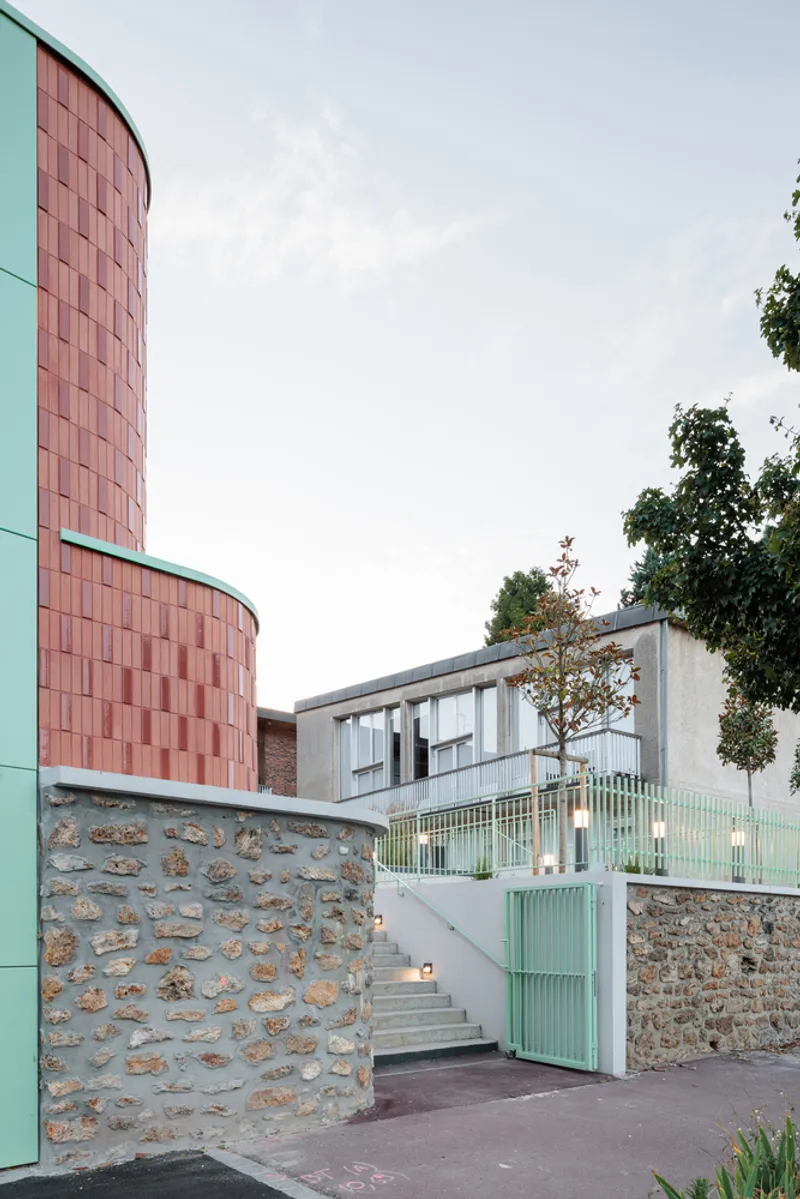


The original building is a stone rubble structure with a pitched tile roof, typical of the Ile-de-France suburbs. The renovation cleaned and repointed the stone walls, leaving them exposed as the heritage layer. Where new elements meet old, the junction is clean: green metal railing against stone, white metal fence against rubble. Nothing is blended or faked.
A white metal slatted fence with vertical slot lights defines the boundary between the cultural centre and the street. It is translucent enough to see through and solid enough to provide security. The planted joints in the paving and the young trees show a landscape that is designed to mature over years.

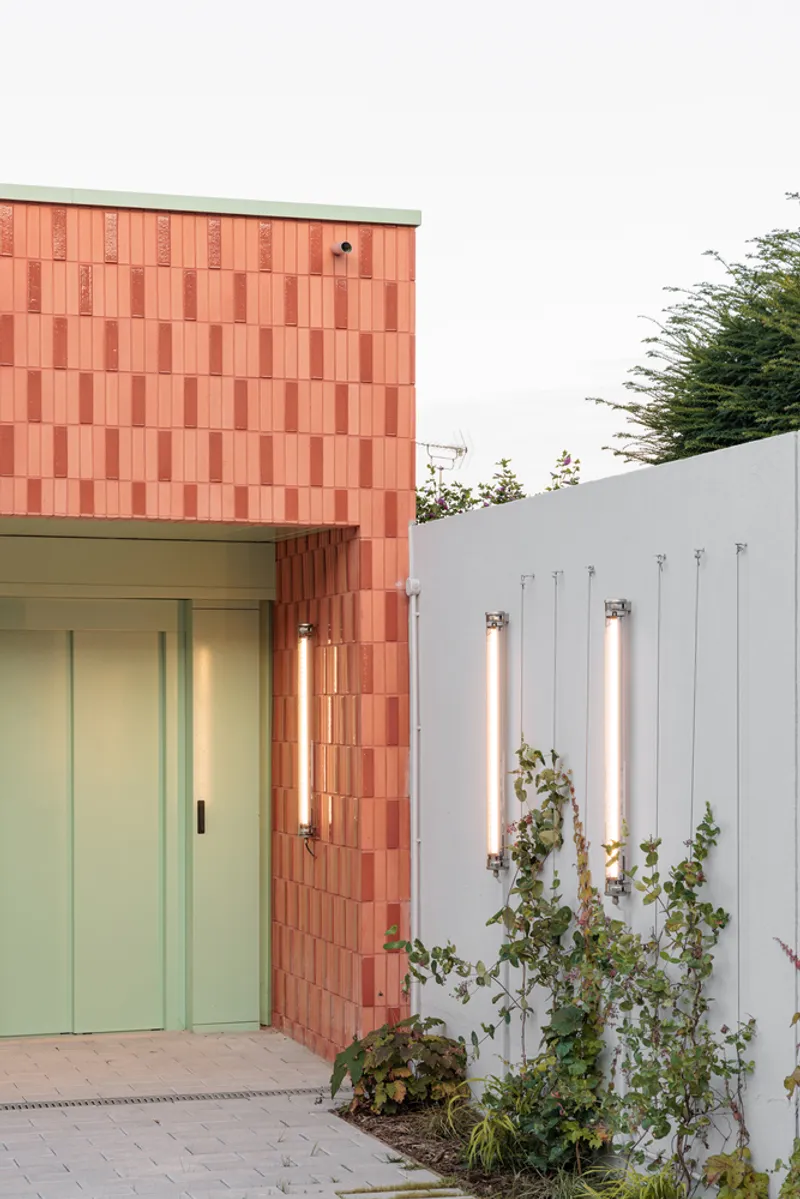
The Public Plaza and Landscape
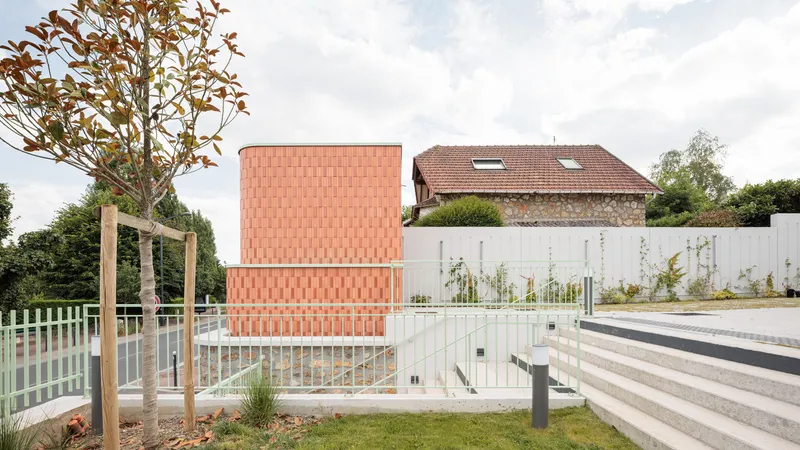


The upper terrace is a new public space created by the renovation. Paved in permeable stone with grass joints, it provides an outdoor forecourt for the cultural centre and a shortcut between the two streets. Bollard lights, planting beds, and a young tree will grow into a shaded civic square over time.
This is the part of the project that matters most to the neighbourhood. The cultural centre existed before. The public space did not. The renovation created a place to gather, wait, and pass through that did not exist before the architects intervened.
Interior: Flexible White Halls


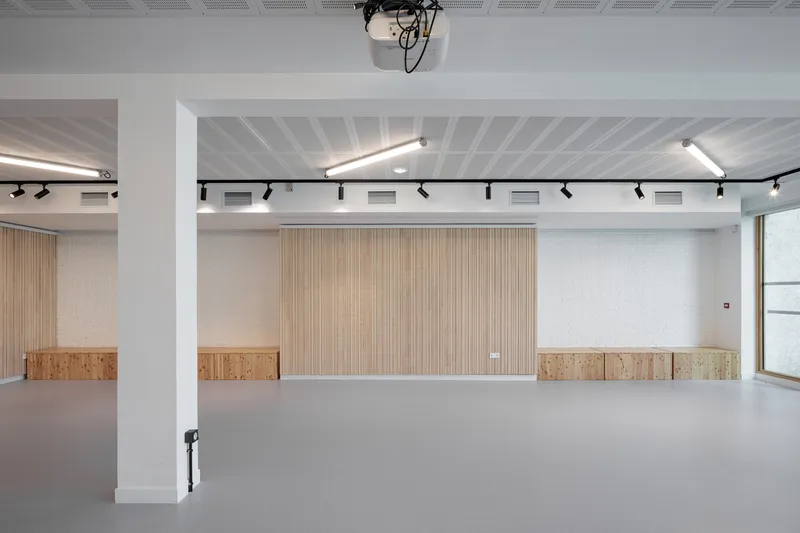
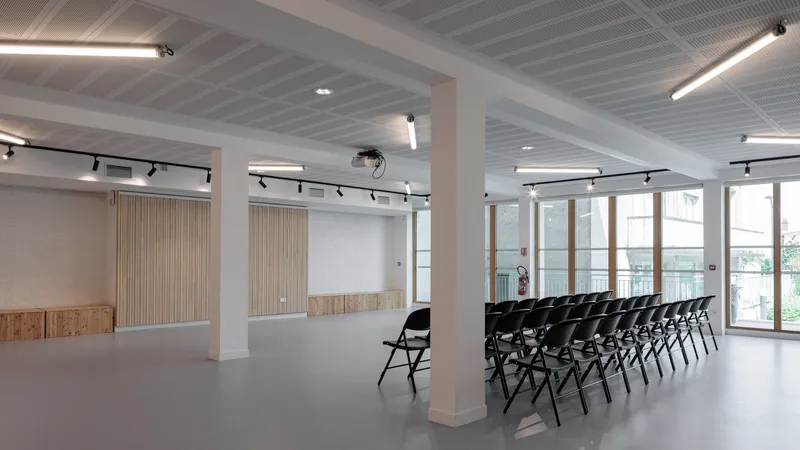
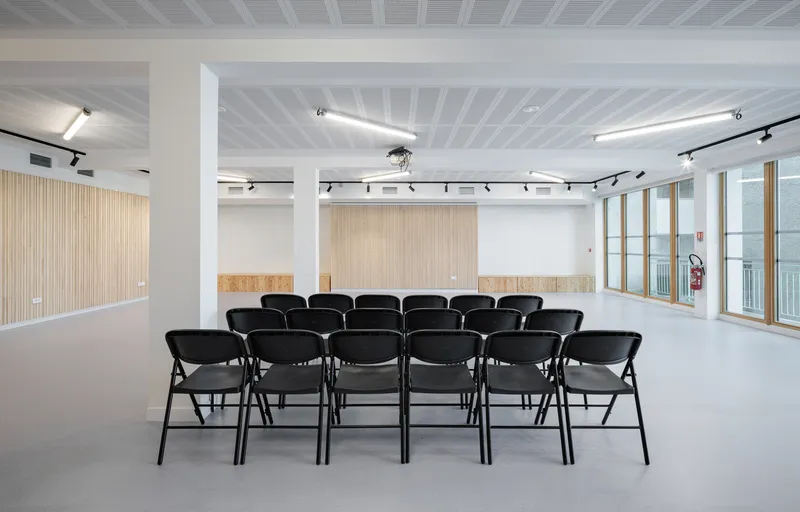
The main hall is a single open volume: white ceiling with exposed steel beams, grey polished floor, and an oak-slatted wall that runs the full length of one side. The wall conceals storage and services behind it. A pass-through window and timber-framed glass doors connect to a small courtyard.
The furniture is minimal and mobile. Rolling timber benches can be arranged for lectures, cleared for exhibitions, or pushed to the wall for performances. Black folding chairs stack and store. A ceiling-mounted projector and track lighting handle the technical requirements without cluttering the room.
Reception and Circulation
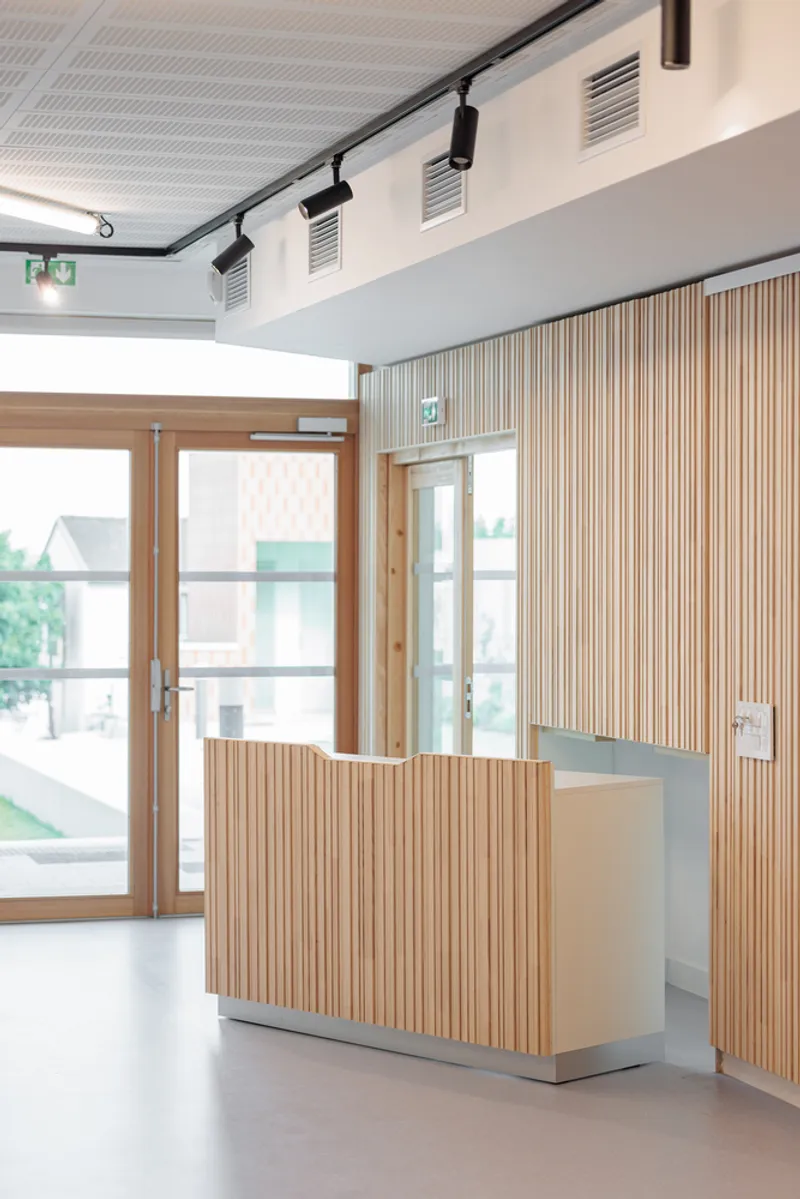

The reception desk is oak-slatted to match the hall wall, with a metal counter and glass entrance doors. The corridor behind is white, simple, and well lit: black ceiling fixtures, grey floor, oak door frames. Nothing competes for attention. The architecture gets out of the way so the programme can change.
Drawings


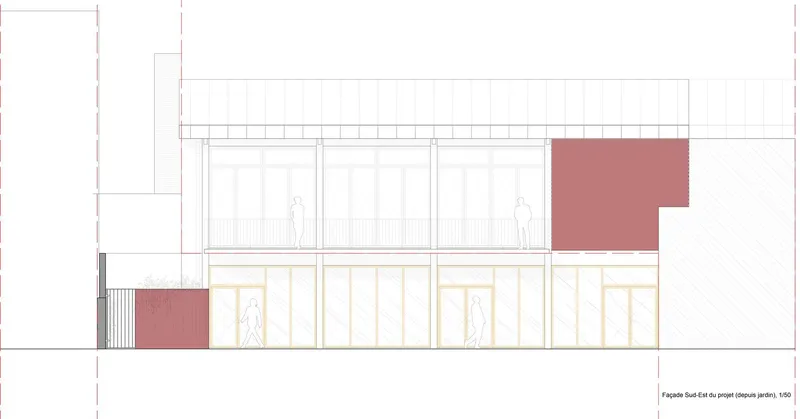
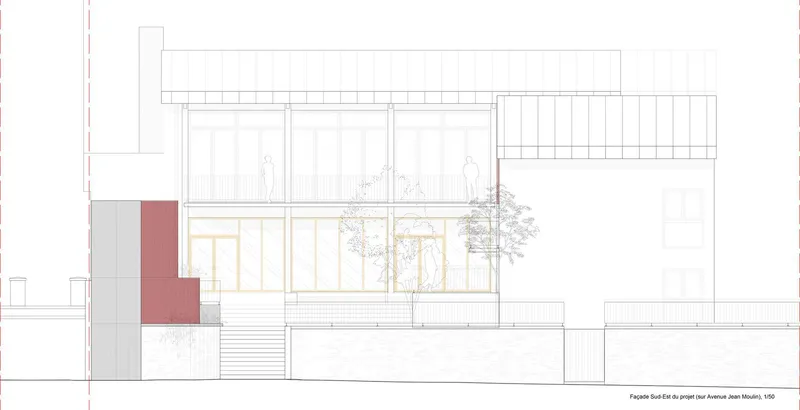
The site plan shows the building wedged between two streets at different levels. The section reveals the full 6-metre slope: the elevator tower at the lower street, the main hall at the upper level, and the pitched roof above. The elevations show how the coral tower and the heritage stone building compose each facade.
Why This Project Matters
Small-town cultural centres rarely get published. They are not glamorous commissions. The budgets are tight, the programmes are generic, and the sites are difficult. But they are the buildings where most people actually experience public architecture: the room where the neighbourhood meets, the hall where children perform, the space where the local association holds its annual dinner.
The Rosa Bonheur Cultural Centre proves that these buildings deserve the same care as museums and concert halls. A terracotta tower, a green railing, a well-made hall, and a new public square. The moves are small. The impact on the neighbourhood is large.
About the Studio
Share Your Own Work on uni.xyz
If you are working on cultural centres, civic architecture, or heritage renovation, uni.xyz is a place to publish your work and connect with a global design community.
Project credits: Rosa Bonheur Cultural Centre by Modal Architecture. Fontenay-aux-Roses, France. Photographs: Salem Mostefaoui.


Popular Articles
Popular articles from the community


longwave studio Reorganizes a 112 m² Tainan Apartment Around the Daily Routines of a Family and Two Cats
In Tainan, Taiwan, birch plywood, rust-red furniture and a freestanding plaster wall link arrival, storage, work and family life in one apartment.

Cube Design Draws an Ecological Corridor Between Two Shenzhen Hills with the Nankai Building
Beside Shenzhen's container docks, the Nankai Building pairs stacked balconies with a climbing green screen to connect two hillsides across its height.

David Ortega Stacks a Two-Story Mexico City Penthouse Around a Steel Stair and a Pergola-Shaded Roof Terrace
In Colonia Roma, a 300 m² penthouse uses oak joinery, a planted steel stair and a slatted roof pergola to make a new-build apartment feel like a house.

David Macias Steps a Doorless Stone and Plaster House Down a Tropical Colombian Hillside
In the humid hills of Colombia, Threshold House replaces the front door with an open void and terraces its 850 m² down the slope instead of fighting it.

Similar Reads
You might also enjoy these articles


Hodi-Mandai Geram
Project Function: Preservation and revitalization of the Intangible heritage and socio-spatial identity of the Hodi by Housing, Cultural Memory Center, Sacred Grove, landscape, local tourism economy


Olio Towers: A Mid-Rise for Performers That Fuses Housing, Rehearsal, and Stage
Located blocks from Houston's Theater District, this modular tower stacks living units around a central performance atrium.

Oasis: Modular Green Housing Carved into Dhaka's Urban Fabric
A shortlisted Plugin Housing entry reclaims unauthorized settlements in Dhaka with stepped concrete volumes, green roofs, and ventilation-driven design.

Black Hole: A Floating Megastructure for the Post-Physical Era
Emiliano Mazzarotto envisions a spherical, self-scaling arena where e-sports, digital hotels, and holographic stadiums replace traditional public space.

Explore Architecture Competitions
Discover active competitions in this discipline

Challenge to reimagine the Iron Throne

Photograph architecture without architects

Illustrate the lost glory of Angkor Wat - Render Challenge

Design challenge to reuse E-waste
Comments (0)
Please login or sign up to add comments
No comments yet. Be the first to comment!