
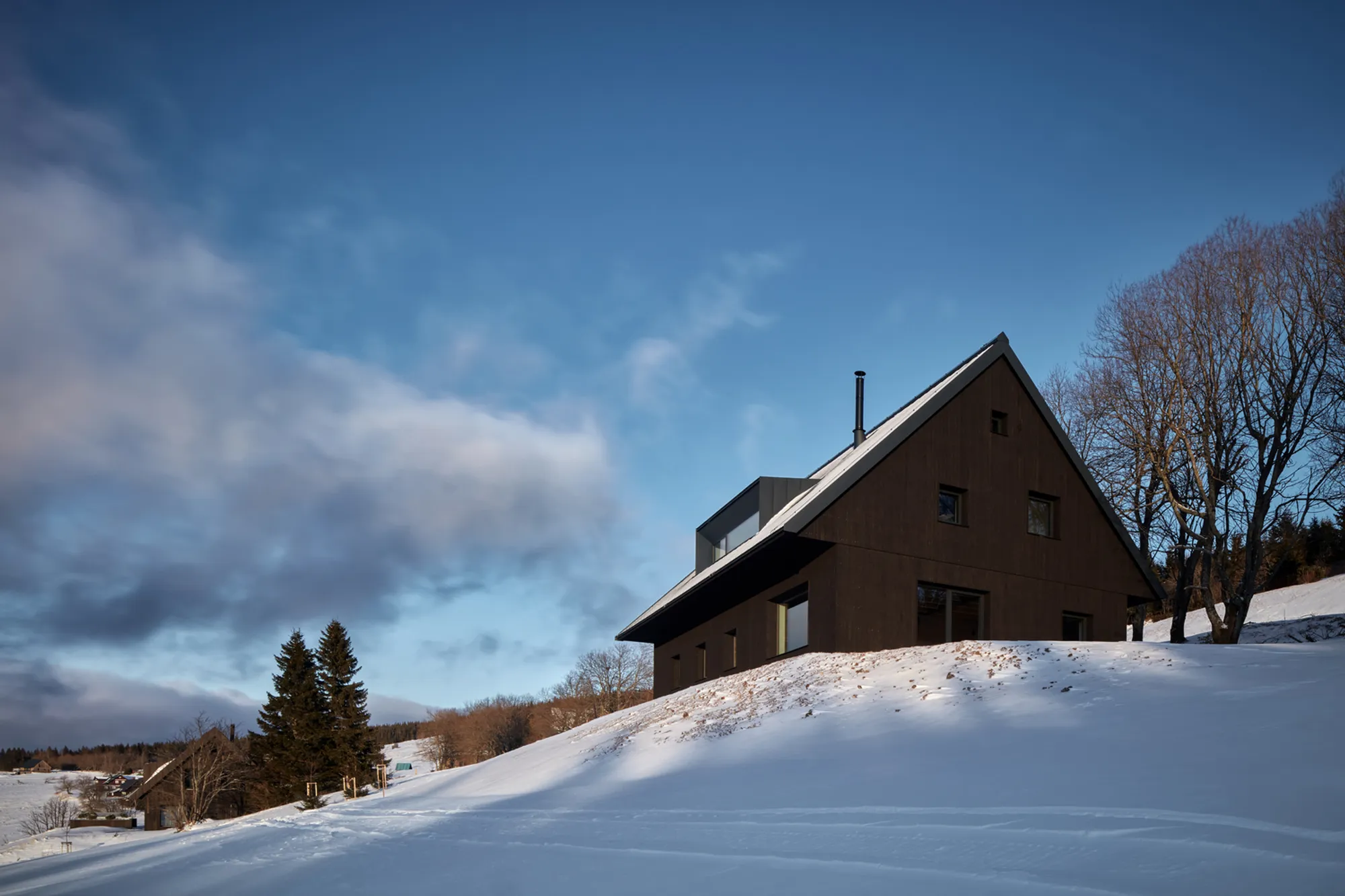
ADR Builds a Black Timber Cottage on a Czech Ski Slope with Three Sleeping Lofts Inside Its Gable
Milada Cottage sits on a meadow hillside in the Krkonoše Mountains, merging traditional mountain form with a modern material palette.


A mountain cottage does not need to reinvent the wheel. It needs to get the basics right: warmth, durability, orientation to the landscape, and a form that makes sense among its neighbors. Milada Cottage, designed by ADR principals Aleš Lapka and Petr Kolář for a hillside site in Malá Úpa, Czech Republic, does exactly that. Completed in 2023, the 362 square meter gross floor area building takes the familiar gable silhouette of the Krkonoše region and executes it with black-stained unplaned boards, cast-in-place concrete, and bleached spruce interiors. The result is a short-term rental property that looks like it belongs to the scattered settlement pattern of the Nové Domky area while feeling entirely contemporary inside.
What makes this project worth studying is not a single dramatic gesture but the accumulation of disciplined choices. The rectangular plan is set horizontally into the slope, giving the lower floor direct access to an adjacent ski run. Brick walls carry the lower volume while a wooden ceiling and roof structure define the gable above. An internal concrete pillar separates the living area from the dining room without closing either space off. And the uppermost reaches of the pitched roof are converted into sleeping lofts reached by their own staircases, squeezing usable area out of geometry that most cottages leave as dead attic space.
A Dark Volume on a White Hillside
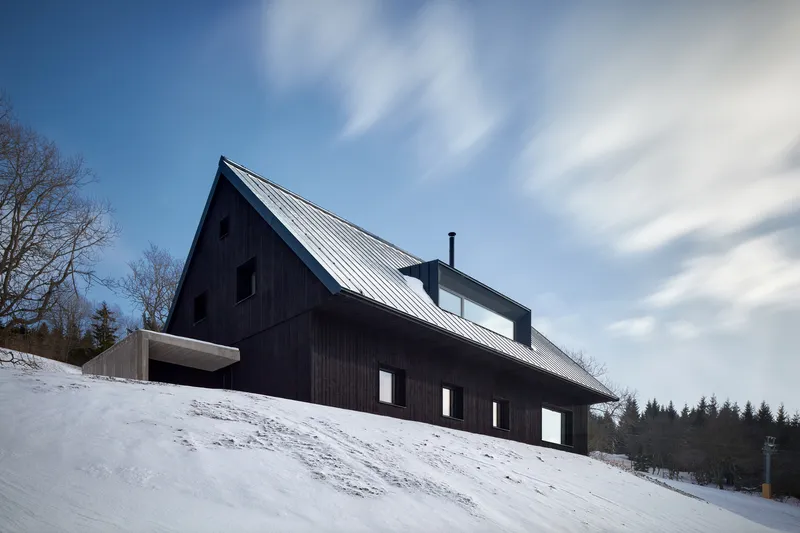
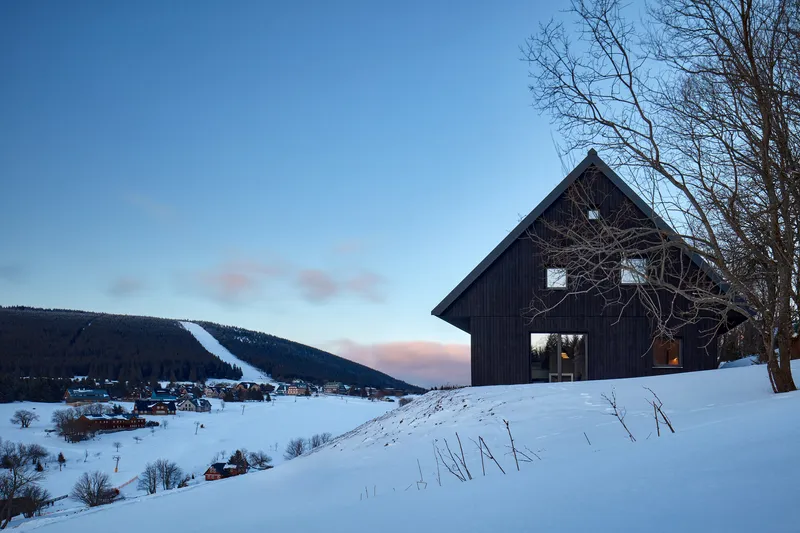
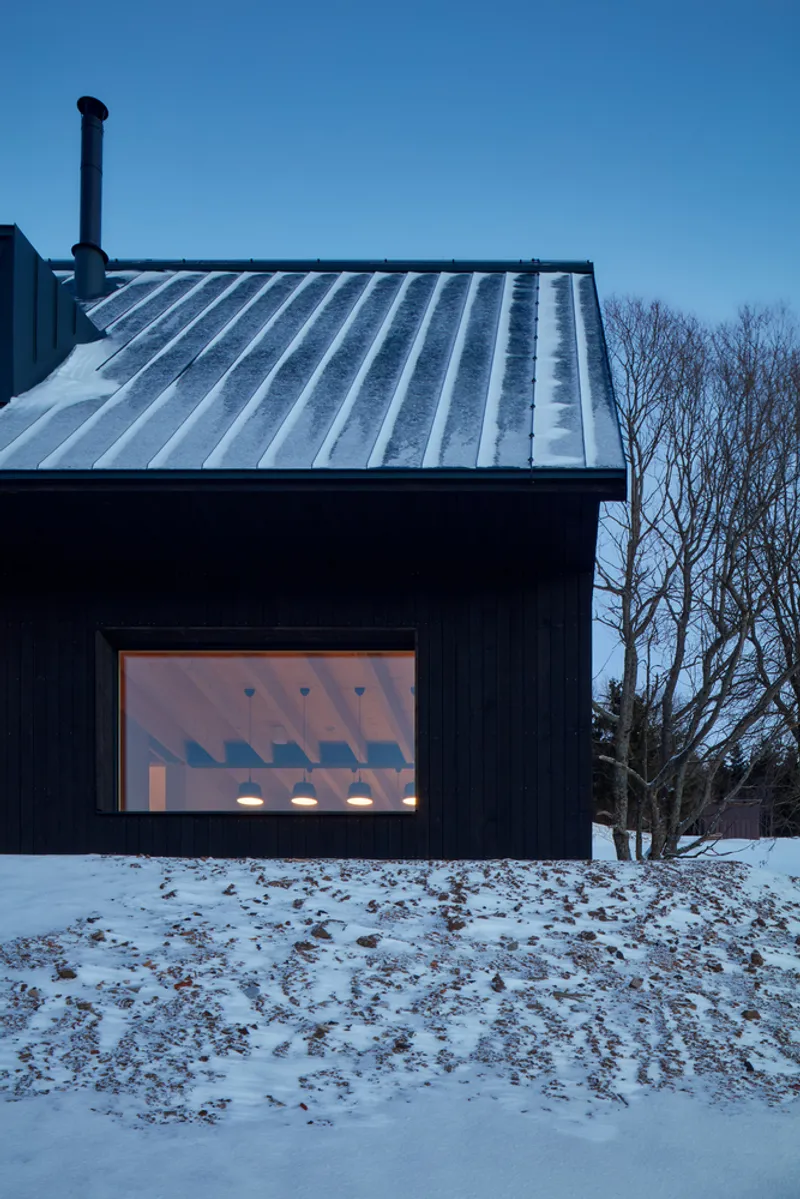
The exterior reads as a single dark mass against the snow. Unplaned boards, painted with a black natural finish, clad the entire facade in vertical runs. Black aluminum window profiles sit flush with the cladding, making the openings recede rather than punctuate. Above, a dark grey corrugated standing seam metal roof completes the monochrome envelope. The effect is a building that absorbs shadow and registers primarily as a silhouette, which is exactly how traditional Krkonoše cottages present themselves against a winter sky.
The volumetric strategy is straightforward: a lower rectangular base, built in brick, is topped by a gable roof containing the upper floors. This two-part composition follows the proportions of the surrounding scattered cottages rather than asserting a foreign scale. At dusk, the illuminated windows glow against the dark timber like lanterns, confirming the building's role as shelter first, architecture second.
Framing the Krkonoše from Every Room
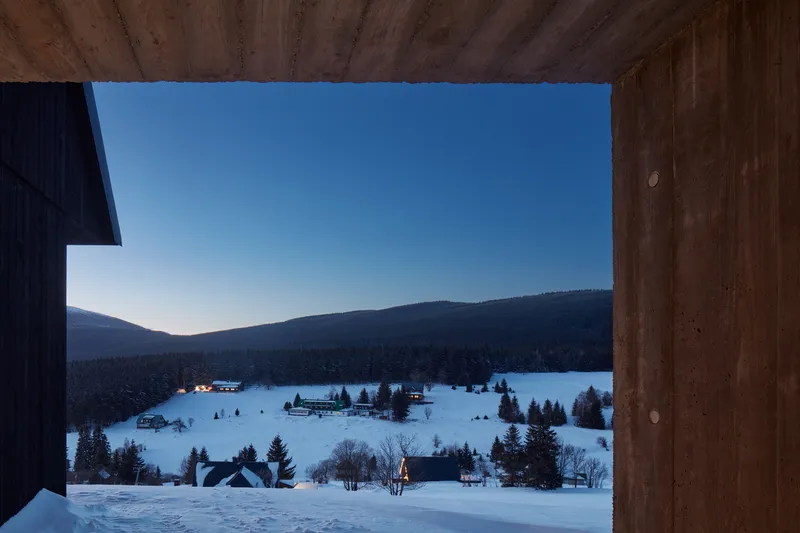
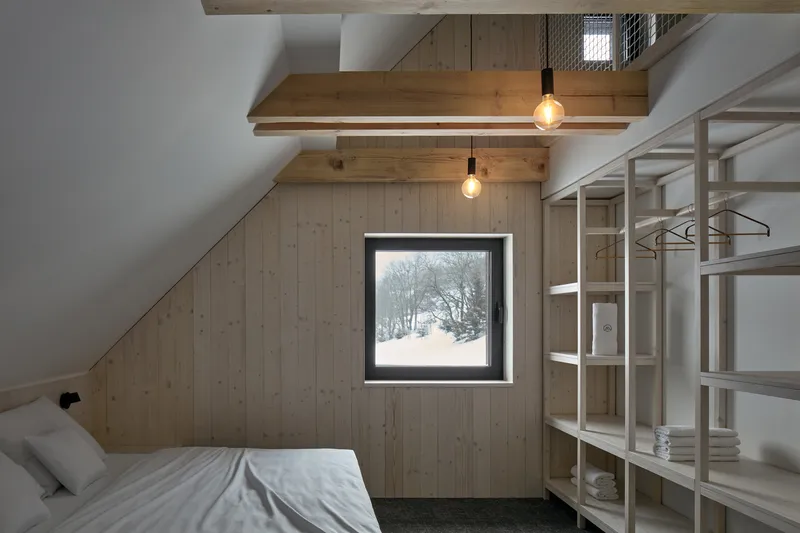
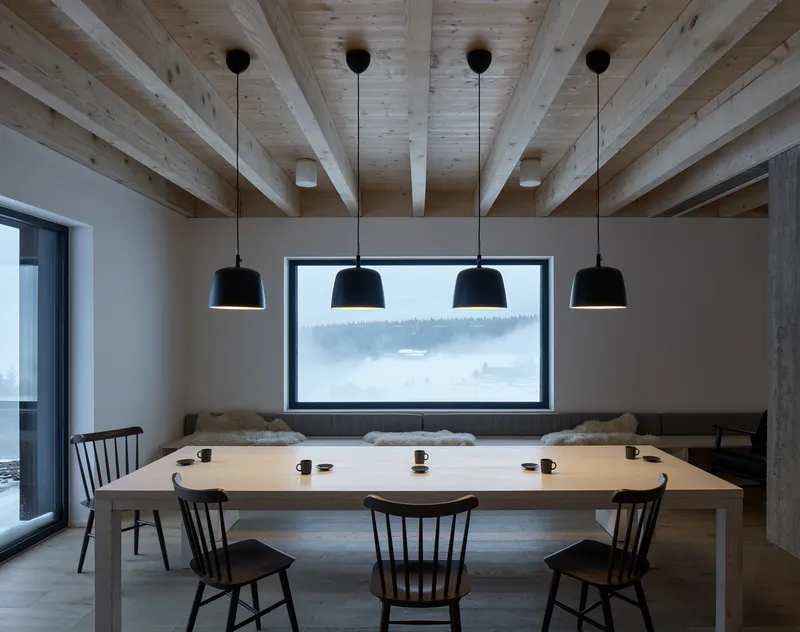
ADR treats windows not as neutral openings but as deliberate frames. A deep timber soffit creates a recessed viewing slot toward the snowy valley below. A square window under the exposed roof beams isolates a patch of white hillside like a painting. In the dining area, a horizontal strip window runs the width of the room, pulling a misty forest hillside into the interior at eye level while seated.
Each of these openings is sized and positioned differently, responding to the specific view and the function of the room behind it. The cottage never defaults to floor-to-ceiling glazing; instead, it parcels the landscape into controlled portions. For a building on a site with panoramic views toward Sněžka, that restraint is the more interesting move.
Spruce, Concrete, and a Central Stove
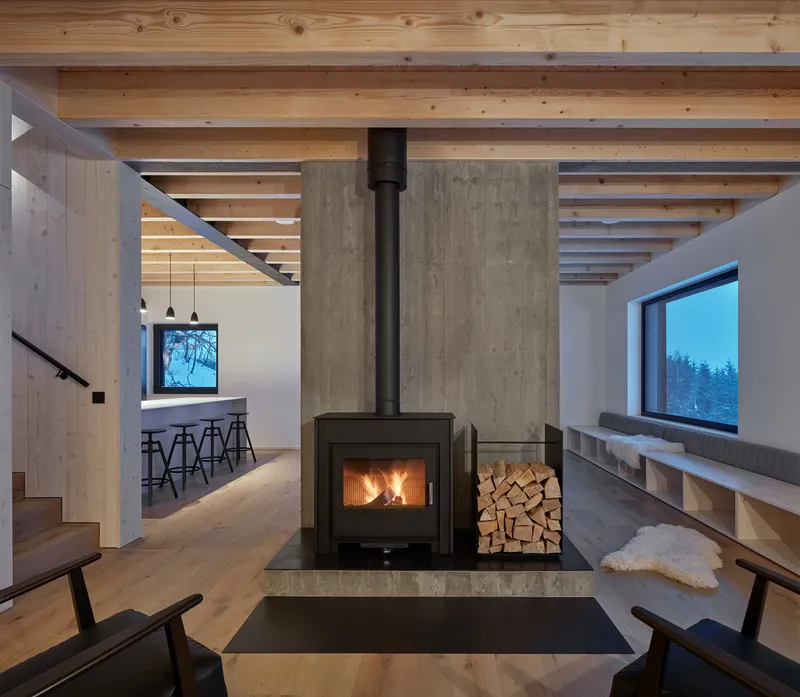
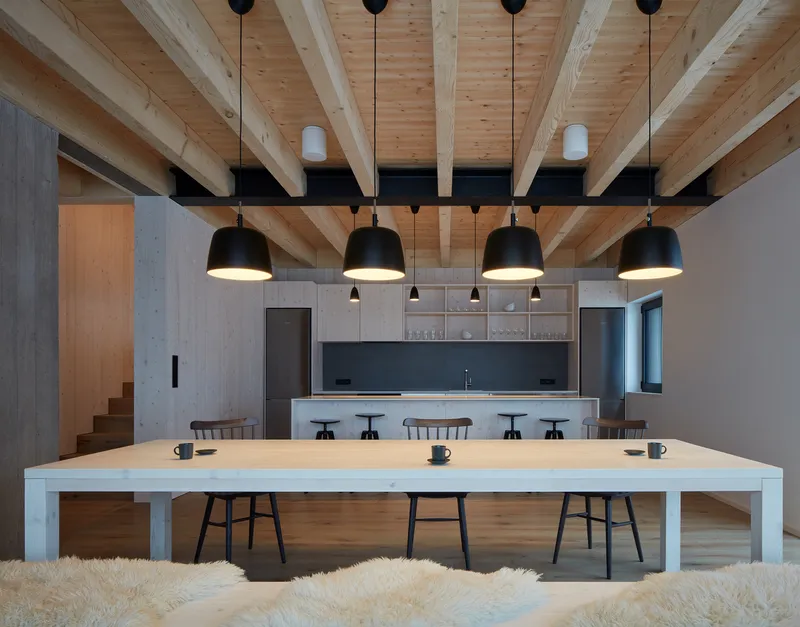
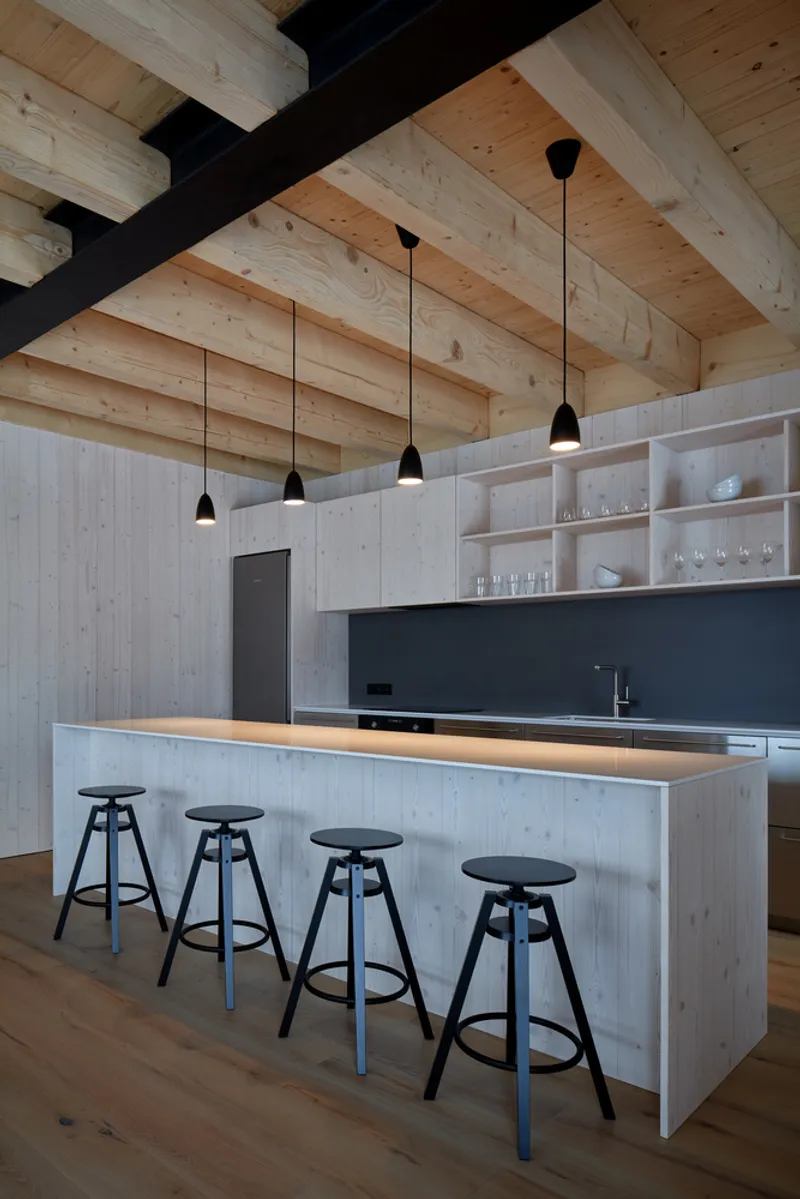
The interior material palette is tight. Bleached spruce lines the walls, ceilings, and much of the built-in furniture, establishing a warm, light-toned backdrop that offsets the dark exterior. Exposed timber joists and beams remain visible throughout, giving the upper volumes a structural legibility that raw drywall never achieves. The kitchen introduces stainless steel and black pendant lights as the primary counterpoints to all that wood.
At the heart of the ground floor, a wood-burning stove sits on a concrete plinth with stacked firewood stored beneath. This is the social and thermal anchor of the cottage: a fire visible from both the living area and the double-height dining space. The concrete pillar nearby divides these zones without walls, allowing heat and sight lines to move freely between them. For a rental property that needs to feel immediately welcoming to strangers, the stove does more work than any amount of interior styling.
Stacking Sleep into the Gable
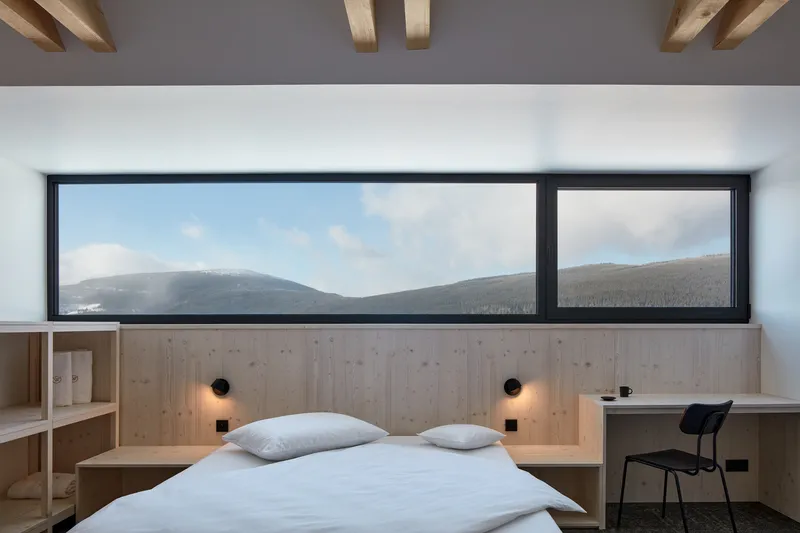
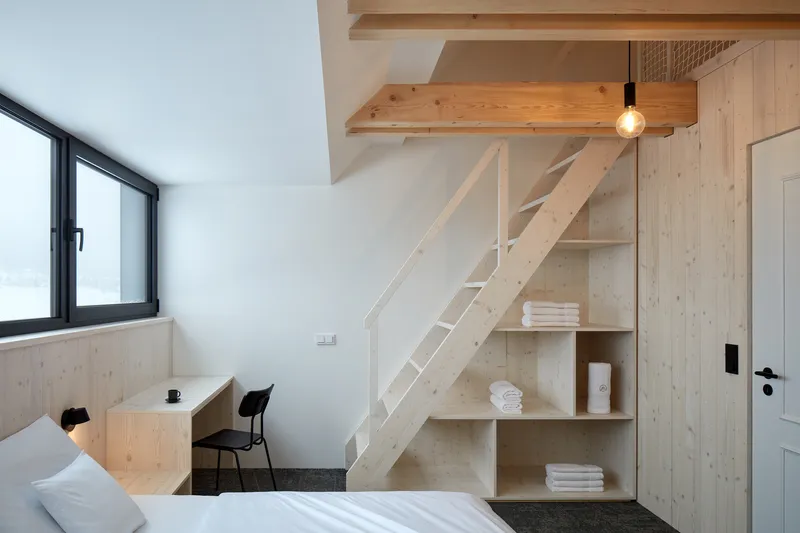
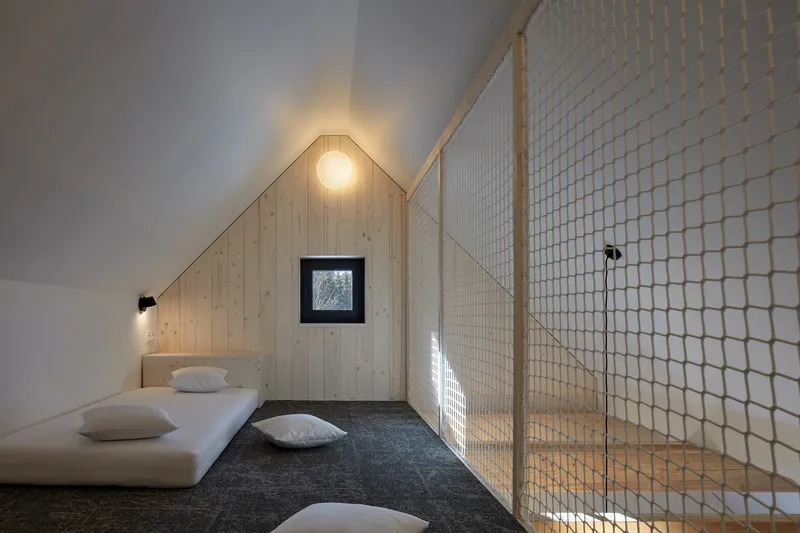
The upper floor holds the bedrooms, each benefiting from the pitched ceiling's height and horizontal windows that frame the surrounding hills at pillow level. But the real payoff of the gable form comes a level higher, where the attic is converted into sleeping lofts. Accessed via lightweight timber ladders, these mezzanine platforms tuck into the apex of the roof behind rope mesh safety barriers. The effect is something between a tree house and a berth on a ship: compact, cozy, and unmistakably fun for the rental guests the cottage is designed to attract.
Built-in storage shelves occupy the low-clearance zones beneath each loft, turning what would be wasted triangular space into practical cabinetry. It is a small detail, but it illustrates how seriously ADR took the challenge of maximizing usable area within a traditional roof profile. Every cubic meter of the 283 square meter usable floor area earns its keep.
Wellness Carved into the Hillside
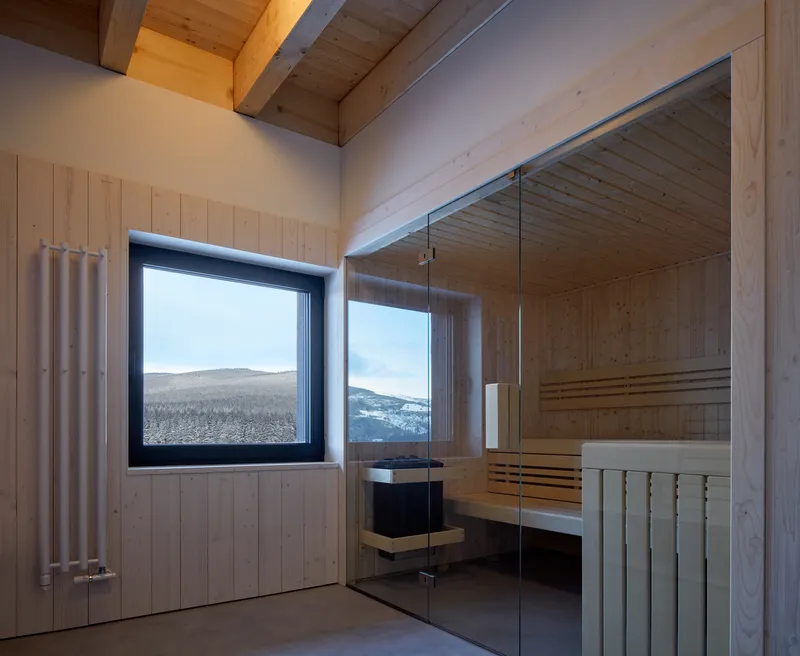
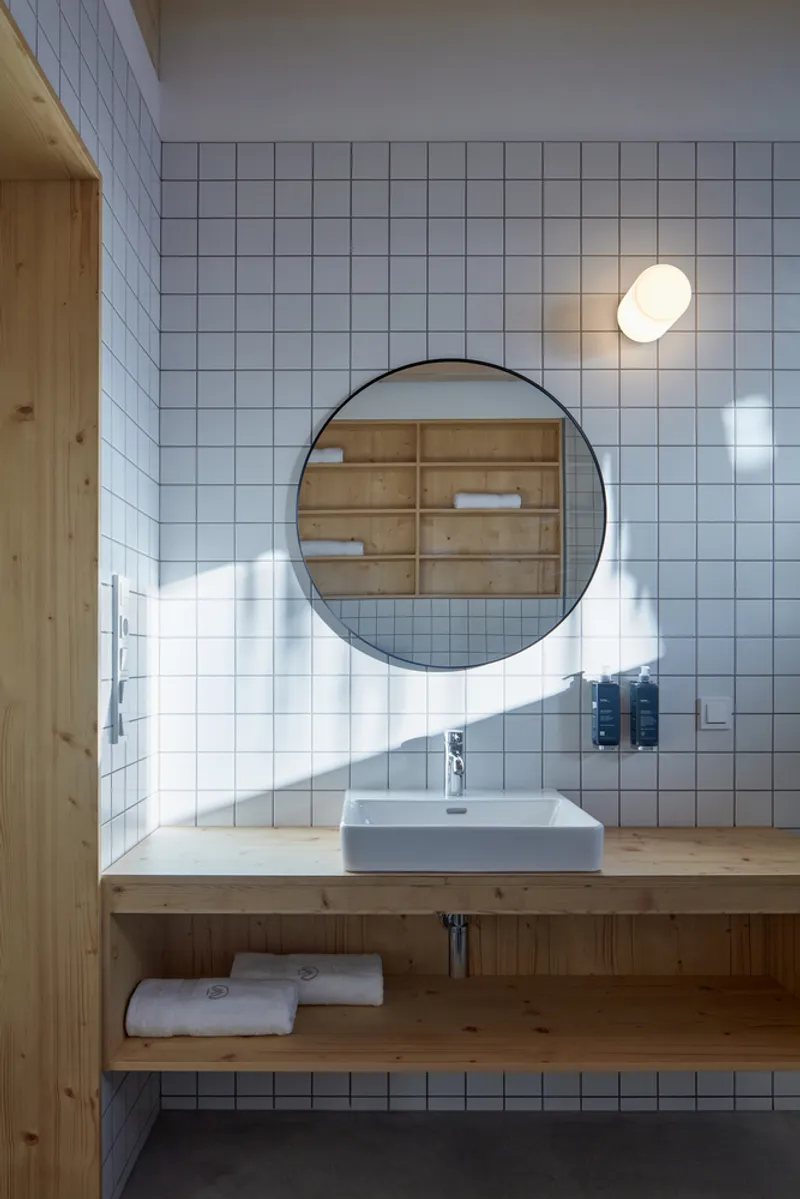
The lower floor accommodates more than a living room and kitchen. A glass-enclosed sauna with timber benches looks directly out onto the winter mountain landscape, turning a utilitarian wellness feature into one of the cottage's most memorable spatial moments. Nearby, the bathrooms maintain the same material discipline: white square tiles, round mirrors, and timber vanities that keep the spruce language consistent without forcing every surface into the same finish.
These rooms are small, but they do not feel like afterthoughts. The sauna window alone justifies the effort of setting the building into the slope, because without that grade change, this room would be looking at a retaining wall instead of a valley.
The Stairwell as Vertical Spine
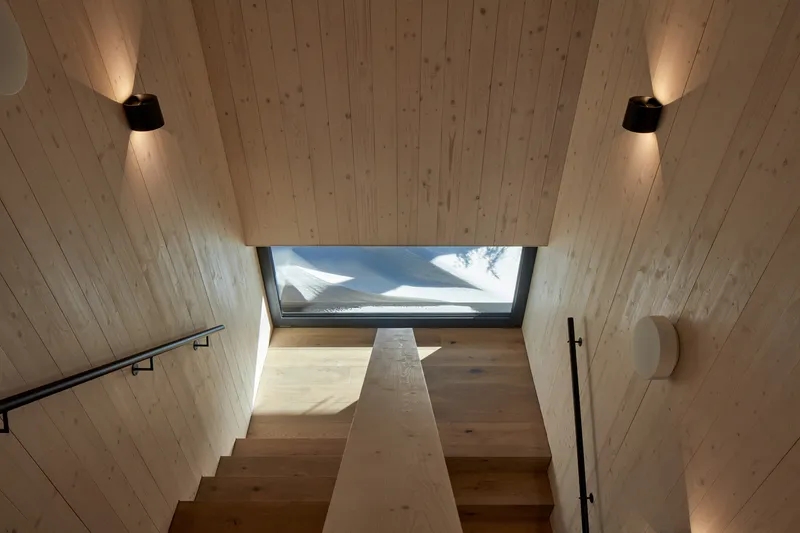
A timber-lined stairwell connects all three inhabited levels. A skylight above the landing washes the vertical circulation with daylight, preventing the core of the building from becoming a dark shaft. Wall-mounted sconces cast light upward in the evenings, maintaining the sense of openness after sunset. The stairwell is more than a connector; it is the only space that reveals the full sectional ambition of the cottage, from the concrete entrance level through the spruce bedrooms to the sleeping lofts under the ridge.
Plans and Drawings
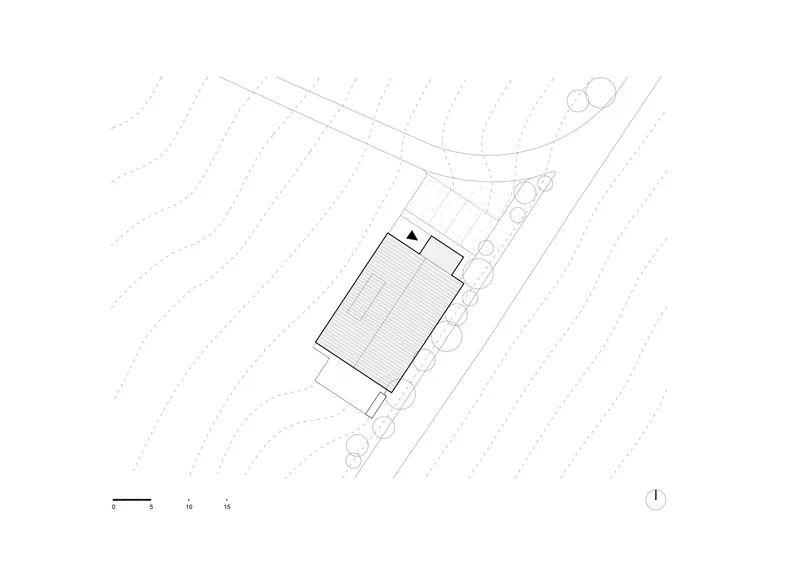
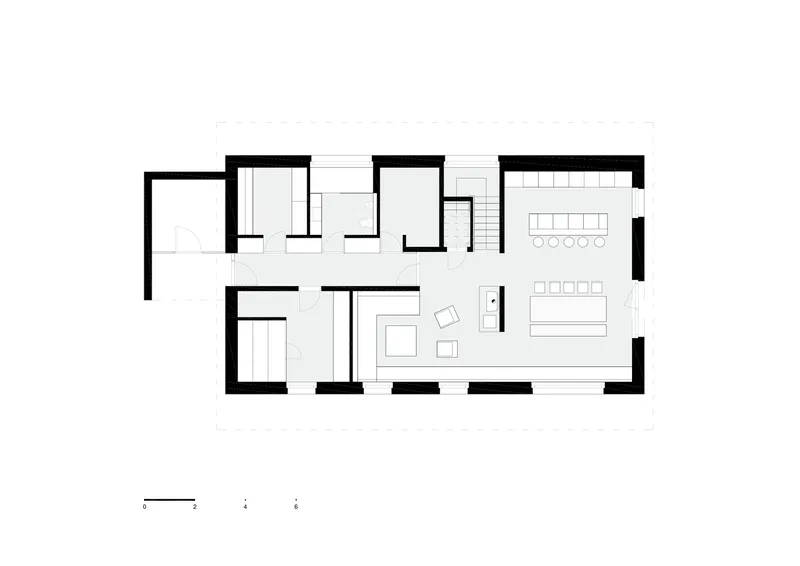
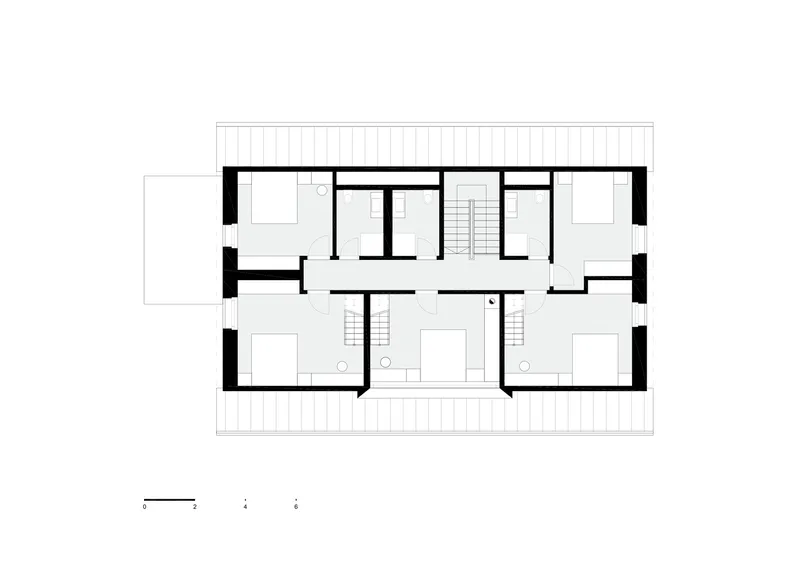
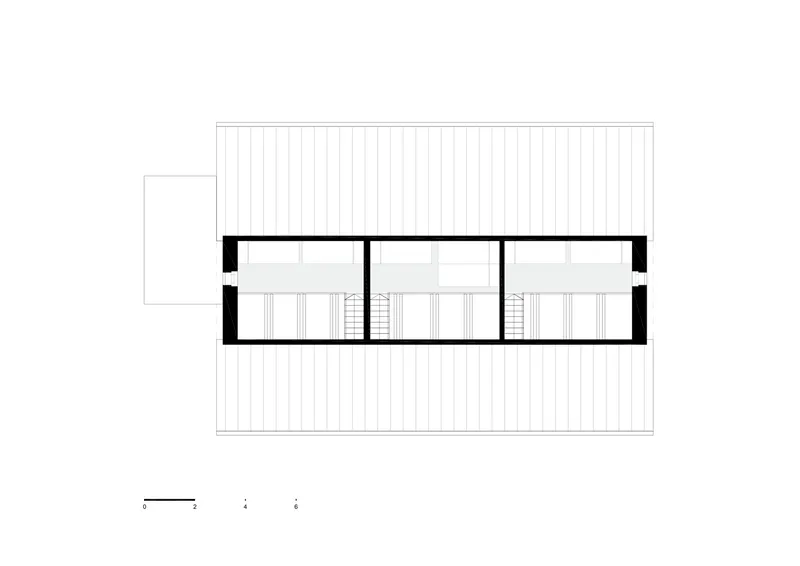
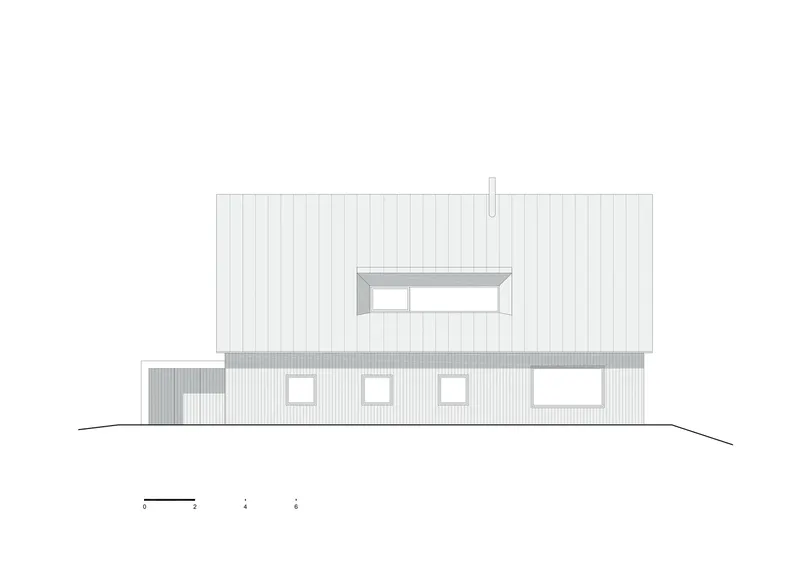
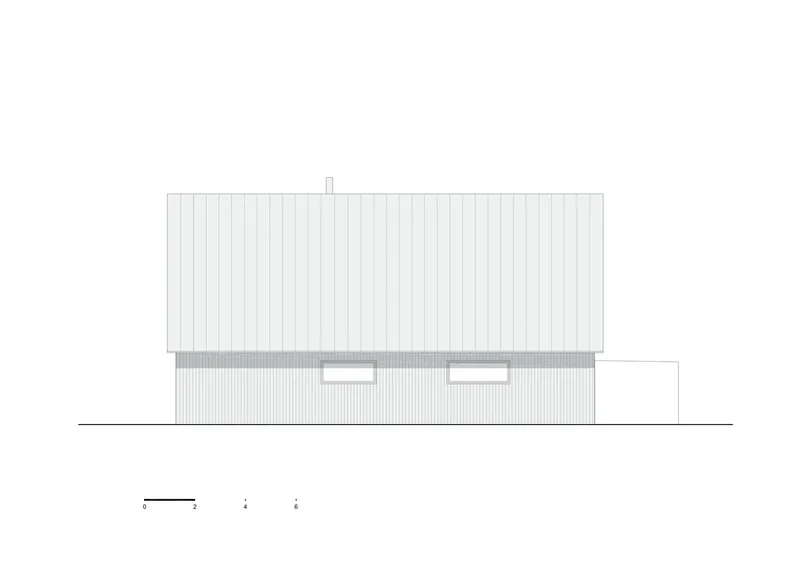
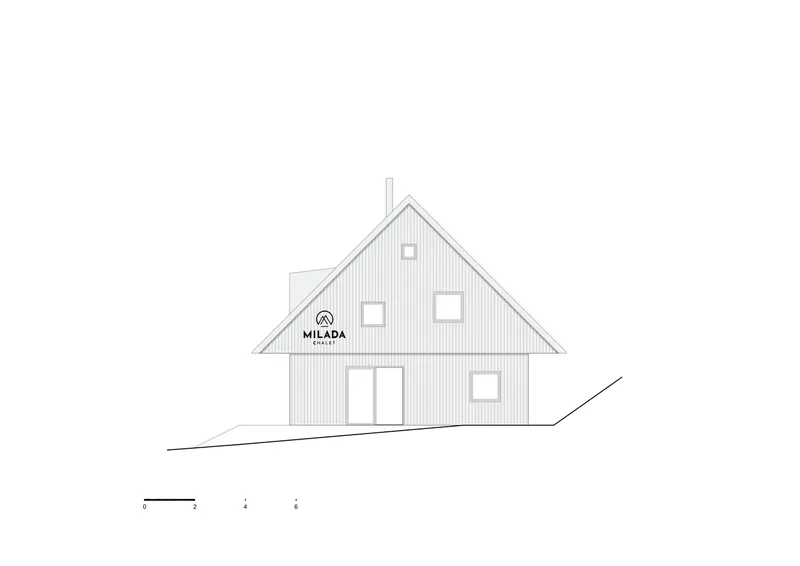
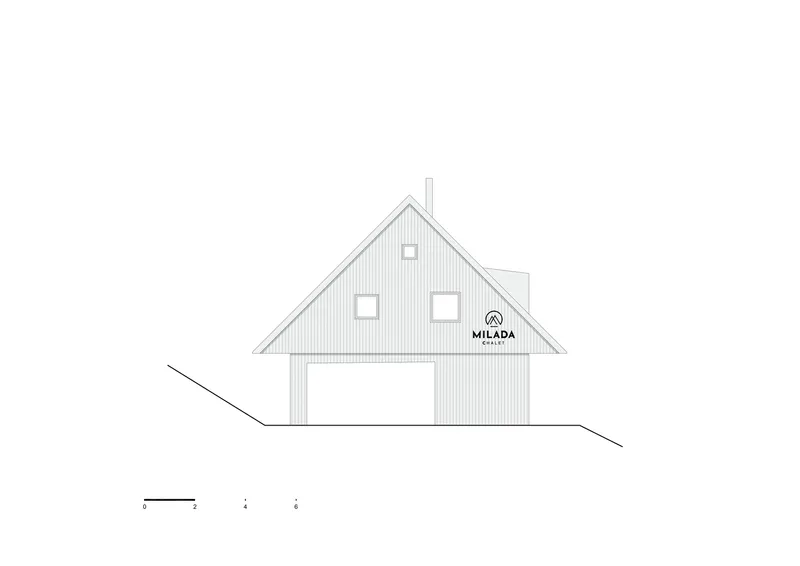
The site plan confirms the building's horizontal embedding into the hillside contours, with the longer facade parallel to the slope. Floor plans show a clear organizational logic: the ground floor is public, the first floor is private, and circulation is concentrated in two central staircases that also serve the attic lofts. The section drawing is the most revealing document, exposing the three distinct living levels stacked within the gable and the relationship between the concrete base and the timber superstructure above.
The four elevation drawings demonstrate the consistency of the black timber cladding across all facades, with window placement varying significantly from one side to the next. The gable ends are nearly blank, with only a few scattered openings, while the long facades carry the majority of the glazing. This asymmetry responds to orientation and privacy rather than compositional whim, which is exactly how mountain buildings have always distributed their openings.
Why This Project Matters
Milada Cottage is not trying to shock anyone. It is trying to be a very good mountain house, and it succeeds by committing fully to a small number of ideas: a familiar silhouette executed in precise materials, a section that extracts maximum sleeping capacity from a traditional gable, and windows that treat the Krkonoše landscape as something to be curated rather than consumed. In a market saturated with rental properties that substitute spectacle for substance, ADR's approach is quietly persuasive.
The broader lesson here is about the value of typological intelligence. The architects studied the scattered cottage development of Nové Domky, understood its proportions and its relationship to the terrain, and then built something that honors that pattern while updating its construction and spatial ambition. The black cladding, the concrete base, the rope-mesh lofts: none of these existed in the historical reference, yet the cottage feels native to its hillside. That is the hardest thing to achieve in mountain architecture, and ADR makes it look easy.
Milada Cottage by ADR (Aleš Lapka, Petr Kolář, with Markéta Tkáčová and Filip Strnad). Malá Úpa, Czech Republic. Gross floor area: 362 m². Completed 2023. Photography by BoysPlayNice.
About the Studio
Share Your Own Work on uni.xyz
If projects like this are the kind of work you want to make, uni.xyz is a place to publish your own, find collaborators, and enter design competitions.




Popular Articles
Popular articles from the community


Co-life: Sustainable Architecture for Age-Friendly Community Living
Co-life reimagines sustainable architecture for seniors through courtyards, rammed earth, shared gardens, and spaces designed for belonging.

Riyadh For All: Intergenerational Urban Design for Active Aging in Rabat
Riyadh For All reimagines urban design in Rabat with intergenerational co-living, adaptive courtyards, and Moroccan cultural exchange today.

The Earth Pod: 3D Printed Homes for Resilient Refugee Communities
The Earth Pod reimagines refugee housing through 3D printed homes made from clay, combining resilience, self-sufficiency, and rapid shelter.

Hill & Cross Opera: Sculptural Opera House Architecture Shaped by Tallinn’s Landscape and Identity
Hill & Cross Opera reimagines opera house architecture in Tallinn through its sculptural hill, civic plaza, glass wave and a luminous cross.
Similar Reads
You might also enjoy these articles


Hodi-Mandai Geram
Project Function: Preservation and revitalization of the Intangible heritage and socio-spatial identity of the Hodi by Housing, Cultural Memory Center, Sacred Grove, landscape, local tourism economy


Olio Towers: A Mid-Rise for Performers That Fuses Housing, Rehearsal, and Stage
Located blocks from Houston's Theater District, this modular tower stacks living units around a central performance atrium.

Oasis: Modular Green Housing Carved into Dhaka's Urban Fabric
A shortlisted Plugin Housing entry reclaims unauthorized settlements in Dhaka with stepped concrete volumes, green roofs, and ventilation-driven design.

Black Hole: A Floating Megastructure for the Post-Physical Era
Emiliano Mazzarotto envisions a spherical, self-scaling arena where e-sports, digital hotels, and holographic stadiums replace traditional public space.


Explore Architecture Competitions
Discover active competitions in this discipline



Challenge to reimagine the Iron Throne


Photograph architecture without architects


Illustrate the lost glory of Angkor Wat - Render Challenge


Design challenge to reuse E-waste
Comments (0)
Please login or sign up to add comments
No comments yet. Be the first to comment!